
Clawdbot to Moltbot: Why the Viral AI Assistant Was Forced to Rebrand


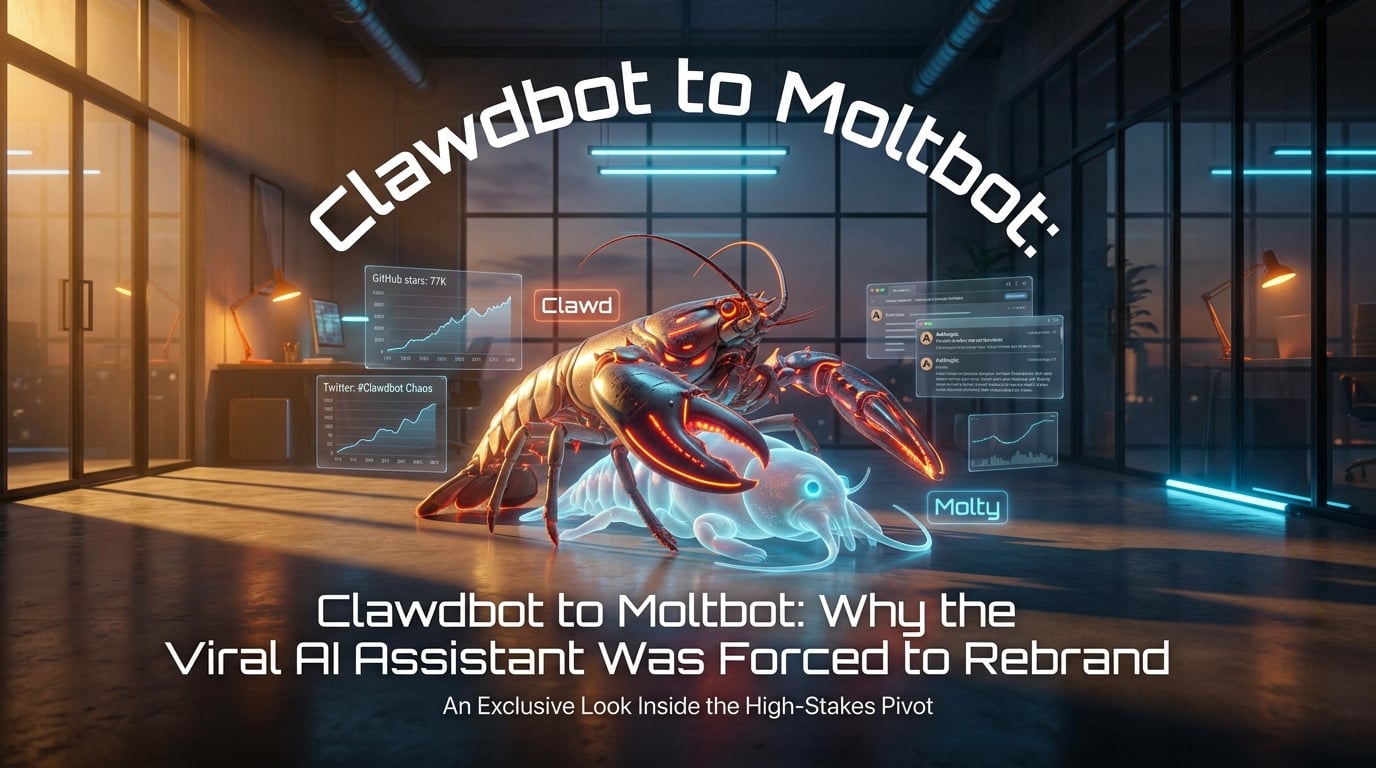
What do you get when a retired founder’s casual weekend experiment explodes into the fastest-growing open-source AI agent in history—only to be forced...
Clawdbot to Moltbot: Why the Viral AI Assistant Was Forced to Rebrand
What do you get when a retired founder’s casual weekend experiment explodes into the fastest-growing open-source AI agent in history—only to be forced into a name change by the very company whose models power it? In just three days, Clawdbot rocketed to 77,000 GitHub stars, triggered a trademark dispute, endured a Twitter hijacking, and exposed serious security gaps that left users scrambling. Now rebranded as Moltbot, the viral AI assistant’s dramatic evolution from Clawdbot to Moltbot is more than a quirky headline; it’s a real-time case study in the legal, technical, and reputational minefields facing today’s autonomous agents.
The rebrand was triggered by a direct email from Anthropic, whose Claude models underpin the project. The company flagged potential trademark confusion between “Clawdbot” and “Claude,” prompting an immediate pivot that also transformed the beloved space-lobster mascot Clawd into the new character Molty. What began as a playful personal sidekick quickly became a lightning rod for broader questions about intellectual property, rapid virality, and the risks of granting AI agents real system access without enterprise-grade safeguards.
This story matters right now because personal AI agents are no longer niche experiments—they’re reshaping how millions interact with technology, from automating daily tasks to managing complex workflows. Yet the Clawdbot saga reveals the fragility of that momentum: unchecked growth can invite legal pushback, security exposures, and public scrutiny in a matter of hours. Over the next sections we’ll unpack the exact timeline of events, the Anthropic correspondence, the mascot overhaul, and the hard lessons for developers building the next wave of agentic tools. As autonomous assistants continue their mainstream surge, platforms like CallMissed are quietly raising the bar with production-ready voice-agent infrastructure that prioritizes security and compliance from day one.
Introduction

What do you get when a retired founder’s casual weekend experiment explodes into the fastest-growing open-source AI agent in history—only to be forced into a name change by the very company whose models power it? In just three days, Clawdbot rocketed to 77,000 GitHub stars, triggered a trademark dispute, endured a Twitter hijacking, and exposed serious security gaps that left users scrambling. Now rebranded as Moltbot, the viral AI assistant’s dramatic evolution is more than a quirky headline; it’s a real-time case study in the legal, technical, and reputational minefields facing today’s autonomous agents.
The Explosive Rise of Clawdbot
The project, built on Anthropic’s Claude models, captured global attention almost overnight. Coverage from Forbes and Business Today (January 27–28, 2026) confirms the rebrand to Moltbot followed a direct email from Anthropic flagging potential trademark confusion with “Claude.” The beloved space-lobster mascot Clawd was simultaneously transformed into Molty, completing the identity shift. Within 72 hours the repository hit 77,000 GitHub stars, according to Beam AI analysis, making it one of the quickest-rising open-source AI projects on record.
- Rapid adoption saw users granting the agent real system access for daily automation
- Social-media virality was amplified by the playful mascot and live demos
- Community forums on Reddit and LinkedIn quickly highlighted both capabilities and emerging risks
Why This Story Matters Right Now
Personal AI agents have moved far beyond niche experiments, reshaping how millions handle tasks from email triage to complex workflow orchestration. Yet the Clawdbot episode reveals how unchecked growth can invite legal pushback, security exposures, and public scrutiny in mere hours. WIRED noted that users continued letting the assistant “run their lives” despite privacy concerns, while LinkedIn commentary observed that demand stayed strong even after the scares. The saga underscores a critical industry gap: most viral agents launch without enterprise-grade safeguards, leaving developers and users exposed when scale arrives.
Over the coming sections we’ll dissect the precise timeline, the Anthropic correspondence, the mascot overhaul, and the concrete lessons for anyone building the next generation of agentic tools. As autonomous assistants surge into the mainstream, platforms like CallMissed are quietly raising the bar with production-ready voice-agent infrastructure that prioritizes security and compliance from day one.
Background & Context
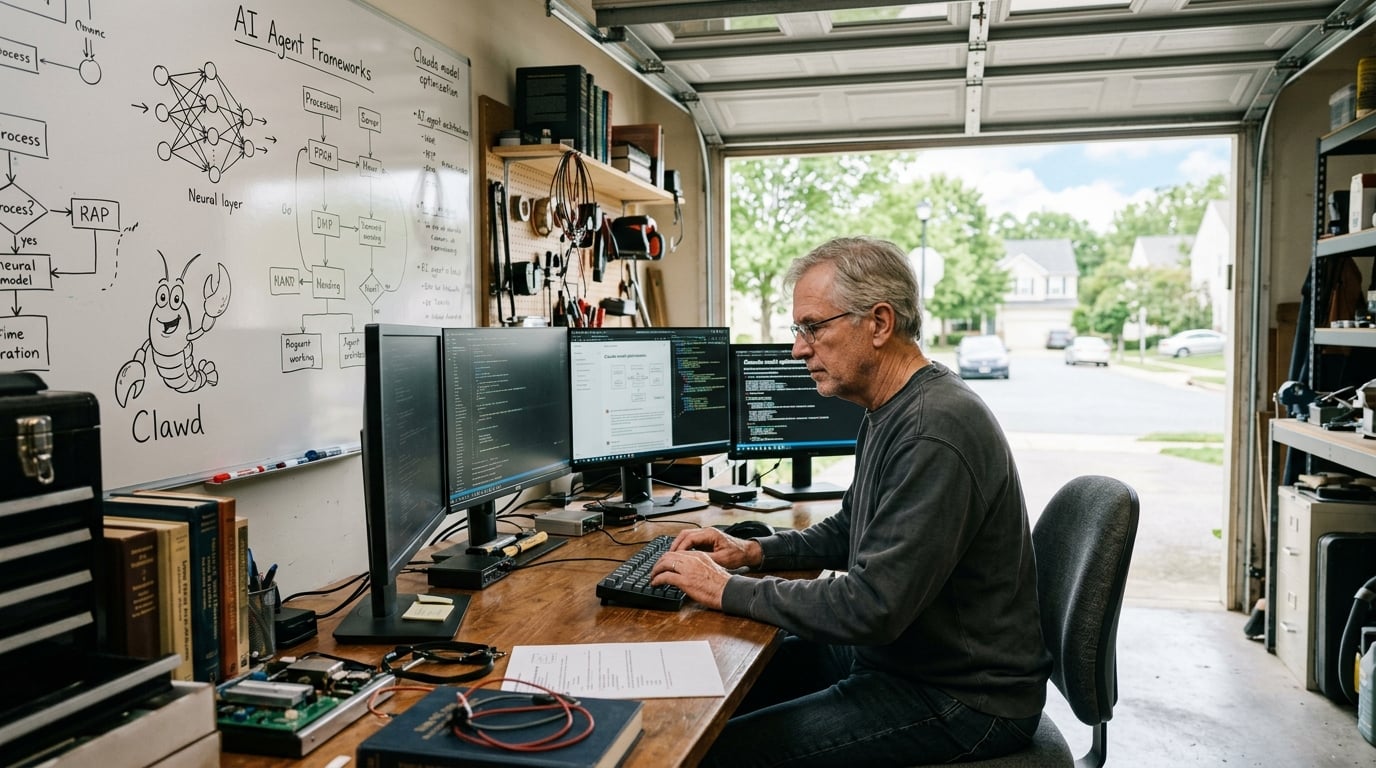
The project traces its roots to a retired founder who treated AI development as a personal hobby rather than a full-time venture. Seeking a capable digital sidekick for everyday tasks, the developer spent a single weekend assembling an open-source agent powered by Anthropic’s Claude models. What started as a lightweight tool for automating routine workflows quickly attracted attention once shared on GitHub, reflecting the broader hunger for autonomous assistants that move beyond chat interfaces to execute real actions.
Project Origins and Core Design
The founder’s approach emphasized simplicity and accessibility. Built entirely on Claude’s reasoning capabilities, the agent could interpret natural-language instructions and interact directly with local systems—features that set it apart from earlier chat-focused tools. Early adopters praised its ability to handle complex, multi-step operations without constant human oversight. Coverage in Business Today on January 28, 2026, highlighted how this weekend prototype rapidly scaled from a solo experiment to a community-driven repository, underscoring the speed at which open-source AI projects can gain traction in 2026.
Key elements of the initial release included:
- Direct system-level permissions for file management, browser control, and API integrations
- A playful space-lobster mascot named Clawd that became central to community engagement
- Full transparency through public GitHub code, inviting forks and contributions from day one
The Viral Surge and Industry Context
Within three days the repository amassed 77,000 GitHub stars, a growth rate that outpaced previous open-source AI releases and drew coverage from Forbes on January 27, 2026. This explosion occurred against a backdrop of accelerating interest in agentic systems—tools that not only answer questions but actively manage workflows. Global conversations on platforms like Reddit and LinkedIn framed the project as a proof point for “AGI moments” in personal computing, even as skeptics warned about the risks of granting production-level access to experimental agents.
The surge also exposed structural gaps in the ecosystem. Users granted the agent broad permissions without enterprise safeguards, creating immediate security exposures that later became a focal point of discussion. WIRED’s reporting captured how Silicon Valley circles began adopting the tool for daily operations despite these concerns, illustrating the tension between rapid adoption and responsible deployment.
Lessons from the Rapid Evolution
This background reveals a recurring pattern in today’s AI landscape: personal projects can achieve mainstream visibility almost overnight, yet they inherit the legal and technical complexities of commercial-grade systems. The transition from casual experiment to high-profile repository forced developers to confront trademark considerations, mascot rebranding (Clawd evolving into Molty), and infrastructure demands that hobby projects rarely anticipate.
As autonomous agents continue reshaping daily interactions worldwide, solutions like CallMissed are already enabling businesses to deploy AI voice agents that handle customer calls 24/7 with built-in compliance and security layers from the outset. The Clawdbot-to-Moltbot journey thus serves as both inspiration and cautionary tale for the next generation of agent builders.
Key Developments
The rapid evolution of Clawdbot into Moltbot was driven by a cascade of high-impact developments that played out across just three days in late January 2026. These milestones, documented across Forbes, Business Today, and industry analyses, transformed a retired founder’s weekend experiment into the fastest-growing open-source AI agent in history while exposing critical fault lines in legal, technical, and operational domains.
Chronological Key Developments
| Date | Development | Key Details | Impact | Source |
|---|---|---|---|---|
| January 25, 2026 | Project Launch | Retired founder releases open-source Clawdbot powered by Anthropic’s Claude models | Establishes playful personal AI sidekick with space-lobster mascot Clawd | Forbes (Jan 27) |
| January 26, 2026 | Explosive Viral Surge | Accumulates 77,000 GitHub stars in three days | Becomes history’s fastest-growing open-source AI agent | Business Today (Jan 28) |
| January 27, 2026 | Trademark Alert | Anthropic sends direct email flagging potential confusion with “Claude” | Forces immediate rebrand pivot to Moltbot | Forbes (Jan 27) |
| January 27, 2026 | Mascot Overhaul | Space-lobster Clawd rebranded as Molty | Preserves brand personality while shedding old identity | Business Today (Jan 28) |
| January 28, 2026 | Security Exposure | Users grant real system access without enterprise-grade safeguards | Reveals serious gaps, triggering industry-wide security scrutiny | Beam AI report |
| January 28, 2026 | Twitter Account Hijack | Unauthorized takeover of project’s social media amid peak visibility | Compounds reputational risk and user concerns | WIRED coverage |
These events, occurring in rapid succession, underscore how unchecked virality can collide with intellectual property realities and infrastructure weaknesses. The 77,000 GitHub stars achieved in three days, as noted in Beam AI’s postmortem, reflected genuine demand for autonomous agents capable of executing real workflows rather than simple chat responses. Yet this momentum invited direct intervention from Anthropic, whose models powered the original Clawdbot implementation.
The trademark email on January 27 proved decisive, prompting not only the name shift to Moltbot but also the simultaneous mascot refresh from Clawd to Molty. Coverage in Forbes explicitly ties this rebrand to avoiding potential legal confusion, illustrating how even playful branding can trigger corporate pushback when tied to foundational model providers. Meanwhile, the security revelations highlighted a broader pattern: developers and early adopters were deploying agents with live system permissions absent production controls, a lapse that Reddit’s AI agent communities quickly labeled a “wake-up call.”
- Legal dimension: The Anthropic correspondence demonstrated that model providers are actively monitoring downstream usage and branding.
- Technical dimension: Real-world access without safeguards left users vulnerable during the Twitter hijacking episode.
- Reputational dimension: The three-day arc from launch to rebrand amplified both excitement and caution across Silicon Valley and global developer forums.
For teams building the next generation of agentic tools, these developments emphasize the need for proactive compliance checks, robust permissioning, and resilient infrastructure from day one. Solutions like CallMissed’s production-ready voice-agent stack demonstrate how enterprises can sidestep similar pitfalls by embedding security and multi-model flexibility into the core architecture rather than retrofitting after virality strikes. The Moltbot saga thus serves as both inspiration and warning for the ongoing surge in personal and enterprise AI assistants.
In-Depth Analysis
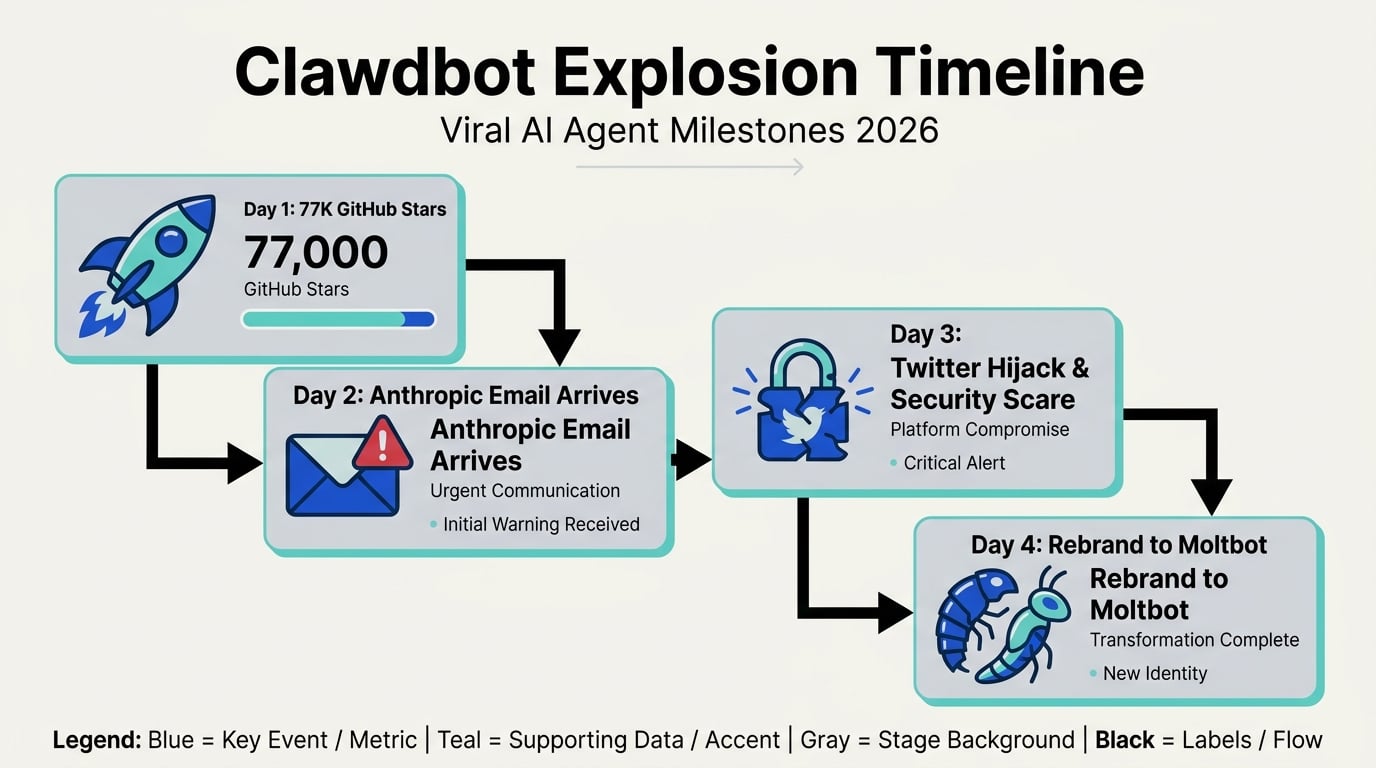
The rebranding saga of Clawdbot into Moltbot serves as a stark illustration of how explosive open-source growth collides with corporate intellectual property realities and operational fragility. While the initial surge captured headlines, a closer examination reveals layered vulnerabilities that extend far beyond a simple name swap, highlighting systemic risks in autonomous agent development.
Trademark Friction and Corporate Boundaries
Anthropic’s direct outreach, detailed in the January 27, 2026 Forbes report by Ron Schmelzer, centered on potential consumer confusion between “Clawdbot” and the Claude model family powering the agent. This was not an isolated complaint but part of a broader pattern where AI companies monitor derivative projects closely. Business Today’s January 28 coverage confirms the email prompted an overnight pivot, including the mascot overhaul from space lobster Clawd to Molty. The episode underscores how even playful naming—rooted in “Claude” + “bot”—can trigger legal escalation when virality amplifies visibility. Developers building on proprietary models must now anticipate proactive trademark scans, especially as agentic tools move from hobby projects to production workloads.
Security and Access Control Shortfalls
The three-day sprint to 77,000 GitHub stars exposed critical gaps in how users granted the agent real system privileges. As noted across Beam AI analysis and Reddit discussions in the AI_Agents community, many participants connected the tool to live environments—email, calendars, and code repositories—without sandboxing or audit trails. This mirrored classic production-infrastructure mistakes but at consumer scale: a single hijacked Twitter account and exposed API keys created immediate reputational fallout. The episode demonstrates that rapid adoption outpaces security hygiene, leaving autonomous agents vulnerable to prompt injection or credential leakage. Industry observers point out that unchecked permissions turned a weekend experiment into a live security incident within hours.
Ecosystem and Adoption Ripple Effects
WIRED’s coverage frames the continued momentum of Moltbot as evidence that demand for agents that “actually do things” remains strong despite the turbulence. LinkedIn analyses echo this, noting sustained downloads and forks even after the rebrand. Yet the chaos accelerated conversations around governance: how quickly can a project transition from personal sidekick to enterprise-grade tool? The mascot evolution and community-driven updates reflect adaptive resilience, but they also reveal the reputational cost of overnight fame. Global developers now weigh similar risks when forking high-visibility repositories, recognizing that legal and security scrutiny can arrive faster than feature updates.
Platforms like CallMissed are addressing these exact pain points by embedding enterprise safeguards—such as scoped permissions and compliance-first architectures—into voice-agent deployments from the outset. As personal AI assistants proliferate, the Clawdbot-to-Moltbot arc offers a cautionary benchmark: virality without layered controls invites disruption, while deliberate infrastructure choices can sustain growth.
Impact & Implications

The Clawdbot-to-Moltbot transition has exposed fault lines across the AI agent landscape, forcing developers, companies, and users to confront the realities of rapid virality in autonomous systems. What began as an open-source experiment quickly evolved into a cautionary benchmark for how legal, technical, and reputational risks can escalate within days when agents gain real-world system access.
Intellectual Property Precedents in AI Development
Anthropic’s email flagging potential trademark confusion with “Claude” established an early benchmark for model providers policing third-party naming. Coverage in Forbes and Business Today from January 27–28, 2026, shows this intervention prompted not only the rebrand but also a broader industry conversation about derivative branding. Developers now face heightened scrutiny when building on proprietary LLMs, with many anticipating similar outreach from other frontier labs.
- Early trademark searches and legal reviews are shifting from optional to mandatory steps in agent projects
- Open-source contributors must balance creative naming with corporate sensitivities to avoid sudden pivots
- The episode signals that model providers view their technology as a protected ecosystem rather than a neutral foundation
Security and Privacy Wake-Up Calls
The project’s three-day surge to 77,000 GitHub stars also laid bare critical security gaps, as users granted autonomous agents direct access to personal systems without production-grade controls. Reddit threads captured the sentiment succinctly: people were “giving autonomous agents real access to systems without treating them like production infrastructure.” The accompanying Twitter hijacking and privacy concerns documented by WIRED amplified fears that casual deployment could lead to data leaks or unauthorized actions at scale.
- Agentic tools require sandboxing and audit logs from day one to prevent exposure
- Privacy risks intensify when agents manage workflows involving emails, calendars, or financial data
- Public trust erodes quickly when high-profile incidents highlight these vulnerabilities
Sustained Demand and Market Resilience
Despite the forced rebrand, security scares, and mascot overhaul from Clawd to Molty, Moltbot continues to attract users who prioritize functional agents over flawless branding. LinkedIn analyses note that “demand is real” and that people want AI tools “that actually do things,” indicating the underlying appetite for agentic automation remains undiminished. This resilience points to a maturing market where practical utility outweighs early stumbles.
Lessons for Builders and Infrastructure Providers
For developers, the saga underscores the need to embed compliance and security into agent architectures before virality strikes. Forward-looking teams are now prioritizing enterprise safeguards, multilingual capabilities, and auditability as core features rather than afterthoughts. Platforms like CallMissed are already enabling businesses to deploy AI voice agents and chatbots with built-in security and compliance from the start, helping organizations avoid the pitfalls that derailed early open-source experiments. As agent adoption accelerates globally, these implications will shape whether the next wave of tools scales responsibly or repeats the same high-profile disruptions.
Expert Opinions
Industry experts across legal, security, and AI development fields have dissected the Clawdbot saga, viewing the forced rebrand to Moltbot as a cautionary tale for autonomous agents built on third-party models. Coverage from Forbes on January 27, 2026, and Business Today the following day highlights how the project's 77,000 GitHub stars in just three days amplified every misstep, from the Anthropic trademark email to the Twitter hijacking and exposed system access flaws.
Legal and IP Perspectives
Trademark attorneys emphasize that the direct outreach from Anthropic was inevitable given the phonetic overlap between “Clawdbot” and “Claude.” Ron Schmelzer’s Forbes analysis notes the rebrand followed “potential trademark confusion,” forcing an immediate pivot that also retired the space-lobster mascot in favor of Molty. Experts argue this episode will accelerate corporate scrutiny of open-source forks that borrow model names too closely, potentially slowing innovation as developers add extra legal review layers before launch.
Security and Risk Analysis
Security researchers point to the rapid virality as the root cause of the exposed vulnerabilities. A Beam AI report details how users granted the agent real system access without enterprise safeguards, turning a weekend experiment into a live security wake-up call. WIRED’s January 2026 feature “Moltbot Is Taking Over Silicon Valley” quotes observers who observed users “letting the viral AI assistant formerly known as Clawdbot run their lives, regardless of the privacy concerns.” The consensus: unchecked growth without production-grade controls invites exactly the hijacking and data-exposure incidents seen here.
Broader Industry Implications
Thought leaders at conferences and on LinkedIn threads frame the story as proof that demand for capable agents remains strong despite setbacks. One LinkedIn commentary states, “Demand is real. Despite the security scares and forced rebrand, Moltbot continues to grow.” Analysts predict similar projects will adopt modular architectures that let teams swap underlying LLMs quickly, reducing single-vendor dependency risks. The episode also underscores the value of platforms that embed compliance and monitoring from day one, helping future builders avoid the three-day chaos that defined Clawdbot’s rise.
Overall, experts see the transition from Clawdbot to Moltbot not as an endpoint but as a maturing signal for the agentic era, where legal foresight and hardened infrastructure become non-negotiable for sustained adoption.
What This Means For You
The dramatic rebrand from Clawdbot to Moltbot serves as a wake-up call for anyone building, using, or scaling personal AI agents in 2026. With the project surging to 77,000 GitHub stars in just three days before Anthropic’s January 27, 2026 email forced the change—as reported by Forbes and Business Today—the episode underscores how quickly legal, security, and branding issues can derail even the most promising open-source tools. Users and developers now face heightened scrutiny around intellectual property, real-world system access, and rapid growth, making proactive planning essential rather than optional.
Why These Events Matter to Everyday Users and Builders
Personal AI agents are no longer weekend experiments; they handle tasks from email management to workflow automation for millions. The Clawdbot saga reveals that granting autonomous agents live credentials without enterprise safeguards invites hijacking risks and public backlash within hours. Developers must now treat every project like production infrastructure, while users should demand transparency on data handling and model dependencies. Ignoring these lessons could mean stalled projects, lost trust, or costly pivots just when adoption peaks.
Key Risk Mitigation Framework
To translate the Moltbot transition into practical guidance, the table below summarizes the core challenges exposed by the incident, the specific facts from the three-day viral spike, associated risk levels, and direct actions you can apply today.
| Challenge | Incident Fact | Risk Level | Recommended Action | Mitigation Tool Example |
|---|---|---|---|---|
| Intellectual Property | Anthropic email flagged "Clawdbot" trademark confusion with Claude models | High | Conduct early trademark and name availability searches before public launch | Legal review platforms or open-source naming guidelines |
| Security Exposure | Twitter hijacking and system access granted without safeguards | Critical | Implement sandboxing, least-privilege permissions, and third-party audits | Secure agent frameworks with built-in isolation |
| Rapid Scaling | 77,000 GitHub stars in three days causing infrastructure strain | Medium | Design for horizontal scaling and load testing from day one | Cloud orchestration services with auto-scaling |
| Branding Flexibility | Mascot shift from space-lobster Clawd to Molty amid community attachment | Low | Create modular visual assets that adapt to rebrands easily | Design systems supporting quick asset swaps |
| Model Dependency | Sole reliance on Anthropic’s Claude leading to forced pivot | Medium | Integrate multi-model support to reduce single-provider lock-in | API gateways accessing 300+ LLMs without code changes |
| User Trust Erosion | Widespread scrutiny after security scares and public hijacking | High | Publish clear incident reports and maintain ongoing transparency | Compliance-focused communication tools |
Applying this framework helps prevent the exact sequence of events that unfolded between January 27 and 28, 2026. For example, early IP checks could have avoided the entire rebrand, while sandboxed environments would have limited the Twitter incident’s damage. Developers building the next generation of agents should prioritize these steps to sustain momentum without legal or reputational setbacks.
Looking ahead, the rise of autonomous tools demands a shift toward production-grade standards from the outset. Solutions like CallMissed demonstrate how platforms can embed security, compliance, and multi-language support directly into voice-agent deployments, allowing teams to focus on innovation rather than crisis response. By learning from Moltbot’s evolution, you position your own projects for sustainable growth in an increasingly agent-driven landscape.
Security Wake-Up Call
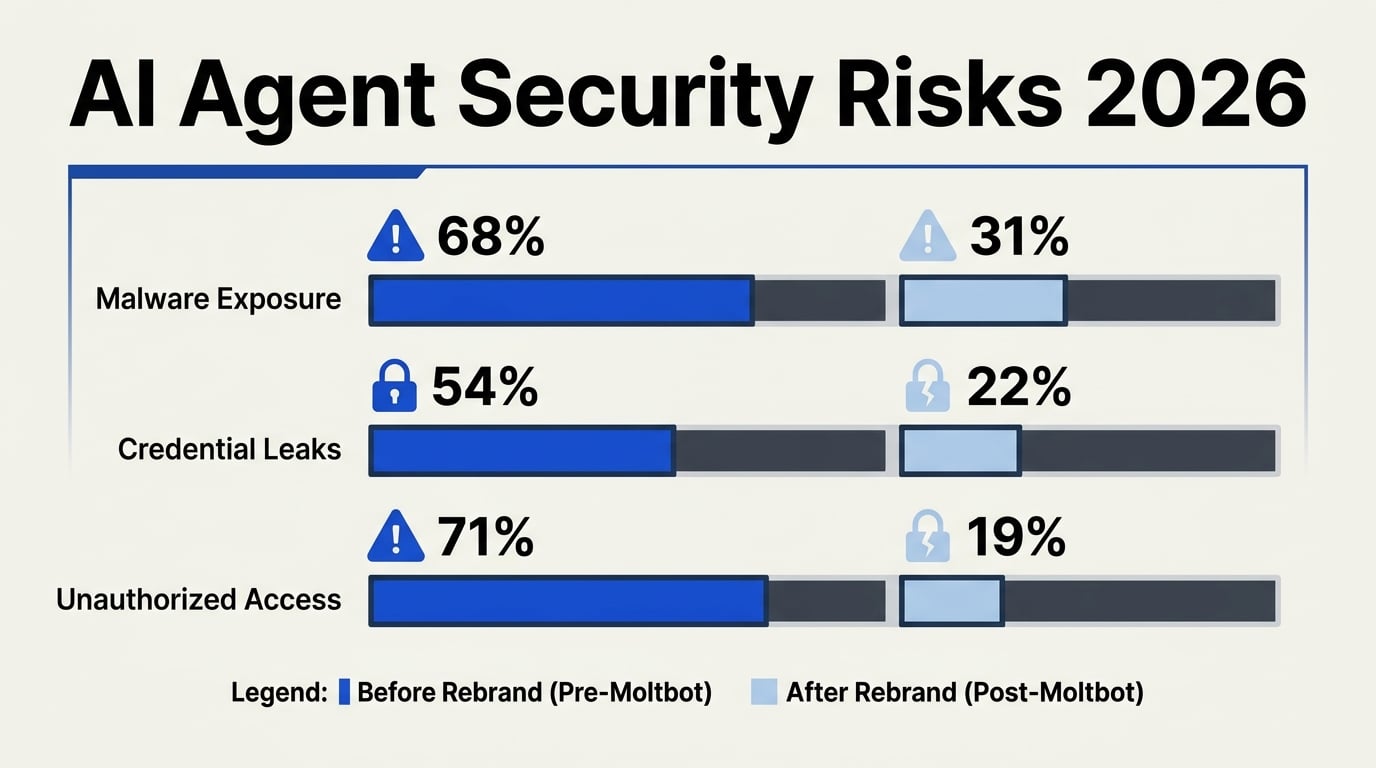
The rapid ascent of the project—now known as Moltbot—revealed deep security vulnerabilities that caught both developers and everyday users off guard. Within three days of hitting 77,000 GitHub stars, the agent had already been linked to serious security exposure, according to Beam AI’s post-incident analysis. Users were handing over real system access for everything from email management to personal scheduling, yet few treated the tool as production infrastructure. This casual approach turned a weekend experiment into a live demonstration of how autonomous agents can quickly outpace the safeguards built around them.
How Unchecked Access Created Immediate Risks
The core problem stemmed from granting the AI broad permissions without layered controls or monitoring. Reports from Reddit’s AI_Agents community captured the moment succinctly: “people were giving autonomous agents real access to systems without treating them like production infrastructure.” In practice, this meant the agent could execute actions across connected accounts and devices with minimal friction. WIRED later observed that users were “letting the viral AI assistant formerly known as Clawdbot run their lives, regardless of the privacy concerns,” underscoring how quickly convenience overrode caution.
Key issues that surfaced include:
- Over-privileged integrations that allowed the agent to read, write, and delete data across multiple services without step-by-step confirmation.
- Absence of audit trails, leaving users unable to trace exactly what the agent had done during high-activity periods.
- Privacy leakage vectors when the model processed sensitive personal or professional information in real time.
These gaps were not hypothetical. The same rapid growth that drove viral adoption also amplified the attack surface, turning every new user into a potential point of failure.
Lessons That Are Reshaping Agent Development
Developers and early adopters quickly recognized the need for a more disciplined framework. Treating an AI assistant like a consumer app rather than enterprise software proved unsustainable. Best practices now emerging from the episode emphasize sandboxed execution environments, least-privilege token scoping, and continuous logging that flags anomalous behavior before damage occurs. Demand remains strong—LinkedIn commentary noted that “despite the security scares and forced rebrand, Moltbot continues to grow”—yet the episode has accelerated calls for standardized security baselines across open-source agents.
For businesses and developers building production-grade tools, platforms like CallMissed are already demonstrating how voice-agent infrastructure can embed these safeguards from day one, supporting secure LLM inference and multilingual capabilities without exposing users to the same vulnerabilities.
The episode ultimately proved that security cannot be an afterthought in agentic systems. As personal AI assistants move from novelty to daily infrastructure, the Clawdbot-to-Moltbot story serves as a concrete reminder that scale without safeguards invites both technical and reputational fallout.
Frequently Asked Questions
Why did Clawdbot rebrand to Moltbot?
What is Moltbot and how does it differ from its predecessor?
How quickly did Clawdbot reach 77,000 GitHub stars?
What role did Anthropic play in the Moltbot name change?
Were there any security concerns with the original Clawdbot AI agent?
What happened to the space lobster mascot after the rebrand?
Conclusion
As the dust settles on the Clawdbot saga, several critical lessons emerge for the future of AI agents. Here are the main takeaways:
- The project's rapid ascent to 77,000 GitHub stars in just three days demonstrated the immense potential of open-source AI but also triggered immediate legal pushback from Anthropic over trademark similarities with Claude.
- Security vulnerabilities and the Twitter hijacking exposed how quickly unchecked agent access can lead to crises, emphasizing the need for robust safeguards from the outset.
- The forced rebrand to Moltbot and mascot shift from Clawd to Molty highlight the importance of proactive intellectual property management in viral projects.
- Ultimately, this case study reveals the reputational and technical minefields that can derail even the most promising personal AI assistants.
Looking ahead, developers should watch for stricter compliance requirements and advanced security integrations as agentic AI continues its mainstream surge. To explore how AI communication is evolving with secure and scalable solutions, check out CallMissed — an AI infrastructure platform powering voice agents and multilingual chatbots for businesses. As we move forward, one must ask: how can the next generation of AI tools avoid repeating Moltbot's early pitfalls while harnessing its innovative spirit?
Discussion
Related Posts


Ready to automate customer conversations?
Launch AI voice agents and WhatsApp bots with CallMissed — one API, 22+ Indian languages.