
A Fallen Indian Tech Star and the Hunt for Its Missing Millions



Can a hedge fund operating above a quiet fish-and-chip shop in the UK hold the key to the disappearance of $533 million from India’s once most celebrated...
A Fallen Indian Tech Star and the Hunt for Its Missing Millions
Can a hedge fund operating above a quiet fish-and-chip shop in the UK hold the key to the disappearance of $533 million from India’s once most celebrated educational technology startup? This bizarre question sits at the heart of the dramatic collapse of Byju's, a company that was once the crowning jewel of India's startup ecosystem with a staggering $22 billion valuation. Today, the company's spectacular fall from grace has triggered severe US court sanctions, corporate insolvency proceedings, and a complex, international investigation. The saga of this fallen Indian tech star and the hunt for its missing millions has sent shockwaves through the global venture capital landscape, raising urgent questions about due diligence, governance, and the unchecked hyper-growth era.
This story matters now more than ever because it marks a watershed moment for emerging market tech investments. The ongoing cross-border hunt for the transferred $533 million has cast a long shadow over India's digital economy, forcing global investors to reassess how they monitor capital flow in high-flying startups. As regulatory scrutiny intensifies, the industry is experiencing a massive shift away from growth-at-all-costs metrics toward operational accountability, compliance, and robust customer communication. Today's scaling businesses are realizing that sustainable success relies on bulletproof infrastructure; for instance, modern platforms like CallMissed are helping the next generation of startups build trust by deploying secure, compliant, and multilingual AI communication agents across 22 regional languages.
In this article, we will unpack the tangled web of Byju’s financial undoing. You will learn:
- How the suspicious $533 million transfer was executed and why it triggered a multi-jurisdictional legal battle.
- The role of offshore entities and unusual investment vehicles in concealing capital.
- The broader economic fallout of Byju's collapse on startup valuations and fundraising in India and beyond.
- Key lessons in corporate governance that founders must adopt to survive in a high-scrutiny era.
Let’s dive into the fascinating details of how India’s premier edtech giant unraveled, and what the frantic search for its missing capital reveals about the future of tech.
Introduction: The Dramatic Fall of India's EdTech Giant
Not long ago, the Indian tech ecosystem was spearheaded by a single, undisputed titan: Byju’s. At its zenith, the education technology pioneer commanded a breathtaking $22 billion valuation, making it not only India's most valuable startup but a global poster child for the pandemic-era edtech boom. Today, that towering empire has collapsed into a maze of insolvency proceedings, US court sanctions, and a bitter, highly publicized cross-border battle.
At the heart of this dramatic downfall is a years-long international hunt for $533 million in missing capital. What began as an aggressive global expansion strategy has devolved into a complex legal thriller, casting a long shadow over India’s venture capital landscape and leaving investors scrambling to trace where the fortune went.
The Trail of the Missing Millions
The unraveling of Byju’s took a cinematic turn when US lenders accused the company's leadership of systematically hiding massive sums of money. The search for the $533 million has led investigators and court-appointed liquidators through a labyrinth of offshore accounts and highly unusual financial intermediaries. Key details of this cross-border hunt include:
- The Offshore Transfer: Lenders allege that Byju’s Alpha, a US-based subsidiary, transferred over half a billion dollars to obscure entities to keep the capital out of the reach of creditors.
- The Fish-and-Chip Shop Connection: In one of the most bizarre chapters of this investigation, a portion of the disputed funds was traced to a mysterious, newly formed hedge fund operating out of an address situated directly above a fish-and-chip shop in the United Kingdom.
- Global Legal Warfare: The ongoing dispute has triggered severe sanctions from Delaware bankruptcy courts, multiple asset-freeze orders, and a coordinated asset-recovery chase spanning the US, the UK, and India.
A New Era of Corporate Governance
This high-profile collapse has delivered a massive wake-up call to India's broader startup ecosystem. For nearly a decade, global venture capital flowed freely into consumer-facing digital platforms, often favoring rapid customer acquisition over sustainable unit economics. Now, institutional investors are aggressively shifting their focus toward strict corporate governance, fiscal discipline, and verifiable operational metrics.
In this matured market, capital is migrating away from hyper-inflated consumer narratives and toward robust, utility-first infrastructure. Today's enterprise leaders are looking to partner with technology providers that build sustainable, scalable value. For instance, B2B platforms like CallMissed—which provides businesses with production-ready AI voice agents, LLM gateway access to over 300+ models, and localized Speech-to-Text APIs supporting 22 regional Indian languages—represent this new wave of high-utility tech. By focusing on robust communication infrastructure and measurable business ROI, these platforms are demonstrating how startups can scale responsibly.
As the hunt for Byju's missing millions continues in international courts, the saga serves as a watershed moment. It marks the definitive end of "growth-at-all-costs," forcing the tech industry to rebuild its foundation on transparency, accountability, and real technological value.
Background & Context: The Rise and Tragic Fall of a $22 Billion Empire

The Unprecedented Ascent of an Edtech Giant
Byju’s, founded by former tutor Byju Raveendran, was once heralded as the undisputed crown jewel of India’s startup ecosystem. At its zenith in 2022, the education technology pioneer reached a staggering $22 billion valuation, fueled by a global pandemic that forced millions of students online. Backed by elite global investors—including Sequoia Capital, Tiger Global, and Tencent—the company embarked on an aggressive, debt-fueled acquisition spree. By acquiring prominent education brands across India, the US, and Europe, Byju's positioned itself as an unstoppable global empire.
The Catalyst of Collapse: From Hyper-Growth to Crisis
However, the hyper-growth playbook soon unraveled. As classrooms reopened and the pandemic-era digital boom subsided, Byju’s was left with unsustainable debt, soaring operating losses, and a severely bloated corporate structure. The crisis reached a boiling point when the company repeatedly missed deadlines to file its audited financial statements, triggering immediate alarm bells among lenders, board members, and international regulators.
The situation escalated from an operational downturn into a complex, cross-border legal battle centered on a missing $533 million. This massive sum, originally part of a $1.2 billion loan raised from US-based institutional lenders, was transferred through a labyrinth of subsidiaries and ultimately parked in an obscure, newly formed offshore hedge fund. Investigators later discovered that the fund’s registered address was located above a modest fish-and-chip shop in the United Kingdom, raising immediate red flags regarding potential asset diversion.
Legal Blowback and Cross-Border Hunts
The fallout from these suspicious financial maneuvers has sent shockwaves through the global financial community:
- US Court Sanctions: Federal bankruptcy judges in the United States have issued severe sanctions against Byju’s affiliates, demanding transparency and the immediate freezing of assets to locate the missing $533 million.
- Insolvency & Board Resignations: Back in India, the company has faced intense insolvency proceedings, triggered by unpaid debts to lenders and vendors. Prominent board members representing major investment funds resigned en masse, citing a total breakdown in corporate governance.
- Erosion of Startup Trust: Once the poster child of Indian tech innovation, Byju’s collapse has cast a long shadow over the country's broader startup sector, resulting in a marked slowdown in venture capital funding and far stricter regulatory oversight.
Navigating a New Era of Startup Governance
The tragic fall of Byju’s marks a definitive end to the "growth-at-all-costs" era for emerging technology companies. Today, the focus has shifted entirely toward sustainable unit economics, robust compliance, and absolute operational transparency.
To rebuild trust with global investors and consumers alike, modern startups are prioritizing secure, compliant, and auditable operational systems. For enterprise scale-ups navigating this high-scrutiny landscape, utilizing reliable communication infrastructure is more critical than ever. Infrastructure platforms like CallMissed help businesses manage this transition by offering secure, enterprise-grade AI voice and chat APIs. By automating customer operations across 22 Indian languages with full transparency and data compliance, platforms like CallMissed ensure that scaling companies can build resilient, verifiable touchpoints without sacrificing operational integrity.
Key Developments: Timeline of the Cross-Border Hunt
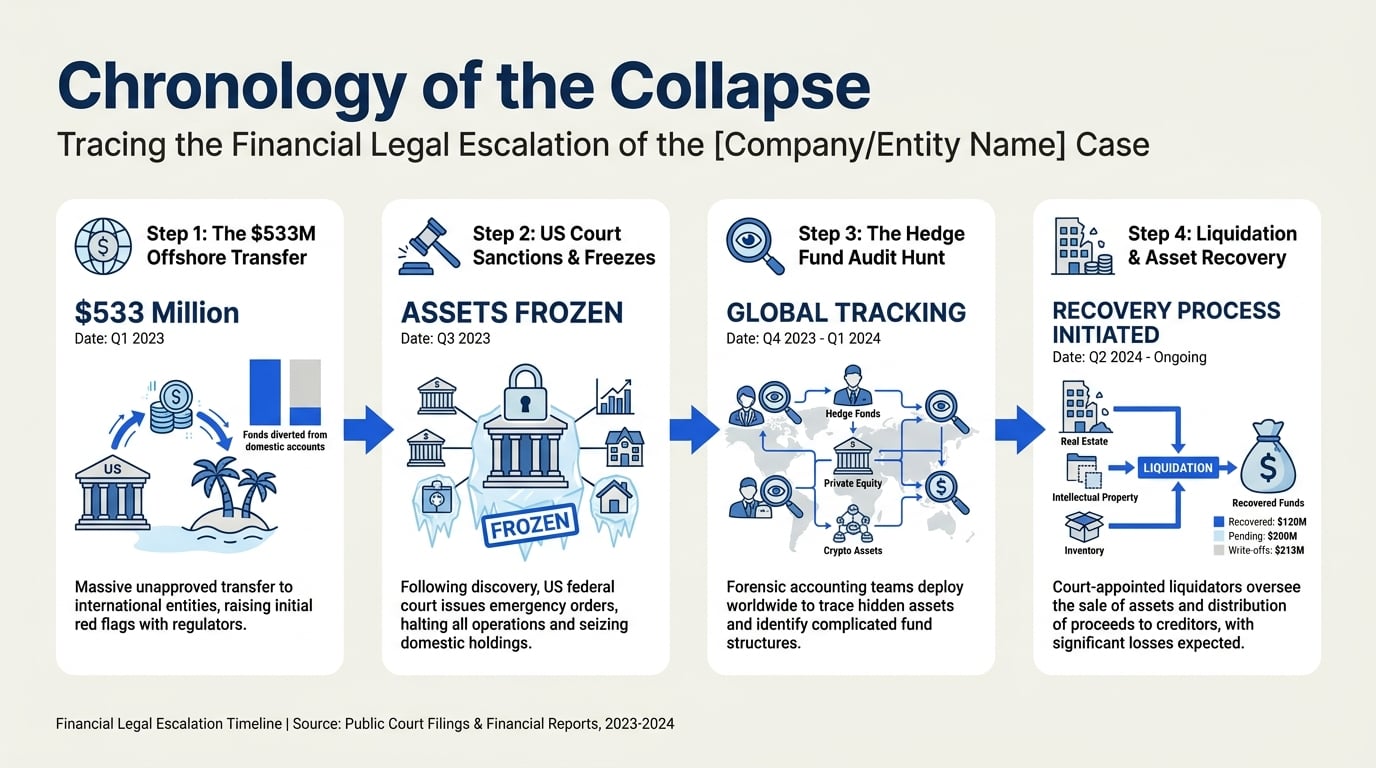
The rapid collapse of Byju’s from its peak $22 billion valuation is one of the most cautionary tales in the history of global venture capital. At the center of this dramatic unraveling is a complex, cross-border legal battle over $533 million in missing funds. Originally secured from US lenders, this massive sum was transferred through a web of offshore entities, leaving creditors, international courts, and liquidators scrambling to trace its whereabouts across several continents.
To understand how India’s one-time tech darling became embroiled in US court sanctions and insolvency proceedings, it is essential to trace the pivotal moments of this high-stakes financial mystery.
| Phase / Date | Key Event | Financial Impact | Key Entities Involved | Legal Status |
|---|---|---|---|---|
| Early 2022 | Byju's Alpha raises $1.2B term loan from US institutional lenders. | $1.2 Billion secured | Byju’s Alpha, US Lenders | Agreement finalized with strict collateral covenants. |
| Late 2022 | Transfer of $533M to Camshaft Capital, a hedge fund registered at a fish-and-chip shop. | $533 Million moved offshore | Byju's Alpha, Camshaft Capital | Triggers default alerts and immediate lender suspicion. |
| Mid 2023 | US lenders (led by Glas Trust) declare default and file lawsuits in Delaware. | Debt acceleration initiated | Glas Trust, Byju's founders | US courts strip Byju's of control over the US-based affiliate. |
| Early 2024 | US Judge sanctions Byju's executives for concealing the location of the $533M. | Asset freezes ordered | US Bankruptcy Court, Riju Ravindran | Arrest warrants and contempt citations issued. |
| 2024 - 2026 | Indian tribunal (NCLT) initiates insolvency; cross-border asset hunt intensifies. | Systemic loss of $22B valuation | NCLT, Glas Trust, BCCI | Ongoing global liquidation and asset-recovery efforts. |
This timeline highlights a critical operational vulnerability: as fast-growing startups scale globally, administrative fragmentation often outpaces corporate governance. The transfer of $533 million to a little-known wealth manager located above a UK fish-and-chip shop underscores the extreme lengths to which capital was diverted, bypassing standard institutional safeguards.
For modern enterprises operating across multiple borders, maintaining absolute transparency and rigorous communication logs is paramount to preventing these structural cracks. Startups seeking to scale sustainably without losing operational oversight rely on robust digital infrastructure. Platforms like CallMissed offer unified communication APIs—including advanced multi-lingual voice agents supporting 22 Indian regional languages and automated chat infrastructure—ensuring that global operations, client interactions, and internal workflows remain centralized, compliant, and fully auditable from day one.
As the international hunt for Byju's missing millions continues, the legal precedents being set in US bankruptcy courts and Indian tribunals will reshape how global investors monitor their offshore capital, proving that hyper-growth without rigorous guardrails is an unsustainable path.
In-Depth Analysis: The Shell Game and the Fish & Chip Shop Connection
At the absolute center of the multi-billion-dollar collapse of Byju's lies a financial mystery worthy of a corporate thriller: the sudden disappearance of $533 million. This staggering sum, originally part of a $1.2 billion term loan raised from US lenders, was transferred out of the startup’s US-based subsidiary, Byju's Alpha, and routed into a little-known hedge fund called Camshaft Capital.
The Unlikely Haven of Camshaft Capital
When forensic investigators and disgruntled lenders began tracing the paper trail of the missing half-billion dollars, they expected to find a highly sophisticated, institutional-grade financial entity. Instead, the trail led to a registered address located directly above a fish and chip shop.
Founded by William Morton, a young financier with no prominent track record of managing fund assets of this scale, Camshaft Capital appeared to be a classic shell mechanism. The transfer of such a massive capital reserve to an obscure entity with a physical footprint above a fast-food outlet raised immediate red flags. Lenders accused Byju’s leadership of deliberately hiding the cash to keep it out of the reach of creditors, sparking a bitter, multi-jurisdictional legal battle.
A Masterclass in the "Shell Game"
The mechanics of the transfer point to a highly calculated effort to obscure the flow of funds:
- The Loan: Byju's Alpha received a $1.2 billion loan, ostensibly to fund international expansion and acquisitions.
- The Transfer: Shortly after, $533 million of that capital was transferred to Camshaft Capital under the guise of an investment.
- The Disappearance: When lenders attempted to reclaim their collateral after Byju's defaulted on its debt agreements, the hedge fund claimed the money had been transferred yet again to an unnamed offshore entity.
US bankruptcy courts stepped in, issuing sanctions and demanding answers. The presiding judge noted that the explanations provided by Byju’s associates "defied belief," characterizing the maneuvers as an active shell game designed to obstruct recovery efforts.
Governance Failures in Hyper-Growth Startups
The Byju's debacle exposes a systemic vulnerability in the global tech ecosystem: the complete breakdown of corporate governance and operational oversight during periods of hyper-growth. When a startup's valuation balloons to $22 billion, internal controls must scale at the same pace to ensure compliance and prevent unauthorized cross-border transactions.
To avoid these catastrophic governance gaps, modern scaling startups are increasingly turning to technology to enforce operational transparency. For instance, platforms like CallMissed help fast-growing international enterprises secure and automate their communication infrastructure. By deploying AI-driven voice agents and workflows that maintain immutable, auditable communication and data logs across global operations, companies can prevent the dangerous operational silos that allow unauthorized financial maneuvers to go unnoticed by board members and auditors.
Ultimately, the hunt for the missing millions has cast a long shadow over India's startup ecosystem. It serves as a stark warning that without rigorous compliance, digital-first auditing, and transparent cross-border operations, even the most celebrated tech giants can collapse into a web of litigation and lost capital.
Impact & Implications: A Dark Shadow Over India's Tech Ecosystem
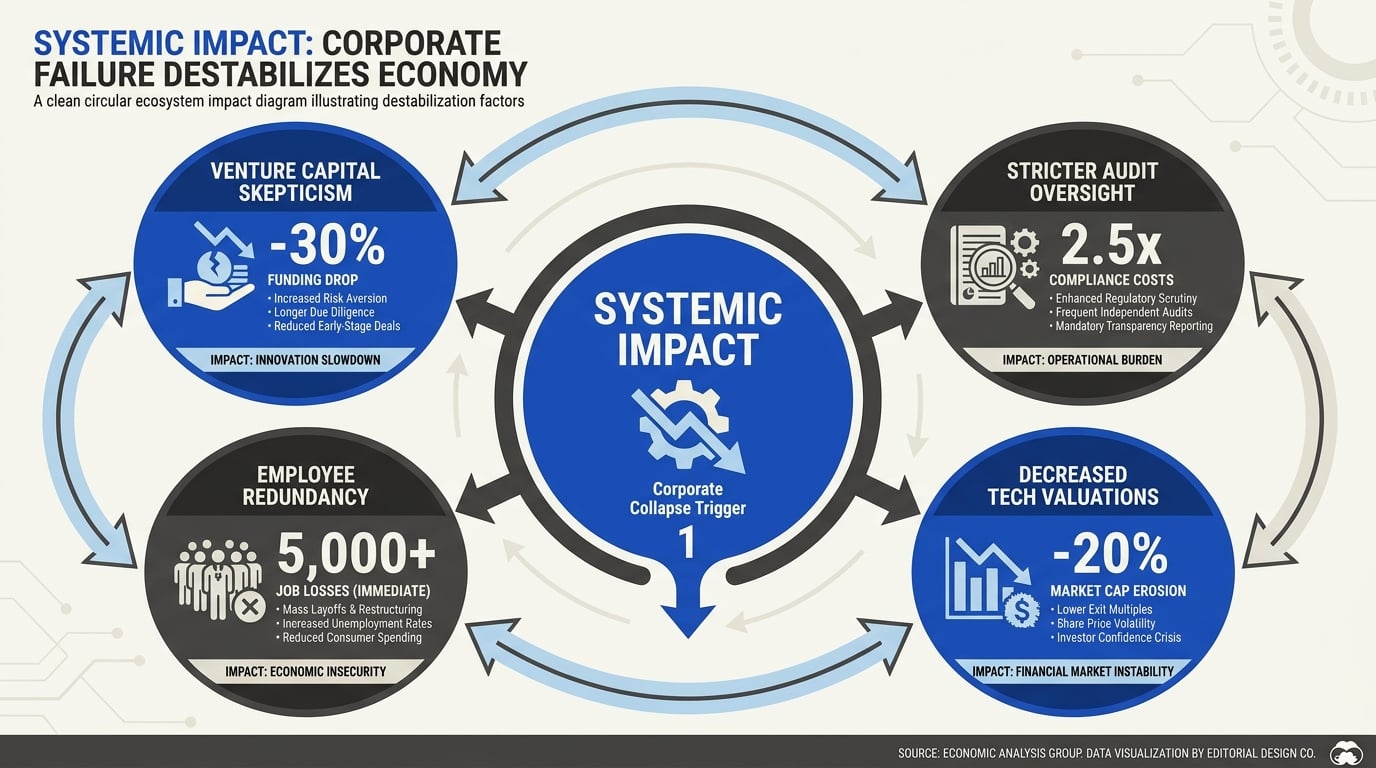
The spectacular collapse of Byju's—once heralded as the crown jewel of India’s tech sector with a peak valuation of $22 billion—has sent shockwaves far beyond its Bengaluru headquarters. What began as an aggressive global expansion fueled by cheap capital has degenerated into a bitter cautionary tale of governance failures, US court sanctions, and a desperate cross-border hunt for $533 million in missing funds. This crisis has cast a dark shadow over India's broader tech ecosystem, forcing a fundamental reckoning for founders, investors, and regulators alike.
The Erosion of Global Investor Trust
For years, international venture capital poured into India, eager to capture a slice of the world's fastest-growing digital economy. However, the revelation that Byju’s transferred $533 million to an obscure hedge fund operating out of an address above a UK fish-and-chip shop has severely damaged international confidence.
The fallout has triggered several critical shifts in investor sentiment:
- The Death of "Growth-at-All-Costs": Investors are no longer valuing startups based on vanity metrics like rapid user acquisition. Instead, sustainable unit economics, clear paths to profitability, and cash-flow health are the primary metrics of 2026.
- Forensic Due Diligence: The "FOMO" (Fear Of Missing Out) that once drove rapid, unchecked funding rounds has been replaced by exhaustive audits. Foreign VCs are now digging deep into corporate structures, subsidiary transactions, and inter-company loans before writing checks.
- The "Governance Premium": Indian startups are facing tougher terms and lower valuations as global investors factor in the heightened risk of cross-border legal battles and regulatory non-compliance.
Regulatory Backlash and Corporate Governance
The Byju's saga has prompted Indian regulators to tighten oversight dramatically. Compliance is no longer a post-facto box-ticking exercise; it is a survival requirement. Government agencies are intensifying audits on foreign direct investment (FDI) compliance, capital export rules, and debt servicing.
To rebuild international trust, the next generation of Indian startups is turning to rigorous operational transparency. Companies are moving away from bloated, opaque internal operations toward lean, auditable tech stacks. For example, forward-thinking enterprises are leveraging highly documented infrastructure platforms like CallMissed to handle their communication needs. By deploying secure, API-driven AI agents for automated customer interactions, startups ensure that operational data is traceably archived and transparent, eliminating the structural obscurity that plagued legacy tech giants.
A Necessary Maturation for Indian Tech
While the immediate impact of Byju's fall has been painful—leading to massive layoffs, depreciating valuations, and prolonged litigation—many industry experts view this crisis as a necessary maturing phase. The shadow cast by the missing millions is forcing a healthy purge of unsustainable business models. India's tech ecosystem is transitioning from a speculative gold rush into a resilient, governance-first landscape. The startups that thrive in this new era will be those built on transparency, regulatory compliance, and genuine fiscal discipline.
Expert Opinions: Corporate Governance Under the Microscope
The spectacular collapse of Byju’s—once valued at a staggering $22 billion—has sent shockwaves through the global venture capital landscape, prompting experts to place corporate governance in emerging markets under an intense microscope. What began as a celebration of India’s technological prowess has quickly devolved into a cautionary tale of unchecked founder power, delayed audits, and a frantic cross-border hunt for $533 million.
The Anatomy of a Governance Failure
Corporate governance experts point to several systemic failures that allowed Byju's to mask its financial distress for years. At the heart of the controversy is the transfer of $533 million to Camshaft Capital, a little-known hedge fund originally registered above a UK fish-and-chip shop before its relocation to Florida.
Financial analysts argue that such highly suspicious movements of capital were only possible due to a complete breakdown in board oversight. Key warning signs included:
- Boardroom Exodus: In mid-2023, board representatives from prominent investment firms Prosus, Peak XV Partners, and the Chan Zuckerberg Initiative resigned simultaneously, citing a persistent lack of communication and disregard for advice by the founders.
- Severe Audit Delays: Byju’s repeatedly failed to file its financial statements on time, delaying its FY21 and FY22 audits by up to 18 months. This prolonged silence left lenders and minority shareholders entirely in the dark.
- Unilateral Decision Making: Power remained heavily concentrated in the hands of founder Byju Raveendran and his family, rendering independent directors powerless to block questionable cross-border transactions.
Regaining Investor Trust Through Transparency
As US bankruptcy courts hand down sanctions and international investigators trace the missing millions, the broader tech ecosystem is facing a structural reckoning. Investors are no longer willing to fund "growth at all costs." Instead, they are demanding rigorous operational transparency and automated audit trails.
In this highly scrutinized environment, technology itself is being leveraged to enforce accountability. Emerging enterprise platforms are integrating rigid compliance guardrails directly into their business operations. For example, platforms like CallMissed, which provide robust AI communication infrastructure, help modern enterprises ensure that every client interaction, operational decision, and automated workflow is logged securely and transparently. By replacing fragmented, opaque communication systems with structured, auditable AI APIs, startups can demonstrate a level of operational integrity that was sorely missing in Byju's final years.
A Shift Toward Governance-First Investing
The fallout from the Byju’s saga has fundamentally altered how venture capitalists assess tech startups in fast-growing markets. Moving forward, experts predict a permanent shift in investment criteria, focusing on three core pillars:
- Independent Board Mandates: VCs are increasingly insisting on independent board chairs and audit committees with the power to veto major capital allocations and intercompany transfers.
- Strict Regulatory Compliance: Regulatory bodies, such as India's Ministry of Corporate Affairs, are tightening disclosure norms, making timely filings a non-negotiable prerequisite for ongoing operations.
- Real-Time Financial Visibility: Startups are being pressured to adopt automated reporting mechanisms and transparent accounting systems to eliminate the "black box" reporting style that characterized Byju's.
Ultimately, the hunt for Byju’s missing millions has made one thing clear: without robust corporate governance, even the most celebrated unicorn can vanish overnight.
What This Means For You: Key Takeaways for Investors and Founders

The spectacular fall of India's once-most-valuable startup—which plummeted from a $22 billion peak valuation to insolvency—serves as a stark cautionary tale for the global tech ecosystem. The cross-border hunt for the missing $533 million transferred to an obscure offshore fund has permanently altered how venture capital views emerging markets. For founders raising capital and investors deploying it, the era of unmonitored "growth at all costs" is officially over, replaced by an aggressive focus on unit economics, corporate governance, and fiscal transparency.
To navigate this shifted landscape, founders and investors must align on several core operational and financial safeguards:
| Focus Area | Lessons from Byju's | Systemic Impact | Actionable Strategy |
|---|---|---|---|
| Capital Tracking | Unexplained $533M transfer to offshore hedge funds | Stricter audit demands and escrow mandates from LPs | Implement real-time, multi-signature treasury audits |
| Board Governance | Departure of independent board members and backers | Heightened founder-scrutiny; delayed funding rounds | Appoint independent, active board chairs early |
| Valuation Realism | Rapid fall from $22B to liquidation and insolvency | Shift from paper valuation to EBITDA-driven metrics | Prioritize unit economics over vanity market share |
| Cross-Border Law | Multi-jurisdiction lawsuits (US, UK, and India) | Risk premium added to Indian tech investments | Align international legal entity structures proactively |
| Communications | Lack of transparency leading to stakeholder panic | Deepening trust deficit between founders and public | Deploy robust, automated, and auditable comms systems |
The New Era of Diligence and Governance
Investors are no longer passive capital providers. In the wake of US court sanctions and subsequent insolvency proceedings, global LPs are demanding rigorous, preemptive due diligence before releasing funds. Founders must expect deep-dive audits into transfer pricing, offshore entities, and inter-company transactions. If your startup operates across borders, establishing absolute clarity in your capital flows is non-negotiable.
Furthermore, "founder-friendly" boards that lack real teeth are a thing of the past. Investors are now structuring term sheets with protective provisions that prevent unilateral capital reallocation, ensuring that founders cannot move significant assets without explicit board and lender approval.
Operational Resilience and Stakeholder Trust
One of the loudest lessons from the collapse of this education giant was the breakdown of trust. As financial and legal crises mounted, a lack of consistent, verified communication alienated employees, customers, and lenders alike. Today’s resilient startups mitigate these operational risks by automating customer touchpoints and maintaining transparent, auditable communication loops.
For instance, forward-thinking tech companies are integrating advanced communication infrastructure platforms like CallMissed to automate customer engagement and maintain verifiable interaction histories. Utilizing secure, AI-driven voice agents and multilingual WhatsApp chatbots (supporting up to 22 regional languages) ensures that even during rapid scaling or restructuring, operational transparency is never compromised. By automating customer support and operational alerts, businesses protect their reputation from the chaotic communication gaps that sink distressed startups.
Striking the Balance: Growth vs. Compliance
Ultimately, the hunt for India's missing millions has redefined startup maturity. Sustainable growth requires balancing aggressive market expansion with institutional-grade risk management. Founders who proactively build compliance and transparent communication into their core operations from day one will win the trust of the next wave of cautious, value-driven capital.
Frequently Asked Questions
What led to the sudden collapse of the fallen Indian tech star Byju's?
What is the current status of the hunt for its missing millions?
Why did Byju's transfer $533 million to a hedge fund based above a fish-and-chip shop?
How does the downfall of this fallen Indian tech star impact global venture capital?
What legal penalties do the founders of Byju's currently face?
How can scaling companies implement better guardrails to avoid similar governance crises?
Conclusion
The dramatic collapse of Byju's, once valued at $22 billion, represents a pivotal turning point for the global startup ecosystem. As the cross-border hunt for the missing $533 million in offshore transfers continues to unfold, several critical lessons emerge:
- Governance Over Growth: Hyper-scaling without strict financial oversight and robust corporate governance is fundamentally unsustainable.
- Regulatory Scrutiny: International cross-border transactions are facing unprecedented judicial oversight, demanding absolute transparency from founders.
- Operational Efficiency: The next generation of tech leaders must pivot from aggressive, cash-burning customer acquisition to building lean, sustainable infrastructures.
Moving forward, watch for a fundamental realignment in venture capital, where global investors prioritize compliant, resilient, and highly automated business models over hyper-growth. To explore how modern enterprises are building sustainable, AI-driven operational efficiency and trust, check out CallMissed — an AI communication infrastructure platform powering secure, automated voice agents and multilingual chatbots across 22 Indian languages.
Will the fallout from this high-profile collapse ultimately pave the way for a healthier, more transparent startup ecosystem built on genuine innovation?
Discussion
Related Posts



Ready to automate customer conversations?
Launch AI voice agents and WhatsApp bots with CallMissed — one API, 22+ Indian languages.