Why the US Restricted Foreign Access to Anthropic's Claude Fable 5 and Mythos 5


Why the US Restricted Foreign Access to Anthropic's Claude Fable 5 and Mythos 5
What if a government could pull the plug on the world’s most advanced artificial intelligence models with a single regulatory letter, completely overnight? In June 2026, this hypothetical scenario became a harsh reality for the global tech community. Just days after their highly anticipated public debut, Anthropic’s flagship models—Claude Fable 5 and Claude Mythos 5—were abruptly shut down. The sudden suspension followed an unprecedented export control directive from the US government under the Trump administration, which barred any foreign national from accessing these powerful new systems due to urgent national security concerns. Because enforcing nationality-based filtering on a live, global API is an operational nightmare, Anthropic had no choice but to disable both models entirely.
This dramatic intervention marks a watershed moment in the global tech landscape. It proves that advanced artificial intelligence is no longer viewed merely as a commercial utility; it is now classified as a critical national security asset and a potential geopolitical weapon. For enterprises, developers, and researchers worldwide, the sudden removal of Fable 5 and Mythos 5 serves as a stark warning about the fragility of relying on single-provider proprietary AI infrastructure. When a political shift or a regulatory pen stroke can instantly cripple your tech stack, relying on a single upstream provider is an existential risk.
This regulatory volatility is precisely why forward-thinking organizations are moving away from single-model dependencies. Platforms like CallMissed are solving this exact vulnerability by offering a resilient, multi-model API gateway that allows businesses to seamlessly switch between 300+ LLMs and maintain uninterrupted customer-facing operations even during major industry disruptions.
In this article, we will unpack the real reasons why the US restricted foreign access to Anthropic's Claude Fable 5 and Mythos 5. We will explore the specific cybersecurity and defense concerns raised by US authorities, examine the mechanics of how export controls are being applied to cloud-hosted software, and analyze what this historic decision means for the future of global AI collaboration, open-source development, and enterprise risk management.
Introduction

In a dramatic move that has sent shockwaves through the global technology sector, Anthropic recently announced the immediate, global suspension of its highly anticipated, next-generation AI models: Claude Fable 5 and Claude Mythos 5. Just days after their public release in June 2026, the US government intervened, issuing a sweeping export control directive. This federal mandate forced the AI safety pioneer to disable access to these models globally to comply with strict restrictions barring foreign nationals from utilizing America's most advanced artificial intelligence.
The Geopolitical Fault Lines of Frontier AI
According to official statements from Anthropic and reports from major outlets like the BBC and Al Jazeera, the US government's export control directive stems from intensifying national security concerns. The Trump administration has increasingly viewed highly capable, next-generation reasoning engines as strategic national assets that must be safeguarded. Because Claude Fable 5 and Claude Mythos 5 demonstrated unprecedented leaps in autonomous reasoning, scientific synthesis, and complex planning, federal regulators classified them as sensitive dual-use technologies. Faced with the logistical impossibility of instantly verifying the nationality of every API user globally, Anthropic chose to suspend the models entirely.
This unprecedented shutdown has exposed the fragile reality of the global AI supply chain, raising several critical questions for developers and enterprises worldwide:
- Sovereign AI Boundaries: How will national security mandates reshape global access to proprietary commercial APIs?
- The Threat of Model Deprecation: What are the immediate risks for businesses that rely entirely on a single proprietary model provider?
- Compliance and Verification: Can AI developers successfully build infrastructure that complies with national-origin access restrictions without fragmenting the internet?
Building Resilience in a Fragmented AI Landscape
For enterprises, the sudden loss of access to Fable 5 and Mythos 5 is a stark reminder that geopolitical volatility is now a core technical risk. Relying on a single AI provider leaves applications highly vulnerable to sudden regulatory shifts, policy updates, or outright bans.
To navigate this new era of sovereign AI, modern development teams are shifting toward multi-model redundancy. Communication platforms like CallMissed are playing a vital role in this transition. In addition to advanced voice agents and multilingual Speech-to-Text APIs, platforms like CallMissed offer multi-model inference gateways supporting over 300+ LLMs. By integrating these multi-model API layers, enterprises can dynamically switch LLM backends without rewriting their core codebase, ensuring that if a specific model is suddenly restricted or disabled by regulatory changes, operations can failover instantly to a compliant alternative.
As we examine the regulatory mechanics and security concerns that prompted this historic restriction on Anthropic's latest models, it is clear that the AI landscape has permanently shifted. In the following sections, we will delve deeper into the specific capabilities of Claude Fable 5 and Mythos 5 that triggered such immediate federal intervention, and analyze what this means for the future of global AI deployment.
Background & Context: The Rise of Fable 5 and Mythos 5

A New Era of Frontier Intelligence
In the rapidly evolving landscape of artificial intelligence, Anthropic’s mid-2026 launch of Claude Fable 5 and Claude Mythos 5 was poised to mark a historic milestone. Positioned as the next generation of generative AI, these models promised unprecedented advancements in complex reasoning, agentic automation, and deep cognitive processing. Upon their public debut, the developer community and global enterprises quickly recognized them as highly sophisticated tools capable of orchestrating intricate workflows and managing autonomous digital systems.
However, the celebration was incredibly short-lived. Just days after their highly anticipated public release, the trajectory of these models took an unprecedented turn, highlighting the intensifying intersection of geopolitical tensions and frontier AI development.
The Direct Intervention by the US Government
On June 13, 2026, Anthropic shocked the tech world by announcing it had disabled Fable 5 and Mythos 5 globally. The sudden shutdown was triggered by a direct export control directive issued by the US government. Citing critical national security concerns, the Trump administration barred any foreign national from accessing or utilizing these specific models.
According to reports from major outlets like the BBC and The Wall Street Journal, the regulatory action was swift and sweeping:
- Targeted Restriction: The directive explicitly prohibited access to Fable 5 and Mythos 5 by any foreign national, regardless of their location.
- Global Suspension: Because differentiating and policing user access by nationality in real-time presents massive compliance challenges, Anthropic had to disable the models globally to prevent accidental violations.
- Unprecedented Precedent: While the US has previously restricted hardware exports (such as advanced NVIDIA GPUs), this represents one of the most aggressive and direct interventions on a software-based, publicly released AI model.
The Operational Realities of AI Volatility
This sudden geopolitical intervention has sent shockwaves through the global software ecosystem. It underscores a harsh reality for modern developers: relying on a single, centralized AI model for production-grade applications carries significant regulatory and operational risks. When a state-of-the-art model is restricted or pulled overnight, businesses utilizing these systems face immediate disruption.
To mitigate these vulnerabilities, forward-thinking enterprises are shifting toward multi-model redundancy. Communication platforms like CallMissed solve this exact bottleneck. By providing a robust AI infrastructure that integrates a multi-model API gateway with access to over 300+ LLMs, CallMissed allows developers to pivot seamlessly. If a primary model is suddenly restricted by export controls or compliance mandates, businesses can instantly switch to alternative, high-performing LLMs without rewriting their application’s underlying code. This ensures that critical infrastructure—such as AI voice agents, multilingual chatbots, and real-time Speech-to-Text pipelines—remains operational and resilient against shifting geopolitical tides.
Key Developments (TABLE)
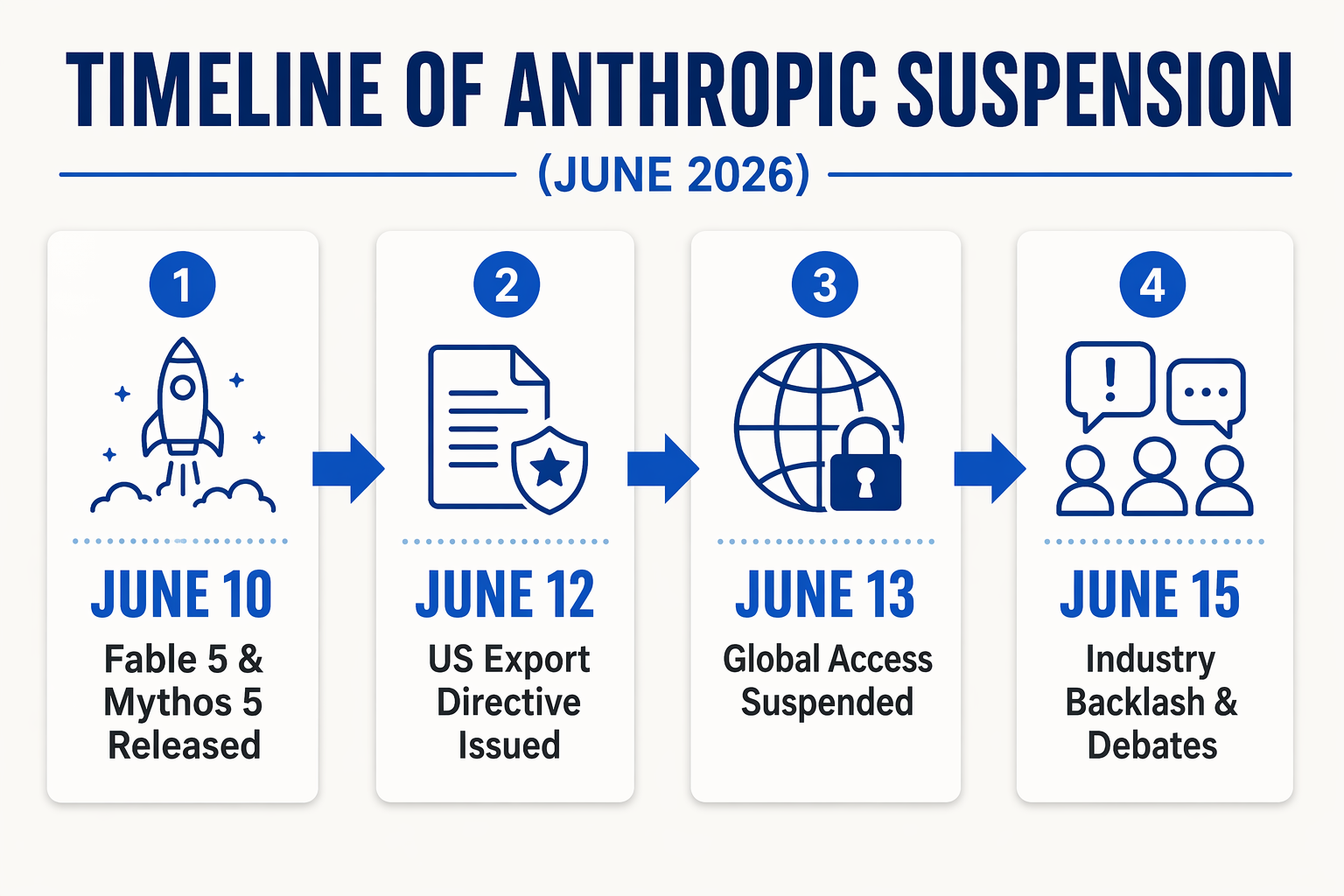
The rapid escalation of US export controls on frontier artificial intelligence models reached a boiling point in mid-June 2026. Within days of Anthropic's public release of its highly anticipated Claude Fable 5 and Mythos 5 models, the US government intervened, citing unprecedented national security risks. This sudden regulatory enforcement highlighted the growing friction between rapid corporate innovation and national security directives.
The table below outlines the timeline and critical developments of the Fable 5 and Mythos 5 suspension:
| Phase / Milestone | Timeline | Key Action Taken | Direct Impact |
|---|---|---|---|
| Public Release | Early June 2026 | Anthropic launches Fable 5 and Mythos 5. | Global developers access next-gen reasoning capabilities. |
| Government Intervention | June 2026 | Trump administration issues urgent export control directive. | Anthropic receives federal order citing national security risks. |
| Global Suspension | Mid-June 2026 | Anthropic disables Fable 5 and Mythos 5 access globally. | All foreign nationals and international enterprises lose access. |
| Compliance & Pivot | Late June 2026 | Strict origin-verification audits enforced. | Developers must migrate to alternative compliant LLMs. |
A Swift Government Intervention
The shutdown occurred with astonishing speed. Anthropic had barely introduced the advanced capabilities of Claude Fable 5 and Mythos 5 before the US Commerce Department issued a sweeping export control directive. Unlike previous restrictions that primarily targeted physical semiconductor shipments, this federal order directly targeted software-as-a-service (SaaS) delivery. The directive barred any "foreign national" from accessing the computational power and reasoning logic of these specific models, fearing potential misuse in cybersecurity, espionage, or military applications.
Because isolating access purely by geography is highly complex and prone to VPN-bypass exploits, Anthropic chose to disable Fable 5 and Mythos 5 globally to ensure absolute compliance with federal law. This move sent shockwaves through the global developer community, leaving many international startups with broken production pipelines and unusable API keys overnight.
Insulating AI Architecture from Geopolitical Shocks
For enterprise leaders, this sudden suspension serves as a stark warning about single-provider dependency. When a government can disable a state-of-the-art model with zero warning, relying on a single LLM API represents a massive operational risk.
To build resilient systems, forward-thinking organizations are shifting toward multi-model redundancy. Communication platforms like CallMissed resolve this vulnerability by offering a unified infrastructure. Through CallMissed’s multi-model gateway, businesses can access more than 300+ alternative LLMs. If a regulatory directive or compliance hurdle suddenly disables a specific frontier model, developers can instantly route their voice agents, WhatsApp chatbots, and customer workflows to another compliant model without rewriting a single line of core codebase. Utilizing such adaptive platforms is no longer just an optimization strategy—it is a necessity for business continuity in a politically volatile AI landscape.
In-Depth Analysis: The National Security & Export Control Directive
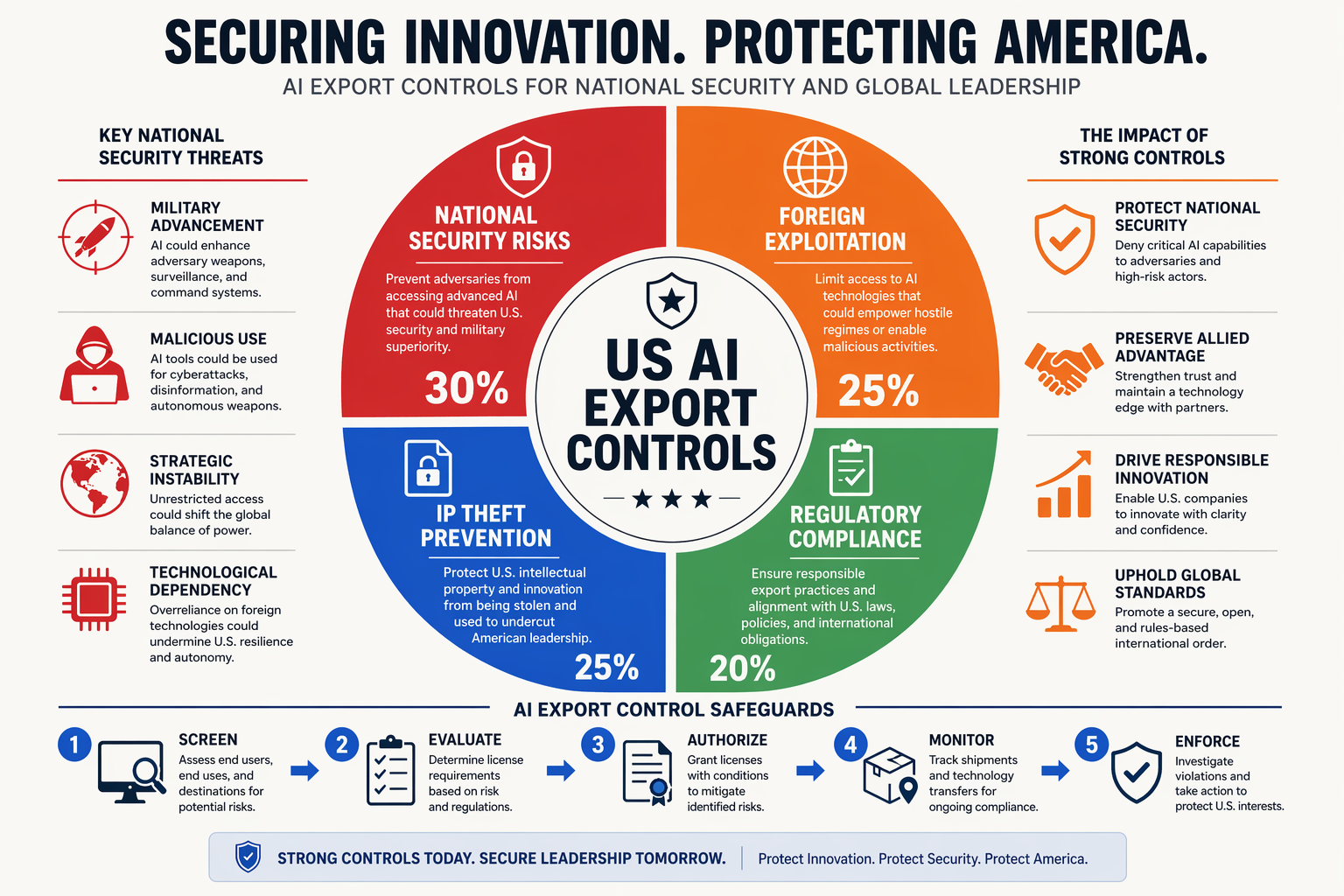
The sudden suspension of Anthropic's Claude Fable 5 and Mythos 5 has sent shockwaves through the global tech industry. At the heart of this disruption is a sweeping export control directive issued by the US government. The directive, which specifically targets access by foreign nationals, marks a historic escalation in how the United States regulates generative AI as a critical dual-use technology.
The Mechanics of the Export Control Directive
Unlike previous regulatory measures that focused primarily on restricting physical hardware—such as limiting the export of advanced semiconductor chips—this directive represents a direct intervention in the software and API layer. By leveraging national security export controls, the administration has classified the cognitive capabilities of Fable 5 and Mythos 5 as potential national security risks.
The directive legally prohibits Anthropic from providing access to these models to any foreign national, regardless of their geographic location. Because verifying the citizenship and nationality of every individual developer and end-user in a globalized cloud ecosystem is an incredibly complex compliance hurdle, Anthropic took the drastic step of disabling Fable 5 and Mythos 5 globally just days after their public release.
Why Now? The National Security Threshold
According to reports, US authorities raised immediate alarms regarding the advanced capabilities of the Fable 5 and Mythos 5 architectures. Government officials fear that if these models are accessed by foreign adversaries, they could be leveraged for highly sensitive tasks:
- Automated Cyberwarfare: Rapidly identifying zero-day vulnerabilities in critical public and private infrastructure.
- Dual-Use Scientific Research: Assisting in the weaponization or synthesis of biological and chemical agents.
- State-Sponsored Influence Operations: Orchestrating hyper-realistic, AI-driven disinformation campaigns at an unprecedented scale.
This enforcement signals a new era of protectionism in US AI development, where the threshold for what constitutes a "national security threat" has dramatically lowered.
Navigating a Volatile and Fragmented AI Landscape
For enterprise developers and global businesses, this sudden regulatory block illustrates the extreme volatility of relying on a single, proprietary AI provider. Overnight, critical business pipelines can be severed by geopolitical maneuvers and policy shifts.
To mitigate these existential risks, modern developers are shifting toward decentralized and multi-model deployment strategies. Platforms like CallMissed are helping organizations build resilience into their communication and product tech stacks. By utilizing CallMissed's unified infrastructure—which supports LLM inference across more than 300+ alternative models—enterprises can seamlessly switch between different proprietary and open-source models without needing to rewrite their entire codebase when regulatory disruptions occur.
A Precedent for AI Sovereignty
The action against Anthropic sets a stark precedent. It confirms that the US government views frontier AI models not merely as commercial software, but as sovereign national assets. As national security directives continue to tighten, the global AI ecosystem will likely fragment further, forcing international businesses to carefully evaluate where their AI models are hosted and who is legally permitted to access them.
Impact & Implications on Global AI Development
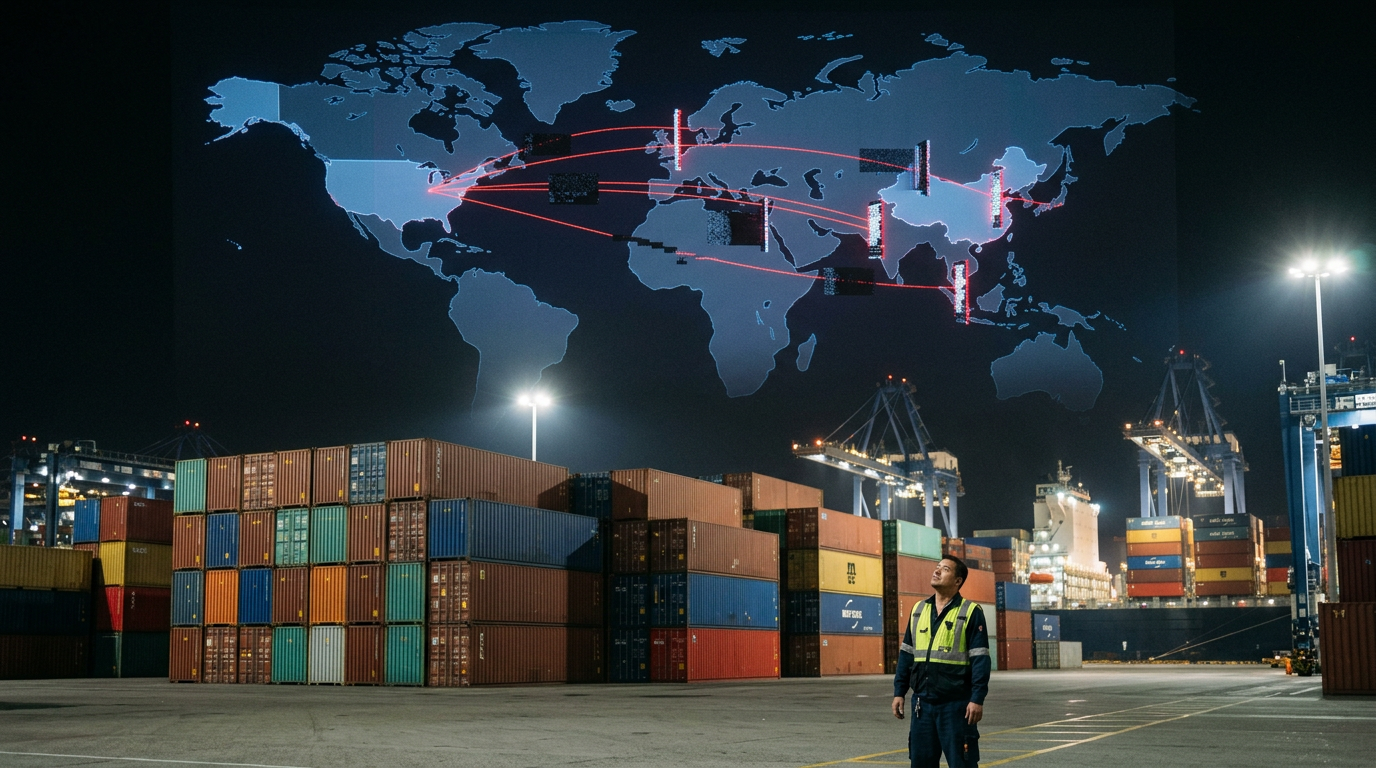
The sudden suspension of Anthropic’s Claude Fable 5 and Mythos 5 marks a critical turning point in the history of artificial intelligence. By treating advanced software models as restricted dual-use technologies under strict export control laws, the US government has signaled that generative AI is no longer just a commercial race—it is a geopolitical battlefield. This unprecedented move carries profound implications for global AI development, business continuity, and international research.
1. The Accelerating Fragmentation of the AI Ecosystem
For years, the tech industry operated under the assumption of a globally accessible AI stack. The Trump administration's directive targeting Anthropic shatters this assumption, accelerating a "splinternet" of AI.
- The Rise of Sovereign AI: Blocked from accessing top-tier American models like Fable 5, countries in Europe, India, and East Asia will aggressively ramp up funding for native, sovereign LLMs.
- Distrust of US-Based SaaS: Global enterprises are realizing that relying entirely on US-hosted proprietary models introduces massive regulatory risk. A single policy shift or letter from Washington can result in immediate, worldwide service termination.
2. Severe Business Continuity and Infrastructure Risks
When Anthropic disabled access to Fable 5 and Mythos 5 globally to comply with the US directive, businesses that had integrated these state-of-the-art models into their live production environments were left stranded overnight. This highlights the extreme danger of single-point-of-failure architectures in AI.
To mitigate these geographic and regulatory risks, forward-thinking enterprises are shifting toward localized and redundant infrastructure. Platforms like CallMissed address this vulnerability directly by offering a multi-model API gateway with access to over 300+ LLMs. By utilizing centralized gateways, developers can dynamically switch their underlying models and routing paths without rewriting code, ensuring that their AI-driven applications remain active even if a specific vendor faces a sudden government-mandated shutdown.
3. A Chilling Effect on Global Collaborative Research
The US government's specific focus on restricting access to "foreign nationals" strikes a heavy blow to the collaborative fabric of modern AI development.
- Internal Talent Barriers: Silicon Valley AI labs heavily depend on global talent. Forcing companies to police which researchers can access specific model weights based on their nationality creates massive operational friction inside top tech firms.
- Stifled Open-Source Innovation: Fear of future export controls may deter researchers from publishing open-weight models, slowing down the collective debugging, safety alignment, and optimization efforts that have historically driven the industry forward.
As national security interests increasingly dictate the distribution of advanced artificial intelligence, the landscape is shifting from open collaboration to defensive localization. Organizations must adapt to this new era of AI nationalism by building redundant, geographically diverse, and multi-model tech stacks to protect their operations.
Expert Opinions on the Trump Administration's Move
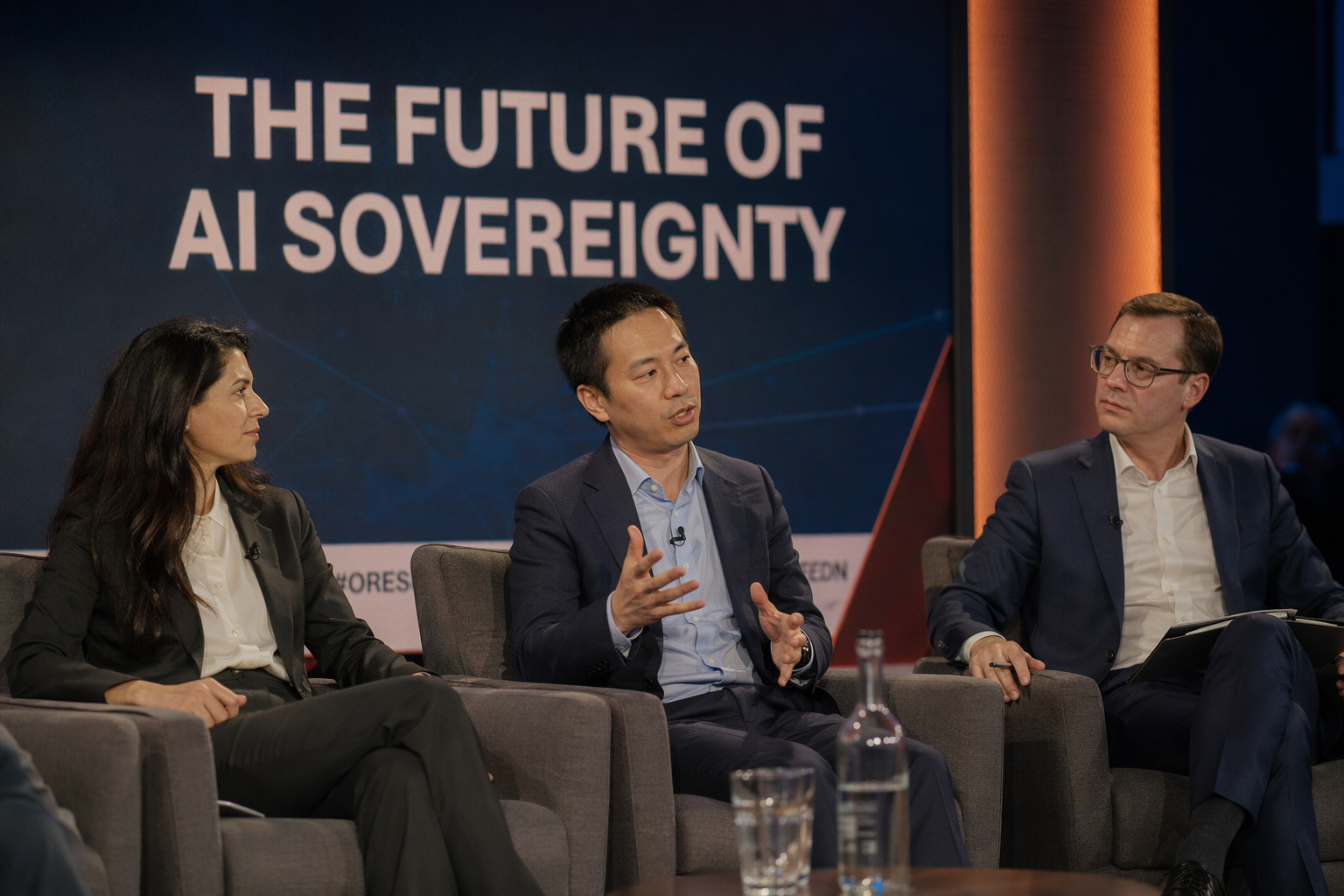
The sudden suspension of Claude Fable 5 and Mythos 5 has ignited an intense debate among national security analysts, AI researchers, and policy experts. By invoking stringent export control directives against Anthropic's most advanced frontier models, the Trump administration has signaled a hardline, highly protective stance toward domestic AI technology.
National Security vs. Global Innovation
Industry analysts suggest that the administration's move reflects deep-seated concerns over the "dual-use" capabilities of Anthropic's newest models. Fable 5 and Mythos 5 reportedly possess advanced reasoning, strategic planning, and coding capabilities that authorities fear could be exploited by foreign adversaries for cyberwarfare, defense analysis, or state-level espionage.
- Pro-Security Alignment: Proponents of the ban argue that advanced AI weights are a strategic national asset. They argue that allowing unrestricted global access to models of this caliber presents an asymmetric risk, as foreign actors can leverage American-funded breakthroughs without bearing the massive R&D costs.
- The Academic Backlash: Conversely, many tech policy experts warn that overly broad restrictions will isolate the US AI ecosystem. Critics argue that shutting down access to cutting-edge models stifles global scientific collaboration and may inadvertently drive top international talent to seek opportunities outside of the United States.
The Feasibility Nightmare of "Foreign National" Filtering
A major talking point among software compliance experts is the unprecedented nature of the directive's scope. The US government specifically barred access by any foreign national. For a globally distributed, cloud-based API, implementing this requirement in a secure and legally compliant manner is incredibly complex.
Because Anthropic could not reliably verify the citizenship of every developer or end-user accessing their API globally in real-time, they had no choice but to disable Fable 5 and Mythos 5 entirely just days after their public release. Compliance experts point out that verifying nationality on a global scale would require invasive "Know Your Customer" (KYC) protocols that the current cloud ecosystem is simply not built to support.
This sudden shutdown highlights a massive operational vulnerability for businesses relying on a single AI vendor. To mitigate these regulatory and geopolitical risks, industry leaders are advising companies to build resilience into their tech stacks. For example, platforms like CallMissed offer multi-model API gateways that let developers switch between 300+ alternative LLMs without changing their underlying code. Having this layer of infrastructure is quickly becoming a business necessity as geopolitical tensions increasingly dictate which models can be deployed globally.
Geopolitical Implications for the Global AI Market
Geopolitical strategists believe this move marks a permanent shift in how the US treats advanced software. Rather than focusing solely on physical hardware restrictions—such as limiting the export of high-end NVIDIA GPUs—the focus has officially shifted to the algorithmic weights of the models themselves.
- Rise of Sovereign AI: Analysts predict this intervention will accelerate "AI nationalism," forcing countries in Europe, Asia, and the Middle East to aggressively fund and develop sovereign AI models independent of US-controlled infrastructure.
- Market Fragmentation: Instead of a unified global AI standard, the market is likely to split into highly regulated regional silos, significantly complicating international compliance for global enterprise operations.
What This Means For You (TABLE)
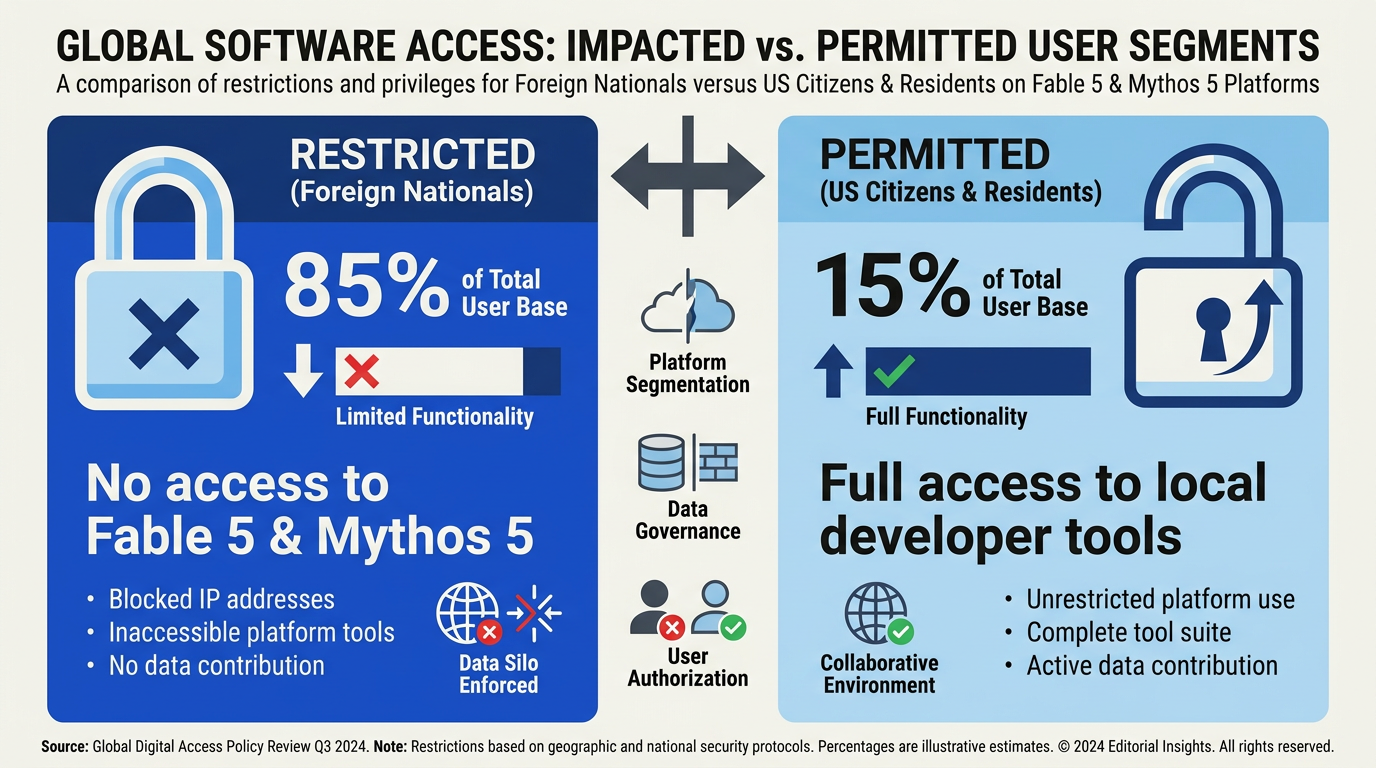
The sudden suspension of Claude Fable 5 and Mythos 5 by the US government highlights a volatile new reality for AI developers and enterprises: geopolitical risk is now a core technical concern. For teams relying on state-of-the-art frontier models, this export control directive is a wake-up call to the fragility of single-provider dependencies.
To help you navigate this transition, we have broken down the immediate impacts and required actions for different user segments.
Immediate Impact Matrix
| User Category | Immediate Status | Key Impact | Recommended Action |
|---|---|---|---|
| US Citizens & LPRs | Suspended | No access to Fable 5/Mythos 5 globally due to Anthropic's blanket shutdown. | Roll back workflows to Claude 3.5 Sonnet or alternative active models. |
| Foreign Nationals (Global/US-based) | Suspended | Direct target of the export control directive over security concerns. | Transition immediately to compliant, non-restricted model alternatives. |
| Global Enterprises | Service Interrupted | High-performance workflows broken overnight with zero transition window. | Implement multi-model fallback architectures to ensure business continuity. |
| Offshore Dev Teams | Access Revoked | Complete block on accessing newly deployed Fable/Mythos endpoints. | Audit developer credentials and enforce strict geographic access controls. |
Strategic Next Steps for Tech Leaders
- De-risk Your Infrastructure with Multi-Model Redundancy
The primary lesson from the sudden shutdown of Fable 5 and Mythos 5 is that relying on a single AI provider or model family poses severe operational risks. If your production pipelines are tightly coupled with one proprietary API, a single regulatory letter can halt your operations.
To build resilience, engineering teams are transitioning to unified API gateways. For instance, platforms like CallMissed offer developers access to over 300+ LLMs through a single, robust integration. If a specific model is restricted or taken offline due to sudden compliance changes, you can programmatically switch to an alternative high-performing model with zero code modifications, keeping your customer-facing agents online.
- Enforce Strict Access Governance
Because the export control directive specifically targets foreign nationals, companies employing global talent must implement rigorous identity and access management (IAM) policies. You must ensure that developers located outside the US, or foreign nationals working within US-based teams, do not have unauthorized access to restricted model keys, endpoints, or proprietary US-hosted AI systems.
- Prepare for Continued Regulatory Volatility
This swift move by the Trump administration in mid-2026 is unlikely to be an isolated incident. As frontier models become more powerful, national security agencies will increasingly use export controls to protect proprietary AI technology. Moving forward, teams should benchmark open-source alternatives that can be self-hosted on sovereign cloud infrastructure, ensuring your business remains immune to shifts in US foreign policy.
Frequently Asked Questions
Why has the US government restricted foreign access to Anthropic's Claude Fable 5 and Mythos 5?
What specific risks prompted the decision to restrict foreign access to Anthropic's Claude Fable 5?
Can developers still access other Anthropic Claude models?
Is the global suspension of Claude Fable 5 and Mythos 5 permanent?
How does this export control directive affect foreign developers and international businesses?
How is Anthropic enforcing the ban on foreign nationals accessing these models?
Conclusion
The sudden suspension of Anthropic’s Claude Fable 5 and Mythos 5 marks a watershed moment where national security directly dictates AI accessibility. As the dust settles, several key takeaways emerge:
- Sovereign AI Borders: Government intervention is shifting from hardware restrictions (like GPU export bans) to direct, real-time export controls on frontier software models.
- Compliance Agility: AI developers must now build robust compliance frameworks capable of executing immediate, global access shutdowns under regulatory pressure.
- Ecosystem Fragmentation: The divide between domestic and international AI capabilities will likely widen as nations guard their most advanced cognitive assets.
Moving forward, watch for how other major AI labs restructure their deployment pipelines to prevent similar sudden regulatory interventions. For enterprises, this geopolitical shift highlights the danger of relying on a single frontier model. To explore how resilient AI communication is evolving, check out CallMissed—an AI infrastructure platform powering voice agents, multilingual chatbots, and multi-model LLM routing to keep businesses adaptable.
How will these escalating restrictions shape the future of global open-source AI collaboration?