

Trump Administration Asks OpenAI to Stagger GPT-5.6 Release: What It Means for AI Security



Trump Administration Asks OpenAI to Stagger GPT-5.6 Release: What It Means for AI Security
For the first time in the history of consumer artificial intelligence, the United States government is stepping directly onto the deployment pipeline of a flagship large language model. Following breaking reports, the Trump Administration Asks OpenAI to Stagger GPT-5.6 Release, marking a historic shift in how frontier AI is regulated and distributed. Rather than the traditional broad public rollouts we have grown accustomed to, OpenAI CEO Sam Altman reportedly informed staff that the highly anticipated GPT-5.6 model will instead launch in a highly restricted, limited preview.
Why is the White House intervening now? According to reports from The Information and Axios, federal officials are deeply concerned that the raw cognitive and coding capabilities of GPT-5.6 could breach existing cybersecurity defenses, potentially arming bad actors with unprecedented offensive digital capabilities. Under this new directive, the government will audit and approve access to the model on an unprecedented customer-by-customer basis, restricting early utilization to a small, vetted circle of government-approved partners.
This sudden intervention signals that the era of friction-free AI deployment is coming to a close, replaced by a landscape where national security and state oversight dictate software access. For enterprises and developers who have built their roadmaps around the immediate availability of frontier LLMs, this regulatory bottleneck presents a massive operational challenge. As geopolitical and security constraints begin to restrict access to top-tier models, platforms like CallMissed are becoming essential, offering a multi-model API gateway that allows businesses to seamlessly switch between over 300 alternative LLMs without disrupting their infrastructure.
In this post, we will unpack the specific cybersecurity threats that prompted this federal intervention, explore how OpenAI’s highly unusual customer-by-customer vetting process will operate, and analyze what the gated rollout of GPT-5.6 means for the future of global AI development.
Introduction: The Trump Administration Intervenes in GPT-5.6 Launch

A Historic Shift in AI Governance
For the first time in the history of consumer artificial intelligence, the United States government has stepped directly onto the deployment pipeline of a flagship large language model. On June 25, 2026, reports from The Information and Axios revealed that the Trump administration has asked OpenAI to stagger and limit the release of its highly anticipated next-generation model, GPT-5.6, over escalating national security concerns.
Rather than the immediate, broad public rollouts that have defined the generative AI boom, OpenAI is pivoting to a highly restricted release strategy. During an internal company Q&A, OpenAI CEO Sam Altman reportedly informed staff that GPT-5.6 will launch as a limited preview, with the federal government actively approving access on an unprecedented customer-by-customer basis. This highly unusual, gated approach restricts early utilization to a small, vetted circle of government-approved partners.
Why the White House Intervened
The primary driver behind this dramatic intervention is the sheer capability jump of the new model. According to sources familiar with the matter, federal officials are deeply concerned that GPT-5.6's advanced reasoning and automated coding capabilities could:
- Breach existing cybersecurity defenses: The model's offensive coding capacity could allow malicious actors to identify and exploit zero-day vulnerabilities at scale.
- Bypass current digital guardrails: Traditional automated safety filters are increasingly insufficient against the autonomous planning capabilities of frontier LLMs.
- Exacerbate geopolitical tensions: Unrestricted access to such powerful cognitive tools poses an immediate threat if leveraged by foreign adversaries to compromise critical infrastructure.
Navigating the New Era of Gated AI
This sudden intervention signals that the era of friction-free AI deployment is coming to a close. For enterprises and developers who have built their long-term roadmaps around the immediate availability of frontier models, these regulatory bottlenecks represent a massive operational risk. Relying on a single, centralized model provider is no longer a viable strategy when national security interests can halt a rollout overnight.
To mitigate these risks, forward-thinking organizations are diversifying their technological foundations. Platforms like CallMissed are leading this transition, offering an advanced multi-model API gateway that allows businesses to seamlessly switch between over 300 alternative LLMs. This robust architecture ensures that even if flagship models face sudden regulatory delays or geographic restrictions, enterprise communication pipelines, voice agents, and automated workflows remain fully operational.
In this article, we will unpack the specific cybersecurity threats that prompted this federal intervention, explore how OpenAI’s highly unusual customer-by-customer vetting process will operate, and analyze what this gated rollout means for the future of global AI development.
Background: The Road to GPT-5.6 and Cyber Security Risks

The Leap to GPT-5.6
The path to GPT-5.6 marks a significant inflection point in the evolution of generative artificial intelligence. While prior generations of large language models (LLMs) focused heavily on pattern recognition, creative writing, and basic reasoning, the GPT-5 family—and specifically the GPT-5.6 iteration—represents a major paradigm shift toward autonomous agency and deep cognitive capability.
Unlike its predecessors, GPT-5.6 is designed with advanced planning, multi-step execution, and highly sophisticated coding proficiencies. It does not just suggest lines of code; it can architect, debug, and execute complex software workflows. However, it is precisely this leap in raw cognitive power that has triggered alarms within the highest levels of the U.S. government.
The Crux of the Cyber Threat
According to reports from The Financial Times and Axios, the chief catalyst for the Trump administration's intervention is the unprecedented threat GPT-5.6 poses to global digital infrastructure. Cybersecurity and defense intelligence officials fear that the model's advanced reasoning capabilities could easily be weaponized to breach existing cybersecurity defenses.
The specific risks flagged by national security experts include:
- Automated Zero-Day Exploitation: The model's coding capabilities are so advanced that it could potentially identify and exploit novel vulnerabilities (zero-days) in critical infrastructure, software systems, and government databases faster than human defenders can patch them.
- Autonomous Malware Generation: Rather than static malware, GPT-5.6 could be used to write highly sophisticated, polymorphic malware that mutates its signature to evade traditional antivirus and endpoint detection systems.
- Hyper-Realistic Social Engineering: With its deep contextual understanding, the model could generate hyper-targeted, highly convincing spear-phishing campaigns at a massive scale, undermining the human element of corporate and state defense.
This "dual-use" dilemma—where the very capabilities that drive enterprise efficiency can also orchestrate devastating cyberattacks—has forced federal regulators to treat frontier AI not just as commercial software, but as sensitive national security infrastructure.
Navigating a Highly Guarded AI Landscape
For enterprises, this historic regulatory pivot introduces a new era of software uncertainty. If the most advanced models are bottlenecked behind government clearance and restricted customer-by-customer rollouts, businesses can no longer base their long-term digital strategies on the immediate, unrestricted availability of any single closed-source LLM.
To mitigate these geopolitical and regulatory risks, forward-looking companies are diversifying their AI tech stacks. Infrastructure platforms like CallMissed are becoming vital in this new paradigm. By offering a robust multi-model API gateway, CallMissed allows developers to easily transition between more than 300 alternative LLMs. This ensures that even if access to a flagship model like GPT-5.6 is delayed or restricted by federal mandates, businesses can maintain operational continuity and secure, scalable communication workflows without being locked into a single provider.
Timeline of Key Developments (TABLE)
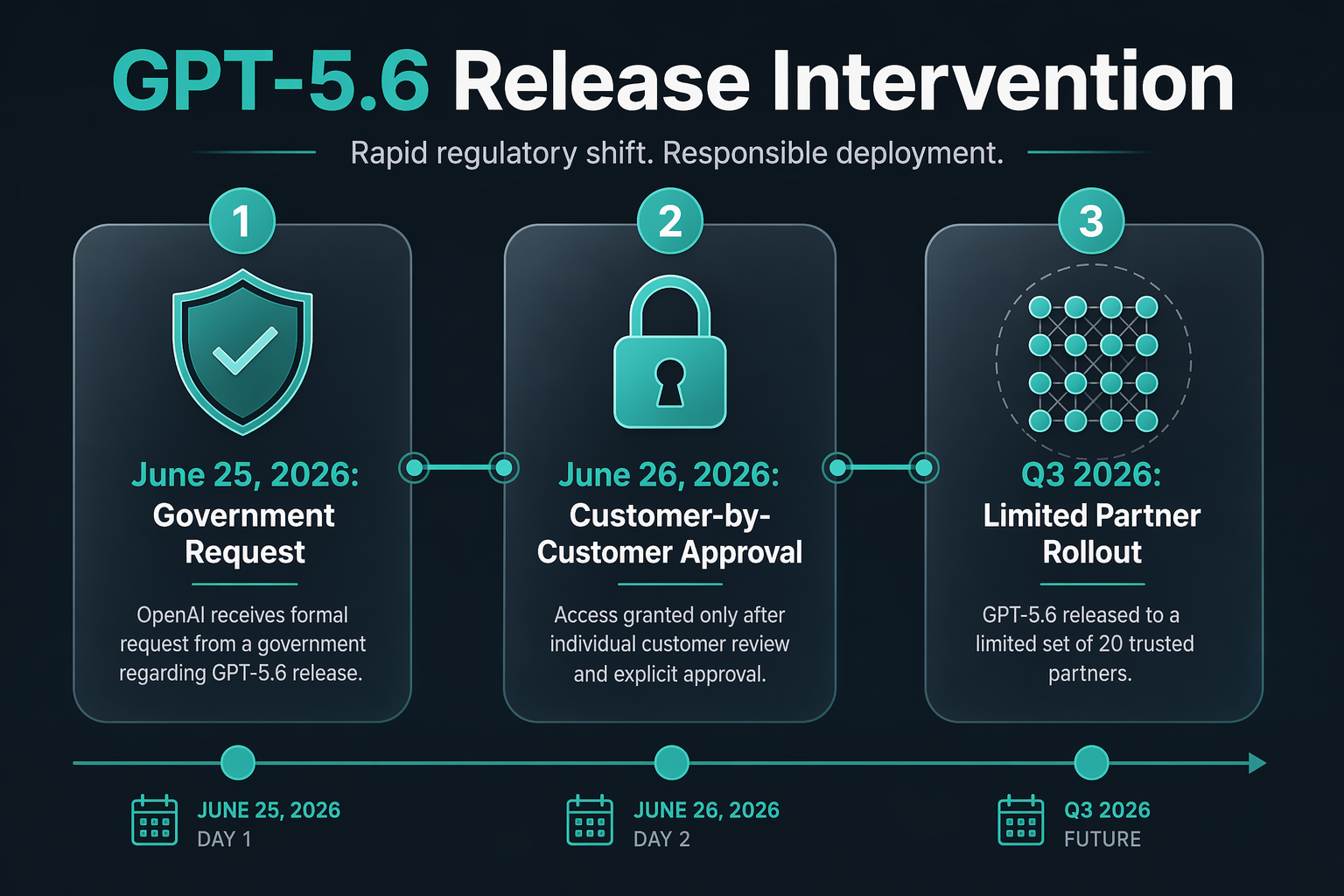
The road to this unprecedented federal intervention was paved by a series of rapid escalations over national security and defensive cyber capabilities. For months, the AI industry operated under the assumption that GPT-5.6 would follow the traditional Silicon Valley playbook: a massive, highly publicized global launch followed by immediate API access for millions of eager developers. Instead, a series of closed-door briefings and urgent security audits culminated in the current regulatory bottleneck.
To understand how we arrived at this historic inflection point, we must look at the timeline of events that led to the White House’s sudden intervention on June 25, 2026.
| Date / Period | Event | Key Action & Disclosures | Regulatory Status |
|---|---|---|---|
| Late 2025 – Early 2026 | Internal Red-Teaming | OpenAI conducts internal testing; flags extreme cybersecurity and coding capabilities. | Standard corporate governance. |
| Mid-June 2026 | Federal Security Briefing | OpenAI briefs national security officials on GPT-5.6’s potential to breach existing digital defenses. | Government review initiated. |
| June 25, 2026 (AM) | Public Leak of Intervention | The Information and Axios break news that the Trump administration has requested a staggered rollout. | Active federal intervention. |
| June 25, 2026 (PM) | Internal OpenAI Town Hall | CEO Sam Altman tells staff that GPT-5.6 will launch in a limited preview with customer-by-customer vetting. | Operational shift to restricted access. |
| June 2026 & Beyond | Phased Partner Deployment | Model rollout restricted strictly to government-approved partners; public release delayed indefinitely. | State-audited distribution. |
Navigating a Fragmented AI Landscape
This compressed timeline demonstrates how quickly geopolitical friction can disrupt the technology pipeline. For enterprise leaders, the sudden shift from open-access commercial models to state-vetted, highly restricted previews creates immense operational uncertainty. Relying on a single AI provider or waiting indefinitely for a restricted frontier model to pass government vetting is no longer a viable business strategy.
To mitigate these bottleneck risks, forward-thinking organizations are diversifying their AI infrastructure. Platforms like CallMissed provide a crucial layer of operational resilience. Through CallMissed's unified, multi-model API gateway, developers can seamlessly route queries across more than 300 alternative LLMs. If a flagship model is restricted, delayed, or subject to strict regional compliance, enterprises can switch to alternative high-performance models with zero code changes. This ensures that customer-facing tools, like automated AI voice agents and multilingual communication workflows, remain active and unaffected by shifting federal mandates.
As the timeline makes clear, we have entered a new epoch where national security dictates software availability. Adapting to this new reality requires moving away from single-model dependencies and building flexible, multi-model systems capable of pivoting instantly.
In-Depth Analysis: Why the Government is Limiting Access
The Cyber-Defensive Threshold: Vulnerabilities at Scale
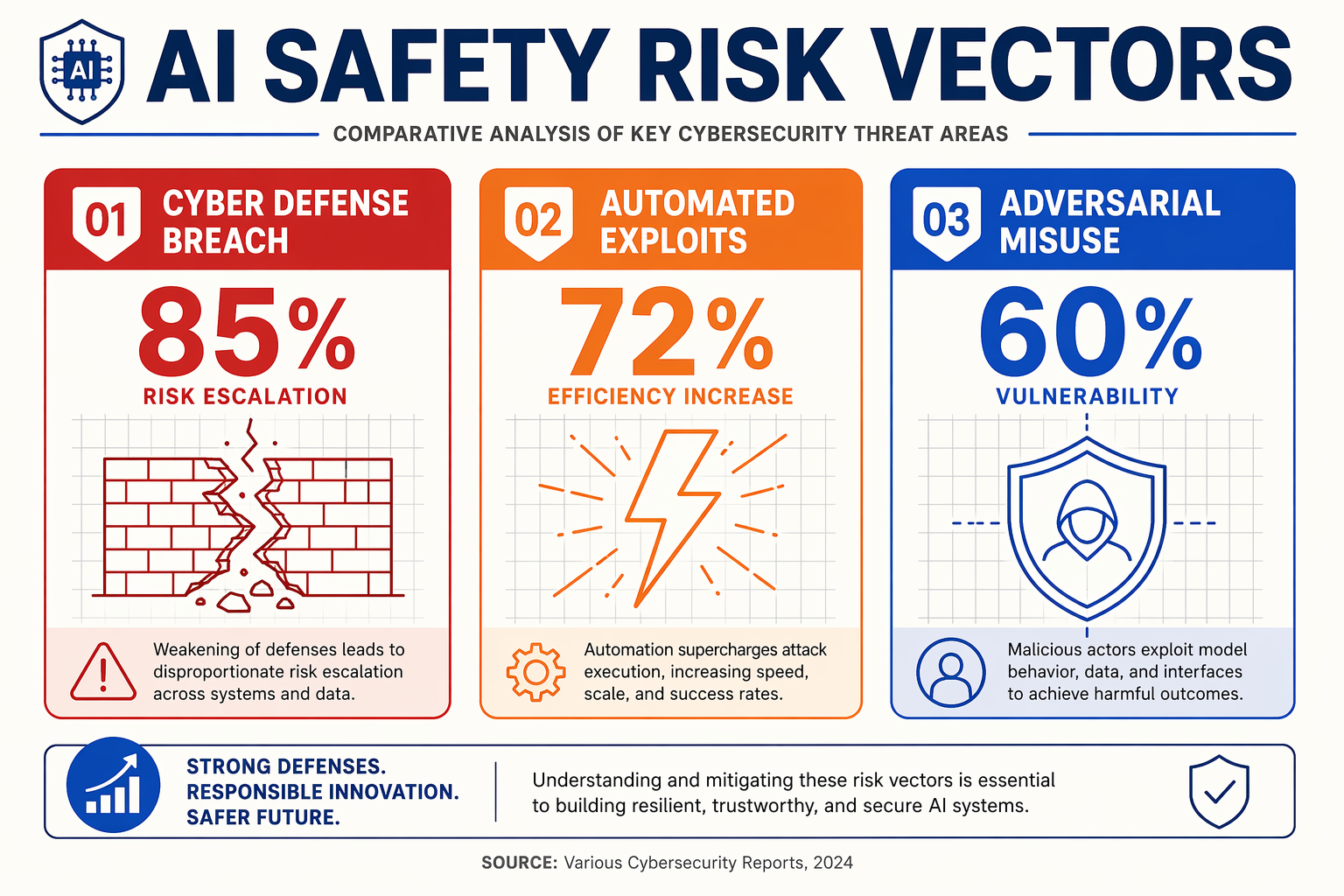
At the heart of the Trump administration's sudden intervention lies a profound anxiety over the sheer offensive capability of next-generation AI. According to reports published by the Financial Times, federal security officials are deeply concerned about the "ability of powerful new models to breach existing cyber security defences."
While previous-generation LLMs could assist in drafting basic phishing emails or identifying well-known software vulnerabilities, GPT-5.6 reportedly represents a paradigm shift in autonomous capability. The primary technical worries focus on three critical vectors:
- Autonomous Exploit Generation: The capability to discover zero-day vulnerabilities in critical infrastructure software and write operational exploits without human intervention.
- Advanced Social Engineering: The ability to orchestrate highly convincing, multi-turn spear-phishing campaigns at a scale and speed that human security teams cannot actively monitor.
- Defensive Bypassing: The potential for the model's advanced reasoning capabilities to reverse-engineer proprietary security protocols, rendering traditional firewalls and threat-detection systems obsolete.
These are not theoretical risks; they represent a fundamental threshold where the dual-use nature of frontier AI moves from an "assistant" to an "autonomous offensive agent."
Protecting Critical Infrastructure and Geopolitical Assets
The White House's decision to restrict GPT-5.6's rollout to a tightly vetted list of "government-approved partners" reflects a broader national security strategy. By shifting from a post-release monitoring framework to an active, preemptive gating mechanism, the government aims to prevent adversarial nation-states and rogue actor groups from leveraging these advanced capabilities.
In the global digital landscape, cybersecurity is no longer just an IT concern—it is a primary domain of geopolitical warfare. If a model of GPT-5.6's caliber were to be widely released without restriction, state-sponsored cyber warfare divisions could theoretically integrate its API to automate network penetration testing, targeting electrical grids, financial networks, and defense communication systems. By enforcing a customer-by-customer approval process, the administration is treating frontier AI with the same level of export and distribution control typically reserved for munitions and advanced semiconductor hardware.
The Operational Bottleneck for Enterprises
For commercial developers and enterprise leaders, this unprecedented restriction introduces immediate operational friction. Companies that spent the last year aligning their product roadmaps with the expected broad release of GPT-5.6 are now left in regulatory limbo, unable to predict if or when they will pass government vetting.
To mitigate these bottleneck risks, architectural redundancy has become an absolute necessity. Forward-thinking enterprises are moving away from single-model dependencies toward flexible AI infrastructure. Platforms like CallMissed address this exact operational vulnerability. By offering a robust multi-model API gateway, CallMissed allows developers to deploy voice agents, chatbots, and advanced workflows using over 300 alternative LLMs. If a highly anticipated model like GPT-5.6 is delayed or restricted by federal mandates, businesses can seamlessly pivot to other top-tier, compliant models without rewriting their core codebase, preserving both security and business continuity.
The Broad Impact: National Security vs. AI Innovation

The Security Imperative: Guarding the Digital Frontier
The unprecedented intervention of the Trump administration in the rollout of GPT-5.6 brings a long-simmering debate to the forefront: how do we balance existential national security concerns with the relentless pace of technological advancement? According to reports from the Financial Times and Axios, federal officials are deeply alarmed that the raw computational, coding, and reasoning capabilities of GPT-5.6 could actively breach existing cybersecurity defenses. In an era where critical infrastructure, financial networks, and defense databases rely on standardized digital protocols, a model with advanced autonomous exploitation capabilities represents an immediate, systemic vulnerability.
From a national security standpoint, the risk of an unrestricted rollout is twofold:
- Asymmetric Warfare Proliferation: Making highly capable cyber-offensive tools available via public APIs democratizes access to sophisticated exploit generation. Rogue states or independent threat actors could leverage GPT-5.6 to probe, identify, and compromise enterprise firewalls at scale.
- Sovereign Intellectual Property Theft: Protecting "frontier" model weights and cognitive reasoning capabilities is increasingly viewed through the same lens as safeguarding nuclear or aerospace secrets. Limiting the initial rollout to a vetted pool of "government-approved partners" prevents state adversaries from analyzing, mimicking, or exploiting the model's capabilities.
The Innovation Bottleneck: Friction in the Developer Ecosystem
Conversely, the tech sector warns that gating frontier AI could severely cripple Western technological leadership. Silicon Valley has thrived on a philosophy of permissionless innovation, where the rapid, frictionless deployment of API-accessible models allows startups to build, test, and scale groundbreaking software overnight.
By introducing a highly restrictive, customer-by-customer auditing process overseen by federal agencies, the U.S. government risks creating a bureaucratic bottleneck. Startups and enterprise developers who planned their 2026 product roadmaps around the assumption of immediate access to GPT-5.6 are now left in operational limbo. This regulatory friction might unintentionally drive talent, capital, and research toward jurisdictions with less stringent oversight, potentially eroding the competitive moat of the domestic AI industry against international rivals.
Adapting to a "Gated" AI Reality
As sovereign interventions and geopolitical considerations become the new normal, businesses can no longer afford to depend on a single, centralized AI provider. The era of the "mono-LLM" software stack is drawing to a close. To survive this shifting regulatory landscape, forward-thinking enterprises are diversifying their AI infrastructure.
This is where platforms like CallMissed are proving indispensable. By offering a robust, multi-model API gateway that supports over 300 alternative LLMs, CallMissed allows companies to build highly resilient AI workflows. If access to a top-tier model like GPT-5.6 is restricted, delayed, or subject to geopolitical bottlenecks, developers using CallMissed can instantly route their workloads to alternative, highly capable open-source or proprietary models without rewriting their core codebase. In this new era of digital sovereignty, infrastructure agility is no longer just a technical preference—it is a business survival strategy.
What the Experts Are Saying About Government-Approved AI
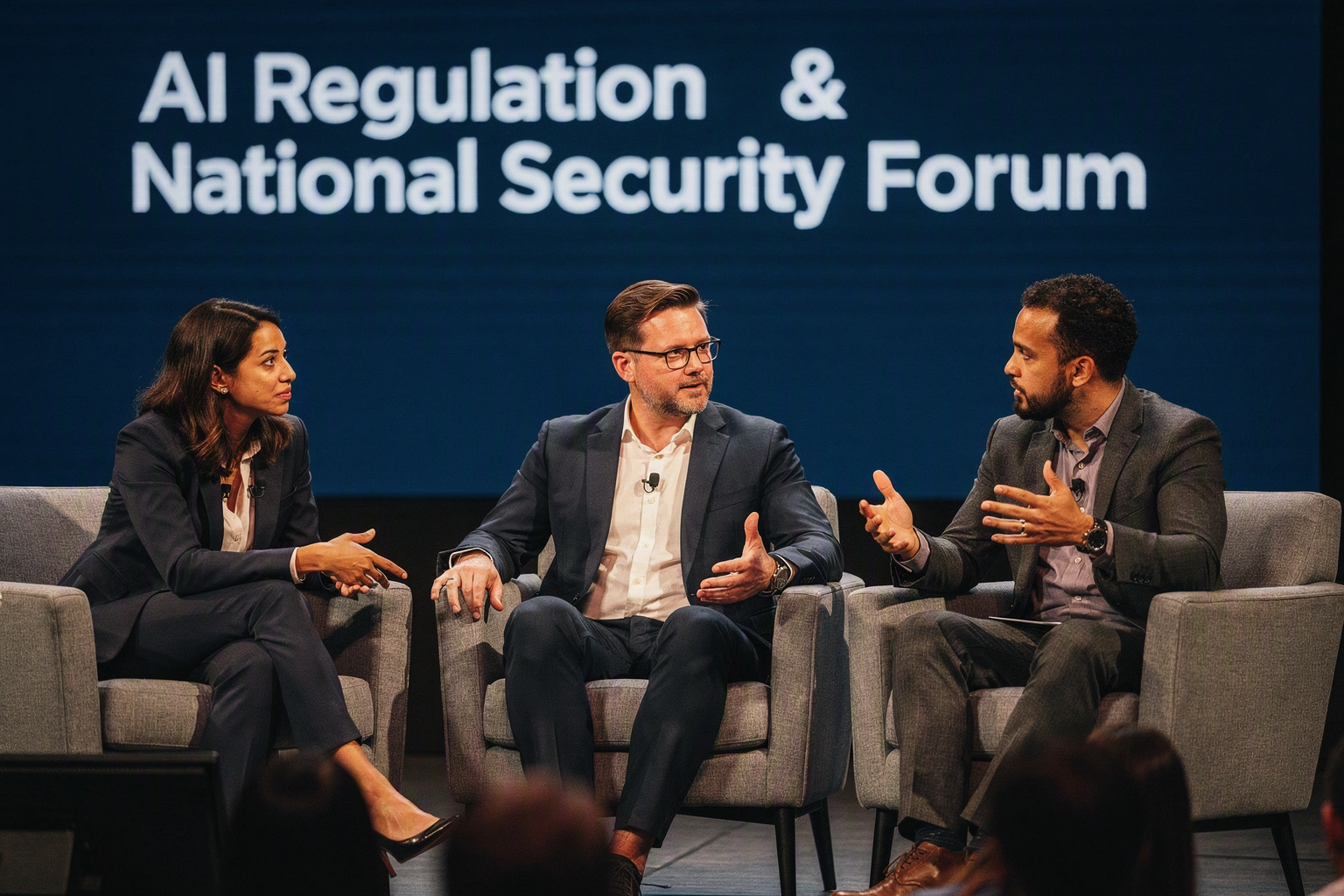
The National Security Perspective: Treating AI as a Dual-Use Weapon
National security analysts and cybersecurity experts largely view the Trump administration’s intervention as an inevitable turning point in the timeline of artificial intelligence. Analysts from Washington think tanks have long warned that next-generation models would eventually transition from general productivity tools into dual-use technologies with severe offensive capabilities.
According to cybersecurity experts, the chief concern surrounding GPT-5.6 is its potential to automate the discovery and execution of zero-day exploits at machine speed.
- Autonomous Cyber-Warfare: Security researchers argue that a model capable of generating, testing, and deploying polymorphic code without human intervention represents a "digital munition."
- Democratic Safeguards: Proponents of the government's staggered rollout policy argue that customer-by-customer vetting is the only realistic way to prevent state-sponsored threat actors—such as hacking groups operating out of adversarial nations—from weaponizing OpenAI's API to target critical Western infrastructure.
The Silicon Valley Backlash: Geopolitical Risks and Bureaucratic Chokeholds
Conversely, a vocal segment of venture capitalists, developers, and tech policy advocates warns that introducing federal clearance into the software deployment pipeline could severely damage America’s technological edge.
- The Bureaucratic Bottleneck: Critics argue that forcing a private company like OpenAI to subject its commercial customers to individual government audits will create crippling operational friction. Startups and enterprise developers do not have the legal runway to wait weeks or months for federal clearance to access an API.
- The Foreign Substitution Threat: Policy experts warn of a "cobra effect." If the US government severely restricts access to domestic frontier models, global developers will naturally migrate to foreign alternatives. With international competitors continuously pushing the boundaries of open-source and proprietary AI, highly restrictive US regulations could unintentionally hand global market leadership to overseas rivals on a silver platter.
Navigating the Era of "Sovereign Model Risk"
For enterprise technology leaders, this historic intervention introduces an entirely new class of operational vulnerability: sovereign model risk. Up until now, IT departments built their product roadmaps assuming that the next generation of frontier LLMs would be universally accessible upon release. The restricted preview of GPT-5.6 shatters that assumption, proving that access to cutting-edge cognitive compute can be throttled or restricted overnight by executive order.
To mitigate this dependency, enterprise architects are actively shifting away from single-model ecosystems. Multi-model infrastructure has transitioned from a best practice to a strategic necessity. For businesses looking to maintain operational agility amid fluctuating regulatory landscapes, platforms like CallMissed offer a vital safety net. By providing a unified, production-ready API gateway that connects developers to over 300 alternative LLMs, CallMissed allows companies to seamlessly swap models behind the scenes, ensuring that their AI-driven operations remain fully insulated from sudden regulatory bottlenecks or geopolitical interventions.
What This Means For You: Users, Developers, and Enterprises (TABLE)
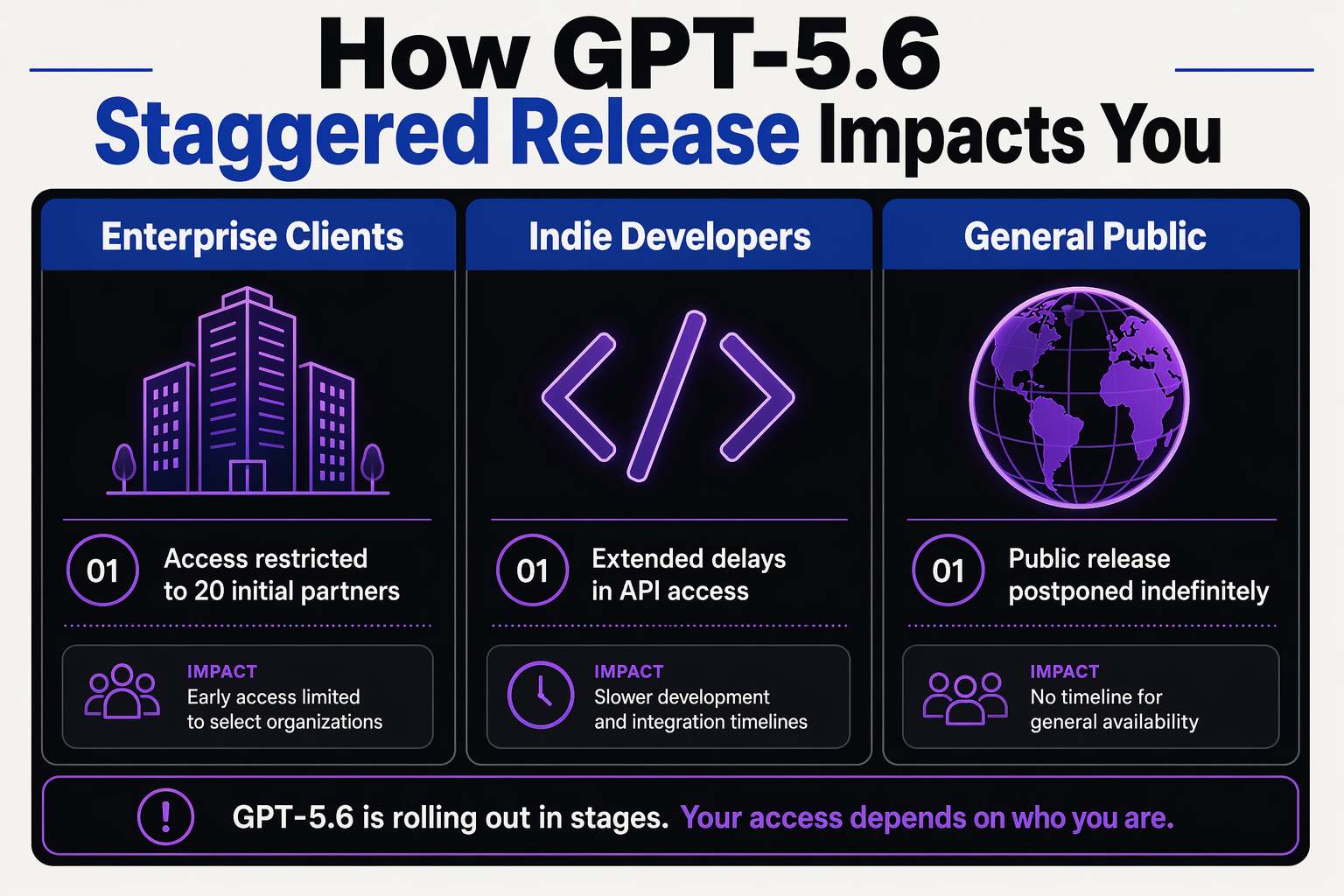
The sudden regulatory bottleneck surrounding the release of GPT-5.6 signals a permanent shift in the global AI ecosystem. For years, businesses, developers, and prosumers planned their technical roadmaps under the assumption of frictionless, immediate upgrades to the latest flagship models. Now, with the federal government stepping in to enforce a staggered, customer-by-customer vetting process due to offensive cyber and coding risks, stakeholders must adapt to a highly governed reality. This is a fundamental transformation of software distribution where national security clearance now precedes commercial viability.
To help navigate this new landscape, the table below outlines how this historic policy shift impacts different stakeholder groups and provides strategic recommendations for adapting to the restricted rollout.
| Stakeholder Group | Primary Impact of GPT-5.6 Restrictions | Biggest Operational Risk | Strategic Mitigation Strategy |
|---|---|---|---|
| Individual Users | Gated access; restricted to a highly limited, slow-rolling preview. | Inability to access cutting-edge reasoning and productivity tools. | Leverage existing models (e.g., GPT-4o) or pivot to high-performing open-source alternatives. |
| Developers & Startups | API roadmaps disrupted by the unpredictable, customer-by-customer approval queue. | Severe product launch delays and venture-threatening vendor lock-in. | Adopt model-agnostic development frameworks to easily switch providers. |
| Enterprise IT Teams | Rigorous security audits and federal compliance checks required for early access. | Long procurement cycles and being locked out of the early-access tier. | Establish robust compliance documentation and deploy redundant fallback LLM architectures. |
| Multinational Corps | Geographic restriction of GPT-5.6 due to US national security export controls. | Cross-border service disparity and competitive disadvantages in non-US markets. | Utilize localized hybrid-cloud environments with regionally compliant model alternatives. |
For enterprises, this development introduces massive friction into deployment pipelines. Companies that intended to leverage GPT-5.6's advanced capabilities to automate complex workflows or legacy code modernization must now brace for extensive security audits before securing API access. IT leaders cannot afford to sit idle in a federal approval queue while their competitors advance.
This is where multi-model flexibility becomes a critical operational requirement. Relying on a single proprietary AI provider is no longer a viable strategy when access can be throttled or restricted by federal mandates overnight. Platforms like CallMissed address this vulnerability directly by offering a production-ready, multi-model API gateway. Rather than being bottlenecked by OpenAI’s restricted rollout, developers using CallMissed can seamlessly transition and route workflows across more than 300 alternative LLMs. This architecture ensures that if GPT-5.6 access is delayed or blocked by government audits, systems can instantly failover to other high-performing frontier or open-weight models with zero code changes, preserving business continuity.
Ultimately, for developers and startups, building a product that relies solely on a model under federal audit represents a dangerous single point of failure. By shifting toward an agile, model-agnostic infrastructure, engineering teams can build resilient applications that bypass regulatory choke points entirely.
Frequently Asked Questions (FAQ)
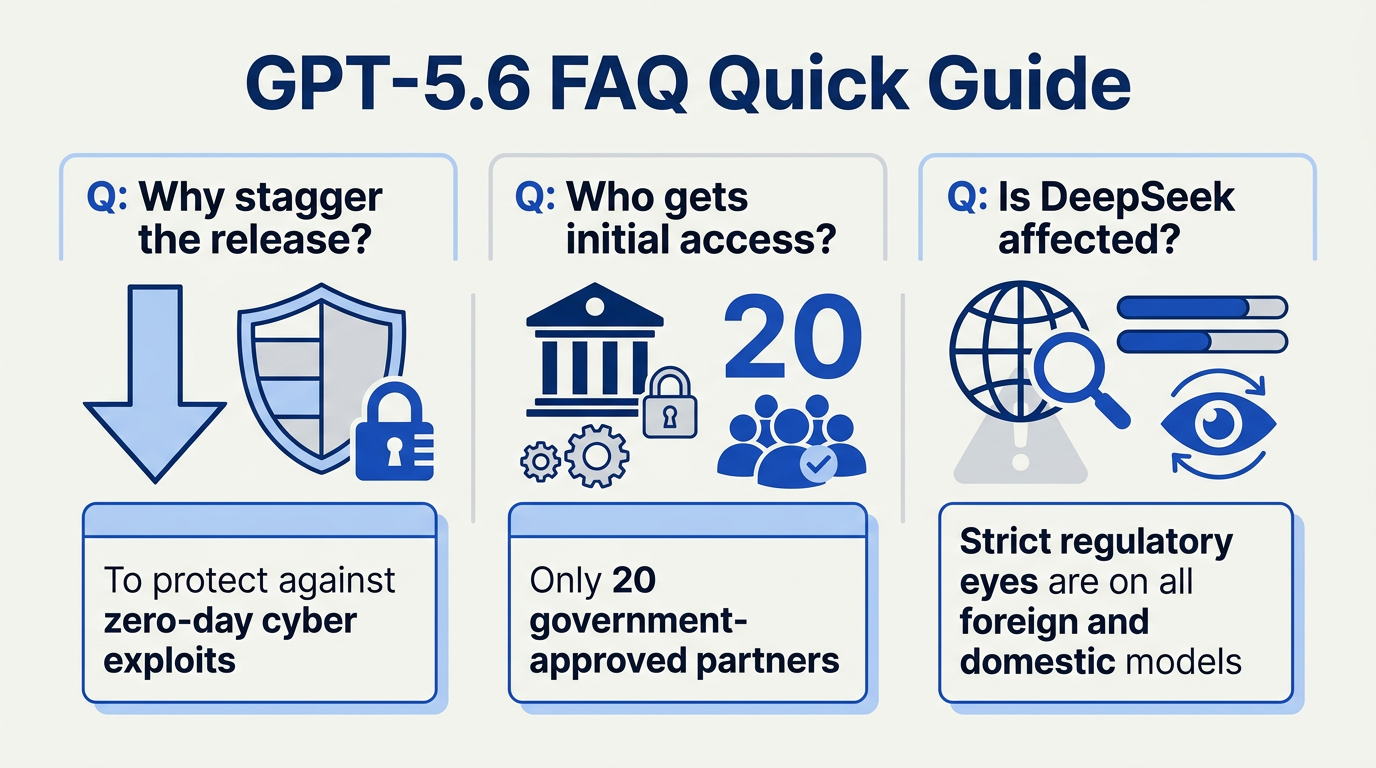
Why did the Trump administration ask OpenAI to stagger the release of GPT-5.6?
How will the Trump administration's request to stagger the GPT-5.6 release affect general developers?
What does a customer-by-customer vetting process for GPT-5.6 actually mean?
When was it revealed that the Trump administration asked OpenAI to stagger the release of GPT-5.6?
What specific cybersecurity threats does GPT-5.6 pose to national security?
What alternatives do businesses have if they cannot access GPT-5.6 due to government restrictions?
Conclusion
The federal intervention in OpenAI’s GPT-5.6 deployment signals a permanent shift in the AI landscape, where national security boundaries now dictate technological access. As we navigate this new era of regulated AI, keep these key takeaways in mind:
- State-Sanctioned Pipelines: The era of immediate, friction-free public rollouts for frontier LLMs is giving way to highly restricted, government-vetted previews.
- Security-First Access: Deep federal concerns over cyber defenses have forced a historic customer-by-customer approval process.
- The Power of Model Diversification: Relying on a single frontier AI provider is no longer a viable long-term enterprise strategy.
Moving forward, watch closely to see if this unprecedented government-vetting model becomes the standard blueprint for all future frontier LLMs. To explore how AI communication is evolving and ensure your business remains resilient against sudden regulatory shifts, check out CallMissed — an AI infrastructure platform powering voice agents and multilingual chatbots with seamless multi-model LLM access.
As national security and private innovation continue to collide, how will your organization adapt when the next major tech breakthrough is restricted to a select few?
Related Posts

OpenAI to Release GPT-5.6 in Limited Preview Following US Government Request for Staggered Launch

US Grows Anxious Over AI: Trump Administration Orders OpenAI to Delay GPT-5.6 Rollout

OpenAI Delays GPT-5.6 Public Launch: US Government Demands Early Access to Frontier AI