

प्रोजेक्ट वल्हाला, समझाया गया: एक दशक का काम JDK 28 में कैसे साकार हुआ



क्या हो अगर मैं आपको बताऊँ कि Java की सबसे मौलिक धारणाओं में से एक—कि हर ऑब्जेक्ट की एक विशिष्ट पहचान होती है—एक ही,...
प्रोजेक्ट वलहल्ला, समझाया गया: कैसे एक दशक का काम JDK 28 में पहुँचा
अगर मैं आपसे कहूं कि जावा की सबसे बुनियादी मान्यताओं में से एक—कि हर ऑब्जेक्ट की एक अनोखी पहचान होती है—अब एक ही, 1,97,000-लाइन के परिवर्तन में फिर से लिखी जा रही है? यही है जो प्रोजेक्ट वलहल्ला JDK 28 में लेकर आ रहा है। एक दशक से अधिक की डिजाइनिंग, प्रोटोटाइपिंग और बहस के बाद, OpenJDK समुदाय आखिरकार JEP 401 को अंतिम रूप दे रहा है, जो वैल्यू क्लासेज़ को पेश कर रहा है, जो जावा टाइप्स से ऑब्जेक्ट आइडेंटिटी हटा देता है। यह केवल एक और भाषा सुविधा नहीं है; यह जावा वर्चुअल मशीन में आया सबसे बड़ा संरचनात्मक बदलाव है जब से जेनेरिक्स JDK 5 में आए थे—यह भाषा के 30 साल के इतिहास में सबसे महत्वाकांक्षी रीफैक्टरिंग मानी जा सकती है।
यह अभी क्यों मायने रखता है? क्योंकि जावा का पारंपरिक ऑब्जेक्ट मॉडल आधुनिक वर्कलोड्स के लिए बॉटलनेक बन गया है। हर Integer, हर Point, हर छोटा डेटा होल्डर हीप एलोकेशन, पॉइंटर इंडायरेक्शन, और ऑब्जेक्ट हेडर से होने वाला मेमोरी ओवरहेड लेता है—ये लागतें हाई-थ्रूपुट सिस्टम, रियल-टाइम एनालिटिक्स, और सीमित क्लाउड इंस्टेंसेज़ पर चलने वाली माइक्रोसर्विसेज़ में बढ़ जाती हैं। इंडस्ट्री अब डाटा-ओरिएंटेड प्रोग्रामिंग की ओर बढ़ रही है, जहाँ लेआउट्स कैश एफिशिएंसी और GC प्रेशर के लिए मायने रखते हैं। वलहल्ला सीधे इसे संबोधित करता है: वैल्यू टाइप्स स्टैक पर या ऐरेज़ के भीतर इनलाइन रह सकते हैं, जिससे एलोकेशन समाप्त हो जाता है और कई परिस्थितियों में मेमोरी फुटप्रिंट 10 गुना तक घट जाता है। और इसके लिए समय सबसे उपयुक्त है। जब AI-ड्रिवन एप्लिकेशन और रियल-टाइम कम्युनिकेशन प्लेटफ़ॉर्म्स लगातार कम लेटेंसी की मांग कर रहे हैं, जावा को अपनी विरासत की अक्षम्यताएं छोड़नी होंगी। CallMissed जैसी सेवाएं, जो स्केल पर वॉयस और मैसेजिंग प्रोसेसिंग के लिए JVM-आधारित बैकएंड्स पर निर्भर हैं, इन प्रदर्शन लाभों का सीधा लाभ उठाएंगी—तेज़ सीरियलाइज़ेशन, सघन डेटा संरचनाएं, और कम GC पॉज़ टाइम्स।
इस पोस्ट में आप जानेंगे कि प्रोजेक्ट वलहल्ला अंदर से कैसे काम करता है: क्यों आइडेंटिटी हटाना मुख्य सूत्रधार है, कैसे inline क्लासेज़ आपके कोड को बिना बैकवर्ड कम्पैटिबिलिटी तोड़े बदल देते हैं, और “जेनेरिक स्पेशलाइज़ेशन” आपके ArrayList<Point> के लिए क्या मायने रखता है। हम एक दशक की यात्रा को OpenJDK के मेलिंग लिस्ट्स से लेकर आज उपलब्ध अर्ली-एक्सेस बिल्ड्स तक, और यह भी बताएंगे कि JDK 28 हर जावा डेवलपर के लिए एक बदलाव क्यों है। चाहे आप एक लेगेसी मोनोलिथ बनाए रख रहे हों या अगली पीढ़ी की स्केलेबल सर्विसेज़ बना रहे हों, वलहल्ला आ रहा है—और यह हमेशा के लिए आपके जावा ऑब्जेक्ट्स को देखने का नजरिया बदल देगा।
परिचय: जावा के लिए एक नए युग की शुरुआत
लगभग तीन दशकों तक, जावा ने वैश्विक एंटरप्राइज़ सॉफ़्टवेयर की नींव के रूप में अपनी जगह बनाई है। हालाँकि, हार्डवेयर परिदृश्य 1995 में जावा के आगमन के बाद से नाटकीय रूप से बदल गया है। आज के आधुनिक CPU मेमोरी डेंसिटी और स्पेशियल लोकैलिटी पर निर्भर हैं, लेकिन जावा का पारंपरिक मेमोरी मॉडल—जहाँ हर गैर-प्रिमिटिव ऑब्जेक्ट अपनी स्वयं की अलग पहचान और पॉइंटर ओवरहेड लेकर चलता है—अक्सर "पॉइंटर चेसिंग" और बार-बार CPU कैश मिसेज़ की ओर ले जाता है।
यह बुनियादी सीमा अब दूर होने जा रही है। JDK 28 के आगमन के साथ, जावा इकोसिस्टम एक दशक में अपने सबसे बड़े विकास को देख रहा है: प्रोजेक्ट वलहल्ला का एकीकरण।
12 वर्षों की "फ्लैट डेटा" की खोज
प्रोजेक्ट वलहल्ला कोई मामूली सिंटैक्स अपडेट नहीं है; यह एक महाकाव्य, बारह वर्ष की रीफैक्टरिंग परियोजना है, जिसका मकसद जावा की साफ ऑब्जेक्ट-ओरिएंटेड संरचना को आधुनिक हार्डवेयर के सीधे प्रदर्शन के साथ मिलाना है। इसकी जड़ में, वलहल्ला ऑब्जेक्ट आइडेंटिटी के प्रदर्शन टैक्स को संबोधित करता है।
इतिहास में, यहाँ तक कि एक साधारण Point(int x, int y) क्लास भी जावा में मांग करता था:
- एक ऑब्जेक्ट हैडर (आमतौर पर 8 से 16 बाइट्स) पहचान मेटाडेटा संग्रहीत करने के लिए
- ऑब्जेक्ट को संदर्भित करने के लिए पॉइंटर्स, जिससे मेमोरी फ्रैगमेंटेशन होता है
- ऑब्जेक्ट के जीवन-चक्र को ट्रैक करने के लिए गार्बेज कलेक्शन का ओवरहेड
JEP 401 (वैल्यू क्लासेस) के माध्यम से, JDK 28 वैल्यू ऑब्जेक्ट्स को पेश करता है, जिनमें पहचान नहीं होती। यह विशाल बदलाव JDK कोडबेस में 1,97,000-लाइन के परिवर्तन के माध्यम से साकार होता है, जो लंबे समय से प्रतिज्ञा किये गए मंत्र को हासिल करता है: "कोडिंग एक क्लास की तरह, काम एक int की तरह।"
आधुनिक अवसंरचना के लिए इसका महत्व
जैसे-जैसे डेवलपर्स रियल-टाइम डेटा प्रोसेसिंग की सीमाओं को आगे बढ़ाते हैं, बेहद कम लेटेंसी अब समझौता करने लायक नहीं रही। उदाहरण के लिए, हाई-थ्रूपुट कम्युनिकेशन प्लेटफ़ॉर्म्स जैसे CallMissed, जो जटिल AI वॉयस एजेंट्स का ऑर्केस्ट्रेशन करते हैं, रियल-टाइम LLM इनफेरेंस प्रबंधित करते हैं, और दर्जनों भारतीय भाषाओं में हाई-स्पीड स्पीच-टू-टेक्स्ट API प्रोसेस करते हैं, उन्हे ऐसे सिस्टम्स की जरूरत है जो GC-जनित लेटेंसी स्पाइक्स को बर्दाश्त नहीं कर सकते। मेमोरी लेआउट को फ्लैट कर के, प्रोजेक्ट वलहल्ला जावा-आधारित बैकएंड पाइपलाइन्स, AI माइक्रोसर्विसेज़, और डाटाबेस इंजन को विशाल डाटासेट्स को कहीं कम मेमोरी फुटप्रिंट और काफी कम GC पॉज़ के साथ प्रोसेस करने की सुविधा देता है।
JDK 28 में आने वाली मुख्य सफलताएँ
JDK 28 में वलहल्ला का एकीकरण तीन प्रमुख प्रदर्शन-संचालित अवधारणाएं लाता है:
- वैल्यू क्लासेज़ (JEP 401): ऐसी क्लास डिक्लेरेशन जो पहचान से बाहर होती है। इनके इंस्टेंसेज़ JVM द्वारा स्वतंत्र रूप से कॉपी और इनलाइन-अलोकेट किए जा सकते हैं, जिससे पॉइंटर ओवरहेड समाप्त हो जाता है।
- बेहतर मेमोरी डेंसिटी: ऑब्जेक्ट हैडर निकालना वैल्यू ऑब्जेक्ट्स की ऐरेज़ को स्मृति में एक साथ संग्रहित करने देता है, जिससे प्रिमिटिव ऐरेज़ की तरह, हॉट डेटा CPU कैश के भीतर बना रहता है।
- जेनेरिक स्पेशलाइज़ेशन: ऐसी नींव रखना कि जेनेरिक्स प्रिमिटिव्स और वैल्यू टाइप्स दोनों के साथ बिना बॉक्सिंग व अनबॉक्सिंग के प्रदर्शन हानि के आसानी से काम कर सके।
हार्डवेयर की दक्षता और डेवलपर-फ्रेंडली सैद्धांतिकताओं के बीच के अंतर को कम करके, प्रोजेक्ट वलहल्ला निश्चित करता है कि जावा अगली पीढ़ी के उच्च-संयोजन, प्रदर्शन-महत्वपूर्ण एंटरप्राइज़ सिस्टम्स के लिए पसंदीदा मंच बना रहे।
पृष्ठभूमि और संदर्भ: वैल्यू ऑब्जेक्ट्स की दस वर्षों की खोज
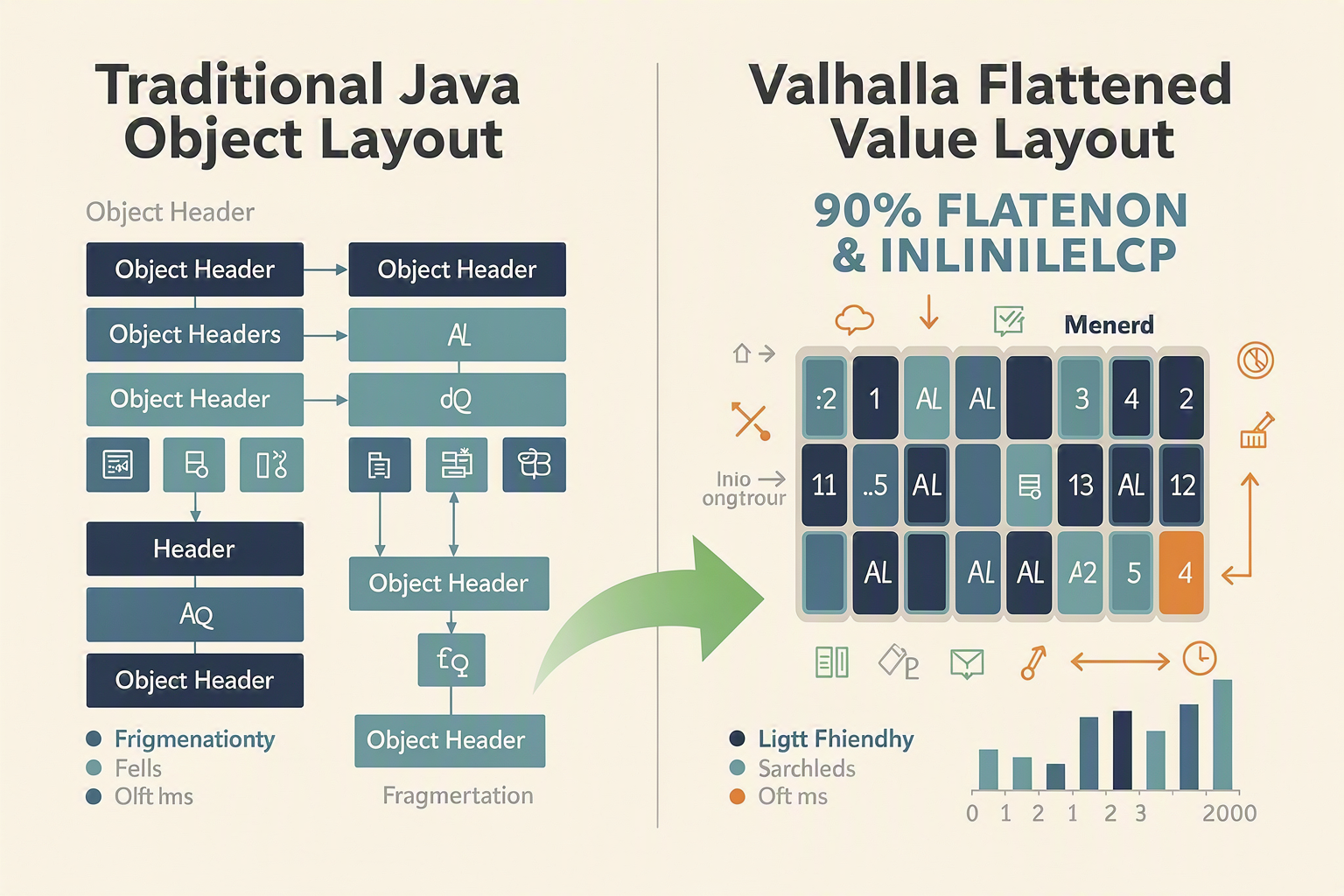
यह समझने के लिए कि क्यों प्रोजेक्ट वलहल्ला को जावा के दशकों के सबसे महत्वपूर्ण उन्नयन के रूप में देखा जा रहा है, पहले JVM (जावा वर्चुअल मशीन) के दिल में मौजूद अंतर्निहित तनाव को देखना ज़रूरी है। जावा 1.0 के बाद से, भाषा ने सख्त विभाजन बनाए रखा है: प्रिमिटिव टाइप्स (जैसे int या char) तेज और हल्के हैं, जबकि ऑब्जेक्ट्स लचीले लेकिन भारी होते हैं। जब से जावा एप्लिकेशन ने विशाल क्लाउड-नेटिव वर्कलोड्स को संभालना शुरू किया है, यह विभाजन लगातार एक प्रदर्शन बाधा बनता गया है।
"कोडिंग एक क्लास की तरह, काम एक int की तरह" समस्या
परंपरागत जावा में, हर ऑब्जेक्ट छुपी हुई लागत लाता है। हर क्लास के इंस्टेंस के लिए ऑब्जेक्ट आइडेंटिटी जरुरी है, जिसके लिए मेमोरी-खपत करने वाला ऑब्जेक्ट हैडर (आमतौर पर 8 से 16 बाइट्स आधुनिक 64-बिट सिस्टम्स पर) चाहिए, ताकि लॉकिंग, सिंक्रोनाइज़ेशन, और गार्बेज कलेक्शन ट्रैकिंग को सपोर्ट किया जा सके।
जब आप ऑब्जेक्ट्स की ऐरे बनाते हैं—जैसे कि कोऑर्डिनेट्स की सूची, पॉइंट्स, या कॉम्प्लेक्स नंबर—JVM उन्हें स्मृति में लगातार स्टोर नहीं करता है। इसके बजाय, यह उन ऑब्जेक्ट्स के रेफरेंस (पॉइंटर्स) की एक ऐरे रखता है, जो हीप में बिखरे होते हैं। यह लेआउट इन तकलीफों को जन्म देता है:
- पॉइंटर चेसिंग: CPU को असली पेलोड तक पहुँचने के लिए लगातार मेमोरी ऐड्रेस में कूदना पड़ता है।
- कैश मिसेज़: आधुनिक CPU कैशेज़ क्रमबद्ध मेमोरी एक्सेस के लिए डिज़ाइन किए गए हैं; असमीपवर्ती ऑब्जेक्ट रेफरेंस इस हार्डवेयर लाभ को बिगाड़ते हैं।
- कम मेमोरी डेंसिटी: ऑब्जेक्ट हेडर का ओवरहेड अक्सर संग्रहीत वास्तविक डेटा से अधिक हो जाता है।
बारह वर्षों की इंजीनियरिंग यात्रा
इस अंतर को पाटने के लिए, OpenJDK ने प्रोजेक्ट वलहल्ला की शुरुआत एक दशक से भी पहले की थी। इसका उद्देश्य जावा के मूल ऑब्जेक्ट मॉडल को फिर से डिज़ाइन करना था ताकि वैल्यू टाइप्स को सपोर्ट किया जा सके—ऐसी संरचनाएँ जो ऑब्जेक्ट-ओरिएंटेड प्रोग्रामिंग के डेवलपर-फ्रेंडली अमूर्तता (मेथड्स, फ़ील्ड्स, और टाइप सेफ्टी) को बनाए रखते हुए प्रिमिटिव्स के हार्डवेयर-फ्रेंडली प्रदर्शन को प्रदान करें।यह महान प्रयास अंततः JDK 28 में JEP 401 (Value Classes) के माध्यम से अपनी परिणति पर पहुँच रहा है। यह केवल एक साधारण सिंटैक्स अपडेट नहीं है, बल्कि यह रिलीज़ एक महान वास्तुकला पुनर्संरचना का प्रतीक है। JEP 401 को JDK में एकीकृत करने के लिए एक विशाल, 1,97,000 लाइनों के कोडबेस परिवर्तन की आवश्यकता थी ताकि JVM के मूल व्यवहार और मानक लाइब्रेरी क्लासों को फिर से लिखा जा सके।
आधुनिक स्मृति दक्षता की मांगें
Project Valhalla का आगमन सबसे उपयुक्त समय पर हुआ है। आधुनिक कम्प्यूटिंग ने कच्चे CPU-केंद्रित प्रोसेसिंग से मेमोरी-केंद्रित प्रोसेसिंग की ओर रुख किया है। आज के अनुप्रयोग—चाहे वे विशाल माइक्रो सर्विस मेष हों या रियल-टाइम डाटा पाइपलाइनों—बेहद अधिक थ्रूपुट और अल्ट्रा-लो लेटेंसी की मांग करते हैं।
यह दबाव विशेष रूप से अत्याधुनिक इन्फ्रास्ट्रक्चर में तीव्र है। उदाहरण के लिए, AI-संचालित संचार प्रणालियाँ जैसे CallMissed, जो रीयलटाइम वॉयस एजेंट्स, स्पीच-टू-टेक्स्ट API और हाई-फ्रीक्वेंसी LLM इंफरेंस मार्गों का समन्वय करती हैं, को मिलीसेकंड-स्तरीय प्रतिक्रियाशीलता बनाए रखने के लिए अधिकतम निष्पादन गति और अनुकूलित मेमोरी घनत्व पर भारी निर्भरता होती है। जिस तरह जावा डेवलपर्स Valhalla का उपयोग मेमोरी लेआउट को फ्लैट करने और पॉइंटर चेसिंग को समाप्त करने में कर रहे हैं, उसी प्रकार आधुनिक संचार इन्फ्रास्ट्रक्चर को रनटाइम निष्पादन का अनुकूलन करना चाहिए ताकि हजारों समवर्ती, संसाधन-गहन कार्य बिना हार्डवेयर का आकार बढ़ाए संभाले जा सकें।
वैल्यू क्लासेस के लिए ऑब्जेक्ट पहचान को समाप्त करके, JDK 28 "फ्लैट" मेमोरी लेआउट का मार्ग प्रशस्त करता है, जहाँ ऑब्जेक्ट्स को सीधे ऐरे या अंतर्निहित क्लासों में इनलाइन किया जा सकता है। यह नाटकीय बदलाव डेवलपर उत्पादकता और बरे-मैटल प्रदर्शन का अंतिम संयोजन दर्शाता है, जो अंततः वह हार्डवेयर दक्षता प्रदान करता है जिसकी जावा पर ऐतिहासिक रूप से कमी बताई जाती थी।
प्रमुख विकास (तालिका): प्रोटोटाइप से लेकर JDK 28 एकीकरण तक
Project Valhalla की यात्रा कंप्यूटर विज्ञान के इतिहास में सबसे महत्वाकांक्षी पुनर्संरचनाओं में से एक है। ब्रायन गोएट्ज़ के नेतृत्व में एक दशक से अधिक समय पहले शुरू किए गए इस प्रोजेक्ट का उद्देश्य जावा की स्वच्छ ऑब्जेक्ट-ओरिएंटेड अमूर्तताओं और आधुनिक CPU मेमोरी पदानुक्रमों की हार्डवेयर वास्तविकताओं के बीच की दूरी को पाटना था। "क्लास की तरह कोड लिखो, int की तरह काम करता है" की अवधारणा के माध्यम से, Valhalla जावा ऑब्जेक्ट्स के "पहचान संकट" को हल करता है, जिससे डेवलपर्स क्लीन OOP कोड लिख सकते हैं बिना कैश मिसेज एवं मेमोरी फुटप्रिंट की भारी कीमत चुकाए।
यह समझने के लिए कि कैसे यह विशाल प्रयास एक प्रयोगात्मक शोध परियोजना से उत्पादन-योग्य कोड में बदला, JDK 28 में इसके समावेशन का मार्ग प्रशस्त करने वाले प्रमुख मील के पत्थरों और संरचनात्मक परिवर्तनों पर नज़र डालना सहायक होगा।
| विकास चरण | प्रमुख तंत्र / JEP | मुख्य वास्तुकला फोकस | प्रदर्शन एवं मेमोरी पर प्रभाव |
|---|---|---|---|
| प्रारंभिक खोज (2014–2019) | प्रोटोटाइप पुनरावृत्तियाँ (L-World) | "इनलाइन" टाइप्स और बाइटकोड-स्तरीय परिवर्तन | ऑब्जेक्ट हेडर्स को हटाने का प्रमाण सिद्धांत। |
| डिजाइन समेकन (2020–2023) | वैल्यू बनाम प्रिमिटिव क्लासेस | ऑब्जेक्ट मॉडल को पहचान और अवस्था में विभाजित करना | अप्रत्यक्षता में कमी और बेहतर CPU कैश स्थानीयता। |
| JDK 28 एकीकरण (वर्तमान) | JEP 401 (Value Classes) | ऑब्जेक्ट पहचान रहित वैल्यू क्लासेस को 1.97 लाख लाइनों की PR के माध्यम से लाना | मैमोरी लेआउट फ्लैट करता है; बॉक्सिंग ओवरहेड हटाता है। |
| भविष्य विशेषीकरण (JDK 28 के बाद) | जेनेरिक विशेषीकरण | जेनेरिक में वैल्यू टाइप्स की अनुमति (जैसे, ArrayList<Point>) | संग्रहणाओं में हीप-अलोकन बाधाओं को समाप्त करता है। |
JEP 401 की ओर दशक-भर का बदलाव
Project Valhalla का JDK 28 में एकीकरण एक ऐतिहासिक मील का पत्थर है, जो मुख्यतः JEP 401 (Value Classes) द्वारा प्रेरित है। यह एकल एकीकरण बारह साल के अनुसंधान का चरम है, जिसके परिणामस्वरूप JDK कोडबेस में 1,97,000 लाइनों का परिवर्तन हुआ।
ऐतिहासिक रूप से, हर जावा ऑब्जेक्ट के पास "ऑब्जेक्ट पहचान" होती थी। यह पहचान 64-बिट सिस्टम्स पर 16-बाइट के ऑब्जेक्ट हेडर की मांग करती है, जिसमें लॉकिंग सूचना और गार्बेज कलेक्शन मेटाडेटा रखा जाता है। इस पहचान के कारण ऑब्जेक्ट्स को रेफरेंस (पॉइंटर) के माध्यम से ही एक्सेस किया जा सकता है, जिससे CPU को लगातार मेमोरी में पॉइंटर के पीछे-पीछे दौड़ना पड़ता है (पॉइंटर चेसिंग), बजाय इसके की वह कैश के सतत ब्लॉक पढ़ सके।
JEP 401 के साथ, डेवलपर्स अब क्लास को value मॉडिफायर के साथ घोषित कर सकते हैं। इसका अर्थ JVM के लिए यह है कि इन क्लासों के इंस्टेंसेस की कोई पहचान नहीं है—केवल अवस्था है।
- मेमोरी घनत्व: ऑब्जेक्ट पहचान को त्याग कर JVM वैल्यू ऑब्जेक्ट्स को फ्लैटली ऐरे में या अन्य ऑब्जेक्ट्स के भीतर संग्रहित कर सकता है, जैसे C स्ट्रक्ट्स का मेमोरी लेआउट।
- हीप आवंटन से बचाव: वैल्यू ऑब्जेक्ट्स अक्सर डायरेक्टली स्टैक या CPU रजिस्टरों में अलॉट किए जा सकते हैं, हीप पर नहीं, जिससे गार्बेज कलेक्शन के ओवरहेड से पूरी तरह बचा जा सकता है।
ये अनुकूलन स्केलेबल, उच्च-थ्रूपुट प्रणालियाँ बनाने के लिए अत्यावश्यक हैं, जहाँ माइक्रोसेकंड-स्तरीय लेटेंसी अटल होती है। उदाहरण स्वरूप, CallMissed जैसे संचार इन्फ्रास्ट्रक्चर प्लेटफॉर्म अत्यधिक अनुकूलित, लो-लेटेंसी रनटाइम्स पर निर्भर करते हैं ताकि रीयल-टाइम AI वॉयस एजेंट्स को सशक्त किया जा सके, सैंकड़ों मॉडलों में LLM इंफरेंस कर सकें, और मल्टीलिंगुअल स्पीच-टू-टेक्स्ट APIs का न्यूनतम GC पॉज़ टाइम्स के साथ प्रोसेस कर सकें। वैलहला के फ्लैट मेमोरी फुटप्रिंट को एंटरप्राइज़ बैकएंड में लाने से उच्च-स्तरीय अनुप्रयोग कहीं अधिक समवर्ती कार्यभार बहुत छोटे हार्डवेयर पर संभाल सकते हैं।
जैसे ही जावा JDK 28 युग में प्रवेश कर रहा है, ये विकास एक आधारभूत ढाँचा तैयार करते हैं, जो भविष्य में जेनेरिक विशेषीकरण को समर्थित करेगा, यह सुनिश्चित करते हुए कि भाषा आने वाले दशकों तक उच्च प्रदर्शन कम्प्यूटिंग के लिए प्रतिस्पर्धी बनी रहे।
गहन विश्लेषण: JEP 401 और Value Classes को समझना
Project Valhalla के JDK 28 में आगमन के केंद्र में है JEP 401 (Value Classes and Objects)। यह अकेला जावा एन्हांसमेंट प्रपोज़ल 1,97,000 लाइनों के कोडबेस रीफैक्टर का चरम है, जो बारह सालों में साकार हुआ। JEP 401 मूल रूप से यह परिभाषित करता है कि जावा डेटा को मेमोरी में कैसे संभालता है, और एक प्रदर्शन बाधा को हल करता है जो Java 1.0 से चली आ रही थी: स्वच्छ ऑब्जेक्ट-ओरिएंटेड अमूर्तता और कच्ची हार्डवेयर दक्षता के बीच विवश समझौता।
समस्या: ऑब्जेक्ट पहचान की कीमत
ऐतिहासिक रूप से, हर जावा ऑब्जेक्ट को ऑब्जेक्ट पहचान का बोझ उठाना पड़ता था। इसका अर्थ है कि सिर्फ एक साधारण डेटा रैपर—जैसे दो 4-बाइट्स इन्टीजर्स रखने वाली 2D कोऑर्डिनेट क्लास—भी विशाल हीप फुटप्रिंट की मांग करती है।
परंपरागत जावा में, हर ऑब्जेक्ट आवंटन में आता है:
- 8-से-16-बाइट्स का ऑब्जेक्ट हेडर जिसमें लॉकिंग, गार्बेज कलेक्शन मेटाडेटा, और सिस्टम आइडेंटिटी हैशकोड्स के लिए जगह होती है।
- पॉइंटर अप्रत्यक्षता, यानी इन कोऑर्डिनेट ऑब्जेक्ट्स के ऐरे वस्तुतः पॉइंटर्स का ऐरे होते हैं, जो हीप में बिखरी जगहों पर पॉइंट करते हैं।
- बार-बार CPU कैश मिसेज, क्योंकि प्रोसेसर बार-बार रेफरेंस्ड डेटा लेने के लिए स्मृति पतों में जंप करता है।
यह डिज़ाइन 1995 में समीचीन था, जब मेमोरी एक्सेस स्पीड CPU स्पीड के बराबर थी। आज, मेमोरी एक्सेस अंतिम बाधा है।
प्रवेश JEP 401: Value Classes क्या हैं
JEP 401 क्लास डिक्लेरेशन के लिए value मॉडिफायर लाता है। किसी क्लास को value class घोषित करने का अर्थ है कि उसके इंस्टेन्सेज को यूनिक पहचान की आवश्यकता नहीं है। यदि दो वैल्यू ऑब्जेक्ट्स में समान डेटा है, तो वे पूर्णतः अभेद्य माने जाते हैं।
पहचान समाप्त करके, JEP 401 कुछ सख्त पर अत्यंत लाभकारी नियम लागू करता है:
- अपरिवर्तनीयता: वैल्यू क्लास के सभी फ़ील्ड्स को प्रत्यक्ष या अप्रत्यक्ष रूप से
finalघोषित करना अनिवार्य है। - कोई पहचान संचालन नहीं: वे ऑपरेशंस जो ऑब्जेक्ट पहचान पर आधारित हैं—जैसे ऑब्जेक्ट पर सिंक्रोनाइजेशन, वीक रेफरेंस या
System.identityHashCode()कॉल करना—या तो निषिद्ध हैं या फिर से परिभाषित हैं। - फ्लैटेड मेमोरी लेआउट: चूँकि JVM जानता है कि ये ऑब्जेक्ट बदल नहीं सकते और इनकी पहचान नहीं है, वह इन्हें "इनलाइन" ऑब्जेक्ट हेडर के बिना स्टोर कर सकता है।
इसका परम उद्देश्य संक्षेप में यही है: "कोड लिखो क्लास की तरह, पर काम करता है int की तरह।" डेवलपर्स तब भी मेथड्स, कन्स्ट्रक्टर्स, एन्कैप्सुलेशन, और इंटरफेस का प्रयोग कर सकते हैं, लेकिन JVM इन्हें प्रिमिटिव टाइप्स की तरह फ्लैट, सतत मेमोरी फुटप्रिंट में कंपाइल करता है।
उच्च-थ्रूपुट इन्फ्रास्ट्रक्चर पर प्रभावJEP 401 द्वारा प्रस्तुत मेमोरी घनत्व में सुधार उच्च-संयोजकता प्रणालियों की परिचालन लागत को नाटकीय रूप से कम कर देगा। जब डेटा को सतत मेमोरी ऐरे में समतल किया जा सकता है, तो कैश स्थानीयता बहुत अधिक बढ़ जाती है, और गार्बेज कलेक्टर (GC) के पास ट्रैक करने के लिए काफी कम हीप रेफरेंस होते हैं।
यह वास्तविक समय इन्फ्रास्ट्रक्चर के लिए एक विशाल छलांग है। उदाहरण के लिए, उच्च पैमाने के एआई संचार प्लेटफ़ॉर्म जैसे कि CallMissed, जो 300+ LLMs के बीच API कॉल्स को रूट करता है और 22 क्षेत्रीय भारतीय भाषाओं में कम-विलंबता वाली स्पीच-टू-टेक्स्ट पाइपलाइन को निष्पादित करता है, अल्ट्रा-फास्ट डेटा सीरियलाइज़ेशन पर गंभीर रूप से निर्भर करते हैं। ऐसे वातावरण में, जहाँ प्रति सेकंड लाखों अस्थायी ऑडियो पैकेट्स और टोकन रैपर बनाए जाते हैं, इन डेटा स्ट्रीम्स को शून्य लागत के मूल्य वस्तुओं के रूप में संसाधित करने की क्षमता GC विराम और मेमोरी विखंडन को समाप्त करती है। JVM मेमोरी घनत्व को अनुकूलित करके, वास्तविक समय वॉयस एजेंट प्राकृतिक भाषा को कहीं कम विलंबता और कम इंफ्रास्ट्रक्चर ओवरहेड के साथ संसाधित कर सकते हैं।
प्रभाव एवं अर्थ: क्यों आपका गार्बेज कलेक्टर आपको धन्यवाद देगा

दशकों से, जावा डेवलपर्स ने एक बुनियादी समझौते के साथ काम किया है: वस्तु-उन्मुख प्रोग्रामिंग की अभिव्यक्तिपूर्ण सुंदरता बनाम समतल मेमोरी लेआउट्स का प्रत्यक्ष प्रदर्शन। हर बार जब आप एक मानक जावा ऑब्जेक्ट को इंस्टैंसियेट करते हैं, तो JVM उसे एक ऑब्जेक्ट आइडेंटिटी आवंटित करता है। यह मेटाडेटा रैपर (जो ऑब्जेक्ट हेडर से बना होता है) महत्वपूर्ण मेमोरी ओवरहेड जोड़ता है और JVM को प्रत्यक्ष मानों के बजाय रेफरेंस का प्रबंधन करने के लिए मजबूर करता है। मेमोरी-गहन अनुप्रयोगों में, यह एक "पॉइंटर सूप" बनाता है जो गार्बेज कलेक्टर (GC) को लगातार जटिल, विखंडित ऑब्जेक्ट ग्राफ्स को पार करने के लिए मजबूर करता है।
JDK 28 में JEP 401 के आगमन के साथ, प्रोजेक्ट वैलहल्ला इस विरासत की बाधा को समाप्त करता है। वैल्यू क्लासेस पेश कर के, वैलहल्ला डेवलपर्स को ऐसे टाइप्स परिभाषित करने की अनुमति देता है जो "क्लास की तरह कोड करें, लेकिन इंट की तरह काम करें।" क्योंकि वैल्यू क्लासेस के पास ऑब्जेक्ट आइडेंटिटी नहीं होती, JVM उनके मेमोरी लेआउट का अनुकूलन कर सकता है, उन्हें सीधे समाविष्ट संरचनाओं या ऐरे में समतल कर सकता है।
समतल मेमोरी और CPU कैश मित्रता
परंपरागत रूप से, 1,000 कस्टम Point(x, y) ऑब्जेक्ट्स की एक ऐरे वस्तुतः डेटा की एक ऐरे नहीं होती; वह 1,000 पॉइंटर्स की ऐरे होती है, जो हीप में बिखरे 1,000 अलग-अलग ऑब्जेक्ट्स की ओर इशारा करती है। JDK 28 में, Point को एक वैल्यू क्लास घोषित करने से JVM समन्वय को एकल, लगातार मेमोरी ब्लॉक के रूप में स्टोर कर सकता है।
- स्थानिक स्थानीयता: सतत मेमोरी का अर्थ है कि जब CPU किसी मान को अपने कैश लाइन में लाता है, तो वह आस-पास के मानों को भी लाता है। यह महंगे L1/L2 कैश मिस और पॉइंटर चेज़िंग को नाटकीय रूप से घटा देता है।
- शून्य-ओवरहेड अमूर्तता: डेवलपर्स को अब उच्च प्रदर्शन निष्पादन प्राप्त करने के लिए स्वच्छ, टाइप-सुरक्षित डोमेन मॉडल और कच्चे प्रिमिटिव ऐरे के बीच चयन नहीं करना पड़ेगा।
गार्बेज कलेक्टर का बोझ कम करना
इस संरचनागत बदलाव के सच्चे लाभार्थी आपके अनुप्रयोग के गार्बेज कलेक्टर हैं। ऑब्जेक्ट आइडेंटिटी को हटाकर, GC का परिचालन कार्यभार तीन प्रमुख क्षेत्रों में काफी कम हो जाता है:
- आवंटन दबाव में कमी: क्योंकि वैल्यू ऑब्जेक्ट्स को समतल किया जा सकता है, वे अक्सर सीधे स्टैक पर या अन्य ऑब्जेक्ट्स के भीतर इनलाइन आवंटित किए जाते हैं। यह हीप आवंटन को पूरी तरह से बायपास करता है, यानी शुरुआत में ही कम कचरा उत्पन्न होता है।
- सरल ऑब्जेक्ट ग्राफ्स: GC हीप को स्कैन करने और ऑब्जेक्ट रेफरेंसेज को ट्रेस करने में बड़ी मात्रा में CPU साइकिल्स खर्च करता है, ताकि यह पता लगाया जा सके कि कौन सी इंस्टेंस अभी भी पहुंच योग्य हैं। समतल संरचनाओं के साथ, ऑब्जेक्ट ग्राफ की जटिलता कम हो जाती है, जिससे काफी तेजी से और अधिक पूर्वानुमानीय स्वीप चरण मिलते हैं।
- लेटेंसी-संवेदनशील प्रणालियों में कम विराम: उच्च-थ्रूपुट इन्फ्रास्ट्रक्चर—for example, वास्तविक समय AI वॉयस एजेंट्स और LLM ऑर्केस्ट्रेशन APIs जो CallMissed जैसे प्लेटफार्म्स द्वारा प्रबंधित किए जाते हैं—micro-GC विराम को समाप्त करना महत्वपूर्ण है। जब एक साथ कई वॉयस स्ट्रीम्स और स्पीच-टू-टेक्स्ट प्रोसेसिंग को संभालना हो, तब भी एक 50 मिलीसेकंड GC विराम प्राकृतिक बातचीत को बाधित कर सकता है। वैलहल्ला सीधे इन लेटेंसी स्पाइक्स को कम करता है।
12-वर्षीय रीफैक्टर का प्रभाव
यह परिवर्तन कोई छोटी-कॉस्मेटिक अपडेट नहीं है; यह जावा वर्चुअल मशीन का एक मौलिक आधुनिकीकरण है। बारह वर्षों की गहन रिसर्च और कोडबेस में एक विशाल 1,97,000-लाइन परिवर्तन के रूप में साकार होकर, वैलहल्ला जावा को आधुनिक हार्डवेयर संरचनाओं के अनुकूल बनाता है, जहाँ मेमोरी एक्सेस की गति (कच्चे CPU प्रोसेसिंग के बजाय) प्राथमिक प्रदर्शन बाधा है। वैश्विक उद्यम प्रणालियाँ, जो बड़े माइक्रोसर्विस बेड़े चलाती हैं, JDK 28 में अपग्रेड करने पर त्वरित, दोहरे अंकों में इंफ्रास्ट्रक्चर लागत में कमी और हार्डवेयर दक्षता लाभ देखेंगी—वह भी स्वच्छ, अभिधर्म जावा लिखते हुए।
विशेषज्ञों की राय: जावा आर्किटेक्ट्स और समुदाय क्या कह रहे हैं
JDK 28 में प्रोजेक्ट वैलहल्ला के आगमन का भाषा आर्किटेक्ट्स और सामुदायिक नेताओं द्वारा JDK 5 में जेनेरिक्स के परिचय के बाद से जावा प्लेटफॉर्म के सबसे महत्वपूर्ण विकास के रूप में स्वागत किया जा रहा है। बारह वर्ष पहले आधिकारिक तौर पर शुरू हुई वैलहल्ला को Oracle’s Java Platform Group ने "एपिक रीफैक्टर" के रूप में वर्णित किया है। लक्ष्य हमेशा जावा के स्वच्छ वस्तु-उन्मुख अमूर्तताओं का मॉडर्न CPU मेमोरी हाइरार्कीज़ की हार्डवेयर हकीकतों के साथ सामंजस्य स्थापित करना रहा है।
जैसा कि Oracle के भाषा आर्किटेक्ट्स ने Devoxx जैसी उद्योग प्रस्तुतियों के दौरान उल्लेख किया है, पारंपरिक जावा मॉडल—जहाँ हर ऑब्जेक्ट की एक विशिष्ट आइडेंटिटी होती है—एक "पॉइंटर सूप" बनाता है, जो CPU कैश प्रदर्शन को गंभीर रूप से खराब कर देता है। JEP 401 के तहत वैल्यू क्लासेस पेश कर के, वैलहल्ला ऑब्जेक्ट आइडेंटिटी को हटा देता है। इससे JVM मेमोरी में डेटा संरचनाओं को समतल कर सकता है, जिससे डेवलपर्स को "ऑब्जेक्ट्स की लचीलापन के साथ प्रिमिटिव्स का प्रदर्शन" मिलता है।
JEP 401 का पैमाना और तकनीकी गहराई
उद्योग विशेषज्ञ इस बात पर आश्चर्यचकित हैं कि वैलहल्ला को वास्तविकता में लाने के लिए कितनी विशाल इंजीनियरिंग मेहनत लगी। तकनीकी रिपोर्टों के अनुसार, JEP 401 JDK कोडबेस में एक बहुत बड़ा 1,97,000-लाइन परिवर्तन है। यह JVM के आंतरिक टाइप्स के प्रबंधन के तरीके का एक मौलिक पुनर्लेखन है, साथ ही जावा की पिछली संगतता के प्रति अपने ऐतिहासिक वचनबद्धता को बनाए रखते हुए।
जावा चैम्पियन और प्रदर्शन विशेषज्ञ टोबि अजिला ने इस बात को रेखांकित किया है कि वैलहल्ला की प्राथमिक उपलब्धि इसकी मेमोरी घनत्व में जबरदस्त सुधार है। आधुनिक कंप्यूटिंग में, मेमोरी एक्सेस—ना कि कच्ची CPU गति—अक्सर प्राथमिक बाधा होती है। ऑब्जेक्ट हेडर और पॉइंटर प्रत्यक्षीकरण को हटाकर, वैलहल्ला एप्लिकेशन को मेमोरी में डेटा को कसकर पैक करने की अनुमति देता है, जिससे डेटा-गहन अनुप्रयोगों के लिए जबरदस्त प्रदर्शन लाभ होता है।
उच्च-थ्रूपुट इन्फ्रास्ट्रक्चर के लिए इसका अर्थ
एंटरप्राइज डेवलपर्स और प्लेटफ़ॉर्म आर्किटेक्ट्स के लिए, इन मेमोरी ऑप्टिमाइज़ेशन के प्रभाव गहरे हैं। वास्तविक दुनिया की प्रणालियाँ, जो एक साथ भारी मात्रा में समवर्ती डेटा संसाधित करती हैं, बिना अपने पूरे कोडबेस को दोबारा लिखे तुरंत दक्षता लाभ देखेंगे।
उदाहरण के लिए, उच्च-संयोजकता वाले प्लेटफॉर्म जैसे CallMissed, जो वास्तविक समय एआई वॉयस एजेंट्स, LLM इनफेरेंस पाइपलाइन्स, और 22 क्षेत्रीय भाषाओं में मल्टीलिंगुअल स्पीच-टू-टेक्स्ट APIs को संचालित करते हैं, इन JDK 28 अपडेट्स से जबरदस्त लाभ उठाएंगे। इन उच्च-थ्रूपुट वातावरणों में, मेमोरी पदचिह्न को कम करना और गार्बेज कलेक्शन (GC) विराम को न्यूनतम करना अल्ट्रा-लो लेटेंसी बनाए रखने के लिए महत्वपूर्ण है। वैलहल्ला के साथ, CallMissed जैसे इंफ्रास्ट्रक्चर प्लेटफ़ॉर्म्स भारी अनुकूलित समवर्ती थ्रेड्स चला सकते हैं, जो हजारों समवर्ती एआई-संचालित वॉयस कॉल्स और डेटा स्ट्रीम को कहीं कम हार्डवेयर ओवरहेड के साथ संभाल सकते हैं।
डेवलपर समुदाय का निर्णय
HackerNews और Reddit जैसे डेवलपर फोरम्स पर, JDK 28 की प्रारंभिक-अभिगम बिल्ड्स पर प्रतिक्रिया जबरदस्त रूप से सकारात्मक रही है। डेवलपर्स विशेष रूप से "क्लास की तरह कोड करें, इंट की तरह काम करें" प्रतिमान को लेकर उत्साहित हैं:
- मेमोरी ओवरहेड का उन्मूलन: डेवलपर्स ध्यान देते हैं कि छोटी डेटा रैपर क्लासेस (जैसे
PointयाComplex) के लिए 16-बाइट ऑब्जेक्ट हैडर को हटाने से हीप अलोकेशन में भारी कमी आएगी। - बेहतर कैश लोकैलिटी: आधुनिक हार्डवेयर सन्निहित मेमोरी पर आधारित है। वैल्यू ऑब्जेक्ट्स को क्रमिक रूप से रखने से CPU कैश डेटा को कहीं अधिक प्रभावी ढंग से प्रीफ़ेच कर सकता है।
- भविष्य के लिए एक बुनियाद: समुदाय की सहमति है कि भले ही Valhalla आने में एक दशक से अधिक लग गया, पर इसकी सावधानीपूर्वक, विचारशील डिजाइन यह सुनिश्चित करती है कि Java प्रदर्शन-प्रधान एंटरप्राइज़ सिस्टम्स के लिए Rust और Go जैसी निम्न-स्तरीय भाषाओं के साथ प्रतिस्पर्धी बनी रहे।
आपके लिए इसका क्या अर्थ है (तालिका): अपने कोडबेस को Valhalla के लिए तैयार करना
JDK 28 में प्रोजेक्ट Valhalla का आगमन जावा पारिस्थितिकी तंत्र के लिए ऐतिहासिक मील का पत्थर है, जिसमें बारह वर्षों के इंजीनियरिंग प्रयास और JVM में 197,000-लाइन परिवर्तन हुआ है। JEP 401 (Value Classes and Objects) की शुरूआत के साथ, जावा आखिरकार "ऑब्जेक्ट मेमोरी में कैसे बर्ताव करता है" और "कैसे घोषित किया जाता है" को अलग कर रहा है।
इस स्मृति घनत्व और कैश दक्षता में छलांग का पूरा लाभ उठाने के लिए, डेवलपर्स केवल रनटाइम अपग्रेड की प्रतीक्षा नहीं कर सकते। वह पुरानी आदतें जो वस्तु पहचान (object identity) पर बहुत अधिक निर्भर थीं, उन्हें चरणबद्ध रूप से समाप्त करना होगा। उच्च थ्रूपुट संचार फ्रेमवर्क—जैसे कि CallMissed की वॉयस एजेंट्स और LLM इंफेरेंस इंजन संचालित करने वाला रीयल-टाइम AI इंफ्रास्ट्रक्चर—को विलंबता (latency) और गार्बेज कलेक्शन के ओवरहेड पर कड़ी पकड़ चाहिए। अपने कोडबेस में वैल्यू क्लासेस को अपनाने से यह सुनिश्चित होता है कि आपके उच्च-संयोजन (concurrency) सिस्टम न्यूनतम GC पॉज़ के साथ और अधिकतम CPU कैश उपयोगिता के साथ चलते हैं।
तैयारी का पहला कदम यह पहचानना है कि आपकी कौन-सी क्लासेस वास्तव में "Value" हैं, न कि "Entity"। वे क्लासेस जो डेटा कंटेनर, गणितीय निर्देशांक, या अपरिवर्तनीय कॉन्फ़िगरेशन को दर्शाती हैं, अनुकूलन के लिए सबसे उपयुक्त उम्मीदवार हैं।
माइग्रेशन रोडमैप: कोड अनुकूलन रणनीतियाँ
निम्न तालिका उन महत्वपूर्ण कोड पैटर्न्स को दर्शाती है जिन्हें आपको आज ही ऑडिट करना चाहिए ताकि JDK 28 में आ रही वैल्यू क्लासेस के साथ बिना रुकावट संगतता सुनिश्चित की जा सके।
| कार्य सूची | लक्ष्य कोड पैटर्न | Valhalla प्रभाव | तैयारी का कदम |
|---|---|---|---|
| बराबरी की जाँच की ऑडिट करें | अपरिवर्तनीय डेटा होल्डर्स या DTOs पर == का उपयोग। | वैल्यू क्लासेस में पहचान नहीं होगी; == फ़ील्ड वैल्यू की तुलना करेगा, मेमोरी पते की नहीं। | सभी संभावित वैल्यू टाइप्स के लिए == को .equals() से बदलें। |
| सिंक्रोनाइज़ेशन हटाएँ | उदाहरणों पर synchronized(obj) के साथ लॉकिंग करना। | वैल्यू ऑब्जेक्ट पर सिंक्रोनाइज़ेशन से JDK 28 में IdentityException आ जाएगी। | स्पष्ट लॉक (ReentrantLock) या थ्रेड-सेफ प्रिमिटिव्स पर माइग्रेट करें। |
| पहचान आधारित API को अलग करें | System.identityHashCode() या पहचान आधारित मैप्स पर निर्भर रहना। | वैल्यू ऑब्जेक्ट्स के पास अद्वितीय पहचान हैश कोड नहीं होगा। | वैल्यू क्लासेस को IdentityHashMap या वीक रेफरेंस की कुंजी के रूप में प्रयोग से बचें। |
final घोषित करें | परिवर्तनीय डेटा ट्रांसफर ऑब्जेक्ट्स (DTOs) बनाना। | वैल्यू क्लासेस स्वाभाविक रूप से अपरिवर्तनीय होंगी और उनके फ़ील्ड्स final होने चाहिए। | अपने DTOs, डोमेन मॉडल्स और यूटिलिटी क्लासेस को पूरी तरह से अपरिवर्तनीय बनाएं। |
| शुरूआती संस्करणों पर टेस्ट करें | पुरानी JVM बिल्ड कॉन्फ़िगरेशन। | ऐरे और फ़ील्ड्स के भौतिक समतलीकरण (flattening) का परीक्षण सक्षम करता है। | Valhalla के शुरुआती संस्करण डाउनलोड कर के रिग्रेशन टेस्टिंग करें। |
अपने डोमेन मॉडल्स का संक्रमण
Valhalla की ओर संक्रमण मुख्यतः इस बारे में है कि आपकी क्लासेस को किस इरादे से घोषित किया गया है। यदि आपकी क्लासेस अप्रतिच्छेद्य (immutable), final, और पहचान-आधारित व्यवहारों से मुक्त हैं, तो उन्हें भविष्य में केवल एक कीवर्ड जोड़ कर वैल्यू क्लासेस बनाना आसान होगा।
एंटरप्राइज़ आर्किटेक्चर के लिए—जैसे कि CallMissed की वह पाइपलाइन जो 22 क्षेत्रीय भाषाओं में करोड़ों रीयल-टाइम मल्टी-लैंग्वेज स्पीच-टू-टेक्स्ट रूपांतरण संभालती है—यहां तक कि सूक्ष्म अनुकूलन, जैसे कि पॉइंटर इंडिरेक्शनों को हटाना, भी भारी प्रदर्शन लाभ ला सकता है। जब आपका कोडबेस Valhalla के लिए अनुकूलित होगा, JVM इन ऑब्जेक्ट्स को फ्लैट, अनुक्रमिक स्मृति में रख सकती है, जिससे धीमी, पॉइंटर-प्रधान ऐरे कैश-अनुकूल, अत्यधिक घनी अनुक्रमिक ब्लॉक्स में बदल जाती हैं। आज ही अपने कोड की ऑडिटिंग शुरू करें, ताकि आपके एप्लिकेशन JDK 28 के पहले दिन इन भारी प्रदर्शन लाभों को प्राप्त करने के लिए तैयार रहें।
बारंबार पूछे जाने वाले प्रश्न (FAQ)
प्र: JDK 28 में प्रोजेक्ट Valhalla क्या है, और यह क्यों महत्वपूर्ण है?
उ: प्रोजेक्ट Valhalla ओरैकल और OpenJDK समुदाय की एक दशक लंबी विशाल पहल है, जिसका उद्देश्य जावा की ऑब्जेक्ट-ओरिएंटेड अवधारणाओं को आधुनिक हार्डवेयर प्रदर्शन के साथ समेटना है। JEP 401 के माध्यम से JDK 28 में यह वैल्यू क्लासेस प्रस्तुत करता है, जो पारंपरिक ऑब्जेक्ट्स से जुड़े मेमोरी ओवरहेड और पॉइंटर-चेज़िंग को समाप्त कर देता है। यह डेवलपर्स को साफ, ऑब्जेक्ट-ओरिएंटेड कोड लिखने की अनुमति देता है, जो प्रिमिटिव टाइप्स की दक्षता के साथ चलता है—यह जावा के पिछले दस वर्षों का सबसे महत्वपूर्ण भाषा और JVM उन्नयन है।
प्र: प्रोजेक्ट Valhalla में वैल्यू क्लासेस जावा के प्रदर्शन को कैसे बेहतर बनाती हैं?
उ: वैल्यू क्लासेस का प्रदर्शन इसलिए बेहतर होता है क्योंकि JVM इन ऑब्जेक्ट्स को सीधे मेमोरी में संग्रहित कर सकती है, बिना पारंपरिक 16-बाइट ऑब्जेक्ट हैडर या पॉइंटर इंडिरेक्शन के (इसे flattening कहा जाता है)। ऑब्जेक्ट पहचान हटाने पर JVM इन्हें स्टैक पर या ऐरे में इनलाइन अलोकेट कर सकती है, जिससे गार्बेज कलेक्शन का दबाव बेहद कम हो जाता है और CPU कैश लोकैलिटी में वृद्धि होती है। यह अनुकूलन "मेमोरी वॉल" की समस्या को हल करता है, जिससे जावा एप्लिकेशन डेटा-प्रधान ऑपरेशनों को C या C++ जैसी गति पर चला सकते हैं।
प्र: JEP 401 क्या है और यह जावा ऑब्जेक्ट मॉडल को कैसे बदलता है?
उ: JEP 401 (Null-Restricted Value Class Types) वह आधारशिला प्रस्ताव है, जो JDK 28 में वैल्यू क्लासेस का एकीकरण करता है। यह बारह वर्षों में विकसित 197,000 लाइनों के कोड बदलाव का प्रतिनिधित्व करता है। यह जावा ऑब्जेक्ट मॉडल को इस तरह पुनर्गठित करता है कि अब टाइप्स दो भागों में बँटे हैं: पहचान क्लासेस (पारंपरिक ऑब्जेक्ट्स) और वैल्यू क्लासेस (जिन्हें केवल उनके स्टेट से परिभाषित किया जाता है)। यह मूलभूत परिवर्तन कम्पाइलर को कस्टम डेटा संरचनाओं को—जैसे जटिल संख्याएँ या निर्देशांक बिंदु—बेहद अनुकूलित, अपरिवर्तनीय मानों के रूप में ट्रीट करने देता है।
प्र: "ऑब्जेक्ट पहचान हटाना" जावा डेवलपर्स के लिए क्या अर्थ रखता है?
उ: ऑब्जेक्ट पहचान हटाने का अर्थ है कि एक वैल्यू क्लास के दो भिन्न उदाहरण, जिनमें बिल्कुल समान फ़ील्ड वैल्यू हैं, बिल्कुल एक ही माने जाएँगे, यानी उनकी कोई अद्वितीय मेमोरी पता (address) नहीं होगी। फलस्वरूप, डेवलपर्स वे ऑपरेशन्स नहीं कर सकते जो पहचान पर निर्भर हैं: जैसे == ऑपरेटर से संदर्भ तुलना, synchronized ब्लॉक से ऑब्जेक्ट पर तालाबंदी, या पहचान-संवेदनशील सिस्टम हैश का उपयोग। बदले में, JVM इन ऑब्जेक्ट्स को थ्रेड्स में स्वतंत्र रूप से कॉपी, अनुकूलित और समतल (flatten) कर सकती है, बिना किसी सिंक्रोनाइज़ेशन या मेमोरी ओवरहेड के।
प्र: JDK 28 में मेमोरी घनत्व सुधार बड़े पैमाने की एंटरप्राइज़ और AI एप्लिकेशनों के लिए कैसे लाभकारी हैं?
उ: प्रोजेक्ट Valhalla द्वारा लाए गए मेमोरी घनत्व सुधार उच्च-थ्रूपुट प्लेटफार्मों को बहुत कम मेमोरी में बड़े पैमाने पर संगत डेटा को प्रोसेस करने की अनुमति देते हैं। उदाहरणार्थ, कॉलमिस्ट जैसे उच्च-संयोजन संचार इन्फ्रास्ट्रक्चर—जो उन्नत LLM इंफेरेंस और स्पीच-टू-टेक्स्ट API का उपयोग करते हैं—JVM अनुकूलन पर निर्भर करते हैं ताकि लाखों वॉयस एजेंट गणनाओं को सक्षम तरीके से संभाल सकें। गार्बेज कलेक्शन के विराम को कम कर और CPU कैश उपयोगिता को अधिकतम कर, ये सुधार रीयल-टाइम, डेटा-सघन प्रणालियों के लिए कम विलंब और घटित इन्फ्रास्ट्रक्चर लागत में सीधे अनुवादित होते हैं।
प्र: प्रोजेक्ट Valhalla कब पूरी तरह रिलीज होगा और डेवलपर्स इसे आज़मा कैसे सकते हैं?
उ: प्रोजेक्ट Valhalla की विशेषताएँ, खासकर JEP 401 वैल्यू क्लासेस, JDK 28 की फीचर लिस्ट में औपचारिक रूप से शामिल की गई हैं। वे डेवलपर्स जो इन प्रदर्शन सुधारों का अनुभव करना चाहते हैं, वे सीधे OpenJDK Java.net रिपॉजिटरी से शुरुआती JDK बिल्ड डाउनलोड कर सकते हैं। इन बिल्ड्स पर अपने मौजूदा कोडबेस का परीक्षण करना अत्यधिक अनुशंसित है, ताकि कोई भी पहचान-संवेदनशील ऑपरेशन, जो वैल्यू क्लासेस पर संक्रमण में बाधक हो, सामने आ सके।
निष्कर्ष
JDK 28 के साथ, जावा इकोसिस्टम अपने सबसे महत्वपूर्ण स्थापत्य बदलाव के कगार पर है, जो पिछले दशक में सबसे बड़ा है। यहां वह बातें हैं जिन्हें ध्यान में रखना चाहिए क्योंकि Project Valhalla की लंबे समय से अपेक्षित विशेषताएं आखिरकार आ रही हैं:
- JEP 401 मील का पत्थर: वैल्यू क्लासेस का एकीकरण बारह साल की, 1,97,000 लाइनों की पुनःसंरचना (refactoring) की मेहनत का परिणाम है, जो OOP अमूर्तन (abstractions) और बरे-मेटल प्रदर्शन (bare-metal performance) के बीच की खाई को पाटता है।
- मेमोरी घनत्व: ऑब्जेक्ट पहचान को हटाने से मेमोरी ओवरहेड में भारी कमी आती है, जिससे प्रमुख CPU कैश दक्षता में काफी बढ़ोतरी होती है।
- JVM का भविष्य-सुरक्षित बनना: यह बदलाव भविष्य में जेनेरिक स्पेशलाइजेशन की नींव डालता है, जिससे जावा क्लाउड-नेटिव एनवायरनमेंट्स में प्रमुख बना रहता है।
आगे बढ़ते हुए, देखें कि प्रमुख एंटरप्राइज़ फ्रेमवर्क्स अपनी कोडबेस को इन पहचान-रहित टाइप्स का पूरा लाभ उठाने के लिए कैसे अनुकूलित करते हैं। यह उच्च-प्रदर्शन बैकएंड दक्षता की ओर रुझान आधुनिक AI प्रणालियों द्वारा अपनी आंतरिक संरचनाओं को अनुकूलित करने जैसा है। यह देखने के लिए कि किस तरह अत्याधुनिक, उच्च-प्रदर्शन तकनीक व्यापार संचालन को बदल रही है, देखें CallMissed—एक AI संचार इन्फ्रास्ट्रक्चर प्लेटफ़ॉर्म जो अगली पीढ़ी के वॉयस एजेंट्स और बहुभाषी चैटबोट्स को शक्ति देता है।
क्या आपकी विकास टीम तैयार है इस एतिहासिक JVM विकास का लाभ उठाकर अधिक तेज़, स्लिम और अधिक स्केलेबल एप्लिकेशन बनाने के लिए?
Related Posts
कोडिंग पर GPT-OSS 120B का ओपन-सोर्स प्रदर्शन: विशिष्टताएँ, बेंचमार्क, मूल्य निर्धारण और API एक्सेस
तर्क कार्यों के लिए Grok 4.20 बनाम Gemini 3.1 Pro: क्या सत्यापित किया जा सकता है?

मैं LLM API गेटवे को वॉइस और WhatsApp एजेंट्स से कैसे कनेक्ट कर सकता हूँ? एक डेवलपर गाइड
Ready to automate customer conversations?
Launch AI voice agents and WhatsApp bots with CallMissed — one API, 22+ Indian languages.