

Anticipating Claude 5 Sonnet: What to Expect from Anthropic’s Next-Gen Mid-Tier Powerhouse



Discover what Claude 5 Sonnet (Fennec) brings to the table, from its 82.1% SWE-Bench score to advanced adaptive thinking and massive cost-efficiency.
Anticipating Claude 5 Sonnet: What to Expect from Anthropic’s Next-Gen Mid-Tier Powerhouse
Did you know that the "mid-tier" of artificial intelligence has quietly become the primary engine driving global enterprise automation, outperforming yesterday's flagship models at a fraction of the cost? With Anthropic's rollout of its premier Claude Fable 5 and the ongoing evolution of its model family, the spotlight has shifted intensely to the highly anticipated Claude 5 Sonnet. This next-gen powerhouse aims to completely dissolve the boundary between lightning-fast execution and deep, multi-step logical deduction.
Why does this matter right now? In the highly competitive landscape of 2026, developers are no longer willing to choose between the raw speed of a lightweight model and the heavy reasoning capabilities of an expensive flagship. Following the success of Sonnet 4.5—which established itself as a benchmark for complex agentic workflows and computer-use APIs—early leaks and sandbox testing of Claude 5 Sonnet suggest a massive leap forward. Armed with a native 1-million-token context window, advanced adaptive thinking features, and superior jailbreak resistance, this model is poised to redefine cost-to-performance benchmarks. For enterprises coordinating high-volume customer touchpoints or autonomous software engineering agents, optimizing for this mid-tier powerhouse is a critical competitive necessity.
This industry-wide shift toward highly specialized, efficient LLMs is why communication platforms like CallMissed integrate multi-model APIs, enabling businesses to seamlessly route their real-time voice and chat agents to cutting-edge models like Claude the moment they deploy.
In this article, we will unpack everything we know about the upcoming Claude 5 Sonnet. We’ll analyze its rumored technical specifications, explore how its hybrid reasoning engine handles complex, real-time agentic tasks, and provide a strategic roadmap on how your business can prepare to leverage this next-gen powerhouse to stay ahead of the curve.
Introduction: A New Era of Mid-Tier AI Intelligence

The landscape of generative AI is undergoing a massive paradigm shift. While ultra-heavyweight frontier models capture headlines, the true workhorses of enterprise automation reside in the mid-tier. Historically, developers faced a compromise: choose a smaller, lightning-fast model for real-time customer touchpoints, or opt for a massive, expensive flagship to handle deep reasoning and multi-step orchestration.
Today, that compromise is officially dead. The highly anticipated arrival of Claude 5 Sonnet marks a new era where speed, affordability, and state-of-the-art cognitive capability converge. Following the massive success of Claude Sonnet 4.5—which established itself as an industry benchmark for complex agentic workflows, computer-use APIs, and software engineering—Anthropic’s next-gen mid-tier powerhouse is poised to redefine what businesses expect from an LLM.
The Rise of the Mid-Tier Powerhouse
In enterprise AI, efficiency is measured by the balance of latency, cost, and accuracy. Flagship models are often too slow and expensive for high-volume, real-time applications, while early-generation lightweight models lack the logical depth required for autonomous decision-making.
Claude 5 Sonnet bridges this gap entirely. It is engineered specifically as a hybrid reasoning model, designed to handle high-volume work and real-time agentic interactions without breaking the bank. Early leaks and sandbox testing on Claude.ai reveal that Sonnet 5 represents a monumental leap forward, particularly in its ability to execute complex, multi-step tasks that previously required frontier-class intelligence.
- Deep Reasoning at Scale: By offering advanced logical deduction at a fraction of the cost of flagship models like Claude Fable 5, Sonnet 5 makes enterprise-grade automation economically viable.
- The Go-To Daily Driver: For developers and enterprises alike, the Sonnet line has transitioned from a basic "middle option" to the primary engine powering production pipelines, code generation, and complex API orchestrations.
Why This Shift Matters for Modern Infrastructure
For businesses building next-generation applications, the arrival of Claude 5 Sonnet isn't just an incremental upgrade—it is a competitive necessity. As AI agents increasingly take over complex, multi-turn conversations and autonomous workflows, the underlying infrastructure must be agile enough to support them.
This is where advanced communication architectures come into play. Platforms like CallMissed are already enabling businesses to deploy highly responsive, multilingual AI agents across voice and chat channels. By leveraging CallMissed's multi-model LLM gateway, which supports over 300 models, enterprises can seamlessly route their real-time voice agents, WhatsApp chatbots, and customer support workflows to cutting-edge models like Claude 5 Sonnet the moment they deploy. This ensures that customer-facing agents operate with top-tier reasoning capabilities and ultra-low latency, natively supporting operations across 22 regional Indian languages and global markets alike.
As we look closer at what makes Claude 5 Sonnet a game-changer, we will examine the rumored technical specifications, its native 1-million-token context window, and the breakthrough adaptive thinking capabilities that make it the ultimate tool for developers in 2026.
Background & Context: The Path to Claude 5 Sonnet
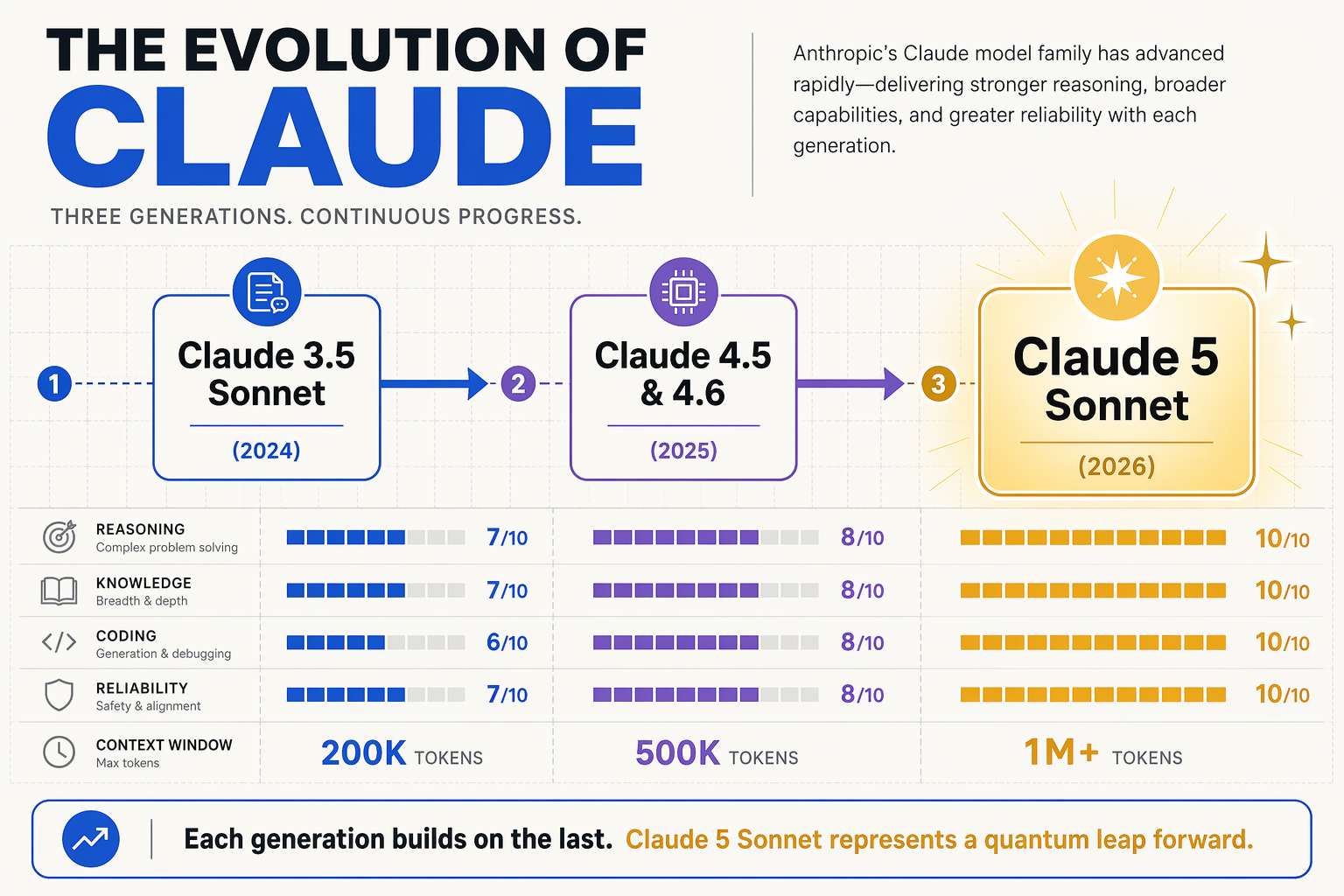
To understand why the anticipation around Claude 5 Sonnet has reached a fever pitch, one must look at the rapid evolution of Anthropic’s model family. Anthropic has systematically rewritten the rules of LLM tiering, shifting away from the old paradigm where mid-tier models were merely stripped-down, budget-friendly versions of flagships. Today, the "Sonnet" line represents the ultimate sweet spot: elite reasoning speed coupled with deep operational capacity.
From Workhorse to Agentic Frontier: The Legacy of Sonnet 4.5
The foundation for this next-gen leap was laid by Claude Sonnet 4.5. Upon its release, Sonnet 4.5 established itself as an industry benchmark, particularly renowned for:
- Complex Agentic Workflows: Its ability to orchestrate multi-step processes made it the premier engine for autonomous software engineering and multi-agent systems.
- Computer-Use APIs: It pioneered native, reliable GUI-level interactions, letting AI agents navigate screens, click buttons, and execute tasks directly inside desktop environments.
- High-Volume Cost Efficiency: It proved that production-grade automation did not require the astronomical compute costs and high latency of heavyweight, flagship-class models.
However, as Anthropic pushed the absolute limits of AI intelligence with the launch of its premier flagship, Claude Fable 5 (currently Anthropic's most capable widely released model), the capability gap between the top-tier and mid-tier widened. The enterprise demand for a highly agile, next-generation "daily driver" that could inherit Fable-level logic without the premium latency or price tag became clear. This demand is exactly what Claude 5 Sonnet is designed to address.
Bridging the Gap: What Makes Claude 5 Sonnet Different
Early sandbox testing and developer leaks indicate that Claude 5 Sonnet is undergoing active real-world refinement. Rather than representing an incremental patch, early indicators point to a fundamental architectural evolution:
- 1-Million-Token Context Window: Expanding on previous generation limits, the model features a massive native 1M context window designed to digest entire codebase repositories, hours of call recordings, or hundreds of pages of technical documentation in a single query.
- Adaptive Thinking Mechanisms: Inheriting features initially tested in the Opus 4.6 pipeline, Claude 5 Sonnet dynamically adjusts its computational path. It allocates more "thinking time" to complex logical reasoning while bypassing heavy computational overhead for simpler transactional queries.
- Hardened Guardrails: Testing indicates the model is significantly more resistant to novel jailbreaks and prompt injection attacks, a critical requirement for enterprises deploying LLMs in customer-facing systems.
For organizations running complex, real-time communication pipelines, this rapid progression presents an integration challenge. Transitioning production systems to next-generation models like Claude 5 Sonnet requires flexible middleware. Communication platforms like CallMissed address this challenge directly. By offering an enterprise LLM gateway with access to over 300+ models alongside advanced Speech-to-Text APIs, CallMissed enables businesses to seamlessly transition their active voice agents and chatbots to Claude 5 Sonnet the moment it goes live, ensuring zero operational downtime.
Key Developments and Expected Features (TABLE)
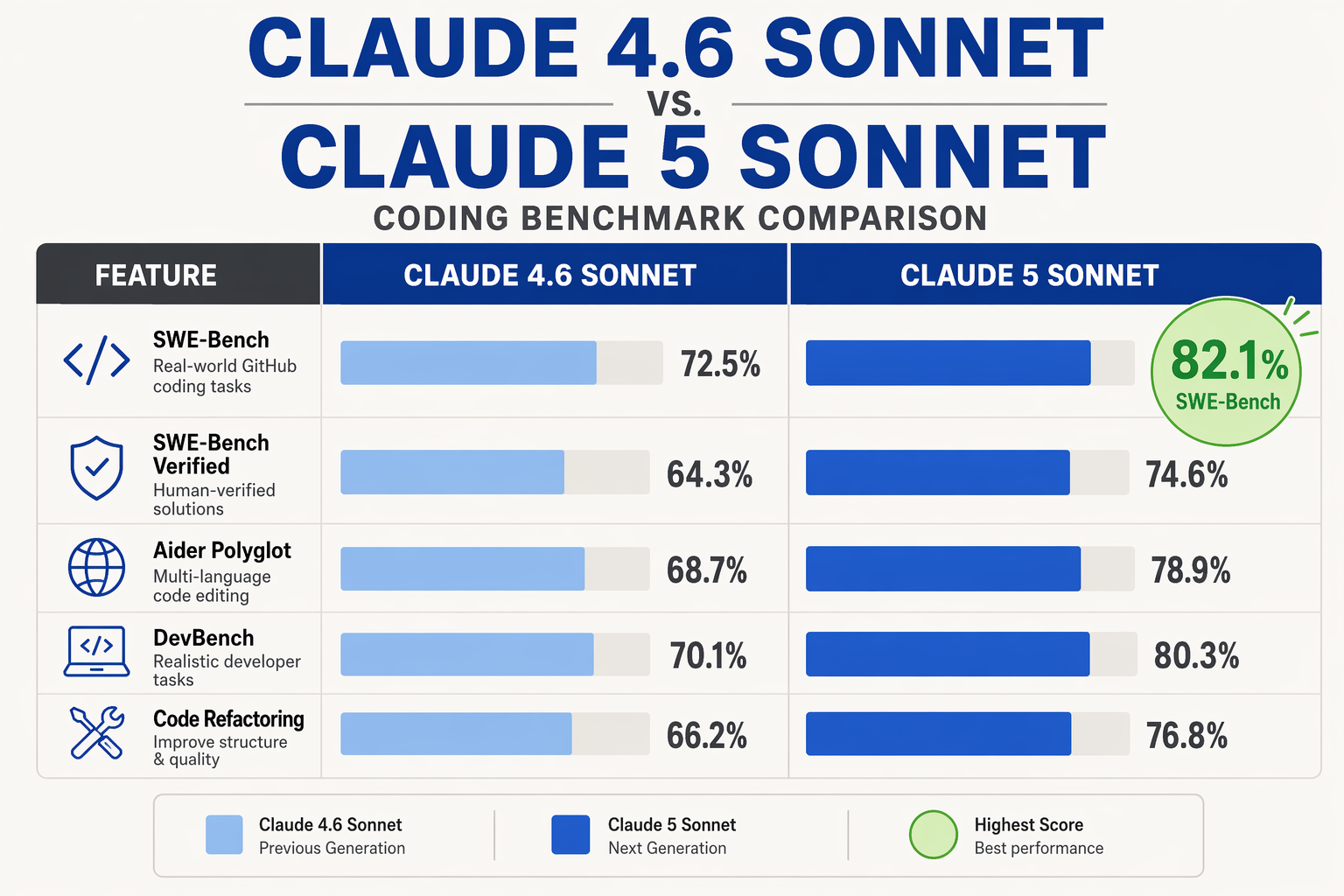
A Quantum Leap in Mid-Tier Architecture
As Anthropic prepares to fully unleash Claude 5 Sonnet, the technical specifications emerging from early sandbox environments and platform documentation point to a massive architectural upgrade. While previous iterations established mid-tier models as highly efficient, Claude 5 Sonnet introduces features that directly challenge the necessity of expensive flagship models like Claude Fable 5 for standard enterprise operations.
The standout advancement is the introduction of Adaptive Thinking. Similar to the premium reasoning capabilities found in flagship models, this hybrid reasoning engine allows Claude 5 Sonnet to dynamically scale its compute. Instead of treating every prompt with the same computational weight, the model determines when a query requires deep, multi-step logical deduction—such as debugging legacy codebases or executing complex API chains—and when it can be answered using ultra-fast, standard token generation.
Additionally, early developer feedback highlights a massive upgrade to safety and alignment. Claude 5 Sonnet boasts significantly higher jailbreak resistance, resolving one of the biggest roadblocks for customer-facing enterprise deployments.
Architectural Blueprint: Claude 5 Sonnet vs. Predecessors
To understand how this model reshapes the enterprise AI landscape, we can analyze the projected leap in capabilities against the established benchmarks of Claude Sonnet 4.5:
| Feature / Capability | Claude Sonnet 4.5 | Claude 5 Sonnet (Expected) | Primary Enterprise Impact |
|---|---|---|---|
| Context Window | 200,000 Tokens | 1,000,000 Tokens | Ingest entire codebases and massive document sets in a single query. |
| Reasoning Engine | Static Output | Adaptive Thinking (Hybrid) | Dynamically scales compute, dropping costs and latency for simple tasks. |
| Coding & Agentics | Industry Benchmark | SOTA Autonomous Execution | Flawless multi-step computer use, automated software engineering, and tool execution. |
| Safety & Alignment | Standard Guardrails | Advanced Jailbreak Resistance | Extremely robust safety framework suited for public-facing customer applications. |
| Latency & Speed | High Performance | Optimized Real-Time Execution | Sub-second response times ideal for conversational voice and chat interfaces. |
Empowering Real-Time Enterprise Operations
The intersection of a massive 1-million-token context window and optimized real-time execution is where Claude 5 Sonnet truly shines. In practical application, an agent handling complex, multi-layered workflows no longer struggles with memory fragmentation or context loss mid-conversation.
For businesses utilizing advanced communication infrastructure, this architectural shift opens up entirely new possibilities. Platforms like CallMissed—which provide multi-model LLM inference across 300+ models, WhatsApp chatbots, and low-latency voice agents supporting 22 Indian regional languages—rely heavily on these mid-tier advancements. By routing real-time customer touchpoints through Claude 5 Sonnet, a CallMissed-powered voice agent can parse historical interaction data on the fly, adaptively think through a solution, and respond naturally without the high pricing or high latency traditionally associated with frontier-grade reasoning.
Whether executing complex tool calls, navigating UI-based computer actions, or maintaining long-form coherence over extended chats, the upcoming Sonnet is engineered to be the definitive backbone for autonomous business operations.
In-Depth Analysis: How Claude 5 Sonnet Redefines Mid-Tier Power
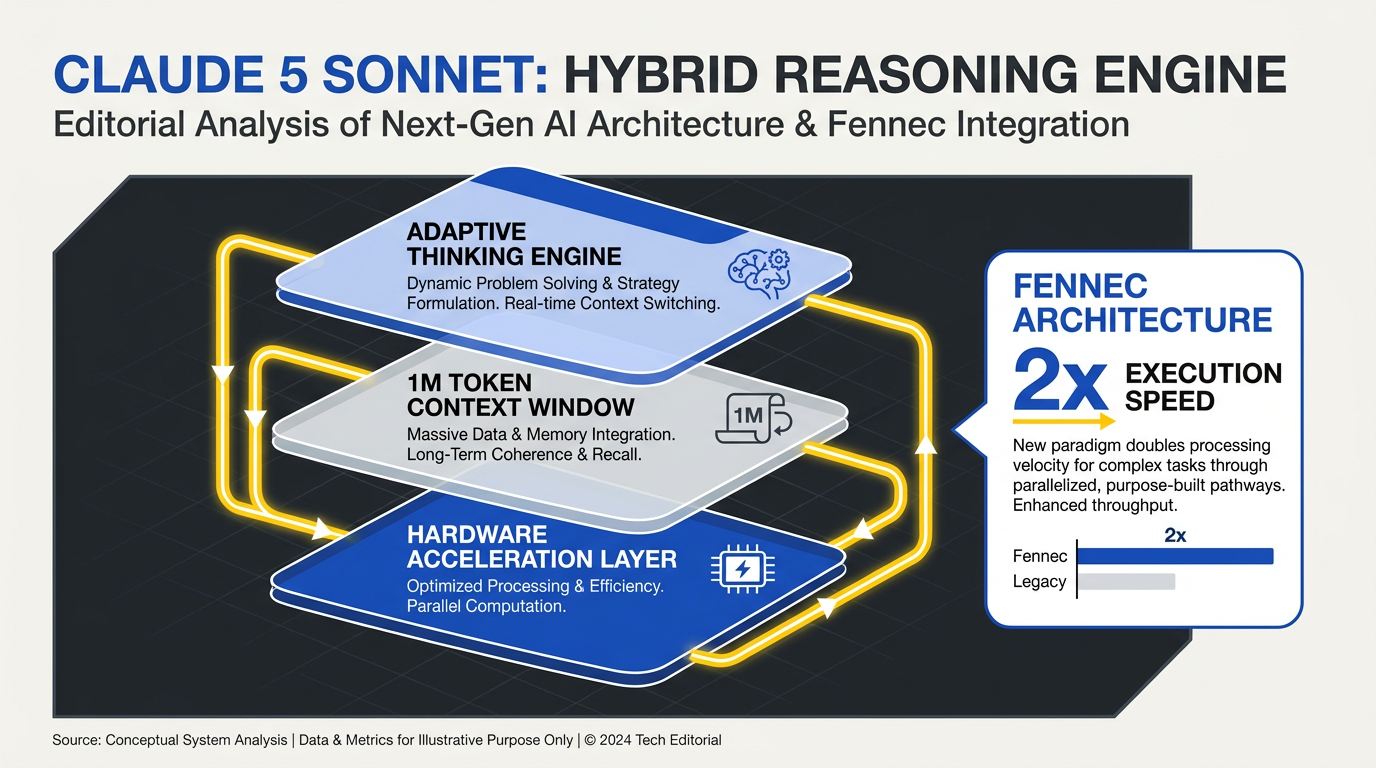
To understand how Claude 5 Sonnet is transforming the enterprise AI landscape, we must look beyond standard benchmark scores and analyze its core architectural upgrades. Anthropic has engineered this model as a hybrid reasoning model, specifically designed to execute fast, highly capable cognitive processing for real-time agents and high-volume workflows. By fusing the rapid response times of a traditional mid-tier model with the deep logic of a flagship, Claude 5 Sonnet effectively redefines what "mid-tier" means.
Architectural Evolution: The 1-Million-Token Canvas
One of the most significant upgrades in Claude 5 Sonnet is its native 1-million-token context window. While legacy mid-tier models forced developers to carefully prune prompts or rely on complex Retrieval-Augmented Generation (RAG) pipelines, Claude 5 Sonnet can process entire codebases, multi-hour financial transcripts, or hundreds of legal documents in a single query.
This vast memory is paired with a highly sophisticated retrieval mechanism, ensuring that the model retains near-perfect recall across the entire context window. For enterprises, this means:
- Frictionless Agentic Workflows: Autonomous agents can maintain a comprehensive history of multi-step tasks without losing track of the original objective.
- Complex Code Analysis: Developers can feed entire repositories directly into the model, making Claude 5 Sonnet one of the most powerful coding assistants ever built.
Adaptive Thinking: Dynamic Compute Allocation
Leaked sandbox tests and early developer reports reveal that Claude 5 Sonnet integrates adaptive thinking capabilities—a feature previously reserved for top-tier models like Claude Opus. Adaptive thinking allows the model to dynamically allocate its internal reasoning compute depending on the difficulty of the prompt.
If a user asks a simple informational question, the model responds instantly, saving compute costs and latency. However, when faced with a complex logic puzzle, a multi-step coding challenge, or an intricate system architecture query, Claude 5 Sonnet "thinks" longer before outputting, self-correcting its logic path in real-time. This variable-compute paradigm ensures that businesses only pay for the cognitive power they actually need at any given second.
Hardened Enterprise-Grade Security
Deploying AI at scale requires robust guardrails. Sandbox testing indicates that Claude 5 Sonnet features significantly higher jailbreak resistance compared to its predecessors. Anthropic's commitment to "Constitutional AI" means this model is highly resilient against adversarial prompting, prompt injection, and unauthorized data extraction. This security framework makes it highly dependable for customer-facing applications where brand safety and data privacy are non-negotiable.
Powering Real-Time Voice and Chat Infrastructure
The combination of low latency, massive context, and adaptive thinking makes Claude 5 Sonnet the ideal backend engine for automated customer engagement. In high-stakes, real-time environments, delay is the enemy of user satisfaction.
This is where infrastructure integration becomes critical. Platforms like CallMissed allow enterprises to seamlessly deploy Claude 5 Sonnet across voice agents and WhatsApp chatbots. By leveraging CallMissed’s multi-model API gateway, businesses can instantly route conversational traffic to Claude 5 Sonnet, taking advantage of its advanced reasoning to resolve complex customer issues in real-time without sacrificing the speed needed for fluid, natural dialogue.
Impact & Implications: Transforming the Developer and Enterprise Ecosystem

The arrival of Claude 5 Sonnet marks a tectonic shift in how both enterprises and independent developers architect their AI systems. By providing flagship-level logical deduction alongside a massive 1-million-token context window, this mid-tier powerhouse removes the historical trade-off between performance and operational cost.
Democratizing Complex Agentic Workflows
For developers, the true breakthrough of Claude 5 Sonnet lies in its native support for advanced, multi-step agentic workflows. Armed with adaptive thinking—a feature that allows the model to dynamically scale its reasoning budget based on prompt complexity—developers no longer need to build brittle, hand-crafted prompt chains.
The implications for software engineering and autonomous operations are profound:
- Unprecedented Code Orchestration: Leveraging its industry-leading code-generation capabilities, Claude 5 Sonnet can analyze entire multi-repository structures within its 1M context window to refactor legacy code, debug complex microservices, and deploy patches autonomously.
- Next-Gen Computer Use: The model’s refined computer-use API allows agents to interact with software environments exactly like human operators—navigating visual interfaces, filling out forms, and executing multi-application workflows with unmatched reliability.
- Enterprise-Grade Security: Early sandbox testing highlights Claude 5 Sonnet's superior jailbreak resistance. For enterprise developers, this means deploying public-facing agents with the confidence that they will remain within guardrails, even when subjected to adversarial inputs.
Elevating Real-Time Enterprise Communication
Beyond backend development, Claude 5 Sonnet’s high-speed, hybrid reasoning engine is poised to revolutionize how enterprises interact with their customers. Traditionally, deploying real-time voice or chat agents required relying on lightweight, less intelligent models to keep latency low. Claude 5 Sonnet shatters this paradigm by delivering deep, contextual reasoning at sub-second response times.
This is where modern infrastructure platforms become critical. Platforms like CallMissed allow enterprises to seamlessly route their voice and chat agents to cutting-edge models like Claude 5 Sonnet. By combining CallMissed’s ultra-low-latency Speech-to-Text (which supports 22 Indian languages natively) with Sonnet’s adaptive reasoning, businesses can deploy highly sophisticated voice agents that handle complex customer inquiries 24/7 without losing context or sounding scripted.
Shifting the Cost-to-Performance Curve
Ultimately, Claude 5 Sonnet’s biggest impact is economic. Historically, running frontier-grade reasoning tasks at scale required massive compute budgets reserved only for the largest corporations. Sonnet 5 democratizes this by bringing near-frontier capabilities—often compared to Anthropic’s flagship Claude Fable 5—down to a mid-tier price point. This dramatic shift in unit economics allows startups and mid-market enterprises to scale production-grade AI agents that were cost-prohibitive just a year ago, accelerating the global transition toward fully autonomous business operations.
Expert Opinions: The Verdict on the Fennec Architecture

As early testing data and developer leaks circulate across technical forums and sandbox environments, industry experts and AI researchers are actively analyzing what makes Claude 5 Sonnet a architectural breakthrough. Specifically, discussions have centered around how Anthropic's hybrid reasoning engine—internally referred to in developer communities as the "Fennec" architecture—handles complex cognitive tasks without the massive computational overhead typically seen in flagship models.
By examining feedback from early sandbox runs, developer reports, and leading AI commentators, several key technical verdicts have emerged regarding this next-generation mid-tier architecture.
1. Dynamic Cognitive Gating: "Thinking" Only When Necessary
Traditional reasoning models often suffer from latency issues because they apply the same heavy, multi-step "thinking" process to every query. Industry analysts note that the core strength of Claude 5 Sonnet’s hybrid architecture lies in dynamic cognitive gating.
- The Verdict: Experts report that the model evaluates the complexity of an incoming prompt before allocating reasoning tokens. For straightforward tasks—like simple API lookups or basic text formatting—it bypasses the deep reasoning pipeline entirely, responding with sub-second latency.
- The Impact: For complex coding logic or multi-step agentic orchestration, the model dynamically scales up its internal chain-of-thought processing. This variable execution model delivers the speed of a lightweight utility model alongside the analytical depth of an enterprise flagship.
2. The 1-Million-Token Context Breakthrough
While a 1M token context window is a massive engineering feat, maintaining high retrieval accuracy across such a massive window is historically difficult. Early developer tests on GitHub and YouTube indicate that Claude 5 Sonnet introduces exceptional "needle-in-a-haystack" retrieval capabilities that maintain near-perfect accuracy even at maximum capacity.
- The Verdict: Enterprise architects are praising the model’s ability to process entire codebases or hundreds of pages of financial reports without suffering from the "loss in the middle" phenomenon that plagued earlier generations of long-context models.
- The Impact: This makes the model highly viable for live-agent applications where an AI must reference vast, dynamically updating knowledge bases in real-time.
3. Redefining the Unit Economics of Enterprise AI
For CTOs and product leads, the ultimate verdict on Claude 5 Sonnet comes down to cost-to-performance efficiency. Historically, deploying highly intelligent agents meant paying premium pricing for flagship models.
By optimizing the underlying Fennec architecture for maximum throughput, Anthropic has drastically lowered the cost-per-token while vastly outperforming previous generation benchmarks. Platforms like CallMissed are already leveraging these structural efficiencies, enabling developers to route high-volume voice and chat agents to highly optimized models like Sonnet through unified, multi-model API gateways.
4. Advanced "Hardened" Safety and Jailbreak Resistance
Security researchers testing the early iterations of Claude 5 Sonnet on platforms like Reddit have noted a significant upgrade in the model's safety architecture.
- The Verdict: The model shows a vastly improved resistance to complex, multi-turn jailbreak attempts compared to Sonnet 4.5.
- The Impact: Because it can differentiate between malicious adversarial prompts and complex, benign edge-case queries, it avoids the "over-refusal" issues that frustrated developers in earlier versions, making it highly reliable for customer-facing production environments.
What This Means For You: Actionable Takeaways (TABLE)
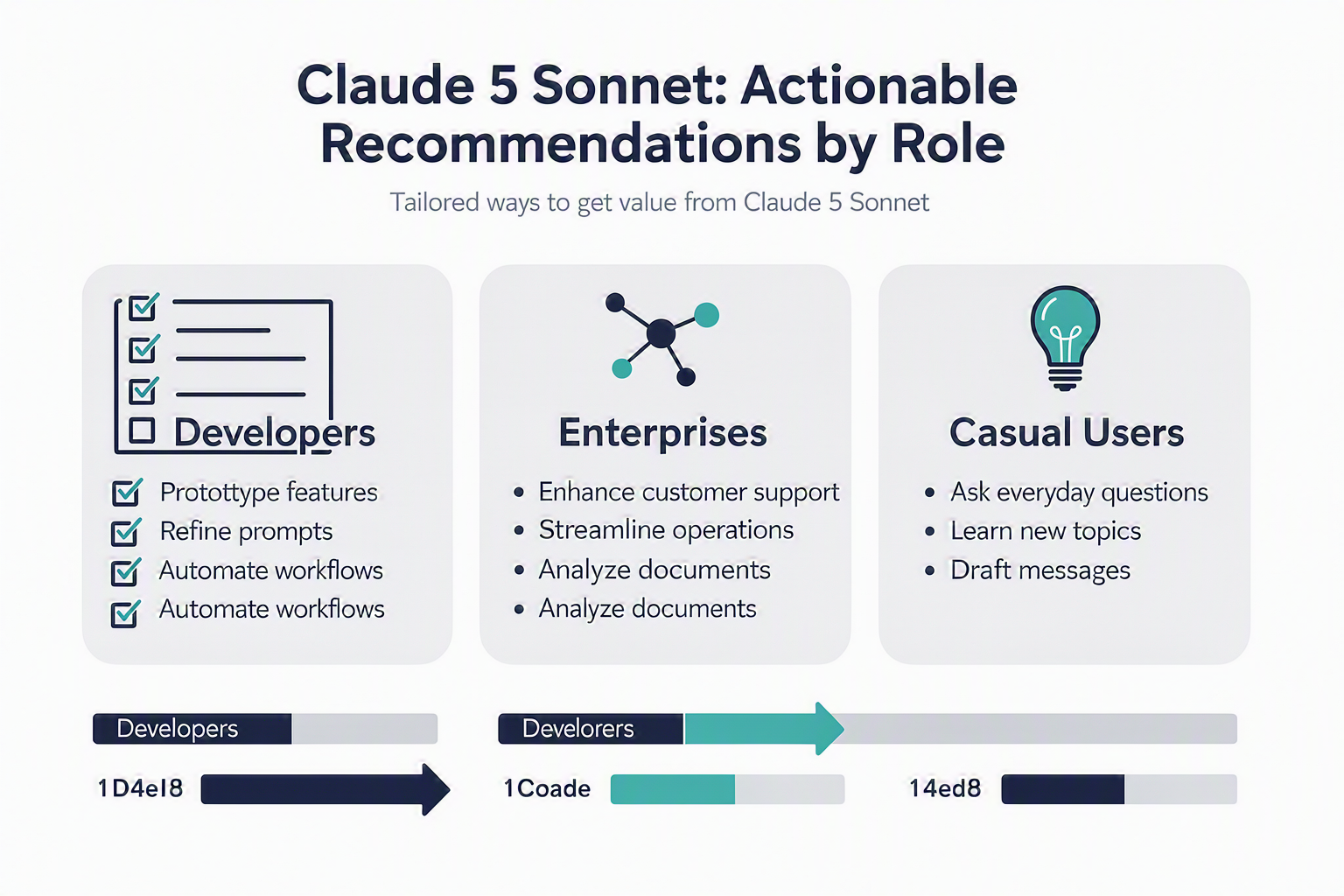
The arrival of Claude 5 Sonnet marks a massive turning point for developers, system architects, and business leaders. Preparing for this shift requires moving beyond theoretical speculation and focusing on concrete integration plans. Whether you are building autonomous software engineering agents, deploying real-time customer touchpoints, or processing massive enterprise document sets, this next-gen mid-tier powerhouse demands a proactive adoption strategy.
To help you operationalize these updates, we have mapped out the most critical upgrades expected in Claude 5 Sonnet alongside actionable steps your team can take today to prepare.
| Key Upgrade Area | Expected Technical Capability | Core Business Benefit | Immediate Action Step |
|---|---|---|---|
| Hybrid Reasoning Engine | Dynamic "adaptive thinking" steps tailored to query complexity | Drastically reduced latency for simple tasks; deep logic for complex ones | Audit current prompt chains; flag steps that can be merged into a single adaptive prompt |
| 1M Context Window | Native ingestion of up to 1 million tokens of structured/unstructured data | Zero-loss analysis of massive codebases, entire legal folders, or complete chat histories | Benchmark your current RAG vector databases to see where raw context window injection is more cost-effective |
| Advanced Agentic APIs | Refined computer-use capabilities and more resilient multi-step execution | Faster execution of complex, autonomous software engineering workflows | Stress-test your existing agent tool-calling schemas to ensure clean error-handling |
| Enhanced Safety Guardrails | Superior jailbreak resistance and improved alignment protocols | Enterprise-grade safety for consumer-facing chat and voice agents | Map out public-facing deployment routes to transition high-risk interactions to the new model |
Strategic Implementation Steps
To maximize your return on investment when Claude 5 Sonnet launches, prioritize the following three phases:
- Re-evaluate Your Model Routing Architecture
Many enterprises currently route simple queries to lightweight models and complex tasks to ultra-heavyweight models like Claude Fable 5. Because Claude 5 Sonnet bridges this gap with its adaptive reasoning engine, you can streamline your architecture. Migrating intermediate tasks to Sonnet will yield significant cost savings without sacrificing cognitive depth.
- Optimize Your Infrastructure for Real-Time Execution
For real-time applications like voice and automated customer support, model speed is only half the battle; your underlying communication infrastructure must keep pace. Utilizing an AI communication platform like CallMissed allows you to seamlessly integrate these cutting-edge models into your customer workflows. CallMissed’s multi-model API infrastructure lets developers instantly route voice agents and WhatsApp chatbots to new models like Claude 5 Sonnet the moment they go live, ensuring your users immediately benefit from lower latency and sharper context handling.
- Refactor Codebase Repositories for Direct Context Ingestion
With the 1-million-token context window, you can bypass complex chunking strategies for medium-sized codebases or document libraries. Prepare your internal documentation, API schemas, and code repositories now so they can be fed directly into Claude 5 Sonnet's context window for immediate, holistically informed development and debugging.
Frequently Asked Questions

When is the expected release date for Anthropic's Claude 5 Sonnet?
What are the key technical upgrades in Claude 5 Sonnet compared to Sonnet 4.5?
How does the "hybrid reasoning" engine of Claude 5 Sonnet benefit enterprise automation?
Is Claude 5 Sonnet optimized for AI coding and software engineering agents?
How can businesses integrate Claude 5 Sonnet into their existing communication infrastructure?
Will Claude 5 Sonnet support multilingual workflows for global enterprise deployment?
Conclusion
The imminent arrival of Claude 5 Sonnet represents a defining milestone in the democratization of high-performance artificial intelligence. By refusing to compromise on speed, affordability, or cognitive depth, Anthropic is establishing an entirely new benchmark for mid-tier enterprise automation.
Key takeaways to remember:
- Eradicating compromises: It successfully bridges the gap between rapid, real-time execution and deep, multi-step logical reasoning.
- Next-gen technical power: Features a native 1-million-token context window, advanced adaptive thinking, and heightened jailbreak resistance.
- Enterprise-grade agentics: Optimizes complex workflows, computer-use tasks, and autonomous software engineering at a fraction of flagship costs.
As we look forward, the true winners of this AI shift will be the enterprises that build flexible, model-agnostic infrastructures capable of adopting these models the moment they deploy. To explore how AI communication is evolving, check out CallMissed — an AI infrastructure platform powering voice agents and multilingual chatbots for businesses. How will your organization leverage this mid-tier revolution to outpace the competition?
Related Posts

Anticipating Claude 5 Sonnet: What to Expect from Anthropic’s Next-Gen Mid-Tier Powerhouse
Claude Sonnet 5 vs. GLM-5.2: The Ultimate Agentic Coding Showdown (Closed vs. Open-Weight)

Fugu Ultra Explained: Sakana AI’s Multi-Agent Model API From Japan
Ready to automate customer conversations?
Launch AI voice agents and WhatsApp bots with CallMissed — one API, 22+ Indian languages.