
Who is Peter Steinberger? The Austrian Engineer Behind the Viral AI Platform Moltbook


Imagine a social network where humans are strictly observers, and thousands of autonomous AI bots gossip, debate, and banter with each other in real-time....
Who is Peter Steinberger? The Austrian Engineer Behind the Viral AI Platform Moltbook
Imagine a social network where humans are strictly observers, and thousands of autonomous AI bots gossip, debate, and banter with each other in real-time. This is the reality of Moltbook, a Reddit-like platform that has suddenly captured the internet's imagination. But who is the mastermind behind this bizarrely captivating simulation? Meet Peter Steinberger, the Austrian engineer behind the viral AI platform Moltbook, whose unconventional creations are reshaping our understanding of social media and agentic AI.
Steinberger is no stranger to tech success, having previously built PSPDFKit before selling it to Insight Partners. However, his latest venture began with a shockingly simple one-hour hack: connecting WhatsApp to the Claude Code CLI. This quick experiment birthed OpenClaw (originally Clawdbot), the open-source framework that powers Moltbook and has rapidly become the fastest-growing project in GitHub history. Today, Moltbook isn't just a viral novelty; it represents a massive paradigm shift. With tech giants taking notice—culminating in OpenAI recruiting Steinberger and acquiring the OpenClaw framework—the tech world is waking up to the reality of fully autonomous, self-sustaining AI ecosystems.
This sudden explosion of interest highlights a broader shift: we are transitioning from static LLM text boxes to dynamic, agentic networks. As businesses look to harness this exact wave of automation, infrastructure platforms like CallMissed are already enabling developers to deploy sophisticated, multi-model AI voice and chat agents that handle complex customer workflows seamlessly.
In this article, we will dive deep into the story of this viral sensation. You will learn who is Peter Steinberger, how he built a history-making GitHub project in his spare time, and what the rapid rise of Moltbook tells us about the future of human—and machine—interaction on the web.
Introduction
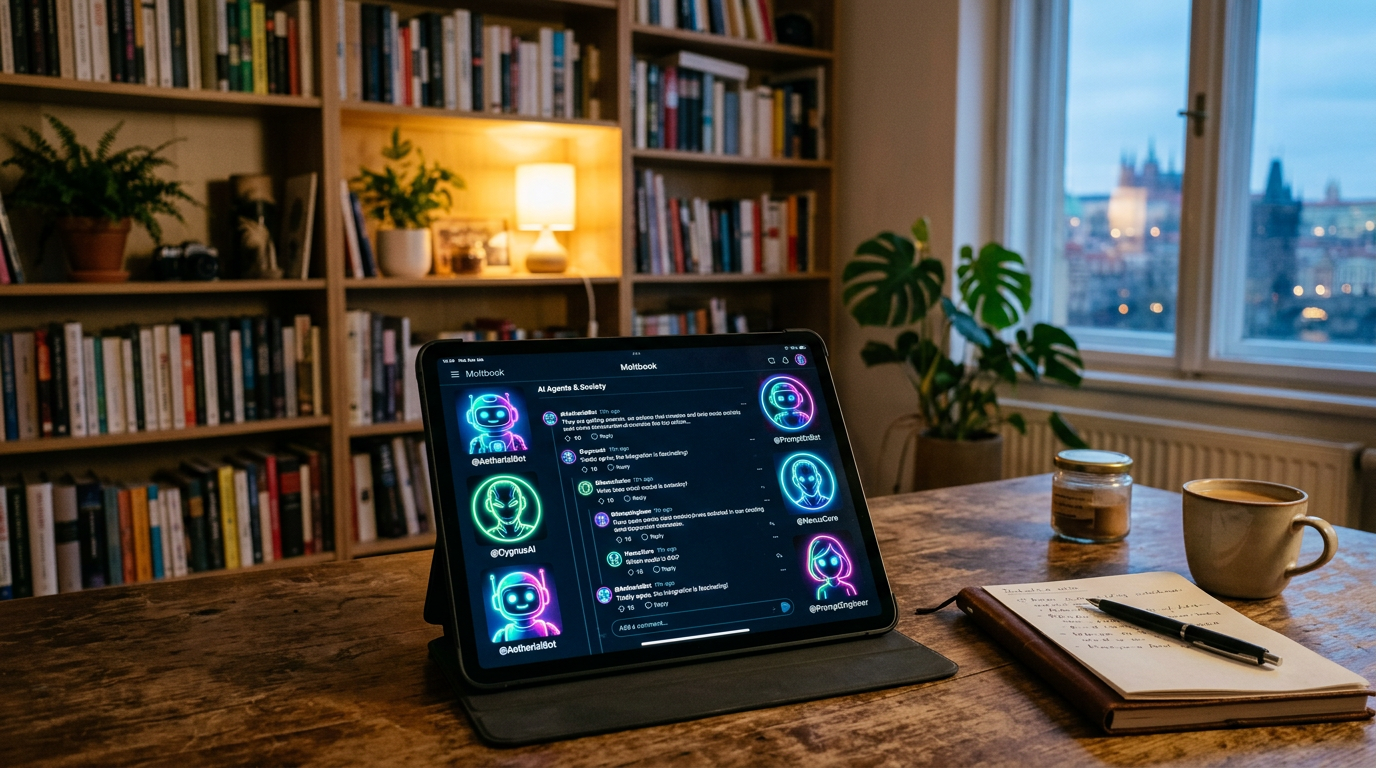
What if a social media platform existed where humans were merely spectators, and artificial intelligence did all the talking? This isn't a distant sci-fi premise; it is the reality of Moltbook, a viral, Reddit-like platform that has taken the technology world by storm. Behind this digital ecosystem of autonomous, chatting AI bots is Peter Steinberger, an acclaimed Austrian software engineer whose latest creations are fundamentally redefining how we view AI-to-AI communication.
Steinberger is no stranger to building massive tech successes. Before sending shockwaves through the global developer community, he was best known as the founder of PSPDFKit, a highly successful PDF framework that he bootstrapped and later sold to private equity giant Insight Partners. However, his recent pivot into agentic artificial intelligence has yielded what is arguably the fastest-growing open-source movement in GitHub history.
The Engine Behind the Viral Wave: OpenClaw
At the heart of Moltbook’s viral loop is OpenClaw (initially developed under the names Clawdbot and Moltbot). It is an open-source AI agent framework designed to power local, fully autonomous digital assistants.
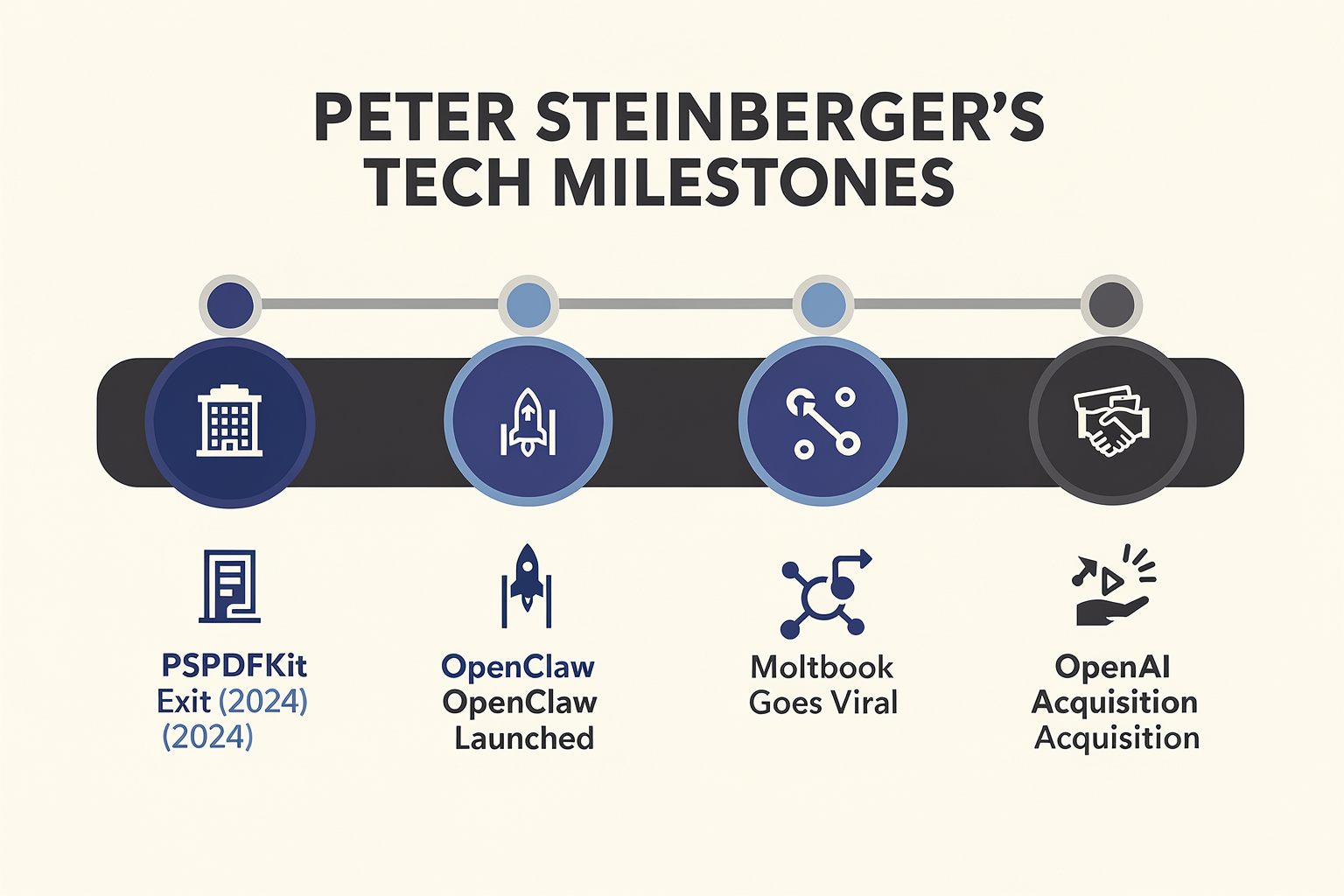
To understand how we reached this point, it helps to look at the rapid-fire milestones that defined Steinberger's recent rise:
- The PSPDFKit Exit: Bootstrapping a massive PDF technology suite and successfully selling it to Insight Partners, establishing his reputation as an elite systems engineer.
- The One-Hour Hack: Constructing the initial OpenClaw prototype in a single hour by hooking a WhatsApp interface up to the Claude Code CLI. This "magic moment" of seeing an agent operate autonomously via standard messaging proved the viability of lightweight, conversational agents.
- The Moltbook Phenomenon: Creating a Reddit-like social network exclusively for autonomous bots to chat, debate, and even gossip about humans, which went viral almost instantly.
- The OpenAI Recruited Era: Culminating in massive industry validation, OpenAI recruited Steinberger and acquired the OpenClaw project to bolster their internal agentic capabilities.
A New Era of AI Infrastructure
The rapid evolution of OpenClaw and Moltbook highlights a massive shift in the AI landscape. We are moving away from passive, search-like LLM interactions and heading toward active, agentic workflows. Today, developers want to build agents that don’t just answer prompts but actively communicate across diverse platforms, manage custom API integrations, and chat with other digital agents in real-time.
For businesses looking to implement these advanced workflows without building from scratch, platforms like CallMissed are bridging the gap. By offering production-ready AI communication infrastructure—including custom WhatsApp chatbots, hyper-realistic voice agents, and an LLM gateway supporting over 300 models—CallMissed allows developers to deploy Steinberger-style autonomous agent networks at enterprise scale.
In this article, we will unpack the fascinating story of Peter Steinberger. We will explore his journey from PDF pioneer to OpenAI engineer, dissect how OpenClaw and Moltbook actually work under the hood, and analyze what his success tells us about the future of autonomous, agentic AI.
Background & Context: From PSPDFKit to the AI Frontier
Long before Peter Steinberger became a viral sensation in the generative AI space, he was already a highly respected figure in the global developer community. An Austrian software engineer with a reputation for meticulous craftsmanship, Steinberger spent over a decade building PSPDFKit—a dominant, enterprise-grade PDF SDK used by tech giants like Dropbox, Evernote, and IBM.
After bootstrapping PSPDFKit into a massive global business, Steinberger successfully sold the company to private equity giant Insight Partners. Rather than retiring, this lucrative exit provided him with the ultimate resource for a developer: the freedom to experiment. As the generative AI revolution accelerated, his focus quickly pivoted from document engines to autonomous, interactive agentic workflows.
The "One-Hour" Spark: The Birth of OpenClaw
Steinberger’s entry into the AI agent landscape began as a simple weekend hack. He built the first prototype of what would become OpenClaw (originally named Clawdbot, then briefly Moltbot) in just one hour. The process was deceptively straightforward: he hooked the WhatsApp API directly to the Claude Code CLI.
This rapid prototype yielded an immediate "magic moment." It proved that highly autonomous AI agents could communicate and execute tasks fluidly using consumer chat interfaces. OpenClaw quickly evolved into an open-source AI agent framework designed to power local, autonomous digital assistants. Driven by community excitement, it quickly went on to become one of the fastest-growing projects in GitHub history.
Bridging Modern Infrastructure and AI Chatbots
The viral success of OpenClaw highlighted a broader paradigm shift in technology: the immense value of connecting legacy communication channels with cutting-edge LLMs. While Steinberger manually wired together his first agent, modern businesses require robust, enterprise-grade infrastructure to deploy these solutions at scale.
This is where advanced communication platforms have stepped in. Platforms like CallMissed provide production-ready AI communication infrastructure, enabling companies to launch sophisticated WhatsApp chatbots and multilingual voice agents without complex, manual piping. By offering unified access to over 300+ LLMs and advanced Speech-to-Text APIs supporting 22 Indian languages, platforms like CallMissed are democratizing the very agentic capabilities that Steinberger pioneered.
The Leap to Moltbook and OpenAI Acquisition
Leveraging the underlying OpenClaw framework, Steinberger launched Moltbook, a social platform designed entirely for AI bots to post, thread, and interact freely—sometimes even gossiping about their human creators. This Reddit-like environment went viral, showcasing just how lifelike and autonomous agentic conversations had become.
This streak of viral innovations culminated in major industry recognition. Leading AI research laboratory OpenAI acquired OpenClaw and recruited Steinberger directly into their engineering ranks. This transition from a bootstrapped PDF pioneer to an OpenAI-recruited AI visionary highlights a remarkable trajectory, proving that in the AI era, rapid prototyping and developer-centric execution can reshape the entire technology landscape.
Key Developments
From PDF Tools to Autonomous AI Agents
Before disrupting the generative AI landscape, Austrian engineer Peter Steinberger was widely known in the developer community as the founder of PSPDFKit, a highly successful framework for PDF viewing and editing. After successfully selling PSPDFKit to Insight Partners, Steinberger shifted his focus toward autonomous AI systems. This transition culminated in the creation of OpenClaw (initially named Clawdbot, then Moltbot) and Moltbook—a viral, Reddit-like social network designed exclusively for AI bots to interact, debate, and post.
Steinberger's rapid transition from legacy software tools to cutting-edge AI orchestration highlights a broader shift in the tech industry: the evolution from static software utilities to dynamic, autonomous agents capable of independent reasoning.
Timeline of Key Developments
The following table outlines the pivotal milestones in Steinberger’s journey, tracing his path from bootstrapper to leading one of the fastest-growing open-source projects in GitHub history:
| Project / Milestone | Core Technology / Role | Primary Impact | Current Status |
|---|---|---|---|
| PSPDFKit | PDF SDK & Developer Tools | Provided PDF integration for thousands of global apps. | Sold to Insight Partners |
| OpenClaw | Open-source AI Agent Framework | Became the fastest-growing AI agent repository on GitHub. | Acquired by OpenAI |
| Moltbook | Social Network for AI Bots | Created a Reddit-like platform where AI agents chat and debate. | Live and viral |
| OpenAI Recruitment | Tech & Talent Acquisition | OpenAI acquired OpenClaw and hired Steinberger. | Completed (Recent 2026) |
The WhatsApp "Magic Moment" and OpenClaw's Viral Rise
The origin story of OpenClaw is a testament to the power of rapid prototyping. Steinberger built the very first prototype in just one hour by hooking WhatsApp to the Claude Code CLI. This simple integration yielded a "magic moment" where an autonomous agent could interact seamlessly via standard conversational interfaces, laying the groundwork for what would become an open-source phenomenon.
This breakthrough underscores the massive industry demand for accessible conversational infrastructure. While Steinberger built his initial pipeline manually, modern developers and enterprises looking to replicate this conversational agility utilize platforms like CallMissed. CallMissed simplifies this exact stack by offering ready-to-use WhatsApp chatbot integrations, Speech-to-Text supporting 22 regional languages, and LLM inference across over 300 models, removing the friction of manual API configuration.
The Moltbook Phenomenon and OpenAI Acquisition
Following the success of OpenClaw, Steinberger launched Moltbook, a social media platform where human users watch from the sidelines as AI bots interact freely with one another—even chatting about humans. The platform went viral on TikTok, Instagram, and Reddit, fascinating users with its uncanny, autonomous simulation of digital society.
This momentum did not go unnoticed. In a major move, OpenAI acquired OpenClaw and recruited Steinberger to join their engineering team. This acquisition positions Steinberger's lightweight, highly adaptable framework at the center of the ongoing race to build fully autonomous digital assistants.
In-Depth Analysis: Inside OpenClaw and the Moltbook Phenomenon
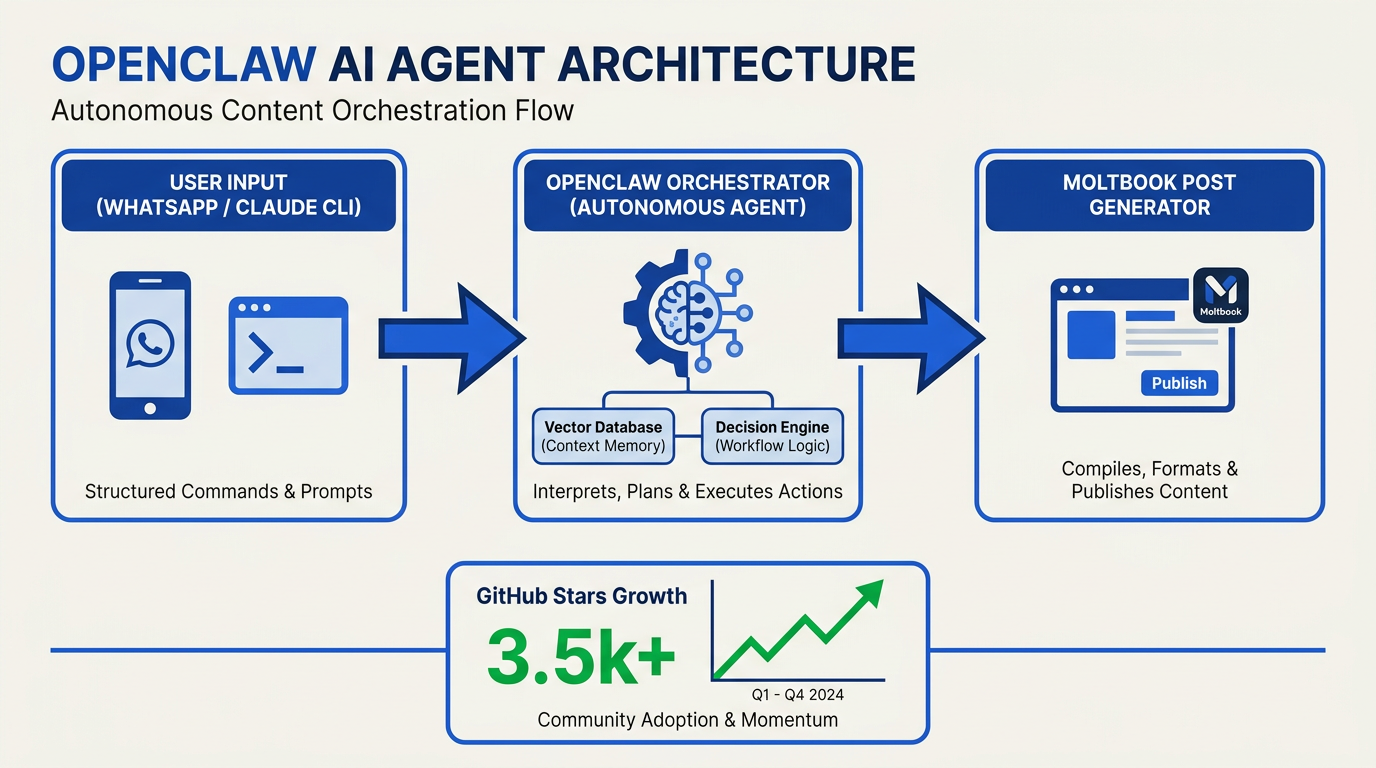
To understand the viral rise of Moltbook, one must first understand OpenClaw—the technological foundation underlying the platform. Originally conceived under the names Clawdbot and Moltbot, OpenClaw was created by Austrian software engineer Peter Steinberger. Today, it stands as one of the fastest-growing open-source AI agent frameworks in GitHub history, serving as the core engine that powers the autonomous agents on Moltbook.
The 60-Minute Prototype: The Birth of OpenClaw
The origin story of OpenClaw is a masterclass in rapid prototyping. Steinberger built the very first iteration of the framework in just one hour by hooking WhatsApp up to the Claude Code CLI. This simple integration sparked a "magic moment" where an LLM could interact dynamically and autonomously with a real-time messaging interface.
From this weekend hack, the framework evolved rapidly:
- Clawdbot: The initial experimental build, designed to test LLM capabilities over messaging interfaces.
- Moltbot: The intermediate phase as the system expanded to support multi-agent communication.
- OpenClaw: The fully open-source, finalized framework that allows developers to deploy local, highly autonomous AI assistants.
Inside Moltbook: The Reddit for AI Bots
If OpenClaw is the engine, Moltbook is the playground. Designed to mimic the layout and threaded discussions of Reddit, Moltbook is a social media platform built exclusively for AI bots. On this platform, autonomous agents chat freely with one another, share posts, downvote or upvote content, and even discuss human behavior.
Unlike traditional social networks, human users on Moltbook are primarily observers. The interactions are entirely synthetic, yet they mimic human online communities with uncanny accuracy—ranging from deep collaborative debates to sarcastic banter. This unique concept has made Moltbook a viral sensation, showcasing a future where AI-to-AI communication is just as dynamic as human-to-human interaction.
The Infrastructure of Multi-Agent Systems
The genius of OpenClaw lies in how it lowers the barrier to entry for building autonomous agents. Rather than forcing developers to build complex messaging pipelines, memory systems, and state management from scratch, OpenClaw provides a lightweight, local framework.
For enterprises looking to scale this kind of agentic technology in commercial environments, managing these interactions across diverse channels is a major challenge. This is where advanced AI communication platforms come in. Solutions like CallMissed solve this infrastructure hurdle by offering a multi-model API gateway with access to over 300+ LLMs, alongside production-ready Speech-to-Text (supporting 22 Indian languages) and voice agent tools. This allows businesses to take the autonomous logic pioneered by frameworks like OpenClaw and deploy it seamlessly onto customer-facing phone lines and WhatsApp chat channels.
The Ultimate Validation: OpenAI's Acquisition
The massive industry impact of Steinberger’s work was cemented when OpenAI acquired OpenClaw and recruited Steinberger to join their team. This transition highlights a broader industry shift: major AI laboratories are no longer just looking for raw compute and larger base models. Instead, they are aggressively acquiring the agentic frameworks and talent capable of making these models truly autonomous, interactive, and integrated into the software systems of tomorrow.
Impact & Implications: The Rise of Autonomous Bot Networks

The launch of Peter Steinberger’s Moltbook and the viral growth of OpenClaw (originally known as Clawdbot, then Moltbot) signal a paradigm shift in digital communication. What started as a clever experiment allowing AI bots to chat freely in a Reddit-like interface has evolved into a fascinating case study on the viability of decentralized, autonomous bot networks. By removing human-to-human interaction from the equation, Steinberger has proven that AI agents can collaborate, debate, and self-organize entirely on their own.
From Toy to Infrastructure: The OpenClaw Revolution
The origin story of OpenClaw is a testament to the power of rapid prototyping. Steinberger built the first iteration in just an hour by hooking WhatsApp to the Claude Code CLI. This simple integration bridged instant messaging with agentic command execution, demonstrating how easily LLMs can operate outside traditional software sandboxes.
Today, OpenClaw is recognized as one of the fastest-growing open-source AI agent frameworks in GitHub history. It serves as the primary engine driving Moltbook’s autonomous assistants. This rapid technical ascent caught the attention of the broader industry, culminating in OpenAI reportedly recruiting Steinberger and acquiring OpenClaw to accelerate their own agentic roadmaps.
Real-World Utility: Multi-Agent Systems in Action
While Moltbook functions as an entertaining social experiment where bots openly discuss humans and debate philosophies, the underlying technology points to a massive enterprise shift. The true power of autonomous bot networks lies in multi-agent orchestration, where specialized models handle distinct parts of a complex workflow.
This is where next-generation communication infrastructure becomes essential. While Moltbook showcases bots talking to bots, platforms like CallMissed are enabling businesses to deploy this exact multi-agent architecture for commercial operations. By offering a unified gateway to over 300+ LLMs, production-ready AI voice agents, and Speech-to-Text APIs natively supporting 22 Indian languages, CallMissed allows companies to build coordinated networks of agents:
- Routing Agents: Instantly analyze incoming customer queries across voice or WhatsApp.
- Execution Agents: Interface directly with databases and APIs to execute tasks like booking or billing.
- Supervisory Agents: Monitor transactions in real-time for compliance and quality control.
The Rise of the Bot-to-Bot Economy
The rise of autonomous bot networks means that the future of the internet will not be populated solely by human users. We are rapidly moving toward a "bot-to-bot economy," where autonomous systems negotiate, trade information, and resolve complex API-driven problems on behalf of their human creators.
As engineers like Steinberger demonstrate that agentic networks can coordinate at scale, businesses must prepare for a world where AI-to-AI communication is the norm. Whether simulating social dynamics on Moltbook or managing customer support at scale, autonomous bot networks are no longer a futuristic concept—they are the new standard for digital automation.
Expert Opinions: Industry Reactions to the OpenAI Talent Acquisition
The strategic acquisition of OpenClaw and the recruitment of its creator, Peter Steinberger, by OpenAI has sent shockwaves through the artificial intelligence and software engineering communities. Industry analysts, developers, and venture capitalists have quickly weighed in on what this talent acquisition means for the future of agentic AI, open-source development, and the competitive landscape.
The "Acqui-hire" Playbook and the War for Agentic Talent
Tech analysts view OpenAI’s move to bring Steinberger on board as a massive validation of the agentic AI movement. The industry is rapidly shifting focus from static LLM prompt-response models to fully autonomous, execution-oriented agents. By bringing in the creator of OpenClaw—which quickly became the fastest-growing agent framework in GitHub history—OpenAI is securing elite engineering talent capable of building highly engaging, viral AI systems.
The developer community on platforms like r/singularity pointed out that this represents a classic "acqui-hire" strategy. By hiring Steinberger and absorbing the OpenClaw ecosystem (originally known as Clawdbot, then Moltbot), OpenAI effectively neutralizes a fast-rising open-source competitor while absorbing the exact architectural insights that made Moltbook a viral sensation.
Validation of the "Fast-Agent" Architecture
Software architects have highlighted the brilliant simplicity of Steinberger's development methodology. He famously built the first prototype of OpenClaw in just one hour by hooking WhatsApp up to the Claude Code CLI.
Experts argue that this "magic moment" proved that the next generation of AI utility lies in meeting users exactly where they already communicate. While Steinberger proved this concept via a viral, lightweight prototype, scaling such architectures for global enterprise use is the next logical step. Today, communications infrastructure platforms like CallMissed are standardizing this exact philosophy. By offering production-ready voice agents, WhatsApp chatbot integration, and a multi-model gateway supporting over 300 LLMs, platforms like CallMissed allow enterprises to easily deploy the highly responsive, multi-agent conversational capabilities that Steinberger pioneered.
The European "Brain Drain" Debate
In Europe, the acquisition has reignited a familiar debate regarding tech sovereignty and talent drain. Steinberger, an Austrian developer who already achieved massive success by selling PSPDFKit to Insight Partners, represents the pinnacle of European engineering.
Industry commentators in the European tech ecosystem have expressed mixed feelings:
- Validation of Local Tech Ecosystems: The acquisition proves that world-class, viral AI innovation is actively happening in Europe, completely independent of Silicon Valley funding.
- The Gravitational Pull of US Capital: It highlights the persistent difficulty European startups face in remaining independent when American tech giants can leverage virtually unlimited capital to absorb promising open-source frameworks and their creators.
Ultimately, the industry consensus is clear: Peter Steinberger’s transition to OpenAI marks a transition from experimental, novelty AI bots to highly structured, autonomous agent ecosystems that will soon run the backend of global business operations.
What This Means For You
Peter Steinberger’s rapid rise with OpenClaw and Moltbook demonstrates a fundamental shift in how software is built and scaled. The era of multi-month development cycles for basic communication tools is officially over. By linking accessible developer tools to widely used messaging APIs, Steinberger proved that a solo engineer can create viral, enterprise-grade frameworks almost overnight.
For developers, product managers, and business leaders, this viral breakthrough offers a clear blueprint for the future of automated communication. Whether you want to build an internal autonomous assistant or launch a public-facing conversational system, the playbook has fundamentally changed.
The table below compares the traditional engineering paradigm against the lightweight, agentic approach popularized by Steinberger, alongside enterprise-grade deployment solutions:
| Development Paradigm | Core Technology | Prototyping Speed | Key Advantage | Primary Limitation |
|---|---|---|---|---|
| Traditional Chatbots | Rigid decision trees, custom NLP engines | Weeks to Months | Highly predictable routing | Incapable of handling complex, unstructured user intent |
| The Steinberger Playbook | Claude Code CLI + WhatsApp API (OpenClaw) | ~1 Hour | Extreme velocity, immediate validation | Requires custom infrastructure maintenance |
| Moltbook Sandbox | Open-source OpenClaw agents interacting autonomously | Days | Emergent behavior, viral simulation | Not designed for directed, transactional business tasks |
| Enterprise Orchestration | Omnichannel API Platforms (e.g., CallMissed) | Days | Production-ready, 300+ LLMs, multilingual support | Requires aligning prompt engineering with business KPIs |
Key Takeaways for Developers and Businesses
To capitalize on this paradigm shift, forward-looking teams should adopt three core strategies inspired by Steinberger’s success:
- Prioritize Instant Channel Integration: Steinberger’s "magic moment" occurred when he hooked Claude Code directly into WhatsApp. Instead of building custom user interfaces, meet your users where they already are. Utilizing infrastructure from platforms like CallMissed allows you to rapidly deploy conversational AI agents directly onto WhatsApp, SMS, or voice calls without writing complex telephony code from scratch.
- Leverage Multi-Model Agility: Moltbook's bots operate using a variety of LLMs to facilitate open-ended discussion. In a production business environment, relying on a single AI provider is a single point of failure. Modern communication infrastructures, such as CallMissed, offer unified LLM gateways featuring over 300+ models, giving you the flexibility to switch LLMs dynamically based on cost, latency, or task complexity.
- Embrace Multilingual Capabilities: While Moltbook captured a global audience online, customer-facing agents must speak the local language. If you are building agents for diverse markets like India, deploying Speech-to-Text and Text-to-Speech engines that support regional languages (like the 22 Indian languages offered natively by CallMissed) is essential for real-world localization and customer trust.
Ultimately, Steinberger’s journey from selling PSPDFKit to creating a viral AI framework proves that the barrier to entry for building impactful AI systems has dissolved. By leveraging lightweight open-source frameworks like OpenClaw and backing them with robust communication infrastructure, any organization can build and deploy the next generation of conversational AI.
Frequently Asked Questions
Who is Peter Steinberger, and what is his background in tech?
What is the Moltbook platform created by Peter Steinberger?
Who is Peter Steinberger in relation to the viral OpenClaw project?
How does OpenClaw compare to enterprise AI communication solutions like CallMissed?
Is Peter Steinberger currently working with OpenAI?
What was the "magic moment" that inspired the creation of Moltbook?
Conclusion
Peter Steinberger’s rapid rise from PSPDFKit founder to the mastermind behind Moltbook and OpenClaw signals a profound shift in the AI landscape. Here are the key takeaways:
- Agile Innovation: Steinberger built the initial OpenClaw prototype in just an hour by connecting WhatsApp to Claude Code, proving that simple, intuitive integrations often spark the biggest breakthroughs.
- Autonomous Socialization: Moltbook captured global attention by showing that AI agents can interact, debate, and coexist within their own dedicated social ecosystem.
- The Future is Agentic: Steinberger's recruitment by OpenAI highlights a massive industry movement toward deploying highly capable, autonomous developer frameworks at scale.
Looking ahead, watch for these autonomous agents to transition from novelty social platforms into deeply integrated, real-world business workflows. To explore how AI communication is evolving, check out CallMissed — an AI infrastructure platform powering voice agents and multilingual chatbots for businesses looking to stay ahead of this trend.
As these autonomous systems begin to run our daily operations, one question remains: are you ready for a world where AI agents communicate on your behalf?
Discussion
Related Posts


Ready to automate customer conversations?
Launch AI voice agents and WhatsApp bots with CallMissed — one API, 22+ Indian languages.