
GPT-Rosalind: OpenAI's Frontier Reasoning for Science and Drug Discovery



Did you know that bringing a single new drug to market typically takes over 10 to 12 years and costs upwards of $2.6 billion, with a staggering 90%...
GPT-Rosalind: OpenAI's Frontier Reasoning for Science and Drug Discovery
Did you know that bringing a single new drug to market typically takes over 10 to 12 years and costs upwards of $2.6 billion, with a staggering 90% failure rate in clinical trials? For decades, the pharmaceutical and biotechnology industries have wrestled with this grueling, high-risk timeline. However, the paradigm is shifting rapidly. In May 2026, OpenAI officially entered the AI-bio arms race with the launch of GPT-Rosalind, a groundbreaking, purpose-built frontier reasoning model engineered specifically for biology, drug discovery, genomics, and translational medicine. Named in honor of Rosalind Franklin—the pioneering chemist whose X-ray diffraction images were critical to deciphering the DNA double helix—this specialized model marks a monumental transition from general-purpose artificial intelligence to highly specialized, "science-first" reasoning engines.
Why does this launch matter so much right now? Traditional large language models (LLMs), while highly capable of writing code or drafting essays, have historically struggled with the rigorous, multi-step logic required for deep scientific research. They frequently hallucinate chemical structures, misinterpret genomic sequences, and fail to comprehend the complex physical laws governing protein folding. GPT-Rosalind changes the game by utilizing advanced reasoning architectures designed to operate directly on dense scientific data. Instead of acting as a simple text generator, it functions as an advanced reasoning co-pilot. It is designed to evaluate complex hypotheses, analyze genomic datasets, and model protein-protein interactions with unprecedented accuracy, allowing researchers to test scenarios virtually before moving to expensive wet-lab experiments.
Bridging the Gap Between Advanced AI and Practical Deployment
As the AI ecosystem fragments into highly specialized domains, organizations face the massive challenge of integrating these complex models into their existing workflows. Fortunately, platforms like CallMissed are already helping enterprises bridge this gap by offering a unified communication and multi-model infrastructure with access to over 300+ LLMs, ensuring that scientific breakthrough models and customer-facing operations can be seamlessly orchestrated under one roof.
In this article, we will take a comprehensive look at OpenAI's newest scientific breakthrough. Here is a preview of what you will learn:
- The Mechanics of Science-First AI: How GPT-Rosalind differs from standard reasoning models like GPT-4o or GPT-5, and how its deep understanding of genomics, chemistry, and protein engineering was built.
- Accelerating Drug Discovery: The specific ways this reasoning model assists in target identification, lead optimization, and translational medicine workflows to shave years off clinical development timelines.
- The "Trusted-Access" Security Model: A look at how OpenAI is pairing this powerful model with strict safety guardrails and trusted-access approaches to prevent biosecurity risks while enabling open scientific collaboration.
- The Future of AI-Bio: How the rise of specialized reasoning models will reshape the biotech landscape, clinical trials, and personalized medicine over the next decade.
Introduction: OpenAI's Leap into Life Sciences with GPT-Rosalind

The landscape of artificial intelligence is undergoing a monumental shift. For years, general-purpose large language models (LLMs) dominated the tech horizon, impressing the world with their ability to write code, draft essays, and automate customer service. However, the limit of what generalized models can achieve in highly specialized fields has become increasingly apparent. In May 2026, OpenAI officially shattered these boundaries by unveiling GPT-Rosalind, its first frontier reasoning model purpose-built for biology, drug discovery, genomics, and translational medicine.
Named in honor of Rosalind Franklin—the pioneering chemist and biophysicist whose X-ray diffraction images were critical to uncovering the double-helix structure of DNA—GPT-Rosalind marks a "science-first" era for AI development. Rather than simply repurposing an existing conversational model with scientific textbooks, OpenAI designed GPT-Rosalind from the ground up to operate on complex scientific data. It represents a targeted, high-reasoning tool designed to assist human researchers in navigating the incredibly complex pipelines of modern biotechnology.
Defining the Paradigm Shift: What is GPT-Rosalind?
GPT-Rosalind is not a conversational chatbot designed to write creative stories; it is a highly specialized reasoning engine. The model is optimized for complex, multi-step scientific workflows where precision, logical consistency, and deep domain knowledge are non-negotiable.
Unlike general LLMs that rely heavily on pattern matching and probabilistic text generation, GPT-Rosalind integrates frontier reasoning capabilities to analyze structured and unstructured biological data. According to early technical documentation and industry analysis, the model does not act as a substitute for human expertise. Instead, it functions as a cognitive partner, helping researchers synthesize massive datasets, formulate hypotheses, and identify hidden patterns across disparate scientific literatures.
The launch of GPT-Rosalind marks OpenAI’s official entry into the highly competitive AI-Bio arms race, directly challenging established specialized platforms. By focusing on deep reasoning rather than mere information retrieval, OpenAI aims to compress the early stages of drug discovery—historically a multi-year, multi-million-dollar bottleneck—into a fraction of the time.
Core Capabilities: A Specialized Toolkit for Life Sciences
GPT-Rosalind has been pre-trained on vast, specialized datasets spanning chemistry, molecular biology, genetics, and clinical trial data. This deep-domain focus allows the model to excel in several key areas:
- Genomics and Chemistry: The model possesses an in-depth understanding of genomic sequences, molecular structures, and chemical reactivity. It can reason through how specific genetic mutations might impact cellular pathways or how chemical modifications could alter a compound's efficacy.
- Protein Engineering: By analyzing protein structures and sequence data, GPT-Rosalind supports researchers in predicting protein folding behaviors and designing novel proteins with targeted therapeutic functions.
- Translational Medicine: One of the most significant challenges in modern medicine is bridging the gap between laboratory discoveries and clinical applications. GPT-Rosalind is built to analyze translational data, helping researchers map laboratory-scale biochemical reactions to systemic, real-world physiological outcomes.
- Scientific Hypothesis Generation: Because the model operates on scientific data rather than standard web text, it can identify subtle correlations across thousands of peer-reviewed journals, clinical trials, and chemical registries, proposing novel pathways for drug design that human researchers might overlook.
The Trusted-Access Framework and Enterprise Orchestration
Deploying AI in the life sciences requires addressing strict standards of data privacy, intellectual property protection, and safety. Recognizing this, OpenAI has launched GPT-Rosalind with a highly controlled trusted-access approach. This framework pairs the model's reasoning capabilities with secure, vetted environments, ensuring that proprietary chemical formulas, patient genomic data, and drug trial results remain entirely confidential and insulated from public training loops.
As research laboratories and pharmaceutical giants begin integrating these specialized models into their tech stacks, the demand for sophisticated middleware and API orchestration has reached an all-time high. Organizations rarely rely on a single model; instead, they build hybrid pipelines where specialized science models work alongside translation, communication, and general-purpose systems.
This is where advanced communication and API infrastructures become vital. For instance, developers looking to integrate scientific reasoning with automated clinical communications or patient-facing updates rely on platforms like CallMissed. While GPT-Rosalind handles the intensive biological reasoning behind the scenes, CallMissed’s multi-model API gateway allows developers to seamlessly coordinate over 300+ LLMs and advanced Speech-to-Text pipelines. This enables research teams to effortlessly translate complex AI-generated scientific insights into multilingual patient notifications, clinical trial updates, or collaborative voice interfaces across 22 regional Indian languages and global dialects.
Looking Ahead: The Future of AI-Driven Science
The introduction of GPT-Rosalind represents a fundamental transition from AI that writes about science to AI that reasons through scientific complexity. By providing researchers with a tool capable of understanding genomics, chemical synthesis, and protein engineering natively, the scientific community is now equipped to tackle some of the most pressing health challenges of our time with unprecedented speed. Over the coming sections, we will dive deeper into how GPT-Rosalind works, its competitive position against other AI-Bio giants, and its real-world implications for the future of medicine.
The AI-Bio Arms Race: Background & Context
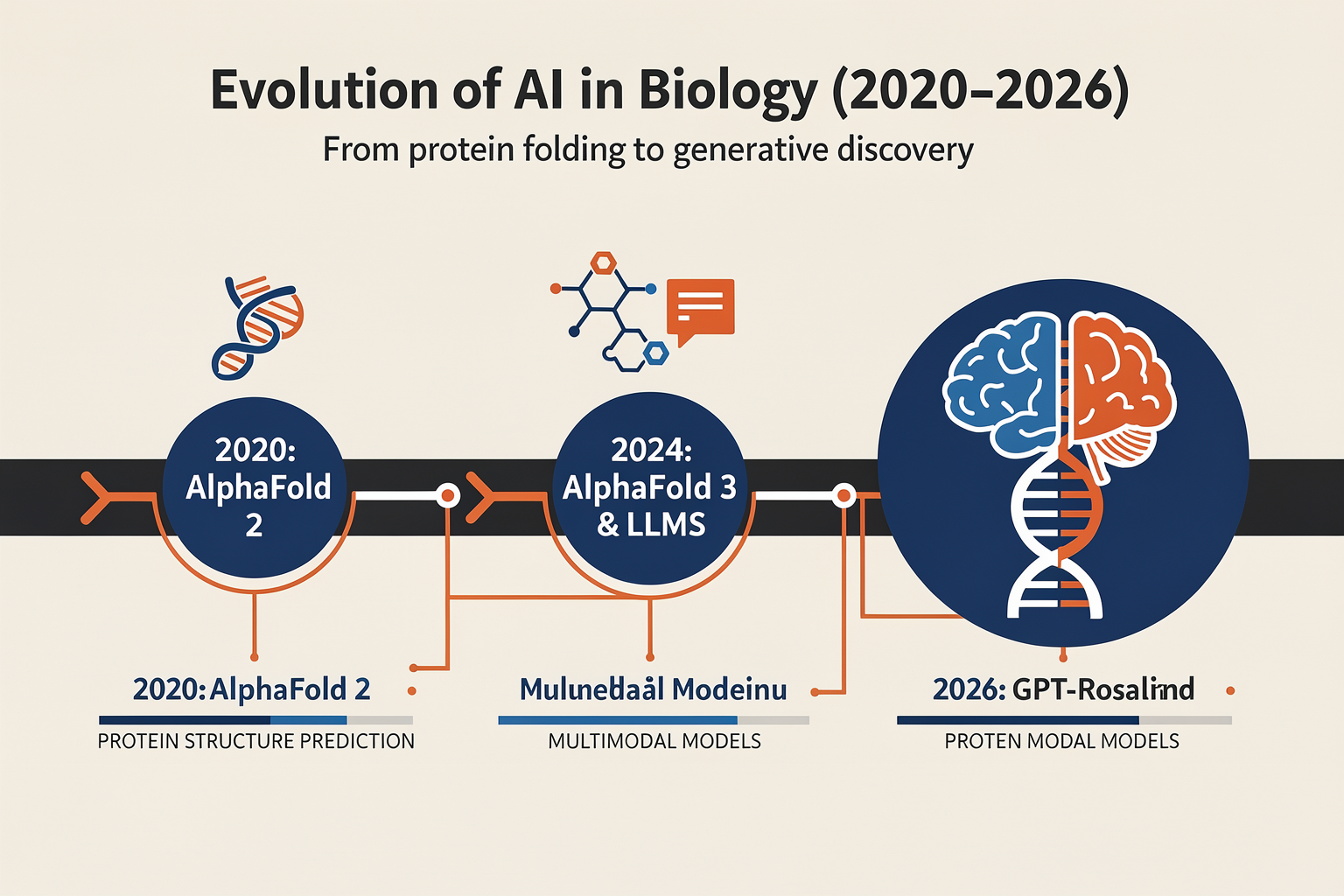
The intersection of artificial intelligence and the life sciences has triggered one of the most high-stakes technological races of the decade. Historically, drug discovery and structural biology were defined by slow, capital-intensive, trial-and-error laboratory experiments. A single drug candidate could take over a decade and cost upwards of $2.6 billion to transition from initial laboratory discovery to clinical approval, with a failure rate exceeding 90% during clinical trials.
Over the last several years, the integration of deep learning began to rewrite these economics. The initial spark occurred when Alphabet's DeepMind introduced AlphaFold, solving the 50-year-old "protein folding problem" by predicting 3D protein structures directly from amino acid sequences. This was quickly followed by Meta's ESMFold and various other open-source attempts to model evolutionary biology using transformer architectures. However, these earlier breakthroughs were primarily specialized prediction engines. They could map structures, but they could not "reason" through complex biological hypotheses, design translational medicine workflows, or synthesize multi-disciplinary scientific datasets.
OpenAI’s official unveiling of GPT-Rosalind in May 2026 marks a fundamental paradigm shift: the transition from predictive structural models to active, scientific reasoning engines. This milestone officially positions OpenAI as a primary contender in the "AI-Bio arms race," transforming how researchers interact with genomic, chemical, and proteomic data.
The Limits of Generalist LLMs in Scientific Workflows
Before the advent of science-first models like GPT-Rosalind, researchers attempted to bend general-purpose large language models (LLMs) to fit scientific workflows. While models like GPT-4 or Claude could summarize research papers or write basic Python scripts for data analysis, they repeatedly stumbled when applied to the rigorous, highly specialized demands of biochemistry and genomics.
Generalist models suffer from three distinct bottlenecks when applied to the life sciences:
- The Hallucination Problem: In creative writing or customer service, a minor hallucination is manageable. In molecular biology, a single hallucinated amino acid residue or an incorrect chemical bond angle can ruin a multi-million-dollar laboratory synthesis.
- Lack of Deep Structural Understanding: General LLMs treat chemical structures (like SMILES strings) and genomic sequences as simple text strings. They lack an organic, physical understanding of 3D spatial chemistry, protein-ligand docking dynamics, and evolutionary conservation.
- Absence of Multi-Step Scientific Reasoning: Designing a drug discovery pipeline requires long-horizon planning. A scientist must identify a disease target, design a complementary small molecule or biologic, simulate its binding affinity, predict its ADME (Absorption, Distribution, Metabolism, and Excretion) profile, and construct a synthesis pathway. General LLMs lack the deliberate, step-by-step reasoning required to navigate these interconnected dependencies.
GPT-Rosalind was engineered to eliminate these bottlenecks. Instead of acting as a general-purpose writing assistant adapted for science, GPT-Rosalind is a specialized frontier reasoning model built from the ground up to support biology, drug discovery, and translational medicine.
GPT-Rosalind: OpenAI’s Direct Entry into Biotech
By launching GPT-Rosalind, OpenAI has introduced a model optimized specifically for scientific reasoning rather than conversational fluency. GPT-Rosalind has an in-depth, native understanding of genomics, chemistry, and protein engineering. Rather than simply retrieving scientific facts, it operates as a sophisticated reasoning tool that works on top of raw scientific data.
According to early documentation and industry analyses, GPT-Rosalind excels at:
- Genomic Analysis: Interpreting complex DNA and RNA sequencing datasets, identifying mutations, and predicting their functional impacts on protein expression.
- Chemical Synthesis & Design: Evaluating molecular structures, suggesting optimization strategies for drug leads, and predicting synthetic viability.
- Protein Engineering: Designing novel proteins with specific target binding properties, accelerating the development of biologics and enzyme-based therapies.
- Translational Medicine Workflows: Bridging the gap between laboratory benchwork and clinical trials by analyzing biomarkers, patient data, and therapeutic efficacy pathways.
Crucially, experts emphasize that GPT-Rosalind is not a substitute for the human expertise required to conduct physical wet-lab validation. Instead, it acts as a force multiplier—allowing researchers to narrow down millions of potential molecular candidates to a handful of high-probability targets in a fraction of the time.
Orchestrating Frontier AI: The Infrastructure Bottleneck
As specialized AI models like GPT-Rosalind enter the market, biotechnology enterprises face a brand-new operational challenge: infrastructure fragmentation. A modern biopharma company cannot rely on a single model alone. They need generalist LLMs for regulatory writing and report generation, specialized vision models for analyzing pathology slides, and frontier reasoning models like GPT-Rosalind for molecular design.
This is where advanced communication and AI infrastructure platforms become crucial. For example, CallMissed addresses this orchestration bottleneck by providing robust, developer-ready LLM inference gateways that support over 300+ models. Using unified platforms like CallMissed, research institutions and biotech firms can seamlessly route different parts of their workflow to the most cost-effective and capable models—sending raw molecular reasoning tasks directly to specialized engines like GPT-Rosalind, while leveraging broader conversational or agentic tools to manage developer operations and day-to-day administrative communication.
This hybrid approach ensures that the scientific community can leverage the bleeding edge of the AI-Bio arms race without getting bogged down by API maintenance, token limits, or infrastructure siloes. GPT-Rosalind represents the future of specialized, science-first artificial intelligence, setting a new standard for how humanity solves its most complex biological challenges.
Key Developments and Features of GPT-Rosalind
To appreciate the impact of GPT-Rosalind, it is essential to look beyond the general capabilities of OpenAI’s previous models. While architectures like GPT-4 offered broad knowledge bases, they often stumbled when confronted with the hyper-specific, multi-layered languages of biochemistry, genomics, and clinical medicine. GPT-Rosalind represents a fundamental shift: a model engineered specifically to reason through the complex relationships governing biological and chemical systems.
The core architecture of GPT-Rosalind combines the computational power of frontier reasoning with deep training across specialized, high-fidelity datasets. The table below outlines the key structural features and scientific domains optimized within the GPT-Rosalind framework.
| Feature / Capability | Core Scientific Domain | Primary Technical Input/Data Types | Target Utility & Research Impact | Safety & Access Level |
|---|---|---|---|---|
| Genomic & Transcriptomic Analysis | Genomics, RNA Biology, Genetics | FASTA/FASTQ sequences, gene expression matrices | Accelerates identification of disease markers and genetic mutations | High-Security Sandbox |
| Protein Engineering & Design | Structural Biology, Proteomics | 3D structural coordinates, PDB files, amino acid chains | Enhances target binding affinity and speeds up de novo antibody design | Standard API / Trusted-Access |
| De Novo Molecular Synthesis | Organic Chemistry, Pharmacology | SMILES strings, molecular graphs, reaction conditions | Lowers time for lead optimization and retro-synthetic pathway planning | Monitored Trusted-Access |
| Translational Medicine Reasoning | Clinical Research, Oncology, Immunology | Clinical trial protocols, patient biomarkers, toxicology logs | Bridges lab-bench target discovery to human clinical trial designs | General API |
| Multi-Step Scientific Reasoning | Broad Multidisciplinary Science | Scientific literature, raw laboratory data notebooks | Solves complex experimental anomalies and designs testable hypotheses | General API |
Deep Domain Understanding: Beyond Text to Molecular Language
Unlike traditional large language models that treat chemistry and biology as mere text translation tasks, GPT-Rosalind possesses an innate comprehension of molecular grammar. It can process structural chemical representations (such as SMILES strings) and sequence languages (such as FASTA and PDB files) as structured mathematical environments.
In drug discovery pipelines, the model does not simply generate plausible-sounding chemical formulas. Instead, it applies physical and chemical constraints to analyze molecular docking, predict binding affinities, and evaluate ADMET (Absorption, Distribution, Metabolism, Excretion, and Toxicity) profiles. This level of granular prediction allows computational chemists to eliminate unviable candidates early in the virtual screening phase, drastically reducing wet-lab validation costs.
For genomics researchers, GPT-Rosalind functions as an interactive co-pilot capable of parsing massive transcriptomic datasets. It identifies subtle patterns in gene expression profiles across diverse cell lines and suggests potential gene knockout strategies for gene therapy development. By analyzing complex biological pathways rather than isolated sequences, the model contextualizes genetic data within the broader framework of cellular biology.
Frontier Scientific Reasoning and Hypothesis Generation
The standout capability of GPT-Rosalind lies in its frontier reasoning engine, designed to mimic the analytical approach of an experienced research scientist. General-purpose models operate primarily on next-token prediction, which can lead to logical leaps or hallucinations in complex scenarios. In contrast, GPT-Rosalind employs an advanced, multi-step chain-of-thought process optimized for the scientific method.
When presented with an experimental anomaly—such as a sudden drop in yield during a chemical synthesis step—the model does not just offer generic troubleshooting tips. It systematically analyzes the reaction parameters, solvent dynamics, and thermodynamic variables to construct multiple testable hypotheses.
This reasoning model is particularly valuable in translational medicine, where researchers must synthesize data from preclinical animal models, in vitro assays, and early-stage human trials. GPT-Rosalind acts as an intellectual bridge, evaluating whether biochemical mechanisms observed in cellular assays are likely to translate effectively into human clinical trial protocols.
Biosecurity, Safety Guardrails, and Trusted-Access
Because of GPT-Rosalind’s unprecedented capabilities in molecular design and protein engineering, OpenAI has placed a heavy emphasis on safety and responsible deployment. The model’s deep understanding of biological agents and chemical synthesis poses unique dual-use risks, particularly regarding the accidental or malicious design of pathogens and chemical hazards.
To mitigate these risks, OpenAI implemented a strict trusted-access approach. This model series operates with specialized biosecurity guardrails that screen inputs and outputs for hazardous biological materials, select agents, and toxins. For highly sensitive workflows, such as de novo pathogen modeling or advanced chemical synthesis, researchers must operate under verified credentialing systems, ensuring that powerful computational biology tools remain in the hands of authorized, ethical researchers.
Integrating Specialized AI into Modern Laboratory Workflows
For GPT-Rosalind to deliver on its promise, it must seamlessly integrate into the broader scientific ecosystem. Modern laboratory environments are highly complex, relying on a diverse array of specialized equipment, proprietary databases, electronic lab notebooks (ELNs), and multi-channel communication pipelines.
This is where advanced technical infrastructure becomes vital. While GPT-Rosalind handles the heavy computational reasoning for life sciences, enterprises must orchestrate these outputs across various teams and operational platforms. Communication infrastructure platforms like CallMissed play a key role in this integration. By leveraging robust API gateways that support over 300+ LLMs alongside high-performance voice agents, Speech-to-Text, and messaging systems, developers can build unified environments. For example, a lab technician can use a voice agent powered by CallMissed’s low-latency API to dictate experimental observations directly into a database, triggering a back-end GPT-Rosalind query to analyze the freshly gathered data in real time.
By combining the specialized scientific reasoning of GPT-Rosalind with highly scalable communication and data-routing infrastructure, research institutions can transition from isolated data silos to highly automated, AI-accelerated discovery engines.
In-Depth Analysis: How Frontier Reasoning Powers Molecular Biology
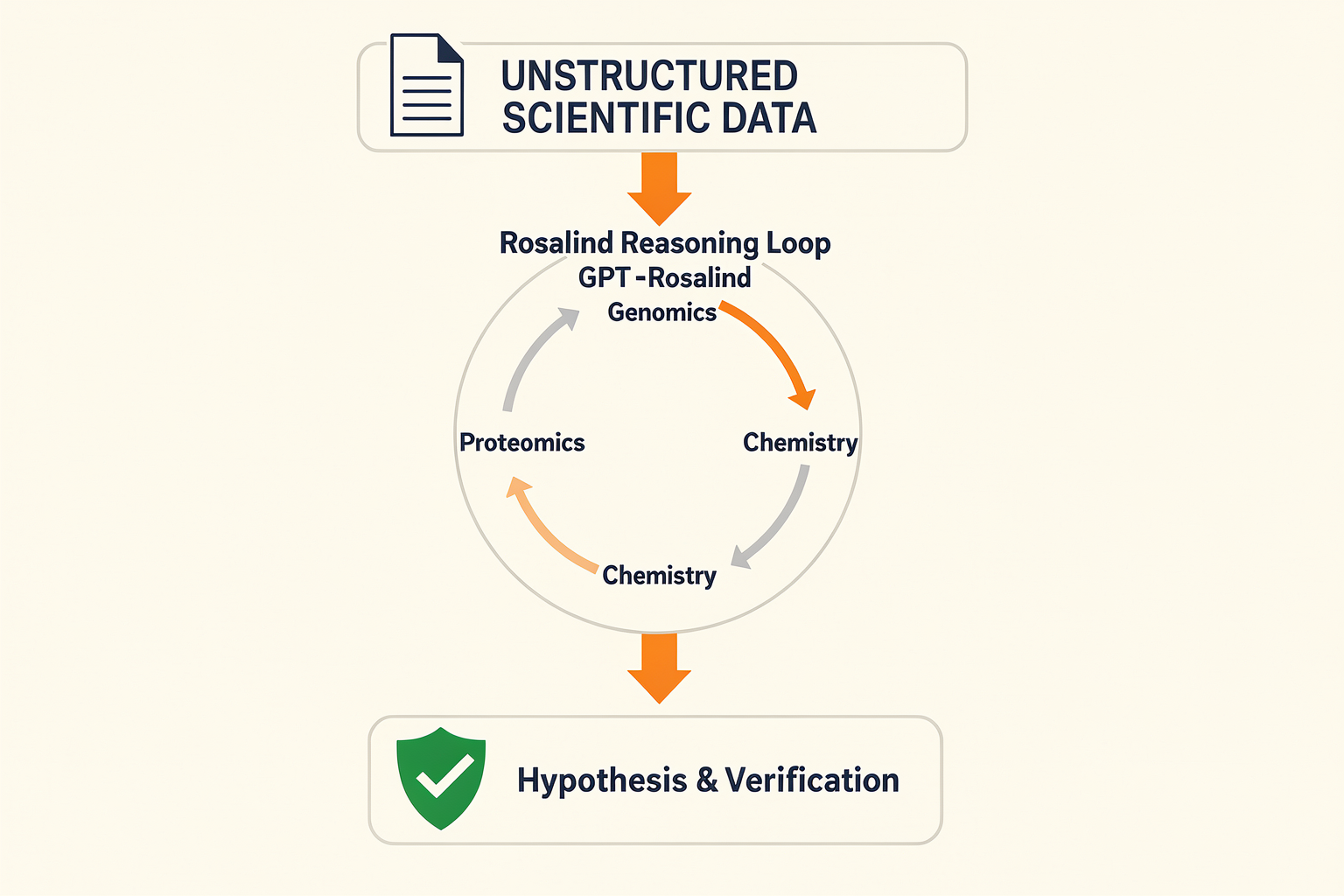
To appreciate why GPT-Rosalind represents a paradigm shift in the life sciences, we must first look at the inherent limitations of traditional generative AI in biology. Standard large language models (LLMs) are trained on vast corpora of natural language, teaching them to predict the next word in a sequence based on statistical probabilities. While this works exceptionally well for drafting essays or generating code, it falls dangerously short in molecular biology. Biology operates on physical laws, precise chemical bonds, and three-dimensional structural constraints—domains where a single "hallucinated" atom or incorrect codon can render an entire multi-million dollar research initiative useless.
GPT-Rosalind bypasses these limitations by utilizing frontier reasoning. Rather than acting as a simple text predictor, it is an advanced reasoning tool purpose-built to operate directly on complex scientific data. By incorporating deep understandings of genomics, chemical structures, and protein folding kinetics, it acts as an intellectual accelerator for researchers, bridging the gap between computational hypothesis generation and wet-lab validation.
The Architecture of Scientific Reasoning
At its core, GPT-Rosalind does not simply search through database entries; it reasons through them. This reasoning capability is critical when dealing with the highly interconnected, multi-layered data structures of molecular biology. The model processes biology through three primary lenses:
- Structural and Spatial Awareness: Standard models see a protein sequence as a string of letters (e.g., M-A-S-G-T...). GPT-Rosalind understands these letters as amino acid residues with specific charge states, hydrophobic properties, and spatial constraints that dictate 3D folding structures and binding affinities.
- Contextual Biological Rules: Biological systems are not static. The model leverages built-in knowledge of cellular pathways, gene expression regulation, and metabolic networks, allowing it to evaluate how a localized molecular change might propagate through an entire biological system.
- Causal Logic Chain-of-Thought: When presented with a prompt—such as optimizing a small molecule for a specific receptor—the model does not jump straight to an output. Instead, it systematically maps its reasoning steps: identifying active sites, assessing binding thermodynamics, evaluating synthetic feasibility, and flagging potential off-target toxicities.
Deep Dive: Frontier Reasoning in Action
To understand how this changes the daily workflow of biotechs and academic institutions, let us examine the specific domains where GPT-Rosalind’s reasoning engine is making the most significant impact.
#### 1. Next-Generation Protein Engineering
Traditional protein design is heavily reliant on trial-and-error, guided by software like AlphaFold or Rosetta. While these tools excel at predicting structures, they do not inherently "reason" about the functional modifications needed for therapeutic purposes.
GPT-Rosalind works in tandem with these structural tools. If a researcher needs to engineer an enzyme that remains stable under highly acidic industrial conditions, they can prompt the model to analyze the wild-type enzyme's sequence. The model reasons through which amino acid substitutions will increase hydrophobic packing in the core or introduce stabilizing disulfide bonds, all while ensuring that the enzyme's active site remains functional. This targeted sequence optimization drastically narrows down the library of candidates that scientists need to synthesize in the physical lab.
#### 2. Accelerating Translational Medicine and Drug Discovery
Translational medicine is notoriously plagued by the "valley of death"—the gap between discovering a promising target in vitro and seeing it fail in vivo during clinical trials. GPT-Rosalind addresses this by acting as a reasoning bridge.
- Genomic Variant Analysis: The model can parse complex genomic datasets to trace how specific single nucleotide polymorphisms (SNPs) alter disease susceptibility or drug response.
- Lead Compound Optimization: When optimizing a lead chemical compound, a chemist must balance multiple variables: potency, selectivity, solubility, and metabolic stability. GPT-Rosalind can systematically weigh these competing criteria. For example, it might suggest adding a fluorine atom to block a metabolic hotspot, explaining step-by-step why this modification improves half-life without disrupting target receptor binding.
Integrating Scientific AI with Enterprise Workflows
As powerful as GPT-Rosalind is, it cannot operate in a vacuum. To be effective in a modern research environment, it must integrate seamlessly with existing lab software, databases, and operational frameworks. Furthermore, life sciences organizations require specialized infrastructure to communicate these complex AI insights across global teams and external partners.
This is where infrastructure platforms play a vital role. For instance, platforms like CallMissed enable enterprises to orchestrate multi-model environments, making it easy to route highly specialized queries to frontier reasoning models like GPT-Rosalind while utilizing other, lighter-weight LLMs for daily operational tasks. Additionally, CallMissed’s robust multi-lingual and speech-to-text capabilities—supporting 22 regional Indian languages and advanced voice agent deployment—allow laboratory technicians to speak voice commands natively to log wet-lab data, query the reasoning model hands-free while wearing protective gear, or automatically draft localized clinical reports for regulatory bodies worldwide. By combining cutting-edge scientific reasoning with robust communication middleware, organizations can drastically accelerate their pipeline from target discovery to market delivery.
Real-World Constraints: A Tool, Not a Replacement
While the capabilities of GPT-Rosalind are transformative, OpenAI and the broader scientific community stress a critical caveat: it is a reasoning tool, not a substitute for physical wet-lab validation.
Scientific breakthroughs still require physical confirmation. GPT-Rosalind cannot run an assay, handle a pipette, or physically monitor how a molecule behaves in a living cell. What it can do is dramatically increase the success rate of those physical experiments. By filtering out millions of unviable chemical pathways or unstable protein configurations computationally, it ensures that when scientists finally step up to the lab bench, they are testing the most logically sound, chemically viable hypotheses possible.
Through this symbiosis of computational frontier reasoning and rigorous physical experimentation, the life sciences are entering an era where drug development timelines could be measured in months rather than decades.
The Trusted-Access Paradigm: Securing Biological AI

The release of GPT-Rosalind in May 2026 marks a watershed moment for the life sciences, but it also brings a critical challenge to the forefront of the AI industry: the dual-use dilemma of biological AI. While a frontier reasoning model capable of deep genomic analysis, chemical synthesis prediction, and advanced protein engineering can drastically accelerate drug discovery, those same capabilities could theoretically be misapplied to design novel pathogens or bypass traditional biosecurity barriers.
To address these existential safety concerns without stifling scientific progress, OpenAI has introduced the Trusted-Access Paradigm. Rather than relying solely on post-hoc alignment or static safety filters, this framework establishes a secure, audited, and identity-verified ecosystem designed specifically for high-consequence biological research.
The Dual-Use Dilemma in the Age of Frontier Biology
As frontier models transition from pattern-matching text generators to highly autonomous reasoning systems, their capacity to operate on complex scientific data scales exponentially. GPT-Rosalind is not merely a retrieval engine; it is a reasoning tool designed to solve multi-step problems in translational medicine and chemistry.
If left completely unrestricted, a model with deep domain expertise in protein design and chemical pathways poses several critical biosecurity risks:
- Pathogen Optimization: The ability to predict mutations that increase transmissibility or immune evasion in existing viral strains.
- Novel Toxin Synthesis: Step-by-step guidance on synthesizing regulated toxins or chemical agents using readily available precursors.
- Bypassing DNA Synthesis Screening: Generating optimized genetic sequences designed to slip past the screening protocols utilized by commercial gene synthesis providers.
To prevent these scenarios, the Trusted-Access Paradigm shifts the security model from passive defense to proactive, identity-centric verification.
Unpacking the Trusted-Access Architecture
The Trusted-Access Paradigm operates on the principle of tiered capability distribution paired with continuous verification. Instead of providing a single, monolithic API endpoint to all developers, OpenAI structures access based on the verified credentials of the institution, the researcher, and the specific use case.
[User Request] ➔ [Cryptographic Identity Verification] ➔ [Dynamic Guardrail Engine] ➔ [GPT-Rosalind Reasoning Core] ➔ [Real-Time Output Auditing] ➔ [Secure Deliverable]This architecture is built upon three foundational pillars:
#### 1. Cryptographic Identity & Institutional Verification
Before accessing GPT-Rosalind's advanced biological reasoning features, researchers must undergo a rigorous vetting process. This involves verifying institutional affiliation (e.g., accredited academic universities, established pharmaceutical companies, or certified biotechnology startups) and linking developer keys to cryptographic identities.
By tying API access to real-world credentials, the paradigm ensures accountability. If a query triggers critical safety thresholds, it can be traced back to a specific, authorized researcher, virtually eliminating the anonymity that malicious actors rely on.
#### 2. Dynamic, Context-Aware Guardrails
Traditional LLM safety filters often rely on simple keyword blocking, which is easily bypassed by jailbreaks or highly technical scientific jargon. GPT-Rosalind utilizes context-aware reasoning guardrails that evaluate the intent behind a scientific query.
If a researcher asks the model to optimize a protein structure, the guardrail system analyzes the target sequence against database registries of known toxins and select agents. If the target is flagged, the model dynamically restricts its output or prompts the user for specific research authorization credentials before proceeding.
#### 3. Closed-Loop Synthetic DNA Integration
A major vulnerability in biosecurity is the physical synthesis of digital biological designs. To close this loop, the Trusted-Access Paradigm is designed to integrate directly with major DNA synthesis providers.
When GPT-Rosalind outputs engineered genetic sequences, the data is cryptographically signed. DNA synthesis providers can then verify these signatures, ensuring that the sequence was generated within a safe, authorized workspace and has already passed OpenAI’s internal biosecurity checks.
The Role of Secure API Infrastructure
Implementing a trusted-access framework requires highly sophisticated middleware and API orchestration. Enterprises cannot simply connect their proprietary laboratory instruments and internal databases directly to a public cloud API without strict compliance, data residency, and privacy guarantees.
This is where the broader AI communication infrastructure must evolve to match frontier safety standards. For organizations deploying these cutting-edge models, platforms like CallMissed provide a glimpse into the future of enterprise AI orchestration. While CallMissed is widely recognized for its high-performance voice agents and multilingual capabilities (supporting 22 regional Indian languages), its core architecture is built upon a secure, multi-model API gateway that allows enterprises to manage, route, and audit LLM queries across 300+ models.
By utilizing robust API gateways, pharmaceutical enterprises can implement localized data masking, ensure HIPAA compliance, and manage access keys before scientific queries ever reach external frontier models like GPT-Rosalind. This layered approach ensures that proprietary research data remains secure while benefiting from state-of-the-art biological reasoning.
Balancing Open Science with Biosecurity
The introduction of the Trusted-Access Paradigm has ignited a vital debate within the scientific community. Proponents argue that restricting access to frontier reasoning models is the only responsible way to prevent biological proliferation. Critics, however, worry that these restrictions could consolidate scientific power within a handful of well-funded Western corporations, slowing down drug discovery in developing nations.
To mitigate this, OpenAI has committed to establishing "trusted corridors" for international researchers working on global health crises, such as malaria, tuberculosis, and neglected tropical diseases. By providing subsidized, pre-vetted access to researchers in these domains, the paradigm aims to democratize the benefits of biological AI while maintaining a robust security perimeter.
Ultimately, GPT-Rosalind proves that the future of scientific AI is not just about the raw parameter count or training data—it is about the safety architectures we build around them. The Trusted-Access Paradigm will likely serve as the blueprint for all future frontier models operating in highly regulated, high-risk physical domains.
Real-World Applications: Accelerating Drug Discovery and Genomics
The launch of GPT-Rosalind represents a paradigm shift in how artificial intelligence interacts with the physical sciences. Rather than acting as a simple conversational agent or a generic text-summarizer, GPT-Rosalind is a specialized frontier reasoning model purpose-built for biology, chemistry, and translational medicine.
For decades, computational biology relied on separate, rigid systems—one for predicting protein folding, another for searching chemical databases, and yet another for analyzing clinical literature. GPT-Rosalind breaks these silos down. By combining deep reasoning capabilities with specialized scientific data, the model serves as an intelligent reasoning partner for human researchers.
While OpenAI emphasizes that GPT-Rosalind is a reasoning tool designed to operate on scientific data and not a substitute for human scientific expertise, its real-world applications are already reshaping the pace of biological discovery. Here is a deep dive into how GPT-Rosalind is accelerating drug discovery, genomics, and translational medicine.
The Next Frontier: Streamlining the Drug Discovery Pipeline
The traditional drug discovery process is famously slow, often taking 10 to 12 years and costing upwards of $2.6 billion to bring a single therapeutic to market. A significant portion of this time and capital is wasted during the early phases of target identification and lead optimization, where researchers must comb through millions of chemical compounds to find those that successfully bind to disease-causing proteins.
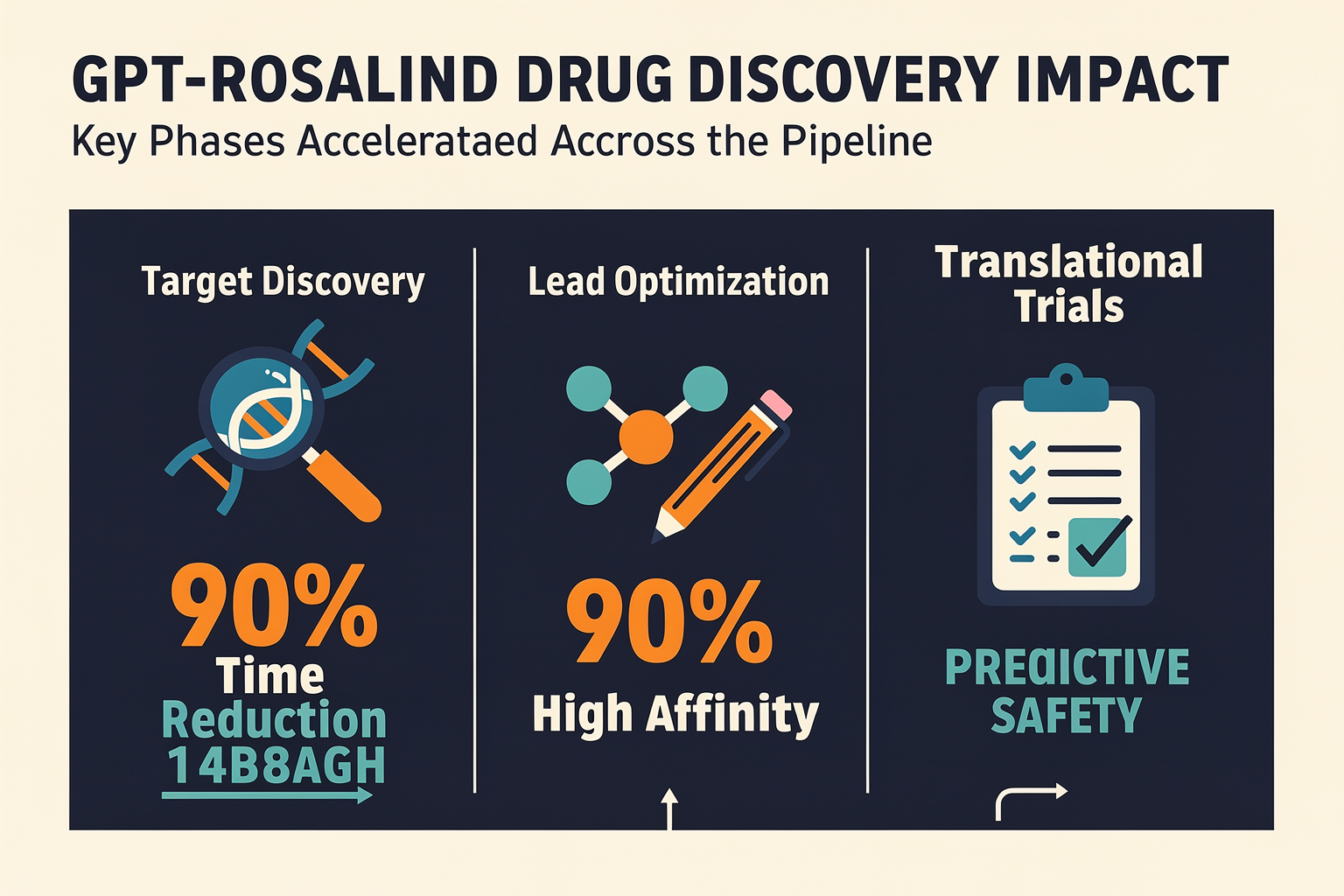
GPT-Rosalind accelerates this pipeline by reasoning through complex chemical spaces and predicting molecular behavior:
- Intelligent Target Identification: Instead of relying on brute-force database searches, researchers can use GPT-Rosalind to reason through complex biological pathways. By analyzing genomic data alongside historical scientific literature, the model can identify novel cellular targets for specific diseases, highlighting previously overlooked protein-protein interactions.
- Predictive Lead Optimization: Once a target is identified, GPT-Rosalind helps optimize chemical structures to improve their efficacy and reduce toxicity. It can reason about how specific chemical modifications (such as adding a methyl group or replacing an atom) will affect a molecule's binding affinity, solubility, and metabolic stability.
- Automated Retrosynthesis Planning: One of the model's standout features is its ability to map out synthesis routes. If a chemist wants to create a novel compound, GPT-Rosalind can work backward, detailing the exact step-by-step chemical reactions, precursors, and environmental conditions required to synthesize the molecule in a wet lab.
By shifting these initial phases from physical trial-and-error to high-fidelity AI-guided reasoning, pharmaceutical companies can shrink the pre-clinical phase from years to mere months.
Precision Genomics and Protein Engineering
Genomics and proteomics generate vast amounts of highly dense, unstructured data that traditional computer models struggle to interpret in context. GPT-Rosalind’s in-depth understanding of genomics and protein engineering allows it to reason through genomic sequences with unprecedented nuance.
- Sequence-to-Function Reasoning: GPT-Rosalind goes beyond pattern matching to understand how genetic mutations manifest as physical traits or diseases. It can analyze raw genomic sequences, identify single nucleotide polymorphisms (SNPs), and reason through how those variations might alter protein expression or drug resistance in patients.
- De Novo Protein Design: Beyond analyzing existing biology, GPT-Rosalind is capable of reasoning through the creation of entirely new, synthetic proteins. For instance, if researchers require a highly stable enzyme to degrade plastic in high-temperature environments, the model can reason through the required amino acid sequence and structural configurations to design a viable, functional protein.
- Evaluating Gene-Editing Outcomes: When working with CRISPR-Cas9 or newer precision gene-editing tools, predicting off-target effects is critical. GPT-Rosalind can reason through genomic homologues and cellular repair pathways to help geneticists evaluate the safety and potential side effects of specific gene edits before they are executed in the lab.
Translational Medicine: Safely Bridging the "Valley of Death"
In the medical community, the transition from successful laboratory results to successful clinical trials is often called the "valley of death" because up to 90% of clinical candidates fail during human testing. GPT-Rosalind helps bridge this gap by acting as a reasoning engine for translational medicine.
Because the model can synthesize information across different medical modalities, it can cross-reference pre-clinical animal data, in-vitro human cell assays, and historical clinical trial outcomes. For example, when designing a clinical trial for an oncology drug, researchers can ask GPT-Rosalind to reason through patient genomic profiles to identify which sub-populations are most likely to respond positively to the treatment. This predictive modeling reduces trial failure rates, lowers overall development costs, and brings personalized therapies to patients much faster.
Crucially, because this powerful reasoning capability carries biosecurity risks, OpenAI has launched GPT-Rosalind with a strict trusted-access approach. This framework pairs the model's advanced computational power with robust, multi-layered safety guardrails. This ensures that while legitimate researchers can utilize its full reasoning capacity for life-saving therapeutics, the system prevents the generation of dangerous pathogens or dual-use chemical compounds.
Integrating Frontier Science with Seamless Lab Workflows
To truly benefit from models like GPT-Rosalind, research laboratories require advanced infrastructure that integrates AI directly into their day-to-day operations. In high-stakes laboratory environments, scientists cannot always sit behind a keyboard to query a model or log data manually.
This is where advanced communication infrastructure platforms like CallMissed become invaluable. In a modern laboratory, researchers working in sterile or hazardous conditions can use custom AI voice agents powered by CallMissed to capture their observations hands-free. Using CallMissed’s highly accurate Speech-to-Text APIs, which support 22 regional Indian languages and English, a lab technician can dictate complex observations in real-time. These voice inputs can then be instantly transcribed, structured, and passed directly into a reasoning engine like GPT-Rosalind to update experimental logs or flag anomalies.
Additionally, because scientific organizations must balance diverse computing needs, CallMissed’s multi-model API gateway allows developers to easily switch between 300+ LLMs. A research facility can utilize GPT-Rosalind's deep reasoning for intensive genomic analysis, while seamlessly routing simpler administrative tasks or customer support queries to faster, highly optimized models under a unified infrastructure.
GPT-Rosalind vs. GPT-4o: General-Purpose AI vs. Science-First AI
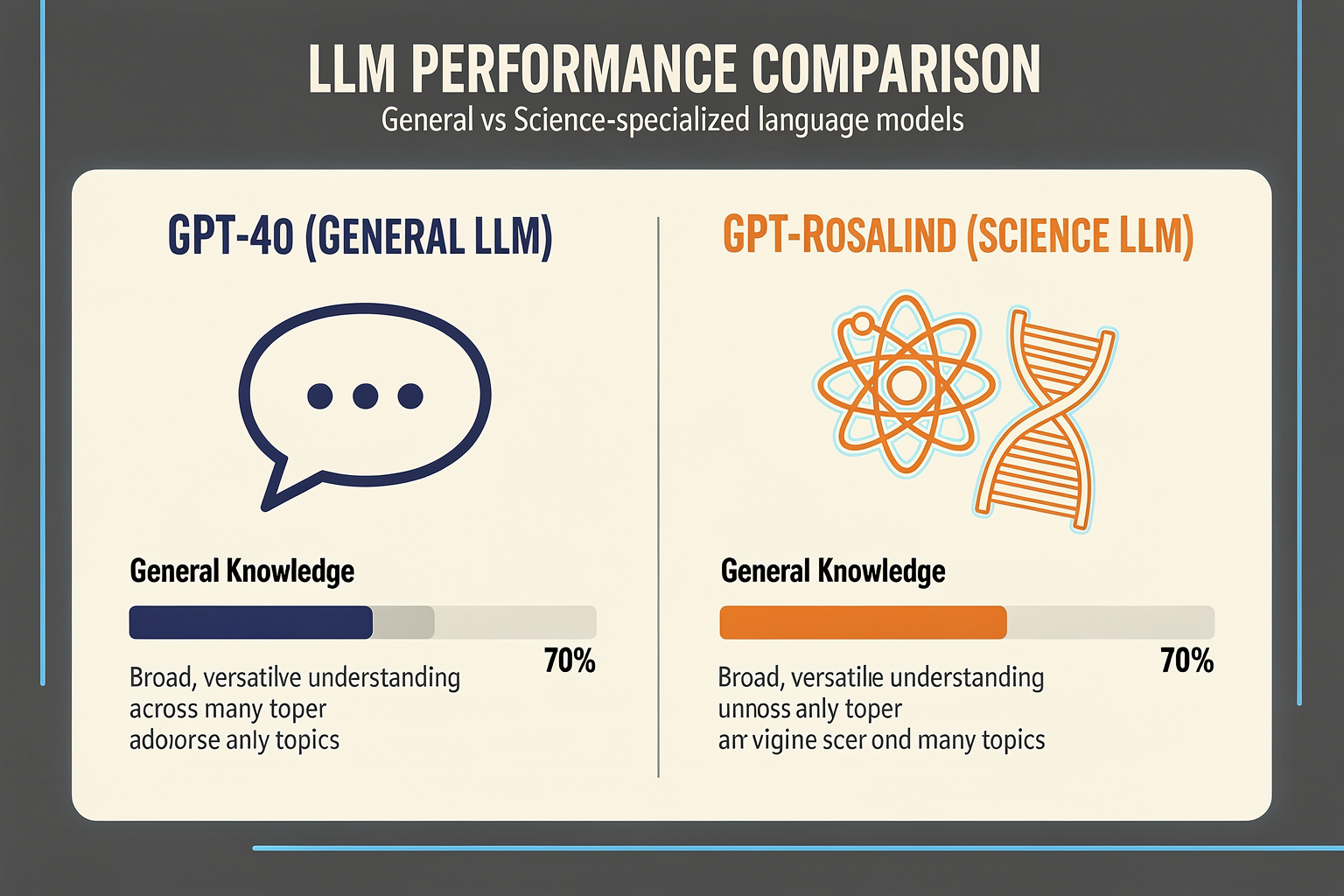
The transition from general-purpose artificial intelligence to specialized, domain-specific systems marks a fundamental shift in how technology serves humanity. While general models have captured the public imagination with their conversational fluidity and creative capabilities, scientific breakthroughs require a different breed of intelligence. The comparison between GPT-4o and GPT-Rosalind highlights this evolution, illustrating the difference between a highly versatile general-purpose AI and a purpose-built, science-first reasoning system.
From Conversational Generalists to Scientific Reasoning Specialists
Launched as OpenAI’s premier multimodal model, GPT-4o represents the pinnacle of general-purpose AI. It is designed to be fast, conversational, and highly adaptive across diverse, everyday tasks. Whether writing code, translating languages, analyzing spreadsheets, or engaging in real-time vocal dialogue, GPT-4o acts as an omnivorous cognitive assistant. However, its broad training corpus—drawn from the vastness of the public internet—makes it a generalist by design. While it can draft scientific summaries or explain complex biological concepts, its underlying architecture is optimized for conversational plausibility rather than rigorous, structure-aware scientific computation.
In contrast, GPT-Rosalind is a frontier reasoning model built from the ground up specifically to support research across biology, drug discovery, and translational medicine. Rather than being a general model repurposed with a scientific coat of paint, GPT-Rosalind is a specialized "science-first" AI model. It does not prioritize creative writing or casual banter; instead, it is built to operate directly on complex scientific data. As industry analyses point out, GPT-Rosalind is best understood as a reasoning tool designed to accelerate scientific workflows, acting as an intellectual amplifier for human researchers rather than a substitute for the specialized expertise required to generate real-world experimental data.
Architectural Philosophies: Multimodal Versatility vs. Domain-Specific Rigor
The fundamental divergence between these two models lies in their training methodologies and operational objectives:
- The Objective Function: GPT-4o is trained to predict the most likely next token across a wide range of human languages, coding environments, and media formats. Its goal is broad utility and human-aligned interaction. GPT-Rosalind, on the other hand, is optimized for deep reasoning within the boundaries of physical, chemical, and biological constraints.
- Handling Non-Textual Scientific Data: While GPT-4o can read chemical notation (such as SMILES strings) or genomic sequences as text, it lacks a native, structurally grounded understanding of these representations. GPT-Rosalind possesses an innate, in-depth comprehension of genomics, chemistry, and protein engineering. It treats molecules, chemical pathways, and genomic data as functional, physical entities rather than mere strings of letters on a page.
- Reasoning Under Constraints: In drug discovery, AI must navigate strict, multi-dimensional parameter spaces (such as solubility, toxicity, binding affinity, and metabolic stability). While GPT-4o often relies on superficial pattern matching, GPT-Rosalind is built as a frontier reasoning engine, allowing it to systematically work through complex biological hypothesis generation and validate potential drug candidates against rigid physical constraints.
The Enterprise Division of Labor
In practice, enterprises and research institutions do not need to choose one model over the other; instead, they are deploying them in tandem to create cohesive, end-to-end workflows.
For instance, in clinical trial management, a general-purpose model like GPT-4o is ideal for patient-facing interfaces, translating complex medical jargon into accessible language, and managing day-to-day administrative paperwork. Meanwhile, GPT-Rosalind operates in the secure background, analyzing genomic sequences, mapping patient biomarkers, and evaluating translational medicine pipelines.
To orchestrate these specialized workflows efficiently, modern enterprises rely on flexible AI infrastructure. Platforms like CallMissed allow organizations to seamlessly integrate and navigate these hybrid architectures. With access to over 300+ LLMs via a single API gateway, developers can route general conversational tasks or patient interactions through conversational models (and even deploy them via voice agents supporting 22 Indian languages), while directing deep scientific queries to dedicated frontier models like GPT-Rosalind. This multi-model approach ensures that scientific rigor is maintained without sacrificing operational flexibility or user accessibility.
Data Security and the Trusted-Access Approach
A critical differentiator between general-purpose AI and GPT-Rosalind is how they handle proprietary intellectual property. In the pharmaceutical and biotechnology sectors, chemical formulations, clinical trial data, and genomic databases represent billions of dollars in proprietary assets.
Using standard consumer-facing, general-purpose models introduces significant compliance, data leakage, and security risks. To address this challenge, GPT-Rosalind features a specialized trusted-access approach. This protocol is specifically designed to pair the model's advanced reasoning capabilities with highly secure, sovereign data environments. This ensures that biotechnology startups and global pharmaceutical giants can safely expose their most valuable proprietary datasets to the model's reasoning engine without the risk of exposing intellectual property to public training sets.
Ultimately, while GPT-4o remains an unparalleled tool for general-purpose productivity, multimodal communication, and everyday task automation, GPT-Rosalind ushers in a new era of "science-first" artificial intelligence. By focusing purely on the specialized, high-stakes demands of biology, chemistry, and translational medicine, GPT-Rosalind equips researchers with the precise cognitive tools needed to solve some of the most complex health and scientific challenges of our time.
Impact & Implications: Reshaping Translational Medicine

Translational medicine—the process of taking scientific discoveries made in the laboratory and turning them into practical clinical treatments that benefit patients—has historically been bottlenecked by the "valley of death." This is the notorious gap between early-stage laboratory success and actual human clinical trials, where over 90% of drug candidates fail. The launch of OpenAI's GPT-Rosalind represents a watershed moment in overcoming these translational barriers. By shifting the paradigm from purely predictive AI models to active scientific reasoning systems, GPT-Rosalind is reshaping how researchers navigate genomics, chemistry, and protein engineering to bring therapies to market.
Bridging the Gap from Bench to Bedside
The primary challenge in translational medicine is not a lack of data, but a lack of structured synthesis. Biologists generate petabytes of genomic sequences, high-throughput screening assays, and proteomic profiles daily. However, connecting these molecular-level insights to systemic human physiology and clinical outcomes requires complex, multi-step scientific reasoning.
GPT-Rosalind addresses this bottleneck directly. Unlike general-purpose large language models, GPT-Rosalind is purpose-built to operate as a reasoning partner for scientific workflows. It specializes in:
- Genomic Interpretation: Linking rare genetic variants to phenotypic expressions and disease pathways, enabling researchers to identify novel therapeutic targets.
- Chemical Synthesis Reasoning: Suggesting practical, multi-step synthesis pathways for novel chemical entities (NCEs) while identifying potential toxicity risks early in the pipeline.
- Protein Engineering Evaluation: Assessing how structural modifications in a protein might alter its binding affinity, stability, or immunogenicity in human subjects.
By providing an in-depth understanding of these domains, the model enables a recursive reasoning loop. A researcher can present a target disease pathway, and GPT-Rosalind can assist in identifying target proteins, recommending chemical scaffolds, and predicting potential in vivo efficacy barriers before a single wet-lab experiment is conducted.
Overcoming the Translational "Valley of Death"
To understand the impact of GPT-Rosalind, it is essential to distinguish it from structural prediction models like AlphaFold. While structural biology models predict what a protein looks like, GPT-Rosalind reasons through why a particular molecule behaves the way it does in a complex biological system.
This reasoning capability has massive implications for several critical areas of translational medicine:
- Target Identification and Validation: Finding the correct biological target is the foundation of drug development. GPT-Rosalind synthesizes disparate scientific literature, genomic databases, and clinical trial histories to construct hypotheses on how specific pathway interventions will affect disease progression.
- Optimizing Clinical Trial Protocols: Clinical trials frequently fail due to poor cohort selection or unrealistic trial design. GPT-Rosalind can analyze historical patient data to design targeted patient stratification strategies, pinpointing biomarker profiles most likely to respond to a candidate drug.
- Therapeutic Repurposing: Finding new uses for existing, approved drugs is one of the fastest paths to clinic. GPT-Rosalind can reason across metabolic pathways to identify hidden secondary mechanisms of action for existing compounds, shaving years off the traditional development timeline.
Crucially, GPT-Rosalind operates as a tool to augment, rather than replace, human scientists. As industry analysts have noted, it is a reasoning tool designed to operate on complex scientific data, not a substitute for the hands-on expertise required to design and validate physical experiments.
Scalable Workflows and Clinical Communication
While the biological reasoning happens in the lab, translational medicine ultimately succeeds or fails based on how efficiently insights are operationalized. Translating molecular breakthroughs into global clinical trials requires massive operational coordination—from recruiting diverse patient cohorts to ensuring trial adherence across multilingual regions.
This is where advanced reasoning models intersect with real-world infrastructure. As research institutions deploy frontier models like GPT-Rosalind, platforms like CallMissed are playing a critical role in scaling the communication backend. For instance, when researchers identify specific genetic biomarkers for a clinical trial, CallMissed’s AI communication infrastructure can automate patient outreach. Utilizing its robust Speech-to-Text and Text-to-Speech APIs supporting 22 regional Indian languages, research organizations can deploy intelligent, multilingual voice agents and WhatsApp chatbots to screen, recruit, and guide diverse trial participants in their native languages.
Furthermore, managing the computational pipelines of modern biotechnology requires flexibility. Through CallMissed's multi-model LLM inference gateway, which provides access to over 300+ models, developers and bioinformatics teams can seamlessly route general administrative tasks to cost-effective models while reserving heavy-duty scientific reasoning queries for specialized engines like GPT-Rosalind, maintaining optimal performance and cost efficiency.
Security, Safety, and the "Trusted-Access" Approach
The application of frontier reasoning models to life sciences introduces unique challenges regarding biosecurity and intellectual property (IP). OpenAI has addressed these concerns by utilizing a strict "trusted-access" approach when deploying GPT-Rosalind.
This framework ensures that:
- IP Protection: Proprietary molecular designs and clinical data analyzed by GPT-Rosalind remain strictly confidential and are not used to train public base models.
- Biosecurity Guardrails: Advanced reasoning capabilities are bounded by strict guardrails to prevent the dual-use synthesis of dangerous pathogens or toxins.
- Verification-First Workflows: Because GPT-Rosalind is built to trace its reasoning steps, scientists can easily cross-reference the model’s logical deductions with empirical literature, mitigating the risk of AI "hallucinations" in critical drug design phases.
A New Era of Science-First AI
The introduction of GPT-Rosalind marks the rise of specialized, science-first AI models that move beyond conversational chat interfaces into deep, domain-specific problem solving. By slashing the time required to synthesize genomic data, design viable chemical compounds, and structure translational research, the model acts as an intellectual catalyst. When combined with modern AI communications infrastructure to scale real-world logistics, the line between laboratory concept and clinical cure is poised to shrink faster than ever before in human history.
Expert Perspectives: What Scientists and AI Researchers are Saying
The scientific and artificial intelligence communities have reacted with a mix of intense enthusiasm and pragmatic caution to OpenAI's release of GPT-Rosalind. For years, researchers attempted to bend general-purpose large language models (LLMs) to fit the rigorous, highly structured demands of biology and chemistry. With GPT-Rosalind, OpenAI has introduced its first frontier reasoning model purpose-built for life sciences, genomics, and translational medicine.
Experts note that this launch signals a permanent pivot toward "science-first" AI models. According to commentators at The Deep View, GPT-Rosalind’s native understanding of complex datasets like protein engineering, chemical structures, and genomics positions it as a foundational tool rather than a generic digital assistant.
Accelerating R&D Without Replacing the Human Scientist
A primary talking point among pharmaceutical researchers is the model's precise role in the R&D pipeline. Industry analysts, writing for publications like DrugPatentWatch, emphasize a crucial distinction: GPT-Rosalind is a reasoning tool designed to operate on scientific data, not a substitute for the human expertise required to generate it.
The consensus among wet-lab scientists is that while GPT-Rosalind can synthesize vast arrays of literature, predict protein-protein interactions, and suggest novel chemical syntheses, it cannot replace physical validation. The model’s strength lies in hypothesis generation and narrowing down candidate molecules from millions to a viable dozen. Key areas of impact highlighted by researchers include:
- Genomics and Protein Engineering: Sifting through genomic sequences to identify target mutations and design proteins with tailored functions.
- Translational Medicine: Bridging the gap between laboratory benchwork and clinical applications by predicting patient cohort responses.
- De Novo Molecular Design: Generating novel chemical structures optimized for specific binding affinities while minimizing potential side effects.
The "AI-Bio Arms Race" and Infrastructure Needs
For AI researchers, GPT-Rosalind represents OpenAI’s definitive move into the high-stakes AI-Bio sector. Industry analysts at Labcritics describe the release as a major escalation in the "AI-Bio arms race," challenging established platforms like Google DeepMind's AlphaFold.
However, running such sophisticated models requires highly specialized infrastructure. This challenge is not unique to biochemistry. Just as platforms like CallMissed address enterprise orchestration complexities in the communication space by offering a unified API gateway to access over 300+ LLMs, the life sciences sector requires tailored multi-model pipelines.
To address this, OpenAI has introduced a "trusted-access approach," pairing GPT-Rosalind with highly secure compute environments. This level of data governance is vital; pharmaceutical companies cannot risk uploading proprietary, multi-billion-dollar clinical trial data or novel molecular structures to public, unshielded APIs.
Security, Ethics, and the Trusted-Access Model
Finally, bio-ethicists and security researchers are focusing heavily on the implications of a highly capable biological reasoning engine. The "trusted-access" framework praised by researchers on LinkedIn is designed to prevent the dual-use risks of AI in virology and toxicology. By restricting access and logging queries through rigorous validation protocols, OpenAI aims to balance rapid scientific progress with global biosecurity.
Ultimately, researchers agree that GPT-Rosalind is not a magic wand, but rather an exceptionally sharp scalpel. Its true value will be unlocked by interdisciplinary teams who know how to ask the right questions and, crucially, how to verify the answers in the lab.
The Horizon: What Lies Ahead for AI-Driven Biology

The launch of OpenAI’s GPT-Rosalind in May 2026 represents a critical inflection point in the democratization and acceleration of scientific discovery. By moving away from general-purpose LLMs and building a "science-first" frontier reasoning model, OpenAI has laid the foundation for a future where AI is no longer a passive retrieval tool, but an active partner in biological exploration.
As we look toward the next decade, the convergence of deep reasoning models, automated laboratories, and high-throughput biology will fundamentally rewrite the rules of medicine, agriculture, and environmental science.
The Shift to Autonomous Hypothesis Generation
Historically, AI in the life sciences was limited to pattern recognition—such as predicting protein structures or searching through massive chemical databases. While valuable, these tasks lacked the cognitive reasoning necessary to form and test novel biological hypotheses. GPT-Rosalind changes this paradigm by operating directly on complex scientific data across genomics, chemistry, and protein engineering.
In the near future, we will transition from AI-assisted research to autonomous closed-loop discovery. In this setup:
- AI Reasoners like GPT-Rosalind will analyze massive genomic datasets to identify novel disease targets and design optimized therapeutic candidates.
- Robotic "Wet Labs" will automatically synthesize these compounds and run physical assays.
- Feedback Loops will feed the resulting experimental data back into the reasoning model to refine its molecular designs in real time.
This continuous loop will compress drug discovery timelines from years to days, allowing researchers to explore a virtually infinite chemical space that was previously impossible to navigate manually.
Multi-Model Ecosystems and Democratized Access
As specialized scientific models proliferate, the infrastructure required to access and orchestrate them must evolve. No single model will dominate every scientific niche; instead, researchers will rely on an ensemble of specialized agents. For instance, a drug development pipeline might use GPT-Rosalind for target identification, AlphaFold for structural visualization, and a proprietary chemical synthesis model for manufacturing.
Managing this multi-model complexity requires flexible, enterprise-grade infrastructure. This is where platforms like CallMissed become indispensable for the broader scientific and healthcare ecosystem. With CallMissed’s unified API gateway, developers and research institutions can seamlessly orchestrate and switch between 300+ LLMs and specialized reasoning models without rewriting their underlying code. This ensures that laboratories can always utilize the most cost-effective and powerful reasoning tools available on the market as the AI landscape evolves.
Translating Bench Science to the Bedside
One of the biggest bottlenecks in modern medicine is translational medicine—the process of turning laboratory discoveries into clinical treatments. GPT-Rosalind’s deep understanding of clinical trial design, patient stratification, and translational medicine will drastically reduce the failure rate of clinical trials, which currently stands at over 90% for drug candidates entering Phase I.
By analyzing historical trial data, real-world evidence, and genomic profiles, frontier reasoning models will:
- Optimize Trial Design: Predict potential side effects and interactions before human testing begins.
- Stratify Patient Cohorts: Identify the precise genetic subgroups most likely to respond positively to a target therapy, paving the way for true personalized medicine.
- Accelerate Regulatory Approvals: Automate the synthesis of massive, multi-thousand-page regulatory filings by translating complex biochemical data into compliant medical literature.
However, a breakthrough drug is only useful if it can be deployed safely and equitably. As personalized treatments scale globally, medical providers will face a massive communication challenge. To bridge this gap, healthcare organizations are leveraging conversational AI.
For example, platforms like CallMissed enable healthcare systems to deploy multilingual AI voice agents and WhatsApp chatbots capable of speaking 22 regional Indian languages natively. These AI agents can translate complex clinical trial parameters, coordinate patient follow-ups, and deliver personalized medical guidance directly to patients in their own languages, ensuring that the fruits of advanced AI-driven biology reach underserved populations worldwide.
Navigating the Dual-Use Dilemma and the "Trusted-Access" Era
With unprecedented biological power comes unprecedented risk. The same reasoning model that can design a life-saving vaccine can theoretically be prompted to optimize a highly transmissible pathogen. OpenAI has anticipated this by deploying GPT-Rosalind under a strict "trusted-access" approach, which pairs the model’s frontier reasoning capabilities with rigorous, multi-layered safety guardrails.
In the coming years, the scientific community will need to formalize these safety frameworks. We will likely see:
- Federated and On-Premise Deployments: Allowing pharmaceutical giants to run reasoning models on highly secure, proprietary clinical data without exposing intellectual property to public networks.
- Biosecurity Synthesis Screening: Mandatory, cryptographic verification of all DNA synthesis orders to ensure that AI-designed sequences are cross-checked against restricted pathogen databases before physical manufacture.
- International Scientific AI Standards: Global regulatory bodies establishing benchmarks for "safe" biological reasoning, similar to current nuclear or chemical weapon non-proliferation treaties.
The Human-AI Synthesis
Ultimately, GPT-Rosalind is not a replacement for human intellect, but a cognitive amplifier. Biology is infinitely complex, characterized by emergent behaviors that cannot be fully predicted by silicon alone. The future of AI-driven biology belongs to the "Centaur Scientist"—the human researcher who masterfully directs AI reasoning engines to navigate the cosmos of biological data.
As we stand on the threshold of this biological renaissance, the integration of advanced reasoning models with scalable, real-world communication and computational infrastructure will determine how quickly we can solve humanity's most pressing challenges, from curing intractable diseases to securing global food supplies.
What This Means For You: Actionable Takeaways for Biotech & Medicine
The arrival of OpenAI’s GPT-Rosalind represents a paradigm shift for the life sciences sector. Unlike general-purpose large language models (LLMs) that have simply been fine-tuned on medical text, GPT-Rosalind is a specialized, frontier reasoning model built from the ground up to interpret complex biological, chemical, and genomic data.
For biotechnology firms, pharmaceutical enterprises, and academic research institutions, this model is not merely a novel chatbot; it is a highly specialized co-pilot for scientific reasoning. However, unlocking its value requires a structured, actionable approach that balances the model's analytical capabilities with human-in-the-loop oversight.
To help your organization navigate this new era of AI-driven life sciences, the table below outlines the core action areas, requirements, and immediate next steps for integrating GPT-Rosalind into your pipeline.
| Focus Area | Core Use Case | Primary Benefit | Technical Requirement | Recommended Next Step |
|---|---|---|---|---|
| Drug Discovery & Design | De novo protein engineering and molecular pathway analysis. | Reduces early-stage lead generation timelines from months to days. | API integration with existing structural biology software (e.g., AlphaFold). | Audit current target identification pipelines for bottleneck stages. |
| Translational Medicine | Correlating preclinical in-vitro/in-vivo data with human clinical outcomes. | Increases the clinical trial success rate by identifying safety signals early. | Clean, structured proprietary datasets formatted for secure LLM ingestion. | Establish a secure sandbox environment using "trusted-access" protocols. |
| Clinical Trial Operations | Accelerating patient recruitment, protocol design, and patient communication. | Minimizes dropouts and speeds up trial site matching and onboarding. | Integration with EHR systems and automated patient-outreach APIs. | Deploy multilingual voice and message agents for patient follow-ups. |
| Scientific Workflows | High-throughput literature synthesis and regulatory document drafting. | Drastically cuts down time spent drafting IND (Investigational New Drug) filings. | Human-in-the-loop (HITL) verification systems to prevent reasoning drift. | Train research associates on prompt engineering for complex biochemistry. |
Accelerating Drug Discovery and Structural Biology
GPT-Rosalind’s deep reasoning engine is uniquely suited for genomics, protein engineering, and chemical synthesis. Because the model understands the underlying rules of molecular biology rather than just pattern-matching text, researchers can use it to hypothesize novel molecular structures or debug failed synthetic pathways.
- Wet-Lab Integration: Do not treat GPT-Rosalind as an isolated oracle. The most effective approach is a closed-loop system where the model's biological predictions are tested in the wet lab, and the resulting empirical data is fed back into the model to refine its reasoning.
- Target Identification: Use the model to cross-reference massive genomic datasets with disparate scientific literature to discover overlooked disease pathways.
- Chemical Synthesis Planning: When designing small molecules, prompt the model to propose synthetic routes, highlighting potential side reactions or safety hazards based on its native understanding of chemical reactivities.
Re-architecting Clinical Trials and Translational Workflows
Translational medicine is notoriously complex, with valuable data often trapped in unstructured lab notes, clinical trial registries, and academic papers. GPT-Rosalind bridges this gap by acting as an intelligent translation layer.
By analyzing historical trial data alongside preclinical findings, the model can flag potential drug-drug interactions or identify specific patient subpopulations most likely to respond to a candidate therapy.
Once a protocol is designed, the next hurdle is execution—specifically, clinical trial recruitment and patient retention. While GPT-Rosalind handles the heavy computational and medical reasoning behind trial design, executing patient-facing communication requires a different set of specialized tools.
To bridge this operational gap, platforms like CallMissed allow research organizations to deploy automated, multilingual AI voice agents and WhatsApp chatbots to manage patient recruitment, pre-screen candidates, and handle trial follow-ups. By integrating CallMissed’s voice infrastructure with your clinical database, you can communicate with diverse patient cohorts globally—supporting 22 regional Indian languages and various international dialects—ensuring high retention rates while keeping clinical coordinators focused on critical research tasks.
Operationalizing the "Trusted-Access" Security Model
A defining characteristic of GPT-Rosalind's rollout is its trusted-access approach. Because the model deals with highly sensitive, proprietary genetic sequences and drug formulations, standard public API deployments are insufficient for competitive biopharma organizations.
- Enforce Strict Data Boundaries: Ensure that any proprietary data sent to GPT-Rosalind is routed through enterprise-grade, zero-data-retention APIs. Your proprietary chemical structures and genomic sequences must never be used to train future public iterations of the model.
- Establish Rigorous Verification Protocols: Remember that GPT-Rosalind is a reasoning tool, not a substitute for human scientific expertise. Establish a mandatory "Human-in-the-Loop" (HITL) protocol where every molecular design or clinical hypothesis generated by the model is reviewed and signed off on by a qualified chemist, biologist, or clinician before moving to physical synthesis.
- Define Compliance Parameters: Align the model’s outputs with regional regulatory standards (such as FDA or EMA guidelines) early in the drafting stage to ensure that automated IND documentation meets strict compliance baselines.
Building a Cost-Effective, Multi-Model Bio-IT Infrastructure
Frontier reasoning models like GPT-Rosalind are computationally expensive and command a premium price point. Relying on Rosalind for basic tasks—such as translating a medical document into layman's terms or drafting routine emails—is an inefficient use of resources.
To build a cost-effective Bio-IT infrastructure, organizations must adopt a hybrid, multi-model approach. Standard data transformation and general communication tasks should be routed to smaller, highly optimized models, saving GPT-Rosalind’s advanced reasoning capabilities for complex tasks like structural biology analysis or genomic sequencing interpretation.
For organizations looking to deploy this architecture seamlessly, solutions like CallMissed’s multi-model API gateway let developers switch dynamically between 300+ LLMs without rewriting core code. This allows your IT team to route standard customer inquiries, initial trial screenings, and administrative tasks to lighter, cost-efficient models, while automatically escalating complex, high-reasoning scientific queries directly to frontier models like GPT-Rosalind. This tiered approach maximizes research output while keeping operational overhead tightly controlled.
Frequently Asked Questions About GPT-Rosalind
What is GPT-Rosalind and how does it differ from general large language models?
How does GPT-Rosalind accelerate the early phases of drug discovery?
Does GPT-Rosalind replace the need for human scientific expertise in laboratory settings?
What specific scientific fields and data types is GPT-Rosalind optimized to handle?
How can developers integrate GPT-Rosalind into broader clinical and communication systems?
What safety and data security protocols govern the deployment of GPT-Rosalind?
Conclusion
The launch of OpenAI's GPT-Rosalind marks a definitive shift from general-purpose AI to highly specialized, science-first reasoning models. By providing deep analytical capabilities tailored to the complex rules of molecular biology, this frontier model is poised to fundamentally accelerate how we approach global health challenges.
Key takeaways to remember about this new paradigm in scientific AI:
- Domain-Specific Reasoning: Unlike standard large language models, GPT-Rosalind is purpose-built with an in-depth understanding of genomics, chemistry, and protein engineering.
- Human-in-the-Loop Collaboration: The model acts as an advanced reasoning assistant to complement and supercharge—rather than replace—the critical expertise of human researchers.
- Accelerated Translational Medicine: By streamlining the analysis of vast biological datasets, it dramatically bridges the gap between laboratory research and clinical applications.
Looking ahead, we should watch how the integration of GPT-Rosalind with automated wet labs and broader R&D pipelines transforms drug discovery timelines over the coming years. As AI reasoning capabilities become increasingly specialized, organizations must learn to seamlessly integrate these frontier cognitive tools to remain at the cutting edge of innovation.
To explore how AI communication is evolving alongside these scientific breakthroughs, check out CallMissed — an AI infrastructure platform powering voice agents and multilingual chatbots for businesses looking to deploy cutting-edge model intelligence.
How will your organization leverage the next wave of specialized reasoning models to transform your industry's workflows?
Discussion
Related Posts



Ready to automate customer conversations?
Launch AI voice agents and WhatsApp bots with CallMissed — one API, 22+ Indian languages.