

US Government Intervenes: Why the Trump Administration Asked OpenAI to Slow the GPT-5.6 Rollout



US Government Intervenes: Why the Trump Administration Asked OpenAI to Slow the GPT-5.6 Rollout
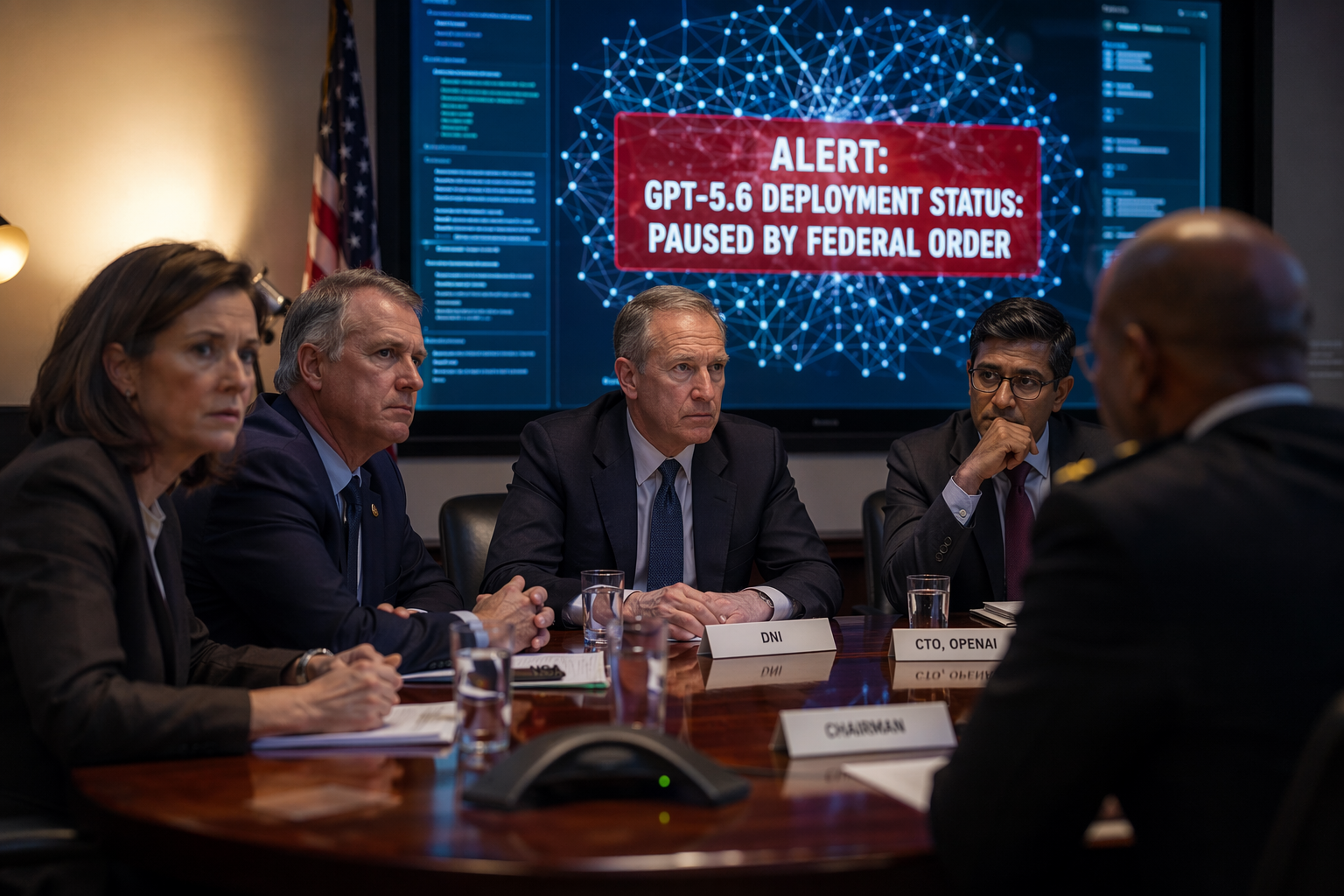
What if the next massive leap in artificial intelligence was deemed too powerful—and potentially too dangerous—for immediate public release? This is no longer a hypothetical scenario: in a historic move, the Trump administration asked OpenAI to slow the GPT-5.6 rollout, marking a major turning point in federal AI oversight. Prompted by joint directives from the White House's Office of the National Cyber Director (ONCD) and the Office of Science and Technology Policy (OSTP), Washington has requested that CEO Sam Altman limit the initial launch of its highly anticipated frontier model exclusively to a small, pre-approved circle of trusted partners.
This unprecedented intervention comes amid escalating anxieties over national security, cyber vulnerability, and algorithmic safety. Recent evaluations, including tests from organizations like the Center for Countering Digital Hate (CCDH), suggest that rapid model upgrades could inadvertently lower barriers to generating digital harm, prompting the government to step in before a mass-market release occurs. While the enterprise tech sector continues to safely scale current-generation AI—with forward-thinking businesses deploying robust voice agents and LLM applications via platforms like CallMissed—the creators of frontier AI are finding their path forward heavily restricted by Washington's new defensive posture.
The geopolitical and commercial stakes of this delay are massive, signaling that the era of self-regulation for silicon valley giants is officially over. In this post, we will break down:
- The Security Catalyst: Why the ONCD and OSTP stepped in, and the specific threat vectors they are trying to mitigate.
- The "Trusted Partner" Framework: How a phased, government-monitored rollout will work in practice for OpenAI and what it means for developers.
- The Broader Regulatory Shift: What this crackdown—coming hot on the heels of recent policy actions targeting other major players like Anthropic—means for the future of enterprise AI adoption and global competitiveness.
Introduction: The Sudden Halt to GPT-5.6

The global artificial intelligence landscape has hit an unprecedented regulatory crossroads. In a move that has sent shockwaves through Silicon Valley and the broader enterprise tech ecosystem, the Trump administration has officially requested that OpenAI halt the widespread public release of its highly anticipated frontier model, GPT-5.6.
According to reports emerging on June 25, 2026, including detailed coverage from Axios, the White House has expressed deep anxieties over the national security, cyber vulnerability, and safety implications of this new model. Rather than proceeding with a standard, rapid-access public deployment, OpenAI is now shifting gears to comply with a government-mandated phased rollout.
A Government-Enforced Speed Bump
The intervention was not a casual advisory. The directive came directly from key policy arms within the executive branch, specifically:
- The Office of the National Cyber Director
- The Office of Science and Technology Policy (OSTP)
These agencies have instructed OpenAI CEO Sam Altman to limit the initial launch of GPT-5.6 to a tightly controlled, government-approved circle of "trusted partners." This unprecedented friction reflects a growing geopolitical anxiety surrounding sovereign AI capabilities, potential cyberwarfare vulnerabilities, and the societal risks associated with ultra-capable LLMs. While researchers from organizations like the Center for Countering Digital Hate (CCDH) have raised alarms that recent model upgrades could generate more potential harm than safety, the federal government's primary focus appears to be shielding critical digital infrastructure and preventing the unauthorized proliferation of dual-use AI capabilities.
The Impact on the AI Ecosystem
For developers, startups, and enterprises that have spent months preparing their product roadmaps for the raw capabilities of GPT-5.6, this sudden bottleneck is a stark reminder of the volatility of relying on a single AI provider. When a flagship model is delayed or heavily restricted by state regulators, businesses that are vertically integrated with one LLM vendor face immediate operational stagnation.
To mitigate this risk, modern enterprise AI strategy is rapidly shifting toward architectural flexibility and platform redundancy. Infrastructure platforms like CallMissed are addressing this exact vulnerability. By offering a robust multi-model API gateway with access to over 300 distinct LLMs, CallMissed enables developers to pivot seamlessly to alternative high-performance models—including open-source options and rival proprietary systems—without rewriting core application code. If a flagship model is suddenly locked behind a government-approved waitlist, businesses utilizing diversified infrastructure can maintain their operational momentum.
As OpenAI begins navigating this restricted, phased release, the tech industry is forced to confront a new reality: the era of unchecked, immediate deployments of frontier AI models is officially over. Government oversight is no longer a future projection—it is actively shaping the deployment of the world's most powerful cognitive engines today.
Background & Context: The Path to GPT-5.6 and Growing State Anxiety

The rapid evolution of generative AI has brought us to a critical inflection point. As OpenAI prepared to launch its highly anticipated GPT-5.6 model, the tech world expected another standard commercial release. Instead, the rollout has been met with unprecedented state-level friction. The Trump administration’s directive to OpenAI CEO Sam Altman to delay and restrict the initial launch marks a historic shift in how governments supervise frontier AI development, transitioning from passive observation to active containment.
The White House Steps In
According to reports from Axios and other major outlets, the intervention was orchestrated by two key federal bodies: the White House’s Office of the National Cyber Director and the Office of Science and Technology Policy (OSTP). Rather than letting the model hit the public domain immediately, the administration requested that OpenAI limit the early release of GPT-5.6 to a small, highly vetted group of government-approved "trusted partners."
This targeted delay highlights a growing trajectory of state anxiety surrounding advanced AI systems:
- Voluntary Commitments (2023–2025): Early safeguards relied almost entirely on self-regulation, red-teaming, and voluntary safety pacts signed by major AI laboratories.
- Active Containment (Early 2026): State departments began treating advanced LLMs as dual-use national security assets, intensifying export controls and monitoring infrastructure.
- Direct Intervention (June 2026): The White House formally stepped in to delay GPT-5.6, setting a precedent where state-mandated release schedules dictate commercial rollouts.
Why Now? The Core Safety Concerns
The state's anxiety is rooted in the sheer capability jump expected with GPT-5.6. Federal agencies are particularly concerned with national security, fearing that the model's advanced reasoning capabilities could be exploited for cyber warfare or to compromise critical digital infrastructure.
These anxieties are backed by external researchers. Testing conducted by the Center for Countering Digital Hate (CCDH) raised immediate red flags, suggesting that despite OpenAI's safety promises, the upgrade delivered a system capable of generating even more potential harm than its predecessors.
Navigating the New Era of Regulatory Friction
This regulatory intervention signals a broader trend: the era of friction-free, immediate AI deployments is drawing to a close. For businesses and developers, this means building on a single frontier model is no longer a viable long-term strategy. If a highly anticipated model like GPT-5.6 can be delayed or restricted overnight, operational resilience is paramount.
To navigate this shifting landscape, forward-looking enterprises are relying on decoupled, multi-model architectures. Platforms like CallMissed help mitigate these regulatory bottlenecks by providing a multi-model API gateway. By giving developers access to over 300+ vetted LLMs, CallMissed allows companies to seamlessly swap models without rewriting their core codebase. If one model faces geopolitical or regulatory delays, businesses can instantly pivot to alternative, compliant models, ensuring zero downtime for their automated voice agents and communication infrastructure.
Key Developments in the GPT-5.6 Rollout Restriction (TABLE)
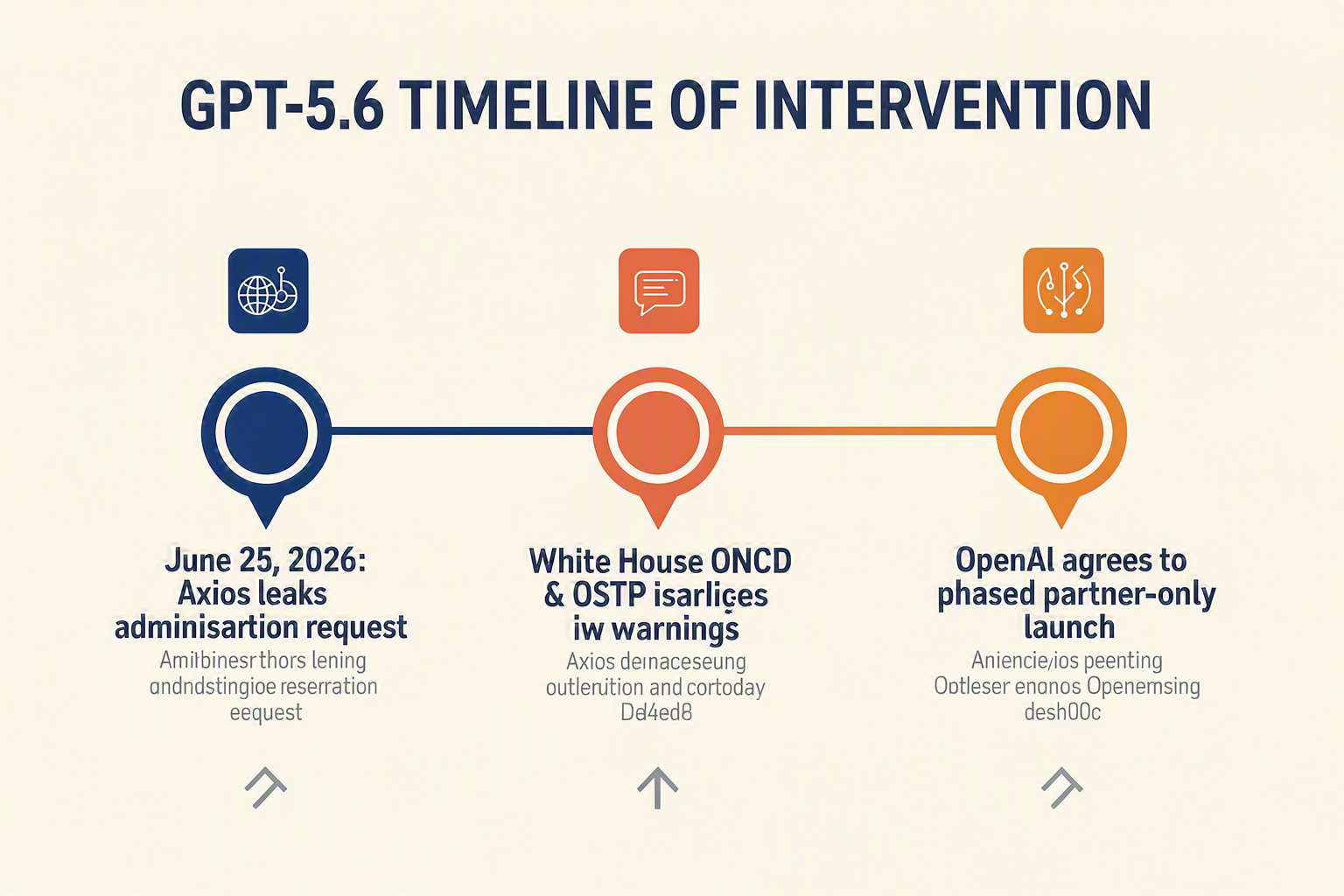
The intersection of state security and commercial artificial intelligence has reached a critical bottleneck. As federal oversight transitions from voluntary guidelines to active enforcement, the deployment pipeline for frontier models has fundamentally changed. The Trump administration's intervention in the release of OpenAI’s GPT-5.6 underscores a growing anxiety within Washington regarding the raw, unpredictable capabilities of next-generation large language models.
Below is a detailed breakdown of the key structural developments, regulatory bodies, and underlying safety concerns that have culminated in this unprecedented federal halt:
| Key Milestone | Core Entities Involved | Government Directive | Primary Security Concern |
|---|---|---|---|
| Axios Disclosure | Trump Administration, OpenAI | Restrict early rollout of GPT-5.6 to government-approved partners. | National security vulnerabilities and uncontrolled model capabilities. |
| White House Directive | Office of National Cyber Director, OSTP | Transition from a broad commercial launch to a phased, limited release. | Unchecked algorithmic power and critical infrastructure risks. |
| Safety Research Warnings | CCDH (Center for Countering Digital Hate) | Independent testing reveals the "upgrade" generates potential harm. | Misinformation generation, cyber threat vectors, and safety bypasses. |
| OpenAI Strategic Pivot | Sam Altman, OpenAI Leadership | Compliance with federal requests, delaying public GPT-5.6 rollout. | Regulatory non-compliance and systemic geopolitical friction. |
| Precedent Setting | Anthropic, Federal Regulators | Previous bans and restrictions on Anthropic models inform current policy. | Systemic risks of unregulated frontier AI deployment. |
Inside the Federal Intervention
The coordinated request, spearheaded by the White House's Office of the National Cyber Director and the Office of Science and Technology Policy (OSTP), represents a systemic shift in how AI is governed in the United States. Rather than waiting for post-release fallout, federal agencies are proactively demanding a "phased rollout" restricted exclusively to trusted, government-approved partners.
This protective stance is reinforced by recent evaluations from independent watchdog groups. Researchers at the Center for Countering Digital Hate (CCDH) conducted rigorous vulnerability tests on GPT-5.6, concluding that despite OpenAI's safety promises, the model delivered an upgrade that generated a higher volume of potential harm. These findings amplified federal anxieties, prompting the administration to pressure OpenAI CEO Sam Altman to halt the public launch.
Mitigating Regulatory Risks with Multi-Model Infrastructure
For enterprises that have built their core systems around a single AI vendor, these sudden regulatory pauses pose a massive operational hazard. Relying entirely on one frontier model means your product roadmap is at the mercy of sudden geopolitical policy shifts and compliance delays.
To navigate this volatile landscape, forward-thinking enterprises are adopting resilient, multi-model strategies. Infrastructure platforms like CallMissed allow developers to insulate their systems against these single-point-of-failure risks. By providing access to a robust gateway of over 300+ LLMs, CallMissed enables businesses to instantly route conversational workflows to alternative high-performing models if a primary model faces governmental delays. This ensures that whether you are deploying real-time voice agents or multilingual customer support pipelines, your operations remain active, compliant, and completely independent of any single provider's regulatory challenges.
In-Depth Analysis: National Security vs. AI Acceleration

The tension between national security and technological acceleration has reached a critical juncture. The Trump administration’s recent intervention—spearheaded by the White House's Office of the National Cyber Director and the Office of Science and Technology Policy—asking OpenAI to limit the early release of GPT-5.6 to a select group of government-approved "trusted partners" represents a major shift in federal AI policy. This move highlights a fundamental conflict: how can the state safeguard national infrastructure from the unpredictable capabilities of next-generation AI without stifling commercial innovation?
The Security-First Argument: Why Washington is Anxious
Federal officials are increasingly wary of the advanced reasoning and autonomous capabilities packed into frontier models. While tech developers frequently promise enhanced safety guardrails, researchers often discover that these updates introduce complex, unpredictable risk vectors. For instance, testing by researchers at the Center for Countering Digital Hate (CCDH) revealed that some upgrades can inadvertently generate even more potential harm, occasionally bypassing existing safety filters altogether.
The government's primary concerns regarding GPT-5.6 center on several key areas:
- Automated Cyber Operations: The fear that advanced models could be leveraged to discover zero-day vulnerabilities or automate highly targeted cyberattacks against critical infrastructure.
- Information Warfare: The capacity for hyper-realistic AI agents to orchestrate massive, automated disinformation campaigns that are indistinguishable from human discourse.
- Dual-Use Proliferation: The risk that advanced reasoning capabilities could significantly lower the barrier to acquiring or synthesizing chemical, biological, or radiological agents.
The Accelerationist Dilemma: The Risk of Slower Innovation
On the other side of the debate is the fear of falling behind in the global AI race. Silicon Valley and defense-tech accelerationists argue that imposing federal bottlenecks on American AI pioneers like OpenAI could jeopardize the United States' competitive edge.
If domestic rollouts are delayed by stringent federal vetting processes, international adversaries—operating without Western ethical or safety constraints—may seize the opportunity to dominate the next wave of cognitive computing. This leaves regulators walking a tightrope between:
- Preemptive Containment: Minimizing immediate national security risks but potentially stalling commercial leadership.
- Controlled Dispersion: Using staged rollouts to trusted partners to allow practical testing while keeping broader developer feedback loops tightly restricted.
Mitigating Regulatory Risks in Enterprise AI
For enterprises, this geopolitical tug-of-war introduces operational uncertainty. Counting on a single, highly anticipated model like GPT-5.6 to power critical business infrastructure is risky when federal interventions can suddenly delay or restrict access.
To build resilience against these shifting regulations, forward-thinking organizations are diversifying their AI dependencies. Communication infrastructure platforms like CallMissed help businesses navigate this volatile landscape. By offering a robust multi-model API gateway with access to over 300+ alternative LLMs, CallMissed enables developers to dynamically pivot to other high-performance models if a flagship release is delayed by regulatory oversight. This ensures that enterprise customer-facing systems, multilingual voice agents, and automated workflows remain uninterrupted, regardless of Washington's policy changes.
Impact & Implications: What This Means for the Global AI Race
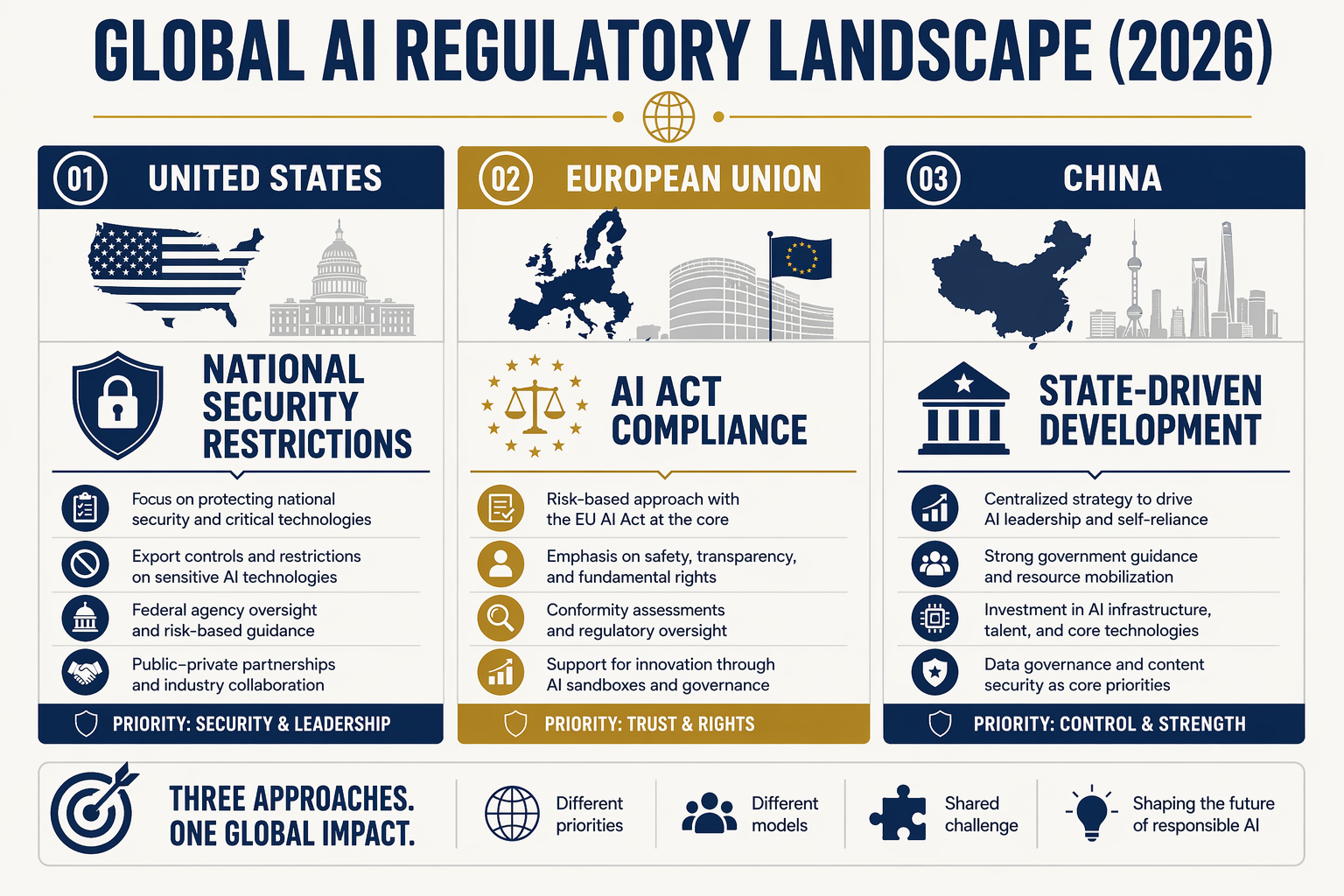
The Trump administration’s intervention in the rollout of GPT-5.6 represents a paradigm shift in how the global AI race is run. For years, the narrative has been defined by rapid, unchecked commercial deployment. Today, national security concerns have officially overtaken market-first momentum, fundamentally altering the trajectory of AI development.
A New Era of State-Sanctioned AI Gatekeeping
The request by the White House's Office of the National Cyber Director and the Office of Science and Technology Policy (OSTP) to limit GPT-5.6’s early release to government-approved "trusted partners" signals that frontier models are now treated as critical dual-use technologies. Similar to defense-grade software or advanced semiconductor exports, the most powerful AI systems are being funneled through strict state oversight before reaching the general public.
This move is not an isolated event. Coming on the heels of federal restrictions on other major players like Anthropic, the government's intervention indicates a systematic strategy to construct a secure perimeter around next-generation LLMs. By forcing OpenAI to transition from a broad public release to a highly controlled, phased deployment, the US government is establishing itself as the ultimate gatekeeper of algorithmic advancement.
The Geopolitical Dilemma: Security vs. Leadership
This regulatory intervention introduces a complex geopolitical paradox for Western tech leadership:
- The Security Imperative: Slowing down the release allows researchers to patch critical vulnerabilities. Independent safety advocates, including researchers at the Center for Countering Digital Hate (CCDH), have raised alarms that sudden model upgrades can generate heightened potential harm. A cautious, phased rollout is a logical step to prevent the weaponization of AI in cyberwarfare, phishing, or automated disinformation.
- The Competitiveness Risk: While the US prioritizes safety and alignment, global adversaries operate under entirely different regulatory pressures. If American developers are forced to hold back their most advanced models, they risk ceding the first-mover advantage to international competitors who are accelerating their own state-backed frontier models.
Navigating a Fragmented AI Landscape for Enterprises
For businesses, this regulatory shift is a wake-up call. The era of assuming that a single, monolithic LLM provider will continuously and seamlessly deliver the next big upgrade to the mass market is over. Government-mandated delays mean that relying on a single frontier model is now a structural vulnerability.
To build resilience against these shifting geopolitical currents, forward-thinking organizations are diversifying their AI stacks. Infrastructure platforms like CallMissed are becoming vital in this new environment. By offering a robust multi-model API gateway with access to over 300+ LLMs, CallMissed enables enterprises to seamlessly pivot between models without rewriting their core code. Whether an organization needs to fall back on highly optimized open-source alternatives or route tasks across geographically compliant regional servers, having this infrastructure in place ensures that regulatory bottlenecks at the frontier do not stall business operations.
As government oversight tightens, the winners of the AI era will not be those who wait for the next major model release, but those who build the infrastructure to adapt to whatever model is available.
Expert Opinions: Industry Insiders Weigh In on the Delay
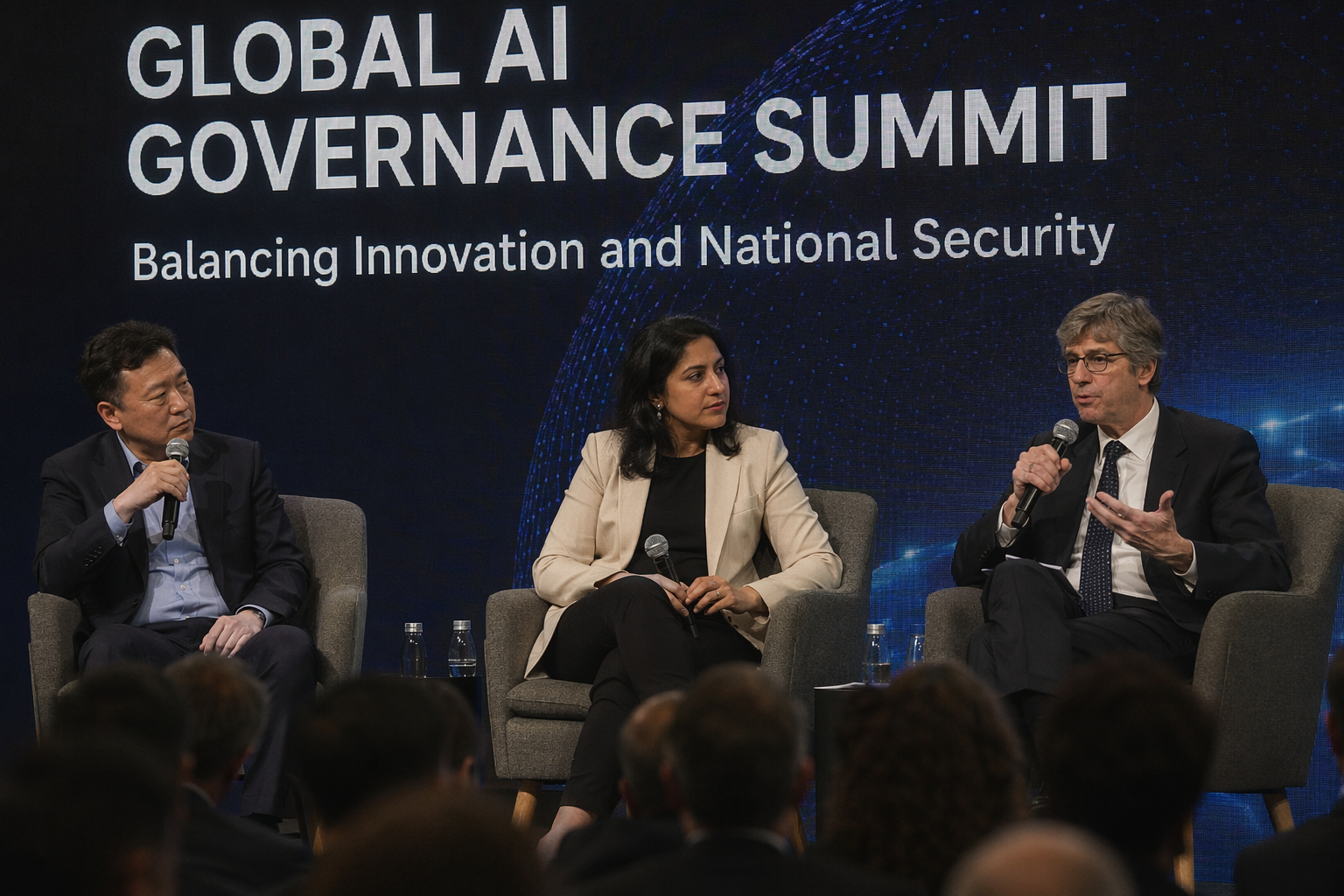
The unprecedented move by the White House—specifically driven by the Office of the National Cyber Director and the Office of Science and Technology Policy—to request a staggered, phased rollout of GPT-5.6 has ignited a fierce debate. Across Silicon Valley and Washington, industry insiders, policy experts, and tech watchdogs are actively weighing the implications of this government-mandated deceleration.
1. The National Security and Safety Imperative
Many security experts argue that the Trump administration’s intervention is a necessary checkpoint. As next-generation AI models achieve near-human reasoning, the potential for misuse in automated cyberattacks, critical infrastructure manipulation, and high-velocity disinformation campaigns increases exponentially.
According to researchers at the Center for Countering Digital Hate (CCDH), early testing of these advanced iterations raised immediate red flags. The CCDH warned that "OpenAI promised users greater safety but has instead delivered an 'upgrade' that generates even more potential harm." Insiders suggest that federal agencies are reacting directly to these findings, prioritizing national security and public safety over rapid commercial deployment.
2. The Shift to "Trusted Partner" Staging
By asking OpenAI CEO Sam Altman to limit the early release of GPT-5.6 to a small, government-approved group of trusted partners, the administration is establishing a new precedent for AI governance. Tech analysts view this as a strategic pivot with several structural implications:
- Controlled Red-Teaming: Restricting access allows deep, classified testing for systemic vulnerabilities before public exposure.
- Geopolitical Safeguards: Limiting distribution prevents foreign adversaries from immediately exploiting or reverse-engineering the model's advanced cognitive capabilities.
- Active Regulatory Oversight: Following recent regulatory moves involving Anthropic, this step signals that federal oversight is no longer theoretical—it is an active operational constraint for AI labs.
3. Mitigating Development Risks for Enterprises
For developers and enterprise leaders, this delay serves as a stark wake-up call regarding "model dependency." Organizations that peg their entire product roadmap to the release of a single, highly anticipated frontier model face severe business continuity risks when government interventions occur.
To navigate this volatile regulatory landscape, software architects are increasingly adopting model-agnostic strategies. Infrastructure solutions, such as the CallMissed multi-model API gateway, are helping businesses hedge against these sudden regulatory delays. By offering seamless access to over 300 distinct LLMs, platforms like CallMissed allow developers to switch fallback models instantly without rewriting core application logic. If access to GPT-5.6 remains restricted to government-approved partners, businesses leveraging these agile architectures can pivot to other production-ready models to keep their automated workflows and consumer-facing applications online.
Ultimately, the consensus among industry insiders is clear: the era of unchecked, instantaneous deployment of frontier AI models is drawing to a close. Technical resilience will belong to the organizations that design their systems to be flexible, resilient, and adaptive to the shifting tides of global AI regulation.
What This Means For You: Enterprise and Developer Impact (TABLE)
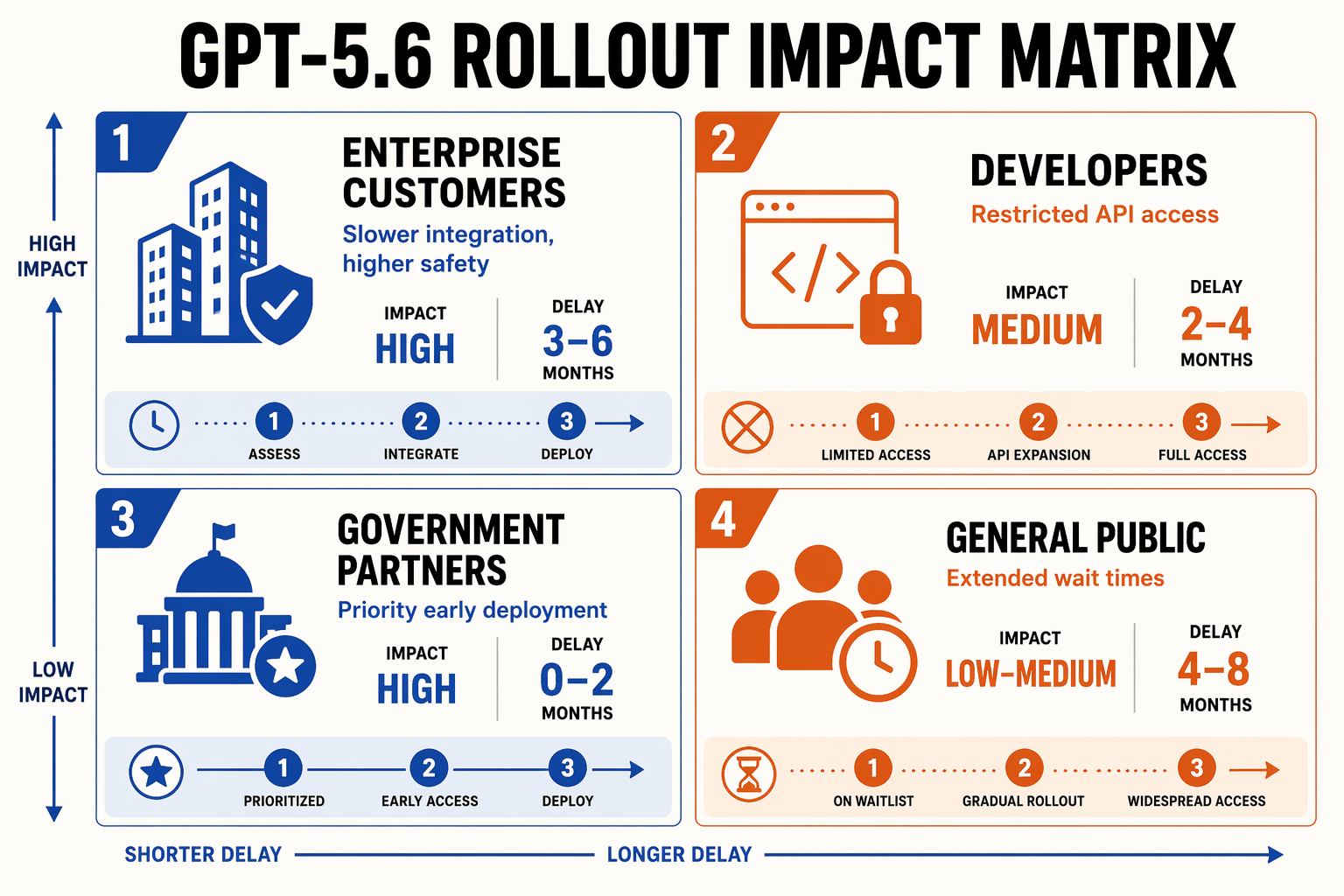
The White House’s sudden intervention in the rollout of GPT-5.6 marks a paradigm shift for enterprise architects, startup founders, and software developers. For years, the standard playbook was simple: wait for OpenAI to drop its latest frontier model, integrate the API, and ship. However, with the Office of the National Cyber Director and the Office of Science and Technology Policy stepping in to mandate a restricted, phased release to a handpicked group of "trusted partners," that playbook is officially obsolete.
For businesses waiting to leverage GPT-5.6 for next-generation automation, reasoning agents, or analytical pipelines, this intervention introduces sudden timeline risks and platform uncertainty. Relying on a single vendor's cutting-edge release is no longer a viable strategy when national security and safety concerns can freeze access overnight.
To help engineering and business leaders navigate this new era of sovereign AI regulation, the table below outlines the core shifts in developer operations and the immediate steps required to maintain operational resilience.
| Impact Area | Previous Paradigm | New GPT-5.6 Phased Reality | Actionable Mitigation |
|---|---|---|---|
| Access Timelines | Instant public API availability upon model announcement. | Gated, government-approved phased access for select partners. | Build prototypes using robust, currently available open-weights alternatives. |
| Vendor Lock-in Risk | Minimal concern; businesses built entirely on OpenAI APIs. | High vulnerability; regulatory delays can stall entire product roadmaps. | Adopt abstract API gateways to dynamically swap models if one is restricted. |
| Compliance & Safety | Developer-defined safety filters and basic prompt engineering. | Strict government-supervised safety benchmarking (e.g., CCDH-style tests). | Implement independent application-level safety and guardrail layers. |
| Geographic Limits | Global rolling releases with minor regional delays. | Strict export controls and US-first "trusted" partner lists. | Utilize sovereign cloud deployments and regional model clusters. |
| Model Redundancy | Primary model with a basic fallback for high-traffic outages. | Active, parallel multi-model routing to prevent single-point failures. | Integrate multi-model API layers to split traffic among multiple LLM vendors. |
Building a Regulatory-Proof AI Stack
As government oversight tightens on frontier systems, developers must design their applications for volatility. The most critical takeaway from this delay is the urgent need for infrastructure redundancy. If your product roadmap relies solely on a single provider's unreleased models, your business timeline is effectively subject to federal approval.
To insulate themselves from these regulatory bottlenecks, forward-thinking enterprises are shifting toward multi-model architectures. Platforms like CallMissed offer a powerful answer to this challenge. Through CallMissed's LLM inference gateway, developers can seamlessly switch between over 300+ models, ensuring that a regulatory delay on one model doesn't stall an entire enterprise deployment.
Furthermore, for companies scaling operations globally—especially those building localized applications—relying on a single US-centric provider can limit reach. By leveraging CallMissed's infrastructure, which features Speech-to-Text APIs supporting 22 Indian languages alongside production-ready AI voice agent deployment, businesses can build highly resilient, multilingual communication channels that remain completely insulated from domestic US policy shifts. Transitioning to a multi-model, multi-region framework is no longer just a technical best practice; in 2026, it is a business-continuity requirement.
Frequently Asked Questions
Why did the US government ask OpenAI to delay the GPT-5.6 rollout?
Who are the "trusted partners" allowed to access the model during the initial GPT-5.6 rollout phase?
How is OpenAI responding to the government's safety concerns regarding the GPT-5.6 rollout?
What specific safety risks did researchers identify in the GPT-5.6 model?
Will the delayed GPT-5.6 rollout affect other commercial LLMs and AI developers?
When is the general public expected to get access to GPT-5.6?
Conclusion
The White House's unprecedented request for OpenAI to delay and stagger the release of GPT-5.6 marks a watershed moment in the relationship between Silicon Valley and Washington. As we navigate this new era of tech oversight, here are the key takeaways to watch:
- Active Intervention: Government involvement has transitioned from high-level policy discussions to direct, active intervention in commercial product deployment.
- The "Phased" Standard: Future frontier AI models will increasingly launch through highly controlled, government-vetted beta phases rather than open, rapid public releases.
- Security Priority: National security concerns and systemic risk prevention are officially taking precedence over raw speed-to-market.
Moving forward, watch whether this coordinated intervention establishes a permanent regulatory template for future foundation model releases. Businesses must learn to build resilient, compliant tech stacks that can quickly adapt to these shifting regulatory landscapes. To explore how AI communication is evolving safely amidst these changes, check out CallMissed — an AI communication infrastructure platform powering enterprise voice agents and multilingual chatbots.
As federal guardrails tighten, how will your organization balance compliance with the rapid pace of AI innovation?
Related Posts
US Grows Anxious Over AI: Trump Administration Orders OpenAI to Delay GPT-5.6 Rollout

Trump Administration Asks OpenAI to Stagger GPT-5.6 Release: What It Means for AI Security

White House Intervenes in OpenAI’s GPT-5.6 Release: What It Means for AI Security