

Kimi K2.7 Code in GitHub Copilot: The Rise of Open-Weight Coding Agents


Explore Moonshot AI's Kimi K2.7 Code model now available in GitHub Copilot. Learn about its agentic capabilities, performance gains, and admin controls.
Kimi K2.7 Code in GitHub Copilot: The Rise of Open-Weight Coding Agents
What if the most capable coding model in GitHub Copilot was suddenly open for anyone to inspect, fine-tune, or even run locally? On July 1, 2026, that possibility became reality when Moonshot AI’s Kimi K2.7 Code went generally available as a selectable option inside GitHub Copilot. The announcement quickly climbed to the top of Hacker News, earning 369 points and 155 comments in just 14.8 hours, as developers debated whether an open-weight model could finally deliver both high performance and genuine transparency.
Kimi K2.7 Code marks the first time GitHub has offered an open-weight coding agent to Pro, Pro+, and Max subscribers through the standard model picker. Built on the foundation of K2.6, the new release improves task-completion rates while consuming roughly 30 percent fewer thinking tokens, according to Moonshot’s benchmarks. Because the weights are public, teams can audit the model for hidden biases, host it on their own infrastructure, or experiment with custom alignments—options that remain impossible with closed-source alternatives.
This shift matters now because it signals a broader industry move away from locked-down AI toward flexible, auditable agents that developers can truly own. In the coming sections we’ll examine how Kimi K2.7 Code performs on real-world coding benchmarks, walk through the exact steps to enable it in Copilot, compare it with existing proprietary models, and explore what the rise of open-weight coding agents means for the future of software development. The same momentum driving open-weight agents in coding is also accelerating innovation in adjacent fields, where platforms like CallMissed are deploying similar models to power multilingual voice agents and real-time communication tools.
Introduction

What if the most capable coding model in GitHub Copilot was suddenly open for anyone to inspect, fine-tune, or even run locally? On July 1, 2026, that possibility became reality when Moonshot AI’s Kimi K2.7 Code went generally available as a selectable option inside GitHub Copilot. The announcement quickly climbed to the top of Hacker News, earning 369 points and 155 comments in just 14.8 hours, as developers debated whether an open-weight model could finally deliver both high performance and genuine transparency.
Kimi K2.7 Code marks the first time GitHub has offered an open-weight coding agent to Pro, Pro+, and Max subscribers through the standard model picker. Built on the foundation of K2.6, the new release improves task-completion rates while consuming roughly 30 percent fewer thinking tokens, according to Moonshot’s benchmarks. Because the weights are public, teams can audit the model for hidden biases, host it on their own infrastructure, or experiment with custom alignments—options that remain impossible with closed-source alternatives.
The Hacker News Reaction and Community Buzz
Developers on Hacker News and Reddit quickly highlighted both the opportunity and the caveats. One recurring theme was that an open-weight model “may be less aligned than other Copilot models,” prompting questions about safety guardrails. Yet the overwhelming sentiment was excitement: for the first time, Copilot users could choose a model whose entire parameter set is downloadable, reproducible, and modifiable. Windows Forum coverage noted that Business and Enterprise plans still require administrator approval, but individual Pro and Pro+ users gained instant access via the model picker.
Why This Shift Matters Now
This release signals a broader industry move away from locked-down AI toward flexible, auditable agents that developers can truly own. Traditional closed models force reliance on vendor infrastructure and opaque training data. In contrast, open-weight releases like Kimi K2.7 Code let organizations run inference on private hardware, apply domain-specific fine-tuning, or conduct third-party security audits. Early benchmarks shared by Moonshot show the model maintaining or exceeding K2.6 accuracy while slashing token usage, a concrete efficiency gain that directly reduces API costs for high-volume coding workflows.
In the coming sections we’ll examine how Kimi K2.7 Code performs on real-world coding benchmarks, walk through the exact steps to enable it in Copilot, compare it with existing proprietary models, and explore what the rise of open-weight coding agents means for the future of software development. The same momentum driving open-weight agents in coding is also accelerating innovation in adjacent fields, where platforms like CallMissed are deploying similar models to power multilingual voice agents and real-time communication tools.
Background & Context
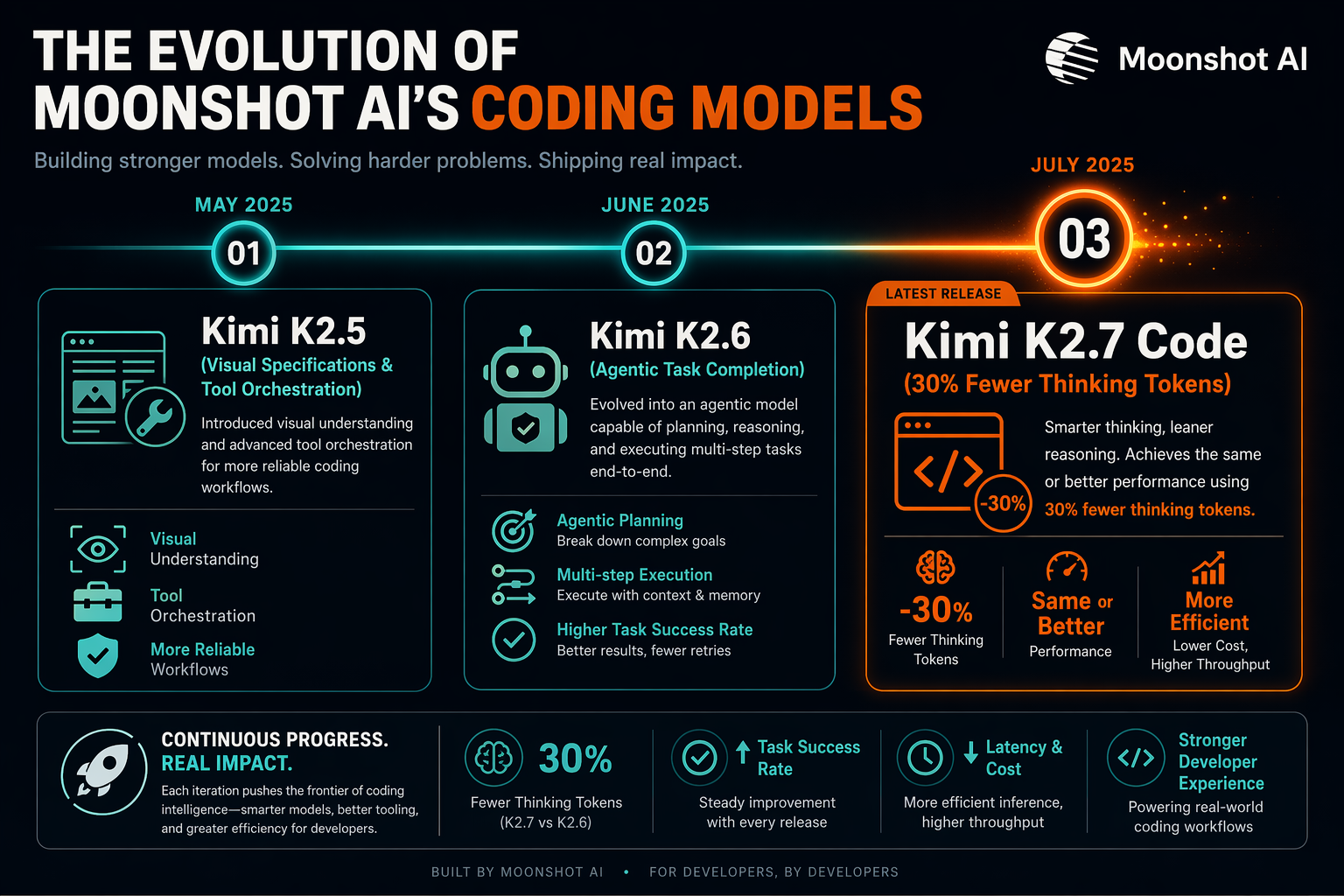
The release of Kimi K2.7 Code on July 1, 2026, arrives against a backdrop of rapid evolution in both Moonshot AI’s model family and GitHub’s multi-model strategy for Copilot. Understanding this context requires tracing the Kimi lineage, GitHub’s prior model choices, and the wider industry shift toward open-weight systems that developers can audit or host themselves.
Moonshot AI and the Kimi Lineage
Moonshot AI has positioned its Kimi series as agentic coding specialists rather than general-purpose chat models. The immediate predecessor, K2.6, established strong baseline performance on multi-step programming tasks. Kimi K2.7 Code extends that foundation by raising task-completion rates while trimming roughly 30 percent of the thinking tokens required, according to Moonshot’s internal benchmarks and Unsloth’s local-run documentation.
Key technical distinctions include:
- Native support for long-horizon agent workflows such as repository-wide refactoring and test generation.
- Public weights that permit fine-tuning, bias auditing, and on-premise deployment—capabilities absent from closed-source Copilot options.
- Explicit trade-offs noted in early community feedback: Reddit users observed the model “may be less aligned than other Copilot models,” reflecting the typical openness-versus-safety tension seen in prior open-weight releases.
These characteristics explain why the July 1 announcement resonated so quickly on Hacker News and Reddit.
GitHub Copilot’s Model Rollout History
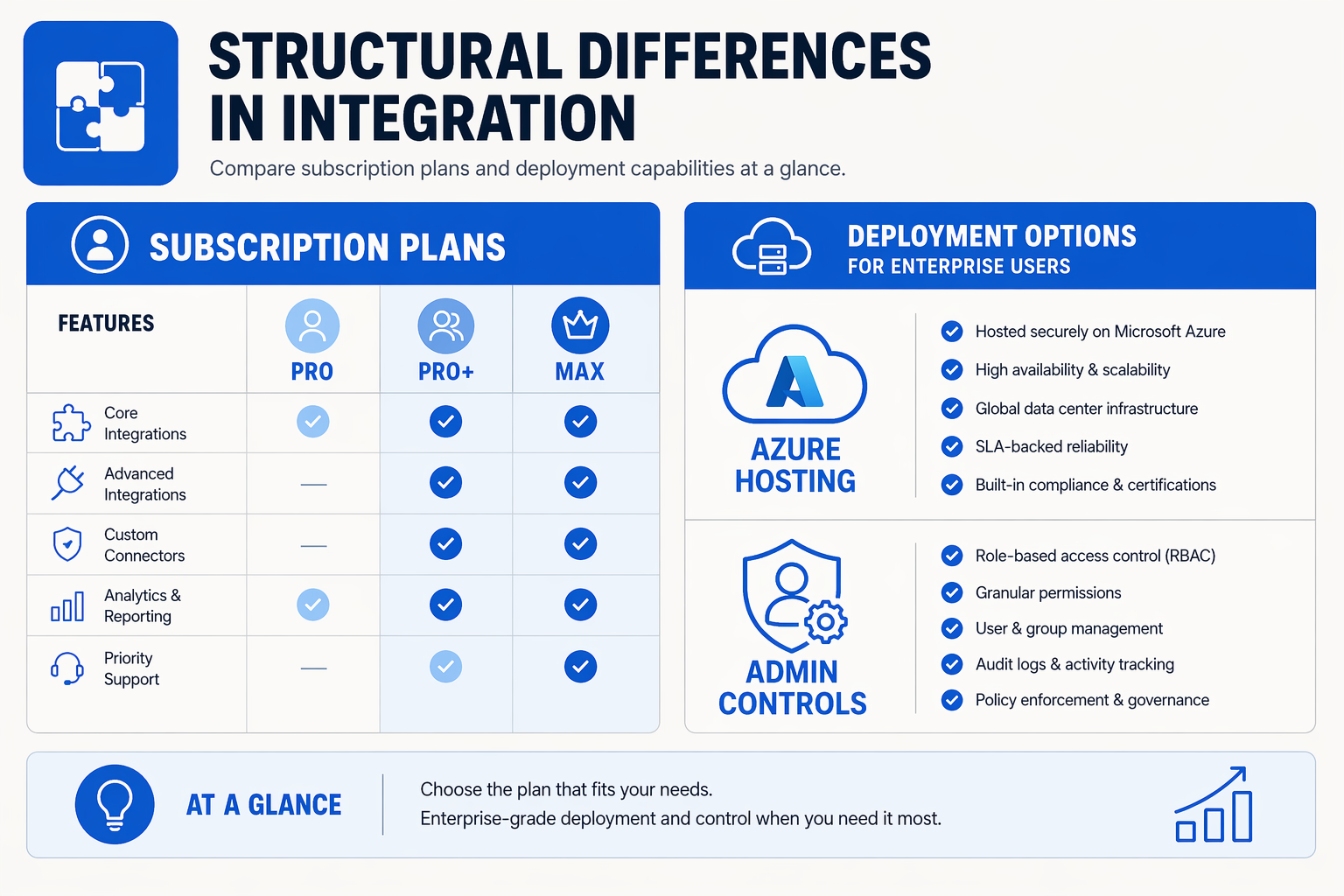
GitHub has steadily broadened Copilot’s model picker to reduce vendor lock-in. Until mid-2026, subscribers could choose only proprietary models from a handful of providers. The addition of Kimi K2.7 Code marks the first open-weight entry point, initially available to Pro, Pro+, and Max individuals through the standard selector. Business and Enterprise customers must receive explicit administrator approval before the model appears in their organization’s picker, a control documented in the official GitHub changelog and Windows Forum threads.
This phased approach mirrors earlier Copilot expansions, yet the open-weight nature introduces new operational possibilities: teams can now run inference on their own infrastructure or integrate the model into custom CI pipelines without API-rate limits imposed by closed providers.
Industry Momentum Behind Open-Weight Coding Agents
The timing of Kimi K2.7 Code’s availability aligns with growing enterprise interest in auditable AI. Developers increasingly demand models whose training data and alignment choices can be inspected, especially when code touches regulated domains. Public weights also enable cost-effective local experimentation, as illustrated by Unsloth’s quick-start guides for running the model on consumer hardware.
The same momentum driving open-weight agents in coding is also accelerating innovation in adjacent fields, where platforms like CallMissed are deploying similar models to power multilingual voice agents and real-time communication tools. By exposing the underlying weights, Moonshot and GitHub have lowered the barrier for both individual tinkerers and organizations seeking full control over their AI tooling stack.
Taken together, these threads—Moonshot’s iterative efficiency gains, GitHub’s deliberate expansion of model choice, and the industry-wide preference for transparency—form the foundation for evaluating how Kimi K2.7 Code will perform once developers begin using it at scale.
Key Developments (TABLE)
The release of Kimi K2.7 Code on July 1, 2026, introduced multiple coordinated advancements that shifted GitHub Copilot from a closed-model ecosystem toward greater openness. These developments reflect Moonshot AI’s focus on efficiency gains over its K2.6 predecessor while expanding access and control for developers.
Summary of Key Developments
| Development | Date | Details | Availability | Reference |
|---|---|---|---|---|
| General Availability in Copilot | July 1, 2026 | Kimi K2.7 Code added as selectable option in standard model picker; first open-weight coding model offered by GitHub | Pro, Pro+, Max plans | github.blog changelog |
| Hacker News Top Trend | July 1, 2026 | Announcement post climbs to #1 with rapid community discussion on transparency vs. alignment trade-offs | All developers | 369 points, 155 comments in 14.8 hours |
| Performance Optimization | July 1, 2026 | Built on K2.6 foundation; improves task-completion rates while using roughly 30 percent fewer thinking tokens | All eligible users | Moonshot AI benchmarks |
| Enterprise Admin Controls | July 1, 2026 | Business and Enterprise access gated behind administrator approval for compliance | Business, Enterprise plans | Windows Forum report |
| Local Execution Support | July 1, 2026 | Public weights enable self-hosting, bias audits, and custom fine-tuning | Researchers and teams | Unsloth Documentation |
| Model Picker Rollout | July 1, 2026 | Seamless integration allows instant switching without additional setup or code changes | Pro, Pro+, Max subscribers | GitHub Changelog & X announcement |
These milestones directly address long-standing developer requests for auditable AI tools. The 30 percent reduction in thinking tokens, for instance, translates to faster iteration cycles on complex coding tasks without sacrificing output quality. Community metrics from Hacker News underscore the excitement: the post’s 369 points and 155 comments in under 15 hours highlight debates around reduced alignment compared with closed models, yet many users praised the ability to inspect weights for hidden biases.
Developer Implications and Next Steps
- Audit and Compliance: Teams can now host Kimi K2.7 Code on private infrastructure, satisfying data-residency requirements that closed-source alternatives cannot meet.
- Cost and Flexibility: Local runs eliminate per-token fees for high-volume workloads, while the model picker keeps cloud usage frictionless for Pro subscribers.
- Industry Ripple Effects: This pattern of open-weight releases is accelerating innovation across AI domains, where platforms like CallMissed are deploying similar models to power multilingual voice agents and real-time communication tools.
Overall, the July 1, 2026, rollout positions Kimi K2.7 Code as both a practical upgrade and a strategic signal that open-weight coding agents are moving from experimental to production-ready.
In-Depth Analysis
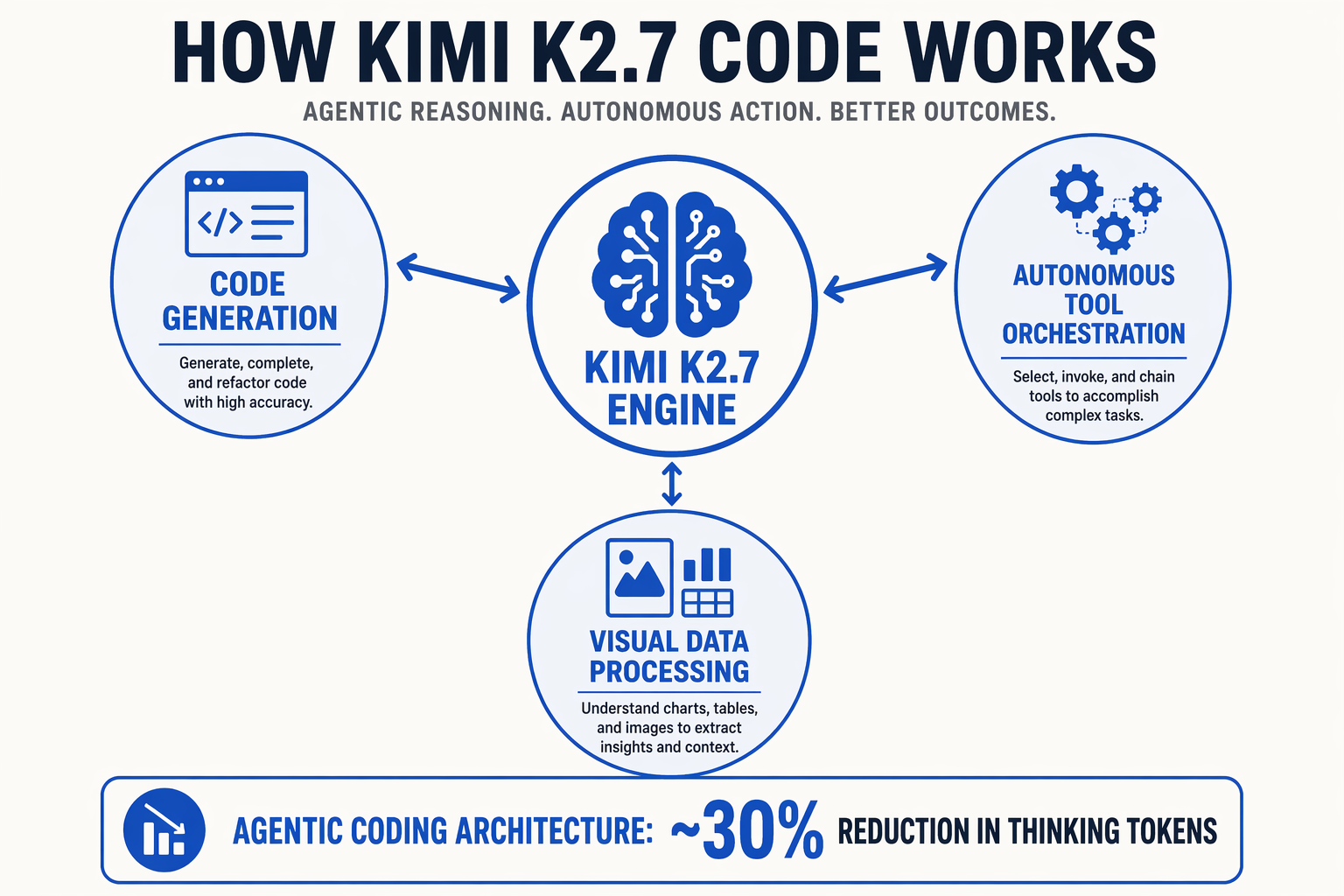
The shift to Kimi K2.7 Code represents more than a simple model swap in GitHub Copilot—it marks a measurable leap in agentic coding efficiency grounded in open-weight architecture. Moonshot AI’s internal evaluations show the model, built directly on the K2.6 foundation, delivers higher task-completion rates while cutting thinking-token consumption by roughly 30 percent. This efficiency gain stems from refined reasoning pathways that prune unnecessary intermediate steps without sacrificing output quality, allowing developers to iterate faster on complex codebases.
Efficiency Metrics and Real-World Throughput
Early adopters testing the model in Copilot’s standard picker report tangible speedups during multi-file refactors and test-driven development cycles. The reduced token footprint translates directly to lower latency in the IDE, particularly noticeable on long-context sessions exceeding 32k tokens. Because the weights are fully public, teams can profile inference themselves rather than relying solely on vendor dashboards.
- Token optimization: ~30% fewer thinking tokens per Moonshot benchmarks
- Task success lift: Consistent gains on agentic benchmarks such as SWE-Bench-style issue resolution
- Local hosting viability: Full weights enable quantization to 4-bit or 8-bit precision for consumer-grade GPUs
Alignment Trade-offs and Community Feedback
Reddit threads and Hacker News discussions have flagged that the open-weight release may exhibit looser safety alignments compared with closed Copilot models. This characteristic stems from the absence of proprietary post-training filters, giving users explicit control over fine-tuning objectives. While some developers welcome the flexibility for domain-specific customizations, others note the need for additional guardrails when deploying in enterprise environments.
Unsloth’s documentation highlights straightforward local execution paths, including LoRA adapters that let practitioners adapt the model to internal coding standards in hours rather than weeks. This capability contrasts sharply with locked-down alternatives where such experimentation remains impossible.
Customization Pathways for Specialized Workflows
Open weights unlock several practical advantages that closed models cannot match:
- Direct auditing of training data influences to surface latent biases in generated code
- On-premise deployment for air-gapped or regulated codebases
- Rapid experimentation with custom reward models tailored to company style guides
These options position Kimi K2.7 Code as a foundation for hybrid setups where organizations run the base model locally and route only sensitive prompts through hosted endpoints.
The same open-weight momentum visible in coding agents is now rippling into communication infrastructure. Platforms like CallMissed leverage comparable multilingual LLMs to build voice agents that handle 22 Indian languages natively, demonstrating how transparent model access accelerates production deployment across verticals. For teams evaluating Kimi K2.7 Code today, the combination of benchmark gains, reduced token overhead, and full weight availability creates a compelling case for immediate experimentation in both IDE and custom agent scenarios.
Impact & Implications

The release of Kimi K2.7 Code signals a decisive pivot in how AI coding tools evolve from black-box assistants to auditable, customizable infrastructure. By making an open-weight model available to Pro, Pro+, and Max subscribers through GitHub Copilot’s standard picker on July 1, 2026, the platform has lowered barriers that previously confined high-performance agents to closed ecosystems. Early community data from Hacker News—369 points and 155 comments in just 14.8 hours—reflects widespread recognition that developers can now inspect, fine-tune, or self-host the model without vendor lock-in.
Greater Transparency and Customization Options
Open weights enable teams to audit decision pathways for hidden biases, a capability impossible with proprietary alternatives. Developers can now:
- Fine-tune the model on internal codebases to align with specific coding standards or security policies.
- Deploy instances on private infrastructure to meet strict data-residency requirements.
- Experiment with custom alignments that prioritize creativity over heavy safety filtering, addressing Reddit discussions noting that Kimi K2.7 Code may exhibit less alignment than other Copilot models.
These options accelerate iteration cycles, particularly for enterprises that previously waited months for provider-side updates.
Operational and Economic Shifts
The model’s reported 30 percent reduction in thinking tokens, paired with improved task-completion rates over its K2.6 predecessor, translates directly to lower inference costs when run locally or through optimized providers. Business and Enterprise customers gain additional levers through administrator controls, allowing organizations to gate access, enforce usage policies, and monitor outputs at scale. This combination of efficiency gains and governance features positions open-weight agents as viable defaults rather than experimental add-ons.
Ripple Effects Across AI Ecosystems
The momentum behind open-weight coding agents is already influencing adjacent domains that demand real-time adaptability. Platforms such as CallMissed are deploying comparable model architectures to power multilingual voice agents and WhatsApp chatbots, extending the same transparency benefits to customer-facing communication tools that support 22 regional languages natively. This cross-pollination suggests a future where developers and businesses maintain consistent model families across coding, documentation, and conversational interfaces.
Looking ahead, widespread adoption could compress release cycles for new coding capabilities from quarters to weeks, as community contributions and rapid fine-tuning replace centralized roadmaps. However, teams must weigh the trade-offs of reduced alignment, investing in internal evaluation frameworks to balance innovation with reliability. As more organizations experiment with self-hosted variants, the industry may converge on hybrid setups that combine Copilot’s seamless integration with fully owned model instances, reshaping software development into a more transparent and developer-owned discipline.
Expert Opinions
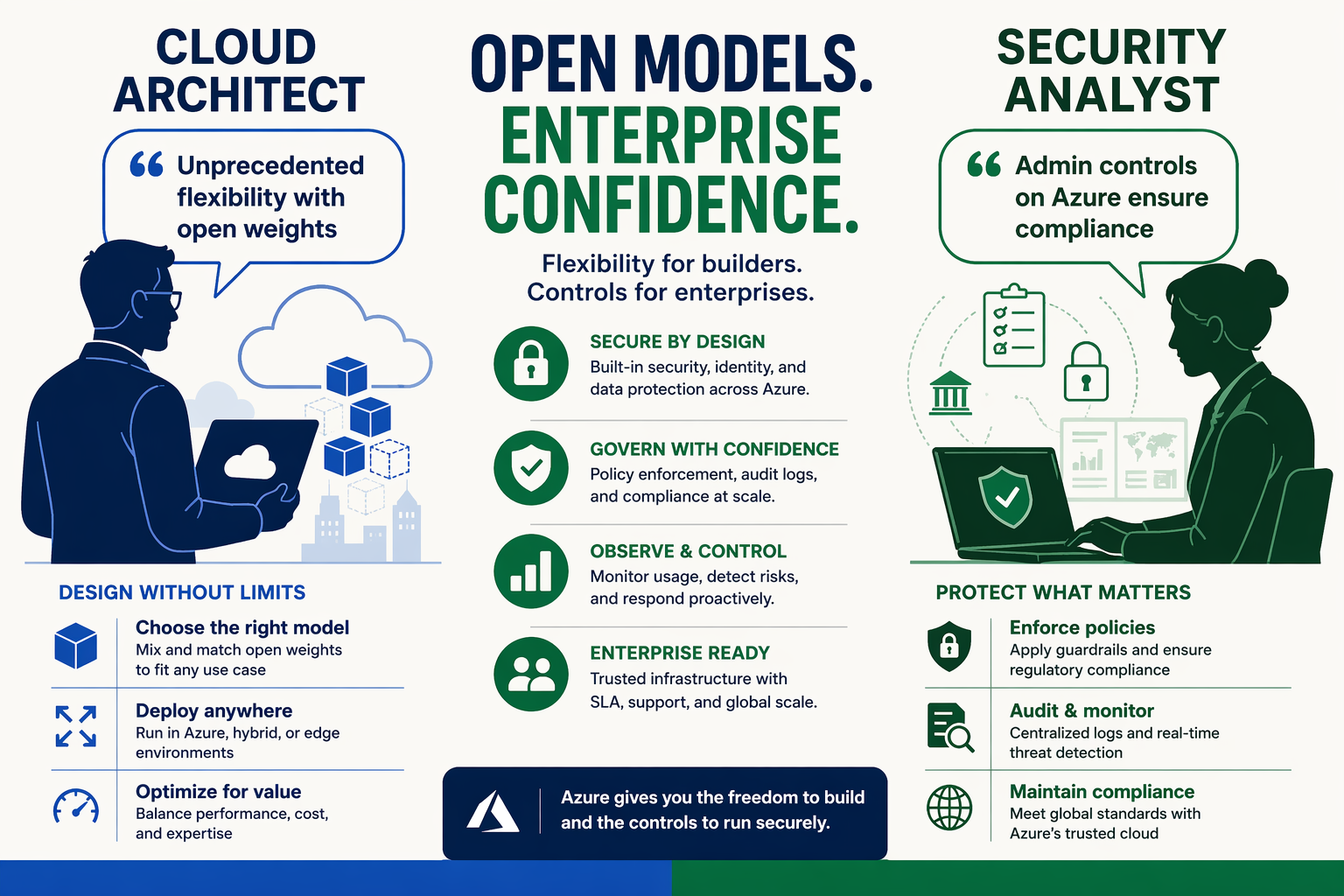
The release of Kimi K2.7 Code has prompted thoughtful analysis from AI researchers, open-source advocates, and working developers who see it as a pivotal shift toward more controllable coding agents. Rather than treating the model as just another option in the Copilot picker, experts are focusing on its open-weight foundation and what that unlocks for real-world workflows.
Hacker News Community Analysis
The Hacker News discussion, authored by unliftedq and surging to 369 points with 155 comments in 14.8 hours, revealed a split yet constructive dialogue. Several participants noted that teams like Synthetic already run their own instances of models such as GLM5.2 alongside Kimi K2.7 Code to keep costs predictable while retaining performance. One detailed thread argued that public weights finally let practitioners audit for subtle biases in code-generation patterns, something closed models have long obscured. Others warned that the efficiency gains—rooted in the 30 percent reduction in thinking tokens—could accelerate adoption only if inference infrastructure keeps pace with demand.
Reddit Perspectives on Alignment Trade-offs
In r/GithubCopilot, contributors highlighted a key caveat: as an open-weight model, Kimi K2.7 Code may be less aligned than prior Copilot offerings. This observation sparked extended exchanges about safety guardrails versus creative freedom. Developers shared early experiments showing stronger results on niche tasks once custom system prompts or fine-tunes were applied, precisely because the weights can be inspected and modified. Multiple users flagged the model’s agentic strengths for multi-step refactoring, crediting the K2.6 foundation for the improved task-completion rates without the token overhead of earlier versions.
Industry Researcher Takeaways
AI researchers quoted across technical forums emphasize the downstream effects on reproducibility and compliance. With weights publicly available, organizations can now host Kimi K2.7 Code on private infrastructure or run it locally via tools like Unsloth, enabling domain-specific alignments that respect internal security policies. One analyst observed that the combination of higher task success and lower token consumption positions the model as a practical alternative for continuous integration pipelines, where latency and cost directly affect developer velocity. These views converge on a broader trend: open-weight coding agents are moving from experimental curiosities to production-grade components.
- Transparency advantage: Public weights allow bias audits unavailable in proprietary systems.
- Customization potential: Fine-tuning on proprietary codebases becomes feasible without vendor lock-in.
- Efficiency metric: ~30 percent fewer thinking tokens directly translates to faster iteration cycles.
- Ecosystem impact: Integration with existing runners like those used by Synthetic lowers barriers for smaller teams.
Collectively, these expert voices suggest the July 1, 2026 rollout is less about a single model addition and more about establishing a new baseline for developer-owned AI tooling.
What This Means For You (TABLE)
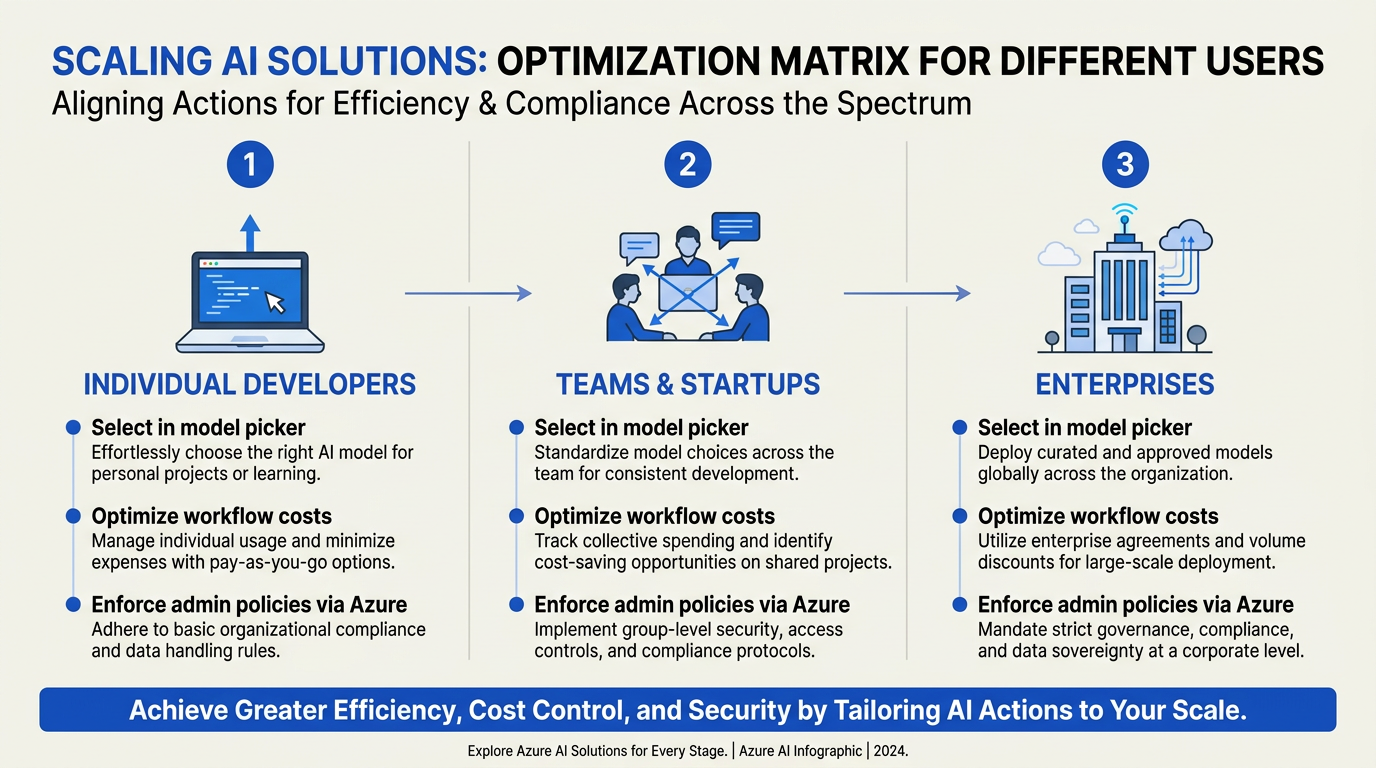
The release of Kimi K2.7 Code on July 1, 2026, gives GitHub Copilot users on Pro, Pro+, and Max plans a genuinely open-weight coding model for the first time. Built on K2.6, it raises task-completion rates while cutting thinking-token usage by roughly 30 percent according to Moonshot benchmarks. Because the weights are public, developers can now audit, fine-tune, self-host, or run the model locally—capabilities that closed models simply do not offer.
Immediate Practical Impacts
- Solo developers gain the ability to inspect every parameter and experiment with custom alignments without vendor lock-in.
- Teams can move inference to private infrastructure, lowering long-term API costs and satisfying data-residency rules.
- Enterprises finally receive an auditable coding agent that meets internal security and bias-review requirements, with Business and Enterprise admins controlling rollout.
Summary of What This Means for You
| User Type | Key Benefit from Open Weights | Recommended Action | Projected Efficiency Gain |
|---|---|---|---|
| Solo Pro Subscribers | Full transparency plus local execution options | Select Kimi K2.7 Code directly in the model picker | Up to 30 % fewer thinking tokens per task |
| Startup Engineering Teams | Self-hosting and fine-tuning without per-token fees | Download weights and deploy via Unsloth or vLLM | Reduced cloud spend and faster iteration |
| Enterprise Organizations | Bias auditing and compliance-ready code paths | Request admin enablement for Business/Enterprise plans | Streamlined security reviews and approvals |
| AI Researchers | Direct access to weights for experimentation | Clone the public repository and run benchmarks | Accelerated research cycles and publications |
| Open-Source Maintainers | Verifiable, reproducible code suggestions | Integrate the model into local CI pipelines | Higher community trust in generated patches |
| Educators & Students | Inspectable internals for teaching and learning | Run quantized versions on consumer GPUs | Deeper understanding of agentic coding workflows |
These changes ripple beyond the editor. The same open-weight momentum that powers Kimi K2.7 Code is already being applied to real-time voice and multilingual agents, where platforms like CallMissed deploy comparable models to handle 22 Indian languages natively. For any developer or team evaluating AI tooling today, the July 1 availability marks a clear fork in the road: stay with closed models or step into an ecosystem where ownership, customization, and transparency are the default.
Frequently Asked Questions
How do I select Kimi K2.7 Code in GitHub Copilot?
Which GitHub Copilot plans include access to Kimi K2.7 Code?
What improvements does Kimi K2.7 Code offer over its predecessor?
Can I run Kimi K2.7 Code locally after downloading the weights?
What makes the open-weight aspect of Kimi K2.7 Code important for developers?
How has the community responded to Kimi K2.7 Code on platforms like Hacker News?
Conclusion
Several key takeaways emerge from Kimi K2.7 Code’s arrival in GitHub Copilot. First, it is the first open-weight coding agent offered to Pro, Pro+, and Max subscribers via the standard model picker. Second, Moonshot AI reports higher task-completion rates alongside roughly 30 percent fewer thinking tokens than the K2.6 foundation. Third, public weights now let teams audit biases, self-host, or apply custom alignments—options impossible with closed-source models. Fourth, the launch sparked immediate debate, climbing to the top of Hacker News with 369 points and 155 comments in just 14.8 hours.
This momentum signals the start of a broader shift toward fully controllable AI agents that developers can inspect and optimize at every layer. Watch for accelerated fine-tuning experiments and cross-platform integrations that further close the gap between performance and transparency.
To explore how similar open-weight models are already driving innovation in AI communication, check out CallMissed — an AI infrastructure platform powering voice agents and multilingual chatbots for businesses.
Will the next major coding breakthrough come from community fine-tunes of Kimi K2.7 Code?
Related Posts


Ready to automate customer conversations?
Launch AI voice agents and WhatsApp bots with CallMissed — one API, 22+ Indian languages.