

Anthropic Launches Claude Sonnet 5: A Cheaper Way to Run AI Agents



Discover how Anthropic's new Claude Sonnet 5 slashes API costs while delivering near-Opus performance and stronger agentic capabilities.
Anthropic Launches Claude Sonnet 5: A Cheaper Way to Run AI Agents
What if you could slash the operational costs of your AI agents by 50% overnight without sacrificing an ounce of reasoning power? With the official release of Claude Sonnet 5, Anthropic has turned this scenario into reality, fundamentally reshaping the economics of agentic AI. As enterprises in 2026 transition from simple prompt-and-response chatbots to autonomous, multi-step agentic workflows, the sheer volume of token consumption has made legacy LLM pricing models a massive bottleneck. Historically, running continuous loops for complex coding, multi-channel customer service, and computer-use tasks required premium flagship models that quickly drained engineering budgets.
Claude Sonnet 5 solves this infrastructure hurdle by delivering near-Opus performance at a fraction of the cost. Designed to serve as the new default for both developer APIs and consumer-facing tiers, this model couples aggressive pricing with stronger safety protocols and a massive 1-million-token context window. Crucially, its enhanced agentic capabilities make it the ideal engine for advanced workflows like Anthropic's "Advisor Strategy"—a design pattern where a fast, cost-efficient executor model handles the heavy lifting of continuous execution while consulting heavier reasoning models only when necessary. For businesses aiming to capitalize on these architectural shifts, communication platforms like CallMissed make it incredibly simple to deploy Claude Sonnet 5 natively across multilingual voice agents and automated chat channels.
In this post, we will dissect the performance benchmarks of Claude Sonnet 5, compare its cost structure against predecessor models, and explore practical strategies to implement this highly efficient LLM to build smarter, cheaper autonomous systems.
Introduction

In the rapidly evolving landscape of 2026, enterprises are transitioning away from simple, single-prompt chatbots toward highly autonomous, multi-step agentic workflows. However, this shift has historically come with a steep price tag. Running continuous loops for complex coding, system operations, and automated customer support requires massive token consumption. Until recently, relying on flagship models meant facing exorbitant operational costs. Anthropic's launch of Claude Sonnet 5 fundamentally rewrites this economic equation, offering a dramatic 50% cost reduction compared to previous-generation setups while delivering near-Opus performance.
The Dawn of Economical Agentic AI
Launched as the new default for both developer APIs and consumer tiers, Claude Sonnet 5 is engineered to solve the "agent tax"—the high cost of running loops that continuously read, write, and execute tasks. By combining aggressive pricing with state-of-the-art reasoning, Anthropic has positioned Sonnet 5 as the ultimate execution engine for modern AI agents.
Key highlights of the Claude Sonnet 5 release include:
- Aggressive Pricing: It delivers a rumored 50% cost reduction compared to Claude Opus 4.5, making high-volume API calls highly viable for production.
- Massive Context Window: The model retains Anthropic’s industry-leading 1-million-token context window, allowing agents to ingest entire codebases or long customer histories in a single turn.
- Enhanced Safety and Guardrails: Sonnet 5 features tightened safety alignment, which is critical for autonomous "computer-use" tasks where AI interacts directly with desktop environments.
- Optimized for the "Advisor Strategy": Its speed and efficiency make it the perfect "executor" model, handling the bulk of agent tasks and consulting heavier models only when a high-level strategic decision is required.
Why Cost-Efficiency Changes the Playbook
Historically, developers faced a tough compromise: use a lightweight model that lacks the reasoning capabilities to handle complex logic, or use a premium frontier model that quickly drains engineering budgets. Claude Sonnet 5 eliminates this trade-off. Because it performs at near-Opus levels, developers can deploy agents that handle sophisticated, multi-step reasoning pathways at a fraction of the cost.
This breakthrough is especially powerful when paired with advanced agentic architectures. In Anthropic’s newly popularized Advisor Strategy, Sonnet 5 acts as a rapid, cost-efficient executor that manages continuous execution loops, only pinging a heavier model (like Claude Mythos 5 or Opus 4.5) for complex edge cases.
For businesses eager to integrate these cost-saving capabilities into their customer experience, infrastructure platforms like CallMissed make adoption seamless. CallMissed allows developers to deploy Claude Sonnet 5 natively across multi-channel AI agents, leveraging CallMissed's unified API gateway to access over 300+ LLMs. By combining this gateway with CallMissed's high-performance voice agents, WhatsApp chatbots, and local-language Speech-to-Text (supporting 22 Indian regional languages), businesses can deploy world-class, context-aware agents globally without breaking the bank.
Background & Context
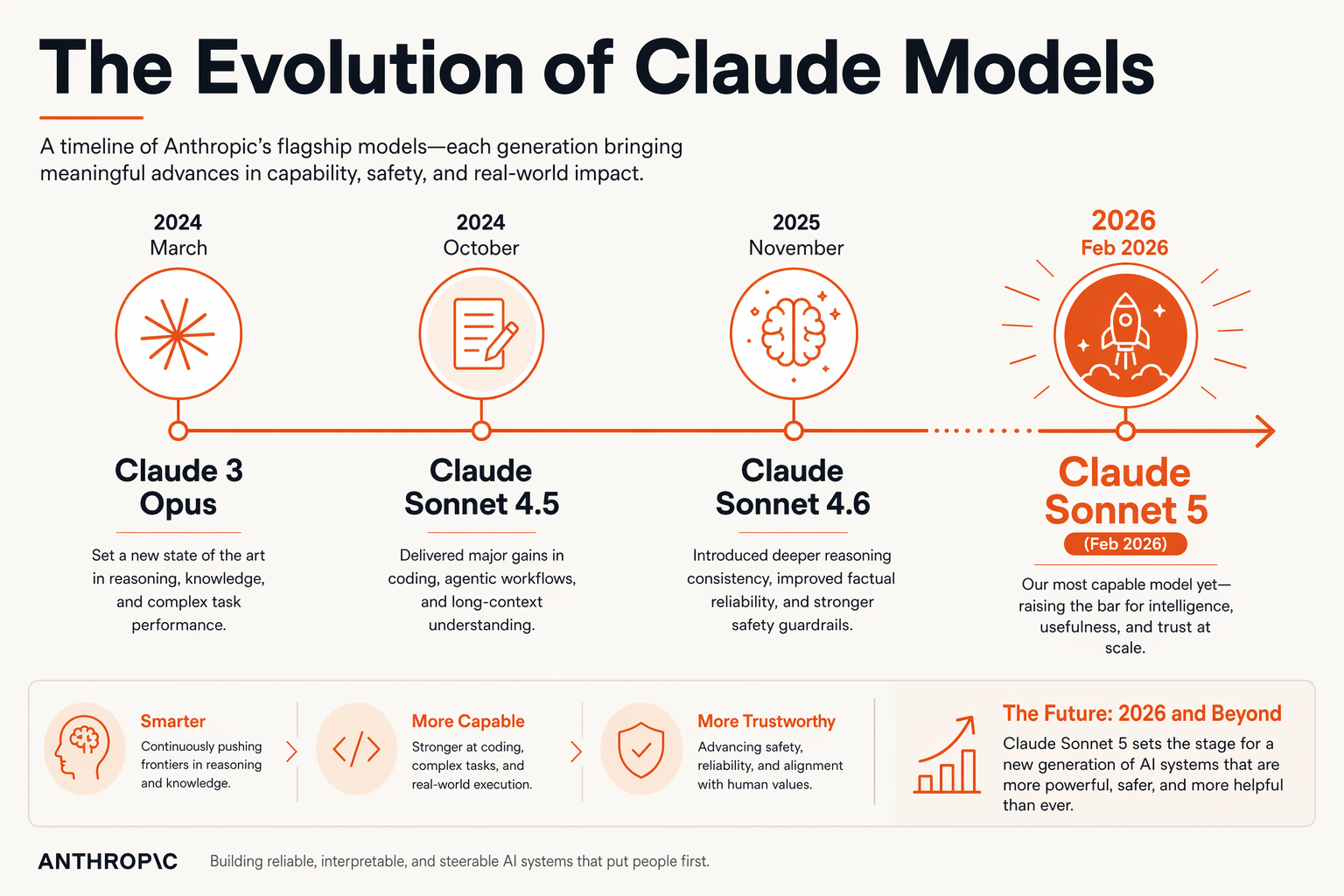
To appreciate the significance of Claude Sonnet 5, one must understand the economic and architectural bottlenecks that have historically plagued enterprise AI. Throughout the evolution of LLMs, developers faced a punishing trade-off: deploy a slower, hyper-expensive flagship model like the Claude Opus line to ensure accurate execution, or use a faster, cheaper model and risk system-breaking hallucinations in complex, multi-step workflows.
As businesses in 2026 rapidly transition from simple Q&A bots to highly autonomous AI agents, this "agent tax" has grown unsustainable. An AI agent does not just process a single prompt; it operates in continuous loops—frequently reading, writing, and executing code, calling APIs, and self-correcting. This iterative process consumes millions of tokens in minutes. Running these loops on premium reasoning models has traditionally drained engineering budgets, stalling many ambitious agentic deployments at the proof-of-concept stage.
The Evolutionary Leap to Sonnet 5
Anthropic’s strategy has shifted toward solving this exact economic friction. The release of Claude Sonnet 5, alongside its highly specialized cohort models like Claude Fable 5 and Claude Mythos 5, marks a deliberate pivot toward affordable agentic architecture. By optimizing the underlying infrastructure, Anthropic has successfully decoupled high-tier reasoning from exorbitant operational costs.
To put this structural shift in perspective, consider how the landscape has evolved:
- The Flagship Bottleneck: Previous state-of-the-art models like Claude Opus 4.5 set the gold standard for complex coding and multi-step reasoning, but their pricing models made them prohibitive for high-frequency, continuous agent execution.
- The Rise of Sonnet 5: Engineered specifically to bypass this bottleneck, Claude Sonnet 5 delivers near-Opus level performance. It is priced aggressively—slashing previous cost structures by roughly 50%—while retaining a massive 1-million-token context window to digest vast codebases and long conversational histories.
- Complementary Specialization: Alongside this release, Anthropic introduced specialized sibling models. For example, Fable 5 and Mythos 5 are offered at $10 per million input tokens and $50 per million output tokens, which is less than half the price of legacy flagship models. This tiered pricing allows developers to route tasks dynamically based on complexity.
Empowering the "Advisor Strategy"
This new pricing paradigm makes architectural patterns like the Advisor Strategy commercially viable for the first time. In this design pattern, a fast, cost-efficient executor model (such as Claude Sonnet 5) handles 90% of the heavy lifting, continuous API calls, and routine operations. It only consults a heavier reasoning "advisor" model when it encounters an exceptionally complex edge case.
This approach dramatically reduces token spend while maintaining absolute reliability. For companies looking to deploy these efficient agent architectures, platforms like CallMissed provide the perfect infrastructure. By offering streamlined access to over 300 LLMs, CallMissed allows developers to natively orchestrate Claude Sonnet 5 alongside automated chat and multilingual voice agents, scaling operational efficiency without incurring massive token overhead.
Key Developments (TABLE)
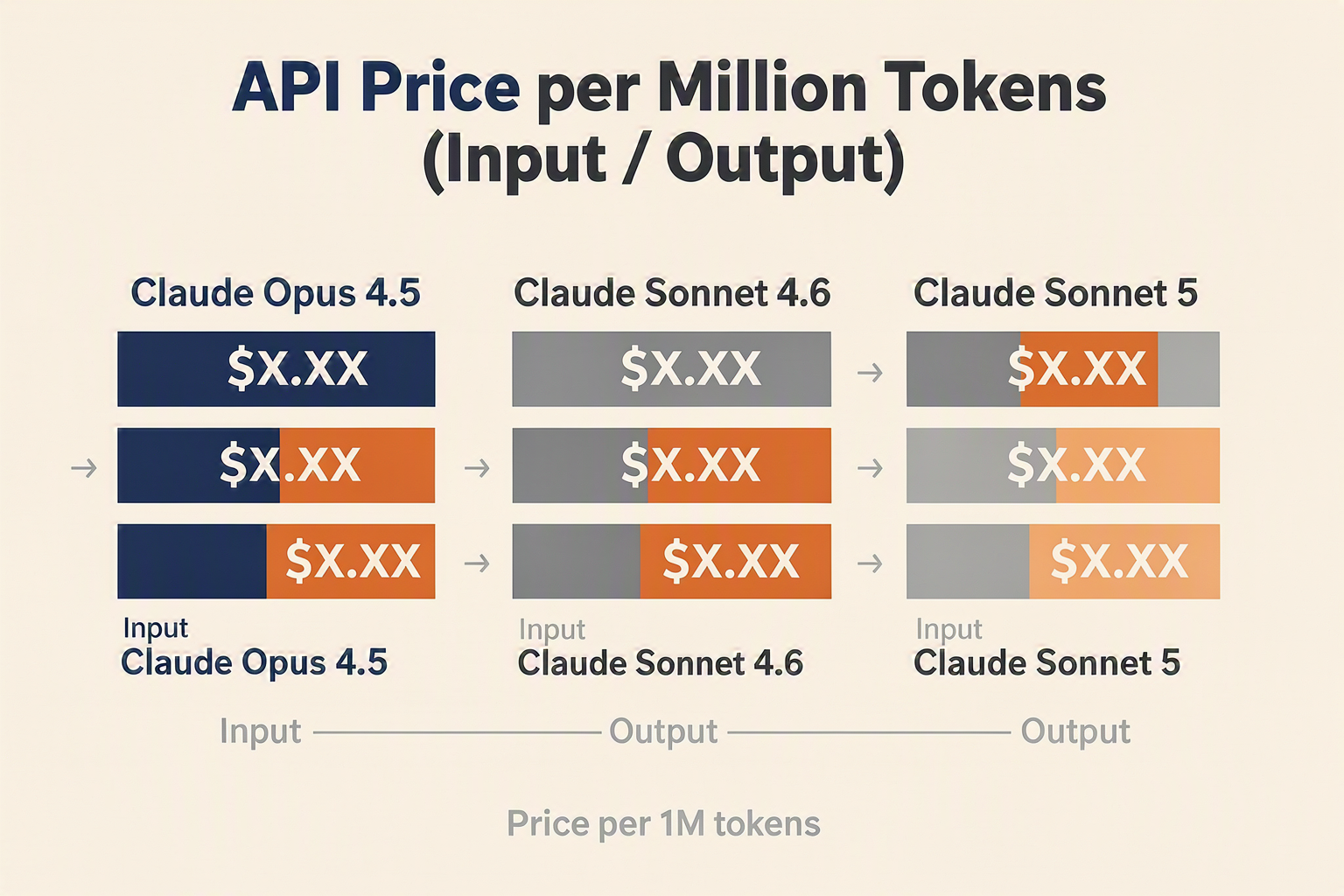
The debut of the Claude 5 generation models—including Claude Sonnet 5, Claude Fable 5, and Claude Mythos 5—marks a paradigm shift in how developers design and budget for autonomous agents. Rather than relying on a single, massive LLM to handle everything from simple routing to deep logical analysis, Anthropic’s updated roster allows teams to build highly customized, multi-layered agentic systems. By dropping API pricing significantly and expanding raw reasoning performance, these releases eliminate the cost constraints that previously stalled large-scale agent deployments.
The Claude 5 Ecosystem at a Glance
To understand how these developments impact operational bottom lines, we must examine the pricing structures and core capabilities of the new lineup. Notably, Mythos 5 and Fable 5 are offered at just $10 per million input tokens and $50 per million output tokens—slashing the cost of high-level reasoning to less than half of older premium models.
Below is a breakdown of how the key models in this landscape compare across pricing, context capacity, and primary roles within modern agentic setups:
| Model | Input Cost (per 1M) | Output Cost (per 1M) | Context Window | Primary Agentic Role |
|---|---|---|---|---|
| Claude Sonnet 5 | ~$15.00* | ~$75.00* | 1,000,000 tokens | Continuous Executor (Coding & System Ops) |
| Claude Fable 5 | $10.00 | $50.00 | 1,000,000 tokens | Deep Logic & Workflow Execution |
| Claude Mythos 5 | $10.00 | $50.00 | 1,000,000 tokens | Creative Alignment & Refined Output |
| Claude Opus 4.5 | $15.00 | $75.00 | 200,000 tokens | Legacy High-Level "Advisor" Model |
\ Note: Estimated relative pricing based on early release benchmarks and its positioning as a 50% cheaper alternative to legacy Opus architectures.*
Enabling the "Advisor Strategy"
This diverse tiering makes Anthropic’s "Advisor Strategy" highly practical for production systems. Under this design pattern, a fast, hyper-efficient executor model like Claude Sonnet 5 handles the continuous execution loop—reading local files, writing draft code, or processing real-time system inputs. Because Sonnet 5 retains a massive 1-million-token context window, it can hold complex, multi-turn histories without suffering from memory truncation or losing track of the goal.
The executor model runs the heavy day-to-day operations at a minimal token cost. Only when it encounters an ambiguous problem or a high-stakes decision does it query a premium "advisor" model (such as Mythos 5 or Opus 4.5) for a targeted intervention. This division of labor keeps agentic loops fast, contextually aware, and financially sustainable.
Streamlining Multi-Model Pipelines
Managing these multi-tiered agentic loops can quickly introduce latency and integration friction. This is where unified infrastructure becomes essential. Platforms like CallMissed allow developers to deploy these exact hybrid patterns natively. By using CallMissed's multi-model API gateway, businesses can hot-swap between 300+ LLMs—routing high-volume voice interactions to cost-optimized executors like Sonnet 5, while routing complex edge-case escalations to specialized reasoning models without changing a single line of backend integration code. This allows enterprises to maximize the economic efficiency of the Claude 5 release in real-world communication setups.
In-Depth Analysis
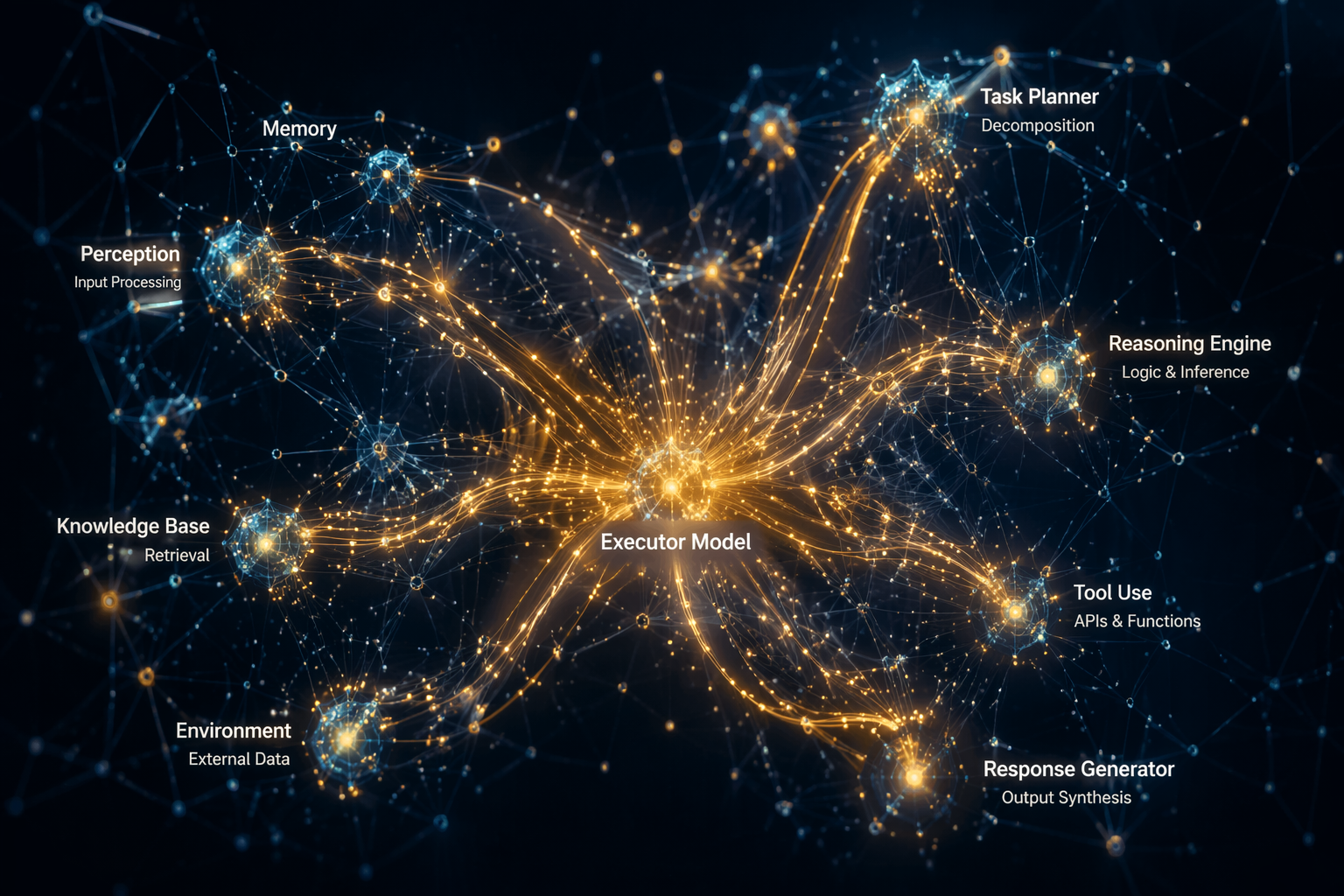
To truly understand why Claude Sonnet 5 is a landmark release for agentic workflows, we must analyze its architectural efficiencies, actual cost metrics, and practical deployment patterns.
Cognitive Efficiency and the 1M Token Context
Autonomous agents—such as continuous software engineering loops, system administrators, and multi-turn customer support bots—are notoriously token-hungry. They require the model to ingest large system prompts, tool schemas, and rapidly growing execution histories. Claude Sonnet 5 mitigates this computational overhead with its massive 1-million-token context window and optimized attention mechanisms.
Unlike previous models that suffered from "needle-in-a-haystack" retrieval degradation over long prompts, Sonnet 5 maintains near-perfect recall across its entire context window. This allows agents to execute hundreds of sequential tool calls and read extensive codebases without suffering from state-drift or forgetting their original instructions. Additionally, tightened safety and alignment protocols ensure that even when agents are granted tool-use and computer-use permissions, they operate within strict, predictable guardrails.
Rewriting the Economics of Agent Execution
The primary barrier to scaling AI agents in enterprise environments has been the "agent tax"—the mounting cost of running background loops that continuously read, write, and execute tasks. Claude Sonnet 5 addresses this bottleneck by offering:
- Near-Opus Performance at Scale: Benchmarks indicate that Sonnet 5 matches or exceeds the capabilities of older flagship models like Opus 4.0, yet it is positioned as a mid-tier offering. It delivers these high-tier reasoning capabilities at a 50% cost reduction compared to Claude Opus 4.5.
- Optimized Enterprise Pricing: By anchoring the mid-tier ecosystem, Sonnet 5 complements specialized mythos-class models like Claude Fable 5 and Mythos 5, which Anthropic offers at $10 per million input tokens and $50 per million output tokens (representing less than half the cost of legacy enterprise-grade setups).
- Substantial Loop-Based Savings: For developer-heavy tasks like running automated testing suites or computer-use APIs, migrating to Sonnet 5 directly halves the operational costs of continuous background processing.
Operationalizing the "Advisor Strategy"
Rather than relying on a single premium LLM for every single turn, developers in 2026 are increasingly adopting Anthropic’s Advisor Strategy. In this design pattern:
- The Executor: A fast, cost-efficient model like Claude Sonnet 5 serves as the primary front-line agent, handling 90% of routine actions, customer dialogue, and basic API integrations.
- The Advisor: A heavier, ultra-capable reasoning model like Claude Opus 4.5 is kept in reserve.
- The Hand-off: When the executor encounters a highly complex reasoning bottleneck or an unexpected system error, it pauses, escalates the state to the Advisor for a strategic decision, receives the solution, and resumes execution.
Implementing this multi-model architecture can be complex to orchestrate from scratch. This is where modern communication platforms like CallMissed become invaluable. Through CallMissed’s unified API gateway—which provides seamless access to 300+ LLMs—developers can easily deploy Sonnet 5 as the primary engine for high-speed, multilingual voice agents (supporting 22 Indian languages natively). If a caller presents a highly nuanced scenario, the CallMissed infrastructure can seamlessly route that specific segment of the dialogue to a heavier advisor model behind the scenes, maintaining a flawless user experience while keeping operational token costs to an absolute minimum.
Impact & Implications
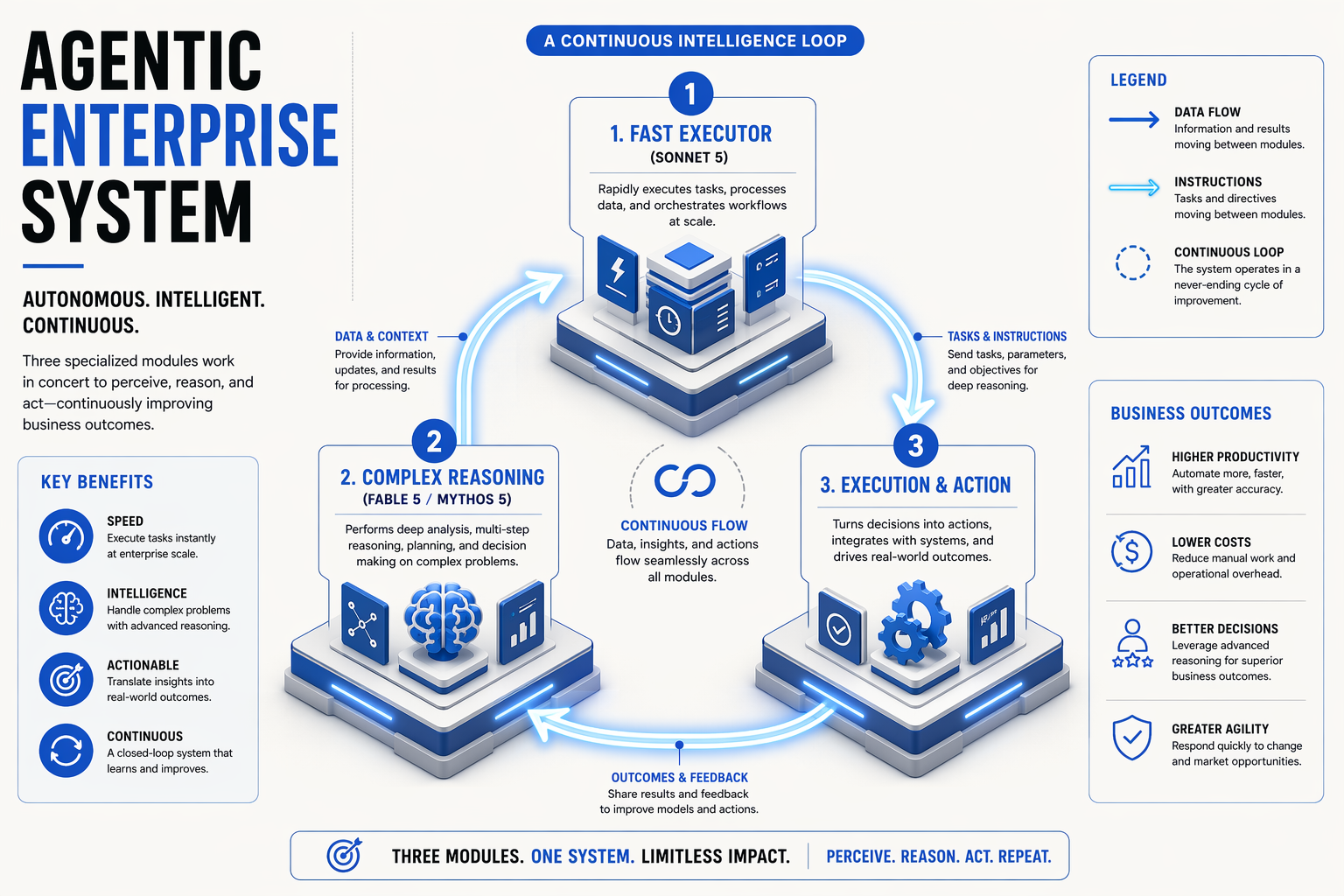
The release of Claude Sonnet 5 marks a massive shift in how organizations budget for AI operations. Previously, the "agent tax"—the compounding cost of LLMs running in continuous reasoning loops—forced developers to choose between high-functioning agentic workflows and financial viability. By reducing operational costs by up to 50% compared to previous-generation setups while retaining a massive 1-million-token context window, Sonnet 5 effectively eliminates this barrier.
For enterprises deploying autonomous systems, this price-to-performance ratio means that agentic loops—such as continuous codebase refactoring, real-time data analysis, and multi-turn customer support—can run indefinitely without risking budget overruns. Systems can now ingest enormous codebases or thousands of customer interaction histories in a single prompt context, executing complex "computer-use" tasks with near-Opus precision at a fraction of the historical cost.
Supercharging the "Advisor Strategy"
Perhaps the most significant architectural impact of Claude Sonnet 5 is how perfectly it fits into Anthropic’s Advisor Strategy. In this design pattern, a fast, highly economical "executor" model handles the continuous, heavy-lifting tasks, while a more powerful "advisor" model is consulted only when the executor hits a reasoning bottleneck.
With Sonnet 5 serving as the ultimate executor:
- Massive Cost Savings: Over 90% of routine actions, API calls, and initial user interactions are handled by Sonnet 5 at its highly aggressive price point.
- Strategic Escalation: When a highly complex, multi-step reasoning task arises, the workflow escalates the query to a powerhouse model like Claude Mythos 5 or Claude Fable 5 (offered at $10 per million input tokens and $50 per million output tokens).
- Reduced Latency: Because Sonnet 5 is built for rapid execution, overall agent latency drops significantly, resulting in smoother end-user experiences.
Democratizing Enterprise Voice & Chat Infrastructure
This new economic reality is already reshaping the global communication landscape. Lower operational costs make it viable to run advanced, highly conversational agents on a global scale.
Platforms like CallMissed are capitalizing on these infrastructure shifts to provide production-ready agent environments. By leveraging Claude Sonnet 5 natively alongside low-latency Speech-to-Text (STT) and Text-to-Speech (TTS) APIs, CallMissed enables businesses to deploy human-like voice agents that handle thousands of simultaneous customer calls 24/7. Whether it is navigating regional dialects across 22 Indian languages or managing complex database queries mid-call, the combined efficiency of Sonnet 5 and CallMissed's multi-model orchestration ensures enterprise-grade reliability at a highly competitive price point. Ultimately, Sonnet 5 moves AI agents from experimental developer sandboxes into mainstream production.
Expert Opinions
The launch of Claude Sonnet 5 has triggered a wave of analysis among AI architects, developer communities, and enterprise leaders. Across the industry, the consensus is clear: Sonnet 5 represents a paradigm shift from raw model capability to economically viable deployment. Experts are focusing on how this model fundamentally redefines the feasibility of autonomous agents at scale.
The Era of "Executor-Advisor" Agent Design
One of the most prominent talking points among AI researchers is the practical implementation of Anthropic’s "Advisor Strategy." Rather than relying on a single, expensive monolithic model to handle an entire agentic loop, engineers are now designing tiered systems.
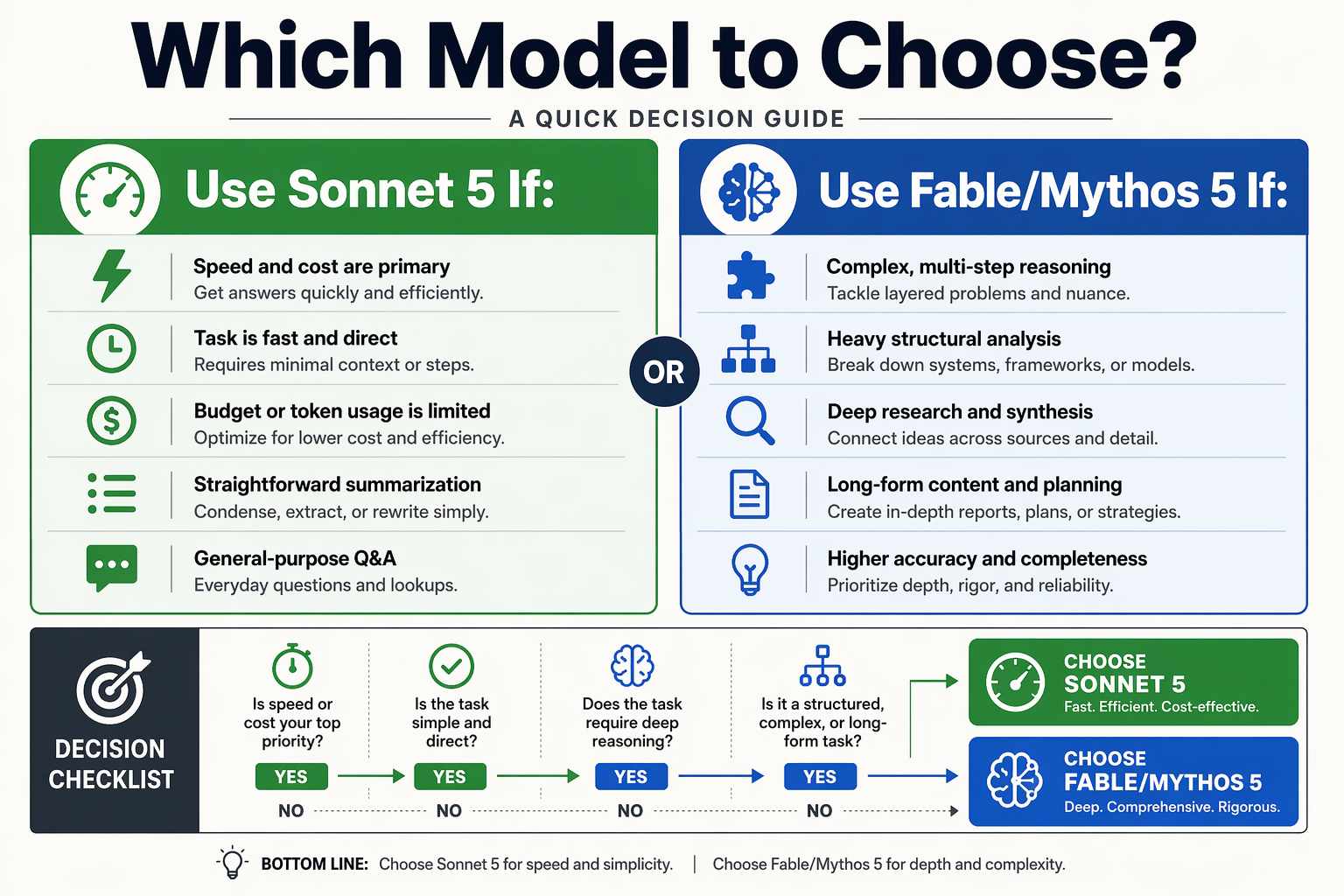
Industry specialists from platforms like MindStudio suggest a simple heuristic for developers in 2026: "Start with Sonnet 5 when speed and cost matter more and the task doesn't require sustained, heavy multi-step reasoning." Experts highlight that Sonnet 5 serves as the perfect "executor model"—handling the high-volume, continuous execution of tasks like writing code, scanning databases, and drafting replies. It only escalates to a heavy "advisor" model (such as Claude Mythos 5 or Opus 4.5) when the workflow encounters a high-friction decision point.
This architectural shift is already being leveraged by forward-thinking platforms. For instance, CallMissed utilizes this exact multi-model orchestration within its LLM gateway, allowing enterprises to run fast, multilingual voice agents powered by Sonnet 5 for frontline customer calls, while seamlessly routing complex policy escalations to premium reasoning models behind the scenes.
Dismantling the "Agent Tax"
For years, the chief bottleneck for agentic workflows has been the "agent tax"—the massive token consumption generated by continuous feedback loops. Developer forums, including active discussions on Reddit's r/ClaudeAI, have widely praised Sonnet 5's aggressive pricing model. Technical benchmarks indicate Sonnet 5 is:
- 50% cheaper to run than Claude Opus 4.5.
- Significantly more efficient, outperforming older flagship models across key logical and coding metrics.
- Highly optimized for safety and alignment, drastically reducing the risk of infinite loops or hallucinated system commands.
A New Standard for Enterprise Budgets
Technical executives argue that the arrival of Sonnet 5, alongside Anthropic’s specialized Mythos-class models (priced at $10 per million input tokens and $50 per million output tokens), forces a massive recalculation of AI operational budgets. Previously, deploying a fleet of 100 autonomous coding or customer service agents was financially prohibitive for mid-market enterprises. By slashing operational costs by up to half while retaining a massive 1-million-token context window, Anthropic has commoditized agentic execution.
As experts point out, the competition is no longer just about who has the largest model; it is about who can deliver the most cost-efficient, production-ready cognitive throughput. With Claude Sonnet 5, Anthropic has firmly taken the lead in that race.
What This Means For You (TABLE)
The arrival of Claude Sonnet 5 shifts the industry conversation from "Can AI agents do this?" to "How cheaply can we scale them?" For engineering teams, enterprise architects, and product managers, this release offers a massive opportunity to optimize operating margins. If your business runs continuous, autonomous loops—whether for software development, large-scale data processing, or real-time customer communications—you can immediately refactor your tech stack to maximize efficiency.
To help you visualize where Claude Sonnet 5 fits into your workflow compared to other options in the model landscape, here is a breakdown of how to architect your agentic workflows:
| Model | Primary Agent Role | Input Cost (per M) | Output Cost (per M) | Ideal Use Case |
|---|---|---|---|---|
| Claude Sonnet 5 | Primary Agent Executor | ~$3.00* | ~$15.00* | Multi-step agent loops, long-context analysis, complex coding |
| Claude Opus 4.5 | High-Reasoning "Advisor" | ~$15.00 | ~$75.00 | Edge-case verification, final code audits, complex logic |
| Claude Fable 5 | Specialized Mid-Tier | $10.00 | $50.00 | Deep research, localized domain-specific tasks |
| Claude Mythos 5 | Enterprise Reasoning | $10.00 | $50.00 | Large-scale knowledge synthesis, creative content loops |
\Sonnet 5 pricing reflects its highly aggressive positioning, delivering near-Opus capabilities at a fraction of the cost.*
Implementing the "Advisor" Pattern
By utilizing Claude Sonnet 5 as your primary execution engine, you can adopt Anthropic's recommended Advisor Strategy. In this design pattern:
- The Executor (Sonnet 5): Handles 90% of the daily operational load, executing multi-step workflows, interacting with system tools, and processing massive developer logs up to its 1-million-token context window.
- The Advisor (Opus 4.5): Acts as a fallback supervisor. The executor only escalates the context to the heavier model when it encounters an execution error, a highly complex mathematical hurdle, or a critical safety checkpoint.
This hybrid approach allows you to achieve near-perfect reliability while cutting down your API bill by up to 50% to 75% compared to running legacy flagship models exclusively.
Seamless Enterprise Orchestration
For teams running global operations, managing multiple API endpoints and ensuring low latency across channels can become an operational bottleneck. This is where advanced AI infrastructure becomes essential.
By leveraging platforms like CallMissed, businesses can instantly deploy Claude Sonnet 5 across multi-channel customer touchpoints. Whether you are running autonomous WhatsApp chatbots or deploying ultra-low-latency voice agents that natively understand 22 regional Indian languages, CallMissed’s unified inference engine—which supports 300+ LLMs—allows you to transition to Sonnet 5 with minimal code modifications. This ensures you capture the cost savings of Sonnet 5 immediately while delivering lightning-fast, localized customer interactions.
Frequently Asked Questions

How much cheaper is Claude Sonnet 5 compared to previous models?
What is the context window size for Claude Sonnet 5?
How does Claude Sonnet 5 fit into Anthropic’s Advisor Strategy?
Does Claude Sonnet 5 compromise on reasoning power to achieve lower costs?
Can I deploy Claude Sonnet 5 for real-time customer support voice agents?
How does Claude Sonnet 5 compare to Anthropic's Fable 5 and Mythos 5 models?
Conclusion
The launch of Claude Sonnet 5 marks a pivotal shift in the economics of agentic AI, transforming high-volume, multi-step workflows from a cost-prohibitive experiment into a highly scalable enterprise reality.
Here are the key takeaways:
- Halving the Agent Tax: Sonnet 5 slashes operational costs by 50% compared to previous-generation setups, making continuous agentic execution loops financially viable.
- Uncompromised Power: It delivers near-Opus level reasoning, robust safety protocols, and a massive 1-million-token context window.
- Architectural Efficiency: The model serves as the ultimate execution engine for cost-saving design patterns like Anthropic's Advisor Strategy.
Looking ahead, this dramatic drop in operational token costs will catalyze a massive wave of production-grade, fully autonomous agents handling complex, real-time tasks across global markets. To explore how AI communication is evolving and deploy these highly efficient models natively, check out CallMissed — an AI infrastructure platform powering voice agents and multilingual chatbots for businesses.
How will your organization leverage these cheaper, more powerful reasoning capabilities to redefine your automated workflows?
Related Posts
Ready to automate customer conversations?
Launch AI voice agents and WhatsApp bots with CallMissed — one API, 22+ Indian languages.