The Rise of the AI Agent: Transforming Autonomous Workflows


What if the software tools we built to answer simple questions suddenly began organizing, planning, and executing entire business strategies on their own?...
The Rise of the AI Agent: Transforming Autonomous Workflows
What if the software tools we built to answer simple questions suddenly began organizing, planning, and executing entire business strategies on their own? For years, enterprise artificial intelligence lived within the strict, reactive boundaries of static prompt-and-response interfaces. Today, however, we are witnessing a fundamental paradigm shift: the rapid evolution from passive conversational chatbots to proactive, goal-oriented systems. This transition marks the rise of the AI agent: transforming autonomous workflows from a futuristic blueprint into a core operational necessity.
Why does this technological leap matter right now? Traditional automation systems are notoriously brittle, often breaking down the moment they encounter an unexpected variable or unmapped edge case. In contrast, modern autonomous AI agents leverage advanced reasoning, multi-turn memory, and external tool integration to navigate real-world complexity. Instead of merely drafting an email or generating a summary, these systems can autonomously coordinate across software platforms, self-correct errors mid-workflow, and execute multi-step operations without human intervention. Enterprise leaders are rapidly moving toward these "agentic workflows" to convert AI from an unpredictable text generator into a governed, measurable execution engine. Infrastructure platforms like CallMissed are already driving this shift, providing the foundational technology businesses need to deploy autonomous, multilingual AI voice agents that handle complex communication pipelines 24/7.
In this post, we will unpack the mechanics of this automation revolution. You will learn the critical architectural differences between basic LLM wrappers and true agentic systems, explore real-world use cases where autonomous agents are delivering measurable ROI, and discover a practical roadmap for integrating agentic workflows into your existing business infrastructure. Welcome to the era of delegating entire operational loops to AI.
Introduction

For years, artificial intelligence was viewed primarily as an advanced search tool or a conversational companion. We marveled at the ability of Large Language Models (LLMs) to generate text, summarize lengthy documents, and answer customer queries in real-time. But as we navigate 2026, a fundamental paradigm shift is underway. The era of the passive chatbot is giving way to the rise of the autonomous AI agent—intelligent systems that do not just respond to instructions, but actively plan, execute, and optimize complex workflows without constant human intervention.
From Conversation to Action: The Agentic Shift
In the early stages of generative AI adoption, human users had to act as the cognitive bridge between tasks. A user would ask an LLM to draft an email, manually copy that draft into a mail client, look up the recipient's CRM profile, and hit send. Today, agentic workflows have eliminated these fragmented steps, transforming AI from a basic text generator into a proactive problem-solver.
Autonomous AI agents represent the next evolution in artificial intelligence, transitioning from rigid, rule-based automation to systems capable of:
- Dynamic Planning: Breaking down a high-level goal (e.g., "Analyze our quarterly churn and update the marketing lists") into a sequence of discrete, logical steps.
- Tool Utilization: Accessing external APIs, databases, web browsers, and enterprise software to retrieve information and execute transactions.
- Self-Correction: Evaluating their own outputs against expected goals and dynamically iterating to fix errors before completing a task.
This evolution turns AI from an unpredictable "black box" into a governed, measurable intelligence system. Instead of relying on a single, massive prompt, forward-thinking enterprises are chaining specialized agents together to automate entire end-to-end business operations.
Redefining Enterprise Productivity
The business implications of this transition are profound. Organizations are deploying agentic architectures across diverse departments, including customer support, sales development, R&D, and HR. Instead of static software that requires manual oversight, companies are leveraging autonomous agents that work 24/7 to manage complex tasks.
For businesses looking to implement this, platforms such as CallMissed offer production-ready infrastructure that bridges the gap between raw LLM capabilities and practical workflows. By providing access to over 300 LLMs, advanced Speech-to-Text supporting 22 regional Indian languages, and autonomous voice agents, CallMissed enables enterprises to transition from basic automated voice responses to fully conversational, action-oriented agents that solve user problems natively in real-time.
As autonomous agents become deeply integrated into the modern workspace, understanding their underlying architecture, capabilities, and deployment strategies is no longer optional—it is a competitive necessity. In this guide, we will explore the technology powering these autonomous systems, how they are reshaping business workflows, and how you can leverage them to drive unprecedented efficiency.
Background & Context
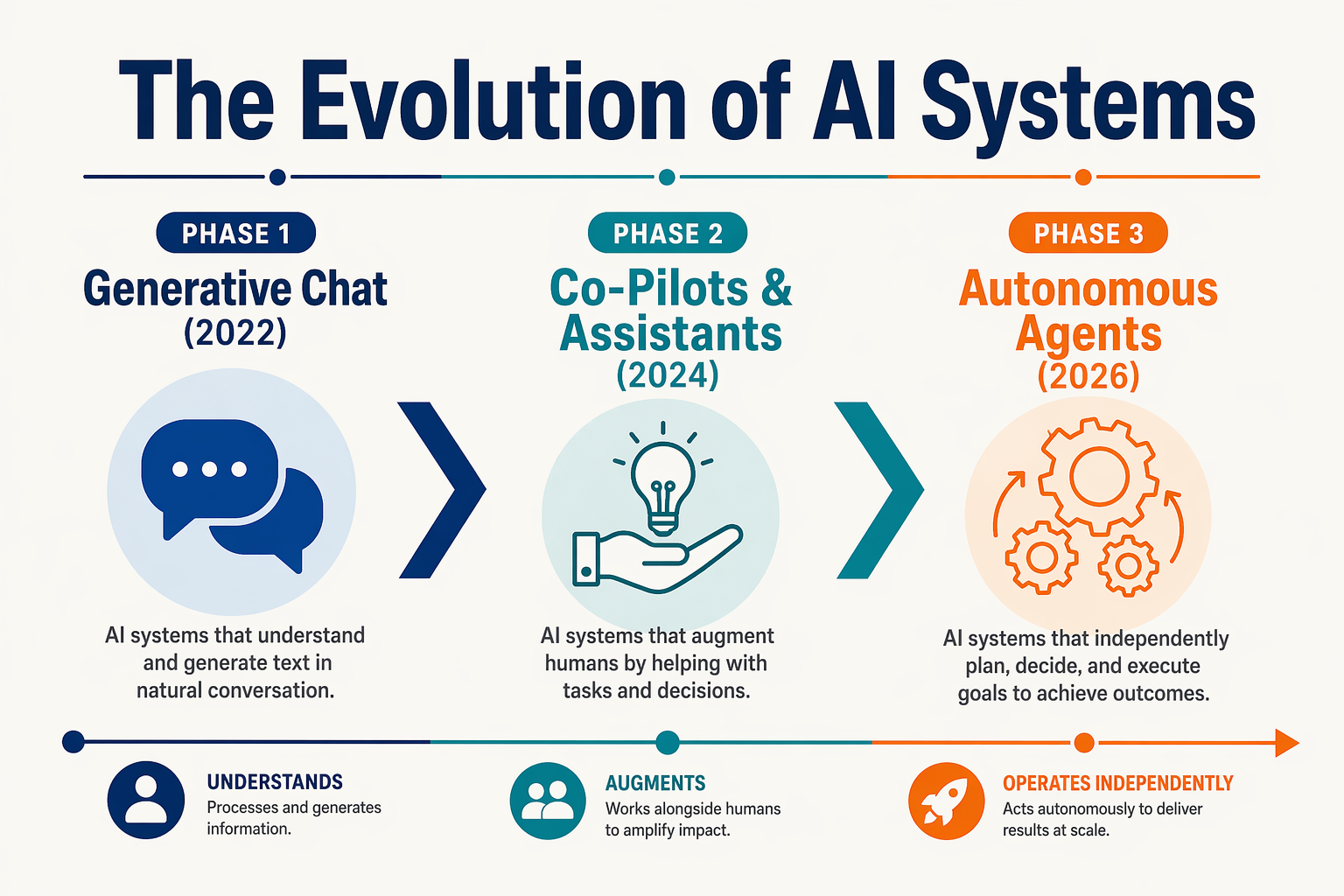
The Evolution of Enterprise Automation
For decades, enterprise automation relied on static, rule-based systems. These traditional frameworks operated on rigid, predefined "if-this-then-that" logic. While effective for simple, repetitive tasks, they quickly broke down when confronted with real-world complexity, unstructured data, or unexpected customer queries.
The arrival of Generative AI and Large Language Models (LLMs) fundamentally changed the playing field, shifting the industry from rigid code to flexible, natural language interfaces. However, early enterprise implementations were largely passive and conversational. They relied heavily on a "human-in-the-loop" trigger; a user had to write a prompt, receive a response, and then manually execute the next operational step.
Today, we are witnessing a massive paradigm shift. As highlighted in recent enterprise research, AI is undergoing a fundamental transformation, evolving from these traditional conversational interfaces into autonomous agents capable of planning, reasoning, and executing complex workflows without constant human intervention.
From Chatbots to Agentic Workflows
To understand the rise of autonomous agents, it is essential to distinguish between standard conversational AI and modern agentic workflows:
- Conversational AI (Chatbots): These systems are fundamentally reactive. They retrieve information, answer queries based on static knowledge bases, and assist users in single-turn interactions. They do not act on their own.
- Agentic AI Workflows: These systems don't just respond—they act, plan, and iterate. Instead of producing a single text response, an agentic system breaks a complex, high-level goal down into sequential sub-tasks, calls external APIs, analyzes the returned data, and self-corrects if an error occurs.
This transition transforms AI from an unpredictable "black box" into a governed, measurable, and highly structured intelligence system. It allows enterprises to automate entire end-to-end operational pipelines rather than just automating isolated tasks.
The Paradigm Shift: Why Now?
Several core technological advancements have converged to make autonomous workflows viable for modern enterprises:
- Advanced Tool Use and Function Calling: Modern foundation models are trained to interact with the digital world. They can write and execute code, query databases, and trigger external APIs natively.
- The Rise of Multi-Model Systems: Enterprises have realized that a single LLM cannot efficiently handle every business need. Complex reasoning might require a state-of-the-art frontier model, while high-speed user interactions require lightweight, specialized models.
- Infrastructure Readiness: Building these systems requires robust orchestration layers. This is where advanced communication platforms come in. For example, CallMissed enables businesses to easily deploy this next generation of agentic workflows by offering a multi-model API gateway supporting over 300 LLMs.
By pairing this extensive model routing with ultra-low latency Speech-to-Text (supporting 22 Indian languages natively) and lifelike Text-to-Speech APIs, platforms like CallMissed allow enterprises to bridge the gap between static LLM reasoning and active, real-time autonomous voice and text agents. This infrastructure makes it possible to scale agentic workflows across global customer touchpoints seamlessly.
Key Developments
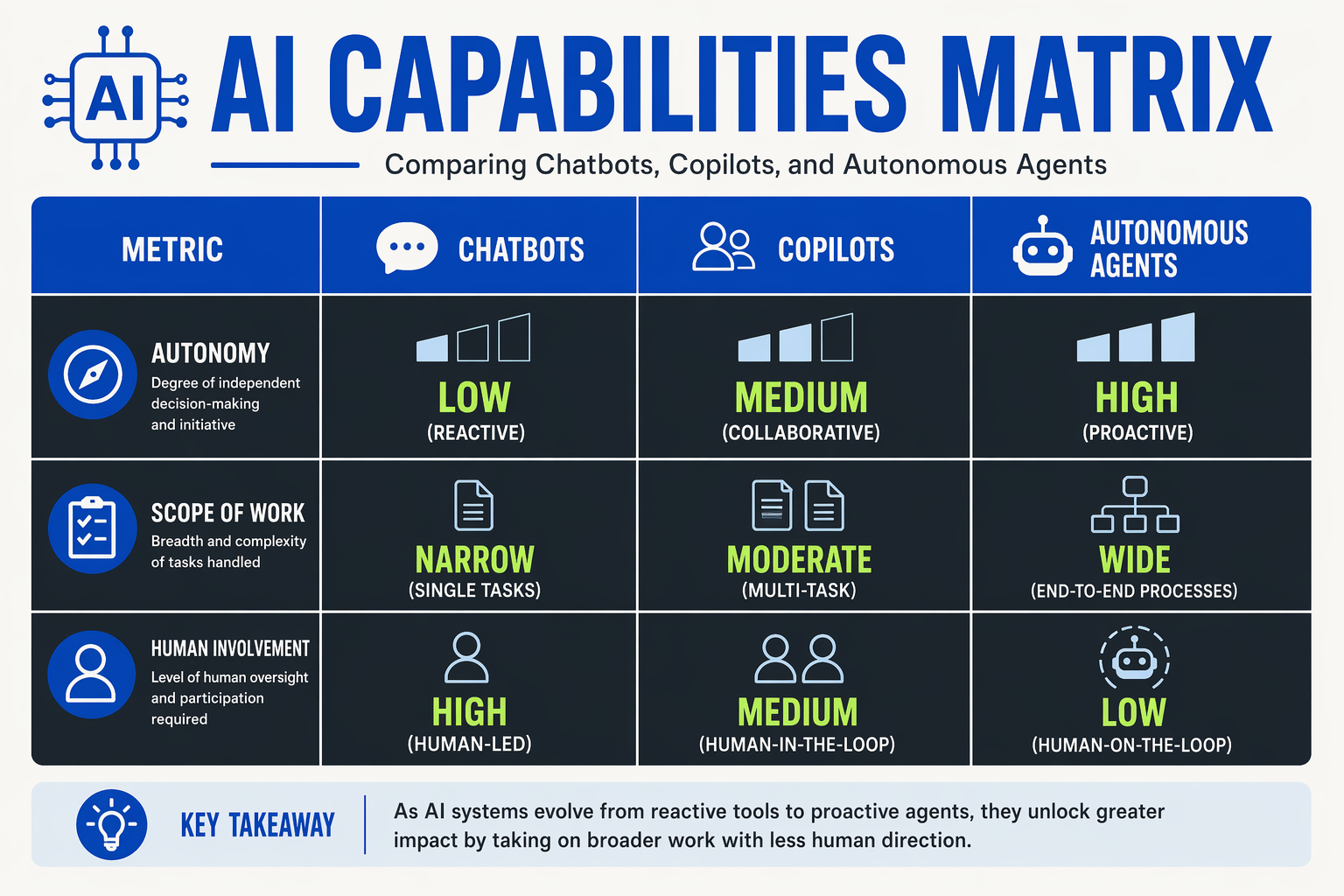
The rapid evolution of artificial intelligence has shifted enterprise focus from passive tools to proactive digital teammates. This paradigm shift—transitioning from isolated generative AI queries to fully integrated agentic workflows—is rewriting the rules of business automation. Instead of waiting for specific, manual prompts, modern autonomous AI agents can analyze complex business goals, orchestrate their own sub-tasks, execute digital tools, and self-correct based on operational feedback.
To understand this transformation, we must look at how key technological developments have redefined the capability spectrum of automated systems:
| Evolution Stage | Core Capabilities | Underlying Tech | Business Impact |
|---|---|---|---|
| Rule-Based Bots | Pre-scripted responses, rigid decision trees, single-turn interactions. | Intent-matching algorithms, hardcoded IF/THEN logic. | High customer friction; strictly limited to basic FAQs and routing. |
| GenAI Copilots | Content drafting, natural language retrieval, search summarization. | Foundation Large Language Models (LLMs), zero-shot prompting. | Boosts individual worker productivity; remains entirely human-dependent. |
| Autonomous Agents | Self-directed goal planning, persistent memory, basic tool calling. | LLMs integrated with vector databases (RAG) and simple API loops. | Semi-autonomous execution; manages isolated, single-domain workflows. |
| Agentic Workflows | Multi-agent collaboration, governance, self-correction, complex reasoning. | Multi-agent frameworks, consensus protocols, advanced orchestration. | Fully autonomous, enterprise-grade operations; governed and measurable. |
The Core Architectural Pillars Driving Agentic AI
The transition to autonomous workflows is powered by three major technical developments:
- Goal-Directed Planning and Reasoning: Unlike traditional LLMs that generate text in a single forward pass, agentic systems use iterative reasoning frameworks like Tree-of-Thoughts (ToT) and ReAct (Reason + Act). This allows the agent to decompose a broad directive—such as "optimize the supply chain routes for Q3"—into logical, sequential execution steps.
- Tool Integration and Digital Agency: Modern agents are no longer confined to text interfaces. They are equipped with action spaces, enabling them to read and write database records, trigger webhooks, run Python scripts in sandboxed environments, and interact with legacy software.
- Memory Persistence: By combining short-term working memory (in-context learning) with long-term memory (vector-based semantic search), agents can retain context across days or weeks of operation. This ensures they learn from previous errors and refine their execution strategies over time.
Deploying these complex capabilities at scale requires specialized communication and model orchestration infrastructure. Platforms like CallMissed are accelerating this deployment by providing developers with a unified multi-model API gateway supporting over 300 LLMs. This allows organizations to dynamically route tasks to the most cost-effective model while leveraging production-ready Speech-to-Text APIs supporting 22 Indian languages.
As enterprises move away from unpredictable "black box" models toward structured, governed agentic workflows, the ability to monitor, measure, and audit agent interactions has become the definitive benchmark for successful enterprise deployment.
In-Depth Analysis
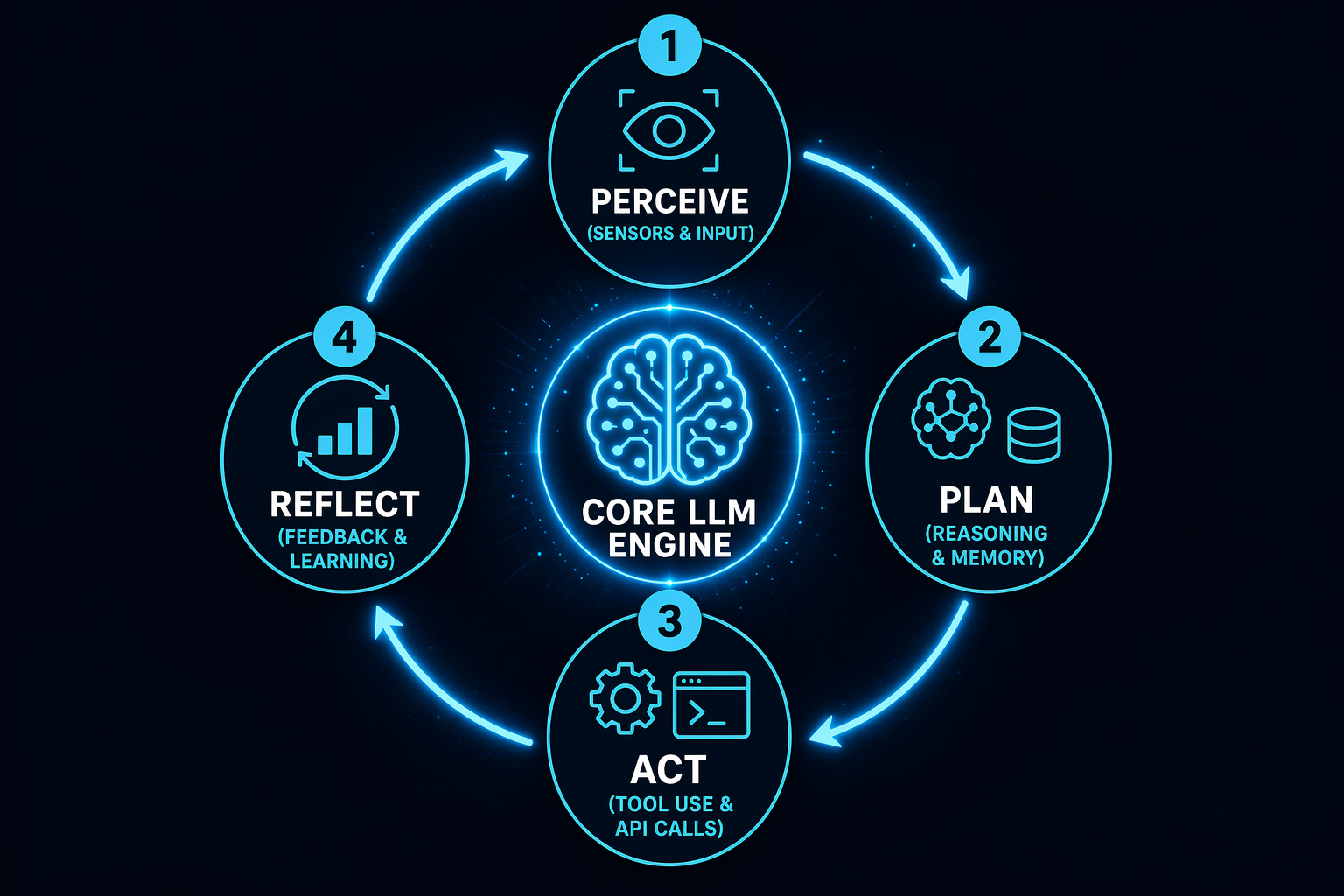
To understand why autonomous AI agents are revolutionizing enterprise automation, we must look beyond the hype of simple chat interfaces. The real breakthrough lies in the transition from standard Large Language Model (LLM) prompts to agentic workflows—a shift that industry leaders define as moving from passive, single-turn response generators to systems that actively plan, utilize external tools, and execute complex, multi-step tasks.
The Engine of Autonomy: Planning, Memory, and Tool Use
Unlike traditional, rigid rule-based automation systems that fail when encountering unexpected variables, an autonomous AI agent relies on a dynamic loop of perception, reasoning, and action. An effective agentic architecture is built on three core pillars:
- Planning & Reasoning: Instead of generating responses impulsively, autonomous agents use reasoning techniques like Chain-of-Thought (CoT) and Tree-of-Thoughts. This allows them to break down macro-objectives (e.g., "optimize this logistics route") into manageable micro-tasks, anticipating obstacles before they occur.
- Memory Management: Agents leverage short-term memory (in-context learning within the prompt window) and long-term memory (vector databases using Retrieval-Augmented Generation, or RAG) to retain user preferences, historical interactions, and operational boundaries over time.
- Tool Integration (Action): This is where agents transcend conversational text. They are equipped with the capability to call external APIs, query databases, generate and execute code, and interact with enterprise software suites to execute physical or digital changes.
The Transition to Governed "Agentic Workflows"
A common critique of early autonomous systems was their unpredictability. However, the rise of structured agentic workflows is transforming AI from an unpredictable black box into a governed, measurable intelligence system. By embedding agents within structured environments with human-in-the-loop triggers, enterprises can audit, scale, and predict outcomes reliably.
Implementing these intricate agentic frameworks requires a highly robust and flexible backend infrastructure. Communication platforms like CallMissed address this structural need by providing a unified API gateway to over 300+ LLMs. This enables developers to dynamically route complex reasoning tasks to high-capacity frontier models, while offloading simpler routing or tool-calling tasks to faster, highly specialized, and cost-effective models.
Multi-Agent Collaboration
The next step in this evolution is the transition from single-agent setups to multi-agent systems. In this paradigm, specialized agents are assigned distinct roles—such as a data analyst, a technical writer, and a quality assurance auditor—and collaborate to complete complex enterprise tasks. By debating, reviewing, and refining each other's outputs, multi-agent systems dramatically reduce hallucination rates and increase the accuracy of automated workflows to production-grade levels.
Impact & Implications
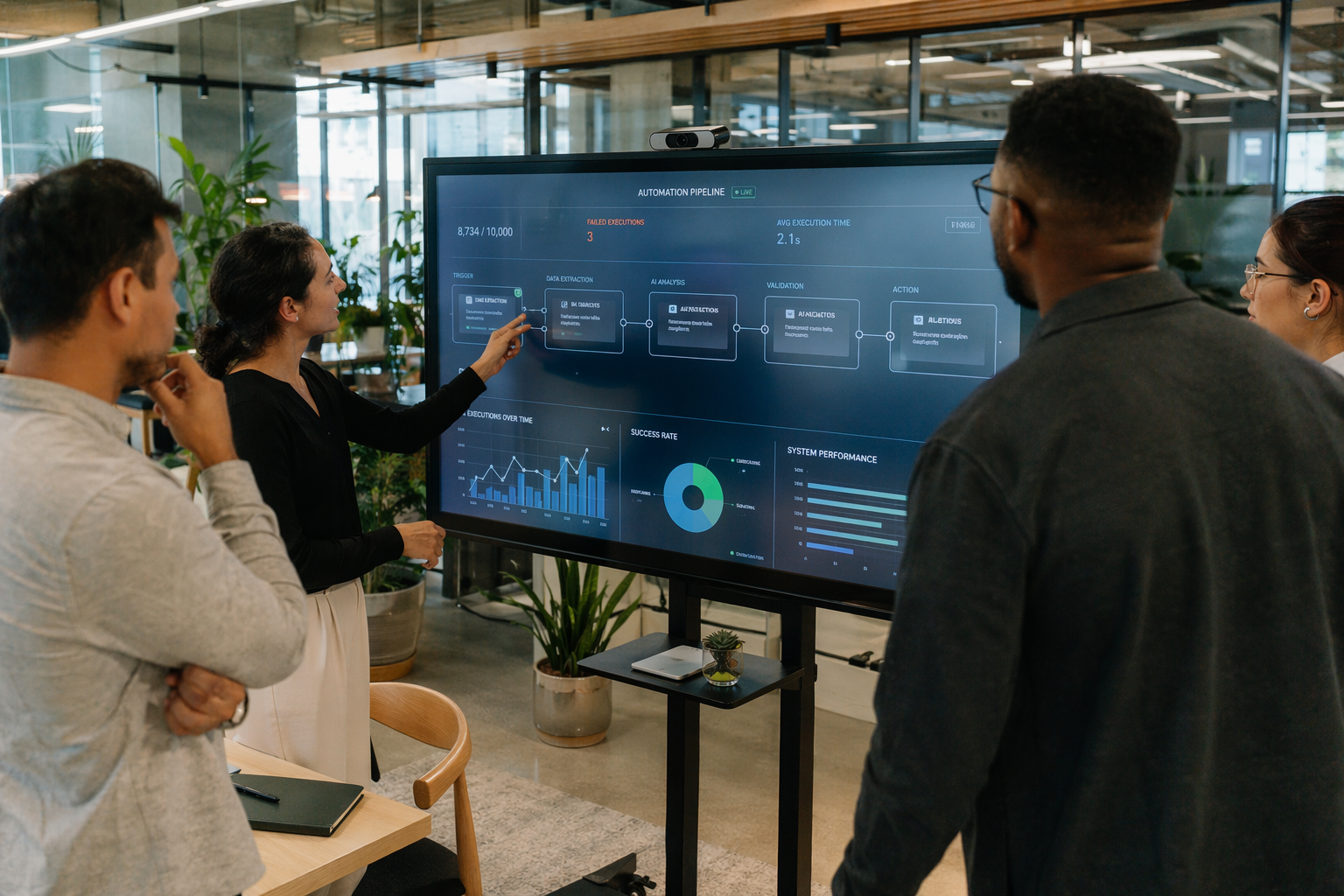
Transforming Productivity and Business Operations
The proliferation of autonomous AI agents is drastically reshaping how work gets done. According to AWS, these intelligent systems are moving "beyond conversational interfaces to systems that leverage AI for proactive problem-solving" [5]. Unlike earlier automation—such as scripts or rule-based chatbots—modern AI agents can independently plan, act, and optimize workflows across customer service, sales, recruiting, and more.
Key productivity impacts include:
- Speed and efficiency: Autonomous agents can handle multi-step tasks—such as onboarding new employees or managing customer inquiries—40-60% faster than traditional manual processes, as observed by recent enterprise case studies [3].
- 24/7 operations: AI agents provide uninterrupted service execution, ensuring business continuity without human interventions. For example, platforms like CallMissed enable companies to deploy AI voice and chat agents that operate round-the-clock, responding to customer calls and messages in real time.
- Error reduction: By consistently following optimized workflows, agents minimize risks of human error or oversight, which is especially critical in compliance-driven industries like finance or healthcare.
The Move to Agentic Workflows
A marked industry shift is underway—from using individual AI agents in silos, to deploying agentic workflows, where multiple agents coordinate tasks end-to-end. According to Kore.ai, "agentic workflows transform AI from an unpredictable black box into a governed, measurable intelligence system" [2]. This transition has significant implications:
- Measurability and Governance: Enterprises can now quantify the specific results produced by AI, tracking metrics like issue resolution time, cost saved, or customer satisfaction—enabling continuous improvement.
- Greater Independence: These workflows require less manual triggering and oversight, allowing human teams to focus on high-value or creative pursuits.
- Orchestration at Scale: Autonomous agents can coordinate across multiple business units or customer touchpoints, handling tasks too complex or dynamic for hardcoded automation.
Challenges and Considerations
As promising as AI agents are, their adoption does raise several important considerations:
- Transparency and Trust: With autonomy comes the need for explainability. “The real promise of agentic workflows is that they’re governed and measurable,” notes Kore.ai, addressing concerns about black-box decision-making [2].
- Workforce Impact: While McKinsey projects that AI automation could boost global productivity by $13 trillion by 2030, it will also demand large-scale workforce upskilling and adjustments to job roles.
- Security and Compliance: Granting agents decision-making power increases exposure risks. Robust oversight and audit trails are essential, especially in regulated sectors.
Societal Implications and the Road Ahead
The broader societal impact of the rise in autonomous agents extends beyond the enterprise. As AI systems increasingly participate in daily transactions—from healthcare scheduling to financial advisories—there’s a growing emphasis on digital inclusion. Indian startups, for instance, are using platforms like CallMissed to deploy multilingual agents supporting 22 regional languages, helping bridge gaps in AI accessibility across diverse populations.
In summary: The rise of autonomous AI agents is not just a technological shift, but a blueprint for the future of productive, inclusive, and adaptive work. While challenges around transparency, workforce evolution, and security remain, forward-thinking businesses are already leveraging agentic workflows for real-world gains—heralding a new era in automation where machines don’t just assist, but autonomously drive meaningful outcomes.
Expert Opinions
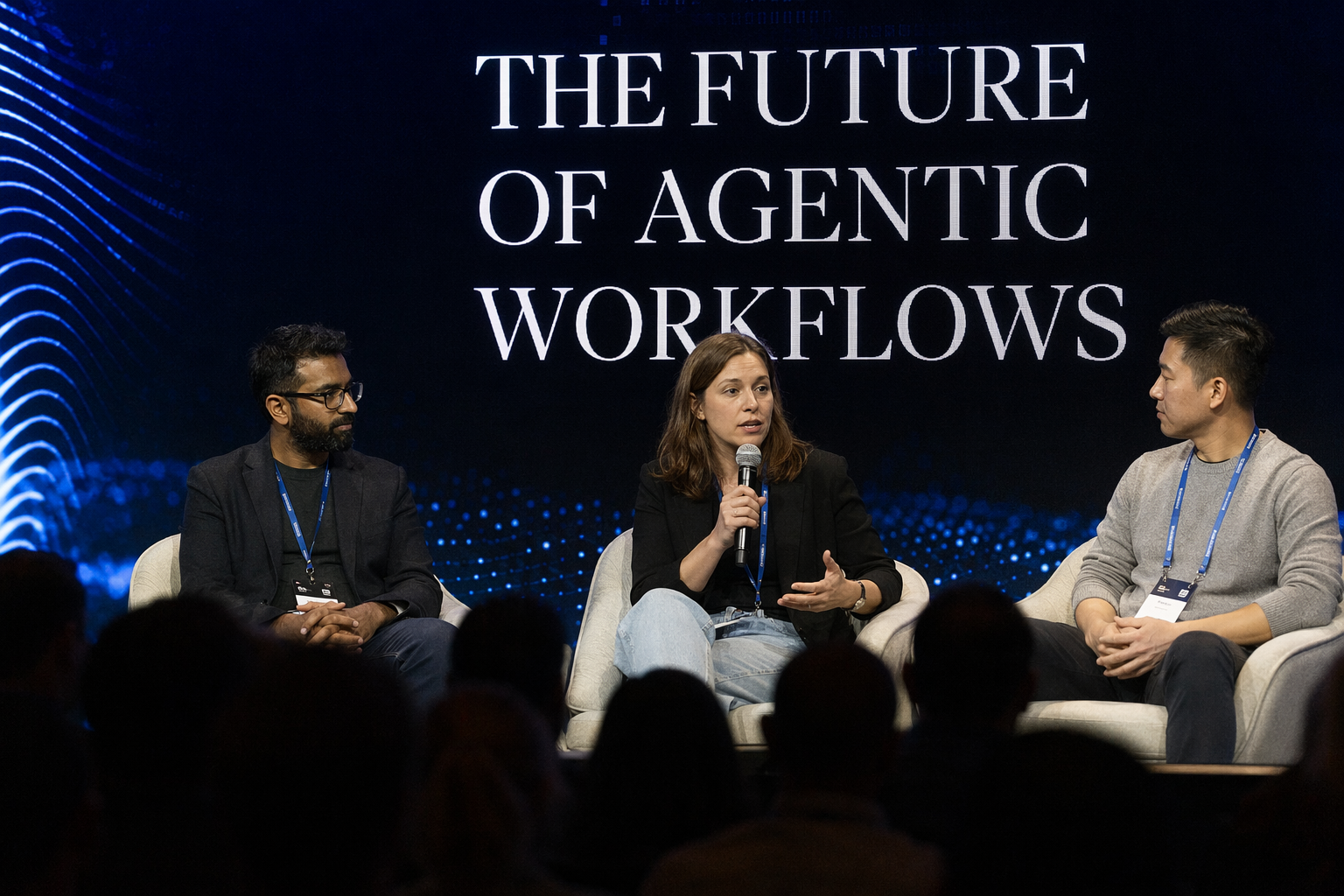
The Shift from Isolated Bots to Agentic Workflows
Industry analysts and technology leaders agree: the true power of autonomous AI lies not in isolated, single-purpose chatbots, but in structured agentic workflows. According to enterprise AI experts, shifting the focus from "AI agents" as standalone entities to "agentic workflows" is crucial for enterprise adoption. This paradigm shift transforms AI from an unpredictable, black-box conversationalist into a highly governed, measurable, and reliable intelligence system. Instead of relying on a single prompt-and-response cycle, these systems break down complex business objectives into iterative steps—planning, executing, analyzing, and self-correcting.
Governance, Control, and the "Human-in-the-Loop"
A recurring theme among enterprise strategists is the necessity of governance in autonomous workflows. Leading cloud and AI infrastructure experts point out that for autonomous tools to reshape business workflows safely, enterprises must implement strict guardrails. Experts emphasize several key pillars for successful deployment:
- Measurability and Auditing: Every decision made by an AI agent must be logged, evaluated, and open to audit.
- Dynamic Tool Integration: Agents must safely access internal databases, secure APIs, and external software to execute tasks.
- Human-in-the-Loop (HITL) Orchestration: Workflows should be designed so that agents autonomously handle 90% of the repetitive heavy lifting but seamlessly hand off highly complex, high-risk, or sensitive decisions to human experts.
This is where modern infrastructure platforms play a pivotal role. For instance, solutions like CallMissed enable enterprises to build these exact governed workflows, allowing developers to orchestrate voice agents and WhatsApp chatbots powered by an API gateway that accesses over 300+ LLMs. This level of flexibility ensures that businesses are never locked into a single model, making it easier to audit, control, and optimize agent performance over time.
Bridging the Multilingual and Multimodal Gap
As enterprise leaders look to scale these autonomous systems globally, experts emphasize that communication barriers remain a significant hurdle. An autonomous agent is only as good as its ability to understand and interact with its environment.
Research indicates that next-generation enterprise automation must natively support multimodal inputs—not just text, but real-time voice and regional languages. Industry specialists note that platforms supporting local languages are seeing much higher adoption rates. By utilizing infrastructure like CallMissed, which features Speech-to-Text (STT) capabilities across 22 Indian languages, developers can build agents that autonomously negotiate, resolve support tickets, or manage logistics natively in regional dialects, bridging the critical gap between advanced LLM planning and localized execution.
What This Means For You
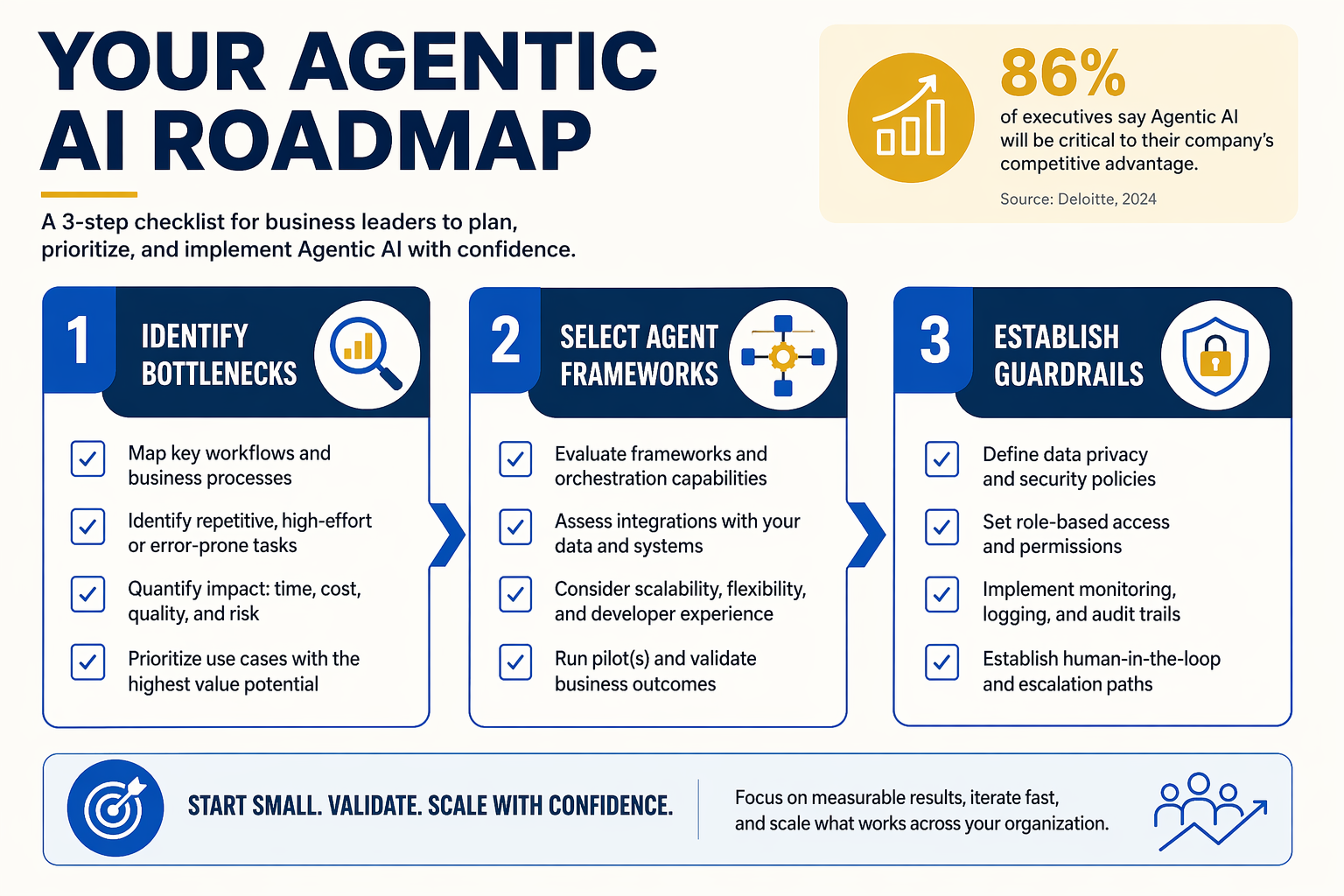
The transition from basic conversational AI to fully autonomous agentic workflows represents a fundamental shift in how organizations design and scale their operations. Instead of waiting for a human to input a precise, single-turn prompt, today's AI agents analyze high-level goals, formulate multi-step plans, integrate with enterprise systems, and execute complex workflows with minimal supervision [1, 2, 7].
For business leaders and technical teams, this means moving away from brittle, rule-based systems and entering a paradigm of scalable, proactive intelligence [4]. Understanding how these systems differ from traditional setups is crucial for preparing your organization for this next wave of automation [5].
| Dimension | Traditional Chatbots | Autonomous AI Agents | Enterprise Impact |
|---|---|---|---|
| Operational Scope | Reacts to single-turn queries and basic commands [3]. | Formulates multi-step plans and executes tasks autonomously [1, 7]. | Reduced operational friction; 24/7 proactive execution of tasks. |
| Workflow Control | Rule-based systems requiring constant prompt guidance [4]. | Governed, measurable, and self-correcting agentic workflows [2]. | Transition from unpredictable black-box AI to audited, reliable outcomes. |
| System Integration | Isolated to single APIs or simple database lookups. | Interacts across multiple legacy tools and external databases [3, 8]. | Seamless, end-to-end automation of complex business processes. |
| Human Interaction | Constant human prompting required for every action. | Exception-handling or "human-in-the-loop" approval gates [1]. | Employees are freed from repetitive admin work to focus on strategy. |
| Communication Channels | Text-only on siloed, rigid messaging interfaces. | Voice, SMS, and messaging apps with deep contextual memory. | Consistent omni-channel experiences across multiple touchpoints. |
Unlocking New Levels of Operational Efficiency
When you deploy autonomous AI agents, you fundamentally change the unit economics of your business processes. Instead of human operators spending hours navigating disjointed software platforms, an agent acts as a unified coordinator. For instance, in enterprise customer service, an agent can autonomously retrieve client history, cross-reference it with real-time inventory, initiate a return process, and update the logistics database without human intervention [3]. This shifts AI from a helpful conversational sidekick into an active, decision-making team member [5].
Democratizing Complex Agentic Deployments
To successfully implement these workflows, organizations must bridge the gap between complex AI models and existing business communication channels. This is where specialized platforms like CallMissed are playing a pivotal role.
By offering a unified communication infrastructure that includes direct access to over 300+ LLMs, Speech-to-Text supporting 22 Indian regional languages, and production-ready voice and WhatsApp chatbot APIs, CallMissed enables businesses to build and deploy governed, multilingual autonomous agents effortlessly. This infrastructure layer ensures that your agentic workflows can communicate naturally and operate reliably across phone calls, messaging networks, and internal databases without requiring you to rebuild your tech stack from scratch.
Ultimately, embracing agentic workflows means preparing your infrastructure for a future where AI handles the execution, leaving your human workforce to focus on high-level oversight, strategy, and relationship building.
Frequently Asked Questions
What are AI agents and how do they differ from traditional automation?
How are AI agents transforming autonomous workflows in businesses?
What are the main benefits of using AI agents for autonomous workflows?
What industries are leading the adoption of AI agents in 2026?
What challenges do companies face when deploying autonomous AI agents?
How can businesses get started with AI agent infrastructure in 2026?
Conclusion
As AI transitions from reactive chatbots to proactive problem-solvers, the landscape of enterprise productivity is undergoing a profound paradigm shift. To stay competitive in this new era of agentic workflows, businesses must prepare for a few key shifts:
- From Response to Action: AI is evolving from passive question-answering tools to autonomous systems that actively plan, execute, and govern complex multi-step processes.
- Operational Governance: The future lies in structured, measurable agentic workflows that transform unpredictable "black box" AI into reliable, enterprise-grade operations.
- Omnichannel & Multilingual Scale: Next-generation agents must seamlessly orchestrate tasks across voice, text, and diverse regional languages to support global workflows.
Looking ahead, watch for the rise of collaborative multi-agent ecosystems that coordinate autonomously across entire departments. To explore how AI communication is evolving, check out CallMissed—an AI infrastructure platform powering advanced voice agents and multilingual chatbots for businesses looking to scale.
How will your organization redefine productivity when autonomous agents are handling your critical, daily customer-facing workflows?