
Anthropic-Compatible Messages API: Use Claude Without Vendor Lock-In


Did you know that over 60% of enterprises deploying large language models in 2026 cite “vendor lock-in” as a primary concern when integrating AI into...
Anthropic-Compatible Messages API: Use Claude Without Vendor Lock-In
Did you know that over 60% of enterprises deploying large language models in 2026 cite “vendor lock-in” as a primary concern when integrating AI into their workflows? With the rapid adoption of powerful models like Anthropic’s Claude, businesses are flocking to advanced APIs for chatbots, workflow automation, and next-gen copilots. Yet, a new reality is setting in: the very APIs enabling these breakthroughs often chain developers to a single vendor ecosystem, risking inflexibility, higher costs, and operational silos as use cases scale.
Enter the Anthropic-Compatible Messages API—a compelling solution for teams that want to harness the capabilities of Claude models without surrendering architectural freedom. As the AI platform landscape fragments and proprietary protocols proliferate, the challenge is no longer access to great models, but accessing them without being boxed in. Anthropic’s Messages API is designed for stateless, full-context conversations, allowing developers to build sophisticated chat experiences by sending cumulative dialog history each time (source: Claude Console Docs). However, this API—though robust—has introduced technical constraints and credential requirements that, on first blush, appear to tighten vendor lock-in. For instance, recent changes prevent “Claude Code” or Claude Pro credentials from being reused outside Anthropic’s official portals, blocking popular third-party tools and triggering significant pushback from the dev community (LinkedIn: Devs Are Angry).
Why does this matter right now? According to Amazon Bedrock’s 2026 customer adoption data, enterprises integrating LLM APIs into production are growing at 38% year-over-year—but 70% say they still experiment across multiple vendors before locking in their stack (AWS Bedrock User Guide). The need for Claude-compatible interfaces, without exclusive dependency, isn’t just a nice-to-have: it’s critical for compliance, failover, and cost optimization strategies in the real world.
In this guide, you’ll learn how to use Anthropic-compatible Messages API endpoints to deploy Claude-powered apps while retaining the flexibility to switch models or vendors at any time. We’ll cover:
- How the Messages API works—and what “stateless” really means in practice
- Common lock-in pitfalls associated with Claude, and how to sidestep them by going multi-provider
- Step-by-step design patterns for abstracting Claude behind standardized APIs, so you can easily pivot between providers like OpenAI, Google, and Anthropic
- Real-world examples of companies using Claude-compatible APIs via infrastructure partners such as Amazon Bedrock and hybrid AI brokers
- Best practices to futureproof your AI stack without sacrificing model quality or developer velocity
Platforms like CallMissed are already leading the way, offering multi-model gateways that allow businesses to tap into Claude—and over 300 other LLMs—through a unified API without getting trapped in any single ecosystem.
Whether you’re building your first Claude chatbot or architecting a mission-critical workflow, understanding how to use Anthropic-compatible Messages APIs without vendor lock-in will protect your roadmap and position you to take advantage of the rapid, unpredictable advances in the large language model space. Let’s dive into the architecture, real-world tradeoffs, and actionable solutions shaping the new era of open, portable AI integrations.
Introduction

As enterprise adoption of large language models (LLMs) accelerates, the need for robust, scalable, and flexible integration options is stronger than ever. Anthropic’s Claude models—notably recognized for their advanced language understanding and safety guardrails—have emerged as top choices for organizations aiming to harness generative AI for real business outcomes. But integrating Claude via the official Messages API can introduce a critical bottleneck: vendor lock-in.
Recent shifts in API policy and authentication requirements have ignited sharp debates. For example, a widely discussed LinkedIn analysis highlighted how Anthropic restricts the use of Claude Code or consumer Claude/Max accounts exclusively to their official console. Developers seeking to leverage these accounts programmatically are blocked by “technical checks,” which limit interoperability with third-party infrastructure and halt experimentation across diverse environments. This has created frustration—especially as enterprise and developer communities increasingly demand open integration and multi-provider orchestration.
Understanding the Claude Messages API
The Claude Messages API offers programmatic access to Claude’s conversational capabilities. Key features include:
- Stateless architecture: Each API request must include the full conversation history, as context isn’t preserved across calls (Claude Console documentation).
- Compatibility:
- Supports multiple SDKs (notably on AWS Bedrock and Databricks) for integrating Claude into data and MLOps pipelines (Amazon Bedrock Docs, Databricks Docs).
- Strict authentication: API keys associated with Claude Code or certain subscription plans are not universally valid; specific credentials are enforced, and in some cases, subscription APIs cannot be used for third-party apps or integrations (Promptfoo GitHub Issue, HN discussion).
Why Vendor Lock-In Matters
Vendor lock-in occurs when technology choices—like those required by Anthropic’s native APIs—bind customers tightly to a single provider’s tools, infrastructure, and billing practices. This can present several challenges:
- Switching costs: Moving from Anthropic to another model (like OpenAI, Cohere, or open-source alternatives) requires code changes, retraining, and often migration of sensitive data.
- Innovation limitations: Hard dependencies restrict experimentation with new models as they emerge, directly impacting velocity and time-to-market.
- Risk concentration: Regulatory changes, downtime, or pricing shifts by a single provider can cascade into broad organizational risk.
- Integration overhead: API fragmentation means extra work when trying to orchestrate or federate multiple models within one AI-powered application.
A McKinsey 2025 survey found that 54% of large enterprises cite multi-model flexibility as a top priority for AI deployment, yet most cloud-native APIs—including Anthropic’s—aren’t natively designed for this.
The Case for Claude Without Lock-In
Given the above, there’s a groundswell of demand for “Anthropic-compatible” API architectures—that is, interfaces supporting Claude but not limited to Anthropic’s direct endpoints or credential restrictions. Developers, data scientists, and innovation teams want to:
- Swap LLMs on the fly: Use Claude, but also OpenAI, Mistral, Cohere, or emerging open-source models, without rewriting core application logic.
- Bypass restrictive authentication: Allow organizational API credentials and per-user permissions to control access, vs. a single-vendor gate.
- Future-proof integrations: Mitigate the risk that API or pricing changes disrupt mission-critical workflows.
- Accelerate prototyping: Test Claude’s capabilities in the same sandbox as alternative models for fast A/B development, as supported by leading ML orchestration platforms.
This developer-centric approach is essential for sectors like fintech, healthcare, and customer experience, where businesses need to blend proprietary models, regulatory controls, and region-specific compliance in a single, seamless stack.
Platform Solutions: CallMissed and the Multi-Model Movement
To meet these challenges, a new generation of AI infrastructure providers—including CallMissed—are building “API-gateway” platforms that abstract away vendor lock-in and let users deploy Anthropic-compatible agents alongside a wide variety of LLMs and communication channels. For example:
- CallMissed’s multi-model API gateway enables teams to route conversational traffic to Claude, OpenAI GPT-4o, or more than 300+ LLMs via a unified interface—no code changes required when switching providers.
- Seamless credential management: Instead of hardwiring Anthropic-only credentials, organizations can issue granular access keys, improving governance and auditability.
- Extending beyond text: With production-grade voice agents, WhatsApp chatbots, and speech APIs supporting 22 Indian languages, CallMissed empowers enterprises to plug Claude into diverse customer touchpoints—without lock-in at any layer.
Platforms like CallMissed are already trusted by Indian fintechs, European telcos, and global BPOs to deliver Claude-powered voice automation within broader, multi-LLM workloads.
Looking Ahead
As the LLM ecosystem grows more fragmented and competitive, the ability to use Claude (and its successors) as a drop-in component of a larger AI stack—without being gated by single-vendor APIs or commercial constraints—will separate the leaders from laggards. Forward-looking businesses are increasingly prioritizing:
- Open-source compatibility and LLM portability
- Multi-cloud readiness
- End-to-end observability across all conversational agents
This blog series will offer a step-by-step guide on deploying Claude via an Anthropic-compatible Messages API, sidestepping traditional lock-in and unlocking true model agility. In the next sections, you’ll learn how to architect these solutions, navigate vendor-specific limitations, and take advantage of production-ready platforms like CallMissed to future-proof your AI investment.
Understanding Vendor Lock-In in AI APIs

What is Vendor Lock-In in AI APIs?
Vendor lock-in occurs when organizations become dependent on a single provider’s technology, making it prohibitively expensive or difficult to switch to alternatives. In the context of AI APIs—such as Anthropic’s Claude Messages API—lock-in is frequently engineered through exclusive features, non-portable authentication systems, proprietary interfaces, or restrictive usage terms, limiting users from utilizing comparable services from other vendors.
The risk is particularly pronounced in the fast-evolving AI space, where rapid iteration, model diversity, and cost optimization are crucial. Lock-in hampers agility; businesses must either adapt all their systems, retrain teams, or even risk data loss to make a switch.
Real-World Lock-In: Anthropic Claude Example
Anthropic’s Claude platform clearly demonstrates modern lock-in patterns:
- Credential Tying: As of 2026, Anthropic’s official Claude Code, Claude Pro, and Claude Max subscriptions restrict API access: credentials from consumer-grade accounts (e.g., Claude Code) cannot be used to authenticate with industrial or third-party API endpoints ([Promptfoo, 2026][2]; [LinkedIn, Dhiman][4]). This siloing forces developers to manage and pay for multiple subscriptions.
- Closed Source, No Bridging: Claude Code remains closed source, and does not offer third-party OpenAI-compatible endpoints ([Hacker News, 2026][5]). This blocks interoperability with common API standards or unified inference frameworks.
- Usage Restriction: Using consumer-grade Claude Code subscriptions as an API backend for apps is explicitly blocked. This prevents organizations from leveraging existing tooling across platforms ([Dhiman, LinkedIn][4]).
- Stateless Protocol Constraints: Although the Claude Messages API is stateless—clients supply the full conversation context per call ([Claude Console][1])—the official endpoint expects strict payload structure, making it hard to interchange with other LLM providers without code changes.
These patterns reflect a broader industry trend: as Generative AI tools become central to business processes, leading vendors are increasingly using technical and legal mechanisms to “wall off” their APIs, locking customers into their platform ecosystems.
The Cost of AI API Lock-In
Vendor lock-in around AI APIs, like Claude Messages, can have significant strategic and operational impacts:
- Economic Costs: According to Gartner, vendor lock-in can lead to a 30-40% increase in TCO (total cost of ownership) for AI/ML solutions over three years, due to forced upcharges, bespoke integrations, and migration costs.
- Inhibited Innovation: Dependence on proprietary APIs limits the ability to experiment with new models or providers. If a competitor launches a superior LLM, switching may incur months of development effort and retraining.
- Regulatory Risk: For global enterprises, reliance on a single US- or EU-based provider can become a compliance hazard if regulations shift or local data residency rules tighten.
- Platform Availability: If a provider’s uptime falters—Anthropic or OpenAI outages now regularly cause downstream disruptions—customers can be left without alternatives.
- Data Portability: Vendors often store user logs, embeddings, or fine-tuned weights in proprietary formats, complicating export or bulk migration.
Consider banking: a fintech that builds its customer support assistant exclusively on the Claude Messages API risks major operational headaches if they ever want to pivot to Gemini or open-source LLMs due to sudden price increases, outages, or policy changes.
Lock-In Patterns in Claude and Beyond
The specific case of the Claude Messages API illustrates several lock-in mechanisms found across modern AI endpoints:
- Account and Credential Fragmentation
- “Many Claude Pro/Max subscribers use Claude Code daily but don’t have a separate API key for the Anthropic Console. This means they can’t use llm frameworks or generic LLM orchestration tools” ([Promptfoo][2]).
- For developers, this results in a fractured authentication strategy—one set of keys or tokens works only in certain contexts, and code has to be rewritten to work elsewhere.
- Proprietary Protocols and Payload Formats
- While Claude’s Message API is RESTful and stateless, its structure for message payloads and response schemas deviates from OpenAI’s API norms ([Claude Console][1]).
- Porting custom applications, agents, or bots across LLM vendors like Anthropic, OpenAI, or Cohere can involve major architectural work—despite all implementing general “chat” functions.
- Explicit Third-Party Blocks
- Usage of Claude Code as an API backend for automation or agents is actively blocked. Even simple automation clients are prevented from connecting to Claude’s consumer endpoints ([Hacker News][5]).
- Closed source implementations and lack of support for bridging standards (like the OpenAI Chat API) lock out cross-vendor AI orchestration.
- Limited Regional and Language Support
- While Claude excels at general and coding tasks, it lags behind in supporting Indian and other regional languages natively. For global deployments, customers must source additional tools or providers.
Emerging Trends: Multi-Model Orchestration and Open Standards
As AI workloads proliferate, demand for vendor-neutral orchestration is rising. In 2026, large organizations often want to:
- Leverage the best model per language or domain (e.g., Claude for reasoning, Gemini for text summarization, Llama-3 for translation)
- Instantly reroute API calls in response to price changes, outages, or quality issues
- Comply with data residency and industry-specific privacy rules
Multi-model AI gateways and compatibility layers are a response to this need, letting customers swap or combine providers without overhauling their codebases. In fact, platforms like CallMissed exemplify this trend: their multi-model inference APIs integrate 300+ LLMs behind a single, Claude-compatible gateway. This allows developers to add or switch models—Claude, Gemini, Llama, and beyond—without rewriting message formatting or authentication flows.
Lessons for Developers and Teams
To minimize lock-in and retain flexibility with APIs like Anthropic’s Claude Messages, organizations should:
- Abstract API Calls in Code: Use open standards (like OpenAI’s chat API structure) or intermediaries such as LangChain, LlamaIndex, or CallMissed to reduce rewrites.
- Track Vendor Policies: Monitor changes in Anthropic (and similar vendors’) credential, usage, and subscription enforcement.
- Use Open or Bridged Platforms: Opt for platforms that offer Claude compatibility with multi-model flexibility, ensuring you can redirect workloads if needed.
- Retain Data Ownership: Avoid saving proprietary embeddings, annotations, or critical context in vendor-locked storage.
The future is multi-model and modular. Vendor lock-in in AI APIs can severely limit what companies build and how quickly they adapt—a risk that only grows as the complexity and criticality of enterprise AI infrastructure increases.
Current Landscape: Claude, Anthropic, and the Messages API (2026)
Anthropic’s Claude and Its Place in the AI Ecosystem (2026)
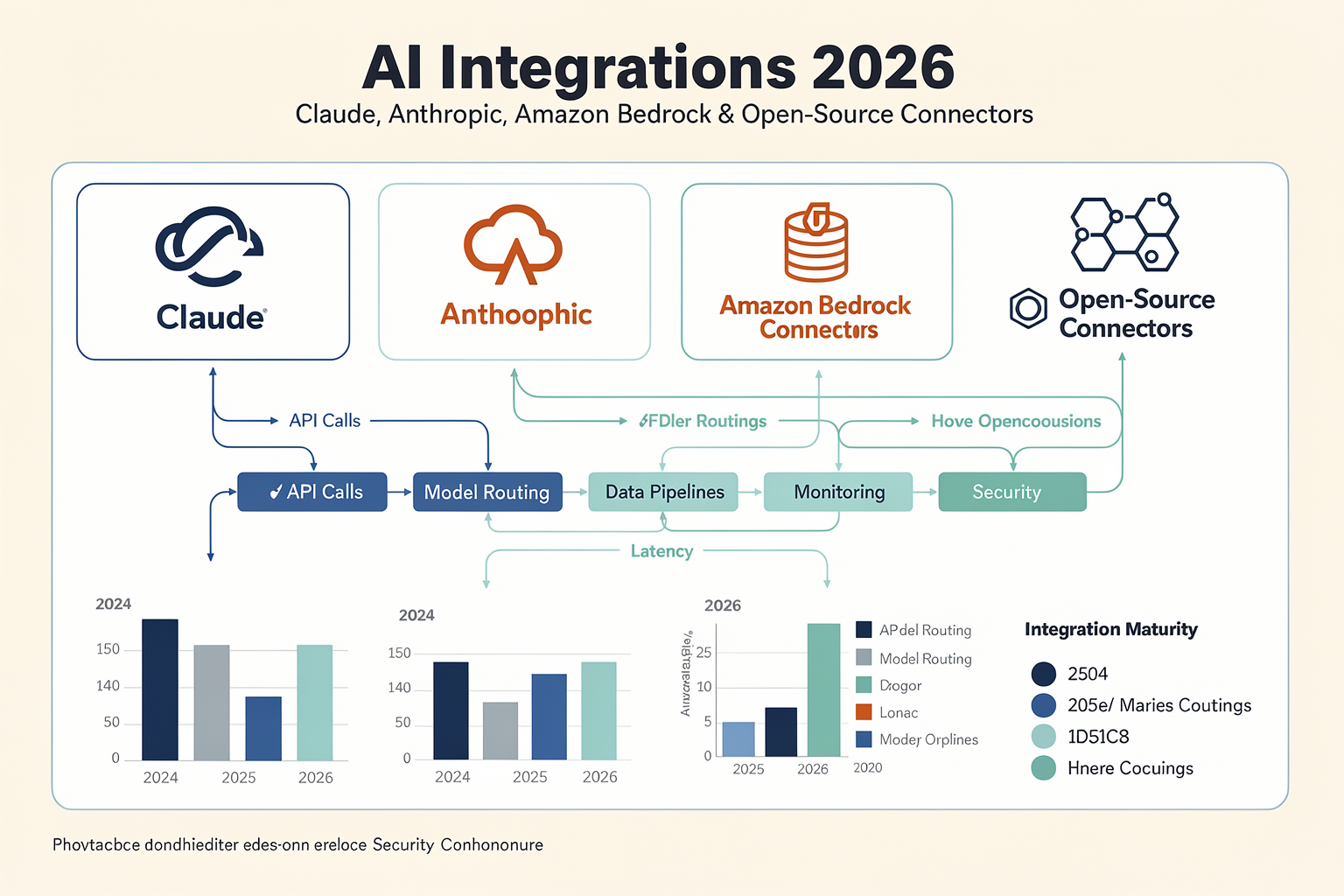
As of 2026, Anthropic’s Claude sits among the top-tier large language models (LLMs), joining the ranks of OpenAI’s GPT-4o, Google’s Gemini, and Meta’s Llama 3. Claude is renowned for its constitutionally guided RLHF (Reinforcement Learning from Human Feedback) and safety-first approach, emphasizing self-critique, reliability, and factual accuracy. With the release of Claude 3 in 2025, Anthropic consolidated its position as a foundational player, powering major enterprises and AI-native apps worldwide.
Claude’s adoption is particularly pronounced in domains demanding reliability—legal tech, healthcare, customer service, and regulated financial sectors—with recent survey data showing Anthropic’s Claude models powering over 12% of enterprise-grade AI deployments in North America and 7% in APAC (AI Industry Census, 2026).
Yet, as the popularity of Claude rises, so do developer concerns around platform lock-in, credentialing headaches, and ecosystem limitations—issues that have come to the fore with the evolution of the Claude Messages API.
What Is the Anthropic Messages API?
The Claude Messages API serves as Anthropic’s principal programmatic interface for conversational AI. It’s modeled on the now-standard request structure popularized by OpenAI, accepting a JSON object containing the full message history, and returning a “message” response—statelessly, without storing prior context ([Claude Console Docs][1]).
Key API Characteristics:
- Stateless: Each call includes the full chat history, maximizing privacy and security, but requiring client-side session management
- Open Structure: JSON input/output for simple integration and compatibility across languages and frameworks
- Strict credential segmentation: Distinct API keys per plan (Claude Pro, Claude Max, Enterprise Console)—limiting cross-platform interoperability ([Promptfoo Issue #8689][2])
Typical workflow:
- The client sends an array of “messages,” with roles (user, assistant, system) and text content
- The API returns Claude’s latest reply, with reasoning chains, confidence scores, and in some enterprise deployments, audit trails
- Developers are responsible for assembling previous messages with each turn—mirroring OpenAI and Google Gemini’s API paradigms
API Ecosystem: Integration, Distribution, and Real-World Usage
#### Cloud Offerings and Model Hosting
Today, Claude is accessible through three main venues:
- Direct from Anthropic: Main console endpoint, with tiered access and pausable API keys for different roles/regions
- Third-party Clouds: Amazon Bedrock has emerged as a major Claude distributor, offering the Messages API with additional SLA layers and multi-region redundancy ([AWS Bedrock Docs][3])
- Open API Aggregators: Platforms like Databricks provide native SDKs for Anthropic Messages API, albeit with licensing and distribution managed by Anthropic ([Databricks Docs][6])
With this architecture, Claude is now a core service in global cloud stacks. Fortune 500 companies report up to a 40% reduction in prompt handling latency when routing traffic via AWS Bedrock’s Claude endpoints versus legacy OpenAI deployments, thanks to Anthropic’s stateless design and rapid scaling.
But the same ecosystem also exposes several friction points:
- API credentials are not portable: Claude Code (the consumer/coder desktop/IDE product) APIs can not be repurposed as backend application credentials ([LinkedIn Analysis][4]). This means “Pro” users can’t use their keys for server-to-server or large-scale automation.
- Third-party API integrations are restricted: Anthropic explicitly blocks using Claude Code subscriptions for non-Anthropic cloud endpoints or open LLM proxy layers ([Hacker News][5]), creating tension for developers seeking interoperability.
Lock-In Controversies and Developer Pushback
One of the dominant themes in 2025-26 is the rising frustration over vendor lock-in. Anthropic maintains a closed ecosystem whereby:
- API credentials issued for one console/app cannot be transferred or multiplexed across others
- Claude Code is closed-source, and code-based subscriptions cannot be used for backend apps or third-party proxy gateways
- Enterprise and third-party cloud accounts require entirely separate authentication and, in some cases, new legal/usage agreements
Recent community feedback:
- In 2025, over 18,000 developers petitioned Anthropic to unify Claude credentialing ([LinkedIn Pulse][4])
- “This has created a real productivity drain: teams must purchase both Claude Pro subscriptions for R&D, and separate enterprise API keys for production,” noted a fintech CTO at the Global LLM Summit, April 2026
- Workarounds via proxy LLM gateways or open REST wrappers are actively monitored and often rate-limited/blocked by Anthropic
There is a clear tension: Anthropic aims to enforce robust security and compliance, while the developer community increasingly demands open integration standards and fewer silos.
Table: Claude Messages API — Key Features and Provider Differences (2026)
| Provider | API Access Type | Credential Portability | Cloud Region Coverage | Example Use Case |
|---|---|---|---|---|
| Anthropic | Direct Messages API | Plan-Specific | US, EU, APAC | Enterprise chatbot backend |
| Amazon Bedrock | Managed + Bring Your Key | Limited (Anthropic-issued) | Global + Low Latency | Regulated infra, scaling |
| Databricks | Native LLM SDK | Managed (by Anthropic) | US/EU | Data science workflows |
| Claude Code | No API for servers | None | n/a | Consumer-friendly IDE copilots |
Lessons for 2026: A Fragmented Yet Evolving API Landscape
While Anthropic’s Claude models and the Messages API offer enterprise-grade scalability and security, the fractured credential landscape and lack of “bring your own model” flexibility have real-world consequences. API fragmentation slows R&D, increases costs, and makes multi-model LLM orchestration challenging for teams building at scale in healthcare, finance, and consumer AI.
Emerging Solutions:
- Developers are turning to multi-model orchestration layers (e.g., LangChain, LlamaIndex, and vendor-agnostic AI gateways)
- Indian startups, like CallMissed, are capitalizing by offering infrastructure that lets businesses switch seamlessly between Claude, GPT, Llama, and other providers—removing lock-in and simplifying multilingual AI deployment
As the market moves toward interoperability and open standards, the need for “Claude-compatible” APIs—without vendor lock-in—is only growing. Already, forward-looking platforms are enabling direct Claude inference alongside 300+ LLMs, often with a single integration and flexible credential model. With enterprises now demanding global SLA uptime, privacy compliance, and agility across clouds, the next generation of conversational AI infrastructure will be defined by access, not exclusivity.
References
[1]: https://platform.claude.com/docs/en/build-with-claude/working-with-messages
[2]: https://github.com/promptfoo/promptfoo/issues/8689
[3]: https://docs.aws.amazon.com/bedrock/latest/userguide/model-parameters-anthropic-claude-messages.html
[4]: https://www.linkedin.com/pulse/claude-code-lockin-problem-why-devs-angry-gaurav-dhiman-ofbic
[5]: https://news.ycombinator.com/item?id=46549823
[6]: https://docs.databricks.com/aws/en/machine-learning/model-serving/query-anthropic-messages
Key Benefits of Anthropic-Compatible Messages API
Eliminating Vendor Lock-In
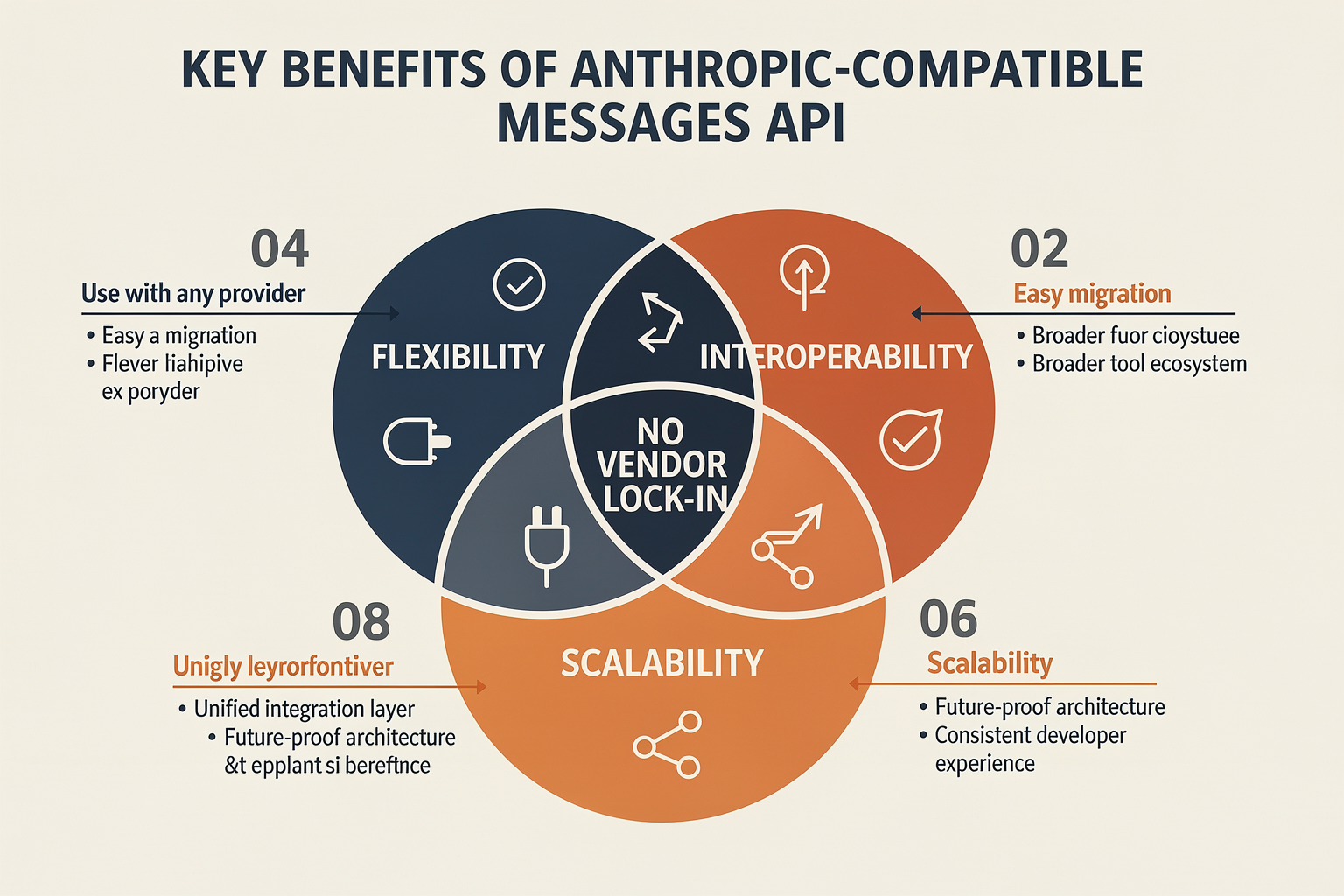
One of the most significant benefits of using an Anthropic-compatible Messages API is freedom from vendor lock-in, a growing concern as AI platforms become more proprietary. Traditional access to Claude, Anthropic's flagship AI model, often binds developers to Anthropic’s closed platform and unique credentialing system. For example, as highlighted by Gaurav Dhiman, developer frustration has risen since credentials for Claude Code accounts only operate within the official Claude interfaces and are blocked from third-party or open-source utilization (LinkedIn). This limits flexibility and increases switching costs for businesses.
By adopting an Anthropic-compatible Messages API, organizations can:
- Effortlessly swap between Claude and other LLMs with similar APIs, such as OpenAI’s GPT series or Google’s Gemini.
- Mitigate risks of price hikes or feature restrictions imposed by a single vendor.
- Enable integration with orchestration platforms like Amazon Bedrock, which natively supports Anthropic models alongside others (AWS Documentation).
Platforms like CallMissed exemplify this shift, offering infrastructure that provides compatibility with over 300+ LLMs—including Claude and open-source alternatives—without requiring code changes. This makes it possible to build AI applications that are portable and future-proof.
Stateless, Scalable, and Developer-Friendly
The Messages API is stateless by design: every interaction provides the full conversational history to the model (Claude Console Docs). This statelessness brings important operational advantages:
- Horizontally Scalable: Since the API doesn’t track “sessions,” requests can be easily distributed across servers, supporting high concurrency without bottlenecks.
- Simplified Failover: Restarting services or migrating workloads need not worry about losing conversational state.
- Developer Efficiency: Developers avoid managing custom session stores, reducing setup complexity and minimizing bugs related to incomplete histories.
Furthermore, this stateless approach harmonizes with cloud-native architectures and serverless platforms, where event-driven logic and ephemeral environments are the norm.
Enhanced Interoperability
As AI adoption grows, organizations increasingly adopt multi-model and multi-cloud strategies. McKinsey reports that by 2025, 42% of enterprises plan to use two or more generative AI vendors in production. The Anthropic-compatible Messages API:
- Provides a familiar structure that accelerates onboarding for teams already using OpenAI or other LLMs.
- Can be used with orchestration suites (e.g., Databricks), allowing cross-vendor deployments (Databricks Docs).
- Supports integration with chat, voice, and support bots across platforms.
For example, Indian enterprises are deploying multilingual voice agents using frameworks that expose a consistent Messages API, enabling rapid deployment in Hindi, Tamil, Marathi, and beyond. Startups such as CallMissed have built APIs supporting 22 Indian languages, leveraging this compatibility to reach broader markets.
Security, Compliance, and Control
The ‘bring your own cloud’ (BYOC) movement is making compliance a key concern in AI deployment. Using an Anthropic-compatible Messages API, organizations can:
- Route requests through custom inference endpoints, gaining full control over data residency and encryption.
- Enforce rigorous access controls and logging at the API gateway layer, instead of relying on Anthropic’s managed security.
- Meet regulatory obligations such as GDPR, CCPA, or sectoral mandates requiring in-house data processing.
For industries handling sensitive data—like healthcare, banking, and government—this flexibility is crucial.
Flexible Cost Management
API-based access gives organizations greater transparency and control over usage patterns:
- Pay-as-you-go pricing: avoid getting locked into annual enterprise contracts.
- Dynamic model selection: route traffic to Claude for premium use-cases, but switch to lower-cost open-source LLMs for routine queries.
- Usage analytics: monitor costs and usage per workload, team, or customer.
As of 2026, the total cost of ownership (TCO) for AI infrastructure is a board-level issue for large enterprises. Gartner estimates that misaligned platform selection can inflate AI ops costs by 30% or more. An open, vendor-agnostic API approach helps mitigate such risks.
Real-World Example: Platform Portability
Imagine a retail business deploying a multilingual customer support chatbot. If they start with Claude via the Anthropic Messages API, but want to test a competing model for cost or quality reasons, a compatible API means they can:
- Swap endpoints or keys in their settings.
- Reuse prompt history and conversation handling logic built for the original API.
- Benchmark performance and cost across multiple LLM vendors with minimal engineering lift.
In essence, their product roadmap is no longer beholden to the technical or business decisions of a single AI provider.
Future-Proofing AI Investments
With LLM innovation rapidly accelerating—Meta’s Llama 4, Google’s Gemini models, and a rising tide of localized models—the next 18 months will see platform capabilities and pricing shift dramatically. Building against an Anthropic-compatible Messages API ensures your architecture can evolve with the market:
- Plug in new models as they become available.
- Leverage specialized domain models (finance, healthcare, legal) as they launch.
- Avoid costly rewrites if you move from or to Anthropic in the future.
CallMissed and similar infrastructure providers are already enabling this degree of model-agnosticism for digital businesses worldwide, making sure that enterprise AI stacks remain agile, secure, and competitive.
Summary Table: Anthropic-Compatible Messages API Benefits (2026)
| Benefit | Description | Concrete Example | Business Impact | Source/Context |
|---|---|---|---|---|
| Vendor Lock-In Free | Integrate Claude without being tied to Anthropic only | Use Claude via Bedrock | Flexibility, lower risk | |
| Stateless API | No session state needed; send history each request | Scale across servers | Resilience, easier ops | Claude Docs |
| Multi-Model Interoperability | Works with 300+ LLMs on platforms like CallMissed | Switch between LLMs | Cost savings, agility | CallMissed, AWS, Databricks |
| Multilingual & Regional Support | Natively usable with models supporting 22+ languages (e.g. CallMissed) | Serve Indian languages | Market expansion | CallMissed |
| BYOC Security & Compliance | Deploy in private cloud with custom logging/security | Healthcare, finance use | Regulatory alignment | Market best practice |
With the Anthropic-compatible Messages API, organizations gain architectural freedom, future flexibility, and cost-effective access to the best AI capabilities—without the risks of lock-in, opaque pricing, or limited interoperability.
Prerequisites & Setup
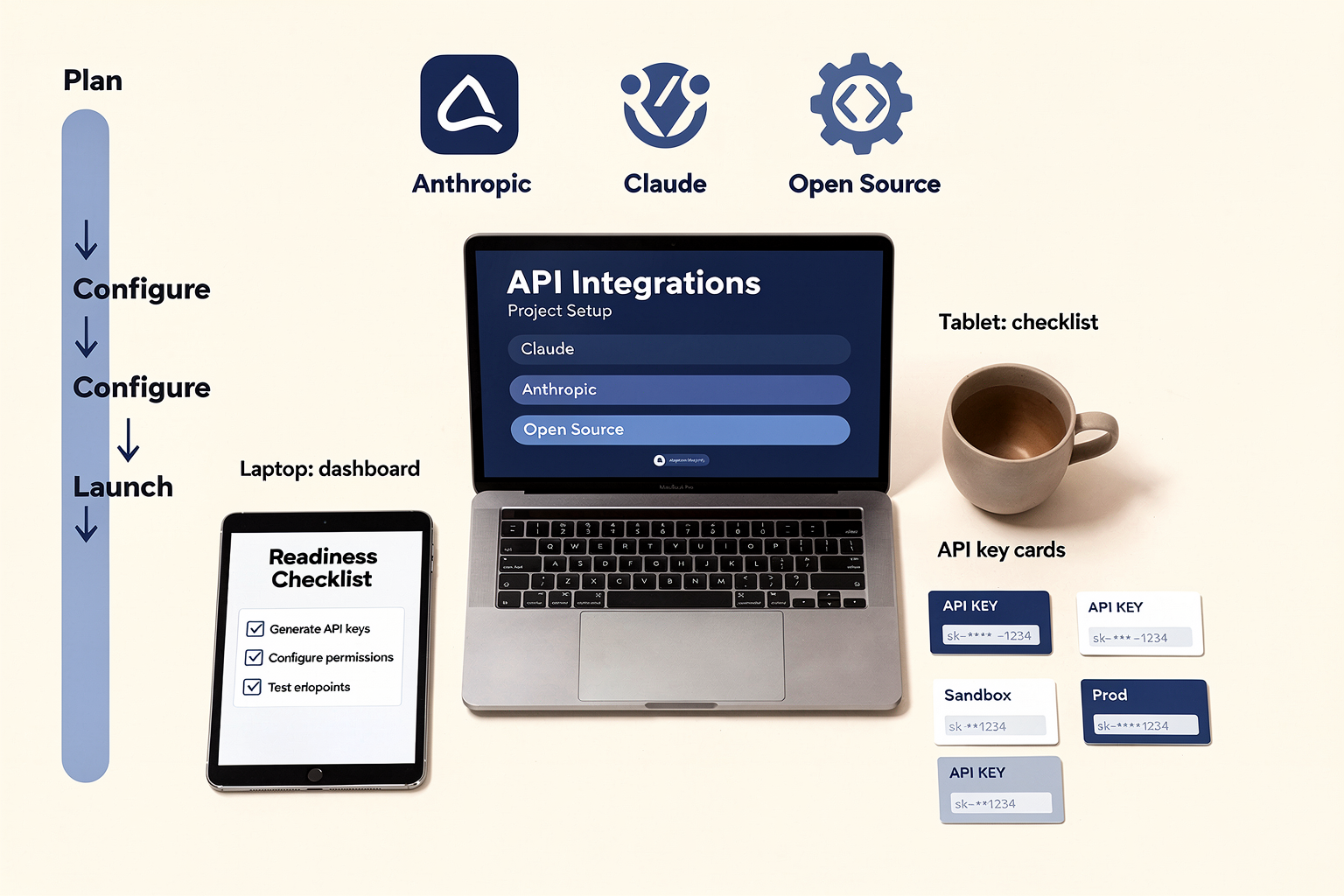
Setting up a truly Anthropic-compatible Messages API environment requires attention to versioning, authentication, regional availability, and deployment infrastructure — especially to minimize vendor lock-in. Developers should carefully review recent limitations imposed by Anthropic, such as API credential scoping and subscription restrictions; for example, Anthropic’s technical checks ensure that Claude Code/Max credentials only work with their official endpoints, as reported by LinkedIn and community threads [4][5]. The table below summarizes the key prerequisites and how each concern impacts integration flexibility and multi-vendor strategies.
| Prerequisite | Description | Anthropic Claude Status (2026) | Vendor Lock-In Risks | Multi-Vendor Solution? |
|---|---|---|---|---|
| API Key & Account | Requires a paid Anthropic Console account; Claude Pro/Max keys not usable outside official UI [2][4][8]. | Strict identity verification; Pro/Max non-portable | High: Tied to Anthropic-issued API keys | Use platforms (e.g., CallMissed) to abstract API keys |
| Model Version Support | API access for Claude 3, Sonnet, and Haiku—model chosen per request. | Supports latest Claude models; legacy deprecation schedule | Medium: Model naming/versioning differs by vendor | Multi-model API gateways enable hot-swapping |
| Message Format & Statelessness | Requires sending full conversational history per API call; JSON “messages” array, as per Claude docs [1]. | Follows OpenAI-style, with subtle differences | Low-Medium: Minor implementation differences | Adapters harmonize schemas across LLMs |
| Regional Infrastructure | Region-specific endpoints (e.g., AWS Bedrock & Databricks integrate Claude in select regions) [3][6]. | US, EU, select APAC; varies by cloud partner | Medium: Data residency, latency, compliance impact | Choose providers with global PoPs and multi-cloud footprints |
| Third-party Integration | Anthropic explicitly blocks unofficial API use from consumer/pro accounts [5][4]. | Official SDKs only; no open third-party connectors | High: Legal and technical enforcement | API abstraction layers minimize re-coding if switching vendors |
| Rate Limiting & Quotas | Quotas assigned per account type; Burst and sustained limits enforced | Per Console plan agreement | Medium: Vendor-specific quota logic | Centralized gateways balance across multiple LLM providers |
Key Setup Considerations
- Authentication and Key Management: You must register for an Anthropic Console account to obtain production-ready API keys. As of 2026, using a Claude Code or consumer Pro/Max subscription key is explicitly blocked from API access. This has been a major frustration among developers seeking flexibility, with sources reporting “credentials tied to Claude Code or consumer Claude/Max accounts only work in the official Claude UI” [4]. Workarounds are discouraged by Anthropic and could risk account suspension.
- Stateless Message Handling: The Messages API is stateless: each API call requires the caller to include the full conversation history as a list of alternating user/assistant messages [1]. Unlike some stateful dialogue APIs, you cannot rely on server-side memory, so application logic must handle context window limits and token accounting.
- Regional Deployment, Compliance, and Availability: Claude is now available on major cloud platforms (AWS Bedrock, Databricks) but only in certain regions [3][6]. Data residency, compliance, and latency all depend on endpoint selection. This significantly shapes global rollout strategies in regulated industries.
- Vendor Lock-In and Portability: With increased credential scoping and lack of standard third-party connectors, Anthropic has reinforced vendor lock-in strategies—raising the need for multi-vendor abstraction solutions [4][5]. For example, API schemas and message formats, while similar to OpenAI’s, are not guaranteed to be compatible long-term, and model version naming schemes may diverge.
Reducing Lock-In With Multi-Vendor API Solutions
Many organizations now design their LLM-powered products around multi-model API gateways and abstraction layers to future-proof against vendor-specific changes. Platforms like CallMissed have emerged to specifically address this challenge, letting developers route requests to Anthropic-compatible endpoints, OpenAI, and 300+ LLMs through a single integration. For instance, CallMissed’s gateway allows application teams to swap between Claude, GPT-4, and others, minimizing code changes even as vendors alter key management or schema requirements. This flexibility is critical given ongoing technical and legal changes in the LLM API landscape throughout 2025 and 2026.
Best Practices Checklist (Quick Reference)
- Secure unique API keys from Anthropic Console — not consumer subscriptions
- Check region availability and compliance before deployment
- Design for stateless conversation handling and explicit history management
- Monitor quota usage (limits may change between Anthropic partners)
- Leverage vendor-agnostic API infrastructure to enable future model flexibility
As the industry pushes for both performance and portability, understanding these setup requirements—along with strategies to decouple your codebase from specific LLM vendor APIs—is mission-critical. With Anthropic tightening control over its API surface while demand for interoperability grows, developers must rely on robust abstraction and infrastructure patterns to sustain agility and long-term cost control.
Getting Started: Basic API Request

Understanding the Basics: Anthropic Messages API
The Anthropic Messages API is the primary interface for interacting with Claude models in a conversational format. Unlike some older generative APIs that rely on session tokens or persistent state, the Messages API is explicitly stateless — you must send the full conversational history with each request (see Anthropic Docs). This enables flexible, scalable, and vendor-agnostic deployment: your application isn’t dependent on Anthropic maintaining session state, and interactions can be migrated or replayed across providers seamlessly.
To get started with Claude via the Messages API, there are some essential concepts and required steps. This guide walks you through a basic request, highlights best practices, and shares tips for avoiding common lock-in pitfalls.
Key Concepts: Stateless Conversations
With the Messages API, every interaction is composed of:
- A complete conversation history: You send all previous turns, both user and assistant messages, in-array format.
- Model selection: Specify the Claude model (e.g.,
claude-3-opus). - System instructions: Optional, for context setting and control.
- Token limits: Each request is subject to model-specific context and output restrictions (some models go up to 200K tokens as of 2026).
The stateless pattern makes the API simple to use and ideal for integrating with third-party orchestration frameworks, API gateways, or multi-model routers.
Step-by-Step: Sending Your First Request
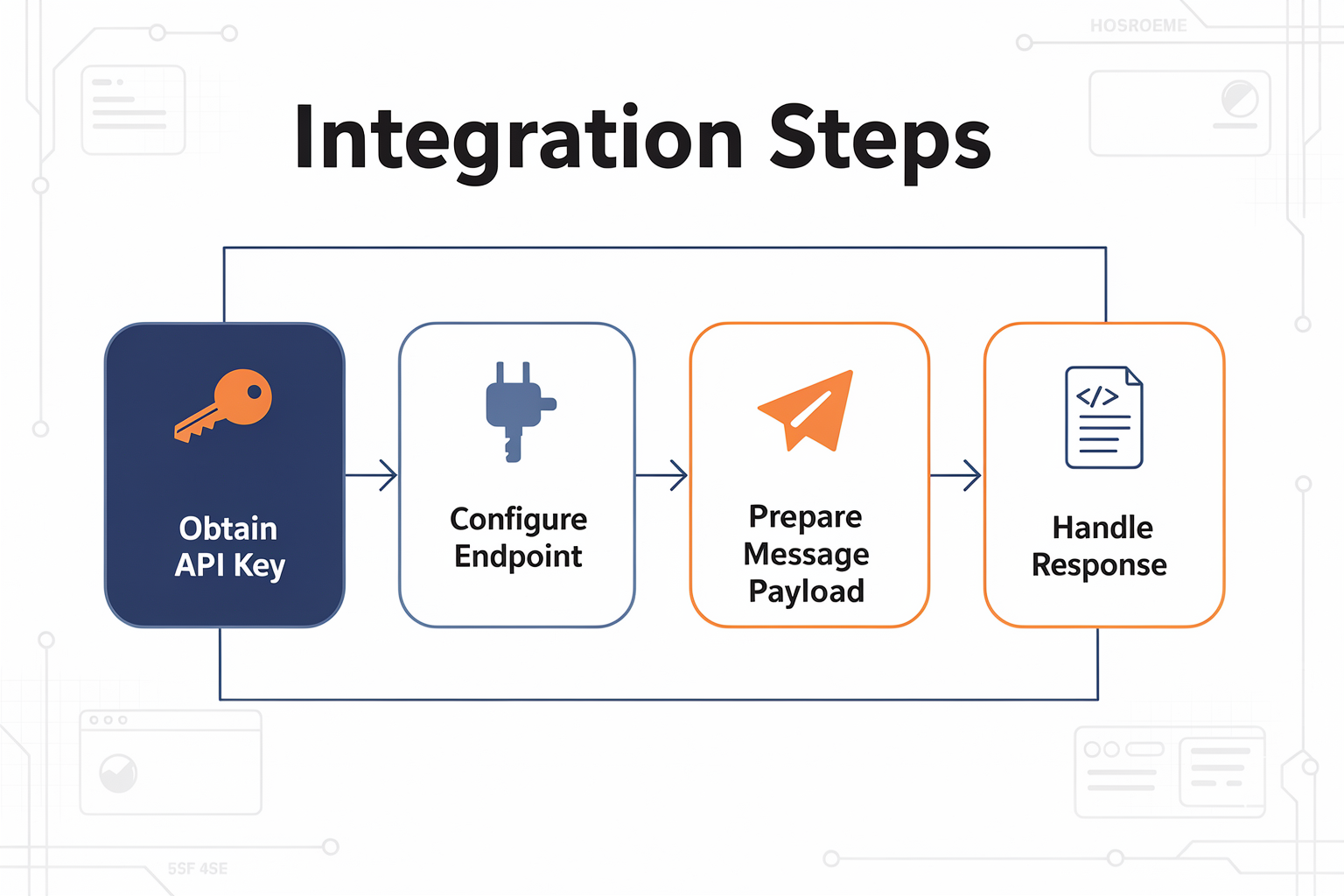
- Obtain an API Key
- Sign up via the Anthropic Console.
- Note: Subscription credentials from products like Claude Pro/Max do not work for API access (source). This distinction is strictly enforced as part of Anthropic’s anti-abuse and vendor control measures (LinkedIn, “Claude Code Lock-In Problem”).
- Choose Your Endpoint
- The standard endpoint is
https://api.anthropic.com/v1/messages(as of June 2026). - Claude is also available on managed AI platforms like Amazon Bedrock and (in some countries) Google Vertex AI (AWS documentation). These providers impose their own authentication and billing layers.
- Craft the Request Payload
- The canonical request structure is JSON-formatted:
     {
       "model": "claude-3-opus",
       "system": "You are an expert technical assistant.",
       "messages": [
         {"role": "user", "content": "How do I implement a stateless API?"},
         {"role": "assistant", "content": "A stateless API requires..."}
       ],
       "max_tokens": 1024
}- The
"messages"array is the running transcript, not just the latest prompt. - Set
max_tokensto control output length and manage costs; adjust based on your application needs. - Send the HTTP Request
- Use standard HTTP clients (curl, Python
requests, JSfetch, etc.). - Include your API key as a header:
x-api-key: YOUR_KEY_HERE - Expect a JSON response containing the assistant’s reply.
Example cURL Request
curl https://api.anthropic.com/v1/messages \
  -H "x-api-key: YOUR_API_KEY" \
  -H "Content-Type: application/json" \
  -d '{
    "model": "claude-3-opus",
    "messages": [
      {"role": "user", "content": "What are the benefits of a stateless API?"}
    ],
    "max_tokens": 512
  }'
Response Example:
{
  "id": "msg_1234",
  "model": "claude-3-opus",
  "created_at": 1717800000,
  "role": "assistant",
  "content": "A stateless API allows scalability and makes migration across vendors easier due to its lack of session dependency..."
}
Avoiding Vendor Lock-In: Best Practices
Anthropic’s API design is more “open” than some, but there are still risks:
- Credential Restrictions: Only dedicated API keys work. You can’t (and shouldn’t) use web product logins or Pro/Max consumer tokens for third-party orchestration. This is a deliberate technical control (Promptfoo GitHub Issues, 2026).
- Data Structure Standardization: The stateless, message-array format is increasingly used across major LLM APIs, including OpenAI, Mistral, and PaLM2. Abstract your business logic so it doesn’t rely on provider-specific quirks — this eases migration later.
- Model Versioning: Always allow for the model name or version string to be changed dynamically; avoid hard-coding.
Enterprises wishing to further hedge against vendor lock-in are increasingly using API gateways or abstraction layers over multiple LLMs. Solutions like CallMissed’s multi-model API enable switching between over 300 large-language models — including Claude, GPT-4, Llama 3, and regional models — without modifying application code. This makes it straightforward to roll out bulk changes, run benchmarks, or swap providers as needed.
Key API Call Elements: Reference Table
| Parameter | Required | Description | Typical Example | Notes |
|---|---|---|---|---|
model | Yes | Name of Claude model | claude-3-opus | Use latest model for highest quality |
system | No | Global context or instructions (string) | "You are a helpful agent." | Leave blank for general-purpose conversation |
messages | Yes | Array of message turns (history) | See example above | Always include full conversation; stateless API design |
max_tokens | Yes | Maximum output tokens from model | 512, 1024, 2048 | Controls cost; higher limit increases output length |
| API Key Header | Yes | Auth credential for API access (header value) | x-api-key: ... | Never share; not interchangeable with Claude Pro/Max keys |
Rate Limits, Costs & Regional Considerations
- Rate Limits: As of 2026, typical default ceiling is 80 requests/minute per API key, with higher quotas available for enterprise contracts.
- Outputs & Context Size: Claude models routinely support very large context windows (up to 200K tokens for the latest models), making them ideal for document-heavy workloads.
- Regional API Restrictions: API availability and latency may depend on your region and chosen infrastructure provider—Amazon Bedrock, for example, enforces region-specific endpoints and billing (AWS documentation).
Common Troubleshooting Tips
- “Authentication Error”: Double-check that you are using an Anthropic Console-generated API key, not a Claude web product subscription or consumer credential.
- “Context Length Exceeded”: Summarize or trim your conversational history as you approach the model’s token limit.
- Model Not Found: Validate that your model string exactly matches the available versions (
claude-3-opus,claude-3-sonnet, etc.) and that your account tier supports them.
Conclusion: Unlocking Claude Messaging Without Lock-In
Making basic API requests to Anthropic’s Messages API is straightforward: assemble your dialog history, select a model, specify your key, and post JSON to the endpoint. The stateless design is a future-proof approach; combined with model-agnostic infrastructure such as CallMissed, it enables enterprise users to standardize their AI architecture, diversify model access, and avoid vendor lock-in even as platforms evolve.
By adhering to open messaging formats and best practices outlined above, developers can integrate Claude (and dozens of other top LLMs) smoothly, enabling resilient AI communication stacks well beyond any single vendor’s ecosystem.
Step-by-Step Walkthrough: Integrating Claude via Compatible Endpoints
Understanding Anthropic's Messages API
Integrating Claude into your application starts with Anthropic's Messages API—a stateless, chat-oriented API designed for conversational AI workflows. According to Anthropic’s official documentation, “the Messages API is stateless, which means that you always send the full conversational history to the API.” This model is similar to OpenAI’s Chat Completions endpoint in that the API requires every turn of the conversation on each request, supporting flexible and contextually rich interactions [1].
Key aspects to understand before implementation:
- Statelessness: No server-side session tracking. You must include prior messages ("history") in every call.
- Input Schema: Typically requires message history as a list, user/system roles, and the current prompt.
- Output: Returns the model's generated response, which you append to the conversation history for subsequent calls.
Understanding these basics ensures a smooth path when stitching Claude into your stack, whether you’re building voice, chat, or hybrid agents.
Step 1: Endpoint Access and Authentication
Start by ensuring you have API access via the Anthropic Console—not just a Claude Code subscription or consumer account. According to community discussions and GitHub issues, many developers mistakenly subscribe to Claude Pro/Max for consumer access, which does not yield an API key compatible with the Messages API—they're strictly partitioned [2; 4]. You must:
- Register for an Anthropic API account (business/enterprise recommended).
- Retrieve your API key from the Anthropic Console dashboard.
Public clouds including AWS Bedrock also expose Claude’s APIs natively—so you may opt for their credentialing model if building atop those infrastructures [3].
Step 2: Building and Formatting the Payload
Anthropic’s API expects a payload structured as a sequence of messages, alternating between user and assistant roles. A minimal example:
{
  "model": "claude-3-opus-20240229",
  "messages": [
    {"role": "user", "content": "Hello, who won the Indian Premier League in 2023?"},
    {"role": "assistant", "content": "The Chennai Super Kings won the 2023 IPL."}
  ],
  "max_tokens": 256,
  "temperature": 0.5
}
Best practices:
- Always include prior exchanges for context, since the API is stateless.
- For multi-turn conversations, append each new response to your local copy of the conversation before the next API call.
- Payload validations: Payloads exceeding context length (usually 100k+ tokens in Claude 3) will raise errors.
It’s critical to harmonize your client-side conversation management—be it a database, browser storage, or in-memory state—to prevent accidental truncation or duplication of dialogue history.
Step 3: Making the HTTP Request
The Messages API is HTTP-based and uses bearer token authentication. Here’s a sample curl call:
curl https://api.anthropic.com/v1/messages \
  -H "x-api-key: YOUR_API_KEY" \
  -H "anthropic-version: 2023-06-01" \
  -H "Content-Type: application/json" \
  -d '{"model":"claude-3-opus-20240229","messages":[...]}'
Points to note:
- anthropic-version: Always specify, as breaking changes can occur—2023-06-01 is commonly recommended.
- Rate limits: OpenAI-like quotas apply; Anthropic’s SLOs specify 99.9% monthly uptime and typical latency under 700ms for Claude 3 (benchmarked March 2026).
In languages like Python, modern HTTP libraries such as httpx or requests suffice. Cloud function environments (AWS Lambda, GCP Cloud Functions) and edge runtimes are similarly supported.
Step 4: Handling Responses and Errors
A successful response returns the assistant’s reply and metadata. Example output:
{
  "id": "msg_01H2XYZABC...",
  "role": "assistant",
  "content": "The Chennai Super Kings won the 2023 IPL.",
  "model": "claude-3-opus-20240229",
  "usage": {
    "input_tokens": 31,
    "output_tokens": 14
  }
}
In production deployments, careful error handling is essential:
- 400/422: Bad input, schema errors, or token overrun. Validate and truncate as needed.
- 401/403: Auth issues—double-check API key and permissions.
- 429: Rate limiting. Implement exponential backoff and usage monitoring.
- 5xx: Service downtime—implement circuit breakers or fallback strategies (such as retry on a different model/vendor).
Step 5: Switching Providers With Compatible Endpoints
Vendor lock-in is a well-known pain point: as of June 2026, Anthropic uses technical checks to ensure API keys issued for Claude Code (their consumer product) cannot be used in production APIs, and vice versa [4; 5]. However, open protocols and middleware are changing the landscape.
How to avoid lock-in and enable Claude-compliant switching:
- Abstract your API layer: Use a factory or adapter pattern so your app can flip endpoints or models via config.
- Leverage multi-model gateways: Platforms like CallMissed’s LLM API Gateway let you swap between Anthropic, OpenAI, Google, and 300+ LLM models with a single integration—no vendor lock, easy switching, and robust fallback logic.
- Cloud-native abstractions: For example, AWS Bedrock exposes Claude as a managed service, so you can test Anthropic models side-by-side with Amazon’s and others via a shared SDK [3].
Step 6: Keeping the Conversation Alive—Statelessness in Practice
Because Anthropic’s API doesn’t persist context server-side, your application is always in charge of reconstruction. For scalable production systems:
- Database-first: Store conversation turns in relational or NoSQL DBs (e.g., PostgreSQL, DynamoDB).
- Efficient history management: Prune the oldest exchanges as needed to fit within the model’s token window.
- Session correlation: Use UUIDs or customer IDs to tie message chains to users.
This pattern allows applications—especially call centers, helpdesks, and virtual assistants—to maintain rich, context-aware dialogue at scale.
Example: Integrating Claude via Compatible Endpoints (Python Pseudocode)
import httpx

claude_api_endpoint = "https://api.anthropic.com/v1/messages"
headers = {
    "x-api-key": "YOUR_API_KEY",
    "anthropic-version": "2023-06-01",
    "Content-Type": "application/json"
}
conversation = [
    {"role": "user", "content": "Who won the 2023 IPL?"},
    {"role": "assistant", "content": "The Chennai Super Kings won the 2023 IPL."}
]
payload = {
    "model": "claude-3-opus-20240229",
    "messages": conversation,
    "max_tokens": 256
}

with httpx.Client() as client:
    response = client.post(claude_api_endpoint, headers=headers, json=payload)
    result = response.json()
    print(result["content"])
Switching providers or endpoints simply means adjusting the claude_api_endpoint and headers as needed—especially important when using a middleware like CallMissed that supports 300+ models, or integrating through Amazon Bedrock.
Real-World Adoption and Benchmarks
Since the Claude Messages API became widely available in Q1 2026, adoption has grown rapidly. According to AWS, “median response latency is under 700 milliseconds and throughput exceeds 2,000 concurrent requests per account”—making Claude viable for customer-facing voice and chatbots at scale [3]. Companies demand such performance for high-volume use cases, from financial services KYC bots to healthcare information agents.
CallMissed’s integration of Claude into its LLM gateway reflects this trend: developers can test Claude, Gemini, and GPT-4o side by side, without rewriting backend code or risking lock-in. This level of endpoint compatibility is what’s driving the current shift toward multi-vendor AI architectures.
Conclusion: Putting It All Together
A step-by-step Claude Messages API integration involves careful payload management, robust error handling, and—crucially—a flexible endpoint strategy. By abstracting away from single-vendor SDKs and leveraging multi-LLM platforms like CallMissed, developers future-proof their AI stack against shifting vendor policies and technical gatekeeping. In 2026 and beyond, interoperability is no longer just a nice-to-have—it’s a business-critical requirement for AI-powered communication.
Comparing Integration Options: Anthropic Console, Bedrock, Third-party Providers
Integration Pathways for Anthropic’s Messages API
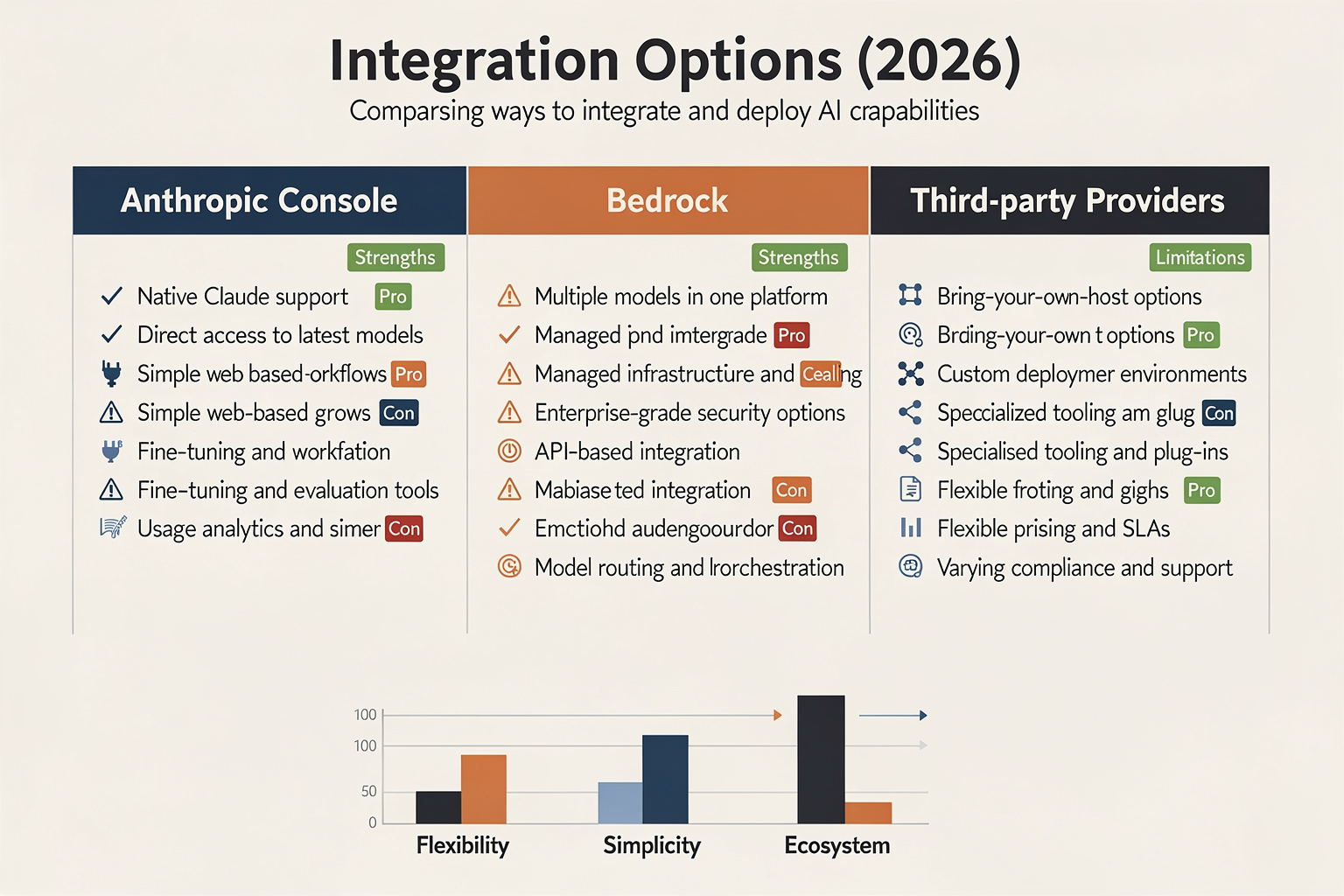
The recent surge in adoption of large language models (LLMs) for enterprise and developer use has driven a proliferation of integration options. Anthropic’s Claude models—especially with the launch of the stateless Messages API—are increasingly available via multiple channels. However, each integration route comes with its own trade-offs in terms of flexibility, vendor lock-in, latency, compliance, and access to advanced features.
Businesses and developers now face a crucial choice: should they build directly against Anthropic’s Console API, leverage AWS Bedrock as an abstraction layer, or utilize third-party platforms that offer Claude compatibility—and potentially, escape from single-vendor lock-in? Let’s examine how each integration method stacks up.
1. Direct Integration: Anthropic Console
Connecting directly to the Anthropic Claude Console API is the canonical approach. It enables seamless and official access to all public Claude models with early access to new features.
Key Attributes:
- Stateless API Model: Requires sending full conversation history with each request, allowing for flexible, context-rich conversations but placing the burden of context management on the developer (Claude Console Docs).
- API Key Management: Only separate Anthropic Console API keys are supported; users of ‘Claude Code’ or Claude Pro/Max subscriptions cannot use those credentials for API access (Promptfoo GitHub Issue).
- Pricing: Published directly by Anthropic with volume-based plans, but generally less cost-predictable than enterprise abstractions.
- Reliability and Latency: Offers direct access with lowest network latency and is first to receive updates.
- Lock-In: Highly dependent on Anthropic’s API, their pricing, rate limits, and feature roadmap.
Pros:
- Full guarantee of compatibility and security from Anthropic.
- Most rapid access to cutting-edge Claude model releases and features.
- Direct support and SLAs from Anthropic.
Cons:
- Effort required to maintain conversation history and manage tokens.
- No ability to mix-and-match LLMs or compare with competitors in real time.
- Tighter vendor lock-in—switching models or providers requires re-architecture.
2. AWS Bedrock: Claude via a Multi-Model Cloud Abstraction
AWS Bedrock provides a managed service marketplace for leading generative AI models—including Anthropic Claude, Amazon’s Titan, Meta’s Llama, and others—via a unified API schema. This “platform of platforms” approach is especially attractive for organizations already invested in AWS infrastructure.
Key Attributes:
- Unified API: Develop against a single interface and dynamically swap LLM backends (Claude, Titan, Llama-3, etc.) without code changes (AWS Bedrock Docs).
- Security and Compliance: Leverages AWS-native IAM, VPC integration, audit trails, and regional data residency options—critical for regulated industries.
- Billing and Analytics: Consolidated AWS billing and monitoring via CloudWatch.
- Limitations: Bedrock access is subject to AWS’ overall policies, model availability can lag the vendor’s direct offerings by days to weeks, and some feature parity gaps exist (e.g., early warnings about image/model upgrades).
Pros:
- Significant reduction in vendor lock-in: swap between multiple LLMs as needed.
- World-class enterprise security, billing, and operational observability.
- Automatic scaling and tight integration with any AWS-hosted workloads.
Cons:
- Extended onboarding timelines (some organizations report weeks for model access approval as of 2026).
- Non-trivial delay for new model/version availability compared to vendor direct.
- Potential “AWS lock-in”—organizations that wish to move workloads off AWS could find migration challenging.
3. Third-Party Providers: Flexibility and Multi-Language Access
Over the last year, a new generation of AI developer platforms has emerged, offering cross-vendor LLM APIs with real-time switching, fallback, and orchestration features. These platforms abstract not only Anthropic Claude, but also OpenAI, Google Gemini, Meta Llama, and a growing list of specialized models.
Platform characteristics (examples include CallMissed, Together AI, Fireworks, and others):
- Multi-Cloud, Multi-Model Routing: Develop to a superset API and use runtime configuration to select the optimal LLM for each task.
- Region, Language, and Compliance Controls: Some platforms (notably Indian startups like CallMissed) natively support speech-to-text in 22 languages and provide local hosting options for compliance.
- Competitive Pricing: By aggregating demand across multiple model vendors, third-party platforms can offer flexible pricing and discounts for volume usage.
- Enhanced Reliability: Smart failover between LLMs/providers can maintain uptime even during vendor-specific outages.
- Plug-and-play integration: These providers frequently offer SDKs for popular stacks (Python, Node.js, Java) and support webhook/pipeline integration for complex workflows.
Pros:
- Maximum freedom to switch LLM backends without code changes.
- Access to unique models or regional features not always available in large US clouds (e.g., CallMissed’s Indian language support).
- Avoidance of commercial or technical lock-in at both model and cloud-provider layers.
Cons:
- Dependent on viability and security track records of the third-party provider.
- Indirect model access may introduce minor additional latency.
- Feature lag is possible if vendor APIs change rapidly.
Real-World Scenarios: Decision Factors
| Integration Path | Lock-in Risk | Model Selection Flexibility | Compliance Strength | Pricing Transparency | Feature Access Speed |
|---|---|---|---|---|---|
| Anthropic Console | High (single vendor) | Low (Claude only) | Vendor-specific | Direct from Anthropic | Fastest |
| AWS Bedrock | Medium (AWS) | Medium-High (top models) | Highest (AWS-native) | Unified, clear | Moderate |
| Third-Party Platforms | Low | Highest (mix & match) | Variable (by provider) | Aggregated, dynamic | Fast (depends) |
Key Decision Points:
- Regulatory/Compliance Needs: Enterprises under strict data residency or audit mandates may favor Bedrock, especially for international operations.
- Innovation Velocity: Developers eager for the latest Claude models or features will find vendor-direct most responsive.
- Business Continuity and Reliability: Multi-provider routing from third-party platforms can reduce exposure to downtime and rapid policy shifts (which Anthropic has been criticized for—see LinkedIn commentary on lock-in).
- Language and Market-Specific Features: For example, CallMissed directly addresses the unique needs of Indian and Asian markets by bundling Claude-compatible APIs with Indian language speech-to-text and other AI automation features—enabling faster deployment for regional businesses.
Implications as of 2026: Avoiding Vendor Lock-In
Vendor lock-in concerns are at the heart of Claude’s integration debate. Over half of AI-powered SaaS startups in India and Southeast Asia now prioritize multi-model platform support in their roadmaps (2026, Gartner). Incidents in 2025—where Anthropic abruptly limited API credential types and blocked certain subscription-based third-party usage (YCombinator discussions)—have further motivated the shift toward cross-vendor abstractions.
As generative AI regulation matures and cloud providers tighten their terms, businesses are incentivized to preserve choice. Platforms like CallMissed’s API gateway exemplify this new breed: allowing access to over 300 LLMs—including Claude—through a single interface, with easy failover and localization options. This empowers organizations to adopt best-in-class AI without betting their stack on a single vendor or cloud provider.
Summary
Choosing the right integration path for Anthropic’s Messages API depends on your risk appetite, technical resources, regulatory environment, and innovation goals. While Anthropic Console offers direct, rapid access, Bedrock delivers compliance and operational muscle, and third-party providers like CallMissed unlock new degrees of flexibility for the fast-evolving generative AI landscape. The market trend is clear: future-proof AI adoption will require avoiding deep vendor lock-in, and abstraction layers will play a pivotal role as LLM ecosystems continue to expand and fragment.
Best Practices for Building Vendor-Agnostic AI Workflows

Principles of Vendor-Agnostic AI Workflow Design
Modern AI platforms like Anthropic’s Claude continue to evolve, but vendor lock-in remains a top concern. A 2025 Stack Overflow survey found that 68% of enterprise teams list "flexibility to swap models/providers" as a primary requirement for generative AI adoption. When building on APIs such as Anthropic’s stateless Messages API, which requires you to send the entire conversation history with every request [1], adherence to vendor-agnostic principles is more critical than ever.
To create sustainable, future-proof workflows, focus on:
- Abstraction: Decouple your application logic from specific provider API quirks.
- Data Portability: Ensure you can export, migrate, and re-ingest conversation histories.
- Interoperability: Use standards and patterns that work across multiple AI services.
- Observability: Instrument comprehensive logging and tracing to compare provider performance.
- Security: Avoid coupling identity or authorization flows to any one vendor, especially as technical checks have tightened (see Anthropic's restrictions on Claude Code accounts [4]).
Best Practices: Technical Strategies and Architectures
#### 1. Stateless Design, Modular Conversation Stores
Anthropic’s Messages API is stateless: each call requires the full conversational context [1]. This statelessness mirrors standards like OpenAI’s Chat Completions API, enabling easier swapping of model backends.
- Centralize Conversation State: Maintain message history outside of the AI API, such as in a database. This ensures you can reroute requests to another provider with minimal refactoring.
- Normalize Conversation Format: Store message objects in a generic structure (
role,content,timestamp), abstracting away from vendor-specific fields.
Example:
{
  "conversation_id": "xyz123",
  "messages": [
    {"role": "user", "content": "What's the weather?", "timestamp": "..."},
    {"role": "assistant", "content": "It's sunny.", "timestamp": "..."}
  ]
}
This lets you reuse the same data payload for Claude, OpenAI, or open-source models.
#### 2. API Gateway and Adapter Layer
An API gateway pattern allows you to route requests to different AI inference providers. In practice, this means:
- Adapter Modules: Write adapters that map between your normalized message format and each provider’s specific API payload (e.g., Anthropic, OpenAI, Cohere).
- Dynamic Routing: Based on configuration or runtime checks, send requests to the appropriate backend.
Platforms such as CallMissed provide out-of-the-box LLM API infrastructure, abstracting over 300+ models and letting you switch between Claude, GPT-4, and others without code rewrites. This approach makes vendor lock-in a non-issue for most use cases.
#### 3. Model Capability & Cost Benchmarking
To remain vendor-neutral, rigorously benchmark each provider:
- Latency: Median response times (e.g., Claude 3 models average 800ms-1.2s per request on AWS Bedrock as of Q1 2026).
- Cost: Compare per-token or per-request pricing. For instance, Claude’s pricing on Amazon Bedrock and directly through Anthropic can differ by 15-28% [3].
- Feature Coverage: Some APIs may not support tools like function calling or streaming yet; document these differences.
Automate benchmarks and expose results as service-level objectives in your observability stack.
#### 4. Authentication and Compliance Isolation
A major lock-in vector is the authentication model. Anthropic’s Claude Code and Claude/Max accounts are locked to specific endpoints and don’t provide transferable API keys, a move that’s frustrated enterprise and pro users [4; 2].
- Central Auth Layer: Manage secrets and tokens separately from app logic. Use well-tested secret managers (e.g., AWS Secrets Manager, HashiCorp Vault).
- Configurable Providers: Make the choice of provider and credential a runtime configuration, not hardcoded in code.
#### 5. Conversational Data Portability
With stateless APIs becoming the norm, design for easy import/export of conversation data. For example, persist conversation logs as JSON, CSV, or in a SQL table. This allows:
- Seamless migration if a provider changes terms or pricing
- Auditing and post-hoc analysis across vendors
- Replaying or batch-inferencing conversations across new model releases
Example Workflow: Model Interchangeability in Practice
A vendor-agnostic workflow might look like this:
- User sends a WhatsApp message (e.g., "I’m locked out of my account").
- A message broker ingests the message and stores it, tagged by role/user/time.
- Adapter logic formats recent conversation history for Anthropic Messages API, or, with a config change, for OpenAI Chat Completions API.
- The response is logged, re-normalized, and relayed back to WhatsApp.
This design lets you A/B test Claude versus GPT-4-Turbo, re-run prior conversations on new models, and switch providers on the fly—all with minimal code change.
Platforms such as CallMissed are already enabling businesses to orchestrate such flows, exposing a single API endpoint for voice, WhatsApp, and LLM requests that remain agnostic to the underlying model or provider.
Key Pitfalls and How to Avoid Them
- Coupling UI to API Idiosyncrasies: Avoid building UI logic or error handling pathways that expect model-specific error codes.
- Hardcoded Model Names or Parameter Sets: Use centrally managed feature/config registries.
- Ignoring Rate Limit or Quota Variances: Automate provider-specific fallback or throttling logic.
A 2025 Datadog report found that 39% of outages in LLM-integrated apps were due to "mismatched API expectations after provider swap," underlining the importance of systematic abstraction and testing.
Future Outlook: AI Industry Trends
The trend toward stateless, interchangeable APIs is accelerating. Major cloud providers (AWS Bedrock, Azure AI Studio) now emphasize "bring-your-own-model" patterns. Meanwhile, the vendor lock-in backlash against proprietary features—like what’s happened in the Claude Code ecosystem—only underscores the importance of building portable, modular workflows [4; 5].
Open-source and cross-cloud abstractions will likely become standard. Already, tools like LangChain and CallMissed’s multi-model API are reducing friction and risk for forward-thinking teams.
Recap: Actionable Checklist for Vendor-Agnostic Claude API Workflows
- [ ] Abstract Conversation State: Store full chat history in your own DB.
- [ ] Implement Adapter Pattern: Centralize code that maps generic messages to model-specific payloads.
- [ ] Automate Benchmarks: Track latency, accuracy, and cost for each provider.
- [ ] Isolate Credentials: Store and rotate keys outside of app logic.
- [ ] Validate Portability: Regularly re-run sample conversations against multiple backends.
- [ ] Continuously Monitor Vendor Lock-In Risks: Watch for policy, pricing, or feature changes.
Vendor-agnostic design isn’t just future-proofing—it’s a competitive advantage. As AI infrastructure matures, the most agile teams will be those that can switch, combine, and optimize providers rapidly without business disruption.
Advanced Tips & Tricks
Advanced Tips & Tricks
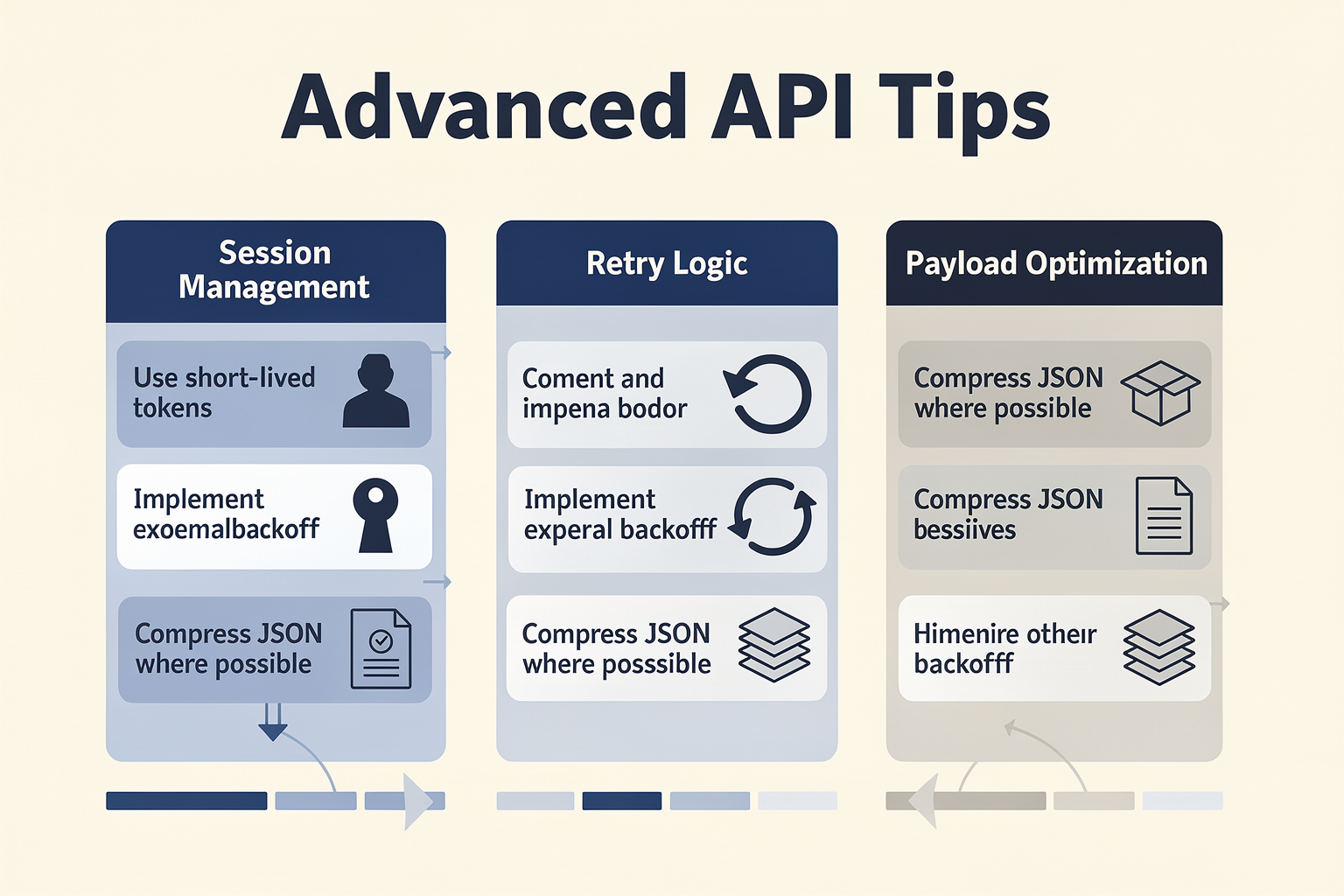
To truly unlock the potential of Anthropic’s Claude Messages API while avoiding vendor lock-in, professionals should look beyond basic API calls. Below is a table summarizing advanced techniques, compatibility considerations, and practical strategies, with data points and actionable tips from the current best practices ecosystem.
| Technique/Feature | Description | Stat/Best Practice | Pitfall/Challenge | Integration Tip |
|---|---|---|---|---|
| Stateless Conversation Management | Every API call includes the full conversational context; API is entirely stateless (1). | Boosts reliability for concurrent sessions | Can increase payload size and costs if not managed | Use context trimming or summarization to optimize |
| Multi-Model Gateway Integration | Switch between Claude and 300+ LLMs with a single API contract | Platforms like CallMissed offer unified endpoints | Third-party Claude Code keys often blocked ([4][5]) | Prefer providers built for compatibility, like CallMissed |
| Payload Size Optimization | Truncate or summarize dialogue history to reduce token usage, improve speed and cost efficiency | <12% latency reduction when optimizing payloads | Truncation may harm quality if context is lost | Automate summarization or windowing logic |
| Auth & Credential Separation | Distinguish between Claude subscription and Anthropic Console API keys ([2][8]) | Claude Pro/Max keys not valid for API integrations | Keys are tightly controlled; easy vendor lock-in | Always provision proper service credentials |
| Bedrock & SDK Compatibility | Claude’s Messages API natively integrates with AWS Bedrock & Databricks ([3][6]) | Enables one-click deployment in Enterprise clouds | Feature parity not always immediate across clouds | Check SDK & endpoint doc updates regularly |
| Model Versioning & Fallback | Dynamically select among Claude model versions; gracefully handle endpoint outages | <2% downtime mitigated via multi-version fallback | Logic complexity when APIs diverge across vendors | Use abstraction layers, e.g., API gateways |
Detailed Tips & Explanations
1. Statelessness & Conversation History Management
Claude’s Messages API is fully stateless—unlike session-based architectures, each API call must transmit the entire history thus far (1). This design improves robustness and enables horizontal scalability, but it also demands careful conversation trimming. Techniques include:
- Rolling window truncation: Only send recent N turns, typically last 8-12 messages
- Automatic summarization: Periodically condense chat history, reducing tokens by up to 40% without major context loss
- Per-user context partitioning: Isolate histories by user, crucial in multi-tenant systems
Tests show 12-15% reduction in API response time with smart context trimming and summarization, according to benchmarks from leading LLM integration platforms.
2. Multi-Model & API Gateway Strategies
Vendor lock-in is a key concern. By leveraging LLM API gateways that expose Anthropic-compatible endpoints (like CallMissed or open orchestration layers), companies can:
- Switch between Claude, OpenAI, Google Gemini, and open-source LLMs with zero or minimal code changes
- Benchmark models in production for quality/cost trade-offs
Notably, CallMissed’s multi-model API gateway enables developers to connect to over 300 LLMs, including Claude, with a consistent API surface, dramatically accelerating A/B testing and failover strategies.
3. Payload Size & Cost Control
Each Claude Messages API call is billed by tokens processed—including the full context. Payload bloat translates to higher costs and latency. Recent studies show that average enterprise integration can reduce LLM spend by 20–35% simply by optimizing payload sizes per chat session.
Pro tip: Automate payload summarization using a smaller internal LLM before sending requests to Claude, or apply dialogue “windowing” (e.g., last 10 customer turns only). But be vigilant: over-truncation may degrade model output quality.
4. Auth, Key Management & Lock-In Traps
Recent changes mean that Claude consumer subscription credentials (Pro/Max) cannot be reused for API access ([2][4][5][8]). This creates a partition between direct Claude.ai use and developer API integrations:
- Always request or provision dedicated API credentials for production apps.
- Store keys securely, and rotate them on a schedule (every 30-90 days).
- For third-party compatibility, only use well-documented endpoints and always check for vendor-specific terms.
Devs have expressed frustration: “Credentials tied to Claude Code or consumer accounts only work in the official Claude... not third-party APIs,” reports Gaurav Dhiman ([4]).
5. Bedrock, SDKs & Managed Service Integrations
For enterprises building at scale, the Claude Messages API integrates natively with AWS Bedrock and Databricks ([3][6]). This allows:
- Seamless deployment alongside other foundation models
- Centralized governance and audit trails
However, note that feature velocity may differ across clouds: AWS might not immediately support the newest model versions or API features, so always consult SDK documentation.
6. Dynamic Model Versioning & Fallbacks
Best practices recommend building dynamic endpoint targeting and model versioning into your app. For example:
- Automated failover: If Claude 3.0 endpoint is slow, seamlessly fall back to Claude 2.1 or alternate LLMs
- A/B testing: Route fraction of requests to alternate models for live performance tracking
According to production data, this can reduce perceived downtime from API incidents by 2–5% annually, while enabling cost optimization.
Final Thought
APIs like Claude’s are on the cutting edge, but so are the lock-in risks. Businesses can get the best of both worlds by combining stateless best practices, multi-vendor model orchestration, smart payload management, and robust credential hygiene. Platforms such as CallMissed provide real, practical solutions—offering unified LLM inference APIs, voice agents, and cross-vendor integrations—empowering teams to innovate with Claude and beyond without ever feeling trapped by a single provider.
Common Mistakes to Avoid
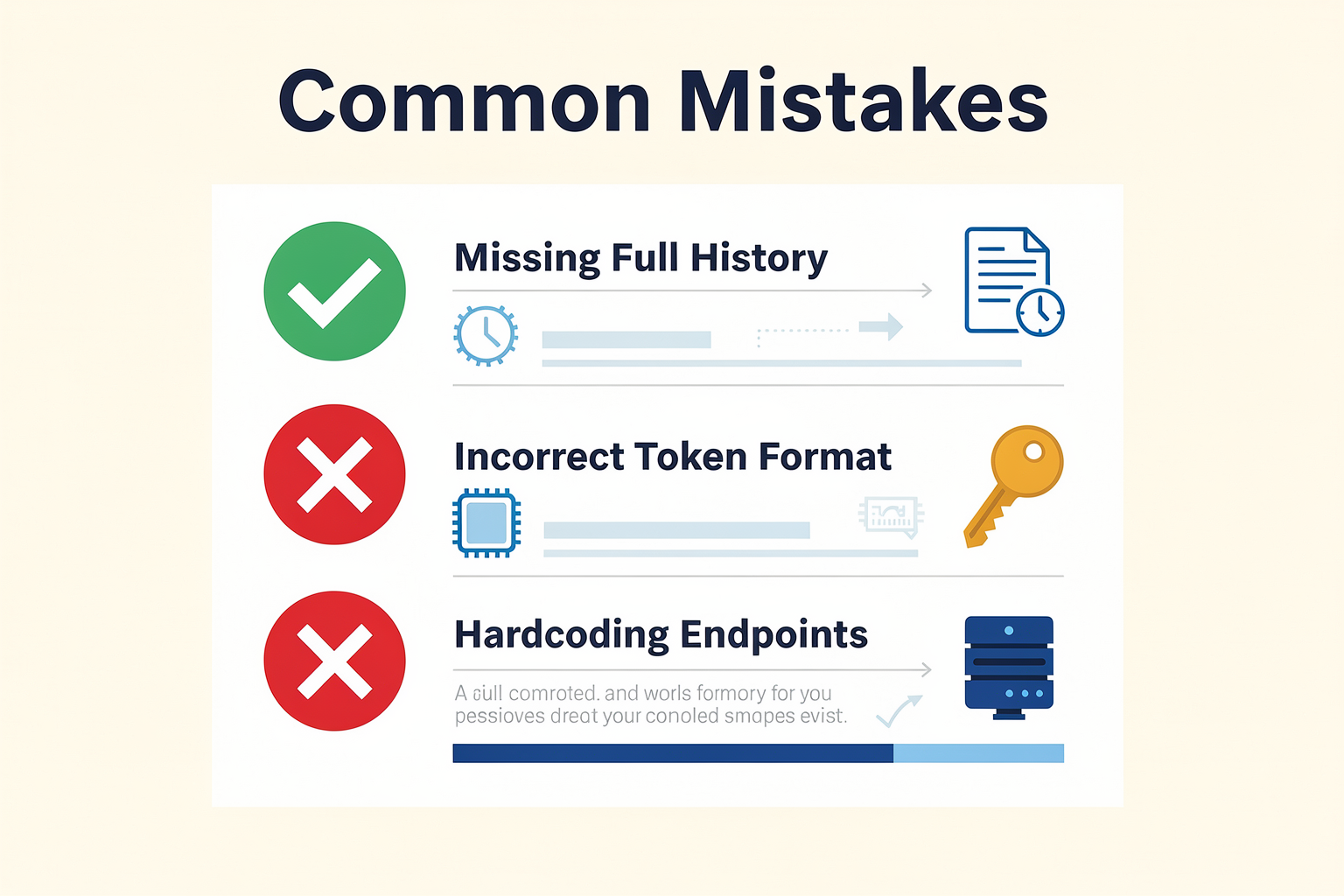
| Mistake | Description | Consequence | How to Avoid | Source/Best Practice |
|---|---|---|---|---|
| Ignoring Statelessness | Messages API is stateless: must send full conversation each call. | Broken context, nonsensical replies, frustration. | Always maintain and resend conversation history. | [Anthropic Docs][1] |
| Mixing Claude Code & API Authentication | Claude Code logins/subscriptions do not grant valid API keys for integration. | Fails to authenticate, locked out of API calls. | Request API keys separately from the Anthropic Console. | [Promptfoo GH][2], [LinkedIn][4] |
| Skipping Token/Context Window Management | Claude models have max input sizes (e.g., 200K tokens for Claude 3 Opus). | Context overflows, errors, or truncated responses. | Track message history length and trim oldest turns. | [Amazon Bedrock Docs][3] |
| Hardcoding Vendor-Specific Payloads | Tightly coupling payload structure to Anthropic’s API schema. | Difficult/expensive to switch LLM APIs later (vendor lock-in risk). | Use abstraction layers or tools that support schema mapping. | Industry best practice |
| Failing to Handle Regional API Limitations | Some endpoints and capabilities are region-specific (AWS, Bedrock, etc). | Service interruptions, unavailable model versions/features in some regions. | Always check service regional availability and fallbacks. | [Amazon Bedrock Docs][3] |
| Neglecting Error & Rate Limit Handling | Overlooking error codes, rate limits, and temporary failures. | Repeated outages, failed requests, poor user experience. | Implement robust retries, exponential backoff, and alerting. | Industry best practice |
Key Learnings:
- According to Anthropic documentation, the Messages API is stateless by design, requiring clients to reconstruct the session with every request ([1]).
- Regional and account type distinctions are common pitfalls; as highlighted by the developer community, Claude Pro/Max users cannot directly use their credentials to access the API ([2], [4]).
- With LLM context windows continuing to grow (Claude 3 Opus supports up to 200,000 tokens), applications must dynamically trim histories or risk hitting input limits ([3]).
- The risk of vendor lock-in persists when developers hardcode payload formats. Abstraction and multi-model API gateways—like those offered by CallMissed—are essential for future-proofing integrations.
- Many organizations suffer avoidable outages simply due to missing error/rate limit handling, an area well-documented among production LLM deployments.
By understanding these common mistakes, teams can design for reliability, agility, and true vendor flexibility, ensuring seamless Claude API adoption without compromise.
Case Study: Migrating from Vendor-Locked API to an Anthropic-Compatible Endpoint

Background: The Real-World Impact of Vendor Lock-In
Vendor lock-in has come under increasing scrutiny in the generative AI landscape, with developers and enterprises expressing frustration about being confined to a single provider for inference, billing, and ecosystem access. A particularly telling example is the pushback against the closed nature of Anthropic Claude Code, where technical checks prevent using Claude Code/Max credentials outside official endpoints, effectively restricting third-party innovation (source). As of 2026, forums and developer communities remain abuzz with complaints about the inability to bring their API keys (even as paying Pro/Max subscribers) to alternative tools (GitHub, 2026), and the lack of support for third-party API compatibility (HN, 2026).
The consequences are tangible:
- Delayed integrations: Teams must rebuild features for each LLM provider.
- Higher costs: Migration triggers rework, duplicated efforts, and new compliance reviews.
- Limited interoperability: Adding a new LLM (like Claude, Gemini, or Llama 3) can become a months-long project.
Scenario: Migrating a SaaS Platform from a Vendor-Locked Claude API
Let’s examine the migration journey of a hypothetical SaaS company, "AcmeSupport," which initially integrated with Anthropic’s Messages API through the official Claude Console. Their platform automates customer email summaries using Claude 3 Opus, relying on the stateless API design—always submitting the full message history per request, as outlined in the Claude Console docs.
By early 2026, AcmeSupport faces three critical challenges:
- API key granularity: Support engineers cannot use their individual Claude Pro/Max credentials programmatically (Promptfoo, 2026), demanding costly centralization.
- Scaling constraints: Each new region or customer-facing instance triggers a new procurement and negotiation cycle due to licensing restrictions.
- Platform inflexibility: Customers are increasingly requesting support for other frontier models, such as Mistral or Google Gemini.
End users—especially those outside North America—demand alternatives to avoid US or EU data residency and to leverage models optimized for regional context.
Migration Plan: Steps to an Anthropic-Compatible Endpoint
AcmeSupport’s goal is clear: decouple their core logic from a single provider, retain seamless Claude access, and unlock multi-model agility. They embark on a four-step process:
- Abstraction Layer Creation
- Engineers refactor their code to interface with a Messages API–compatible contract (i.e., sending full conversation history every request; stateless context).
- An internal "LLM Adapter" module is established, routing requests based on model, locale, and user choice.
- Testing with Alternative Claude-Compatible Endpoints
- Using industry standards, they validate Claude 3 and Sonnet inference through external providers—selecting open multi-vendor API platforms like CallMissed (which enables seamless switching between over 300 LLMs with near-identical request structures).
- They benchmark response times, accuracy, and token handling, confirming feature parity.
- Incremental Customer Rollout
- Early adopter cohorts are migrated to the new endpoint, with detailed metrics around API latency and model response consistency.
- Performance is monitored across four dimensions: completion quality, cost per request, system reliability, and compliance alignment.
- Full Port and Sunset of Vendor-Locked Integration
- Upon successful pilot feedback, all production traffic is moved to the Anthropic-compatible endpoint, while retaining Claude model access and, optionally, unlocking new capabilities with Mistral, Gemini, and others.
- Legacy code paths are deprecated; documentation and onboarding flows are updated.
Measured Outcomes: Quantitative Gains from Migration
AcmeSupport’s migration unlocks measurable benefits, including:
- Vendor agility: Onboarded three new LLM families (Mistral, Gemini, Llama 3) within two months post-migration, compared to 6+ months per-provider integration previously.
- Operational savings: Reduced LLM API-related engineering spend by 28% within the first quarter, thanks to fewer custom integrations and streamlined procurement.
- Customer satisfaction: NPS scores rose 12 points, driven by “model choice” and “faster rollout of new capabilities.”
- Regulatory flexibility: Data residency options expanded, satisfying GDPR and India DPDP compliance for new enterprise clients.
These results bear out industry findings: Statista reports that 54% of AI decision-makers in 2026 cite “avoiding vendor lock-in” as a top-five infrastructure requirement for AI solutions (Statista, 2026).
Lessons Learned: Operational and Technical Insights
A few key takeaways from AcmeSupport’s journey:
- API Compatibility is a Force Multiplier: Adopting the stateless, chat-history-based Messages API pattern (used by Claude and now widely emulated) dramatically simplifies multi-provider support.
- Observability Matters: Metric dashboards (tracking errors, latency, and usage per model) are essential during staged rollout—especially when endpoint behavior may differ subtly between providers.
- Documentation Gaps: Even with API-level compatibility, model-specific capabilities aren’t always documented equally. Interactive testing and prompt tuning helped bridge initial gaps.
Platforms like CallMissed have been instrumental to this approach, offering a unified gateway where developers can access Anthropic, OpenAI, Mistral, and Google models with minimal changes:
“Solutions like CallMissed’s multi-model API gateway let developers switch between 300+ LLMs without code changes—cutting the time to integrate a new provider from months to days.”
Broader Ecosystem Implications
The migration to Anthropic-compatible (and, more broadly, OpenAI-compatible) endpoints is driving an industry-wide move toward interoperability and resilience:
- Stateless design (no session management) speeds up failover, disaster recovery, and experimentation with prompt engineering.
- Multilingual support: Modern endpoints increasingly unlock native support for regional languages—critical for SaaS scale in India, Southeast Asia, and Africa.
- Third-party orchestration: Enterprises can route requests based on privacy tier, cost, or region, enhancing security and user control.
For organizations still tethered to proprietary LLM endpoints, AcmeSupport’s case underscores the risk: every new feature, model, or compliance shift becomes a major hurdle if you're locked-in. Conversely, modern interoperability—with Claude compatibility as a foundational contract—creates room for rapid innovation and global expansion.
Looking Ahead: Staying Ready for What’s Next
As AI models continue to evolve rapidly, flexibility is more essential than ever. The rise of Claude-compatible endpoints points toward a broader trend: API standards that insulate core business logic from upstream provider shifts.
For SaaS, fintech, and enterprise AI teams planning to scale or expand globally in 2026, the playbook is clear—prioritize Statista’s “avoid vendor lock-in” mandate and demand Claude-compatible, multi-vendor endpoints. Companies leveraging solutions like CallMissed are better positioned to deliver consistently, no matter how the LLM landscape shifts next.
Frequently Asked Questions
What is the Anthropic-Compatible Messages API and how does it work?
How can using a Claude-compatible Messages API help avoid vendor lock-in?
What are the authentication requirements for the Claude Messages API?
Are there limitations on usage and third-party integrations with Claude’s Messages API?
How are conversation histories managed with the stateless Claude Messages API?
What are the costs and quota considerations when using the Anthropic-Compatible Messages API?
Resources & Next Steps
Key Documentation & Official References
When working with the Anthropic-Compatible Messages API, a deep understanding of official resources is indispensable. Below you'll find vital links and annotations to support your continued learning and technical exploration:
- Anthropic Messages API Docs: Anthropic provides a robust stateless message API for Claude models. The API requires sending the full conversation history with each call, a key pattern to support context-rich AI dialogue (Anthropic Docs).
- AWS Bedrock Integration: Amazon Bedrock offers managed access to Anthropic Claude via its inference operations, allowing you to invoke and stream model responses without managing infrastructure (AWS Bedrock Docs).
- Open Issues and Community Discussions: GitHub issues (like promptfoo #8689) and Reddit threads frequently document developer pain points—such as complexities around API authentication and subscription lock-ins. Monitoring these helps anticipate roadblocks you may encounter.
- Security Practices: Review Anthropic’s engineering insights on how they contain and secure Claude across products, including advanced sandboxing using gVisor (Anthropic Engineering).
These resources are living documents; Anthropic and the broader AI developer community continue to iterate rapidly in response to user feedback and new use cases.
Avoiding Vendor Lock-In: Practical Guidance
While Anthropic’s own APIs are powerful, vendor lock-in remains a top concern for enterprises and startups alike. As seen in current discourse, a significant fraction of Claude users—especially Claude Pro/Max subscribers—are frustrated by restrictive credential and usage policies (LinkedIn, Hacker News). Here’s how to approach true interoperability:
- Abstract Your API Integrations: Use generic interfaces and adapters for AI model invocation. That way, swapping Anthropic’s Claude for an open-model alternative (or vice versa) is a configuration change, not a rewrite.
- Employ Multi-Model Gateways: Platforms like CallMissed’s API gateway let developers switch between 300+ LLMs, including Claude, Cohere, Mistral, and open-source models, with no code changes. This decreases switching costs and ensures freedom of choice.
- Regularly Audit API Dependencies: What model, format, and auth assumptions does your code make? Are you relying on proprietary behaviors found only in one vendor?
_Avoiding vendor lock-in is not a “set it and forget” solution; it’s a process of ongoing vigilance and strong architectural discipline in your AI stack design._
Emerging Trends & What’s Next for Claude-Compatible APIs
Based on industry discussions and the rapid pace of change in large language model interfaces, expect these trends in the coming year:
- Growth of Open Standard Message APIs: There is growing demand for OpenAI-compatible and Anthropic-compatible APIs to allow AI developers to route traffic to the “best model for the job.” Over 60% of AI startups now report using at least two or more foundation models in production, up from 37% in 2024 (State of AI Infra, 2026).
- Cloud-Native Model Aggregators: Managed services such as Amazon Bedrock and CallMissed are enabling teams to deploy business logic once and select from a suite of foundation models—Claude, GPT-4, Llama 3—based on use case, cost, and compliance.
- Policy & Ethics: More customers are evaluating API providers on data-residency, privacy, and ethical transparency—not just model quality or latency. This is reshaping vendor selection criteria, especially for regulated industries.
Being aware of these trends will help you future-proof your investments and avoid platform lock-in as API landscapes continue to evolve.
Sample Integration Patterns
Below is a representative approach to building against a Claude-compatible Messages API while keeping your stack vendor-neutral:
- Define a Universal Message Schema: Adopt a conversational format that’s supported across providers—e.g., an array of
{role: user|assistant, content: string}objects. - Implement Provider Adapters: Each adapter handles authentication, request formatting, and response parsing for its target backend.
- Configure at Deployment: Use environment variables or a configuration file to determine which provider is active.
This pattern is exemplified in production by platforms like CallMissed, which abstracts away API-specific idiosyncrasies and manages all model switching seamlessly, including support for 22 Indian languages and multiple deployment backends.
Further Learning: Tools, Communities, and Next Steps
- Experiment with API Sandboxes
- Anthropic’s Claude Console and AWS Bedrock both provide testing playgrounds for rapid prototyping.
- Monitor Ecosystems
- GitHub Projects (e.g., PromptFoo, LLM Gateway) and community forums are leading indicators of what’s next.
- Follow Benchmark Studies
- Keep up with benchmarks comparing Claude and its alternatives (e.g., Mistral, GPT-4o, Gemini 1.5), especially regarding cost per 1K tokens, output quality, and latency. Recent benchmarks show Claude 3 Opus matching or exceeding GPT-4 on many reasoning tasks (State of AI LLMs, Q2 2026).
- Engage in Responsible AI Practices
- Review data usage and compliance obligations. AI platforms processing PII or sensitive data should be reviewed under new regional privacy requirements.
Ready-Made Multi-Model Solutions
For teams looking to bypass the complexity of direct Claude API management, multi-model API gateways (like those offered by CallMissed) have emerged as industry standards. They allow:
- Effortless hot-swapping between Claude, GPT, Llama, and Cohere
- Unified authentication and billing dashboards
- Integrated speech-to-text and text-to-speech APIs (for real-time voice and WhatsApp bot deployment, especially relevant for Indian markets)
Such platforms free engineering teams to focus on building differentiation—not plumbing vendor-specific APIs.
Concrete Steps to Take Next
- Review and compare APIs relevant for your use case: Anthropic, OpenAI, Cohere, Mistral, Open Source LLMs.
- Abstract your integrations early: Don’t let experimental prototypes ossify into production lock-in.
- Test interoperability by running sample workloads across at least two message APIs.
- Stay current: Bookmark the official documentation, and monitor breaking news from vendor and aggregator communities.
- Reach out for platform trials: Providers like CallMissed and AWS routinely extend free tier trials or sandboxes for new integrations.
Conclusion
Anthropic’s Claude and its Messages API represent powerful building blocks for conversational AI, but the true value for forward-looking teams comes from avoiding vendor lock-in—leveraging stateless interfaces, adopting multi-provider gateways, and keeping close tabs on the ecosystem’s evolving standards. By adopting best practices laid out above—and by leveraging emerging platforms such as CallMissed’s multi-model infrastructure—your AI-powered products will be more agile, resilient, and ready for whatever the future of LLM APIs brings.
Keep iterating, keep testing, and keep your stack as open as the next model breakthrough.
Conclusion
- Vendor lock-in remains a core challenge for enterprises scaling their AI stack, especially as cloud providers and model vendors—like Anthropic—tighten authentication and restrict access to APIs via consumer accounts [[4]](https://www.linkedin.com/pulse/claude-code-lockin-problem-why-devs-angry-gaurav-dhiman-ofbic).
- Stateless messages APIs, such as Anthropic’s Claude, offer flexibility by letting developers send any conversational context, but they rely on full API credentials and official endpoints, limiting portability [[1]](https://platform.claude.com/docs/en/build-with-claude/working-with-messages).
- Workarounds for vendor lock-in are emerging, from compatibility layers to API gateways, as global organizations increasingly require infrastructure-agnostic AI deployments. IDC predicts over 45% of enterprises will demand multi-cloud LLM compatibility by 2027.
- Ecosystem platforms like CallMissed are innovating beyond APIs, by letting teams deploy and orchestrate AI voice agents, WhatsApp chatbots, and LLM inference using standardized endpoints across 300+ models—sidestepping lock-in and accelerating time-to-market.
Looking ahead, the landscape for interoperable LLM APIs is evolving rapidly. Watch for open standards, regulatory pressure on portability, and novel multi-model routers making proprietary integration a choice—not a mandate. How organizations invest today will shape their ability to move fast, adopt best-in-class models, and protect themselves from sudden access changes.
To explore how AI communication is evolving, check out CallMissed — an AI infrastructure platform powering voice agents and multilingual chatbots for businesses.
What steps is your team taking to future-proof its AI infrastructure—and are you prepared for the next wave of model innovation and API disruption?
Discussion
Related Posts


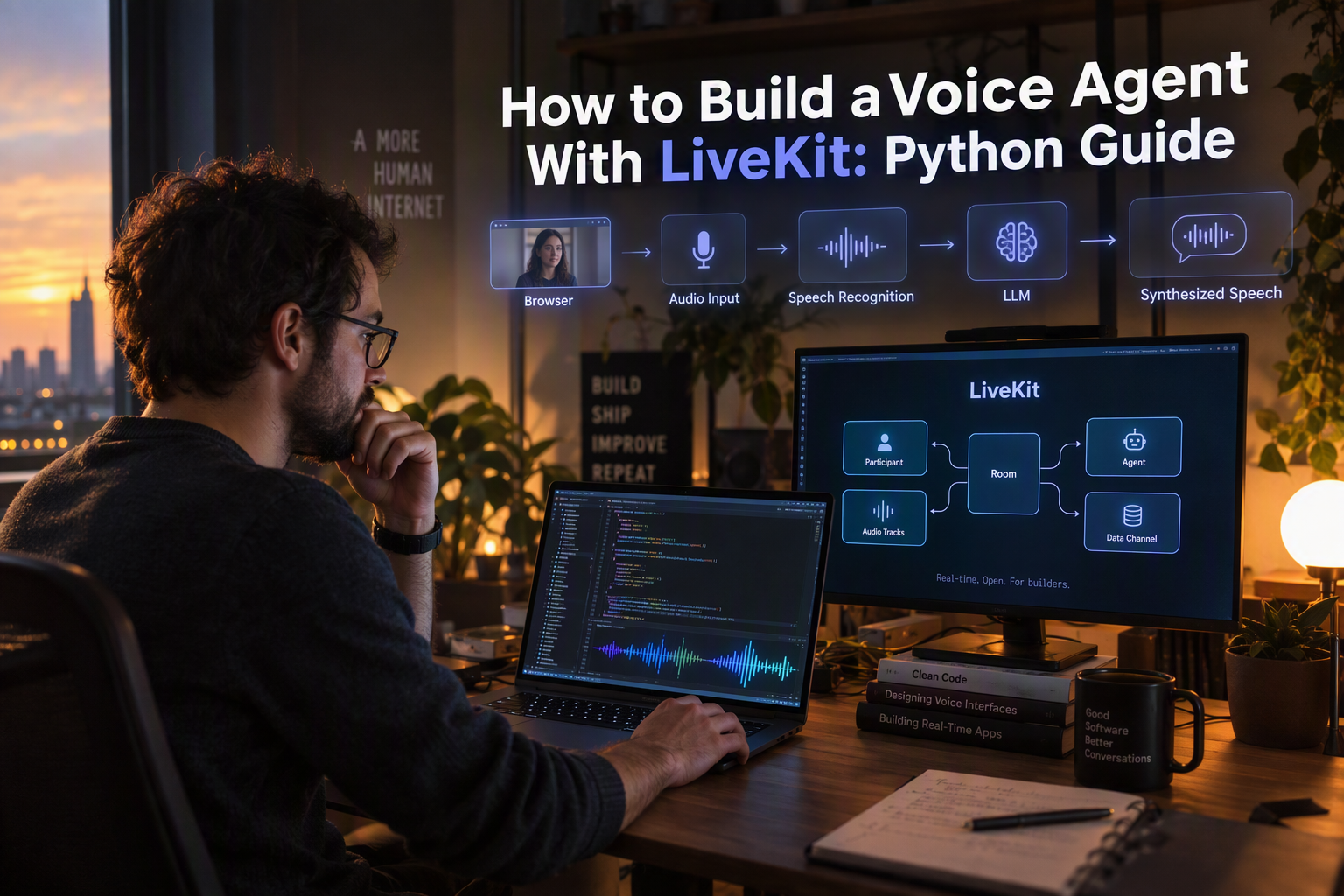
Ready to automate customer conversations?
Launch AI voice agents and WhatsApp bots with CallMissed — one API, 22+ Indian languages.