

Anthropic Introduces Claude Sonnet 5 & Claude Science: The Dawn of Agentic AI



Explore Anthropic's groundbreaking release of Claude Sonnet 5 (Fennec) and Claude Science. Learn how 5,000-line code generation and automated research are reshaping tech.
Anthropic Introduces Claude Sonnet 5 & Claude Science: The Dawn of Agentic AI
What if an artificial intelligence could autonomously write over 5,000 lines of production-ready code from a single prompt, navigate complex research pipelines, and execute multi-step tools without human intervention? On February 3, 2026, Anthropic turned this ambitious vision into reality with the launch of Claude Sonnet 5 (developed under the internal codename “Fennec”) and Claude Science. This release represents a monumental shift in the artificial intelligence landscape: we are officially transitioning from the era of conversational chatbots to the dawn of true agentic AI.
This launch is sending shockwaves through the global tech community, and the data explains why. Claude Sonnet 5 is engineered as a hybrid reasoning model that delivers lightning-fast, highly capable intelligence optimized for real-time agents and high-volume enterprise operations, all backed by a massive 1-million-token context window. The performance leap is staggering. According to Anthropic's internal benchmarks, developers preferred Sonnet 5 over the previous Sonnet 4.6 in Claude Code roughly 82% of the time, citing a dramatic reduction in hallucinated libraries and a vastly superior ability to maintain logical consistency over long-horizon tasks. Meanwhile, Claude Science introduces groundbreaking capabilities in research automation, allowing autonomous systems to handle complex scientific data synthesis and tool utilization with unprecedented precision.
For businesses and developers, this technological leap changes everything. It means engineering teams can now automate entire software development lifecycles, and researchers can accelerate discovery cycles at a fraction of the historical cost. As these sophisticated reasoning models become the new standard, communication infrastructure is also rapidly evolving; platforms like CallMissed are already enabling businesses to harness this agentic power, allowing organizations to deploy highly context-aware voice agents and WhatsApp chatbots that can resolve complex, multi-step customer workflows autonomously.
In this article, we will go under the hood of Anthropic's latest breakthroughs. You will learn about the key features of Claude Sonnet 5 and Claude Science, explore the jaw-dropping benchmarks that have the developer community buzzing, and understand how to leverage these next-generation agentic workflows to supercharge your business automation.
Introduction: Anthropic's Giant Leap with Claude Sonnet 5 and Claude Science

On February 3, 2026, the landscape of artificial intelligence underwent a fundamental paradigm shift. With the official launch of Claude Sonnet 5 (developed under the internal codename "Fennec") and Claude Science, Anthropic has bypassed the incremental updates of the past to deliver a true masterclass in agentic AI. We are no longer merely discussing conversational chatbots that answer queries; we have entered the era of autonomous, multi-step digital workers capable of managing complex, long-horizon workflows with minimal human oversight.
The global developer and enterprise communities are experiencing a massive shakeup, and the raw performance metrics explain why. Built as a state-of-the-art hybrid reasoning model, Claude Sonnet 5 represents a massive leap in processing capacity, sporting a massive 1-million-token context window. This allows the model to digest entire codebases, complex scientific papers, and vast corporate databases simultaneously.
Redefining the Developer Experience
The real-world implications for software engineering are nothing short of revolutionary. During its beta testing and early deployment phases, Claude Sonnet 5 demonstrated an unprecedented ability to generate over 5,000 lines of production-ready code from a single, well-structured prompt.
Furthermore, Anthropic’s internal benchmark data highlights a profound shift in developer satisfaction:
- 82% Preference Rate: Developers preferred Sonnet 5 over the previous Sonnet 4.6 version within Claude Code roughly 82% of the time.
- Drastic Hallucination Reduction: Software engineers reported a steep decline in hallucinated libraries, syntax errors, and broken dependencies.
- Long-Horizon Consistency: The model maintains logical consistency over massive, multi-file code generation tasks, successfully executing complex tool integrations without breaking existing architecture.
The Dawn of Science and Voice Automation
Parallel to the software breakthrough is the introduction of Claude Science, a specialized system engineered to automate scientific data synthesis and tool utilization. By pairing high-velocity reasoning with rigorous verification, Claude Science allows R&D teams to automate complex research pipelines, parsing through thousands of academic papers to extract actionable insights in seconds.
As these reasoning models become highly accessible, they are transforming how enterprises handle customer interactions. True automation requires a bridge between advanced LLMs and real-world communication channels. This is where cutting-edge infrastructure platforms like CallMissed come into play. By integrating state-of-the-art models like Claude Sonnet 5, CallMissed enables businesses to deploy ultra-responsive AI voice agents and WhatsApp chatbots. These agents can seamlessly leverage Sonnet 5's tool-use capabilities to resolve complex, multi-step customer inquiries in real time—supporting businesses in multiple regional languages natively and efficiently.
In this deep-dive article, we will go under the hood of Anthropic's dual release. We will analyze the core architecture of the Fennec model, unpack the staggering benchmarks that have rewritten industry standards, and explore how your organization can deploy these agentic workflows to achieve unprecedented operational scale.
Background & Context: The Evolution of Anthropic's Fennec Model
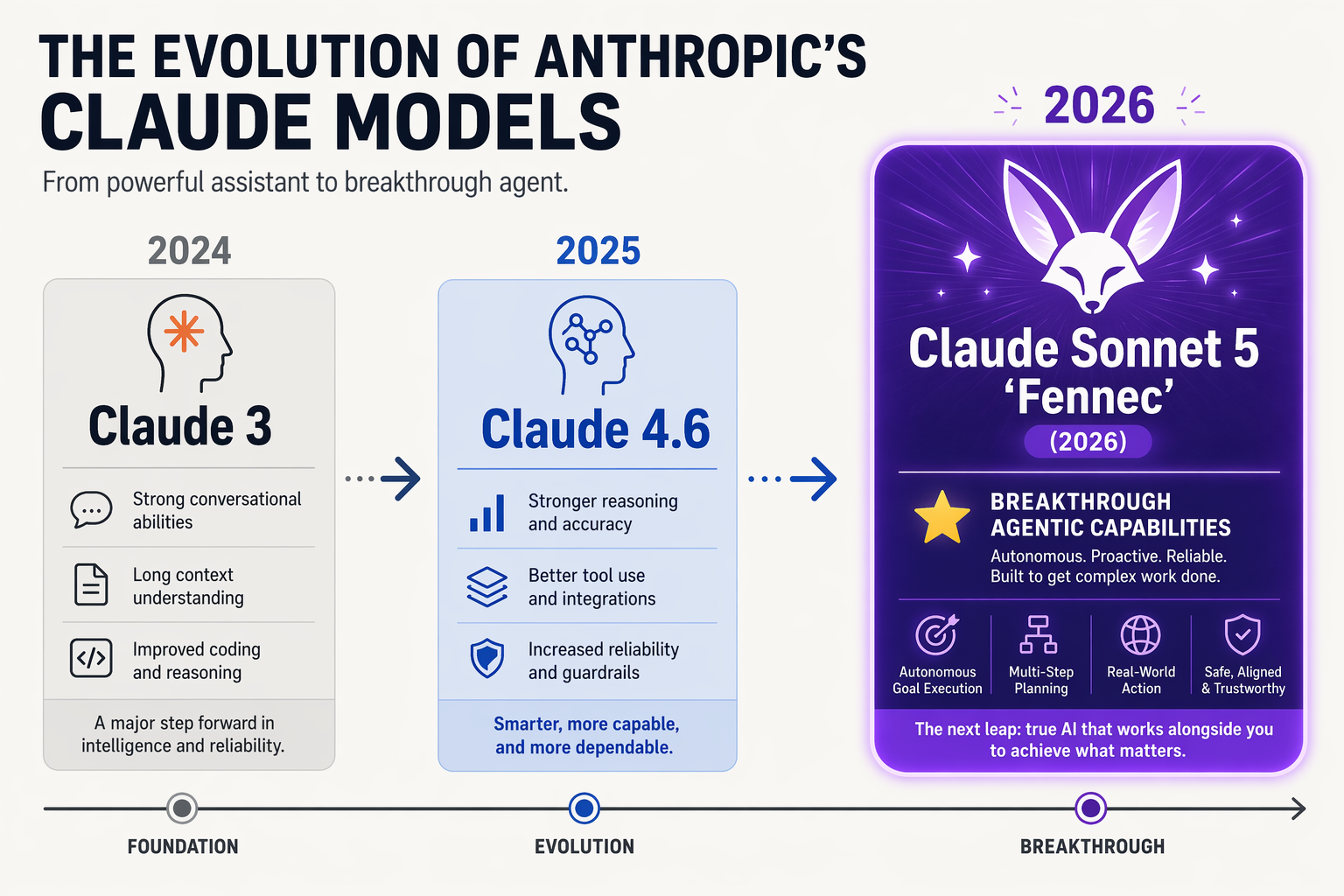
From Conversational Assistants to Agentic Autonomy
The road to Claude Sonnet 5 represents a deliberate, architectural pivot by Anthropic. In the earlier chapters of generative AI, large language models (LLMs) were predominantly evaluated on their "chatbot" capabilities—how fluidly they could converse, summarize documents, or answer trivia. However, as enterprise demands shifted from basic text generation to complex workflow automation, the limitations of these chat-first models became glaringly obvious.
Prior to the February 3, 2026 launch of Sonnet 5, Anthropic’s flagship offering in this tier was Claude Sonnet 4.6. While Sonnet 4.6 was widely praised for its state-of-the-art coding capabilities and tool use, it still operated within a traditional, turn-based framework. Developers attempting to build long-horizon, autonomous agents frequently ran into bottlenecks. Models would lose track of the broader objective during multi-step executions, hallucinate library dependencies, or fail to self-correct when code compilation failed. The industry needed a model specifically designed to act, rather than just respond.
The "Fennec" Philosophy: Speed, Precision, and Agility
Developed under the internal codename "Fennec", Claude Sonnet 5 was engineered from the ground up to solve these exact constraints. In nature, the fennec fox is celebrated for its incredible agility, highly developed senses, and ability to thrive in harsh, dynamic environments. This is the exact blueprint Anthropic adopted for Sonnet 5.
Rather than simply scaling up parameter size—which often introduces prohibitive latency and cost—Anthropic focused on a hybrid reasoning model architecture. This approach optimizes the model for:
- High-Volume Operations: Handling massive throughput without degrading response times.
- Real-Time Agentic Workflows: Actively observing, planning, and executing sequential tool calls with a high degree of precision.
- State Tracking over 1M Tokens: Maintaining strict logical consistency across a massive 1-million-token context window.
This evolution is particularly critical for modern communication infrastructure. For instance, platforms like CallMissed allow developers to tap into over 300+ LLMs via a unified API gateway. Integrating a highly optimized, low-latency agentic model like Sonnet 5 means businesses can now power incredibly sophisticated, multi-turn AI voice agents and WhatsApp chatbots. These agents don't just follow static decision trees; they can dynamically query database APIs, update customer records, and resolve intricate service requests in real-time.
Aligning Safety with Autonomous Capability
Historically, Anthropic has anchored its brand on building "helpful, honest, and harmless" AI systems. Transitioning to autonomous, agentic AI presented a unique challenge: how do you maintain strict alignment and safety when an AI is executing thousands of lines of code and calling external APIs autonomously?
With the "Fennec" model, Anthropic successfully scaled its constitutional safety guardrails to match its agentic capabilities. Sonnet 5 doesn't just execute instructions faster; it continuously evaluates its own outputs against safety protocols, ensuring that autonomous tool usage remains secure and predictable. This structural evolution marks the transition of the Claude ecosystem from a highly capable coding assistant into an active, trusted partner in enterprise automation.
Key Developments: Claude Sonnet 5 vs. Previous Models (TABLE)
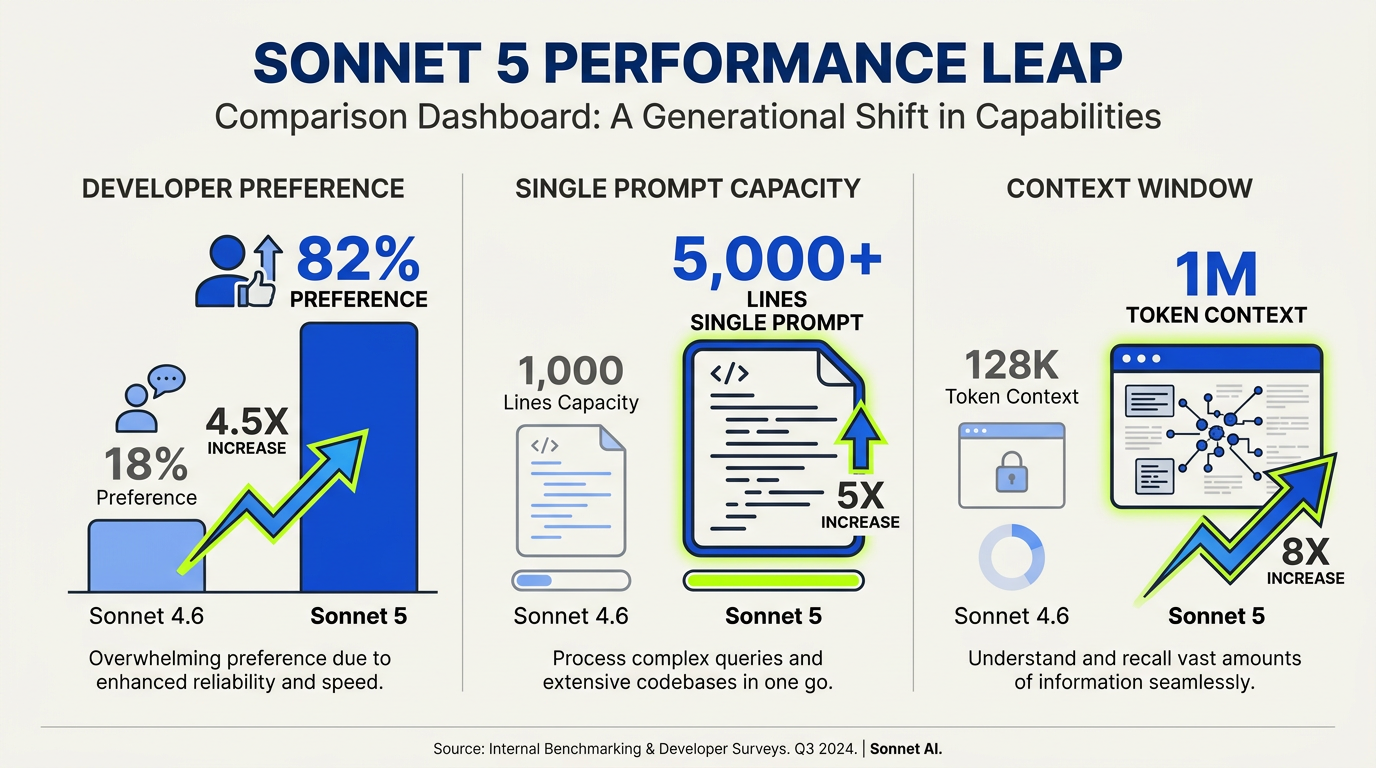
Evolution of the Sonnet Lineage: A Generational Leap
To fully appreciate the architectural triumph of Claude Sonnet 5 (codenamed "Fennec"), it is essential to compare it directly to its predecessors. While previous iterations focused primarily on improving conversational fluency, reducing latency, and expanding basic reasoning capabilities, Sonnet 5 has been engineered from the ground up as a hybrid reasoning engine. It is specifically optimized to power real-time agentic workflows, execute complex tool calls, and manage multi-step, long-horizon tasks without losing context or logical consistency.
The performance metrics and architectural specifications highlight a massive divergence from earlier models. While Claude 3.5 and 4.6 laid the groundwork for developer-centric tools, Sonnet 5 introduces a massive 1-million-token context window alongside highly specialized, low-hallucination code generation. In internal evaluations, this dramatic shift resulted in developers preferring Sonnet 5 over Sonnet 4.6 in Claude Code approximately 82% of the time. Developers specifically noted a substantial decline in hallucinated libraries and a vastly superior ability to maintain codebase architecture over highly complex projects.
| Model / Metric | Claude 3.5 Sonnet | Claude Sonnet 4.6 | Claude Sonnet 5 (Fennec) |
|---|---|---|---|
| Release Date | Mid-2024 | Late 2024 / 2025 | February 3, 2026 |
| Context Window | 200,000 tokens | 200,000 tokens | 1,000,000 tokens |
| Primary Design Focus | General intelligence & logic | Developer tools & speed | Agentic workflows & hybrid reasoning |
| Code Generation Limit | ~1,000 lines of code | ~2,500 lines of code | 5,000+ lines (Production-Ready) |
| Dev Preference (Claude Code) | Baseline | Refined Baseline | 82% preferred over v4.6 |
Key Architectural Enhancements in Claude Sonnet 5
- Massive State Preservation (1M Context Window):
While previous versions maxed out at 200k tokens, the new 1-million-token context window allows businesses to feed entire software repositories, complete financial quarters, or extensive scientific datasets directly into the model. This eliminates the need for aggressive vector-search chunking, allowing the agent to maintain absolute coherence across massive data structures.
- From Completion to Execution:
Older Sonnet models acted primarily as highly advanced text predictors. Sonnet 5 acts as an executor. It is designed to run in loops, interact with terminal environments (via tools like Claude Code), debug its own outputs, and autonomously interact with APIs.
- Multi-Model Orchestration and Integration:
As enterprises rush to build production-grade systems around these new reasoning models, the need for robust, flexible AI infrastructure is skyrocketing. For instance, platforms like CallMissed make it seamless for organizations to orchestrate these state-of-the-art models. By leveraging CallMissed's multi-model API gateway—which supports over 300 LLMs—developers can easily route complex reasoning tasks to Claude Sonnet 5 while handling real-time customer voice and chat interactions natively in 22 regional Indian languages. This hybrid approach ensures that the reasoning power of Sonnet 5 can be translated into real-world, localized actions.
In-Depth Analysis: 5,000 Lines of Code and Agentic Workflows

Redefining Software Engineering: The 5,000-Line Milestone
Historically, large language models have suffered from "context drift" or logic degradation when generating files longer than a few hundred lines. Developers frequently spent more time refactoring broken imports and debugging hallucinated functions than they saved by using AI. Claude Sonnet 5 fundamentally shifts this dynamic.
During pre-release testing and early developer leaks, engineers observed Sonnet 5 autonomously writing over 5,000 lines of syntactically correct, modular, and fully integrated code from a single high-level prompt. This breakthrough is driven by three core architectural features:
- 1-Million-Token Context Window: This massive memory space allows the model to hold entire repositories, complex dependency trees, and legacy system-level documentation in active memory simultaneously.
- Drastic Reduction in Hallucinations: In early developer benchmarks, engineers preferred Sonnet 5 over Sonnet 4.6 in Claude Code roughly 82% of the time. The overwhelming reason cited was the near-total elimination of hallucinated library functions, deprecated APIs, and logical contradictions in long-horizon outputs.
- Hybrid Reasoning Architecture: Unlike standard models that predict the next token purely sequentially, the "Fennec" architecture utilizes a hybrid reasoning mechanism. It pre-plans overall code structures, maps out system architecture interfaces, and drafts individual components in a logically sequenced order before generating the final code blocks.
Orchestrating Long-Horizon Agentic Workflows
True agentic AI is defined by its ability to execute and self-correct over extended, multi-step workflows. Claude Sonnet 5 does not just write code; it operates as an active, autonomous collaborator that can manage complex engineering pipelines from end to end.
An enterprise software agent powered by Sonnet 5 can handle a complete, closed-loop development cycle:
- Deconstruct & Plan: Analyze a user-submitted bug report or feature request and outline a detailed, multi-step implementation plan.
- Tool Utilization: Autonomously call APIs, read local directory structures, and execute terminal commands in a sandboxed environment to gather necessary runtime context.
- Draft & Iteration: Write the required source code, compile it, and write custom test suites to verify functionality.
- Self-Correction: Run unit tests, capture errors from the compiler or runtime logs, and systematically debug its own code until all tests pass.
This shift from static generation to autonomous execution is reshaping how organizations scale their technical operations. To bring these advanced reasoning loops to real-world applications, developers are leveraging platforms like CallMissed. By utilizing CallMissed's multi-model API gateway, businesses can seamlessly feed raw user inputs from voice calls or WhatsApp chats directly into Sonnet 5-driven agents. This enables autonomous systems to diagnose technical account issues, execute back-end database scripts, and resolve complex workflows in real time without human intervention.
Impact & Implications: How Claude Science Redefines Research
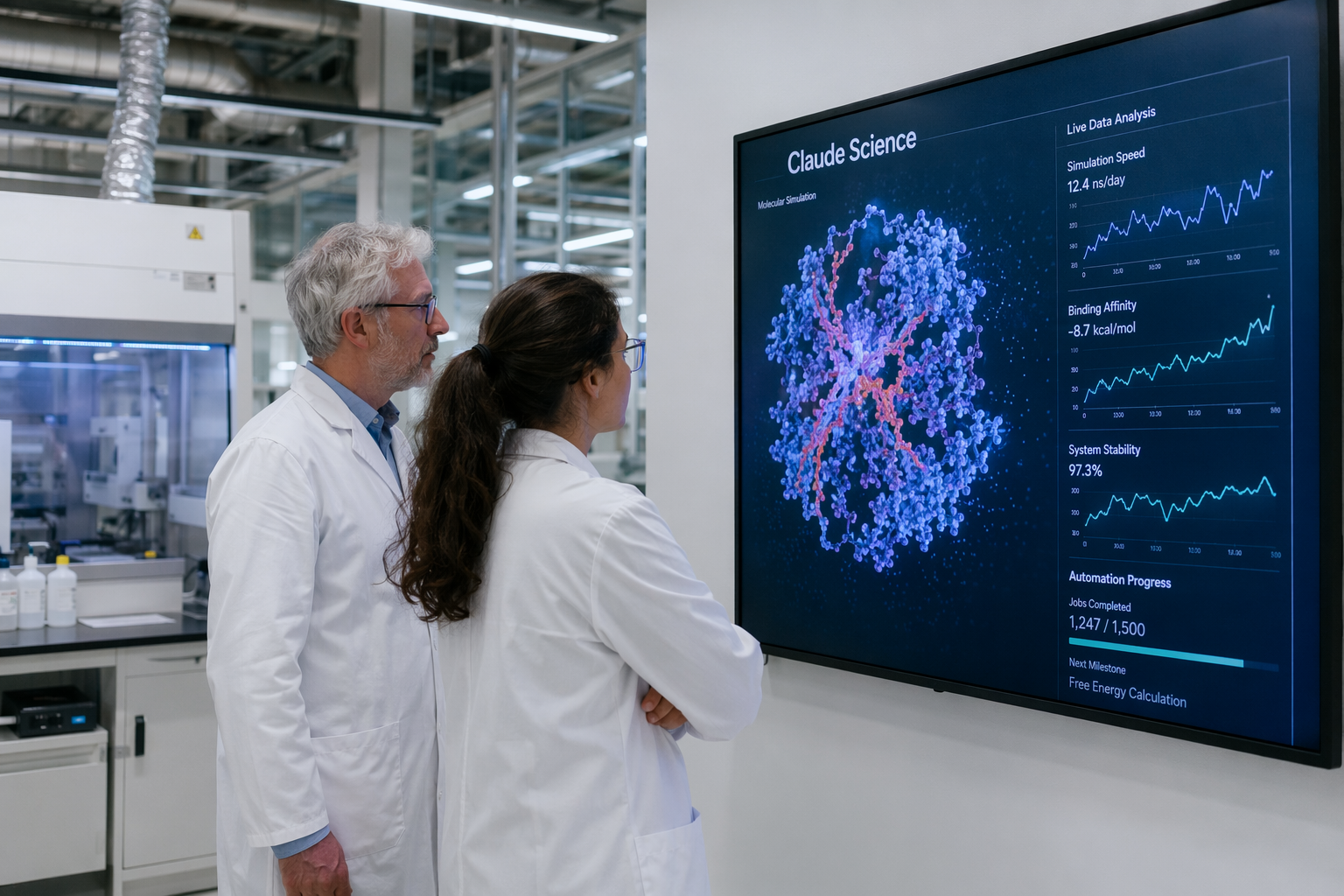
From Data Synthesis to Autonomous Hypothesis Testing
The launch of Claude Science alongside Sonnet 5 marks a profound shift in how humanity approaches complex research. Historically, the scientific method has been bottle-necked by the sheer volume of human hours required to review literature, synthesize disparate datasets, and run preliminary simulations. Claude Science dismantles this barrier by transforming the AI from a passive knowledge retrieval system into an active, autonomous research partner.
Equipped with a massive 1-million-token context window, Claude Science can ingest entire libraries of academic journals, clinical trial results, or genomic datasets in a single prompt. It does not merely summarize this information; it cross-references methodologies, identifies anomalies across thousands of pages of research, and proposes novel hypotheses. For industries like biotechnology, materials science, and climate modeling, this translates to shrinking literature review timelines from months to minutes.
Executing Multi-Step Research Pipelines
What truly sets Claude Science apart is its advanced capability for long-horizon agentic work and native tool utilization. Unlike standard LLMs that require step-by-step human prompts, Claude Science can orchestrate entire multi-step research workflows independently:
- Autonomous API Integration: The model can query chemical databases, access protein-folding registries, or pull real-time environmental telemetry to feed its analysis.
- Code-Driven Simulations: By writing and executing its own Python scripts, Claude Science can run mathematical simulations, analyze the output, and iteratively debug its own code to refine its results.
- Rigorous Error Reduction: Built on Anthropic's latest reasoning architecture, the model exhibits a dramatic reduction in hallucinations, ensuring that the formulas and data structures it generates are peer-review ready.
By handling the highly repetitive phases of data synthesis and trial formulation, Claude Science frees human researchers to focus on high-level strategic direction and physical verification.
Translating Lab Discoveries into Real-World Action
The ultimate value of scientific discovery lies in its deployment. When breakthrough data is generated in the lab, it must be rapidly communicated to stakeholders, clinical trial participants, and field engineers. This is where advanced AI communication infrastructure becomes essential.
For instance, platforms like CallMissed allow research organizations to bridge the gap between complex AI reasoning and human collaboration. By leveraging CallMissed's robust developer APIs, research institutions can instantly deploy context-aware voice agents and WhatsApp chatbots. If Claude Science identifies a critical trend in clinical trial telemetry, CallMissed's automated agents can proactively contact trial participants, conduct follow-up surveys in 22 regional Indian languages, and feed that structured data back into the Claude Science research loop.
Democratizing High-Impact R&D
Perhaps the most disruptive implication of Claude Science is the democratization of deep research. Historically, only massive pharmaceutical giants or heavily funded academic institutions had the resources to run exhaustive research pipelines.
By lowering the computational and logistical costs of discovery, Anthropic is leveling the playing field. Small biotech startups, independent clean-energy developers, and grassroots agricultural researchers can now leverage the power of a world-class research assistant, accelerating global innovation at an unprecedented scale.
Expert Opinions: What Tech Leaders Say About Sonnet 5
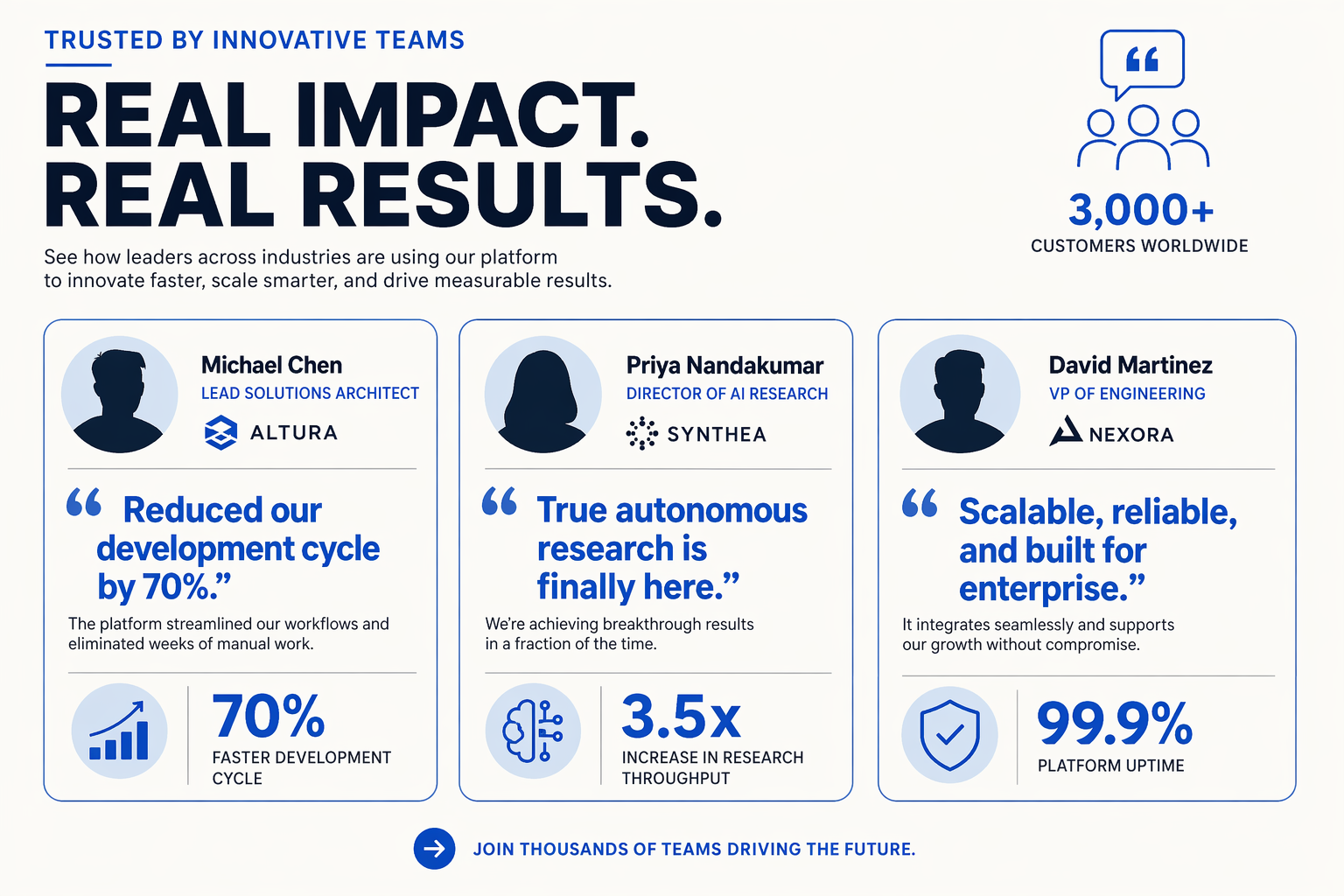
The release of Claude Sonnet 5 (developed under the codename "Fennec") on February 3, 2026, has ignited intense discussion across Silicon Valley and the global developer ecosystem. Tech leaders, enterprise architects, and software engineers are analyzing what this hybrid reasoning engine means for the future of automated workflows. Here is a breakdown of what industry experts are highlighting as the most disruptive aspects of Sonnet 5.
Redefining the Limits of Autonomous Engineering
For software engineering leaders, the most shocking capability is the sheer scale of Sonnet 5's single-prompt generation. Generating over 5,000 lines of production-ready, logical code represents a fundamental shift.
- Fewer Hallucinations, Better Architecture: CTOs are pointing to Anthropic’s internal telemetry showing that developers preferred Sonnet 5 over Sonnet 4.6 in Claude Code roughly 82% of the time. The consensus is that the model doesn't just write more code; it writes correct code, dramatically reducing dependency errors and hallucinated libraries.
- True Long-Horizon Autonomy: Tech leads emphasize that Sonnet 5 behaves less like an autocomplete tool and more like an autonomous staff engineer. It can ingest a massive codebase, map dependencies, and execute multi-step refactoring tasks without human hand-holding.
Bridging the Gap in Enterprise Agentic Workflows
AI researchers and product managers are particularly excited about the model's hybrid reasoning architecture combined with its massive 1-million-token context window.
- Context Without Latency Degradation: Historically, massive context windows suffered from "needle in a haystack" retrieval issues or massive latency spikes. Early enterprise testing shows Sonnet 5 maintains sub-second first-token latency even when processing hundreds of thousands of tokens of corporate documentation.
- Empowering Real-Time Action: Because Sonnet 5 is optimized for real-time agentic execution, experts predict a massive surge in conversational AI maturity. Businesses can now feed entire customer history databases directly into the prompt context to resolve highly personalized, complex queries on the fly.
Seamless Integration into Modern AI Pipelines
The rapid adoption of Sonnet 5 has also highlighted the need for flexible, multi-model infrastructure. Many enterprise architects are advising against locking development into a single provider, suggesting instead a hybrid approach to LLM utilization.
This is where advanced communication platforms are stepping in. Systems like CallMissed allow developers to seamlessly orchestrate these breakthroughs, leveraging a multi-model API gateway with access to over 300+ LLMs. By combining Sonnet 5's deep reasoning capabilities with specialized infrastructure, companies can deploy ultra-low latency voice agents and WhatsApp bots capable of navigating complex, multi-lingual enterprise workflows with ease.
Ultimately, the tech community's verdict on Claude Sonnet 5 is clear: we have officially crossed the chasm from predictive assistants to fully autonomous, execution-focused digital agents.
What This Means For You: Actionable Takeaways for Businesses & Devs (TABLE)
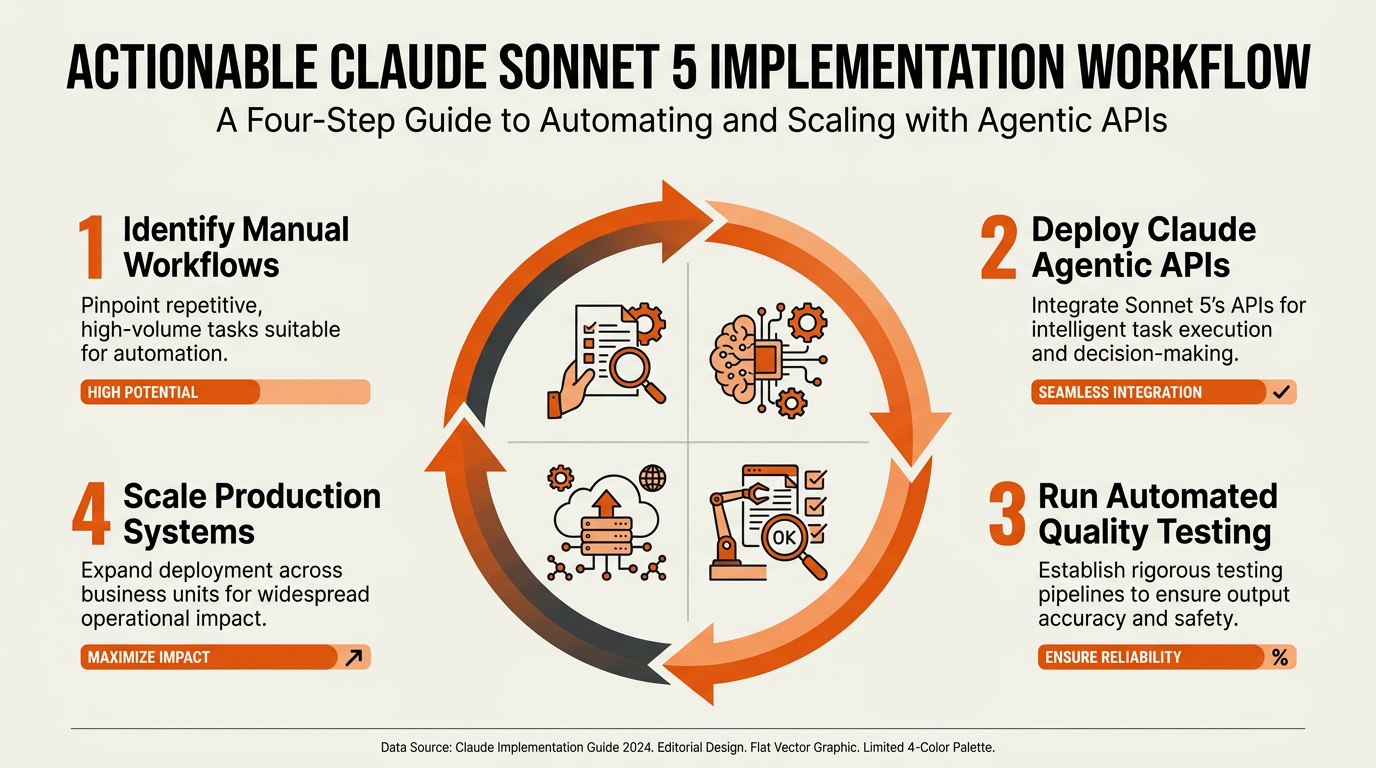
The introduction of Claude Sonnet 5 (Fennec) and Claude Science marks a permanent shift in how software is engineered and how complex research pipelines are constructed. Businesses and developers cannot afford a wait-and-see approach. To remain competitive in this agentic era, organizations must transition from static, conversational chatbots to dynamic, tool-using agents capable of long-horizon execution.
Below is a strategic roadmap designed to help business leaders and development teams immediately capitalize on Anthropic’s new model architecture.
Strategic Implementation Roadmap for Claude Sonnet 5
| Focus Area | Core Action Item | Primary Value Driver | Recommended Metric / Goal |
|---|---|---|---|
| Software Engineering | Migrate legacy codebases to Claude Code using Sonnet 5 for bulk refactoring. | Generates 5,000+ lines of production-ready code in a single prompt; 82% developer preference over Sonnet 4.6. | Reduce software development lifecycle (SDLC) timelines by 40%. |
| Enterprise Search | Ingest complete repository databases and documentation folders into the active context. | Massive 1-million-token context window allows deep contextual analysis without retrieval-augmented generation (RAG) fragmentation. | Achieve zero-shot synthesis across entire codebases. |
| Customer Operations | Deploy agentic customer workflows by integrating Sonnet 5 via communication gateways. | High-speed, real-time hybrid reasoning enables seamless execution of multi-step, transactional tasks. | Achieve 90%+ first-contact resolution (FCR) on complex inquiries. |
| Scientific R&D | Implement Claude Science pipelines to parse, cross-reference, and summarize academic journals. | Automates complex research tasks and scientific data synthesis with robust tool-use accuracy. | Accelerate literature review and data modeling phases by 5x. |
Key Takeaways for Developers: Unlocking Agentic Workflows
For developers, Sonnet 5 is not just another LLM API endpoint; it is an engine designed to act. To get the most out of this update, engineering teams should restructure their development practices around three core pillars:
- Design for Tool-Use (Function Calling): Instead of prompting the model to write isolated code snippets, design environments where Sonnet 5 can actively write, test, and execute scripts in sandboxed environments. The model's drastic reduction in hallucinated libraries makes it highly reliable for automated pipeline management.
- Optimize for the 1M Context Window: Rethink your data ingestion strategies. With a 1-million-token limit, you can feed entire system architectures, dependency graphs, and historical logs directly into a single prompt to solve highly complex debugging issues that previously required complex RAG chunking strategies.
- Implement Multi-Model Routing: Not every task requires a heavy reasoning model. Devs should establish intelligent routing layers. Use lighter, faster models for simple classification and route complex, multi-step agentic tasks to Sonnet 5.
Key Takeaways for Businesses: Scale and Integration
For business leaders, the immediate opportunity lies in operational efficiency and automated customer interactions. By utilizing platforms like CallMissed, businesses can seamlessly bridge the gap between Anthropic’s powerful agentic models and their daily customer-facing touchpoints.
Integrating Sonnet 5’s reasoning capabilities into communication platforms enables organizations to build highly responsive voice agents and WhatsApp chatbots. Rather than just responding with static FAQ answers, these agents can access internal APIs, resolve billing discrepancies, update database records, and guide users through complex workflows autonomously, 24/7. This transition from basic automated replies to true agentic problem-solving represents the next major milestone in customer experience ROI.
Frequently Asked Questions About Claude Sonnet 5 & Claude Science
When was Claude Sonnet 5 officially released and what was its development codename?
How does the performance of Claude Sonnet 5 compare to previous models like Sonnet 4.6?
What is the context window capacity of the new Claude Sonnet 5 model?
Can Claude Sonnet 5 really generate thousands of lines of production-ready code from a single prompt?
What is Claude Science and how does it differ from the standard Sonnet model?
Can I integrate Claude Sonnet 5 with multi-channel communication tools like CallMissed?
Conclusion
The arrival of Claude Sonnet 5 (Fennec) and Claude Science on February 3, 2026, marks the definitive transition from passive chatbots to highly autonomous, agentic AI systems. Businesses and developers must adapt quickly to leverage this massive technological leap.
Here are the key takeaways from this landmark release:
- True Agentic Capability: Models can now execute long-horizon, multi-step tasks, such as generating over 5,000 lines of production-ready code from a single prompt or automating intricate scientific research pipelines.
- Massive 1M Token Context Window: This hybrid reasoning model maintains logical consistency over high-volume enterprise operations and real-time agent workflows.
- Staggering Developer Adoption: Internal benchmarks show developers prefer Sonnet 5 over Sonnet 4.6 in Claude Code 82% of the time, driven by a massive reduction in hallucinated libraries.
Moving forward, watch for how rapid integration of these advanced reasoning models will redefine customer-facing automation and backend software engineering. Organizations that integrate these cognitive architectures into their infrastructure today will lead the next wave of digital transformation.
To explore how AI communication is evolving alongside these reasoning breakthroughs, check out CallMissed—an AI communication infrastructure platform powering next-generation voice agents and multilingual chatbots for forward-thinking businesses. Are you ready to transition your operations from conversational assistants to fully autonomous agents?
Related Posts
Ready to automate customer conversations?
Launch AI voice agents and WhatsApp bots with CallMissed — one API, 22+ Indian languages.