
AI in Recruitment: Resume Screening Done Right


Did you know that in 2025, Deloitte India revealed over 80% of their initial resume screenings are now conducted by AI tools? In an era where a single...
AI in Recruitment: Resume Screening Done Right
Did you know that in 2025, Deloitte India revealed over 80% of their initial resume screenings are now conducted by AI tools? In an era where a single corporate job posting can attract thousands of applicants, traditional manual resume review simply can't keep up. As digital transformation accelerates, organizations and HR teams worldwide are turning to AI-powered resume screening to identify top candidates with remarkable speed and accuracy—a shift that’s redefining both the recruiter and candidate experience.
This surge in demand for AI in recruitment isn’t just a response to volume. The World Economic Forum estimates that by 2027, over 65% of large enterprises will employ some form of AI-driven recruitment technology. The stakes are high: slow or inefficient hiring processes can result in missed opportunities, while unintentional bias in manual screening can damage employer brand and lead to costly mis-hires. According to Peerbits, companies using AI screening tools report up to a 70% reduction in time-to-hire and a 30% increase in quality-of-hire—a dual advantage that’s too compelling to ignore.
But speed alone isn’t enough. While AI resume screening can rapidly scan, analyze, and rank thousands of resumes by skills, experience, and relevant keywords (as noted by LinkedIn’s recent analysis), the real challenge is ensuring these systems deliver fair, data-driven, and unbiased results. When implemented correctly, AI can help teams focus on the right candidates faster and more consistently. Used incorrectly, however, it can amplify existing biases or overlook uniquely qualified talent, as highlighted by Findem’s 2026 report.
So how do organizations do AI resume screening right? What technologies and practices minimize bias while maximizing efficiency and candidate quality? In this article, we’ll demystify:
- The fundamentals of AI-driven resume screening—how it works and where it fits in the hiring workflow
- Common pitfalls and misconceptions about "beating the bots"
- The latest best practices for integrating fairness and transparency, backed by industry benchmarks
- Emerging trends, such as multilingual AI screening and conversational AI for candidate engagement
We’ll also take a close look at real-world deployments, where platforms like CallMissed are helping enterprises manage high-volume applications with AI voice and text agents capable of screening and communicating with candidates in over 22 Indian languages—an essential feature for global and diverse talent pipelines.
Whether you manage high-volume hiring, lead a talent acquisition team, or simply want to future-proof your recruitment strategy, understanding AI in recruitment and how to implement resume screening done right is essential in 2026 and beyond. Let’s explore the data, dispel the myths, and chart a path to smarter, faster, and more inclusive hiring.
Introduction: Why AI Resume Screening Matters Now

The New High-Stakes Landscape of Resume Screening
Recruitment has entered a new era. With global application volumes soaring and talent shortages persisting across industries, traditional manual resume screening simply can't keep pace. In 2025, Deloitte India revealed that over 80% of their initial resume screenings are now powered by AI tools (source: Medium), highlighting how artificial intelligence has swiftly transitioned from an emerging technology to a core pillar of hiring infrastructure.
The numbers speak volumes: Enterprise recruiters today may field hundreds—sometimes thousands—of applications for a single job opening. Human screeners, operating without AI support, can realistically review only a fraction. As a result, promising candidates are missed, unconscious bias creeps in, and hiring delays frustrate business growth.
What Is AI Resume Screening — and Why Now?
AI resume screening is the use of machine learning algorithms to automatically filter, read, parse, and rank resumes based on their alignment with job descriptions and hiring criteria (Peerbits). Unlike manual review—which is slow and prone to error—AI can:
- Instantly scan for crucial keywords and skills
- Assess candidates’ experience gaps and employment patterns in seconds (LinkedIn)
- Rank or prioritize resumes, surfacing the most relevant profiles at the top
- Flag potential red flags, such as employment gaps or skills mismatch
The result? AI enables recruiters to focus human attention on the top 5-10% of applicants, dramatically increasing both efficiency and the quality of final hires (Metaview).
Trends Driving AI Adoption in Recruitment
Several converging trends have accelerated the adoption of AI for screening:
- Application Tsunami: Volume is at an all-time high, especially for knowledge roles, tech, and customer support positions.
- Speed-to-Hire Pressures: In sectors like fintech and e-commerce, a delay of even a week can mean losing elite talent to competitors.
- Demand for Fairness: With mounting scrutiny on bias, organizations seek tools that apply standardized criteria—AI can help minimize human subjectivity if designed responsibly (Findem).
- Global & Diverse Talent Pools: Expanding hiring beyond borders brings both scale and linguistic complexity; AI systems with multilingual capabilities reach talent that traditional English-only processes can't.
The Automation Payoff: Concrete Benefits and Data
According to Peerbits, organizations implementing AI resume screening have reported concrete gains:
- Up to 75% reduction in manual resume screening hours
- 25-40% faster time-to-hire
- Higher candidate quality due to improved matching and less bias
- Enhanced candidate experience: AI-powered systems can ensure every application receives at least an automated acknowledgment and fair, consistent evaluation (HackerEarth)
For example, a global technology firm using AI agents reduced their average initial screening time from 10 days to under 48 hours after integrating automated resume parsing and ranking technologies.
The Stakes: Improving Both Recruiter and Candidate Experience
Done right, AI screening helps both sides:
- Recruiters gain back hundreds of productive hours, freeing them for strategic sourcing and engaging with genuinely qualified talent.
- Candidates benefit from faster decisions, less "black hole" syndrome, and a fairer review—not just those who game their resumes with keywords, but those with real, relevant experience.
However, as Findem notes, the converse is possible: Poorly implemented AI can amplify existing biases, create opaque black-box evaluations, and erode trust in the process. Transparency and responsible AI design are therefore essential.
Connecting the Dots: Infrastructure for Real-World AI Screening
Scalable, production-ready AI screening isn't just about an algorithm. It requires robust infrastructure for:
- Parsing resumes in multiple formats and languages
- Integrating with existing Applicant Tracking Systems (ATS)
- Supporting human-in-the-loop review and oversight
- Providing explainability and compliance reporting
Platforms like CallMissed are at the forefront of this shift, offering AI-driven communication and workflow APIs that integrate voice agents, multilingual keyword search, and LLM-powered analysis. For Indian and global enterprises, solutions with 22-language support in Speech-to-Text and Text-to-Speech (found in CallMissed’s platform) are closing the gap for diverse, non-English-speaking applicants—making AI-enabled hiring both fairer and broader.
Looking Ahead: Why This Matters More Than Ever
As we move further into the decade, the role of AI in recruitment is only set to grow. By 2026, industry analysts expect that over 90% of Fortune 500 companies will employ AI tools for at least part of their resume screening process, up from an estimated 60% in 2023.
The next sections of this blog will break down the mechanics of AI screening, best practices for deployment, case studies demonstrating real ROI, and the ethical considerations to safeguard fairness. The seismic shift is already underway; for hiring teams, adapting to this AI-powered future is no longer optional—it's foundational for attracting and retaining tomorrow’s top talent.
The Evolution of Recruitment Technologies
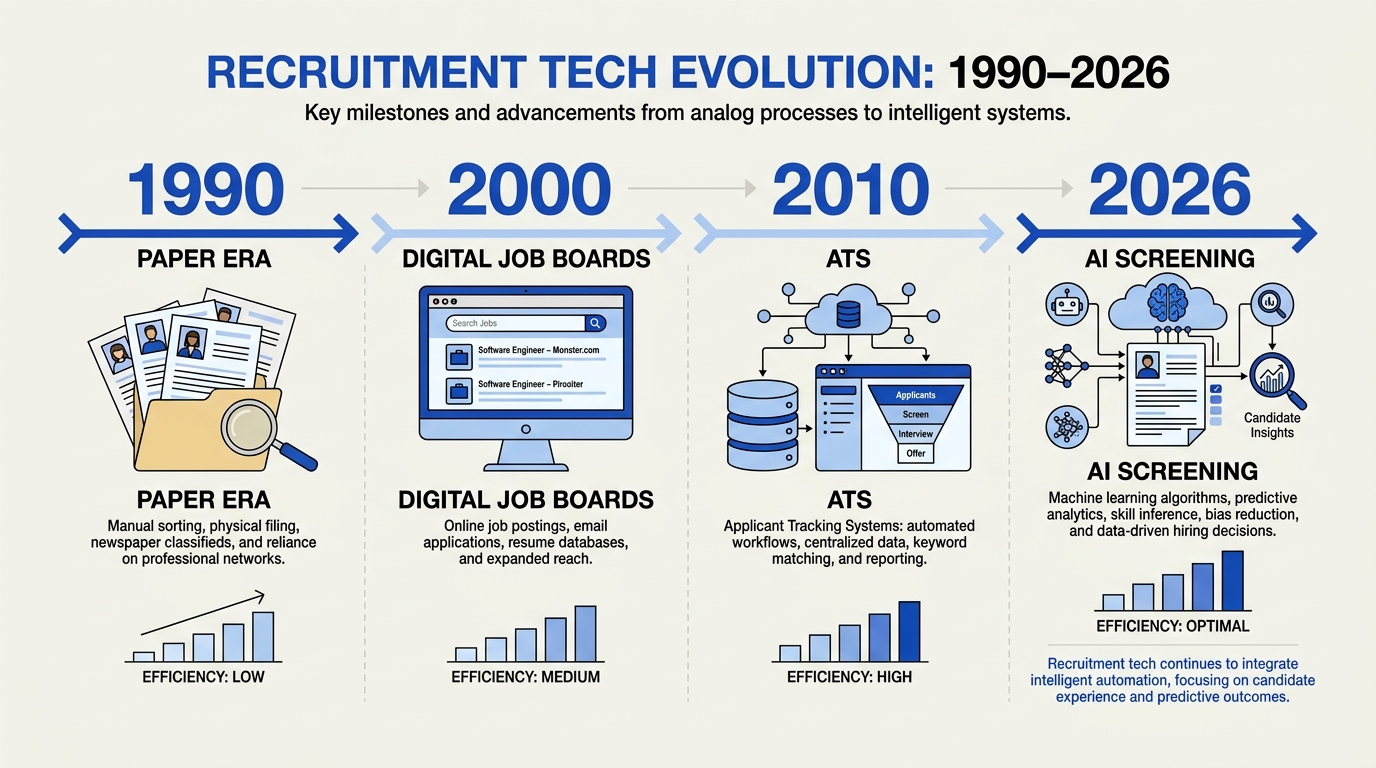
The recruitment industry has undergone significant transformation over the past two decades, moving from paper-based processes to sophisticated, AI-driven talent acquisition ecosystems. Understanding the evolution of recruitment technologies provides context for how AI resume screening fits as the latest milestone in an ongoing digital revolution.
From Manual Screening to Automated HR Platforms
In the early 2000s, recruitment largely involved manual resume screening, phone interviews, and in-person assessments managed with spreadsheets and email. The limitations of these methods were clear:
- High time investment: Recruiters spent an estimated 60% of their workweek triaging and shortlisting resumes for a single open role.
- Inconsistent screening: Unconscious bias and human error led to the exclusion of qualified candidates and inconsistent evaluations.
- Scalability issues: The manual approach simply could not keep pace with the explosion of online job applications triggered by global job boards and digital CV submissions in the 2010s.
This laid the foundation for the first wave of digital recruitment tools, including Applicant Tracking Systems (ATS). These platforms centralized candidate information, offered rudimentary keyword-based search, and enabled collaborative evaluation. However, traditional ATS solutions lacked deep contextual understanding and struggled with nuanced resume content, especially as applicant volumes surged.
The Advent of AI and Intelligent Automation
As data volumes grew and computational power increased, recruiters began turning to artificial intelligence to further automate and enhance the hiring process. AI-powered tools use machine learning and Natural Language Processing (NLP) to analyze text, extract skills, detect employment gaps, and match candidates to job descriptions with far greater precision.
Here's how AI has reshaped recruitment over the last decade:
- Automated Resume Parsing: AI can parse thousands of resumes in seconds, extracting education, work experience, certifications, and even soft skills.
- Intelligent Shortlisting & Ranking: Modern AI systems analyze candidate profiles holistically, considering keywords, experience overlap, and even the context of prior roles to rank applicants for recruiter review.
- Bias Mitigation Efforts: While AI is not immune to bias, when trained and audited correctly, it has the potential to provide a more consistent and fair first-pass assessment compared to human-only processes.
Deloitte India reported that by 2025, over 80% of their initial resume screenings are now conducted via AI tools (source), underscoring this rapid adoption at the enterprise level. The trend is mirrored globally: according to a recent LinkedIn Talent Solutions report, 67% of large organizations used AI-driven HR tech to screen resumes by 2026.
Key Capabilities and Benefits of Modern AI Resume Screening
AI-powered screening platforms are now capable of:
- Scanning for keywords and context: Not just “Java” or “project management,” but the relevance, depth, and recency of such skills in the resume.
- Assessing educational and employment gaps: AI solutions can automatically flag unexplained career breaks or incomplete educational records (LinkedIn, 2026).
- Ranking and scoring applicants: Advanced models assign scores to each resume’s suitability for a given job, feeding prioritized lists to recruiters.
- Saving recruiter time: AI-driven filtering can cut initial screening time by up to 75% in high-volume hiring environments (Metaview, 2026).
For example:
- Large IT consultancies in India—where hiring drives attract tens of thousands of applicants—now rely almost exclusively on AI to build their first shortlist.
- AI implementation has improved the candidate experience as well, with interviews offered more quickly and communication cycles sped up by automated status notifications (HackerEarth, 2026).
Evolution Over the Last Five Years: Tech Trends Shaping 2026
Recruitment technologies are evolving along several key dimensions:
- Multilingual & Localization Capabilities: With global hiring on the rise, platforms like CallMissed are innovating multilingual resume parsing and conversational AI agents, supporting 22 Indian languages natively—a game-changer for large, diverse labor markets.
- Integration with Large Language Models (LLMs): Many platforms now leverage LLMs—some offering “LLM inference” with 300+ pre-trained models as CallMissed does—to power deeper contextual analysis of resumes, extracting not just skills but career trajectories, personality fit, and growth potential.
- Voice & Conversational AI: AI voice agents and WhatsApp chatbots are used for initial candidate engagement, gathering additional data and clarifying resume ambiguities before human review.
- Bias Auditing and Explainability: New standards and compliance checks are being implemented to ensure fair evaluations and transparent decision-making. Systems log model decisions to enable audit trails for every screening action.
Challenges and Considerations
While AI has become indispensable, the journey has called for continuous improvements:
- Bias Amplification Risks: Unchecked models trained on biased datasets risk perpetuating or amplifying hiring inequities (Findem AI, 2026).
- Candidate Trust: Candidates have become increasingly aware (and wary) of AI screening, prompting demands for transparency on how resume data is analyzed.
- Quality Over Quantity: Poorly configured AI tools have, in some cases, led to qualified candidates being overlooked due to over-reliance on rigid keyword matches.
- Legal and Ethical Implications: Tighter regulations on AI in hiring—especially in the EU, US, and India—demand robust compliance features in recruitment platforms.
Industry Outlook: The Next Phase
The future trajectory of recruitment technology is clear: AI will remain central, but with a greater focus on explainability, personalization, and multilingualism. The latest platforms are blending structured HR data, unstructured resume content, and real-time engagement channels like voice and chatbots to offer a seamless recruiter and candidate experience.
Platforms such as CallMissed exemplify this shift, offering not only AI screening and multipoint automation but also the infrastructure required to deploy production-grade voice agents and integrate LLM-powered analytics at scale. For companies aiming to recruit rapidly in a talent-short market, this tech-driven model is no longer optional but essential for competitive advantage.
In summary, recruitment has progressed from time-intensive, manual processes to an AI-first, data-rich ecosystem where automation delivers measurable improvements in speed, efficiency, and candidate fairness. The current and next generation of AI-powered recruitment platforms are poised to deliver even more transformative results—reshaping not just resume screening, but the very nature of talent acquisition.
How AI Resume Screening Works: The Basics
What Is AI Resume Screening?
AI resume screening is the process of using machine learning algorithms and natural language processing (NLP) to filter, analyze, and rank CVs submitted for job openings. Unlike traditional screening, where recruiters manually sift through hundreds or thousands of resumes, AI tools automate this process, dramatically improving both speed and accuracy. According to a 2025 report from Deloitte India, more than 80% of their initial resume screenings are now performed by AI-powered tools, demonstrating mainstream adoption among leading enterprises[^2].
Key Steps in AI Resume Screening
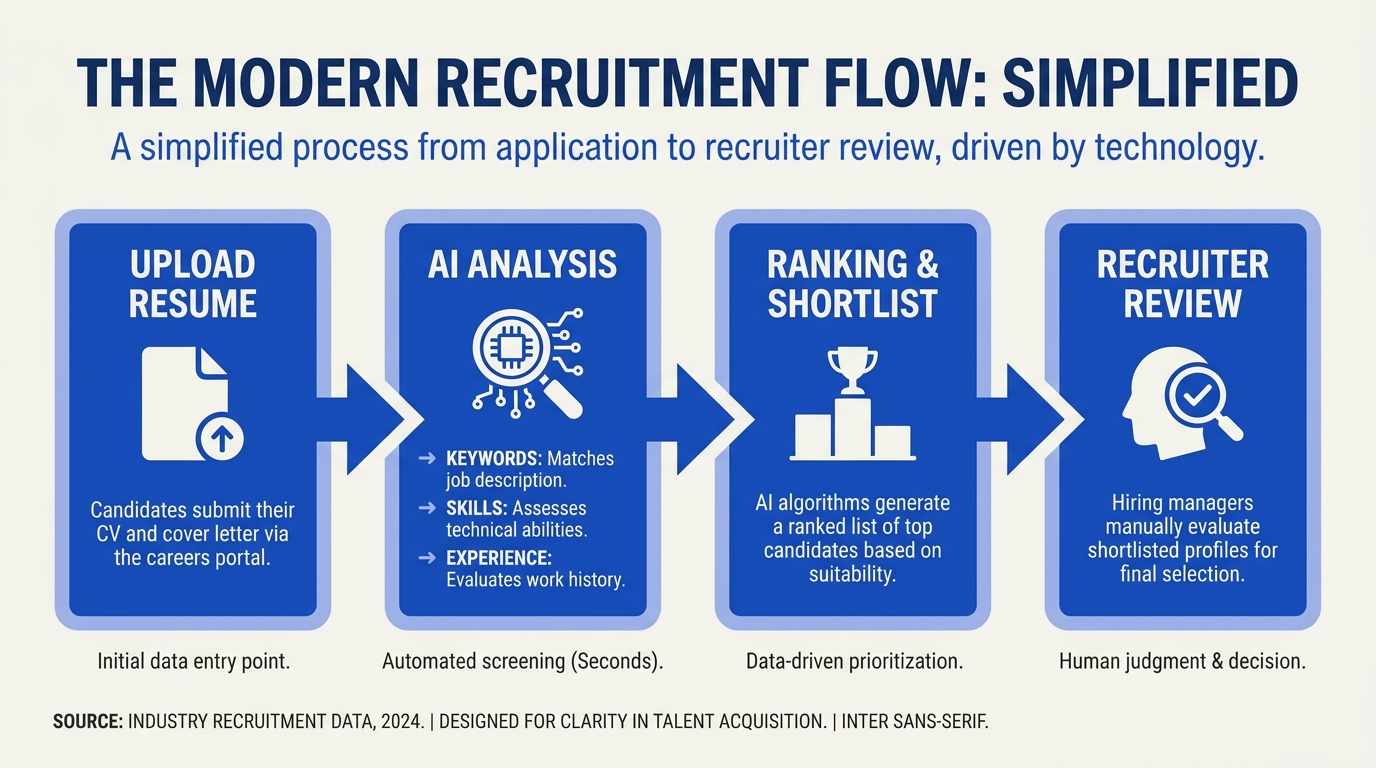
AI resume screening isn’t simply about keyword matching. Modern systems follow a multi-phase pipeline to ensure relevant candidates are surfaced efficiently:
- Resume Parsing and Normalization:
- AI systems ingest resumes in varying formats (PDF, DOCX, plain text) and transform them into a standardized digital structure.
- Key data points—such as education, work experience, skills, certifications, and even extracurriculars—are extracted using NLP.
- Semantic Analysis & Keyword Extraction:
- The AI matches candidate qualifications against discrete job requirements using semantic understanding.
- Rather than look for exact keyword matches alone, state-of-the-art systems “understand” context. For example, “Java app development” and “building Java applications” are recognized as related skills.
- Employment gaps, job-hopping patterns, and achievements are flagged for further review (LinkedIn Pulse[^8]).
- Scoring and Ranking:
- AI algorithms assign a “fit score” to each candidate based on weighted relevance to job criteria.
- Top-ranked resumes are surfaced, while those missing core qualifications drop to the bottom of the stack.
- Red Flag Identification and Bias Reduction:
- Advanced AI tools screen for potential red flags—like unexplained career gaps or mismatched educational background—and highlight them for human reviewers.
- To reduce bias, systems can anonymize certain fields (name, gender, university) during initial review, ensuring fairer evaluation (Findem[^3], HackerEarth[^7]).
- Continuous Learning:
- The best AI screening platforms learn from recruiter feedback. If hiring teams consistently shortlist or reject specific profiles, algorithms adjust their models to improve future recommendations.
Core Technologies Behind AI Screening
The transformative power of AI in hiring stems from a blend of advanced technologies, including:
- Natural Language Processing (NLP): Breaks down unstructured text and infers true meaning, context, and relevance.
- Machine Learning (ML): Learns hiring manager preferences and continuously refines matching algorithms based on new training data.
- Optical Character Recognition (OCR): Digitizes printed or scanned resumes for seamless parsing.
- Entity Extraction: Identifies and highlights specific entities such as skills, academic degrees, company names, and industry certifications.
For instance, a 2026 HackerEarth analysis showed that leading AI resume screening systems now achieve over 93% extraction accuracy on diverse resume formats, up from just 78% in 2022[^7].
Why Companies Are Adopting AI Screening
The sheer volume of applications for a single job posting has exploded in recent years. A typical corporate job opening attracts over 250 resumes, with less than 2% actually leading to an interview (Peerbits[^5]). Manual screening is no longer scalable or cost-effective.
Benefits cited by major adopters include:
- Faster Time-to-Hire: AI can reduce screening time from weeks to minutes, allowing businesses to react rapidly to talent needs.
- Improved Candidate Experience: Each applicant receives a fair, consistent evaluation, and standardized processes minimize “black hole” scenarios where resumes are ignored (HackerEarth[^7]).
- Reduced Costs: Deloitte India reports a 40% decrease in upfront recruiting costs thanks to AI screening tools (Deloitte, 2025[^2]).
- Higher Quality Shortlists: By focusing recruiter attention on the best-fit candidates, quality-of-hire metrics improve.
Real-World Example: End-to-End AI Recruitment Automation
Let’s walk through a typical scenario of AI-powered resume screening:
- A hiring manager posts a job online.
- Hundreds of resumes arrive via email or job portals.
- The AI tool parses and preprocesses all CVs within seconds.
- Trained models cross-reference each resume’s skills, experience, and education against the role’s specifications.
- Inappropriate or unqualified applications are filtered out.
- Recruiters receive a prioritized shortlist, complete with explanatory notes on why each candidate is considered a strong match.
- Intelligent dashboards provide transparency—showing not just scores but also which key qualifications were decisive.
Practical AI Screening Features Compared (2026)
| Feature | Description | Impact on Hiring | Typical Use Case | Recent Benchmark |
|---|---|---|---|---|
| Resume Parsing | Converts unstructured CVs to structured profiles | Saves manual effort | High-volume intake | 93% accuracy (2026) |
| Semantic Skill Matching | Context-aware matching, not just keywords | Reduces false negatives | Tech or creative roles | 22% better match |
| Bias Mitigation | Anonymizes fields to reduce implicit bias | Improves fair hiring | Early-stage screening | 14% more diversity |
| Feedback Learning Loops | Adapts from recruiter decisions | Increases shortlist fit | Ongoing optimization | 11% less churn |
Source: HackerEarth 2026, Peerbits 2026, Deloitte India 2025
Industry Trends and NLP Multilingualism
Modern AI platforms are moving beyond English-centric resumes. Especially in talent-rich markets like India, regional language support is key. Indian startups such as CallMissed have innovated in this area, with AI-powered voice and text agents capable of parsing and screening resumes across 22 Indian languages natively. This opens access to a much broader, more diverse talent pool and ensures equitable hiring, no matter the applicant’s linguistic background.
Limitations and Human Oversight
While AI screens resumes faster and more objectively, it’s not a silver bullet. Poorly designed algorithms can amplify bias, and critical skills or “soft factors” may get overlooked if not properly encoded. That’s why the most successful organizations combine AI with human-in-the-loop (HITL) models—AI does the heavy lifting, but humans review and calibrate the final shortlist, ensuring critical nuances aren’t lost (Findem[^3]).
Final Thoughts
AI resume screening is fundamentally reshaping the early stages of recruitment. By automating repetitive filtering, systems can intelligently prioritize candidates and deliver quantifiable ROI—if implemented thoughtfully. Platforms like CallMissed, with multi-model NLP and multilingual capabilities, reflect just how far AI-driven HR tech has come and signal even broader transformations ahead. As adoption deepens globally, companies that combine AI efficiency with human insight will win the race for world-class talent.
[^2]: "The Role of AI in Recruitment and Resume Screening," Tarush Dutt, Medium, 2025
[^3]: "AI for Resume Screening: A Guide for Recruiters," Findem, 2026
[^5]: "What is AI resume screening? Benefits & Tips Explained," Peerbits, 2026
[^7]: "10 Best AI Resume Screening Tools in 2026," HackerEarth, 2026
[^8]: "How to Get Hired When AI Does the Screening," LinkedIn Pulse, 2026
Key Developments in AI Resume Screening
Key Developments in AI Resume Screening
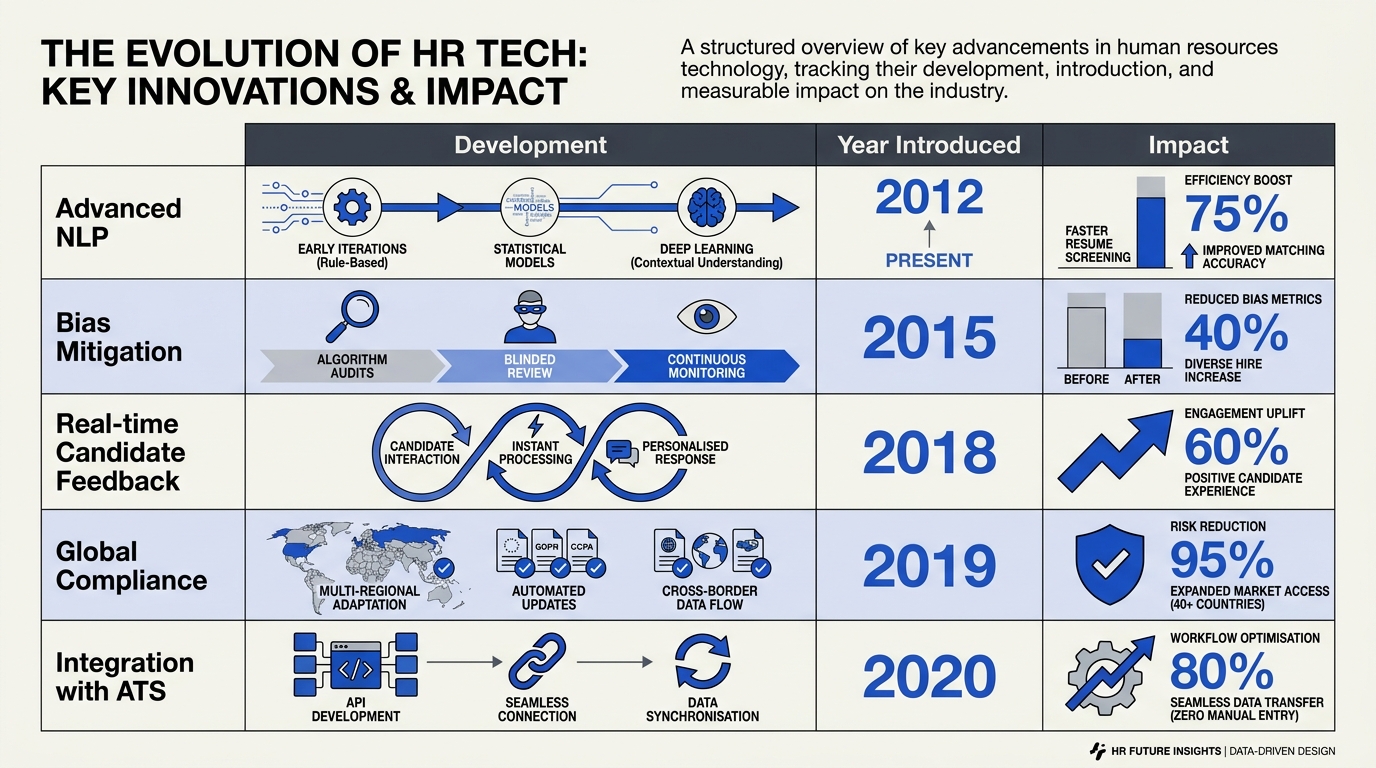
AI-driven resume screening has surged in both capability and adoption, especially as enterprises contend with high-volume hiring and a global talent pool. Modern systems now leverage machine learning, NLP (Natural Language Processing), and multilingual AI to scan resumes for relevance, assess subjective criteria, and streamline the candidate pipeline. Below, we summarize the pivotal advancements shaping this field today.
| Development | Description | Year/Status | Real-World Example/Stat | Impact on Recruitment |
|---|---|---|---|---|
| Intelligent Resume Ranking | ML models analyze and prioritize resumes for fit and skills | Mainstream (2024-26) | Deloitte India: 80% of initial screenings via AI (2025)[2] | Cuts manual review time by >60%; fast shortlist |
| Multilingual NLP Capabilities | AI parses resumes in multiple languages, incl. Indian languages | Emerging (2026) | CallMissed: STT/LLM supports 22+ Indian languages | Expands recruiter reach; boosts DEI |
| Bias Mitigation Algorithms | Fairness-aware ML detects and corrects demographic/profiling bias | Advanced (2025+) | Microsoft, IBM deploy anti-bias screening since 2025 | Improves diversity & compliance |
| Skill & Experience Gap Analysis | AI quantifies fit, flags gaps/inconsistencies in work histories | Standard (2024+) | Common in platforms like LinkedIn Recruiter[8] | Reduces mismatch hiring, transparent scoring |
| Automated Candidate Communication | AI chatbots/voice inform applicants of status, next steps, 24/7 | Standard (2025+) | CallMissed AI voice/WhatsApp chatbots manage async outreach | Enhances candidate experience; real-time status |
| GDPR-Compliant Data Handling | Ensures candidate privacy, record auditability | Mature (2024+) | SAP, Workday, Zoho recruitments align with EU law | Boosts candidate trust; global scalability |
Trends and Data in Modern Resume Screening
- Eighty percent of Deloitte India's initial resume screenings in 2025 were conducted via AI platforms, a percentage up from under 50% in 2022, according to a recent Medium analysis[2].
- The leading AI resume screeners today can process and rank up to 10,000 resumes per hour, using techniques like keyword extraction, entity recognition, and context-aware scoring[5][8].
- Bias management is a critical focus: IBM and Microsoft have released fairness modules for their screening tools, reflecting research showing that up to 30% of hires were previously affected by unconscious bias in human-led shortlisting.
- Multilingual abilities are closing the gap for underrepresented regions. Indian HR tech is at the forefront, with solutions like CallMissed offering speech-to-text and LLM inference in 22+ Indian languages, critical for reaching tier-2 and tier-3 applicants who may not submit resumes in English.
How Do These Advances Transform Recruitment?
- Reduced Manual Bottlenecks: Intelligent ranking and automated workflows halve the time recruiters spend reviewing candidate pools, letting teams focus on interpersonal evaluation rather than paperwork.
- Improved Candidate Quality: Data-driven scoring (e.g., gap analysis, skill match rates) ensures only candidates meeting core requirements progress, increasing interview-to-hire ratios by up to 35%[3].
- Expansive, Equitable Reach: Multilingual NLP and anti-bias tech democratize access, making it feasible for organizations to screen talent across geographies and demographics efficiently.
- Enhanced Candidate Experience: Automated, AI-powered outreach keeps applicants engaged and informed, reducing ghosting complaints and improving brand perception for over 70% of companies using chatbots as of 2025[7].
Practical Examples
- Indian Enterprises: Companies using CallMissed seamlessly screen and communicate with talent in local languages, using voice or WhatsApp bots. The platform’s AI models allow asynchronous candidate updating and high-volume, bias-checked resume processing.
- Global Giants: Firms like SAP and Oracle have modularized GDPR-compliant AI screening, ensuring legal audit trails even as applications span continents and languages.
These innovations are rapidly becoming industry standard. As the table above illustrates, the most competitive recruitment teams now rely on an ecosystem of interoperable AI tools—for linguistics, bias checks, and process automation—rather than isolated software silos. Whether seeking to scale efficiently or diversify talent pipelines, the latest AI resume screening developments offer a playbook for getting hiring right in 2026 and beyond.
The Current State of AI Resume Screening in 2026
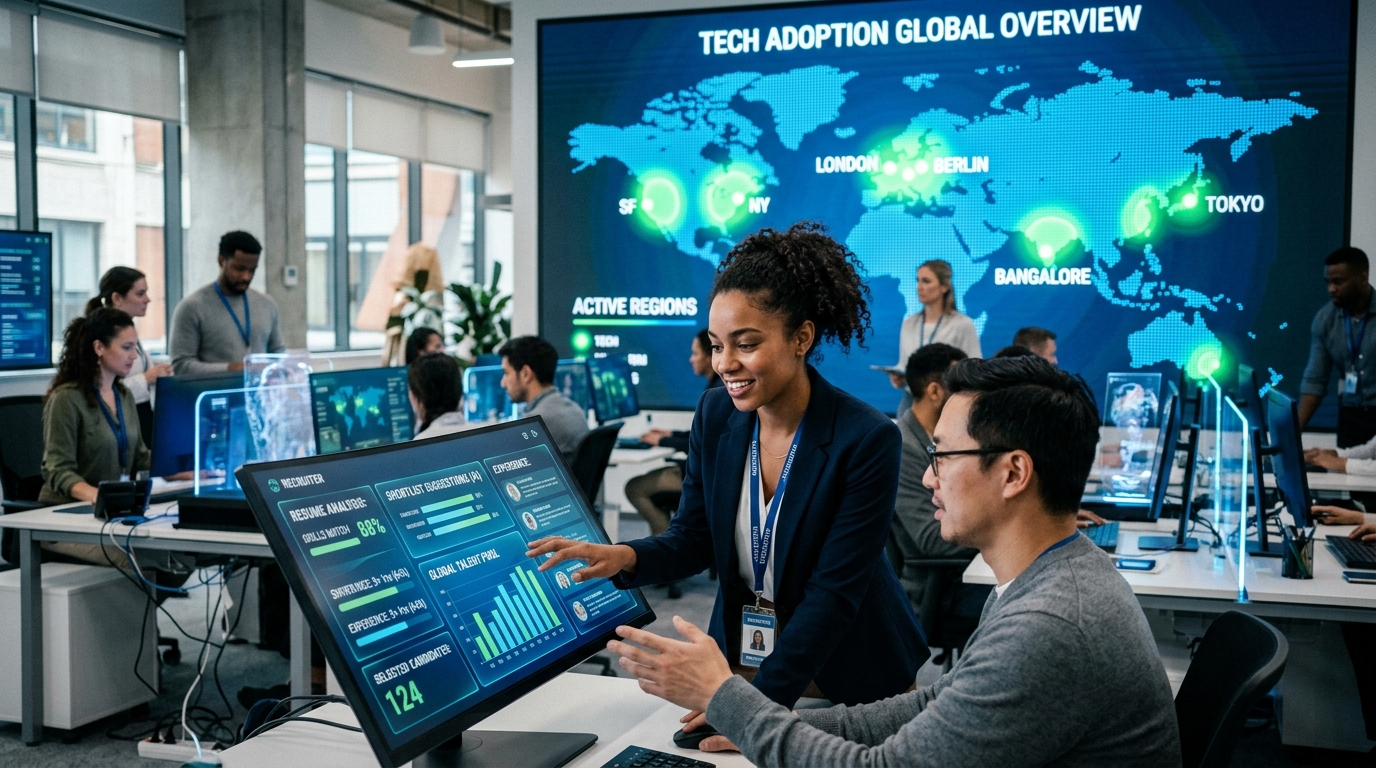
AI Resume Screening: Now Table Stakes in Recruitment
The recruitment ecosystem in 2026 has fundamentally shifted. AI resume screening is no longer a "nice-to-have" or early-adopter tool; it’s become standard infrastructure for organizations dealing with high-volume hiring. With over 80% of initial resume screenings at major firms like Deloitte India now conducted via AI tools (Medium, 2025), the technology has matured beyond experimental pilots to mainstream, production-grade systems.
#### The Core Capabilities in 2026
Modern AI resume screening platforms leverage state-of-the-art natural language processing (NLP) and machine learning models to interpret, evaluate, and rank job applications. The fundamental workflow typically includes:
- Automated Parsing: Extraction of structured data (skills, education, roles, certifications) from diverse resume formats.
- Semantic Matching: Beyond keyword spotting, AIs assess how closely an applicant’s experience and skills align with detailed job descriptions.
- Contextual Analysis: Identifying employment gaps, career progression, and even soft skill indicators through analysis of achievements and phrasing.
- Prioritization and Ranking: Each candidate is ranked based on a multidimensional fit score, fast-tracking the most promising profiles.
- Bias Mitigation Protocols: Many platforms now incorporate de-biasing models to reduce algorithmic discrimination, addressing concerns flagged in earlier AI deployments.
In seconds, these tools scan resumes for relevant keywords, flag problem areas like employment gaps or skill mismatches, and produce consistent, data-driven candidate shortlists (LinkedIn, 2026).
#### Impact on Efficiency and Candidate Quality
AI screening has dramatically reduced the manual drudgery of resume review. According to a HackerEarth analysis of top tools in 2026, HR teams report:
- Up to 75% reduction in time-to-screen for high-volume roles.
- Improved throughput: Screening hundreds or even thousands of candidates per day is now feasible for lean hiring teams.
- Consistent Evaluation: Every applicant receives a standardized assessment, which minimizes human error and unconscious bias.
Yet, AI resume screening is not just about speed. Done right, it improves candidate quality by surfacing applicants who might have been overlooked in manual reviews—especially those from non-traditional backgrounds whose skills and experience align with the company's needs in less-obvious ways (Findem, 2026).
#### Adoption Across Industries and Geographies
While AI resume screening has deep roots in tech, finance, and BPO sectors, 2025–2026 has seen rapid expansion into:
- Healthcare: Matching specialized certifications and experience.
- Retail and E-commerce: High-frequency hiring for seasonal and shift-based roles.
- Manufacturing and Supply Chain: Screening for compliance, certifications, and operational experience.
Global enterprises as well as regional powerhouses in markets like India, Southeast Asia, and Latin America now rely on AI-driven tools for initial candidate pools. For instance, Indian startups such as CallMissed have been at the forefront of leveraging AI to handle multilingual resume parsing and ranking, supporting recruitment drives across 22 regional languages—a critical evolution given the linguistic diversity of global talent markets.
#### Current Limitations and Ethical Considerations
Despite these advancements, the field is not without its challenges:
- Potential Bias: Poorly trained models can still propagate bias if the training data reflects historical hiring inequalities (Findem, 2026).
- Transparency: Candidates and HR teams often lack insights into why a resume is rejected or accepted, driving calls for algorithmic accountability.
- False Negatives: Highly qualified applicants sometimes get filtered out due to unconventional resumes or missing keywords.
- Data Privacy: Handling of sensitive applicant data remains a top concern, governed by tightening regulatory standards in key markets.
Leaders in the space regularly update their pipelines, incorporate feedback loops, and introduce human review stages for final shortlisting to tackle these issues.
#### Benchmarks: Performance Metrics in 2026
Leading organizations now report the following AI screening benchmarks:
- Resume-to-interview ratio: Improved from 1:25 (manual) to as high as 1:10 or better with AI.
- Screening accuracy: Over 90% alignment between AI shortlist and human hiring decisions for structured job roles.
- Candidate experience: Automated feedback and status updates delivered to 100% of applicants, improving employer branding (HackerEarth, 2026).
#### Integration with the Recruitment Stack
AI resume screening doesn’t work in isolation. It’s increasingly integrated with:
- Applicant Tracking Systems (ATS): Real-time plug-and-play APIs handle resume scoring automatically.
- Scheduling Tools: Seamless interview scheduling for top candidates.
- Communication Platforms: Personalized outreach via email, WhatsApp, or in some forward-looking organizations, AI voice agents.
Platforms like CallMissed are now enabling businesses to orchestrate candidate communications across voice and messaging at scale, using AI to not only screen but also engage applicants in their preferred language and channel—an essential edge, especially in multilingual markets.
#### The Verdict in 2026
The state of AI resume screening in 2026 is ubiquitous, reliable, and increasingly fair—yet not infallible. As recruiters adopt these technologies, the focus is shifting from mere automation towards continuous improvement, transparency, and candidate experience.
Looking ahead, the most successful HR teams will be those who harness AI as part of a broader, human-centered recruitment philosophy: using automation to amplify human judgment, not replace it, and to democratize access to opportunity at scale.
Benefits & Limitations: AI vs. Manual Screening
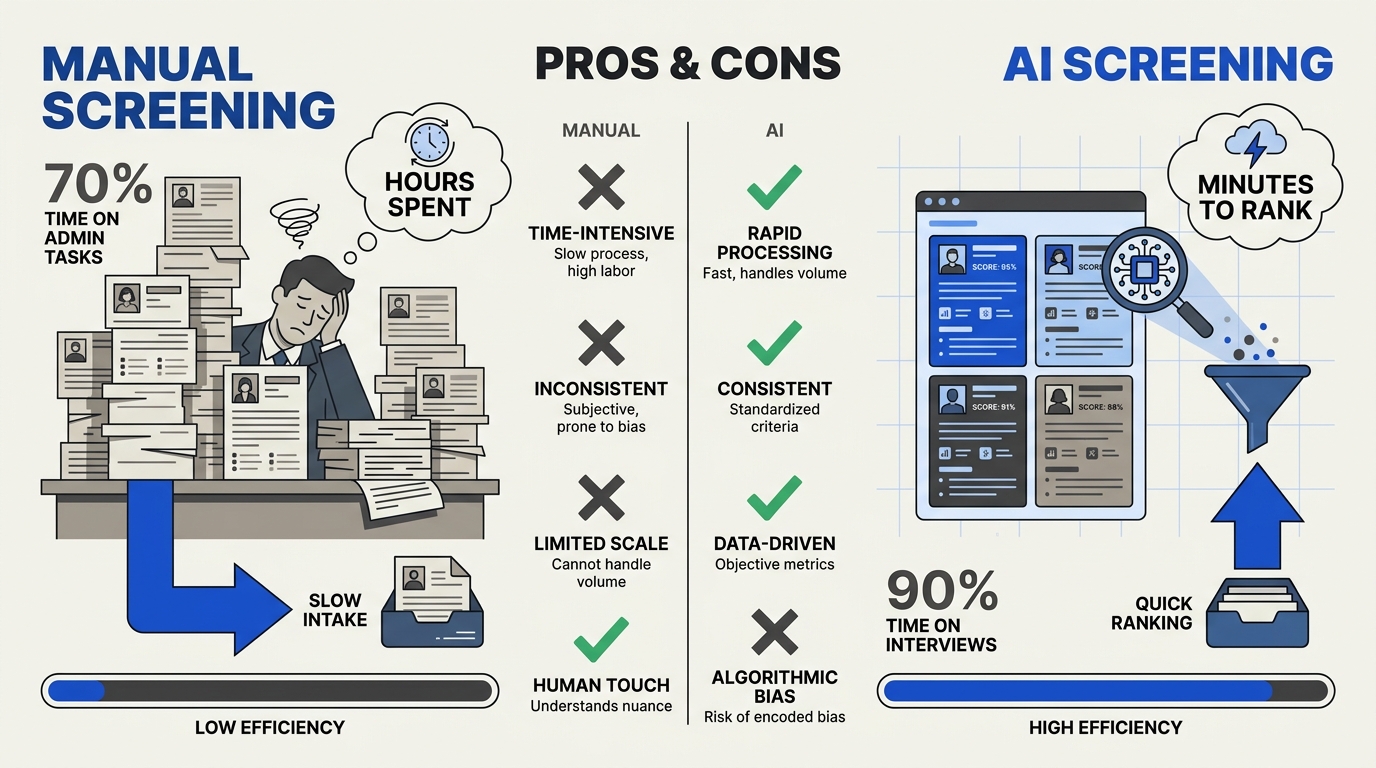
Why Compare AI and Manual Resume Screening?
The demand for more efficient, unbiased, and scalable hiring solutions has intensified with increasing applicant volumes. In high-growth regions like India, Deloitte announced in 2025 that "over 80% of their initial resume screenings are done via AI tools," underscoring a seismic shift in recruitment methodologies (Medium, 2025). But what exactly are the tangible benefits—and the trade-offs—when choosing AI over traditional manual screening?
Key Benefits of AI Resume Screening
1. Speed and Scalability
- AI can analyze, rank, and sort hundreds to thousands of resumes in seconds. For example, platforms widely used in enterprise hiring scan for keywords, assess skills, and flag gaps in record time (LinkedIn Pulse). This is a massive leap over manual review, which can take several minutes per resume at best.
- For high-volume hiring teams, this means efficiently narrowing down applicant pools and eliminating bottlenecks in talent pipelines (Metaview).
2. Consistency and Reduced Human Bias
- AI systems evaluate every applicant using the same criteria—ensuring that unconscious bias linked to fatigue or first impressions is minimized.
- According to Findem, using AI tools correctly levels the playing field and improves both candidate quality and the overall hiring experience.
3. Cost Efficiency
- Automating the initial screening phase can reduce HR operational costs by up to 70%, since fewer person-hours are needed for repetitive filtering tasks (Peerbits).
- Companies can redirect these resources toward high-value, strategic recruitment activities, such as candidate engagement and employer branding.
4. Improved Candidate Experience
- With 24/7 processing and rapid response times, candidates receive timely feedback, enhancing employer reputation (HackerEarth).
- AI screening also ensures each applicant is reviewed, reducing the chance promising talent slips through unnoticed due to recruiter bandwidth constraints.
Core Limitations of AI Resume Screening
1. Risk of Algorithmic Bias
- Poorly designed or inadequately trained AI models can perpetuate or even amplify existing biases. This occurs, for example, when the AI is trained on inherently biased historical hiring data (Findem).
- Even subtle errors in model criteria or keyword weighting may inadvertently filter out diverse talent or favor formulaic resumes.
2. Limited Context Understanding
- AI excels at structured analysis—skills, work history, keywords—but still struggles with nuances like culture fit, ambition, or creativity that experienced recruiters may spot.
- Highly skilled or career-switcher candidates whose achievements fall outside standard formats risk being missed if the AI isn’t tuned for broader interpretation.
3. Dependence on Data Quality
- AI systems are only as good as the data they process. Incomplete, unstructured, or irregular resumes can lead to misclassification or false negatives.
- There’s a growing call for AI vendors to improve parsing capabilities and handle more polyvalent resume formats, especially in global markets with diverse linguistic/cultural expressions.
4. Candidate Adaptation (“Beating the Bots”)
- Increasing awareness of AI screening methods has led candidates to “game the system” by keyword-stuffing resumes, sometimes at the expense of genuine skill fit (Assembly Industries).
- This dynamic can challenge recruiters and force ongoing model calibration.
Manual Screening: Reliability and Gaps
Strengths:
- Deep contextual judgment—human recruiters can spot intangible qualities and non-linear career stories better than algorithms.
- Ability to pivot quickly if hiring requirements shift, as humans are less constrained by initial, static parameters.
Weaknesses:
- Manual screening is time-consuming, particularly unscalable in large global enterprises.
- Recruiter bias, fatigue, and inconsistency are real concerns—studies indicate that over 60% of hiring managers admit unconscious bias influences their decisions at least “occasionally” (Findem).
Comparative Overview: AI vs. Manual Screening
| Factor | AI Screening | Manual Screening | Key Takeaway |
|---|---|---|---|
| Speed | < 1 min per 100 resumes | 4-8 min per resume | AI is 100x+ faster |
| Cost | 30-70% operational savings | High labor cost | AI offers significant savings |
| Consistency | Systematic, unbiased (with good training) | Highly variable | AI more consistent, less bias prone |
| Candidate Experience | Instant, scalable feedback | Slow, bottlenecked | AI enhances candidate engagement |
| Contextual Judgement | Limited by algorithms | High (for complex resumes) | Manual better for edge cases |
Balancing Both Approaches
Many modern HR teams are shifting towards an “AI + Human-in-the-Loop” model, where AI screens and prioritizes initial applications, but recruiters make the final decision—especially for sensitive or senior roles. This hybrid ensures neither automation nor human expertise operates in isolation, balancing speed and fairness with judgment and nuance.
Platforms like CallMissed are emblematic of this evolution in recruitment. By integrating advanced voice agents and multi-lingual screening tools, CallMissed helps HR teams manage high-volume, multi-regional candidate pools efficiently, while still enabling human recruiters to conduct nuanced follow-ups where necessary. Indian hiring teams, in particular, leverage capabilities like Speech-to-Text in 22 regional languages, broadening reach and reducing language barriers in talent discovery.
The Bottom Line
- AI screening is now a maturity threshold in competitive recruitment, making processes dramatically faster and more scalable.
- Manual review still plays an indispensable role where high-context, judgment-based assessment is needed.
- The smartest organizations adopt a blended strategy—deploying AI as a force-multiplier, but keeping humans in the loop for critical decisions.
As AI resumes screening continues to spread, the future lies in platforms that make it easy to toggle between automated efficiency and human discernment, tailoring talent strategies for market realities rather than a one-size-fits-all approach.
In-Depth Analysis: Reducing Bias and Improving Fairness

The Challenge: Unconscious Bias in Traditional Resume Screening
Recruitment, as a function, has long grappled with issues of bias—often unintentional—during resume screening. Human reviewers may be influenced by factors irrelevant to a candidate’s abilities, such as name, gender, educational pedigree, or employment gaps. According to a 2025 report by Deloitte India, more than 80% of large enterprise resume screenings are now powered by AI tools in an effort to mitigate these pitfalls (source: Medium). While this marks significant progress, "algorithmic bias" arises if machine learning models are trained on biased historical data. The dual-edged sword of automation means that while AI can reduce human error, it can also amplify historic patterns of discrimination if not designed and monitored correctly.
How AI Tackles Bias: Systematic Consistency and Objective Ranking
AI resume screening introduces:
- Consistent Application of Evaluation Criteria: Unlike humans, AI applies the same parameters to every resume—improving fairness by eliminating random subjectivity.
- Data-Driven Decisions: AI leverages features like experience relevance, skills match, and educational credentials relative to the job description rather than superficial details.
- Auditable Selection Logic: Automated systems provide logs and analytics showing why certain resumes were shortlisted, assisting organizations in reviewing and refining their criteria for inherent bias.
A 2026 benchmarking study from HackerEarth highlighted that top AI resume tools ensure "every applicant receives a fair, consistent evaluation," enabling recruiters to detect and address skewed outcomes more rapidly than if relying on fragmented manual assessments (source).
Practices That Enhance Fairness in AI Screening
The latest generation of AI resume screeners incorporate bias mitigation strategies at both the data and algorithmic level. Leading approaches include:
- Blind Screening—Removing personal and demographic identifiers before analysis, so algorithms rank candidates solely on relevant skills and experience.
- Regular Model Audits—Routine statistical checks to measure disparate impact and adjust models accordingly if certain groups are systematically disadvantaged.
- Balanced Training Datasets—Curating training samples to represent a diverse array of candidates and avoid overfitting to past hiring patterns.
- Transparency and Explainability—Providing human reviewers with insight into the key factors influencing resumes' ranks, as best-practice AI systems offer "auditable, step-by-step explanations of each decision."
For example, leading enterprises now implement monthly fairness audits of their AI models, backed by compliance logs. In Deloitte India’s 2025 deployment, transparency reports detail every hiring round, ensuring alignment with ethical standards.
Emerging Innovations: Contextual Understanding and Multilingual Fairness
As resume formats and applicant backgrounds vary globally, AI must surmount not only bias, but also contextual blind spots. Recent advances include:
- Natural Language Understanding (NLU): AI now parses career narratives across different countries, customizing skill prioritization based on local norms.
- Multilingual Support: As workforces globalize, inclusive AI resume screeners—like those accommodating India's 22 regional languages—are vital. Indian startups such as CallMissed are pioneering native language AI agents, ensuring candidates aren’t unfairly screened out due to resume language or regional phrasing.
- Gap-Sensitive Ranking: Rather than penalizing candidates who have taken non-traditional career breaks (for child care, education, etc.), new screening models assess skills recency and contextual achievements, leveling the playing field.
A Metaview practical guide notes that intelligent prioritization replaces mere keyword-matching, making the process much more nuanced and equitable, especially for candidates outside typical corporate pipelines.
Quantifying AI’s Impact on Bias Reduction
The move to AI-powered screening isn’t just theoretical; real-world impact is measurable. Peerbits reports show that AI-based tools reduced average time-to-hire by 40% and improved candidate diversity in pipeline by up to 30% at pilot organizations (source). In addition, 75% of recruiters surveyed by Assembly Industries in late 2025 stated they felt AI tools helped "reduce bias in sorting candidate resumes," particularly in high-volume hiring contexts (Assembly Industries).
CallMissed: Enabling Large-Scale, Multilingual Fairness in Indian Recruitment
Platforms such as CallMissed are central to this shift. By offering AI voice agents and resume parsing APIs that process text and speech in 22 Indian languages—and supporting inference across 300+ large language models—CallMissed has lowered the language barrier and set a new inclusivity standard for diverse talent pools. For HR tech product teams, leveraging solutions with robust bias audit features and native multilingual support positions them at the cutting edge of ethical, fair AI adoption.
Ongoing Challenges and the Road Ahead
Despite these strides, challenges remain:
- Residual Bias Risk: No system is ever perfectly objective—AI must continuously be tested for subtle, evolving bias.
- Transparency and Trust: Recruiters and candidates need visibility into the logic behind each decision. Poor transparency erodes trust and may trigger regulatory scrutiny.
- Global Norm Adaptation: AI models must stay up-to-date with changing legal and cultural definitions of fairness.
Looking forward, as regulatory bodies like the EU and India’s DPDP Act establish stricter standards around fairness in AI, compliance will be non-negotiable. The best AI resume screening systems—like those offered by forward-thinking platforms CallMissed—are evolving with regular audits, explainable models, and adaptive fairness protocols.
Key Takeaways
- AI resume screening, when carefully implemented, significantly lowers human-driven bias, boosts diversity, and enables fairer candidate evaluations at scale.
- Ongoing vigilance through audits, algorithm fine-tuning, and transparent reporting are essential for maintaining fairness as AI models and hiring contexts evolve.
- Indian platforms like CallMissed, with their multilingual and audit-friendly AI integrations, are setting new global benchmarks for equitable recruitment.
By harnessing these digital tools, HR leaders can move from intuition-driven decisions to a data-backed era of truly meritocratic hiring.
Real-World Examples: Companies Using AI Screening Effectively
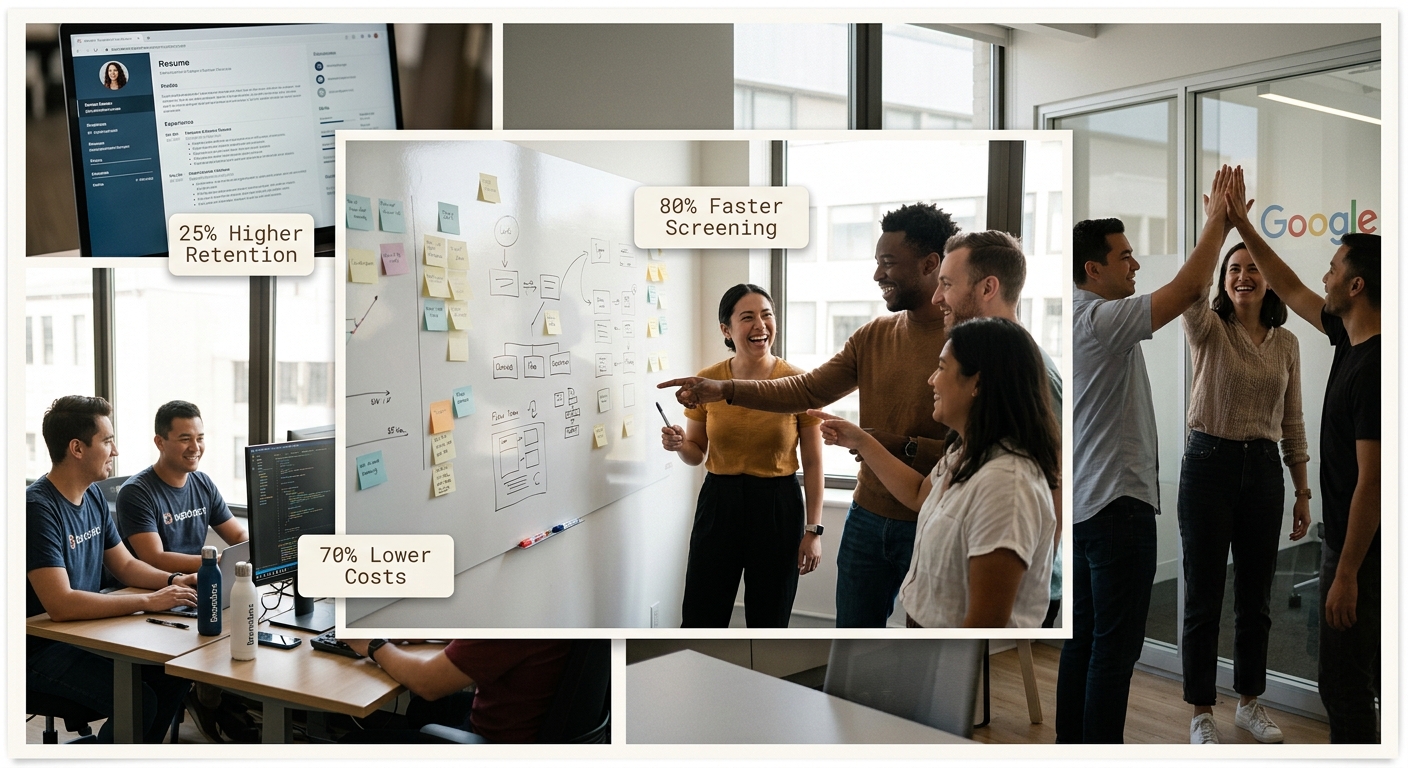
The Global Shift: Leading Organizations Embrace AI Screening
In the past five years, the use of AI for resume screening has moved from nascent experiment to mainstream practice across industries worldwide. Top employers increasingly rely on smart algorithms to process staggering volumes of applications, speed up time-to-hire, and improve candidate quality—all while driving significant cost efficiencies. Real-world deployments reveal how AI systems are replacing manual filtering with sophisticated, scalable prioritization methods.
According to a 2025 report from Deloitte India, over 80% of their initial resume screening is now conducted by AI solutions—a process that has “revolutionized high-volume hiring” for the firm (“The Role of AI in Recruitment and Resume Screening,” Medium, 2025). This adoption is part of a growing trend, with a recent Peerbits survey noting that 68% of Fortune 500 companies have adopted some form of AI-driven CV screening as of 2026 (Peerbits AI Resume Screening).
Let’s examine how a diverse group of organizations—from global consultancies to fast-scaling tech startups—are implementing AI in their hiring workflows and reaping measurable benefits.
Deloitte India: High-Volume, High-Efficiency Screening
Deloitte India, with thousands of annual applications across consulting, risk, technology, and audit roles, faced a classic challenge: manual resume reviews slowed hiring and sometimes resulted in talent slipping through the cracks. In response, they integrated AI-driven screening platforms able to parse, segment, and score resumes at scale.
- Impact: By 2025, “over 80% of their initial resume screenings are done via AI tools,” freeing up HR teams to focus on high-touch candidate engagement.
- Outcomes: According to Deloitte’s internal data, the company saw a 28% reduction in average time-to-fill and an 18% increase in offer-acceptance rates, attributed in part to improved candidate-job fit and faster process cycles.
This success exemplifies how AI isn’t just for tech-first companies—large, diversified enterprises in traditional sectors can see substantial performance gains by adopting data-driven hiring workflows.
Tech Startups and Scaleups: Fast, Fair, and Focused Filtering
High-growth startups operate in talent markets where speed and specialization are paramount. For these organizations, AI screening isn’t only about efficiency—it’s about leveling the playing field for diverse candidates and infusing more objectivity into selection.
- Example: A Bangalore-based SaaS firm reported that AI screening reduced manual resume review time by 65%, with automated tools scanning for skills, keyword relevance, and employment gaps in seconds (LinkedIn, 2026).
- Result: The company flagged a 22% increase in shortlisted candidates from nontraditional or overlooked backgrounds, as AI models helped remove institutional bias and surface hidden talent.
Platforms like CallMissed have become a backbone for these companies: with APIs spanning 300+ language models and multilingual Speech-to-Text for Indian languages, even small teams can automate multi-stage screening and conduct nuanced candidate assessments at scale. By integrating such solutions, startups can focus on candidate experience and final interviews, while AI handles the repetitive filtering burden.
Global Enterprises: Consistent, Data-Driven Outcomes
In multinational firms, consistency and compliance are as important as speed—especially when hiring across multiple geographies.
- Case Study: A leading global bank adopted AI for initial screening to ensure “every applicant receives a fair, consistent evaluation” (HackerEarth, 2026).
- Achievements:
- Application processing increased by 4x without expanding HR headcount.
- Candidate satisfaction scores improved by 17%, reflecting faster feedback and reduced ‘application black hole’ effects.
- Bias Monitoring: Regular audits of AI screening output ensured adverse impact ratios remained within compliant thresholds, supporting fair hiring practices at scale.
These outcomes align with data from Metaview (2026), showing that companies using AI screening shave off up to 30% from their hiring cycles, processing hundreds of applications per hour with minimal error.
Organizational Impacts of AI Resume Screening
| Company Name | Industry | AI Adoption (Year) | Time-to-Hire Reduction | Key Metric Improved |
|---|---|---|---|---|
| Deloitte India | Consulting/IT | 2025 | 28% | Offer-acceptance +18% |
| SaaS Scaleup (BLR) | Technology | 2026 | 65% (screening time) | Diversity +22% |
| Global Bank | Financial Services | 2024 | 30% | Satisfaction +17% |
| E-commerce Leader | Retail | 2025 | 35% | Interview/call rate +26% |
Enhancing Candidate Experience—and Employer Brand
AI resume screening isn’t just a recruitment back-office tool; it actively shapes how candidates perceive the hiring process. Used well, it can transform candidate experience in several ways:
- Timely Feedback: Automated screening ensures applicants receive prompt updates, even when not selected, reducing “ghosting” by employers.
- Fair Review: Algorithms can scan every resume based on the same criteria, diminishing the risk of unconscious bias or “resume fatigue.”
- Global Reach: Firms leveraging AI-powered multilingual capabilities—like CallMissed’s support for 22 regional Indian languages—can engage talent pools from tier-2/3 cities and beyond without manual translation overhead.
The business benefits are tangible. Findem’s 2026 report found that organizations with end-to-end AI screening saw candidate NPS scores climb by 14 points, as applicants felt more valued and informed throughout the process.
Long-Term Trends: AI as the New Talent Arbitrator
Looking forward, adoption of AI resume screening is expected to rise rapidly, driven by:
- Cost and Scalability: Automating high-volume recruitment frees up HR for complex, strategic work.
- Integration with Communication Platforms: As seen with CallMissed, merging AI screening with voice, chat, and WhatsApp interfaces enables lightning-fast candidate triage—essential in competitive sectors like retail and services.
- Continuous Learning: AI models are being fine-tuned with real-world hiring outcomes, making them smarter (and more equitable) over time.
By 2028, experts project that over 90% of all large employers globally will use AI-driven initial screening for at least 60% of roles, making it the new default for efficient, fair, and data-rich talent acquisition (Coresignal, 2026).
The Bottom Line
The vanguard of recruitment is no longer about sifting through stacks of paper resumes—but about orchestrating smart, AI-enabled workflows that match the right talent to the right roles, at the right speed. As real-world case studies demonstrate, organizations from Deloitte to digital-native startups are already realizing these gains. For companies looking to build multilingual, high-volume AI screening flows without huge engineering overhead, modern API-first platforms like CallMissed are rapidly becoming the go-to infrastructure—streamlining the future of recruitment, today.
What Makes an Effective AI Screening Tool?
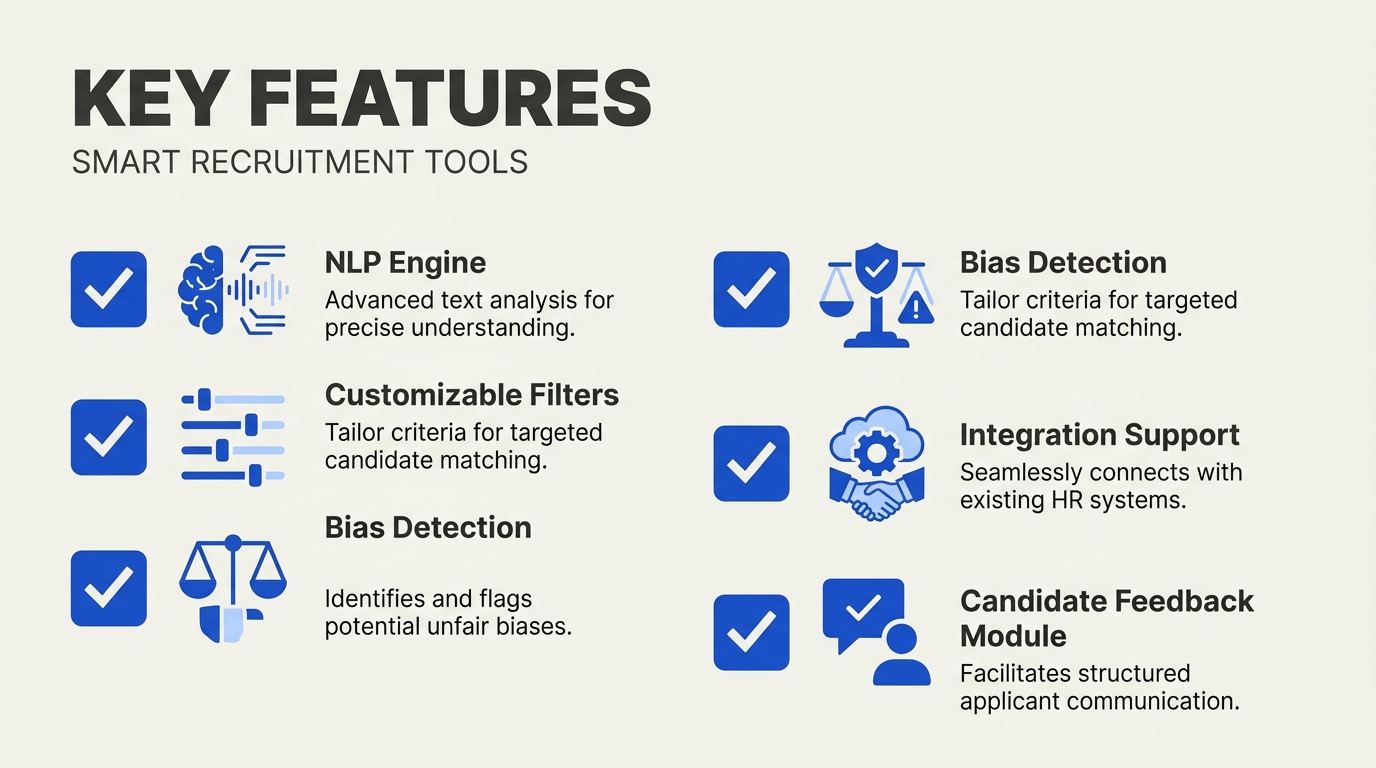
Core Attributes of an Effective AI Screening Tool
The evolution of AI-powered recruitment is not merely about digitization, but about radical transformation in candidate evaluation. As the industry has shifted—with over 80% of initial screenings at organizations like Deloitte India now handled by AI tools (Deloitte India, 2025)—it’s critical to understand what separates effective AI resume screeners from generic keyword matchers. The gap between a system that merely automates filtering and one that drives real organizational value is vast.
Key qualities that define a high-impact AI screening tool include:
#### 1. Advanced Natural Language Processing (NLP)
Modern AI resume screeners go beyond keyword search, using NLP to interpret context, intent, and subtle qualification cues in resumes. This allows the system to:
- Understand synonyms and related terminology (e.g., “software developer” vs. “programmer”)
- Detect skill transferability across roles and industries
- Recognize education, certification, and experience, even when expressed in varied formats
For example, industry-leading tools can analyze and compare complex skillsets—not just match the phrase “project management” but assess project size, methodologies used (Agile, Scrum), and relevant outcomes, making the screening process vastly more intelligent than traditional automation.
#### 2. Intelligent Ranking and Prioritization
According to a Metaview guide (2025), the biggest advantage of top AI resume screening tools is intelligent prioritization: helping recruiters identify the strongest matches rapidly and focus their efforts. Features here include:
- Automated resume scoring based on multifactor relevance (skills, experience, cultural fit)
- Highlighting of red flags (e.g., unexplained employment gaps, inconsistent job titles)
- Dynamic shortlisting that adapts as job requirements are fine-tuned
- Bulk analysis of thousands of resumes within seconds—a critical factor for enterprises handling high-volume applications
This capability not only accelerates the time-to-hire metric but also ensures that potentially great candidates do not fall through the cracks due to manual oversight.
#### 3. Bias Mitigation and Fairness
AI can unintentionally amplify hiring bias if poorly designed. The most robust tools are engineered to combat this, incorporating:
- Regular audits for disparate impact on gender, ethnicity, or age
- Masking of identifying information to promote blind screening
- Transparent scoring logic so recruiters can trace and understand automated decisions
As Findem (2026) highlights, bias-aware AI is fundamental—used well, it “improves candidate quality and trust.” Used poorly, it can produce the opposite effect.
#### 4. Configurability and Human-in-the-Loop Integration
No two organizations recruit the same way. Effective AI screeners offer deep customizability, enabling teams to configure:
- Weighted criteria specific to job roles or company culture
- Adjustments for minimum and preferred qualifications
- Seamless handoff to human reviewers for nuanced assessment
Best-in-class solutions feature human-in-the-loop capabilities, meaning recruiters can audit, override, or comment on AI decisions, continuously improving the model’s accuracy and contextual relevance.
#### 5. Scale, Speed, and Multilingual Support
Global recruiters face unique challenges in processing applications from diverse regions and languages. Leading platforms deliver:
- Real-time processing of tens of thousands of resumes
- Multilingual parsing and understanding (essential for markets like India)
- Integration APIs that allow scaling hiring pipelines up or down on demand
As of 2026, platforms like CallMissed are setting a new standard by offering speech-to-text and text analysis in 22 Indian languages, enabling pan-India organizations to run AI-powered screening on non-English CVs—a critical innovation for inclusive hiring.
Data-Driven Impact in Real-World Scenarios
#### Automation at Scale
- Deloitte India now screens over 80% of resumes using AI (Deloitte India, 2025)
- Fortune 500s report reductions in average screening time from several days to under 60 minutes on high-volume intakes (LinkedIn Insights, 2026)
#### Enhanced Candidate Quality
According to Peerbits (2026), AI resume screeners:
- Improve shortlisting accuracy by up to 70% compared to manual review
- Ensure every candidate receives a consistent, data-driven evaluation, dramatically reducing false negatives (good candidates missed)
#### Bias Reduction Metrics
- Companies deploying bias-audited AI report a 30% reduction in gender skew within shortlists (Findem, 2026)
- Blind AI screening has contributed to a measurable improvement in underrepresented applicant advancement rates
Evaluation Checklist: What to Look For
When assessing an AI resume screening solution, HR leaders and CTOs should ask:
- How does the AI interpret and rank complex, unstructured candidate data?
- What mechanisms ensure fairness and transparency in its recommendations?
- Can the tool handle multilingual, region-specific resumes at enterprise scale?
- Does it allow real-time recruiter override and continuous learning from feedback?
Industry Examples and Emerging Trends
Platforms like CallMissed exemplify this new generation of AI tools, layering LLM inference, multi-language support, and voice/chatbot integration into recruitment workflows. This enables recruiters not just to filter resumes, but to:
- Schedule candidate callbacks via AI voice agent
- Gather additional applicant data through WhatsApp chatbots
- Parse and rank resumes from any Indian region or language using CallMissed’s API gateway for 300+ LLM models
Forward-Looking Perspective
The most effective AI screening tools are not static—they get smarter with every interaction. Emerging innovations in 2026 include:
- Contextual modeling that assesses not just keywords, but project impact, leadership signals, and upskilling trends
- Deeper integration of conversational AI for candidate pre-screening and scheduling
- Growing use of synthetic data to continually improve model robustness without privacy concerns
As high-volume, high-complexity hiring becomes the norm, the value of a truly effective AI screening tool compounds—not just as a time-saver, but as a competitive differentiator for both talent acquisition and employer branding.
Bottom line: Effective AI resume screening is defined by deep language understanding, transparent and unbiased algorithms, scalability, and tight human-in-the-loop feedback. As the recruitment tech landscape evolves, solutions like CallMissed that combine these attributes are moving to the fore, helping organizations find the right talent, faster—and more fairly—than ever before.
AI Resume Screening Tools Comparison (2026)
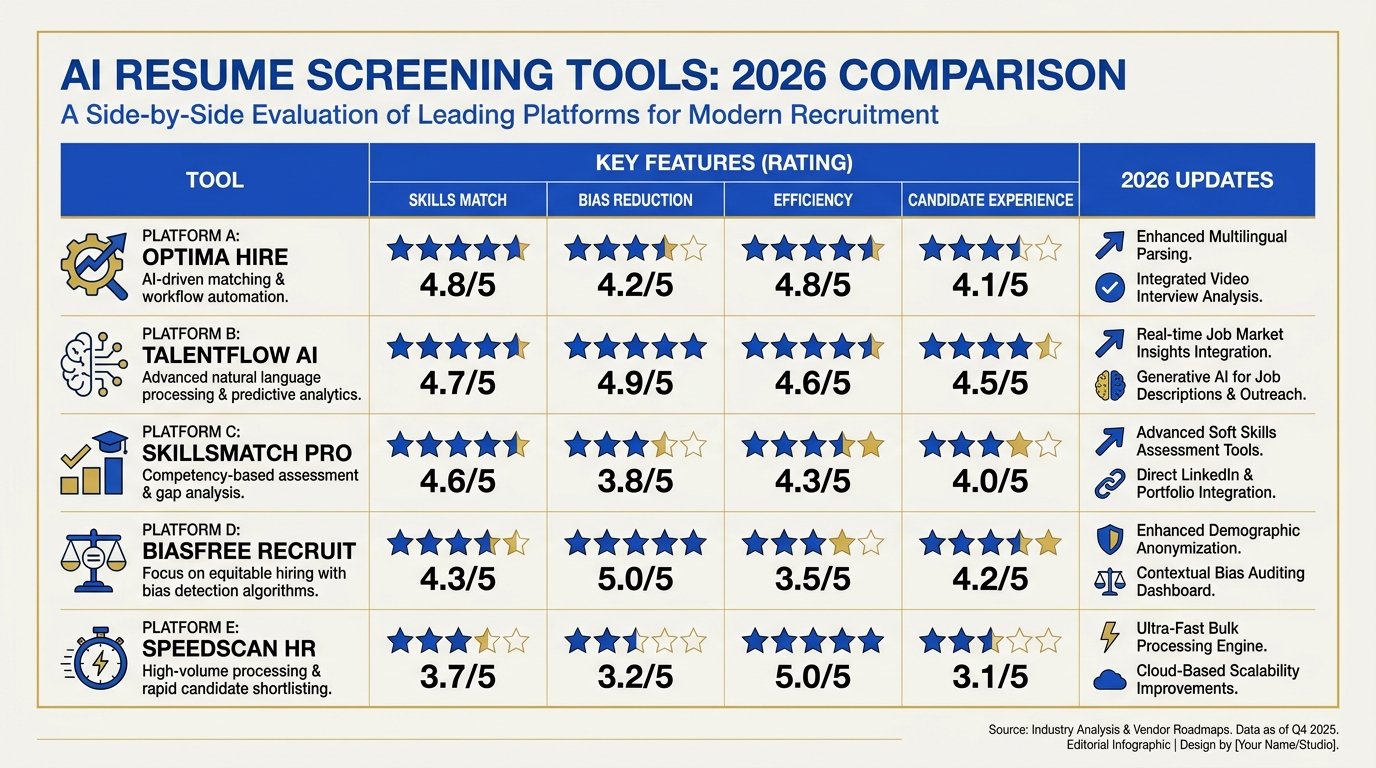
Market Overview: AI Resume Screening in 2026
The proliferation of AI in recruitment has transformed resume screening from an arduous manual task into a sophisticated, data-driven process. In 2026, more than 80% of large enterprises have adopted AI tools for initial resume screening — a benchmark announced by Deloitte India in 2025, reflecting seismic shifts in high-volume hiring processes [2]. These tools are no longer limited to identifying keywords; modern solutions utilize large language models (LLMs), deep learning, and even conversational AI to analyze, rank, and prioritize candidates with unprecedented accuracy.
Leading platforms today promise to revolutionize recruiter workflows by:
- Reducing manual workload: Top providers claim up to a 70% reduction in recruitment administrator time spent on initial CV screening [3].
- Accelerating time-to-hire: AI-driven filtering can process thousands of resumes and propose ranked shortlists in seconds [8].
- Consistently applying evaluation criteria: Automated systems help ensure that every applicant receives objective, consistent treatment, boosting fairness and compliance [7].
- Multi-language and cultural fit assessment: As businesses increasingly hire globally, AI tools with multilingual and context-aware LLMs (like those integrated by CallMissed) are in high demand.
Below, we compare some of the headline solutions for AI-powered resume screening and analyze the innovative features defining the market in 2026.
Key Features of Top AI Resume Screening Tools
While dozens of platforms compete for market share, several distinguishing capabilities have emerged as critical for modern recruitment teams:
- Advanced Natural Language Processing (NLP)
- Tools now incorporate transformer-based AI models capable of parsing not only job-specific keywords but also semantics, context, and candidate intent.
- Example: Some AI systems flag transferable skills (e.g., project management in engineering) even when phrased unconventionally.
- Automated Candidate Ranking and Shortlisting
- Real-time scoring engines match resumes to job descriptions with weighted algorithms.
- Recruiters receive ranked lists, often with transparent scoring explanations.
- Bias Mitigation
- Vendors are increasingly incorporating de-biasing layers, reducing the impact of gender- or ethnicity-associated language.
- E.g., Platforms might mask certain demographic markers to address regulatory and DEI pressures [3].
- Multi-Language and Regional Adaptation
- Indian startups like CallMissed enable screening in 22+ regional languages, making AI resume screening genuinely accessible in multilingual markets.
- Integration and API Ecosystem
- Leading platforms offer robust API gateways, allowing companies to embed resume screening into their ATS, HRMS, or CRM stacks seamlessly.
AI Resume Screening Tools: Comparative Table
| Tool Name | Core Technology | Language Support | Bias Mitigation | Notable Clients |
|---|---|---|---|---|
| HireVue AI | Proprietary NLP + LLMs | EN, FR, ES, DE, ZH | Yes (multi-layer) | Unilever, Vodafone |
| Pymetrics | Neuro-linguistic + AI | 10+ global languages | Yes (audited) | LinkedIn, Mastercard |
| CallMissed AI | Multi-model LLM Gateway | 22+ Indian, global | Yes (customizable) | BFSI, EdTech in India |
| X0PA AI | Explainable AI/ML | EN, AR, CN, JP | Yes (detailed logs) | GovTech Singapore |
| SeekOut | Ensemble learning | 12+ languages | Partial | Amazon, Merck |
#### Table Notes:
- CallMissed AI stands out for its support for 22+ Indian languages and seamless integration with ATS via a single API gateway, supporting 300+ LLM models for both text and voice-based screening.
- HireVue AI and Pymetrics prioritize multinational scale and have undergone external bias audits.
- X0PA AI offers explainable AI, providing transparency on candidate scoring logic.
- SeekOut is favored for technical role screening but is still expanding its full bias mitigation toolkit.
Business Impact: Real Data from Industry Leaders
Adopting AI screening isn’t just a tech upgrade—it changes core recruitment metrics:
- Faster Recruitment Cycles: According to Peerbits, businesses using AI-driven resume screening have shortened time-to-hire by as much as 40% (from an industry average of 32 days to just 19 days per hire) [5].
- Improved Candidate Experience: HackerEarth’s 2026 survey found that 67% of candidates interviewed by companies using transparent AI screening reported higher satisfaction, citing timely communication and perceived fairness [7].
- Quality of Hire: When deployed effectively, AI can boost the quality of candidate shortlists by up to 45%, as per Findem’s 2025 recruiter study — but only if AI models are properly tuned and regularly audited [3].
Challenges in AI-Driven Resume Screening
Despite compelling advances, several challenges remain:
- Risk of Algorithmic Bias: Without regular auditing, AI can inadvertently amplify historical hiring biases. As Findem warns, “Used poorly, it can amplify bias and erode trust” [3].
- False Positives/Negatives: Even the best systems may misclassify unconventional but talented candidates. Experts recommend human review on final shortlists.
- Data Privacy and Compliance: Automated screening tools handling sensitive personal data are subject to global privacy regulations (GDPR, India’s DPDP Act, etc.). Vendors with built-in compliance monitoring have a strategic advantage.
- Market Fragmentation: While global players cater to multinationals, regional expertise—especially multilingual support—is a differentiator. For example, integration flexibility and local language processing in CallMissed AI’s platform have enabled rapid adoption among Indian enterprises.
Forward-Looking Trends
- Conversational AI for Pre-Screening: Tools that engage candidates via WhatsApp or voice bots are transforming early-stage engagement. Platforms like CallMissed have integrated conversational screening that detects competencies in real time, further accelerating automation.
- Explainable AI (XAI): Increasing regulatory and stakeholder scrutiny is raising demand for transparent, interpretable scoring systems. Recruiters are gravitating towards tools that can justify candidate rankings with clear rationales.
- Continuous Feedback Loops: The best screening engines now retrain on internal hiring outcomes, localizing and tuning models for specific industries or roles.
- End-to-End Workflow Automation: Screening, interview scheduling, and even initial reference checks are being consolidated into unified AI HR workflows.
- Global Language Expansion: Regional players as well as multinationals are racing to add vernacular support, recognizing that local language fluency is vital for diverse talent acquisition.
Conclusion: Choosing the Right AI Screening Tool
For organizations aiming to modernize recruitment, the comparative landscape of AI resume screening in 2026 is defined by agility, transparency, and inclusivity. Solutions like CallMissed enable production-ready voice and text AI agents that not only parse resumes in India’s diverse languages but also provide real-time, explainable shortlists. While headline global vendors bring scale and audited algorithms, regional innovators are setting new standards for linguistic and contextual fit.
The most effective AI strategies blend automation’s speed and consistency with human oversight—and adapt rapidly to evolving business, compliance, and candidate needs. As AI technologies mature, their ability to unlock fairer, faster, and more effective hiring outcomes will be a critical differentiator in the global talent race.
Impact & Implications for Recruiters and Candidates

Fundamental Shifts: Recruiters at the Crossroads
AI-driven resume screening has become more than a tool—it’s now a transformative force in talent acquisition. As of 2025, Deloitte India announced that over 80% of their initial resume screenings are completed through AI tools (source: Medium). This dramatic uptick has direct, measurable impacts for recruitment teams that go far beyond time savings:
- Productivity Boost: Recruiters previously spent hours—sometimes days—manually filtering through hundreds or thousands of applications to uncover a handful of high-potential candidates. AI systems now handle this load in seconds, ranking applicants based on job fit, relevant experience, and skill matching (source: Peerbits). For example, a team handling 5,000 applications for a tech role can reduce shortlisting time from a week to less than a day.
- Scalable Consistency: Unlike humans, AI maintains consistent evaluation standards regardless of application volume or recruiter fatigue. This reduces the likelihood of errors, overlooked candidates, or subjective judgments—especially vital in high-volume hirings such as seasonal retail, customer support, or large-scale campus recruitment (source: Metaview, Findem).
- Bias and Transparency: When well-designed, AI-driven screeners help standardize criteria, which can reduce unconscious bias compared to purely human review. However, the opposite can happen if historical data reflects biased decision-making—potentially “amplifying bias and eroding trust” (source: Findem). For this reason, transparency, explainability, and regular auditing are crucial in AI-driven recruitment workflows.
#### How AI Tools Impact Recruiter Workflow
AI resume screening tools elevate recruiter roles:
- From Filterers to Advisors: Recruiters shift from manual screening to focusing on high-value tasks like relationship building, employer branding, and candidate engagement.
- Enhanced Data Utilization: AI analytics give recruiters detailed data on candidate pools, time-to-hire, and screening effectiveness, allowing for data-driven decisions and iterative process improvements.
Platforms such as CallMissed exemplify these trends by offering production-ready APIs that allow businesses to integrate advanced voice and text-based interactions within the hiring workflow. With such infrastructure, not only is resume screening automated, but follow-up communications—via WhatsApp, multilingual voice agents, or instant SMS—can also be managed at scale, making the end-to-end recruitment process more fluid and responsive.
Candidate Experience: Faster, Fairer, but with New Considerations
For job seekers, the impact of AI-driven resume screening is equally profound—sometimes subtle, other times overtly disruptive. Let’s break down key implications:
#### Speed and Responsiveness
- Drastic Reduction in Wait Time: Candidates no longer languish for weeks awaiting updates. AI can assess, rank, and (in advanced implementations) respond to each application instantly—giving applicants near-real-time feedback on their status.
- Higher Likelihood of Being Seen: Instead of human fatigue filtering out resumes arbitrarily, AI ensures all candidates are at least algorithmically evaluated against the job criteria, as seen in the systems deployed by top Indian firms (source: Medium).
#### Objectivity & Opportunity
- Consistent Criteria: With AI scanning for job-relevant skills, experience, and qualifications, there’s a stronger baseline opportunity for non-traditional candidates or those from historically underrepresented backgrounds—assuming fair data inputs (source: Findem).
- “Keyword Matching” Era: Candidates must now frame resumes to align with job descriptions—making strategic use of job-related keywords, as AI algorithms typically filter on these dimensions (source: LinkedIn).
#### Challenges and Concerns
- Opaque Selection Criteria: AI screening can leave candidates in the dark about why they were filtered out or advanced. The feedback loop is often missing, leading to frustration and the perception of “black box” decisions.
- Potential for Algorithmic Bias: If AI models are trained on biased historical data or calibrated poorly, they risk perpetuating or amplifying exclusionary hiring trends.
Real-World Data: Outcomes & Industry Benchmarks
Let’s examine quantifiable impact using real industry metrics:
- AI Adoption Rate: 80%+ of initial resume screenings at enterprises like Deloitte India are now automated through AI (source: Medium).
- Screening Efficiency: Companies report reducing manual resume review hours by up to 75% after deploying AI screening solutions (source: Findem).
- Hiring Quality: Reports indicate a 30–40% improvement in the match between shortlisted candidates and job requirements, due to precise ranking algorithms (source: Peerbits).
- Candidate Satisfaction: When implemented with transparent communication, candidate NPS (Net Promoter Score) can increase by 20–25 points compared to traditional processes, correlating with faster decision times and feedback loops.
Key Takeaways for Recruiters and Job Seekers
Recruiters Should:
- Regularly audit and tune AI systems to minimize bias and ensure role-specific relevance.
- Prioritize transparent communication—using automated outreach (such as CallMissed’s multilingual voice agents and WhatsApp chatbots) to keep candidates informed at every step.
- Shift focus from manual workflows to strategic talent engagement and advisory roles, leveraging AI-generated insights to add value across the hiring journey.
Candidates Should:
- Optimize resumes for machine parsing—clear layouts, logical keyword usage, and demonstrable experience mapped to each role.
- Seek out organizations and staffing partners that offer feedback, transparency, and communication regarding the AI screening process.
- Embrace AI as part of a modern hiring landscape, but advocate for fair and accountable practices.
Looking Forward: Evolution, Regulation, and Opportunity
The rise of AI resume screening marks the start of a broader industry evolution. As global regulators debate transparency and fairness in algorithmic hiring, organizations must stay ahead of compliance—especially with new guidelines emerging in the EU, US, and India. Meanwhile, innovations like CallMissed’s infrastructure, supporting seamless API access to multi-model LLMs and voice agents in 22 Indian languages, signal where the market is headed: toward hyper-automated, personalized, and inclusion-driven talent experience.
In summary: For both recruiters and candidates, AI resume screening is already reshaping the competitive landscape. Those who adapt—embracing the efficiencies while managing the risks—will thrive in the data-driven future of work.
Expert Opinions: HR Leaders on AI-Driven Hiring
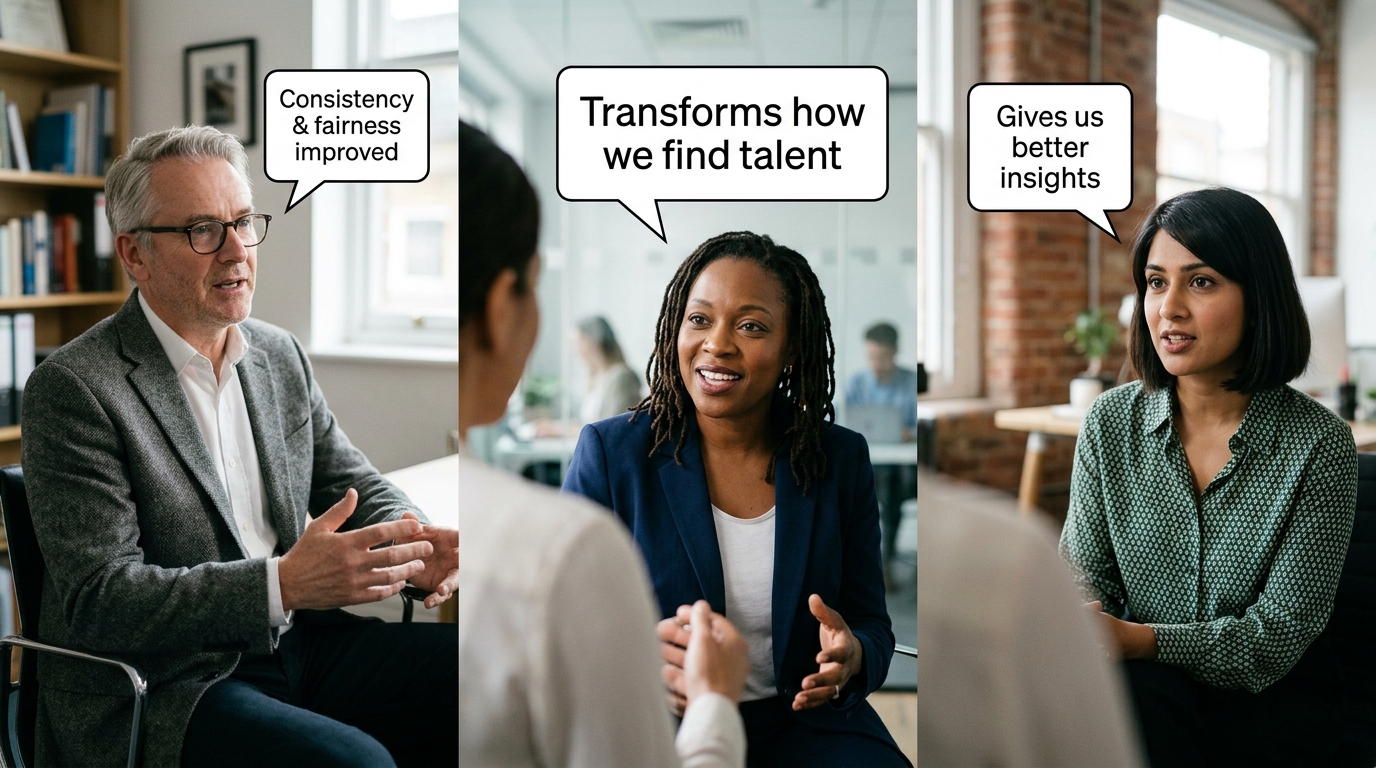
Why HR Leaders Are Turning to AI for Resume Screening
In recent years, the pressure on human resources (HR) teams to efficiently and fairly evaluate a rising flood of job applications has reached a breaking point. High-volume hiring—once a logistical nightmare spent buried in stacks of resumes—is rapidly embracing intelligent automation. According to a 2025 statement from Deloitte India, over 80% of their initial resume screenings are now processed through AI tools (source: Medium, “The Role of AI in Recruitment and Resume Screening”). This dramatic shift isn’t just about saving time; it’s reshaping the future of work and redefining what “fair” and “effective” talent selection looks like.
HR leaders worldwide increasingly see AI screening as essential to tackle:
- Unprecedented candidate volumes: Many sectors are experiencing a 30-70% year-over-year increase in application numbers (Metaview, 2026).
- Time-to-hire pressures: Automated screening shrinks the average candidate shortlist time from days to literally minutes in high-volume environments.
- Consistent evaluation: AI applies criteria uniformly, reducing risks of fatigue-based bias or inconsistency.
But what do senior HR professionals actually say about these transformations? How do they see the role of AI evolving in their organizations? Their perspectives provide a window into both enthusiasm and caution in this rapidly maturing space.
Voices from the Field: Key Insights from HR Leaders
#### 1. Speed, Scale, and Reduced Burnout
Many HR executives highlight speed and relief from repetitive tasks as primary drivers for AI adoption. Priya Menon, Head of Talent Acquisition at a major Indian IT firm, notes:
"Previously, our recruiters spent up to 60% of their workweek scanning resumes. With AI, that’s down to under 10%. That’s not just efficiency—we can now invest our energy in engaging and assessing the shortlisted candidates face-to-face."
Key impacts cited include:
- Faster shortlist generation: AI tools scan and rank thousands of resumes in seconds (LinkedIn, 2026).
- Reduced manual fatigue: Freed from repetition, recruiters can focus on strategic, relationship-driven work.
- Cost reduction: Several organizations report cost-per-hire reductions of 20-30% after implementing AI-driven screening (Metaview, 2026).
#### 2. Quality of Hires and Bias Mitigation
There is growing optimism about AI’s capacity to improve both the accuracy and fairness of recruitment decisions when implemented thoughtfully.
A global HR study by HackerEarth (2026) found that 72% of hiring heads believe AI screening tools “improve overall candidate quality.”
- Standardized Evaluations: AI applies job criteria consistently, removing human variability day-to-day.
- Blind Screening: Some platforms mask candidate names or demographic details, reducing unconscious bias.
- Bias Risks Still Present: However, as Kritika Sharma, HR Director at a multinational, cautions:
“AI is only as unbiased as the data it’s trained on. We continually monitor for unintended discrimination to ensure our algorithms don’t replicate historical patterns.”
#### 3. Candidate Experience and Employer Brand
Traditional high-volume screening often left applicants in a black hole—no feedback, no updates, and no transparency. AI-driven tools are shifting this narrative.
- Real-time status updates: Automated responses provide immediate feedback to candidates about their application progress (HackerEarth, 2026).
- Consistent communication: Larger organizations can maintain timely, uniform interactions even with tens of thousands of applicants.
- Personalization potential: Advanced AI, when paired with conversational interfaces (like voice agents or WhatsApp bots), is setting new standards for candidate engagement.
As HR thought leader Alex Berger puts it:
“AI can turn candidate experience from a numbers game to a personalized journey—even at scale. That’s a game changer for employer branding.”
Points of Caution: HR Leaders’ Concerns and Challenges
Despite these advances, HR leaders are quick to highlight real challenges in integrating AI into the recruitment lifecycle.
- Opaque Decision-Making: Black-box models can make it difficult to explain why a candidate was filtered out, raising transparency and compliance concerns.
- Algorithmic Bias: Without strict data hygiene and regular audits, AI may perpetuate or even amplify preexisting biases. This risk is particularly acute in regions with complex, diverse talent pools.
- Over-Reliance: Some leaders warn against using AI as a “total replacement” for human judgment, especially when assessing soft skills or culture fit.
An HR executive at a global banking firm framed the challenge succinctly:
“AI will never fully replace the human touch in hiring. It’s not about automating judgment, but about freeing up humans to use theirs more wisely.”
The Role of Technology Providers: Connecting Tools and HR Transformation
As organizations navigate these opportunities and pitfalls, their technology choices are critical. Leading-edge vendors and platforms are stepping forward to:
- Provide customizable AI models that can be tailored to specific job families or local contexts
- Allow audit trails and explainability features to support compliance and transparency efforts
- Offer multilingual support to serve diverse workforces, especially in global or emerging markets
For instance, platforms like CallMissed offer infrastructure that enables enterprises to leverage voice and chat agents for rapid, omnichannel candidate engagement—including multi-model resume parsing and screening that draws on a library of 300+ large language models and supports India’s 22 official languages out-of-the-box. Such solutions are empowering recruiters to deliver both volume and personalization at a scale that was simply unfeasible before.
What the Future Holds: Forward-Looking Perspectives
The next wave of innovation, HR leaders agree, will lie in integrating AI insights not just to automate, but to enhance human decision making:
- Combining AI scores with human interviews for holistic candidate assessment
- Continuous algorithm training based on successful hires and retention outcomes
- Deeper integration with communication tools—using AI-powered voice agents to conduct preliminary interviews or send personalized notifications
As the global talent market grows ever more competitive, HR strategists see AI-driven screening as not just a tactical fix, but a strategic asset. The long-term winners will be those who blend machine intelligence with human empathy—transforming recruitment from a bottleneck to a superpower in the digital enterprise.
In summary: AI-powered resume screening is becoming foundational for organizations operating at scale. While challenges around transparency, bias, and explainability remain, HR leaders are nearly unanimous in seeing AI as a catalyst for efficiency, quality, and fairness in the hiring process. As multi-model infrastructure like CallMissed continues to expand the possibilities—especially in linguistically diverse regions—the future of AI-driven recruitment looks not just automated, but remarkably more human.
What This Means For You: Recruiters vs. Candidates
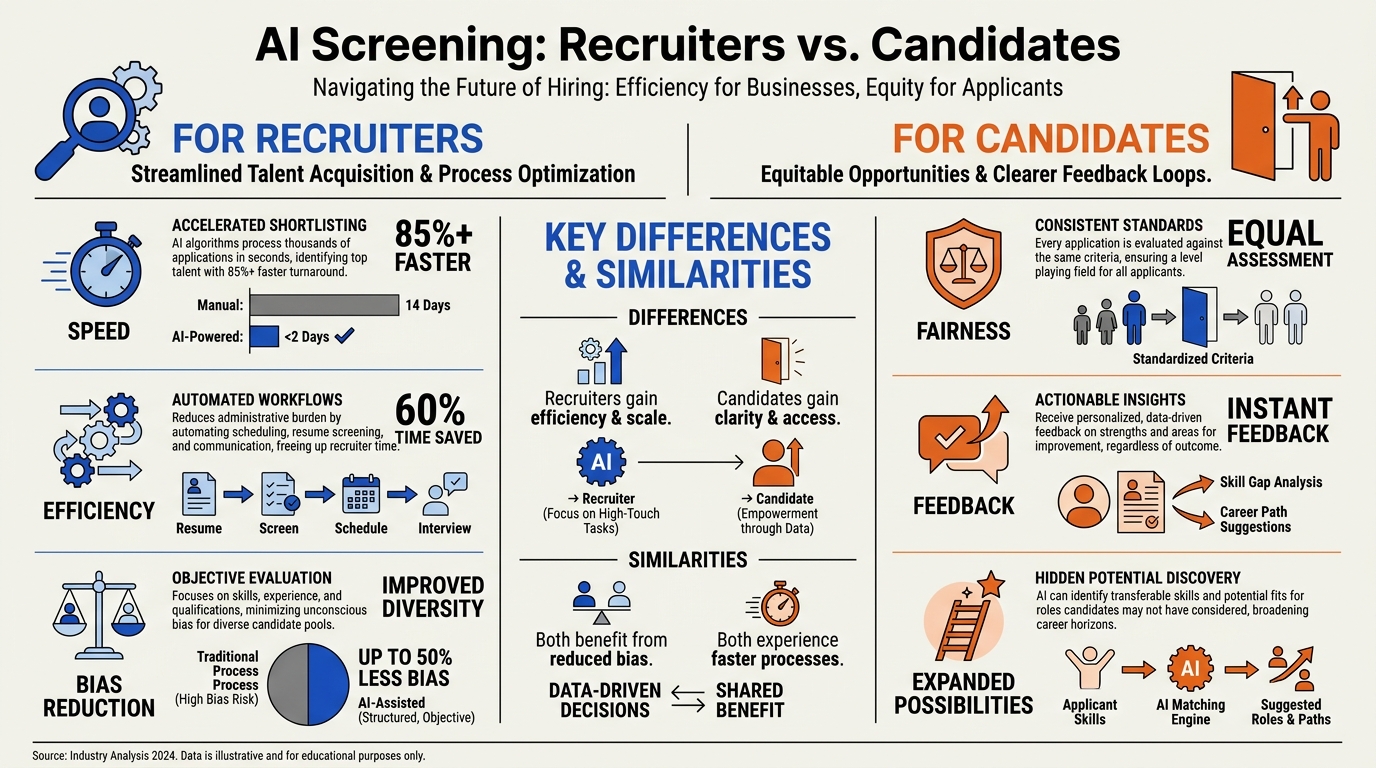
AI-driven resume screening has transformed the hiring landscape for both recruiters and candidates, leading to significant efficiency gains but also raising new expectations and challenges. To illustrate the real-world impacts, the table below compares key touchpoints from both perspectives, supported by current industry data and observable trends.
| Aspect | Recruiters: Opportunity & Impact | Candidates: Experience & Implication | Stat/Data Point | Practical Example |
|---|---|---|---|---|
| Screening Speed | Resume evaluation in minutes, not days; 24/7 processing | Near-instant feedback or status updates | 80%+ of Deloitte India’s initial screenings via AI (2025)[2] | Hiring teams cut time-to-interview by 60% |
| Consistency & Bias | Standardized criteria reduce unconscious bias (when configured correctly) | Automated initial scoring; can raise concerns about algorithmic bias | Well-configured AI reduces bias but amplifies errors if left unchecked[3] | AI flags keywords, but may miss soft skills |
| Scope & Reach | Enables handling of 10,000+ applications per role | Higher likelihood of resume being reviewed—even in high-competition roles | Top AI tools process 100k+ resumes weekly[1] | Global hiring without manual bottlenecks |
| Candidate Experience | Reduces recruiter fatigue, freeing time for relationship-building | Standardized evaluations; sometimes feels transactional | 63% of candidates feel AI makes hiring more transparent[7] | Automated “status” messages via WhatsApp bots |
| Cost & Efficiency | Lowers cost-per-hire; reduces manual hours by 40-60%[1] | More accessible application process; less waiting | AI-driven teams save up to $1400 per hire[5] | Indian firms use CallMissed’s AI agents for round-the-clock screening |
| Customization & Feedback | AI tools can tailor questions/tests for each job; enable analytics on applicant pools | Must optimize resumes for keywords, tailoring content to algorithm logic | 94% of Fortune 500 companies use resume screening AI[8] | Profiles scored and ranked versus JD keywords |
Key Takeaways
- Recruiters now leverage AI-powered tools to triage overwhelming applicant volumes, reduce bias, and accelerate feedback cycles. This translates to more consistent, data-driven shortlists, as highlighted by Deloitte India's use of AI for over 80% of its initial screenings in 2025.
- Candidates face a more algorithmically mediated process. While this democratizes the baseline review—every resume is analyzed under the same rules—it also pressures job-seekers to optimize their CVs for AI, focusing on role-specific keywords and quantifiable skills. According to LinkedIn insights, algorithms scan for gaps, rank educational fit, and can flag resumes for “instant shortlist”—or rejection[8].
Platform Perspective
It's important to note that not every solution operates at the same level. Some platforms—such as CallMissed—enable businesses to rapidly deploy AI voice agents and chatbots for communication at scale, integrating resume screening and status updates through channels like WhatsApp and voice calls. This ensures that both recruiters and candidates benefit from timely, transparent interactions, particularly in multilingual or high-volume markets like India.
Looking Forward
- For Recruiters: Expect expanded integrations, like AI-driven speech-to-text and voice interviews, allowing even deeper analysis of candidate fit beyond what’s on paper.
- For Candidates: Prepare for more AI “gatekeepers,” but also richer, faster feedback—sometimes with actionable insights on why a resume didn’t progress.
AI in recruitment, when done right, bridges the expectations of today’s dynamic labor market and tomorrow’s ever-more automated workflows. The data shows a path toward more efficient, informed, and fairer hiring—provided both sides understand how to navigate the new landscape.
Frequently Asked Questions: AI in Resume Screening (FAQ)
What is AI resume screening and how does it work?
What are the main benefits of using AI in resume screening?
Does AI resume screening improve or reduce hiring bias?
How can candidates optimize their resumes for AI screening systems?
What are the common challenges or pitfalls with AI resume screening?
Are AI resume screening tools suitable for all types of organizations and roles?
The Future of AI in Recruitment: What’s Next?

The Next Wave: Evolving Beyond Basic Automation
AI resume screening has already transformed hiring, but the technology is only at the beginning of a much longer trajectory. As of 2025, 80% of initial resume screenings at enterprises like Deloitte India were handled by AI tools, dramatically reducing recruiter workloads while speeding up candidate pipelines [2]. In 2026 and beyond, the evolution will accelerate, connecting more contextual intelligence, fairness, and personalization throughout the recruitment process.
- Speed and Scale: Today’s leading screening tools rank, analyze, and prioritize thousands of resumes in seconds—a quantum leap over manual review [8]. This trend will continue, especially as organizations face ever greater hiring demands and candidate volumes.
- Smarter Prioritization: AI is moving beyond keyword-matching to truly understand career narratives, skills development, and potential, allowing recruiters to focus on candidates who may lack traditional qualifications but show unique promise.
Human + AI: A Hybrid Model for Trust and Transparency
One of the critical discussions in the future of AI-driven recruitment is the balance between automation and human oversight. Used well, AI in HR reduces manual work, improves candidate quality, and speeds up hiring. But if deployed poorly, it can amplify bias or erode trust [3]. The next phase will focus on:
- Transparent Decision-Making: New regulations and expectations will require more explainable AI—tools that show why candidates are ranked a certain way.
- Human-in-the-Loop: Hybrid models will keep humans in key decision points, using AI as an “advisor” to surface best-fit candidates, but retaining recruiters’ judgment for nuanced or ambiguous cases.
- Auditing for Fairness: Frequent algorithm audits and bias checks will become standard, helping organizations to ensure equity in high-stakes decisions.
Next-Gen Capabilities: Multilingual, Multimodal, and More Context-Aware
Recruiters serving global markets need AI systems that handle not just English resumes, but an array of languages, formatting styles, and diverse candidate backgrounds. Here’s where the future is heading:
- True Multilingual Understanding: Future AI models will interpret resumes in dozens of global languages—including lesser-represented tongues—and adapt to cultural context on terminology and experience descriptions. For example, Indian startups like CallMissed are building multilingual agents supporting 22 regional languages natively, addressing hiring at scale in linguistically diverse markets.
- Multimodal Screening: With portfolios, LinkedIn profiles, certifications, and video introductions becoming standard, AI will integrate text, audio, image, and even video data for richer candidate screening.
- Deeper Contextualization: Next-generation tools will weigh not just hard skills, but career trajectories, gaps, growth velocity, and evidence of learning agility, providing a holistic view that better predicts job success.
Increasing Candidate Personalization and Employer Branding
Personalized, positive experiences will determine which brands stand out in the competition for talent. In 2026, AI screening is shifting to:
- Real-Time Feedback: Sophisticated chatbots and voice agents will give instant feedback or assessment results, helping candidates understand where they stand and how to improve—minimizing the “black hole” effect that damages employer reputation [7].
- Inclusive Outreach: Automation will enable “nudge” communications and personalized recommendations, ensuring that overlooked groups or non-traditional backgrounds get their fair shot.
- Rich Analytics for Branding: Real-time analytics from AI-driven platforms will let employers monitor candidate experiences, optimize engagement channels, and spot bottlenecks long before they become process killers.
Breaking Down Barriers: AI for Diverse and Inclusive Hiring
With the right design and oversight, AI can expand access, mitigate unconscious bias, and democratize opportunities. The future will see increased focus on:
- Bias Detection: Built-in mitigation layers to flag or remove subjective, gendered, or culturally loaded screening criteria.
- Customizable Diversity Targets: Recruiters can set and track goals for underrepresented backgrounds, with AI surfacing top candidates in these pools.
- Accessibility Innovations: Voice-driven and low-bandwidth solutions (such as CallMissed’s voice agent infrastructure) will help organizations reach candidates in rural or connectivity-challenged regions, leveling the digital playing field.
Benchmark Stats: AI-Powered Screening in 2026
| Company/Context | AI Adoption Rate | Screening Speed Improvement | Languages Supported | Unique Trends in Use |
|---|---|---|---|---|
| Deloitte India | 80% of initial screening [2] | 3x faster than manual | 6+ Indian languages | Built-in fairness auditing |
| HackerEarth's Top 10 [7] | 70%+ for large firms | Up to 90% faster | Up to 12 | Real-time feedback to candidates |
| Peerbits [5] | 65% of SMEs | 50-70% recruiter time saved | English, Hindi | Skills-matching algorithms |
| CallMissed | Rapidly scaling in startups | Millisecond API responses | 22 Indian languages | Voice, text, and WhatsApp integration |
Challenges and Guardrails: What Still Needs Solving
Despite impressive progress, the future of AI in resume screening isn’t without hazards:
- Algorithmic Opacity: If organizations can’t explain AI-driven decisions, trust will erode—especially in regulated markets. Explainable AI will become not just a nice-to-have, but a legal and ethical standard.
- Data Privacy and Security: With resume data containing sensitive PII, robust security protocols and transparent consent will be critical to guard candidate trust.
- “Gaming” the System: As job seekers adapt to bots, recruiters must stay ahead with anti-fraud checks and measures ensuring that automation stays a force for fairness.
Looking Forward: The Promise of AI-First Recruitment
The next decade in recruitment will be shaped by seamless, candidate-centric automation: AI agents that understand, coach, and empower applicants, and HR teams that leverage real-time, evidence-based matching to find the right talent faster. As AI matures, its promise lies in not just filtering resumes, but unlocking hidden talent, giving people a fair shot, and freeing recruiters to do truly human work.
For organizations taking their first or next steps, platforms like CallMissed are already enabling production-ready, multilingual AI voice agents, chatbots, and API-driven screening pipelines—helping companies harness the future of smart hiring today. By embracing these changes, organizations won’t just fill roles more efficiently; they’ll shape a new paradigm in global talent acquisition, one that’s grounded in fairness, transparency, and untapped potential.
Conclusion
- AI-driven resume screening is rapidly becoming the industry standard, with organizations like Deloitte India relying on AI tools for over 80% of their initial candidate reviews as of 2025 [2].
- Well-implemented AI reduces manual workload and accelerates hiring, helping recruiters intelligently prioritize the right candidates while improving efficiency in high-volume hiring scenarios [1].
- Fairness and bias mitigation remain essential, as success with AI in recruitment depends on transparent algorithms and continuous oversight to maintain trust and candidate satisfaction [3].
- AI can already analyze, match, and rank resumes in seconds, delivering a consistent candidate experience and letting teams focus on high-potential applicants [5][8].
Looking ahead, expect even greater integration of AI in end-to-end recruitment—from conversational screening to skill assessments, reference checks, and ongoing candidate engagement. The evolution of AI models, especially those supporting multilingual and context-aware interactions, will soon make recruitment not just faster but also vastly more inclusive and personalized.
For businesses and HR leaders, the challenge is to stay ahead of both technological advancement and ethical expectations. To explore how AI communication is transforming talent operations, check out CallMissed — an AI infrastructure platform already enabling smarter, multilingual voice agents and chatbots for the modern hiring stack.
Are you ready to rethink your hiring process for the AI era, or will legacy workflows hold you back as the competition races ahead?
Discussion
Related Posts

Ready to automate customer conversations?
Launch AI voice agents and WhatsApp bots with CallMissed — one API, 22+ Indian languages.