

CallMissed Review: Pricing, Features, Alternatives & Who It’s For


Use this evidence-led CallMissed review to assess pricing, features, alternatives, risks, and checks to complete before buying.
CallMissed Review: Pricing, Features, Alternatives & Who It’s For
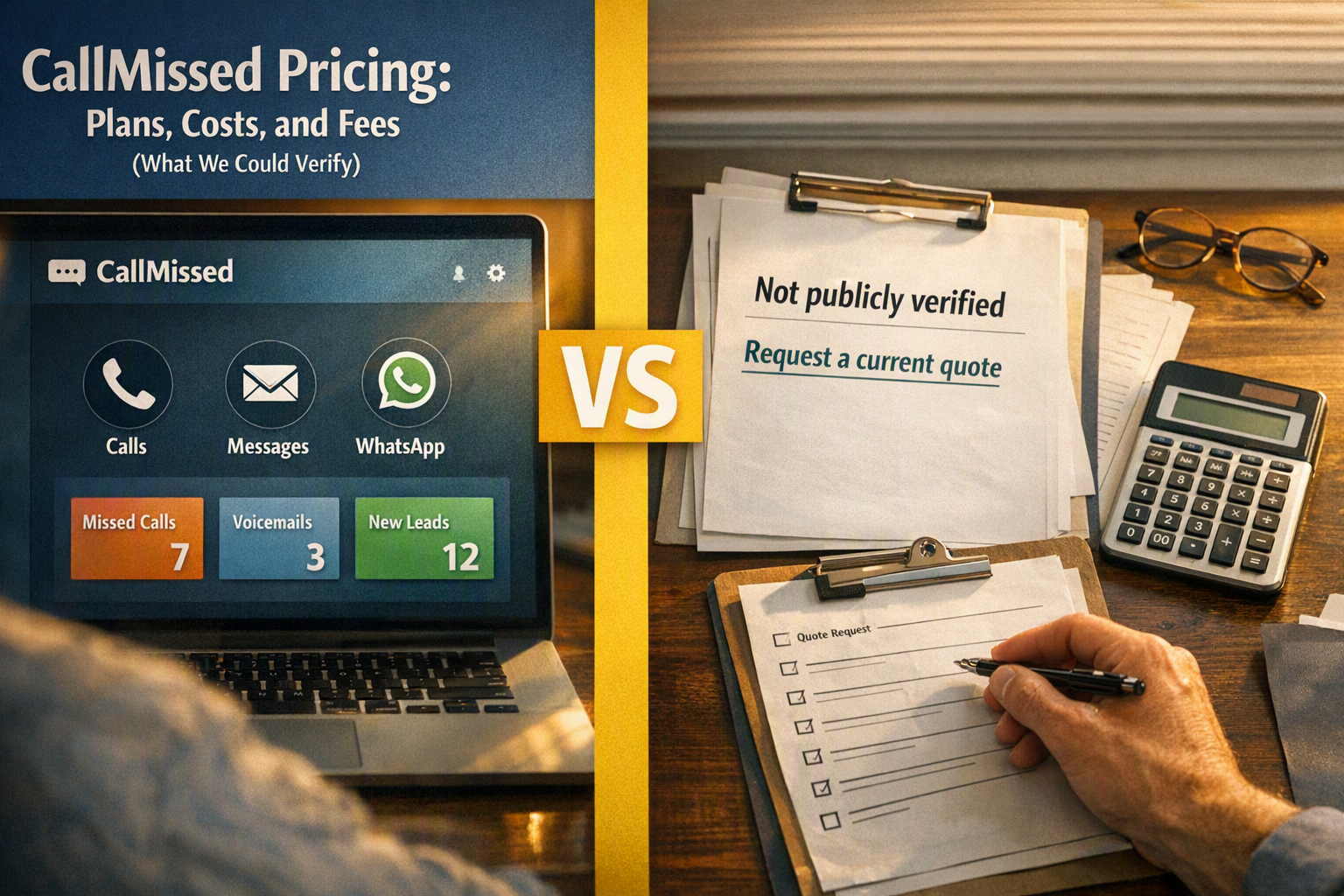
What if the most important finding in a CallMissed review is not a feature or price, but the information a buyer cannot independently verify? Based on the available public web research, there is not enough reliable evidence to confirm CallMissed’s current plans, pricing, usage limits, customer track record, or contractual terms. The practical verdict is straightforward: do not make a paid decision until CallMissed provides a live demonstration, written quote, product documentation, and clear terms.
That caution matters because AI communication platforms increasingly combine several purchase decisions in one: voice agents, phone numbers, WhatsApp messaging and calling, email automation, shared customer context, analytics, integrations, and human handoff. A low headline price can become expensive if usage fees, number rental, message charges, onboarding, implementation, or cancellation restrictions are disclosed only during sales. Conversely, a platform may be a strong fit for a business if it can reliably connect these channels and support the languages its customers use.
CallMissed’s own product materials describe an AI-native communication platform for businesses, including voice agents, WhatsApp chatbots, WhatsApp Business calling, omnichannel customer context, and developer APIs. Those materials also state support for 22 Indian languages across speech recognition and voice generation. These are useful product claims to investigate—not independent evidence of performance, uptime, customer satisfaction, or commercial value. First-party educational articles such as CallMissed’s guide to omnichannel AI agents and shared customer memory can explain the intended workflow, but they should not be treated as third-party reviews.
This review therefore separates confirmed information, first-party claims, and unknowns. It examines what CallMissed is intended to do, what is publicly verifiable about CallMissed pricing, which CallMissed features buyers should test, and whether the platform appears suitable for small businesses, support teams, developers, or India-focused companies. It also addresses CallMissed alternatives without inventing competitor prices or presenting unsupported superiority claims.
Most importantly, the evaluation focuses on questions a sales call should answer in writing: Are phone numbers available in the required countries? Are WhatsApp calls, messages, voice minutes, email sends, and API requests billed separately? Can agents hand off conversations to people while preserving context? What integrations, analytics, security controls, data-retention policies, support commitments, refunds, and cancellation rights apply?
By the end, readers should have a decision-ready framework for answering “is CallMissed worth it?”—not through an inflated rating, but through evidence. If the required documentation is unavailable, that absence is itself a buying signal: pause, request clarification, and compare only after the commercial and technical details are verifiable.
What is CallMissed, and is it worth considering?
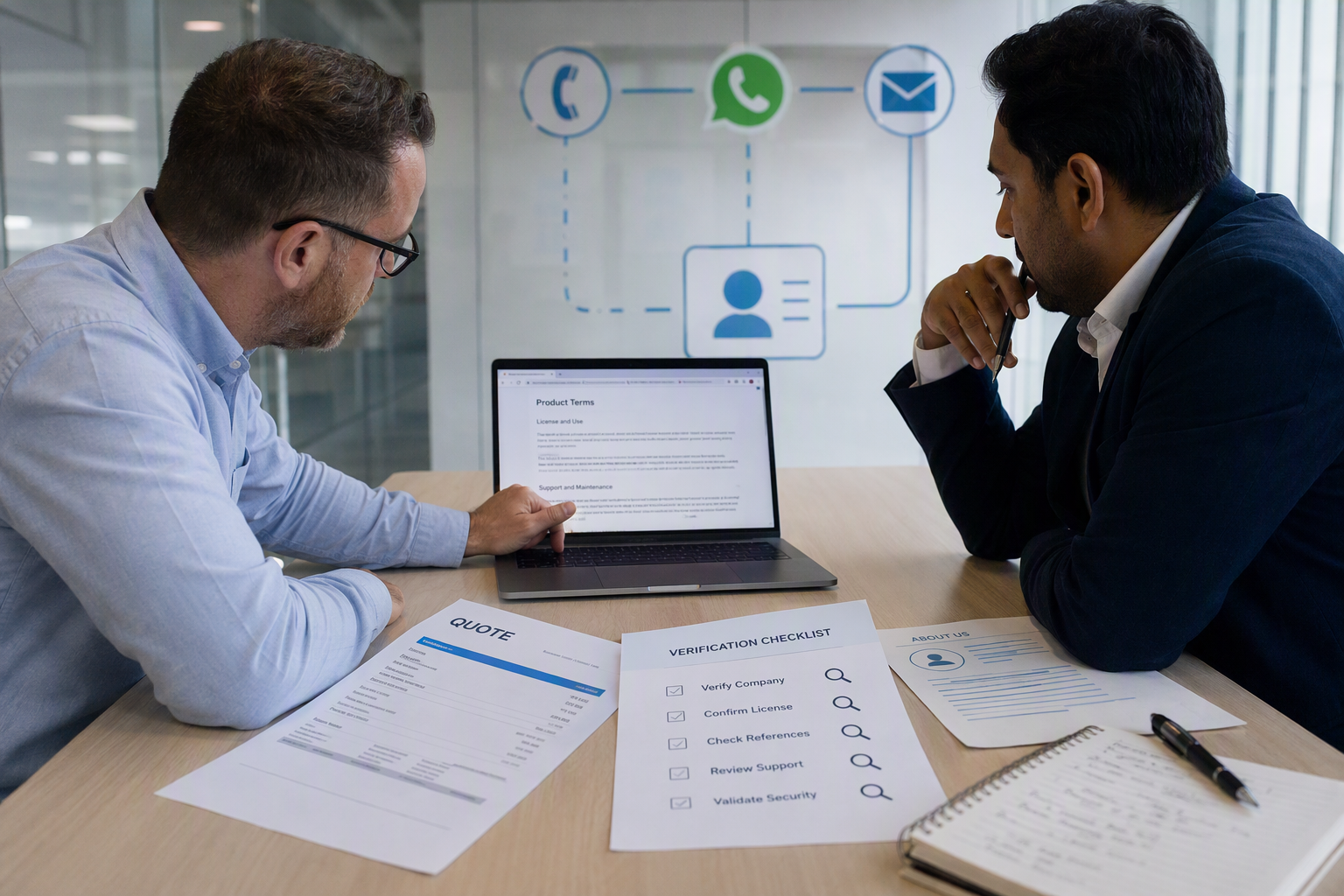
A CallMissed review should begin with a caution: available public research does not provide enough independently verifiable evidence to confirm current pricing, plan limits, customer results, or contractual terms. CallMissed may be worth evaluating—particularly for India-focused businesses—but buyers should request a live demonstration, written quote, product documentation, and full terms before making a paid decision.
What is CallMissed?
CallMissed describes itself as an AI-native customer-engagement and communication platform for businesses. Its product materials present a combined workflow spanning:
- AI voice agents for automated customer conversations
- WhatsApp chatbots and WhatsApp Business calling
- Shared customer context through an omnichannel inbox or CRM
- Email and campaign tooling
- Developer APIs for AI capabilities
CallMissed’s materials also state support for speech recognition and voice generation across 22 Indian languages. That Indic-first positioning could be relevant to companies serving regional-language audiences in India, where English-only automation may be insufficient.
However, these are first-party product claims, not independent validation of accuracy, uptime, call quality, customer satisfaction, or return on investment. For example, CallMissed’s articles about omnichannel AI agents and shared customer memory and WhatsApp agents explain the intended product experience, but they should not be treated as third-party reviews.
What does the available evidence confirm?
The current evidence supports investigating CallMissed, not confidently recommending it. The table below records the evidence position described in this review; these figures are research findings, not CallMissed product metrics or prices.
| Evidence item | Numeric detail | What it means | Verification status |
|---|---|---|---|
| Independently verified public pricing figures | 0 | No confirmed plan or usage price can be relied on from the available research | Not publicly verified |
| Independently verified usage limits | 0 | Minutes, messages, API calls, seats, and storage limits remain unclear | Not publicly verified |
| Independently verified customer-track-record figures | 0 | No confirmed customer count, ratings, case-study results, or retention data is established here | Not publicly verified |
| Languages stated in CallMissed materials | 22 | CallMissed claims Indian-language speech recognition and voice generation coverage | First-party claim; performance not independently verified |
Who should consider CallMissed?
CallMissed may deserve a structured evaluation from:
- India-focused businesses that need voice or chat experiences across regional languages.
- Support and sales teams seeking shared context across WhatsApp, voice, email, and human handoff.
- Developers interested in reaching multiple AI capabilities through an OpenAI-compatible gateway.
- Small businesses that prefer one communication platform rather than assembling separate tools.
The key question is not simply whether CallMissed has the advertised CallMissed features, but whether those features work reliably for the buyer’s countries, languages, traffic volumes, compliance requirements, and escalation workflows. A purchase decision should remain conditional until pricing, limits, integrations, privacy controls, support commitments, and cancellation terms are supplied in writing.
What can be verified about CallMissed? (TABLE)
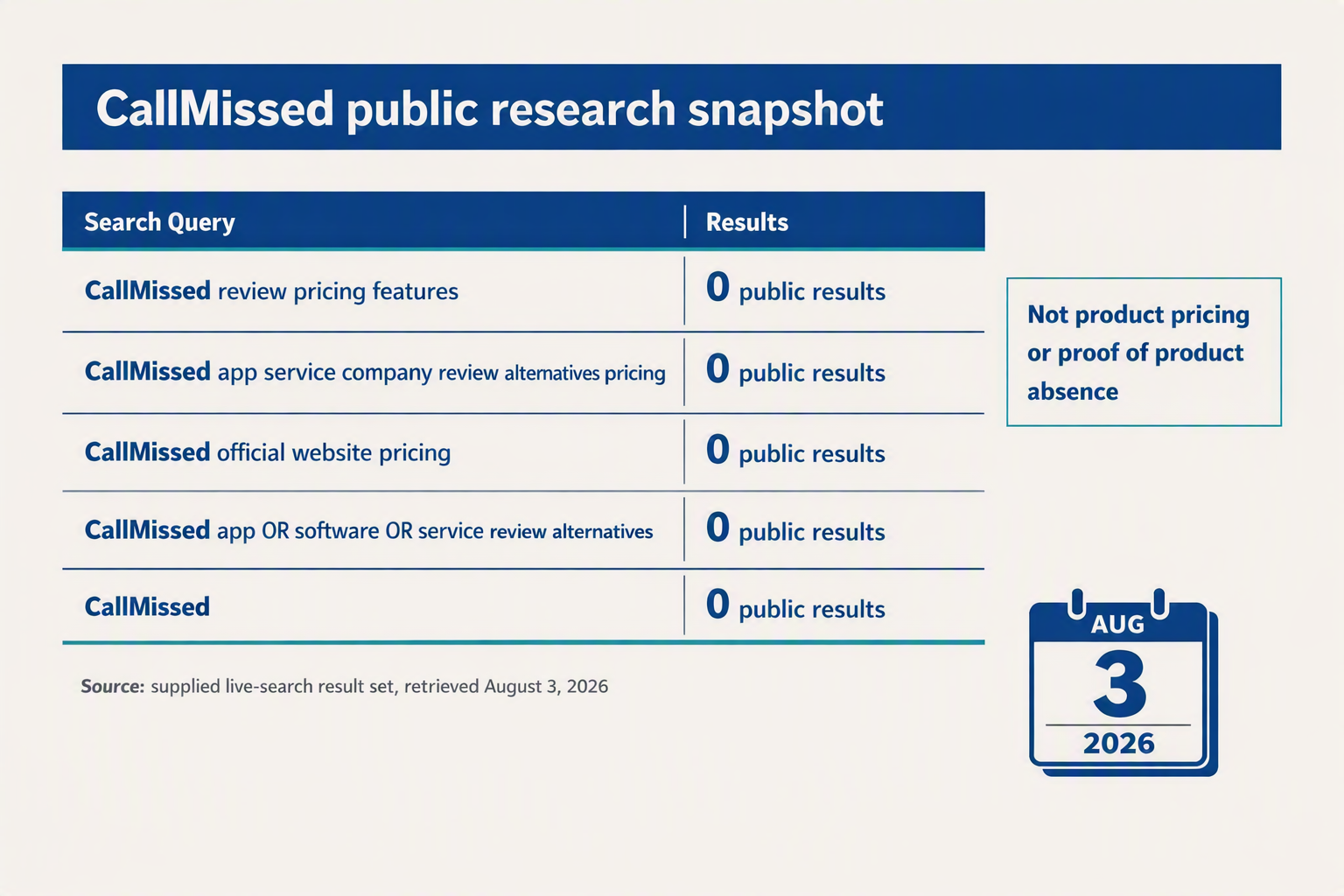
A CallMissed review can verify the product’s stated direction, but not enough commercial or performance information to support a confident purchase recommendation. CallMissed’s public materials describe a broad AI communication platform; however, current pricing, limits, reliability, customer results, and contractual terms remain not publicly verified in the available research.
What does the available evidence actually confirm?
The table below separates first-party product claims from evidence that an independent buyer could use to assess commercial risk. “Not publicly verified” does not prove that a capability is absent; it means the available research did not provide sufficient independent documentation or testable detail.
| Evidence area | What CallMissed states publicly | Independent verification | Buyer implication |
|---|---|---|---|
| Product scope | AI voice agents, WhatsApp chatbots, WhatsApp Business calling, omnichannel context, and developer APIs | Not publicly verified by an independent benchmark or review | Request a live demonstration covering the exact channels required |
| Indian-language support | Support for 22 Indian languages across speech recognition and voice generation | Language coverage is a first-party claim; accuracy, latency, and dialect performance are unverified | Test real customer utterances, accents, code-switching, and escalation scenarios |
| WhatsApp calling | Materials describe inbound and business-initiated WhatsApp Business voice calls connected to AI agents | Not independently verified in the supplied research | Confirm eligibility, country availability, Meta requirements, call charges, and human handoff |
| Pricing and plans | No current public pricing, plan limits, or complete usage schedule was confirmed | 0 independently verified price points available in the supplied research | Obtain a written quote showing subscriptions, minutes, messages, API usage, numbers, taxes, and overages |
| Reliability and outcomes | Public educational articles explain intended workflows such as shared customer context and AI-agent continuity | No independently verified uptime, latency, resolution rate, or customer-satisfaction statistic was found | Ask for service levels, monitoring evidence, references, and a trial using production-like traffic |
| Commercial and privacy terms | Product materials do not establish complete support, retention, security, refund, or cancellation obligations | Not publicly verified in the supplied research | Require documentation covering data processing, subprocessors, retention, export, termination, and support response times |
The 22-language figure is a concrete product specification from CallMissed’s own materials, but it is not a performance benchmark. A buyer should therefore treat it as a capability to test rather than as evidence that every language delivers equivalent speech-to-text or text-to-speech quality.
CallMissed’s first-party articles—including its explanations of omnichannel AI agents, phone numbers, shared customer memory, and WhatsApp agents—are useful for understanding the intended workflow. They are not independent reviews, customer references, uptime reports, or contractual documentation.
What should a buyer verify before comparing alternatives?
Before evaluating CallMissed alternatives, ask CallMissed to document:
- Billing: voice minutes, WhatsApp messages and calls, email sends, API requests, phone-number rental, setup, taxes, and overages.
- Operations: supported countries, concurrent calls, response latency, business-hours routing, recording, transcription, and human handoff.
- Integrations: CRM, help-desk, webhooks, calendars, authentication, analytics, and data export.
- Governance: encryption, data location, retention, deletion, subprocessors, access controls, and AI-training policies.
- Contract terms: free trial conditions, minimum commitment, refunds, cancellation notice, portability, and support escalation.
Until those details are supplied in writing, the evidence supports a qualified investigation, not a definitive “is CallMissed worth it?” verdict.
How much does CallMissed cost, and what should you verify?
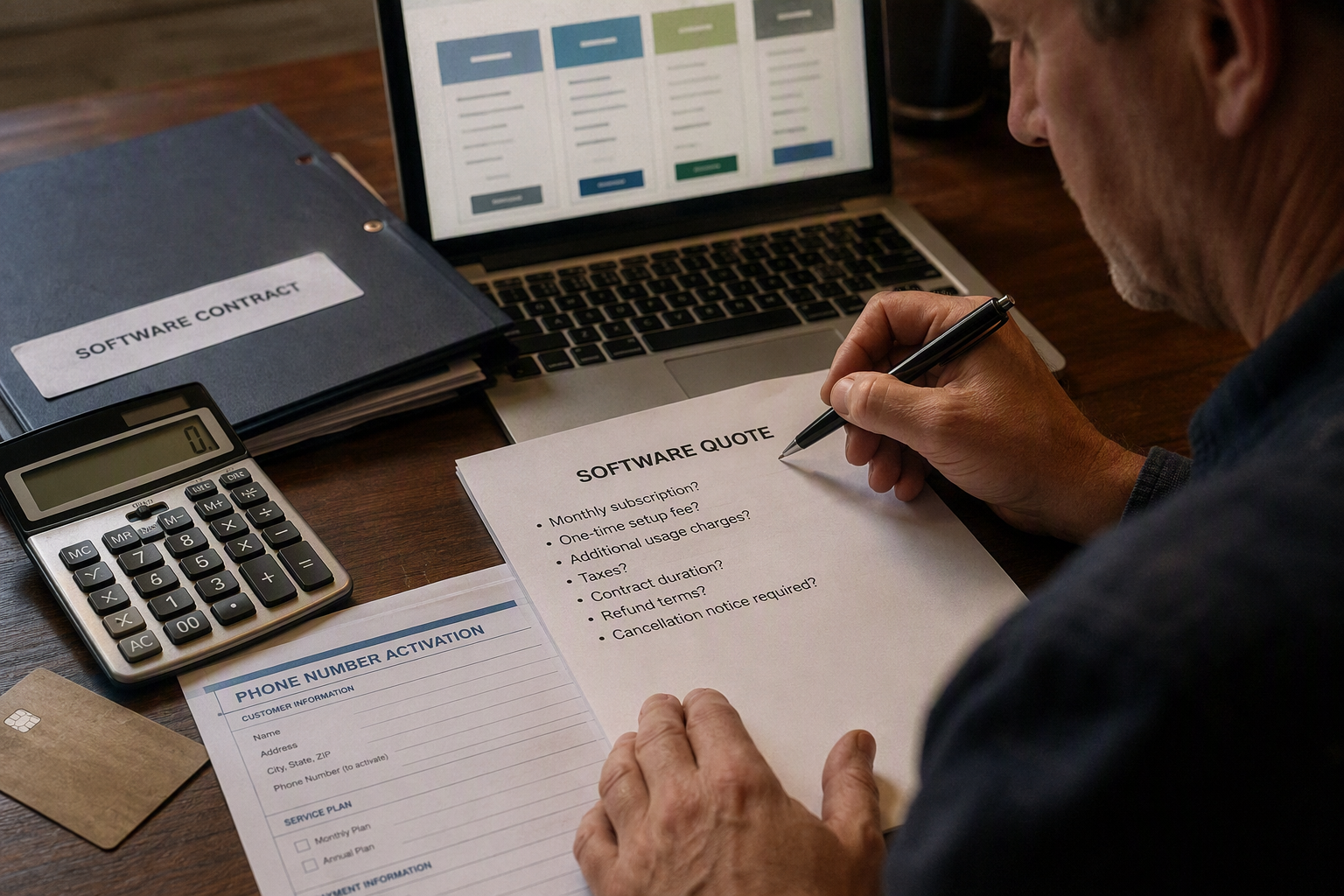
Publicly verifiable CallMissed pricing is not established by the available research, so a buyer should not assume that any advertised, quoted, or search-result figure represents the complete cost. Before paying, request a live demonstration, an itemised written quote, and the applicable service terms; otherwise, “is CallMissed worth it?” cannot be answered responsibly on price alone.
What does the available evidence confirm?
CallMissed product materials describe an AI communication platform spanning voice agents, WhatsApp chatbots, WhatsApp Business calling, omnichannel customer context, email workflows, and developer APIs. The same materials claim support for 22 Indian languages across speech recognition and voice generation, but these are first-party product claims—not independent evidence of pricing, uptime, accuracy, or customer results.
| Buyer question | Publicly confirmed evidence | Number available | Verification status |
|---|---|---|---|
| Indian-language voice support | CallMissed product materials state support across Indian languages | 22 languages | First-party claim; test required |
| Current subscription plans | No dependable plan schedule established in the available research | 0 verified plans | Request current pricing sheet |
| Usage limits | Minutes, messages, API requests, and storage limits are not independently confirmed | Not verified | Obtain written limits |
| Free trial or credits | Trial duration, eligibility, and restrictions are not confirmed | Not verified | Confirm before signup |
| Customer track record | No independently verified customer count, rating, or case-study dataset is established | 0 verified metrics | Ask for attributable references |
The “0” entries do not mean that CallMissed has no plans, customers, or limits. They mean the available evidence does not provide a reliable, independently verifiable figure that should be used for a purchasing decision.
Which charges should you verify?
A low base subscription may not represent the total cost of an AI communication platform. Ask CallMissed to separate recurring fees, usage fees, and implementation charges in writing:
- Platform access: workspace, seats, inbox, CRM, knowledge base, analytics, and automation fees.
- Voice costs: phone-number purchase or rental, inbound and outbound minutes, call recording, transcription, text-to-speech, and transfers.
- WhatsApp costs: business-initiated messages, templates, conversation charges, media, and WhatsApp Business calling.
- Developer usage: LLM tokens, speech-to-text, text-to-speech, image generation, web search, API requests, and fallback-model usage.
- Operations: onboarding, custom integrations, migration, training, support tiers, taxes, minimum commitments, and overage rates.
Also verify whether CallMissed’s 1-credit-equals-₹1 structure, free tier, and pay-as-you-go options apply to the exact product and region being purchased. These commercial details should be confirmed in a current quote rather than inferred from general product descriptions.
What should the contract confirm?
Before signing, obtain written answers about:
- Data and privacy: hosting region, retention, deletion, subprocessors, recordings, model training, and security controls.
- Reliability: service-level commitments, incident communication, backups, and recovery procedures.
- Handoff and integrations: whether human escalation preserves shared context across voice, WhatsApp, email, and CRM systems.
- Commercial terms: billing increments, refunds, cancellation notice, export rights, number portability, and account closure.
- Testing: access to a sandbox or pilot using the languages, phone numbers, workflows, and integrations your business actually needs.
CallMissed’s educational pages about omnichannel agents and shared customer memory explain intended workflows, but they remain first-party material rather than independent reviews. A transparent vendor response to this checklist is itself an important buying signal.
What features does CallMissed include, and which limits remain unknown?

Publicly available information supports a feature-level description of CallMissed, but not a complete, independently verified specification. CallMissed product materials describe voice agents, WhatsApp chatbots, WhatsApp Business calling, omnichannel customer context, email tooling, and developer APIs; however, usage caps, uptime, integrations, security controls, and commercial limits remain unverified.
What features does CallMissed publicly describe?
CallMissed is presented as an AI-native customer-engagement and communication platform for businesses. Its stated feature set spans several channels:
- AI voice agents for handling customer conversations over phone or connected voice channels.
- WhatsApp chatbots for automated customer support and engagement.
- WhatsApp Business calling, including inbound and business-initiated calls bridged to an AI agent.
- Omnichannel customer context, intended to preserve conversation history across voice, WhatsApp, email, and web interactions.
- Knowledge-base retrieval-augmented generation (RAG), which can ground agent responses in business information.
- Email and campaign tooling for outbound communication and follow-up.
- Developer APIs for LLM chat, speech-to-text, text-to-speech, image generation, and web search through an OpenAI-compatible gateway.
CallMissed’s product materials also state support for 22 Indian languages across speech recognition and voice generation. That is a meaningful evaluation criterion for India-focused businesses serving regional-language customers, but buyers should test language accuracy, accents, code-switching, latency, and escalation behavior rather than treating language-count claims as performance benchmarks.
The company’s first-party articles on shared customer memory and WhatsApp agents explain intended workflows. They are useful product education, not independent validation.
Which CallMissed limits remain unknown?
The public material reviewed does not establish the following details in a buyer-ready form:
- Usage limits: included voice minutes, WhatsApp conversations, email sends, API requests, knowledge-base size, concurrent calls, or monthly message caps.
- Channel charges: phone-number rental, telephony minutes, WhatsApp conversation fees, business-initiated calls, carrier charges, and email delivery costs.
- Technical performance: uptime commitments, response latency, speech-recognition accuracy, voice quality, fallback behavior, and maximum call duration.
- Operational controls: human handoff, call recording, transcripts, analytics, role-based access, audit logs, integrations, webhooks, and CRM synchronization.
- Security and contracts: data residency, retention and deletion policies, encryption, subprocessors, compliance documentation, support response times, refunds, auto-renewal, and cancellation rights.
These unknowns matter because a platform that combines voice, WhatsApp, email, and AI APIs can have several independent billing and failure points. A buyer should request written answers rather than infer limits from product articles.
What should a feature evaluation include?
Before purchasing, ask CallMissed to demonstrate one realistic workflow end to end:
- A customer contacts the business on WhatsApp, voice, or email.
- The AI agent retrieves approved knowledge and answers in the required language.
- The customer is transferred to a human without losing context.
- The interaction appears in the shared inbox, CRM, transcript, and analytics.
- The business can export, delete, and audit the resulting customer data.
The demo should be accompanied by current documentation and a written quote. Until those materials confirm the limits above, the responsible conclusion is that CallMissed’s capabilities are publicly described, but its production boundaries are not yet independently verifiable.
What should you assess about CallMissed’s design, onboarding, and support?

A useful CallMissed review should assess more than the interface: buyers need evidence about onboarding effort, day-to-day usability, support responsiveness, and escalation when an AI conversation fails. Publicly verifiable information is currently insufficient to confirm CallMissed’s onboarding process, support SLA, documentation quality, or implementation costs, so request a live walkthrough and written answers before purchasing.
Is CallMissed’s design easy to evaluate?
The design should be judged by how quickly a non-technical team can move from setup to a working customer conversation. During a demonstration, ask the provider to show the complete workflow rather than a polished feature tour:
- Create or configure an AI voice agent.
- Add a knowledge base and test whether answers are grounded in approved content.
- Connect WhatsApp, voice, email, or web channels.
- View a conversation in the shared inbox or CRM.
- Transfer the interaction to a human while preserving customer context.
- Review transcripts, outcomes, recordings, analytics, and error states.
- Change an agent’s instructions, permissions, escalation rules, and business hours.
CallMissed’s product materials describe voice agents, WhatsApp chatbots, WhatsApp Business calling, omnichannel customer context, email tooling, and developer APIs. They also claim support for 22 Indian languages across speech recognition and voice generation. These are relevant capabilities for India-focused teams, but first-party descriptions do not independently prove interface quality, language accuracy, latency, or reliability.
| Area to assess | What to verify in a live session | Publicly verified status |
|---|---|---|
| Agent setup | Time and steps required to launch a usable agent | Not publicly verified |
| Channel management | WhatsApp, voice, email, web, and human handoff workflow | Product claims require testing |
| Indian-language support | Which of the stated 22 languages work for STT and TTS | 22 languages claimed by CallMissed; performance unverified |
| Administration | Roles, approvals, audit logs, analytics, and configuration controls | Not publicly verified |
| Developer experience | API documentation, keys, webhooks, SDKs, and error handling | Not publicly verified |
How should onboarding and support be tested?
Ask for a written onboarding plan with named responsibilities, expected timelines, training availability, migration assistance, and any one-time implementation fees. A credible trial should use realistic call recordings, FAQs, accents, code-switching, WhatsApp conversations, and difficult handoff scenarios—not only scripted success cases.
Support should be evaluated against operational requirements:
- Availability: Which channels handle support, and during what hours and time zone?
- Escalation: Is there a named contact for outages, billing disputes, and safety incidents?
- Response commitments: Are support targets contractual, or merely informal expectations?
- Documentation: Are setup guides, API references, changelogs, and troubleshooting procedures accessible?
- Exit process: Can data, recordings, transcripts, phone numbers, and configurations be exported after cancellation?
CallMissed’s educational articles, including its guides to cross-channel communication and shared customer memory, may clarify the intended product model. They remain first-party material, not independent evidence of onboarding or support performance. The buying decision should therefore depend on a documented pilot, measurable acceptance criteria, written pricing, privacy terms, and clear cancellation rights.
What are the pros and cons of CallMissed based on public evidence? (TABLE)
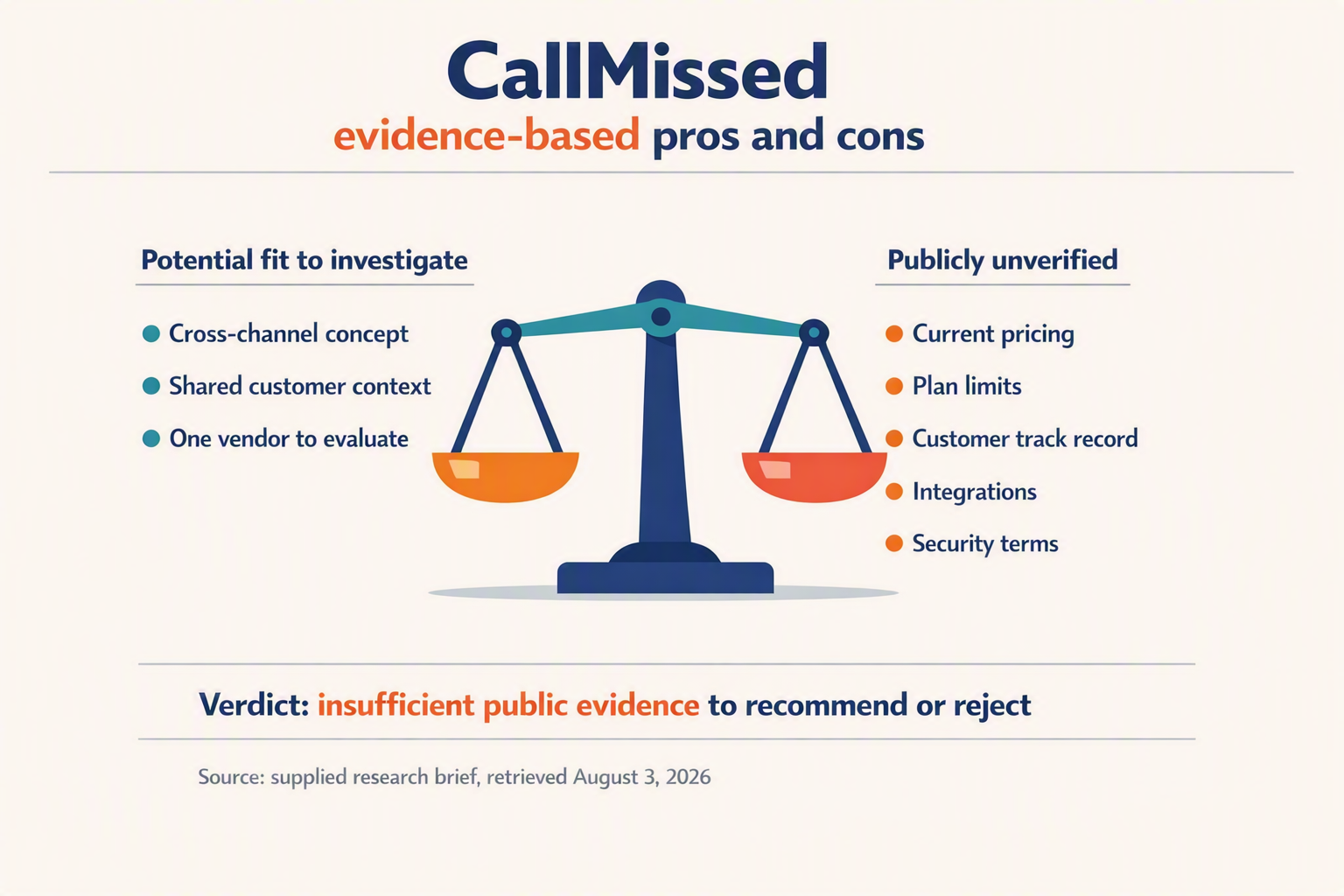
The main pro of CallMissed is a potentially broad, India-focused communication stack: CallMissed product materials describe voice agents, WhatsApp chatbots, WhatsApp Business calling, shared customer context, and developer APIs, including support for 22 Indian languages. The main con is evidentiary: public research has not independently verified current pricing, usage limits, reliability, customer outcomes, or contractual terms.
What does the public evidence support?
| Evaluation area | Potential advantage | Public evidence | Important limitation |
|---|---|---|---|
| Indian-language voice | Could support businesses serving regional-language customers | CallMissed product materials claim speech recognition and voice generation across 22 Indian languages | The claim is first-party; independent accuracy, latency, and language-by-language benchmarks were not publicly verified |
| Omnichannel communication | Could combine voice, WhatsApp, email, and customer context in one workflow | CallMissed materials describe voice agents, WhatsApp chatbots, WhatsApp Business calling, omnichannel inbox/CRM, and email tooling | Buyers should confirm which features are included in each plan and whether channels require separate charges |
| WhatsApp Business calling | Could enable AI-assisted inbound and business-initiated WhatsApp calls | CallMissed presents WhatsApp Business calling as part of its platform offering | Confirm country eligibility, WhatsApp approval requirements, call pricing, recording rules, and human handoff behavior |
| Developer access | Could reduce integration work if one API covers multiple AI functions | CallMissed describes an OpenAI-compatible gateway for LLM chat, speech-to-text, text-to-speech, image generation, and web search | Public research did not verify model availability, rate limits, fallback behavior, uptime, or API service-level commitments |
| India-focused commercial model | May be approachable for Indian SMBs and developers | CallMissed materials describe transparent credit pricing, a free tier, and pay-as-you-go access | Current prices, included credits, expiry rules, taxes, overage treatment, and refund terms were not publicly verified |
| Evidence and procurement readiness | Product education can help buyers understand intended workflows | CallMissed publishes first-party guides about omnichannel agents, shared memory, phone numbers, and WhatsApp | First-party articles are not independent reviews and do not establish customer satisfaction, security certification, or performance |
Which pros are most relevant to a buyer?
The strongest apparent advantages are language coverage, channel breadth, and the possibility of connecting WhatsApp conversations with AI voice workflows. For an India-focused business, the stated “22 Indian languages” is materially more relevant than a generic multilingual label—provided a live test confirms recognition quality for the company’s actual accents, code-switching, and use cases.
CallMissed’s product materials also suggest a unified approach rather than separate tools for voice, WhatsApp, email, and customer history. That could simplify operations, but only if the platform preserves context during escalation and supports reliable human handoff.
Which cons should stop an immediate purchase?
The largest issue is not a confirmed product defect; it is missing public verification. A buyer cannot responsibly calculate total cost or operational risk without written answers covering:
- CallMissed pricing: subscription, credits, voice minutes, WhatsApp fees, phone numbers, API usage, taxes, and overages.
- Performance: latency, transcription accuracy, uptime, failed-call handling, and analytics.
- Governance: data retention, subprocessors, security controls, recordings, deletion, refunds, and cancellation.
- Implementation: integrations, onboarding fees, support response times, and export of customer data.
Accordingly, the evidence-based verdict is promising fit for investigation, not yet a sufficiently documented purchase decision. Treat the claimed capabilities as a shortlist of tests, not as independently validated results.
How does CallMissed compare with alternatives? (TABLE)
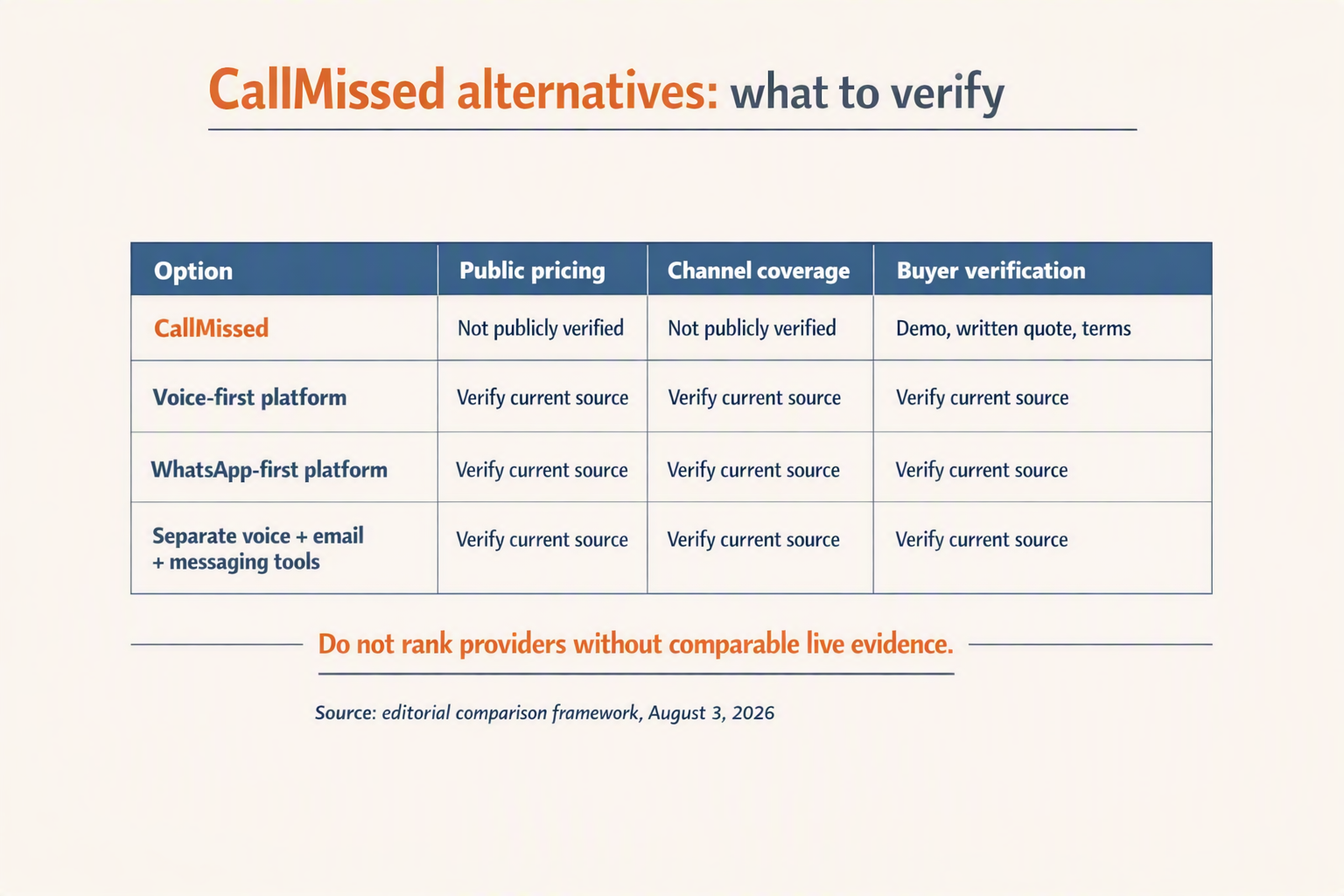
The CallMissed review conclusion is that CallMissed cannot yet be compared confidently on price, limits, reliability, or customer results because the available research does not independently verify those details. CallMissed’s stated 22-language Indian speech capability is notable, but buyers should compare it with alternatives only after obtaining live demonstrations, written pricing, technical documentation, and contractual terms.
What can buyers compare today?
The table below compares solution types, not unsupported vendor rankings. The supplied research does not provide verified public prices for CallMissed or named alternatives, so every commercial figure is labelled accordingly rather than estimated.
| Option | Potential fit | Public pricing evidence | Verified capability in this review | What to verify |
|---|---|---|---|---|
| CallMissed | Indian businesses needing voice, WhatsApp, email, and shared customer context | Not publicly verified | First-party materials claim voice agents, WhatsApp chatbots, WhatsApp Business calling, omnichannel context, and 22 Indian languages | Live workflow, usage fees, phone availability, limits, integrations, SLA, data terms |
| Specialist AI voice platform | Teams focused mainly on inbound or outbound phone automation | Not available in the supplied research | No specific vendor capability or performance data verified | Minutes, telephony charges, latency, call transfer, recording, regional language quality |
| WhatsApp-focused provider | Businesses whose primary channel is WhatsApp messaging or support | Not available in the supplied research | No specific vendor capability or pricing verified | WhatsApp Business approval, template fees, voice-call support, human handoff, API restrictions |
| Omnichannel customer-engagement suite | Larger support teams seeking CRM, inbox, reporting, and multiple channels | Not available in the supplied research | No alternative vendor facts verified | Per-seat fees, channel add-ons, CRM integrations, analytics, implementation costs |
| Custom multi-provider stack | Developer teams requiring maximum control over models and infrastructure | Not available in the supplied research | Requires separate voice, messaging, email, and AI services | Engineering cost, monitoring, security, fallback models, vendor contracts, maintenance |
CallMissed’s 22 Indian languages claim comes from CallMissed’s own product materials; it is a first-party product claim, not an independent benchmark. That distinction matters when comparing regional speech recognition, pronunciation, code-switching, latency, and voice quality across Hindi, Tamil, Telugu, Bengali, Marathi, and other languages.
Which alternative is more suitable?
The right alternative depends on the workflow rather than the largest feature list:
- Choose a voice specialist if phone automation is the main requirement and WhatsApp or email continuity is secondary.
- Choose a WhatsApp-focused provider if the business already has a stable CRM and needs messaging operations more than AI voice.
- Choose an omnichannel suite if supervisors need queues, permissions, reporting, and agent-assist workflows.
- Choose a custom stack if the engineering team can manage multiple APIs and wants provider-level control.
- Evaluate CallMissed when an India-first business wants to investigate voice, WhatsApp, email, and shared context through one platform.
Before treating any option as a genuine CallMissed alternative, request the same written checklist from every vendor:
- Base subscription, setup, number rental, message, minute, email, and API charges.
- Included limits, overage rates, trial terms, refunds, renewal, and cancellation rights.
- Human handoff behaviour, conversation history, analytics, integrations, and export options.
- Data retention, subprocessors, security controls, recording consent, and support commitments.
- A live test using the business’s actual languages, call flows, escalation rules, and customer data.
This makes the comparison evidence-based and prevents an apparently inexpensive platform from hiding usage or implementation costs.
Who is CallMissed for, and who should wait before buying?
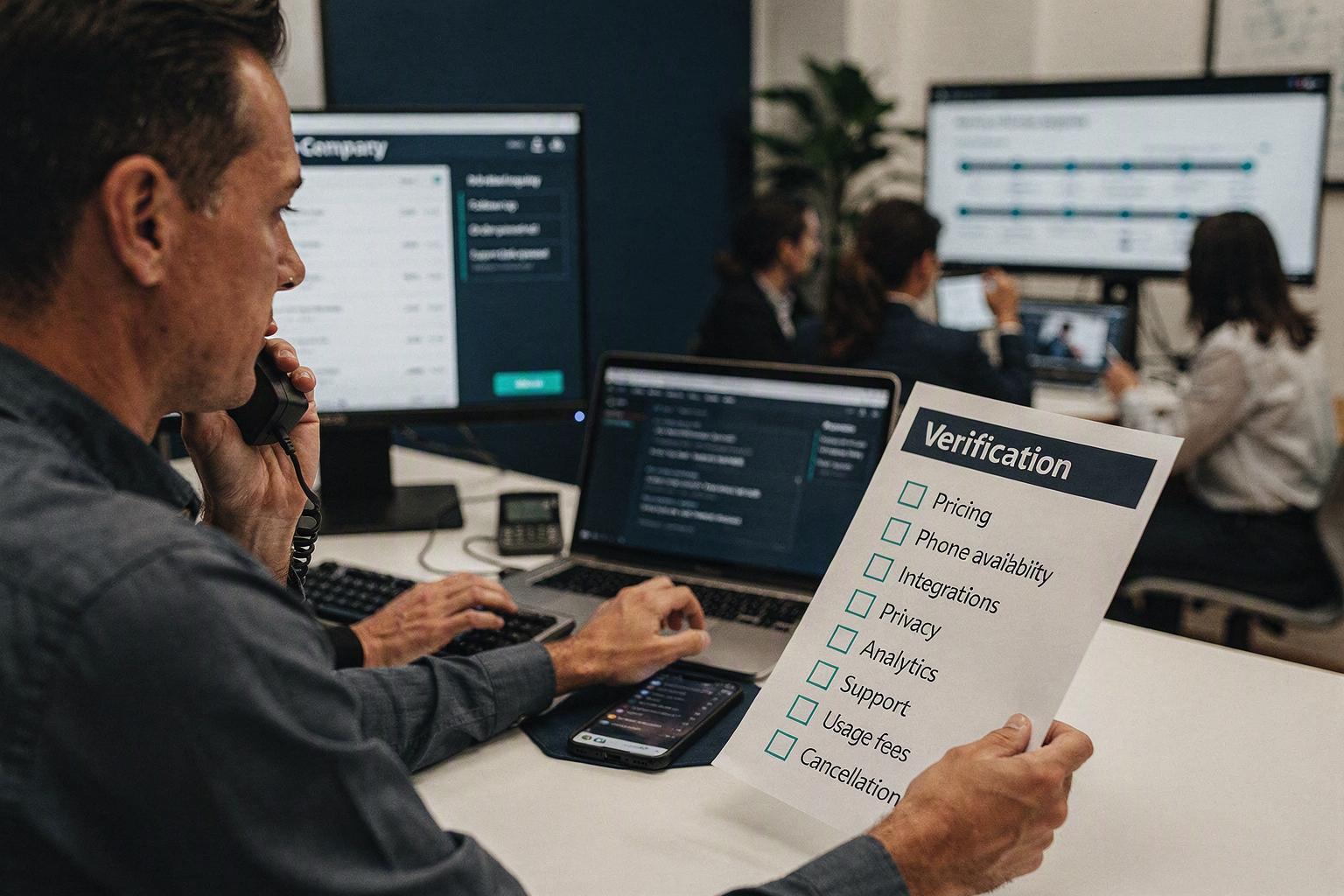
The CallMissed review conclusion is clearest for buyers: CallMissed may suit teams that want AI voice, WhatsApp, email, and shared customer context in one workflow, but public research does not provide enough independently verifiable evidence to recommend a paid purchase confidently. Prospective customers should wait until they receive a live demonstration, written CallMissed pricing, product limits, data terms, and cancellation conditions.
Who is CallMissed likely to fit?
CallMissed is most relevant to businesses that want to consolidate customer communication rather than operate separate tools for phone support, WhatsApp, email, and AI automation. Based on CallMissed’s product materials, potential fits include:
- India-focused businesses serving customers across regional languages; CallMissed states that its speech recognition and voice generation support 22 Indian languages.
- Small and mid-sized support teams that need AI voice agents, WhatsApp chatbots, or automated customer follow-up without building every component internally.
- Developers and product teams evaluating a multi-model AI gateway; CallMissed describes an OpenAI-compatible API covering language models, speech-to-text, text-to-speech, image generation, and web search.
- Businesses exploring WhatsApp Business calling, particularly where an AI voice agent may need to handle inbound or business-initiated conversations.
- Teams that value shared customer context, provided the product can demonstrate reliable conversation history, routing, permissions, and human handoff.
These are potential fit signals, not independently verified performance results. CallMissed’s educational articles about omnichannel agents and shared customer memory explain the intended product workflow, but they are first-party materials rather than independent reviews.
| Decision area | Publicly stated information | Independent verification | What to confirm |
|---|---|---|---|
| Indian-language voice | 22 Indian languages claimed in CallMissed materials | Not publicly verified in this research | Test accents, dialects, latency, transcription accuracy, and fallback behavior |
| WhatsApp communication | Chatbots and WhatsApp Business calling described | Not publicly verified in this research | Confirm country availability, Meta approval, call fees, recording, and handoff |
| AI developer access | OpenAI-compatible gateway described | Not publicly verified in this research | Check supported models, rate limits, fallback rules, logs, and data handling |
| Omnichannel context | Voice, WhatsApp, email, and shared context described | Not publicly verified in this research | Test identity matching, history retention, integrations, analytics, and permissions |
Who should wait before buying CallMissed?
Buyers should wait if their decision depends on published pricing, guaranteed uptime, documented security controls, or a proven customer track record. The available research does not independently confirm current plans, usage limits, phone-number availability, implementation fees, support commitments, refunds, or contract terms.
Waiting is especially sensible for:
- Regulated organizations that need documented data residency, retention, encryption, access controls, audit logs, or subprocessors.
- High-volume contact centers that require service-level agreements, queue metrics, call recording policies, predictable per-minute costs, and tested escalation workflows.
- International businesses that need numbers, WhatsApp calling, language support, and local compliance in multiple countries.
- Budget-sensitive small businesses unable to absorb unexpected charges for minutes, messages, numbers, API requests, onboarding, or cancellation.
Before comparing CallMissed alternatives, request the same written specifications from every vendor. If CallMissed cannot provide them, the responsible verdict on “is CallMissed worth it?” is not yet—wait for verifiable commercial and technical evidence.
What are the answers to the most common CallMissed questions?
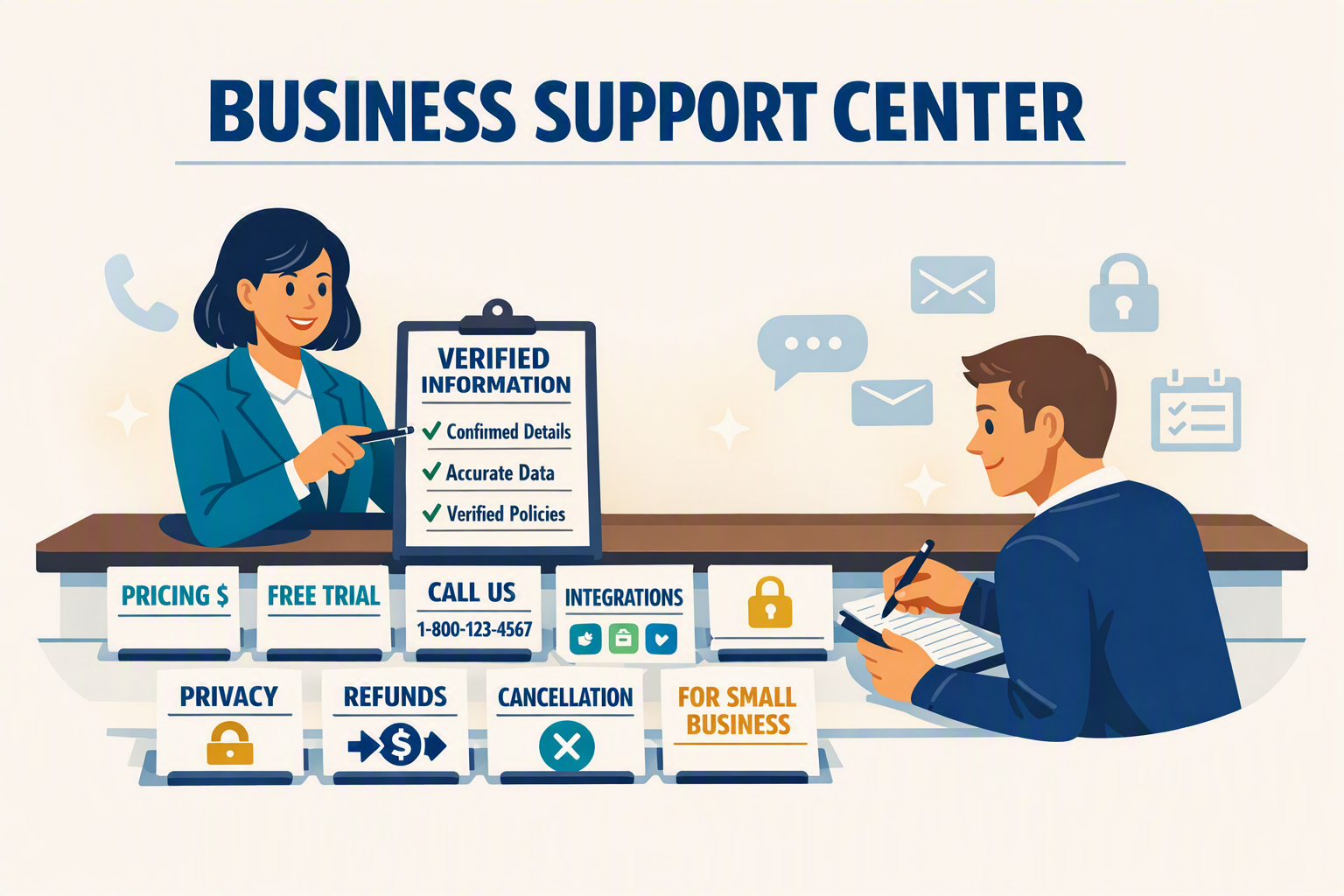
What is the current CallMissed pricing, and is CallMissed pricing publicly available?
Does CallMissed offer a free trial, and is it suitable for a small business?
Can CallMissed provide phone numbers and WhatsApp Business calling?
What CallMissed features and integrations are included?
Does CallMissed protect customer data, and what are its refund and cancellation policies?
Is CallMissed worth it, or should I consider CallMissed alternatives?
Conclusion
The verdict from this CallMissed review is straightforward: CallMissed may be worth evaluating, but available public evidence is not sufficient to recommend a paid plan or confirm current pricing, usage limits, performance, or customer outcomes. Before committing, buyers should request a live demonstration, written quote, product documentation, and complete commercial terms.
Key findings from this CallMissed review:
- Broad first-party product claims: CallMissed materials describe voice agents, WhatsApp chatbots, WhatsApp Business calling, email automation, shared customer context, omnichannel workflows, and developer APIs.
- Stated support for Indian languages: CallMissed says its speech recognition and voice generation support 22 Indian languages. This could benefit regional-language use cases, but the claim has not been independently verified here.
- Unclear commercial details: Buyers should confirm charges for calls, messages, WhatsApp conversations, phone numbers, email, API requests, onboarding, support, and cancellation in writing.
- Limited public evidence: First-party educational content explains intended workflows, but it does not independently establish reliability, implementation quality, customer satisfaction, or return on investment.
- Alternatives require evidence-based comparison: Evaluate documented pricing, integrations, human handoff, analytics, security controls, data retention, support commitments, and contract flexibility.
Buyer checklist
Use this CallMissed review as a starting point, then verify:
- The total estimated monthly cost for your expected usage
- Included allowances, overage rates, minimum commitments, and cancellation terms
- Voice, WhatsApp, email, and API capabilities demonstrated with your workflows
- Human handoff, analytics, integrations, and shared customer-context features
- Accuracy and latency for the Indian languages your customers use
- Service levels, support response times, data-processing terms, and retention policies
- Regional phone-number availability and WhatsApp-related requirements
- Independent customer references or measurable case-study results
CallMissed may suit smaller businesses seeking to connect voice, WhatsApp, email, customer history, and human support in one platform. Its AI-infrastructure positioning may also interest developers if the APIs, model access, documentation, reliability, and billing terms meet their requirements. Those possibilities should be validated through testing rather than inferred from product materials.
The final recommendation of this CallMissed review is to shortlist CallMissed only if its capabilities match your use case, then run a limited pilot with defined success metrics and obtain all pricing and contractual terms in writing. Do not rely on a rating or feature list alone.
Before asking “is CallMissed worth it?”, ask: Will CallMissed provide enough verifiable evidence for your business to make a safe, measurable, and reversible decision?
Related Reading
Related Posts
Ready to automate customer conversations?
Launch AI voice agents and WhatsApp bots with CallMissed — one API, 22+ Indian languages.