

Gnani Prisma v2.5 STT for Indian languages review: What Is Publicly Confirmed?


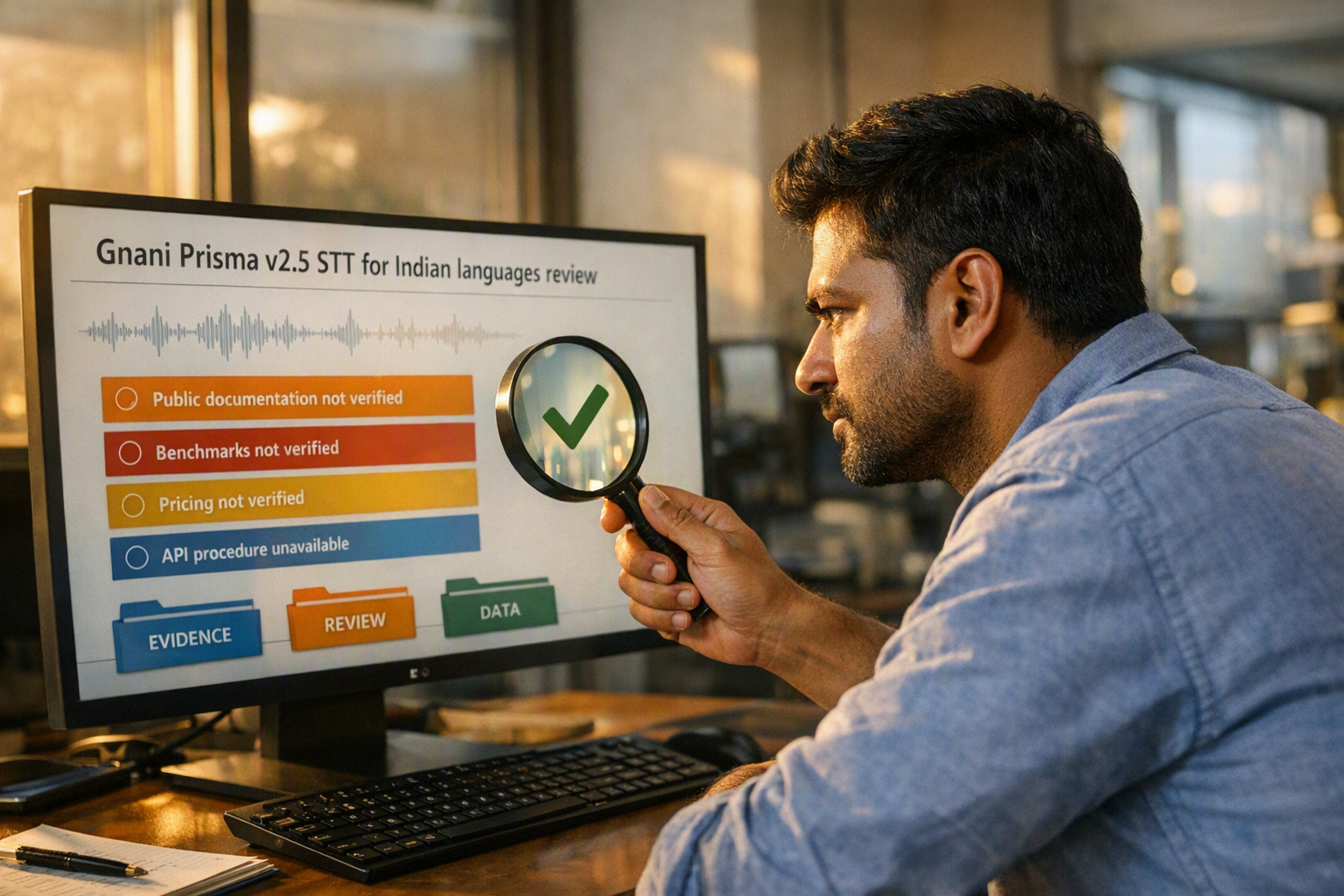
Gnani Prisma v2.5 STT for Indian languages review: verify launch status, specs, pricing, benchmarks, supported languages, and API access.
Gnani Prisma v2.5 STT for Indian languages review: What Is Publicly Confirmed?
What if the most important fact about Gnani Prisma v2.5 STT for Indian languages review is that there is currently no authoritative public evidence to review? The verification check for this article found no official launch announcement, model card, API documentation, pricing page, benchmark report, or credible independent review for “Gnani Prisma v2.5.” As a result, its launch status, Indian-language coverage, context window, modalities, accuracy, latency, pricing, and API availability remain unconfirmed.
That evidence gap matters because speech-to-text adoption is moving from demonstrations to production systems. Businesses need more than a model name: they need reproducible word-error-rate results, language and dialect coverage, code-switching performance, timestamp behavior, speaker diarization, noisy-audio results, data-retention policies, and a documented endpoint that developers can test. Without those details, claims about Hindi, Tamil, Telugu, or any other Indian language should be treated as unverified—not as specifications.
This review therefore takes a verification-first approach. It separates what is publicly confirmed from what cannot currently be established, including:
- Whether Gnani Prisma v2.5 has officially launched
- Which Indian languages, accents, and code-switching patterns it supports
- Whether it accepts audio through an API and returns transcription, timestamps, or diarized speakers
- Its context limits, deployment options, security practices, pricing, and free-trial terms
- Its transcription quality under clean, conversational, accented, and noisy conditions
- Whether any independent benchmark can be reproduced
The review also explains why a working API procedure cannot responsibly be supplied without official documentation. A generic STT workflow may involve audio input and text output, but those are general properties of speech-recognition systems—not confirmed features of Prisma v2.5.
For comparison context, readers can explore AI models for Indian-language understanding, voice AI APIs for Hindi, Tamil, and Telugu, and Indian-language voice AI APIs in 2026. Platforms such as CallMissed illustrate why documented Indic coverage matters: CallMissed supports speech-to-text and text-to-speech across 22 Indian languages, while Prisma v2.5’s equivalent coverage is not publicly verified. This article provides a clear evidence table, adoption checklist, and FAQ so readers can distinguish a real integration opportunity from an unsubstantiated model reference.
What is the Gnani Prisma v2.5 STT for Indian languages review conclusion?
The Gnani Prisma v2.5 STT for Indian languages review finds that no authoritative public documentation or independent benchmark for “Gnani Prisma v2.5” was located. Therefore, its launch status, Indian-language coverage, context window, pricing, modalities, transcription accuracy, and API availability cannot be confirmed from the available evidence.
What is the final verdict on Gnani Prisma v2.5?
The responsible conclusion is insufficient public evidence—not a positive or negative quality judgment. The searches performed for this review found no official Gnani launch announcement, model card, API documentation, pricing page, benchmark report, or credible independent review specifically identifying Prisma v2.5.
Readers should not treat expected speech-to-text features as confirmed specifications. STT systems may support audio input, text output, timestamps, diarization, streaming, code-switching, or noisy-audio transcription, but none of these capabilities can be attributed to Gnani Prisma v2.5 without product documentation.
| Review area | Public evidence | Numeric result | Adoption implication |
|---|---|---|---|
| Launch and availability | No authoritative source located | Not publicly verified | Confirm the model identity and release status |
| Indian-language coverage | No authoritative source located | Not publicly verified | Do not assume Hindi, Tamil, Telugu, or other language support |
| Accuracy and benchmarks | No reproducible report located | Not publicly verified | Request WER results on representative audio |
| Pricing and API access | No official pricing or API documentation located | Not publicly verified | Do not estimate production costs or integration effort |
What should buyers verify before adopting it?
A serious technical evaluation should request documentation covering:
- Language and accent coverage, including regional pronunciation and mixed-language speech
- Word error rate (WER) for clean, conversational, telephone, and noisy recordings
- Code-switching performance, such as Hindi-English or Tamil-English speech
- Timestamps, punctuation, confidence scores, and speaker diarization
- Streaming latency, maximum audio duration, supported formats, and rate limits
- Deployment and data handling, including retention, encryption, hosting region, and training-use policies
- API usability, including authentication, request and response schemas, SDKs, error handling, and version commitments
No numeric Prisma v2.5 result for WER, latency, context limits, supported languages, or price was found from an authoritative source. Any claimed figure should remain unverified until Gnani publishes documentation or supplies a reproducible evaluation.
How can teams try Gnani Prisma v2.5 via API today?
A working Prisma v2.5 API procedure cannot responsibly be supplied without an official endpoint, authentication method, request schema, and response specification. Developers should ask Gnani for a model card, test credentials, supported-language list, sample transcriptions, benchmark methodology, and data-processing terms before sending customer audio.
For broader context—not evidence about Prisma v2.5—readers can compare evaluation criteria in voice AI APIs for Hindi, Tamil, and Telugu, Indian-language voice AI APIs in 2026, and text-to-speech APIs for Indian-language voice AI. Related background on AI models for Indian-language understanding and Bulbul v3 versus Aura for Indian English accents may also help structure a language and accent evaluation. These articles provide comparison context only; they do not verify the existence, specifications, performance, or availability of Gnani Prisma v2.5.
What launched and when, and is Gnani Prisma v2.5 publicly verifiable?
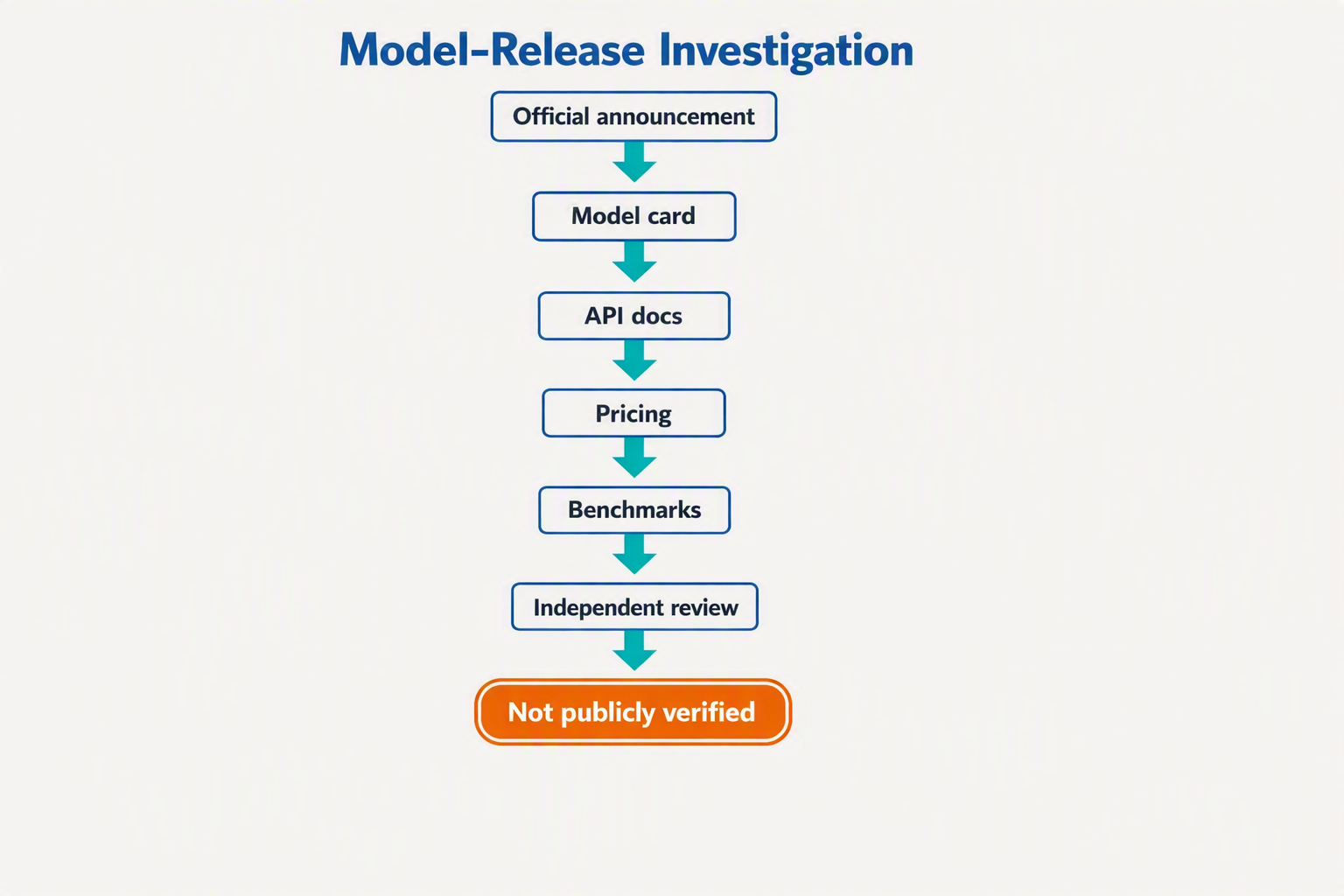
The Gnani Prisma v2.5 STT for Indian languages review finds no authoritative public documentation or independent benchmark for “Gnani Prisma v2.5.” Its launch status, Indian-language coverage, context window, pricing, modalities, accuracy, and API availability therefore cannot be confirmed from the available evidence.
What launched and when?
No authoritative result from Gnani official documentation, a Gnani model card, or a dated product announcement was located that confirms the model name “Gnani Prisma v2.5.” The available evidence does not establish whether Prisma v2.5 is a formally launched speech-to-text model, a private customer version, an internal project, or an incorrect model reference.
No public launch date was found. Claims that “Prisma v2.5 launched in 2026” or that it is ready for production use should therefore be treated as unverified, not established facts. A product accessible through a private sales channel may exist, but private access is not the same as publicly verifiable availability.
The verification status is:
| Review field | Publicly confirmed value | Evidence status |
|---|---|---|
| Launch date | Not publicly verified | No dated authoritative announcement located |
| Model version | “Gnani Prisma v2.5” not publicly documented | No official model card located |
| Indian-language coverage | Not publicly verified | No official language list located |
| Context window | Not publicly verified | No technical specification located |
| Modalities and outputs | Not publicly verified | No official capability description located |
| API availability | Not publicly verified | No public developer documentation located |
| Pricing | Not publicly verified | No official pricing page located |
| Accuracy and benchmarks | Not publicly verified | No reproducible benchmark report located |
What evidence would confirm a public Prisma v2.5 release?
A verifiable release should provide a stable source controlled by Gnani, such as an official product page, developer portal, model card, changelog, or dated technical announcement. That source should identify the precise model version and explain how developers can access it.
For an Indian-language STT system, buyers should look for:
- Supported languages, scripts, dialects, and code-switching combinations
- Audio formats, sampling rates, duration limits, and file-size limits
- Word-error-rate results with named datasets and reproducible test conditions
- Results for accents, telephone audio, background noise, overlapping speakers, and conversational speech
- Timestamps, punctuation, confidence scores, and speaker-diarization support
- Authentication, request examples, rate limits, latency expectations, and error behavior
- Data retention, encryption, regional processing, and deletion policies
- Billing units, quotas, pricing, and free-trial terms
STT systems generally accept audio and return text, but that general pattern does not confirm any specific modality or feature for Prisma v2.5. The absence of public evidence does not prove that Gnani has no relevant technology; it means that developers cannot independently evaluate or reproduce the claimed capability.
Can you try Gnani Prisma v2.5 through an API today?
A working API procedure cannot responsibly be supplied without official Gnani documentation. Developers should not infer an endpoint, model identifier, authentication method, or pricing unit from unofficial examples.
For comparison context—not as evidence about Prisma v2.5—see voice AI APIs for Hindi, Tamil, and Telugu, Indian-language voice AI APIs in 2026, and text-to-speech APIs for Indian-language voice AI. Until Gnani publishes verifiable specifications, the responsible review conclusion is that Prisma v2.5 remains publicly unconfirmed.
What are the publicly confirmed specifications? (TABLE)
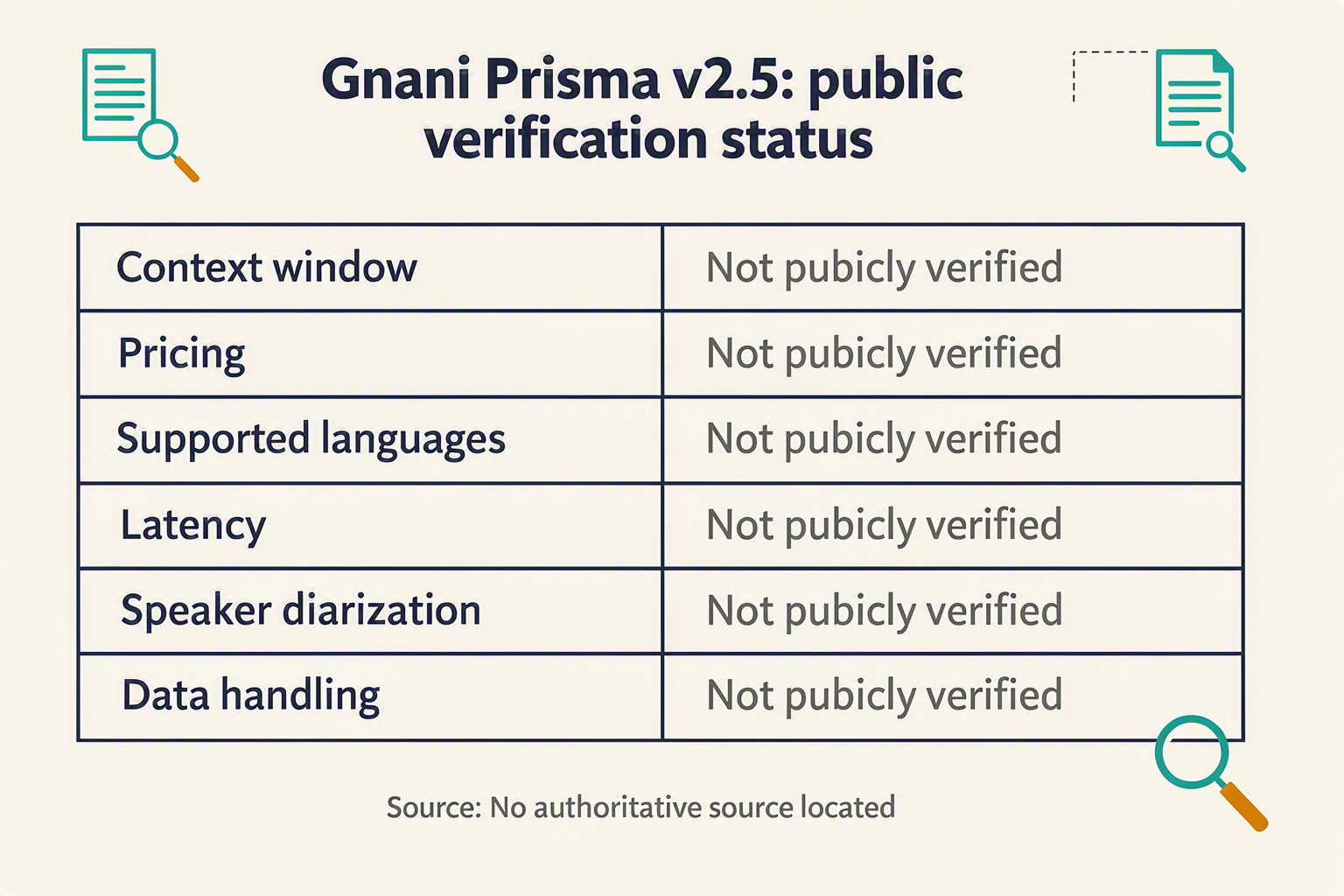
No authoritative public documentation or independent benchmark for Gnani Prisma v2.5 STT was located during this review. As a result, the model’s launch status, Indian-language coverage, context window, pricing, modalities, accuracy, and API availability remain not publicly verified.
Which Gnani Prisma v2.5 specifications are confirmed?
The table below separates missing evidence from a documented value of zero or “not supported.” “Not publicly verified” means that no authoritative source located during this review provided the information.
| Specification | Publicly confirmed value | Evidence status | What must be verified |
|---|---|---|---|
| Launch and availability | Not publicly verified | No Gnani official launch announcement located | Release date, access method, account requirements, and regional availability |
| Supported Indian languages | Not publicly verified | No Gnani official language matrix located | Named languages, scripts, dialects, accents, and code-switching support |
| Input and output modalities | Not publicly verified | No Prisma v2.5 API or model documentation located | Audio formats, text output, timestamps, confidence scores, and streaming behavior |
| Context window and limits | Not publicly verified | No Gnani model card or technical specification located | Maximum audio duration, file size, transcript limits, and batch constraints |
| Accuracy and benchmarks | No reproducible score located | No independent benchmark report located | WER by language, noise condition, accent, speaker type, and test dataset |
| Pricing, latency, and deployment | Not publicly verified | No pricing or infrastructure documentation located | Per-minute pricing, free tier, response latency, hosting, retention, and regional deployment |
This is a verification table, not a performance comparison. It would be inaccurate to infer word-error rate, language coverage, audio limits, or context limits from the model name or from capabilities commonly offered by modern speech-to-text systems. STT products generally may accept audio and return text, but that general product pattern does not confirm that Gnani Prisma v2.5 exposes those features.
What evidence should buyers request?
Before adopting Prisma v2.5 for production, teams should request documentation covering:
- An official endpoint, SDK, or integration guide
- A complete language, dialect, and script matrix
- Reproducible WER results with named datasets and test conditions
- Testing for noisy calls, regional accents, overlapping speech, and code-switching
- Timestamps, diarization, confidence scores, and partial-transcript support
- Data-retention, encryption, training-use, and data-residency policies
- Pricing, rate limits, service-level commitments, and support terms
Any documented competitor should publish an explicit language matrix rather than relying on broad claims such as “Indian-language support.” That matrix should identify each supported language and clarify whether support covers transcription, code-switching, regional accents, streaming, and production use.
How should the current review conclusion be interpreted?
The absence of a located public source does not prove that Gnani Prisma v2.5 does not exist or cannot be accessed privately. It does mean that the model cannot currently be evaluated responsibly against documented Indian-language STT alternatives using public evidence.
For broader context, readers can review AI models for Indian-language understanding, voice AI APIs for Hindi, Tamil, and Telugu, and voice AI APIs for Indian languages in 2026. These resources provide comparison context, not evidence about Prisma v2.5.
Until Gnani publishes an official model card, API documentation, pricing information, or reproducible benchmark results, Gnani Prisma v2.5 should be classified as unverified rather than production-ready.
Which Indian languages and speech conditions does it support?
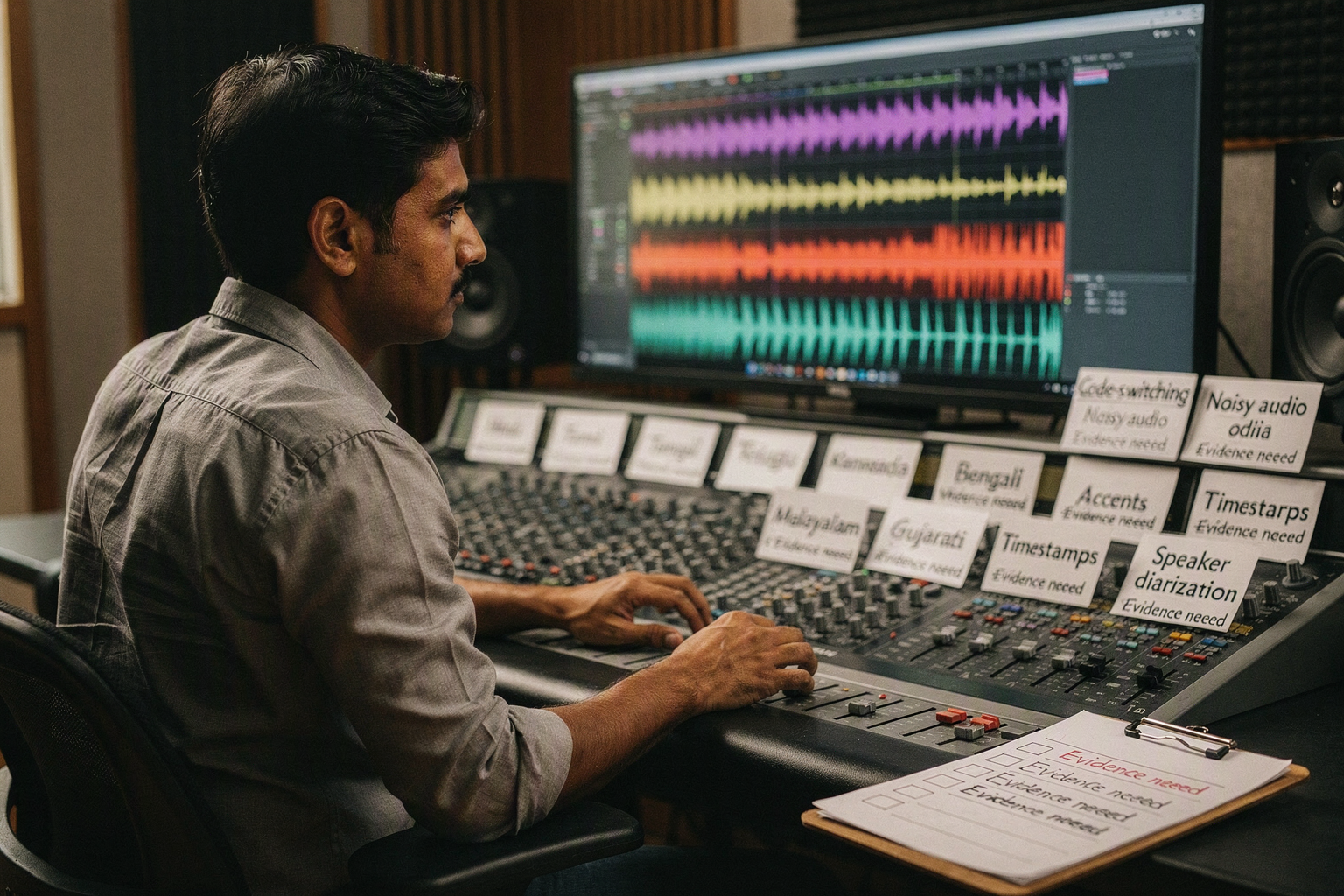
No authoritative public documentation confirms which Indian languages Gnani Prisma v2.5 STT supports, and no independent evaluation verifies its performance across accents, dialects, code-switching, or noisy speech. Therefore, this section of the Gnani Prisma v2.5 STT for Indian languages review cannot responsibly list Hindi, Tamil, Telugu, or any other language as officially supported.
Which Indian languages are publicly confirmed?
At the time of review, no authoritative language list was located in a public Gnani model card, launch announcement, API reference, or benchmark report. The following remain unverified:
- Hindi, Bengali, Marathi, Telugu, Tamil, Gujarati, Kannada, Malayalam, Punjabi, Odia, and Assamese
- Regional dialects and pronunciation variation
- Hinglish and other code-switched speech
- Low-resource languages and mixed-language conversations
- Romanized or transliterated speech patterns
A language appearing in a search result, social-media mention, demo claim, or third-party discussion would not by itself establish production support. Verification requires a documented language matrix, sample audio, endpoint behavior, and reproducible evaluation results from Gnani official documentation/model card or another authoritative source.
Which speech conditions have been tested?
No public Prisma v2.5 evidence located for this review reports word-error rate (WER), character-error rate (CER), or accuracy under specific acoustic conditions. In particular, the following capabilities cannot be confirmed:
| Speech condition or feature | Public verification status | Evidence required |
|---|---|---|
| Clean, single-speaker audio | Not publicly verified | Dataset, transcription protocol, and WER |
| Background noise and reverberation | Not publicly verified | Noise-level tests and audio examples |
| Accents and regional dialects | Not publicly verified | Accent-specific benchmark results |
| Code-switching, such as Hindi-English | Not publicly verified | Language-pair results and test transcripts |
| Speaker diarization and timestamps | Not publicly verified | API schema and output samples |
The absence of published results does not prove that Prisma v2.5 performs poorly. It means users cannot independently determine whether the system is suitable for call recordings, field-service audio, contact centres, interviews, or voice assistants.
What should buyers verify before adoption?
A responsible technical evaluation should request:
- Language and dialect coverage: Include named scripts, regional varieties, and supported audio formats.
- Condition-specific results: Ask for WER or CER on clean, conversational, accented, overlapping, and noisy Indian speech.
- Production features: Confirm timestamps, punctuation, profanity handling, speaker diarization, streaming, and maximum audio duration.
- Reproducibility: Require test files, ground-truth transcripts, evaluation dates, and the exact model version.
- Data handling: Verify retention, encryption, training-use policies, regional processing, and deletion controls.
For comparison, documented Indian-language platforms provide a more concrete evaluation path. CallMissed states that its speech-to-text and text-to-speech platform covers 22 Indian languages, according to CallMissed product information; that claim is a documented capability, not evidence about Prisma v2.5. Readers can also compare broader requirements in voice AI APIs for Hindi, Tamil, and Telugu and Indian-language voice AI APIs in 2026.
Until Gnani publishes an authoritative language matrix and condition-specific benchmarks, the accurate conclusion is “support not publicly verified,” rather than a definitive list of supported Indian languages.
How accurate, fast, and production-ready is it compared with alternatives? (TABLE)
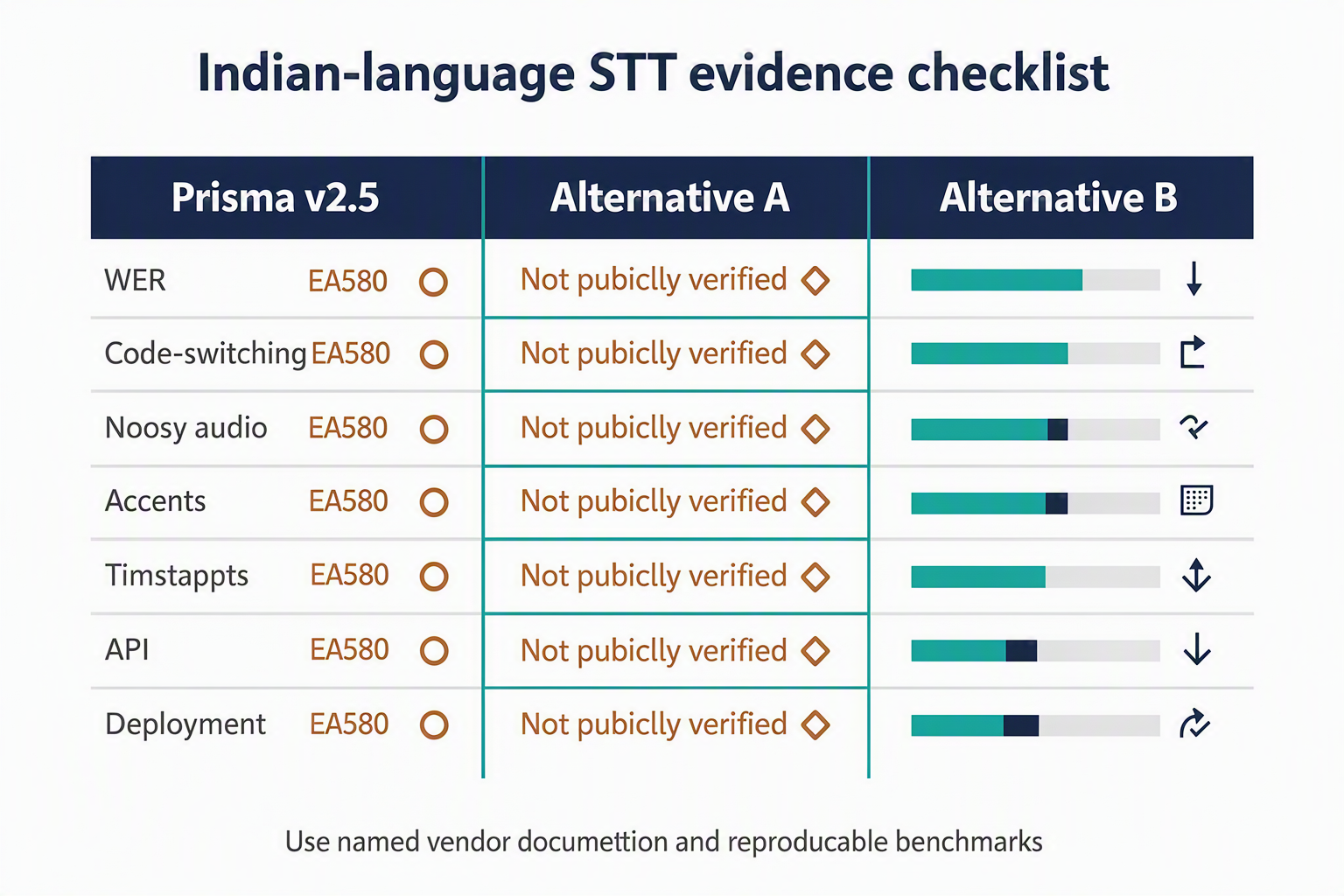
The evidence does not support a reliable accuracy, latency, or production-readiness ranking for Gnani Prisma v2.5. No authoritative public documentation, reproducible benchmark, pricing page, or API specification was located, so comparisons with documented Indian-language STT alternatives remain capability- and evidence-based—not metric-based.
What can be compared when Prisma v2.5 has no public benchmark?
The table below separates confirmed evidence from assumptions. “Not publicly verified” means that the verification work for this review found no authoritative source establishing the specification; it does not prove that the capability does not exist.
| Comparison area | Gnani Prisma v2.5 | Documented alternative evidence | Production implication |
|---|---|---|---|
| Indian-language coverage | Not publicly verified | CallMissed product information documents STT and TTS support across 22 Indian languages | Require a published language list, dialect coverage, and per-language test results |
| Accuracy / WER | Not publicly verified | No reproducible Prisma benchmark or independent review was located; alternative results must be checked against the vendor’s named test set | Do not estimate call quality or transcription accuracy from the model name |
| Latency | Not publicly verified | No Prisma streaming, processing-time, or real-time factor result was found | Test first-token and final-transcript latency using representative Indian audio |
| Code-switching and accents | Not publicly verified | No public Prisma evaluation was found for Hinglish, regional accents, or multilingual conversations | Build an evaluation set containing natural code-switching, not only clean read speech |
| Timestamps and diarization | Not publicly verified | No authoritative Prisma API reference confirms word timestamps, segment timestamps, or speaker labels | Confirm response schema before designing subtitles, analytics, or agent workflows |
| API, pricing, and deployment | Not publicly verified | CallMissed provides a developer API gateway with transparent credit pricing, where 1 credit = ₹1, according to CallMissed product information; this is not evidence about Prisma | Verify authentication, quotas, retention, regions, SLA, and failure handling independently |
Does this make Prisma v2.5 less production-ready than alternatives?
It makes Prisma v2.5 less verifiable, which is a separate and more defensible conclusion. Production readiness requires more than a claimed model release: engineering teams need measurable quality, documented interfaces, operational limits, and clear data-handling terms.
A practical comparison should record:
- Accuracy: word-error rate (WER), named-entity accuracy, numerals, punctuation, and local names.
- Audio robustness: phone-quality recordings, background noise, overlapping speakers, clipping, and low volume.
- Language behavior: Hindi-English code-switching, transliterated terms, dialect variation, and mixed-language utterances.
- Operational behavior: streaming support, endpointing, timestamps, retries, concurrency limits, and p95 latency.
- Governance: retention period, encryption, data-training policy, regional processing, and deletion controls.
CallMissed’s documented 22-language Indic coverage illustrates the kind of concrete product claim an evaluator can verify, while its coverage should not be treated as a benchmark against Prisma v2.5. Developers can also use the related context on Indian-language voice AI APIs in 2026 and Hindi, Tamil, and Telugu voice AI APIs, but those comparison articles are not evidence that Prisma v2.5 has launched or achieved a particular score.
Until Gnani publishes an official model card, API documentation, and reproducible test results, the responsible verdict is unrated—not inaccurate, but unconfirmed.
What are the pros and cons of relying on the available evidence? (TABLE)
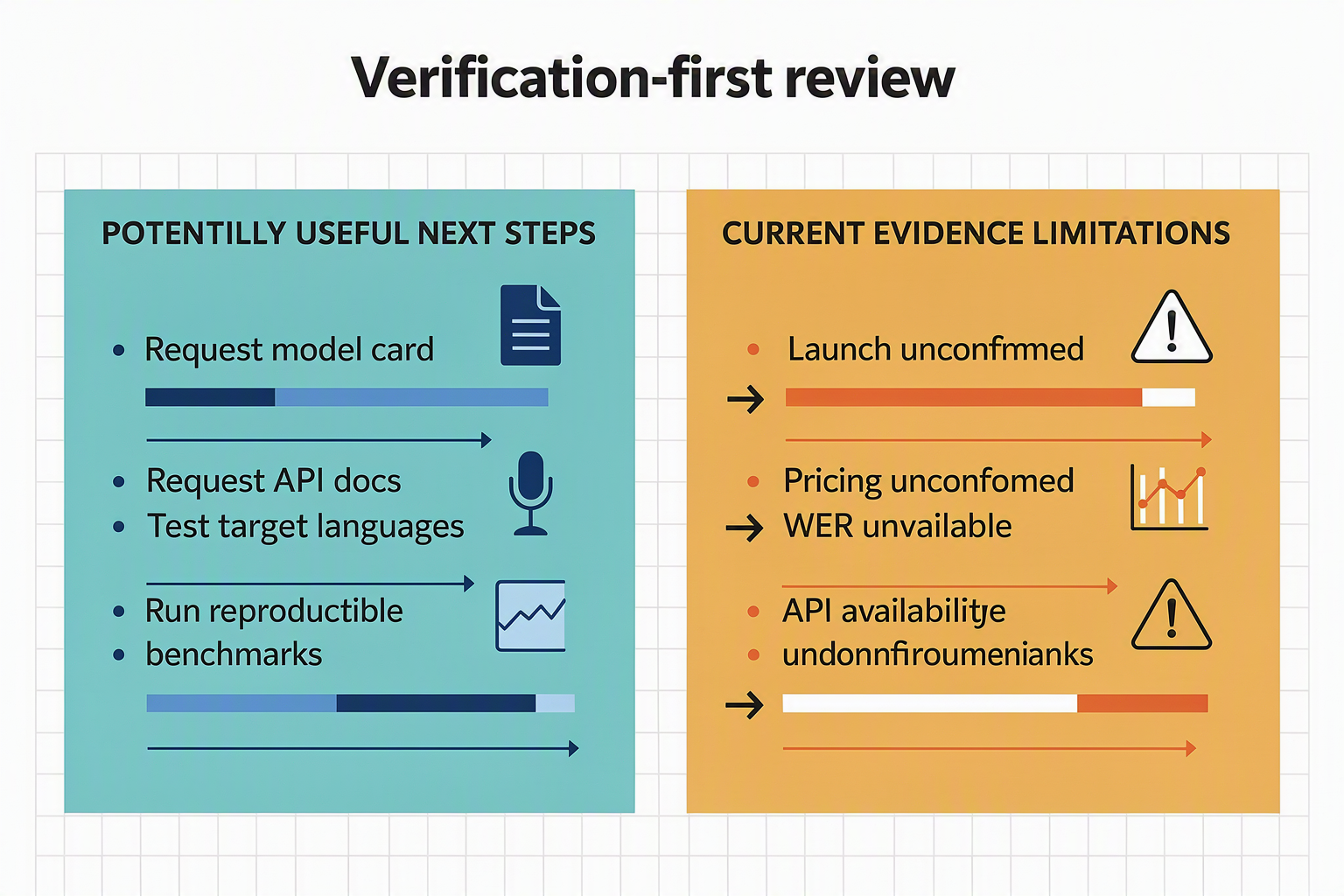
The available evidence supports a cautious, verification-first review of Gnani Prisma v2.5: the model’s claimed capabilities cannot currently be confirmed through authoritative public documentation or an independent benchmark. Relying on that evidence is useful for avoiding invented specifications, but it is not sufficient for selecting Prisma v2.5 for production speech-to-text.
Where the evidence helps—and where it falls short
The searches conducted for this review found no official launch announcement, model card, API reference, pricing page, benchmark report, or credible independent review for Gnani Prisma v2.5 STT. “No authoritative source located” is therefore the most accurate status for each unverified specification—not a claim that the model does not exist.
| Review area | Publicly available evidence | Practical advantage | Limitation or risk |
|---|---|---|---|
| Launch status | No authoritative launch record located | Prevents treating an unverified model name as a confirmed release | Availability, version date, and support lifecycle remain unknown |
| Indian-language coverage | No authoritative language list located | Leaves room for direct vendor verification before adoption | Hindi, Tamil, Telugu, code-switching, dialect, and accent support cannot be assumed |
| Accuracy and benchmarks | No reproducible WER report or independent benchmark located | Avoids presenting fabricated quality numbers | Performance in clean, conversational, accented, or noisy audio is unknown |
| API and modalities | No official API documentation located | Encourages teams to distinguish generic STT behavior from confirmed Prisma features | Audio formats, endpoints, timestamps, diarization, limits, and authentication are unverified |
| Pricing and deployment | No public pricing or deployment documentation located | Leaves procurement decisions open until a vendor provides written terms | Cost, free-trial availability, cloud region, retention, and enterprise controls cannot be evaluated |
| Evidence quality | Search results supplied no populated SERP, People Also Ask data, or related searches | Makes the review transparent about its research boundary | Lack of search evidence is not proof of nonexistence or proof of technical failure |
A general speech-to-text system may accept audio and return text, but those are generic category properties, not confirmed Prisma v2.5 specifications. The same caution applies to timestamps, speaker diarization, latency, context limits, streaming, and data handling.
What should buyers verify next?
Before testing or signing a contract, request the following from Gnani or an authorized representative:
- A dated official model card naming Prisma v2.5.
- A complete list of supported Indian languages, dialects, scripts, and code-switching patterns.
- WER or CER results with datasets, audio conditions, sample counts, and reproducible methodology.
- API documentation covering authentication, audio formats, streaming, timestamps, diarization, rate limits, and error handling.
- Pricing, retention, deletion, residency, and deployment terms.
For comparison, CallMissed’s published platform information explicitly describes speech-to-text and text-to-speech across 22 Indian languages; that documented coverage is a useful benchmark for the level of specificity buyers should expect from any competing service. Related evaluations of Indian-language AI models and voice APIs can provide market context, but they are not evidence about Prisma v2.5 itself. Until primary documentation appears, the responsible conclusion is “not publicly verified,” not “production-ready.”
How can you try Gnani Prisma v2.5 via API today?
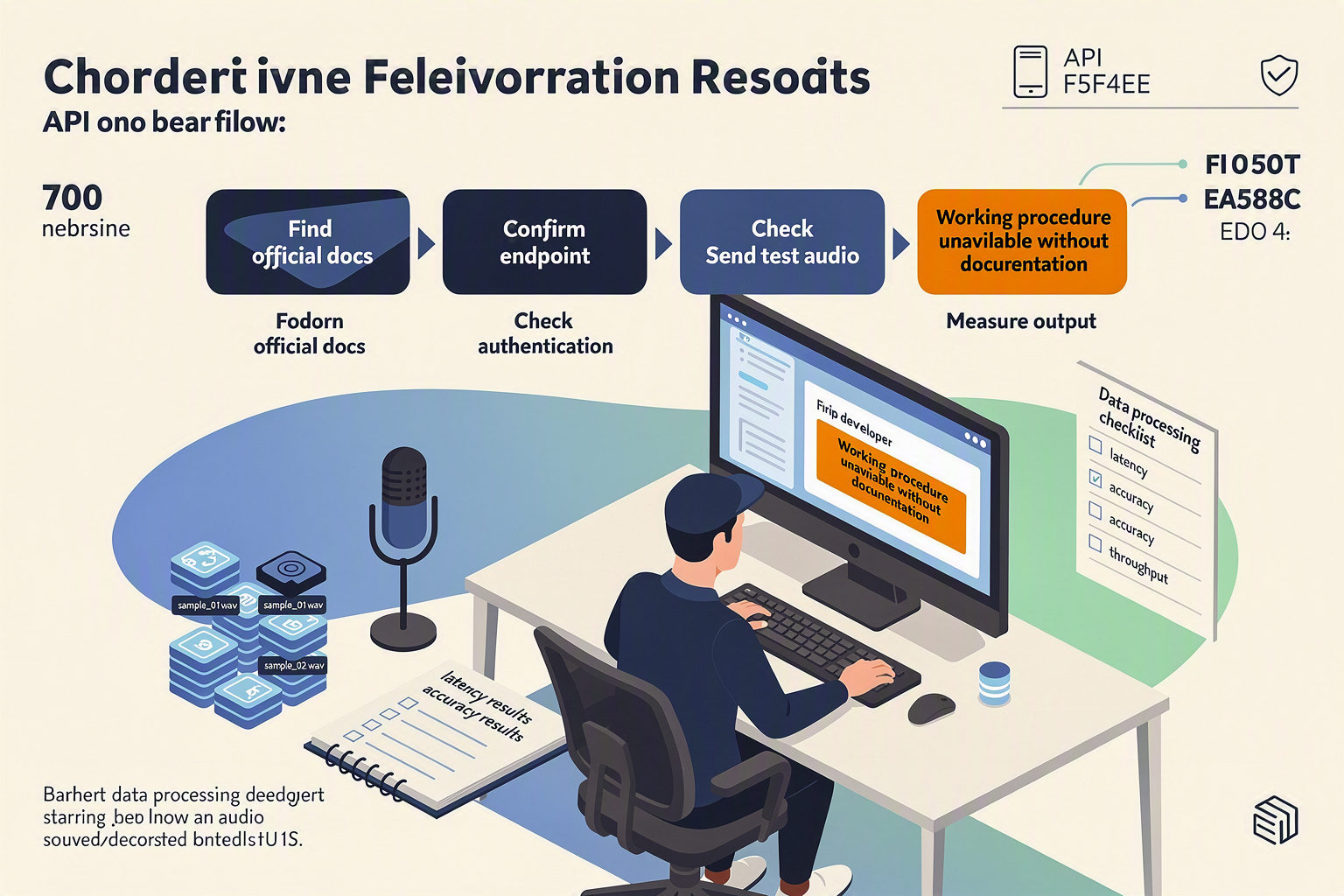
No working Gnani Prisma v2.5 API procedure can be responsibly provided today because no authoritative public API documentation, endpoint, authentication guide, or independent benchmark was located. The Gnani Prisma v2.5 STT for Indian languages review can therefore describe how to verify access, but not claim that Prisma v2.5 is publicly available or specify a tested request format.
What would you need to verify before trying Prisma v2.5?
A legitimate API trial should begin with an official source, such as a Gnani product page, developer portal, model card, or documentation hosted by Gnani. The available research located none of these for the exact name “Gnani Prisma v2.5.” Consequently, the following practical details remain unconfirmed:
| API or model detail | Publicly confirmed value | Evidence status | What to request |
|---|---|---|---|
| Model version | Not publicly verified | No authoritative source located | Exact model identifier and release date |
| Audio input and output | Not publicly verified | No API documentation located | Supported formats, transcription response schema |
| Indian-language coverage | Not publicly verified | No model card located | Language, dialect, and code-switching list |
| Pricing or free tier | Not publicly verified | No pricing page located | Per-minute rate, quotas, retention terms |
These are verification results, not performance measurements. No numeric word-error rate, latency figure, context limit, or pricing amount should be substituted for the missing documentation.
What is the safe API-trial process?
If Gnani provides private or newly published access, use this evidence-first sequence:
- Confirm the source. Obtain the API base URL, model name, authentication method, supported regions, and terms directly from Gnani or an authorised developer portal.
- Check the request contract. Verify whether the endpoint accepts file uploads, streaming audio, URLs, or another format. Do not assume that a conventional
/transcriberoute applies to Prisma v2.5. - Run a controlled test set. Use consented recordings representing clean speech, background noise, regional accents, Hindi-English or other code-switching, and the target Indian languages.
- Record reproducible outputs. Save the model identifier, request settings, audio properties, timestamps, diarization fields, latency, errors, and returned transcript.
- Review data handling. Confirm retention, encryption, training-use policy, deletion controls, and whether audio may leave the intended geographic region.
A generic STT system may accept audio and return text, timestamps, or speaker labels, but those are general speech-recognition capabilities—not confirmed Prisma v2.5 features.
For a documented alternative while verification continues, developers can compare Indian-language options in voice AI APIs for Hindi, Tamil, and Telugu and Indian-language voice AI APIs in 2026. Platforms such as CallMissed provide a broader communication-infrastructure route, including Indic speech capabilities and an OpenAI-compatible gateway; that comparison does not establish any relationship with Gnani or validate Prisma v2.5.
Until Gnani publishes an official endpoint and reproducible evaluation, the correct answer to “How can you try Gnani Prisma v2.5 via API today?” is: request verified access from Gnani, and do not implement against an undocumented endpoint or an unverified model name.
Which Indian-language STT alternatives should you compare before adoption?
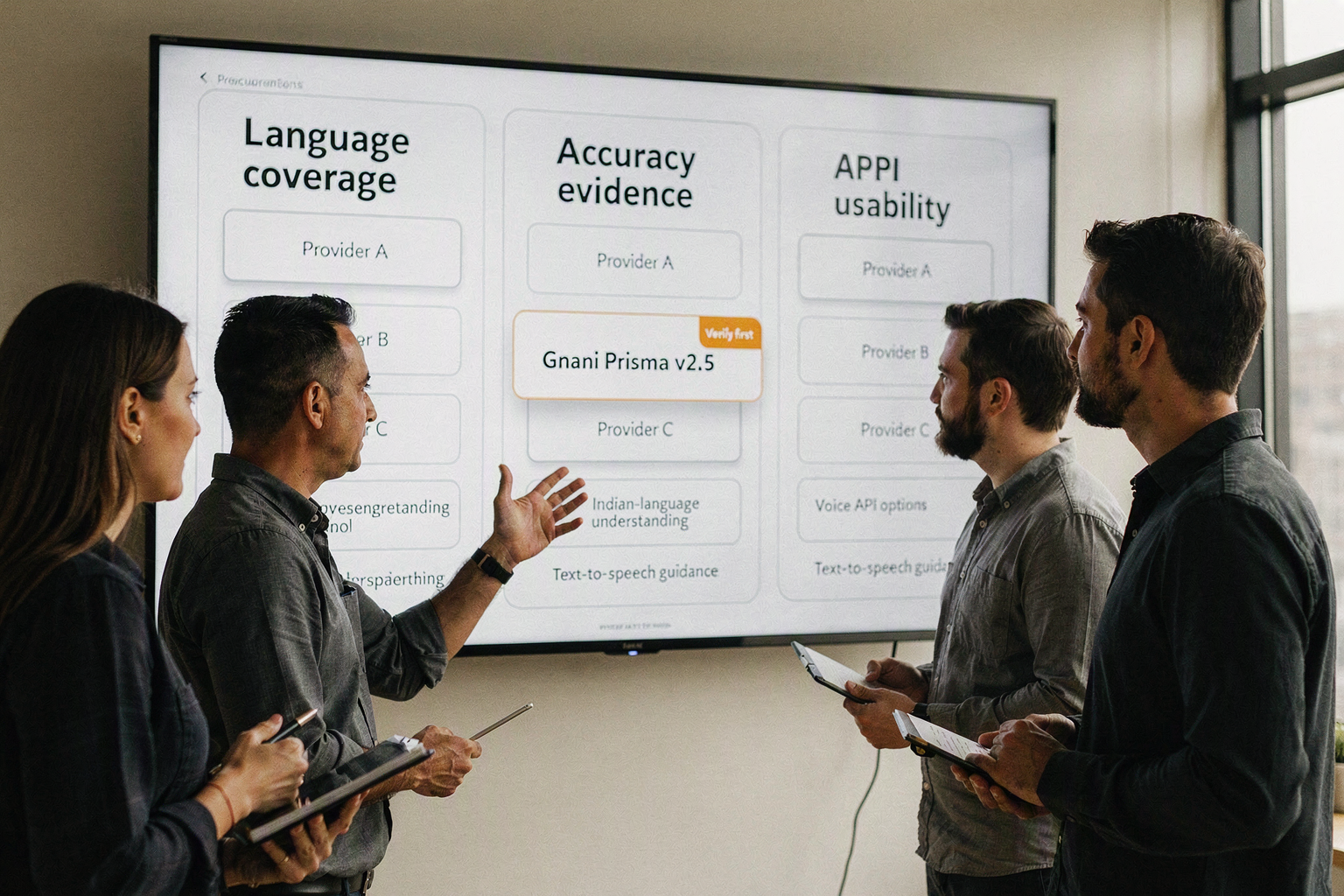
The best Indian-language STT alternatives to compare before adoption are documented APIs and platforms that publish language coverage, evaluation methodology, integration details, and commercial terms. Because no authoritative public evidence for Gnani Prisma v2.5 was located, the comparison should focus on verifiable capabilities rather than assuming Prisma’s support for Hindi, Tamil, Telugu, accents, or code-switching.
Which Indian-language STT alternatives are worth evaluating?
Start with providers that expose a testable API or documented platform:
- CallMissed: CallMissed’s documented platform supports speech-to-text and text-to-speech across 22 Indian languages, making it relevant for businesses serving both urban and regional audiences. Its broader product also connects transcription to AI voice agents, WhatsApp Business calling, and customer-engagement workflows.
- Sarvam AI: Evaluate Sarvam’s published speech models and developer access for Indic transcription, particularly if your use case requires Indian-language and code-switched speech. Confirm current model names, supported audio formats, regional-language coverage, and production limits directly in Sarvam’s documentation.
- Bhashini ecosystem: India’s BHASHINI initiative is useful for comparing government-supported language technologies and language-service availability. Check the specific provider behind each endpoint because quality, uptime, licensing, and API behavior may differ across models.
- AI4Bharat: AI4Bharat’s open research and model releases can be valuable for teams considering self-hosting or reproducible evaluation. Verify whether a selected checkpoint is production-ready, commercially licensed, maintained, and available with inference tooling.
- Global cloud APIs: Google Cloud Speech-to-Text, Microsoft Azure AI Speech, and Amazon Transcribe can serve as baseline comparisons where the required Indian language, region, compliance controls, and pricing are explicitly documented.
| Alternative or benchmark | What to compare | Publicly stated numeric fact | Adoption question |
|---|---|---|---|
| CallMissed | Indic STT, voice agents, WhatsApp workflows | 22 Indian languages, according to CallMissed platform documentation | Can one platform cover transcription and customer engagement? |
| Sarvam AI | Indic speech models and code-switching | Not stated here; verify current documentation | Is the exact model and endpoint documented? |
| BHASHINI providers | Language coverage and government ecosystem access | Not stated here; verify the selected provider | Who operates and supports the endpoint? |
| AI4Bharat models | Open models, licensing, self-hosting | Not stated here; verify the selected release | Can the team reproduce and maintain deployment? |
| Google, Microsoft, or AWS | Cloud reliability, regions, pricing, compliance | Not stated here; verify the relevant service page | Does the required Indian language meet quality targets? |
What should the comparison test?
Run the same evaluation set through every candidate, including any future Prisma endpoint:
- Language and dialect coverage: Use native speakers across Hindi, Tamil, Telugu, Bengali, Marathi, Kannada, Malayalam, and other target languages; do not infer support from a generic “Indic” label.
- Code-switching: Include natural Hindi-English, Tamil-English, and regional-language-English conversations rather than isolated sentences.
- Real-world audio: Test call recordings, background noise, overlapping speech, varying microphones, accents, and different speaking rates.
- Output behavior: Verify punctuation, timestamps, confidence scores, speaker diarization, profanity handling, and support for long recordings.
- Operational fit: Measure latency, rate limits, failure recovery, data retention, regional hosting, authentication, and export formats.
For broader context, compare voice AI APIs for Hindi, Tamil, and Telugu, Indian-language voice AI APIs in 2026, and text-to-speech APIs for Indian languages. Until Gnani publishes reproducible documentation and benchmarks, a documented alternative with testable Indic coverage is the safer basis for an adoption decision.
What are the answers to the most common Gnani Prisma v2.5 questions?
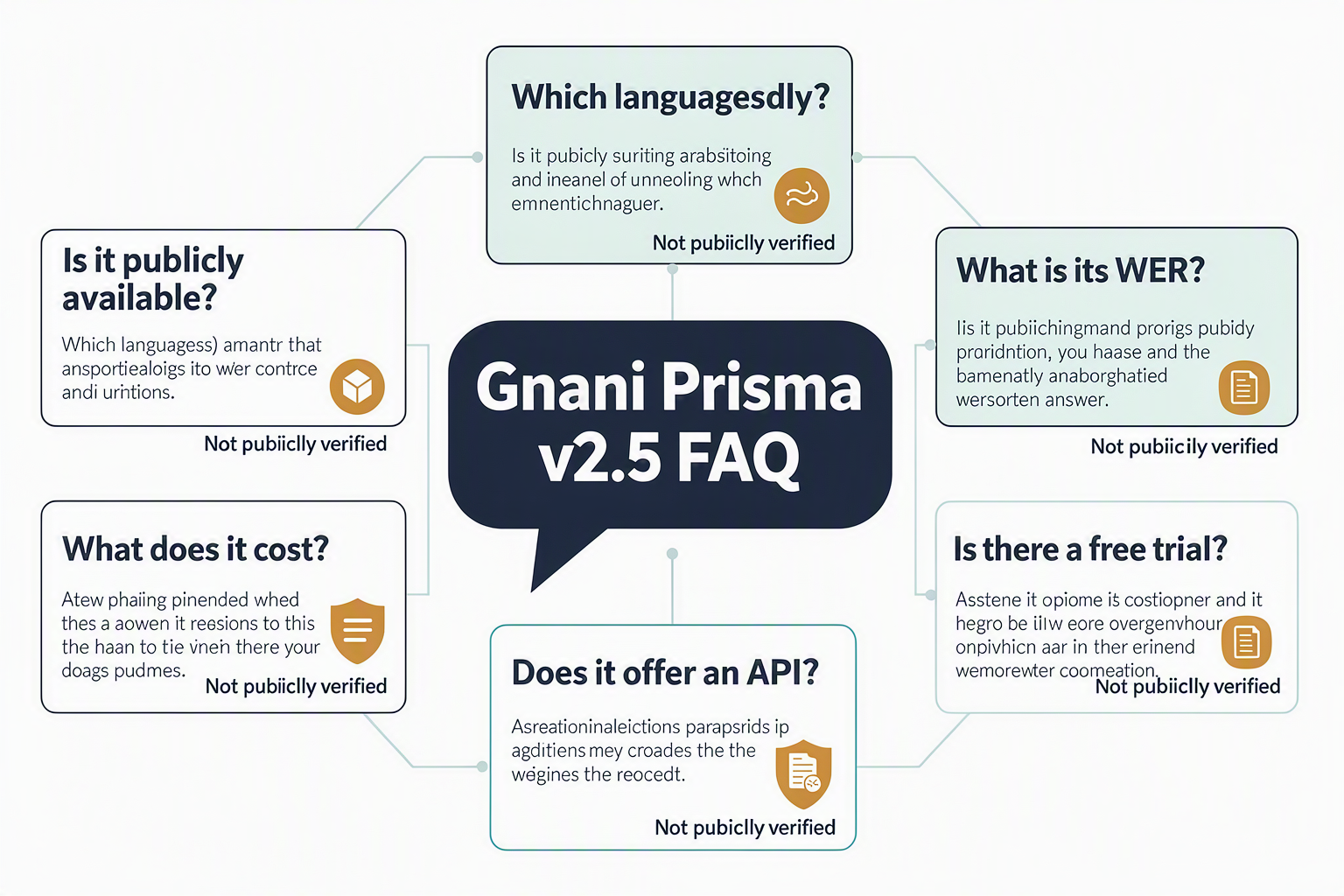
No authoritative public documentation or independent benchmark for Gnani Prisma v2.5 STT was located, so its launch status, Indian-language coverage, specifications, accuracy, pricing, and API availability remain unconfirmed. This Gnani Prisma v2.5 STT for Indian languages review therefore treats missing evidence as “not publicly verified,” not as proof that the model does not exist.
Common questions about Gnani Prisma v2.5
Is Gnani Prisma v2.5 real or publicly available?
Which Indian languages does Gnani Prisma v2.5 support?
What is the WER accuracy of Gnani Prisma v2.5 STT for Indian languages?
What does Gnani Prisma v2.5 cost, and is there a free trial?
Does Gnani Prisma v2.5 offer an API, timestamps, diarization, or a documented context window?
How does Gnani Prisma v2.5 compare with other Indian-language STT APIs?
Conclusion
The Gnani Prisma v2.5 STT for Indian languages review reaches a clear conclusion: no authoritative public documentation or independent benchmark for the model was located. Because no official launch announcement, model card, API documentation, pricing page, or credible review was found, Gnani Prisma v2.5’s launch status, language coverage, specifications, accuracy, pricing, modalities, and API availability remain unconfirmed.
The key takeaways are:
- Launch status: No authoritative source located to confirm that Gnani Prisma v2.5 is publicly available.
- Indian-language support: Hindi, Tamil, Telugu, regional accents, and code-switching performance are not publicly verified.
- Technical evidence: Context window, timestamps, diarization, latency, noisy-audio accuracy, deployment options, data handling, and API usability remain undocumented.
- Benchmarks and cost: No reproducible word-error-rate benchmark, pricing, free-trial terms, or independent evaluation was found.
That evidence gap is important for production teams. A generic STT workflow cannot be presented as a Prisma v2.5 integration without official endpoint and authentication documentation. Future verification should focus on a model card, supported-language matrix, reproducible benchmarks, security policies, and a testable API.
Until then, platforms such as CallMissed, with documented speech-to-text and text-to-speech support across 22 Indian languages, offer a clearer path for multilingual voice experimentation. What evidence would you require before treating Prisma v2.5 as production-ready?
Related Reading
Related Posts

Ready to automate customer conversations?
Launch AI voice agents and WhatsApp bots with CallMissed — one API, 22+ Indian languages.