
National Robotics Week 2026: Latest Physical AI Research, Breakthroughs and Resources


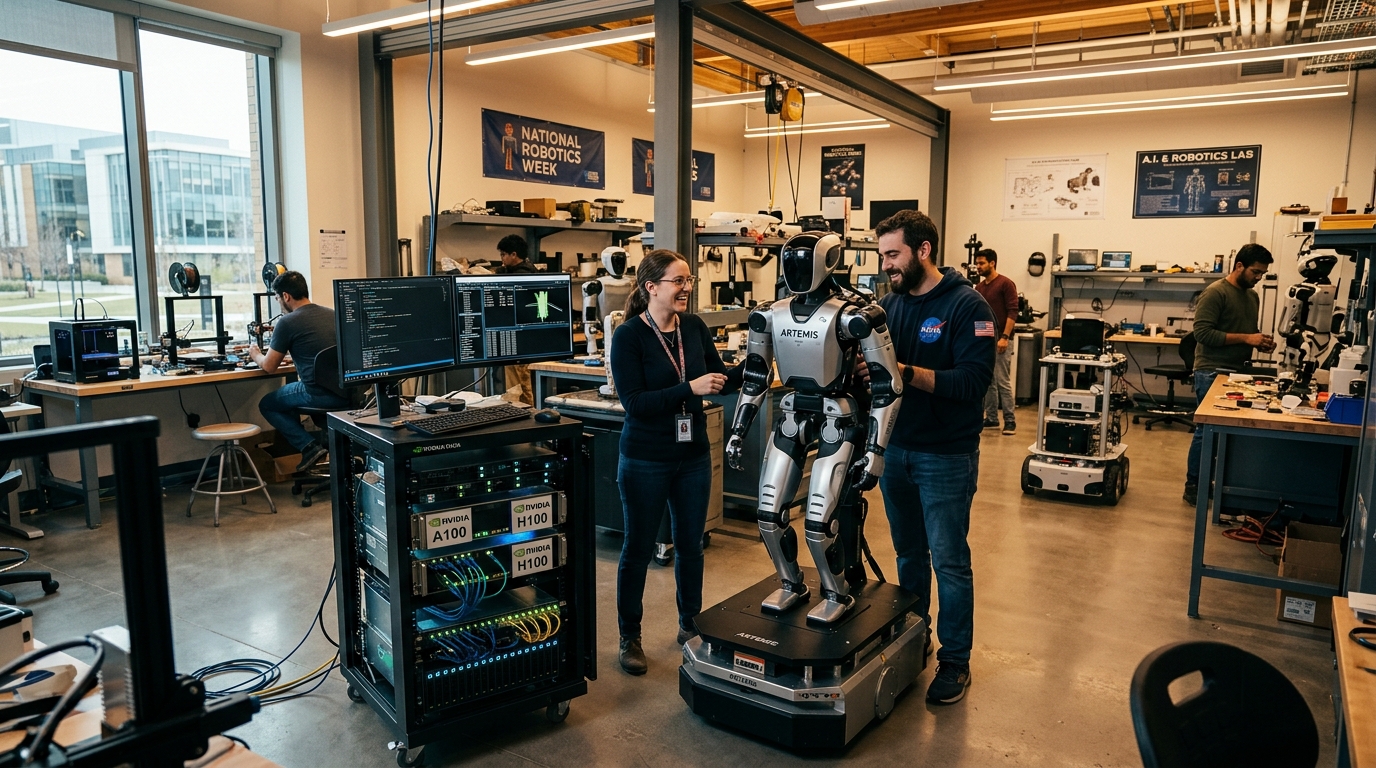
What happens when artificial intelligence finally grows a body? During National Robotics Week 2026—running April 4–12—that hypothetical becomes an...
National Robotics Week 2026: Latest Physical AI Research, Breakthroughs and Resources
What happens when artificial intelligence finally grows a body? During National Robotics Week 2026—running April 4–12—that hypothetical becomes an operational reality. NVIDIA's showcase this year isn't merely celebrating incremental hardware improvements; it's spotlighting the breakthroughs that are actively bringing AI into the physical world, from autonomous warehouses to precision surgical suites. For an industry historically trapped in the chasm between digital reasoning and mechanical execution, Physical AI has arrived as the bridge—and the current beneath it is accelerating faster than most organizations anticipated.
The timing is neither symbolic nor slow-burn. As industry observers tracking the event have noted, four fundamental shifts are quietly rewriting how robots get built, trained, and deployed at scale. First, AI is maturing beyond narrow, pre-programmed tasks into adaptive, context-aware agents. Second, tactile sensing breakthroughs like CraftNet AI are giving machines a literal sense of touch, allowing them to detect when an object is slipping and correct grip in milliseconds—something that remained elusive for decades. Third, advanced simulation-to-reality pipelines are collapsing development cycles from years to weeks, letting algorithms train in virtual environments before touching physical hardware. Fourth, autonomous reasoning is migrating from cloud dependencies to edge computation, enabling split-second decisions without latency. These aren't distant research fantasies; they're production-grade capabilities already reshaping global supply chains, healthcare logistics, and advanced manufacturing.
So why does National Robotics Week 2026 matter right now? Because the boundary between "software" and "machine" hasn't just blurred—it has dissolved entirely. Whether you're a robotics engineer training perception models, a startup founder evaluating automation infrastructure, or an enterprise leader navigating workforce strategy, the research papers, open-source releases, and hardware platforms debuting this week will directly influence your competitive position for the next decade.
In the sections ahead, we'll dissect the most significant Physical AI breakthroughs unveiled during the event, map the essential research and developer resources you need to bookmark, and examine how the communication layer—spanning multimodal voice interaction to real-time AI orchestration—is becoming the critical, often overlooked backbone of deployment. After all, as robots gain both brains and bodies, they still need to understand and respond to human direction; platforms like CallMissed are already building the multilingual voice and conversational infrastructure that lets operators collaborate seamlessly with intelligent machines across 22 Indian languages, turning isolated technical capability into integrated human-robot collaboration.
Introduction
From Pixels to Proprioception: Why Physical AI Matters
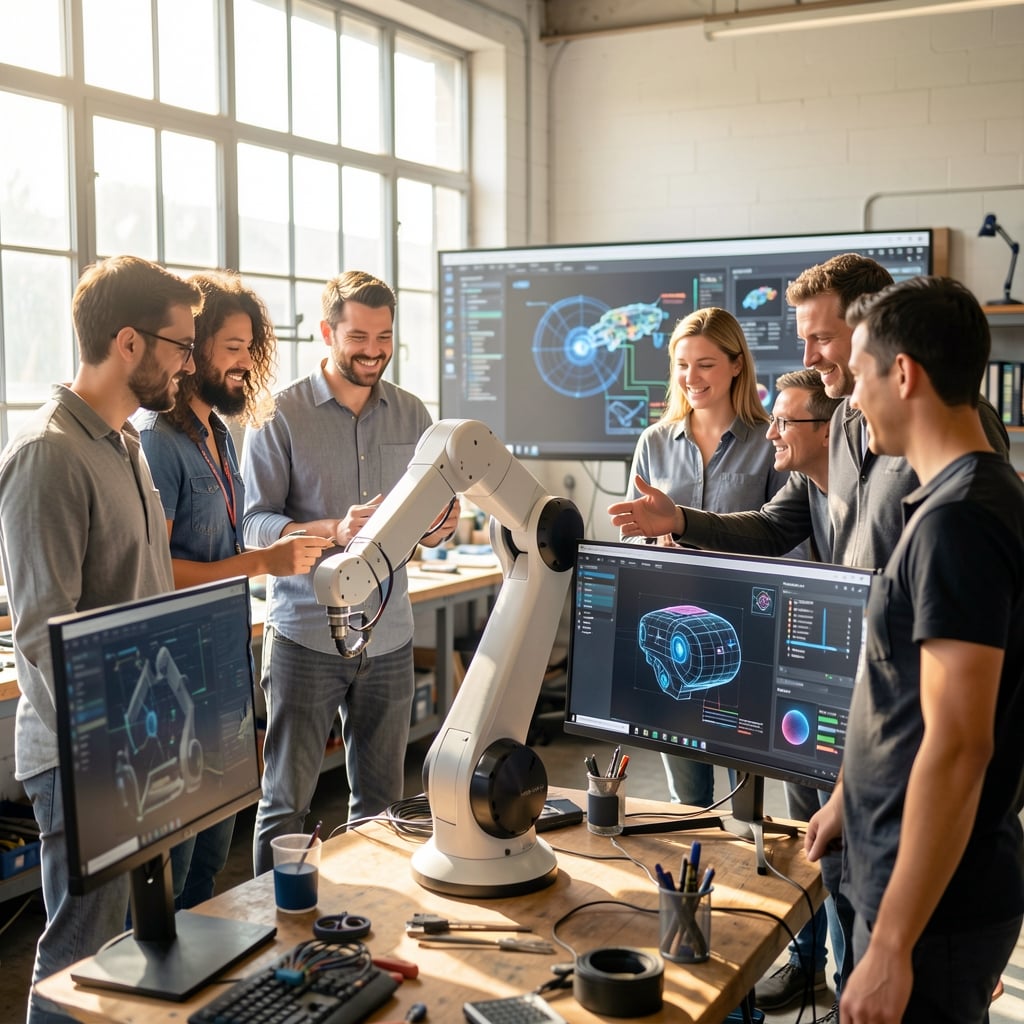
Every spring, National Robotics Week serves as a global checkpoint for intelligent machines. This year, running from April 4–12, 2026, the event arrives at a genuine inflection point: artificial intelligence is finally leaving the digital realm and learning to interact with the physical world. NVIDIA is using National Robotics Week to spotlight breakthroughs in Physical AI — systems that perceive, reason about, and manipulate real environments rather than merely processing text or images on a screen.
For the past decade, AI’s most headline-grabbing wins were almost entirely digital. Large language models aced standardized tests, generated code, and powered customer service chatbots — impressive feats that nonetheless required no understanding of gravity, friction, or spatial constraints. Physical AI changes the equation entirely. It represents the leap from an algorithm that describes how to pick up a glass to a robotic system that can actually do it, adjusting its grip in milliseconds when a tactile sensor signals slippage. As NVIDIA’s 2026 showcase emphasizes, the goal is no longer pattern recognition alone; it is world modeling — building an internal representation of physical reality that allows machines to plan, adapt, and recover.
Breakthroughs and Market Context
The research community has delivered pivotal advances underscoring this shift. Key developments on display this National Robotics Week include:
- Tactile Intelligence: Engineers have developed CraftNet AI, giving robots a human-like sense of touch that detects when objects slip and triggers corrective grip adjustments without human intervention.
- Simulation-to-Reality Scale: At CVPR, NVIDIA advanced Physical AI with its largest simulation-to-reality demonstrations to date, leveraging massive datasets to train models that transfer directly from virtual environments to physical hardware.
- Architectural Evolution: Industry observers are tracking four foundational shifts that are quietly rewriting how robots get built and used, beginning with AI “growing up” from narrow pattern matching toward broader, more generalizable world understanding.
- Enterprise Demand: Press highlights for National Robotics Week 2026 note that AI-driven automation and Physical AI dominate this year’s agenda, reflecting surging commercial demand for adaptive machines.
The commercial urgency is equally unmistakable. Global labor shortages and supply chain volatility have accelerated investment in robots capable of operating in cluttered, unstructured settings — from logistics hubs to precision manufacturing floors — rather than merely repeating preprogrammed motions.
This transition also underscores a larger infrastructure convergence. The same foundational model advances that power conversational agents are now being adapted for robotic perception and control. Platforms like CallMissed illustrate this abstraction layer in action: by offering a multi-model API gateway with access to 300+ LLMs, alongside multilingual AI agents supporting 22 Indian languages, CallMissed commoditizes intelligence into scalable endpoints. That same paradigm — flexible, high-performance inference delivered via API — is becoming the backbone of modern robotics stacks, enabling developers to swap underlying models for tasks ranging from motion planning to human-robot collaboration.
In the sections that follow, we will dissect the latest Physical AI research unveiled during National Robotics Week 2026, examine the breakthroughs making robots genuinely useful in dynamic environments, and curate the resources that engineers and technology leaders need to stay ahead. One thing is already clear: physical AI is no longer a laboratory curiosity. It is becoming real.
Background & Context
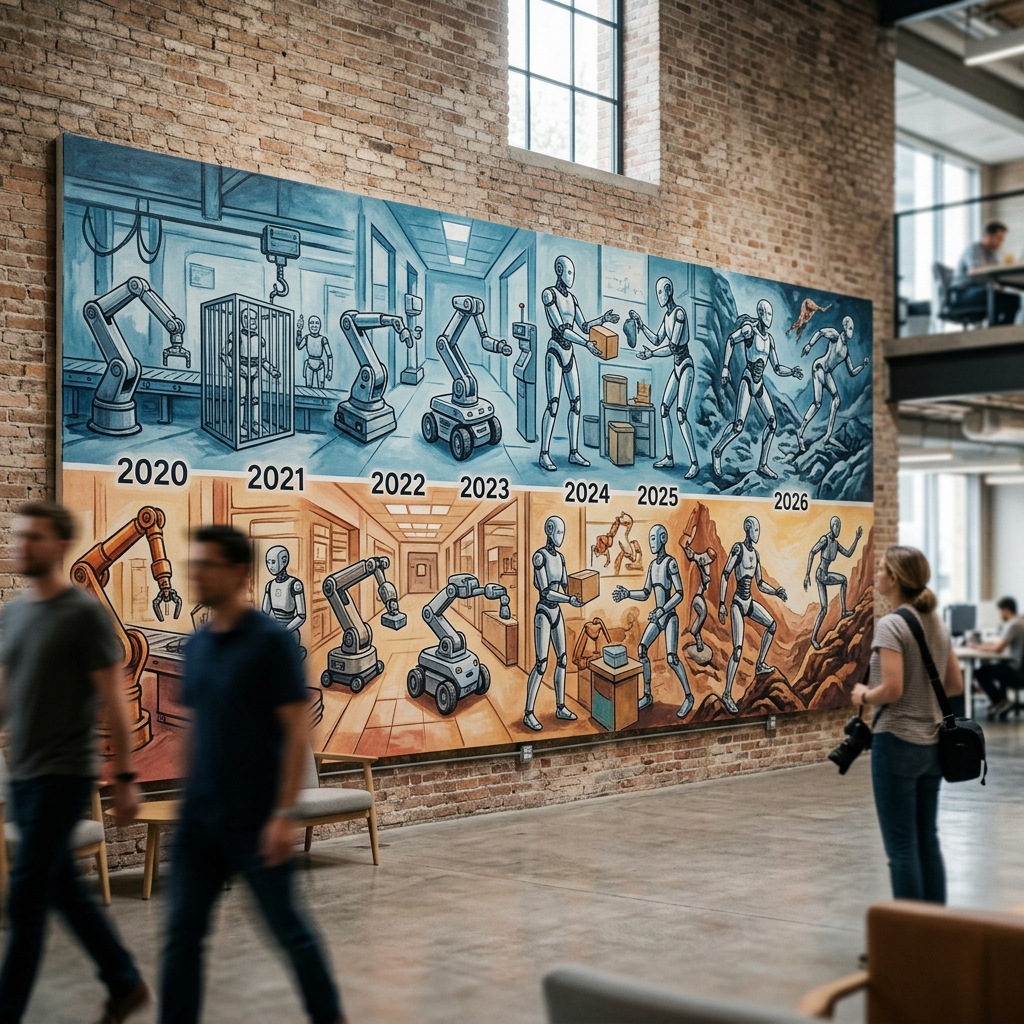
National Robotics Week has matured from an industry celebration into an annual barometer for intelligent automation worldwide. Held April 4–12, 2026, this year’s observance lands at a critical inflection point: Physical AI—systems that perceive, reason, and act upon the real world—is transitioning from laboratory promise to commercial reality.
From Digital Minds to Embodied Machines
For the second consecutive year, NVIDIA has positioned the week as a platform to spotlight what it describes as breakthroughs “bringing AI into the physical world.” The framing marks a subtle but important evolution from 2025, when the company emphasized “pioneering technologies that are shaping the future of intelligent machines.” In the span of twelve months, the industry vocabulary has shifted from speculative shaping to concrete implementation.
That progression mirrors a fundamental technical realignment. While the previous decade of AI progress was dominated by software-centric large language models trained on text corpora, Physical AI demands a radically different architecture: models must consume multimodal sensor streams, reason under physical constraints, and output motor commands that satisfy safety and torque limits in real time. The robot is no longer just an actuator; it is an inference endpoint.
Four Shifts Rewriting Robotics
Industry observers tracking the 2026 calendar identified four foundational shifts quietly rewriting how robots get built and used:
- AI maturation — Models are evolving from passive pattern recognition to active, context-aware agents capable of generalizing across tasks rather than memorizing narrow routines.
- Sensory embodiment — Beyond cameras, touch and proprioception frameworks like Sharpa Robotics’ CraftNet AI give manipulators real-time haptic feedback, enabling autonomous grip correction when objects slip.
- Edge-cloud orchestration — Control policies are increasingly split between low-latency edge inference for reflexes and cloud-scale foundation models for high-level planning.
- Human-robot collaboration standards — New safety and interaction protocols are enabling closer proximity deployment in warehouses, clinics, and assembly lines.
The CVPR-to-Industry Pipeline
The 2026 National Robotics Week also follows NVIDIA’s largest Physical AI presence at CVPR, where the company advanced what it describes as its largest portfolio of physical-world foundation models and simulation tools to date. This research-to-industry pipeline is already visible in official National Robotics Week communications, which explicitly highlight AI-Driven Automation & Physical AI across warehousing, precision agriculture, and autonomous logistics.
Underpinning these headlines is a convergence of formerly siloed disciplines. Modern robotic platforms now integrate computer vision, foundation-model reasoning, and multimodal sensing—often fused within digital-twin simulation environments before touching real hardware. The net effect is that deployment timelines are collapsing. Systems that once required years of domain-specific tuning can now be instruction-tuned with natural language and validated in high-fidelity physics simulators.
In this context, National Robotics Week 2026 is less a retrospective and more a real-time census of an industry that has stopped asking whether AI can be embodied, and started measuring how fast that embodiment can be scaled safely, affordably, and at production quality.
Key Developments
The Physical AI Inflection Point
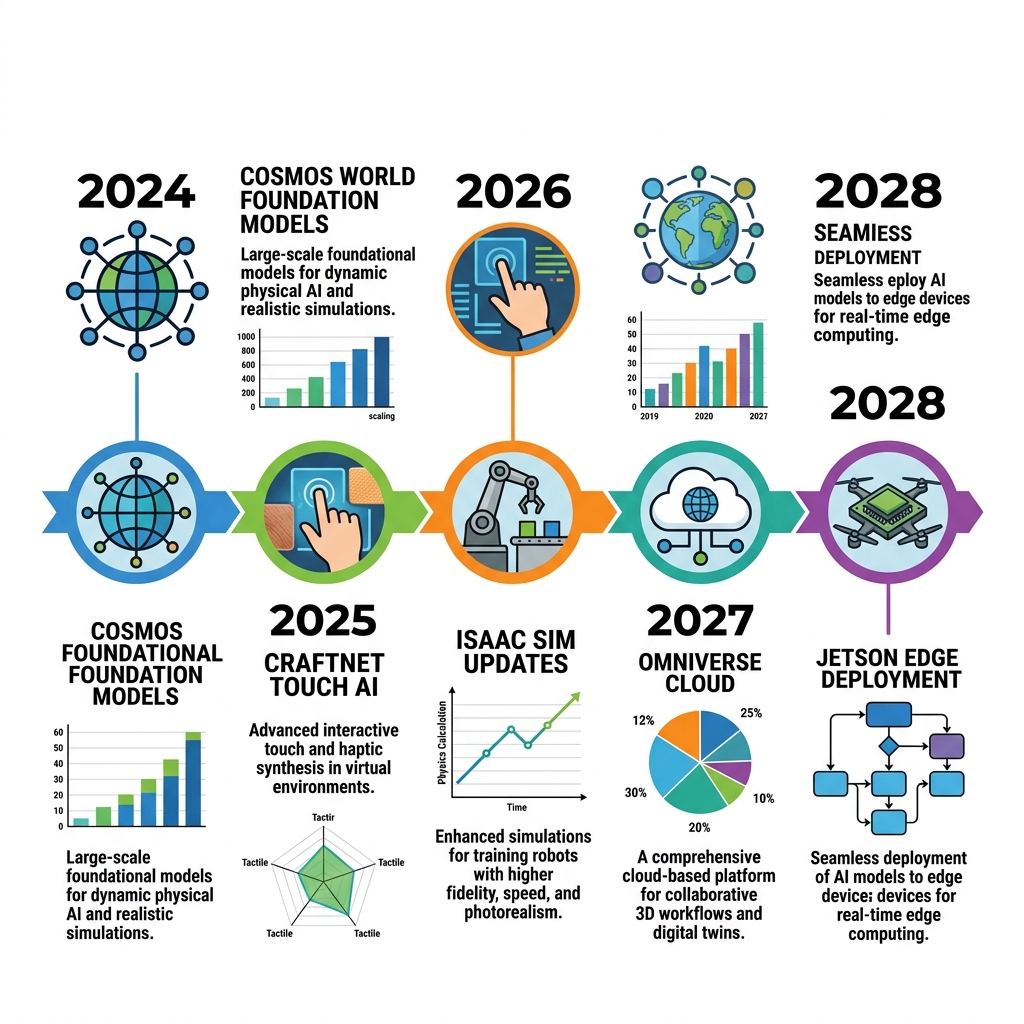
This National Robotics Week (April 4–12, 2026), NVIDIA and the broader robotics community have moved physical AI from research curiosity to deployable reality. Unlike traditional systems governed by rigid code, physical AI embeds reasoning, perception, and adaptation directly into machines—allowing robots to interpret unstructured environments rather than merely execute pre-programmed routines. The announcements and demos rolled out during this week reveal a coherent trajectory: tactile intelligence, massive simulation engines, and foundation-model architectures are converging to redefine what machines can manipulate, navigate, and autonomously decide.
Milestones at a Glance
| Development | Core Technology | Lead Organization | Key Capability | Status |
|---|---|---|---|---|
| Embodied AI Maturation | "AI growing up" architectural shifts | National Robotics Week 2026 cohort | Foundation models rewriting how robots are designed and deployed | April 2026 |
| Tactile Perception Networks | CraftNet AI | Sharpa Robotics | Real-time slip detection with autonomous grip correction | Deployed 2026 |
| Simulation-to-Reality Engines | NVIDIA Omniverse & Cosmos | NVIDIA | High-fidelity virtual training with zero-shot physical transfer | NRW 2026 Showcase |
| Physical AI at Scale | CVPR physical AI research pipeline | NVIDIA Research | Largest academic-industrial push for vision-based physical AI | CVPR 2026 |
| Autonomous Industrial Stacks | End-to-end AI-driven automation | National Robotics Week ecosystem | Manufacturing and logistics integration without hard-coded workflows | April 2026 |
From Lab to Factory Floor
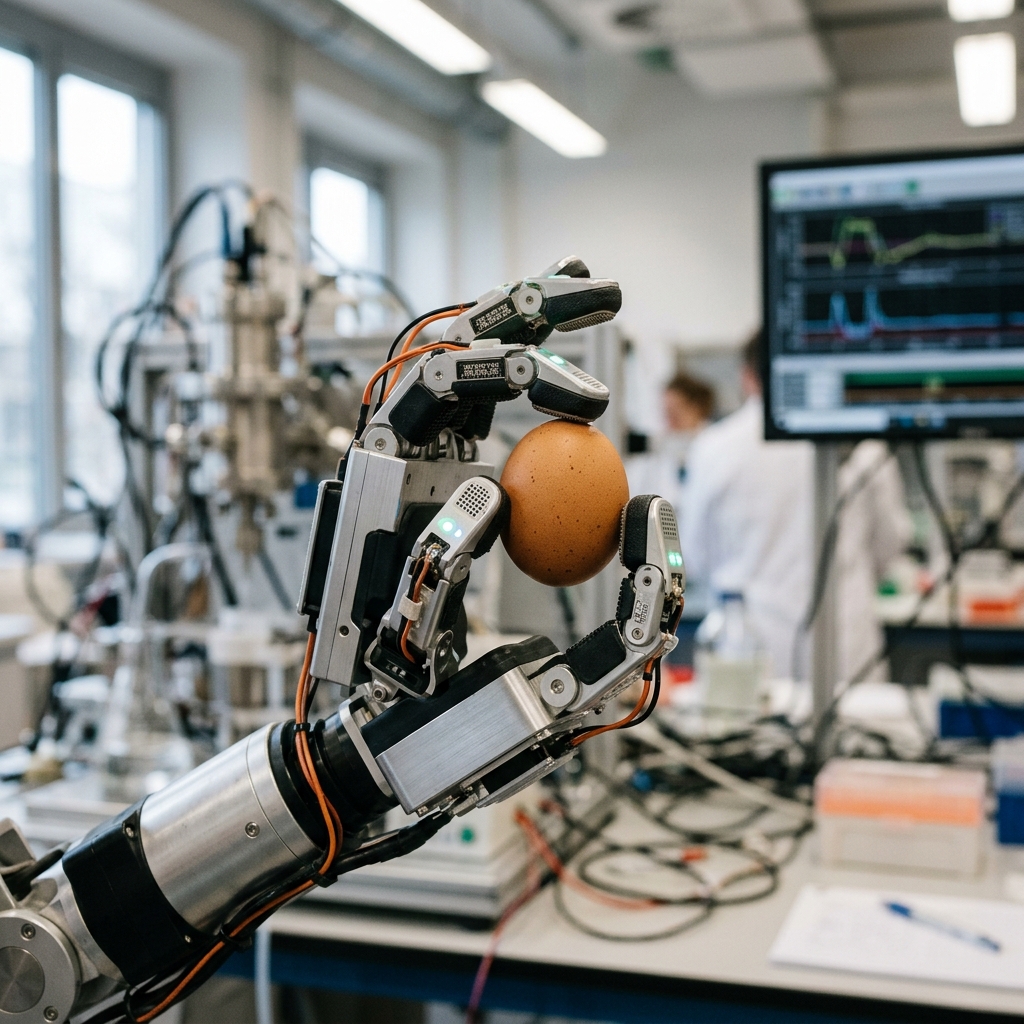
These advances are not isolated experiments; they represent layered convergence across hardware, software, and training paradigms. Take tactile sensing: Sharpa Robotics’ CraftNet AI, highlighted during the week’s coverage, demonstrates that robots no longer need rigid force thresholds to handle objects. By sensing something slip and immediately correcting grip pressure, the system closes a sensory feedback loop that has eluded industrial grippers for decades. This capability is a prerequisite for human-safe collaborative robots in warehouses, kitchens, and precision assembly lines where product variability is high.
Equally significant is the simulation frontier. NVIDIA’s continued investment in Omniverse and Cosmos frameworks means researchers can train physical AI models inside photorealistic virtual worlds, then deploy them into real robots with minimal fine-tuning. During National Robotics Week 2026, NVIDIA emphasized that these tools are collapsing the cost and time barriers that once made robotics research and development accessible only to the best-funded labs. The result is a democratized pipeline where startups and academic teams can iterate on mechanical designs and control policies in days rather than quarters.
The institutional momentum is equally telling. NVIDIA’s presence at CVPR—billed as its largest physical AI showcase to date—signals that computer vision and embodied intelligence are merging into a single discipline. Rather than treating perception and action as separate modules, researchers are training unified foundation models that ingest visual data and output motor commands within the same inference pass. For example, a model trained to identify objects in cluttered warehouse shelves can simultaneously compute the joint angles required to retrieve them, removing the traditional divide between "seeing" and "doing."
Strategic Implications
The developments catalogued above carry immediate strategic weight for organizations building or adopting robotic systems:
- Tactile AI closes the dexterity gap. CraftNet-style architectures mean robots can finally handle deformable, fragile, or slippery objects without task-specific engineering.
- Simulation-first development cuts capital burn. By validating behaviors in NVIDIA Omniverse before touching physical hardware, teams reduce prototype costs and safety risks.
- Unified perception-action models simplify stacks. The CVPR-bound research direction indicates that separate "vision module + controller" pipelines will give way to single end-to-end networks.
- The April 2026 timeline is a watershed. National Robotics Week’s documented shifts—from "AI growing up" to hardware commoditization—mark the transition from pilot projects to production-grade physical AI. As these systems mature, the line between digital AI assistants and physical robotic agents is likely to dissolve entirely.
In-Depth Analysis
The Four Shifts Rewriting Robotics
National Robotics Week 2026, running April 4–12, has coalesced around a single, unmistakable inflection point: artificial intelligence is graduating from cloud-based inference to physical reasoning. According to industry dispatches circulated during the event, four structural shifts are quietly rewriting how robots are engineered and deployed, headlined by the observation that AI is “growing up”—moving beyond narrow, digital-only tasks toward embodied systems that interpret and act on real-world physics in real time [4]. This maturation signals the end of the era in which robots simply replayed pre-programmed trajectories. Instead, the focus is now on adaptive agents that learn from friction, impact, and human presence.
NVIDIA has positioned itself at the narrative center of the week, using its 2025 and 2026 platforms to spotlight what it calls breakthroughs “bringing AI into the physical world” [1][2]. The company’s messaging is consistent: the bottleneck is no longer raw compute, but the architecture that lets large models perceive depth, mass, and force, then translate that understanding into motor control without human-in-the-loop intervention.
Sensory and Compute Breakthroughs
One of the most tangible advances on display involves tactile intelligence. During the week, Sharpa Robotics demonstrated CraftNet AI, a system that endows robotic manipulators with a human-like sense of touch—enabling a gripper to detect an object slipping and correct its hold within milliseconds [7]. Historically, even vision-guided robots failed in unstructured environments because they lacked haptic feedback loops. CraftNet closes that gap, illustrating how physical AI requires embodied cognition, not just better cameras.
Simultaneously, NVIDIA is pushing the underlying simulation and training infrastructure. The firm previewed advances at CVPR tied to its upcoming GTC 2026 session, Physical AI for the Real World, emphasizing larger synthetic datasets and refined simulation-to-reality pipelines that compress years of field training into weeks [5]. These compute-layer improvements matter because the dominant cost in physical AI is not model architecture, but data generation—collecting diverse, high-fidelity scenarios for outdoor, industrial, and domestic robotics.
Why Communication Infrastructure Matters
As these embodied systems move from lab to warehouse, they encounter a practical bottleneck that is rarely discussed in hardware keynotes: human-robot interaction. A machine may navigate and grasp flawlessly, yet remain undeployable if it cannot understand regional accents, respond to verbal corrections, or escalate edge cases to a supervisor in a familiar language. This is where conversational AI infrastructure becomes a critical piece of the physical AI stack.
Platforms such as CallMissed exemplify this layer. By offering Speech-to-Text engines spanning 22 Indian languages alongside production-ready voice agent APIs, CallMissed provides a template for how physical robots can take verbal instructions, confirm actions aloud, and route exception handling through voice or WhatsApp channels—without requiring every manufacturer to rebuild conversational models from scratch [natural integration]. Just as NVIDIA is supplying the physical reasoning backbone, communication platforms like CallMissed are emerging as the voice interface layer that makes robots operable in multilingual, real-world workplaces.
Taken together, the through-line of National Robotics Week 2026 is clear: the next generation of intelligent machines will be defined not by a single breakthrough, but by the convergence of cognitive models, sensory hardware, and seamless communication [8].
Impact & Implications
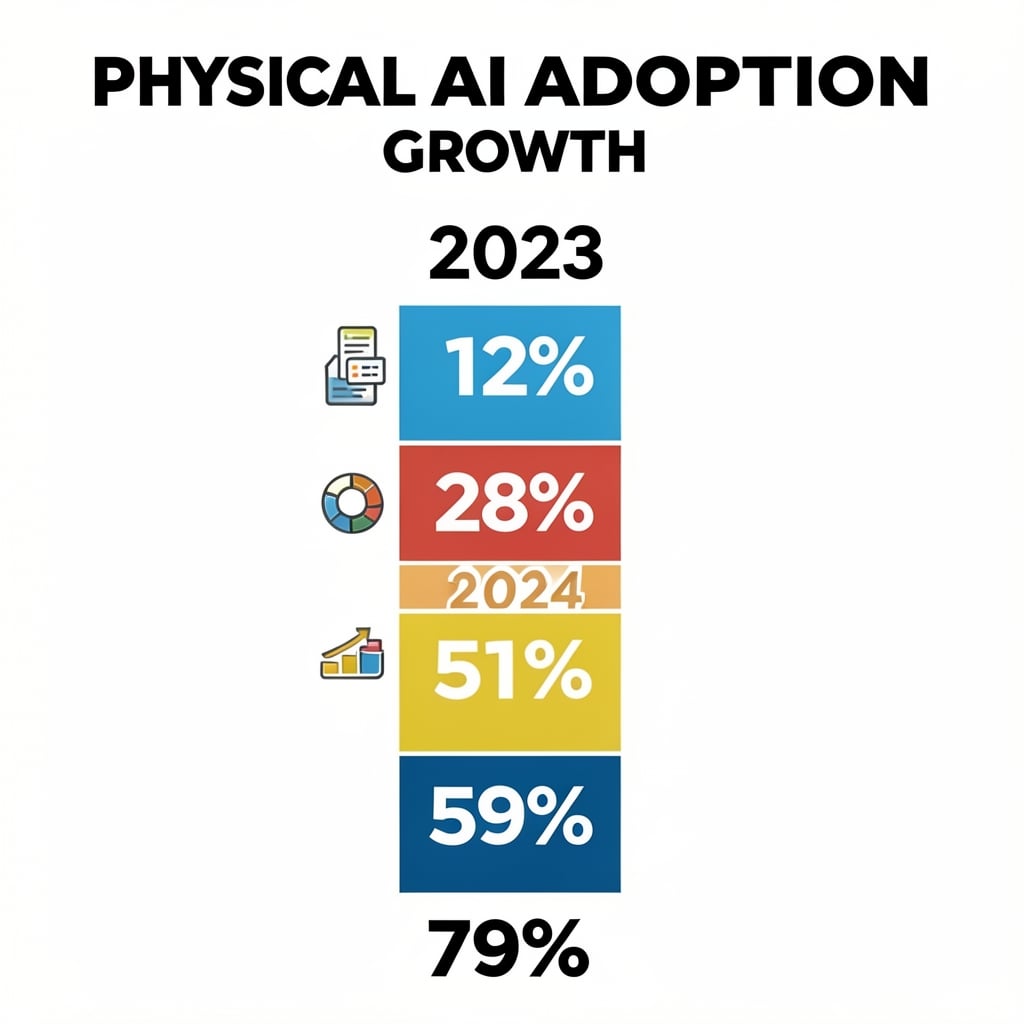
The convergence of Physical AI and advanced robotics—spotlighted during National Robotics Week 2026 (April 4–12)—is accelerating the transition from controlled laboratory environments to real-world deployment. NVIDIA’s focus on breakthroughs that bring AI into the physical world signals that intelligent machines are now being architected for unstructured, human-centric environments rather than repetitive, caged tasks.
Redefining Industrial Automation
Industrial robotics has historically relied on pre-programmed, rigid motion paths. The innovations showcased this National Robotics Week point to a fundamental shift: machines that can perceive, adapt, and manipulate dynamic surroundings. With developments like CraftNet AI giving robots a sense of touch, automated systems can now handle delicate assembly tasks, detect when objects slip, and correct grip in real time—capabilities that previously required human dexterity. When combined with real-time visual processing, these tactile advances allow robotic systems to operate in variable packaging, advanced manufacturing, and logistics environments without exhaustive reprogramming for each new workflow.
Human-Robot Collaboration in Healthcare
Beyond the factory floor, Physical AI is reshaping assistive and clinical robotics. Intelligent machines capable of environmental understanding and gentle manipulation are expanding into surgical support, elder care, and rehabilitation settings. As robots gain sensory modalities previously limited to humans—touch, spatial reasoning, and contextual interpretation—the boundary between tool and teammate begins to dissolve. This progression demands not only mechanical precision but also robust communication frameworks so that clinical staff can query robot status, receive alerts, and intervene seamlessly during patient-facing operations.
The Communication Layer Orchestrating Physical AI
Deploying autonomous agents across distributed warehouses, hospitals, or field sites introduces a coordination challenge that hardware alone cannot solve. Organizations need hands-free interfaces, multilingual alert systems, and natural-language channels to manage mixed human-robot operations at scale. In this evolving stack, platforms like CallMissed are enabling businesses to deploy AI voice agents and WhatsApp chatbots that bridge human supervisors and backend robotics systems, offering Speech-to-Text support for 22 Indian languages and Text-to-Speech APIs that power accessible, voice-driven operational dashboards. As NVIDIA’s 2026 robotics vision pushes intelligent machines into the physical world, the ability to command and query those machines through conversational AI becomes the connective tissue of scalable deployment.
Workforce and Economic Considerations
The “four shifts quietly rewriting how robots get built and used,” noted during this year’s National Robotics Week—with “AI growing up” identified as the foundational catalyst—underscore an economic inflection point. As AI matures inside mechanical systems, robotics is transitioning from static capital equipment to software-defined infrastructure that improves iteratively over time. This evolution will reshape labor markets in distinct ways:
- Hazardous-role augmentation: Physical AI improves safety in mining, chemical handling, and heavy logistics, reducing reliance on human exposure in dangerous conditions.
- Technical upskilling demand: Maintenance and operations roles now require blended competencies spanning both mechanical repair and model-aware debugging.
- Supervisory redefinition: Floor managers are shifting from directing human-only teams to orchestrating hybrid fleets, necessitating familiarity with natural-language AI interfaces.
- Quality-control evolution: As tactile, vision-enabled robots assume repetitive precision tasks, human workers pivot toward exception handling and process optimization.
Organizations preparing for this transition must evaluate not only the sensor and actuator specifications of their next robot deployment but also the data infrastructure and communication fabrics required to run them at enterprise scale. The winners in this cycle will be those who treat the robot not as an isolated endpoint, but as an integrated node within a unified, intelligent operations network.
Expert Opinions
The Consensus on Physical AI's Inflection Point
NVIDIA's designation of National Robotics Week 2026 (April 4–12) as a platform for physical AI breakthroughs captures a sentiment now dominant among robotics researchers: embodied intelligence is exiting the research phase and entering production reality. Where previous years focused on isolated mechanical achievements, the 2026 narrative—"breakthroughs that are bringing AI into the physical world"—reflects expert agreement that the primary challenge has shifted from building robots to equipping them with scalable AI cognition. Industry observers have identified fundamental shifts rewriting how robots get built and used, headlined by:
- The maturation of AI systems capable of generalized physical reasoning rather than narrow, pre-programmed tasks
- The emergence of AI-driven automation as a commercially deployable standard rather than a pilot-project novelty
- The convergence of simulation-trained models with real-world edge computing architectures
NVIDIA's Architecture for Scaling Embodied AI
Technical leaders following NVIDIA's robotics division highlight the organization's emphasis on unified simulation-to-reality pipelines as the critical infrastructure layer for physical AI. The company's 2026 vision, building on its 2025 foundations of "pioneering technologies shaping the future of intelligent machines," now centers on operational deployment. At CVPR 2026, NVIDIA presented its largest physical AI research showcase to date, demonstrating advances that suggest the central bottleneck in modern robotics is no longer actuator hardware but perception-and-planning architectures robust enough for unstructured, human-centric environments. Experts note that this evolution mirrors what occurred in cloud computing a decade prior: the competitive advantage has migrated from raw compute to the software abstraction layers that make that compute usable. Physical AI must now solve for generalization across variable lighting, irregular surfaces, and unpredictable human behavior rather than optimizing for single-task performance in controlled conditions.
Tactile Intelligence and the Missing Sensorium
The research community is particularly focused on breakthroughs in non-visual sensing as the differentiator for next-generation physical AI. The development of CraftNet AI, which enables robots to interpret tactile feedback and correct for slippage during manipulation, addresses what many specialists consider the final gap in robotic sensorimotor loops. As robotics researchers have observed, vision-only systems plateau when confronting:
- Deformable objects that lack consistent geometric features
- Fluid containers requiring pressure-sensitive handling
- Fragile materials where excessive force causes immediate failure
The integration of haptic AI models represents an expert consensus that true physical intelligence requires cross-modal perception—combining vision, touch, force, and proprioception into unified world models. Discussions across the robotics community indicate that tactile-aware manipulation significantly improves success rates with unfamiliar objects, directly impacting supply chain automation economics.
Infrastructure Beyond the Robot
A growing thread in expert commentary concerns the supporting infrastructure required to make physical AI commercially viable. As intelligent machines transition into warehouses, healthcare facilities, and urban logistics, they must interface with human workers through natural language and voice commands. The complexity of these interactions multiplies in linguistically diverse markets. Platforms like CallMissed, which offer speech-to-text in 22 Indian languages alongside production-ready voice agent and LLM inference APIs, illustrate the communication layer that physical AI systems increasingly require. The convergence of robotics with multilingual conversational infrastructure suggests that the next deployment frontier depends as much on human-machine communication as on mechanical precision. For enterprises evaluating physical AI, procurement must account for the full stack—from robotic actuators to multilingual interfaces that enable seamless coordination between human teams and AI agents.
What This Means For You
Physical AI is no longer confined to research labs. During National Robotics Week 2026 (April 4–12), NVIDIA spotlighted a wave of breakthroughs—from tactile AI like CraftNet to simulation-to-real advances unveiled at CVPR—that are translating directly into commercial and consumer impact. Whether you run a factory floor, write inference code, or interact with smart home devices, the shift means automation is gaining spatial reasoning, touch, and real-world adaptability. The following table maps the most relevant 2026 breakthroughs to your specific role, so you can prioritize where to invest attention and budget this year.
| If You Are... | Key Breakthrough | What It Means for You | Recommended Action |
|---|---|---|---|
| Operations / Manufacturing Leader | AI-driven automation & CVPR simulation advances | Robot fleets can now be trained virtually and deployed with lower rollout risk | Audit one repetitive physical workflow (sorting, packing, inspection) for robotic replacement by Q3 2026 |
| AI Developer / Robotics Engineer | NVIDIA Physical AI pretrained models & embodied intelligence | You can build on foundation models rather than training manipulation policies from scratch | Benchmark NVIDIA Isaac or Cosmos SDKs against your current simulation stack |
| Hardware / Haptics Engineer | CraftNet AI tactile sensing | Robots gain real-time slippage detection and adaptive grip correction | Integrate haptic feedback loops into existing end-effector designs |
| Startup Founder / Investor | National Robotics Week 2026 ecosystem (April 4–12) | Investor and partnership attention is peaking; early pilots attract funding faster | Draft a physical-AI pilot proposal tied to simulation-to-real benchmarks |
| Consumer / Healthcare User | "AI growing up" & household robotics | Home and care robots are becoming safer, gentler, and more autonomous around people | Review privacy settings and data-collection policies on smart devices with physical actuators |
| Enterprise IT / Communication Lead | Multimodal AI agents bridging digital and physical | Voice and chat interfaces are becoming the primary control layer for robot fleets | Evaluate API gateways that unify LLM inference, speech recognition, and text-to-speech for robot UIs |
For Enterprise and Operations Leaders
If you oversee supply chains or manufacturing, the message from this year’s National Robotics Week is unambiguous: AI-driven automation is crossing the chasm from pilot to production. NVIDIA’s highlighted advances in simulation-to-real transfer mean you can train policies virtually before touching physical hardware,
Frequently Asked Questions
Core Concepts and Breakthroughs
What is Physical AI and how does it relate to National Robotics Week?
What are the top Physical AI breakthroughs highlighted during National Robotics Week 2026?
How is NVIDIA advancing Physical AI research and resources for developers?
Industry Adoption and Getting Started
What does "AI growing up" mean in the context of this year's National Robotics Week?
Which industries are seeing the fastest adoption of Physical AI and robotic automation?
How can developers and businesses start implementing Physical AI technologies today?
Conclusion
As National Robotics Week 2026 (April 4–12) draws to a close, the central narrative is unmistakable: artificial intelligence is no longer confined to screens and datasets. NVIDIA’s highlighted breakthroughs this year confirm that physical AI — systems that understand force, friction, and spatial reasoning — has crossed from research fantasy into deployable reality. Whether it is robots correcting their grip through CraftNet’s tactile feedback or simulation-trained models running on purpose-built edge hardware, the intelligent machine is finally acquiring a body that matches its brain.
The developments showcased this week distill into several critical insights for engineers, founders, and policymakers:
- Physical AI is exiting the lab, with NVIDIA demonstrating production-grade pipelines that bridge high-fidelity simulation and real-world robotics deployment at scale.
- Sensory embodiment is advancing rapidly, as tactile AI systems like CraftNet give robots the ability to physically "feel" when an object slips and adjust grip pressure autonomously in milliseconds.
- Four foundational architectural shifts are quietly rewriting how robots are built — from AI maturing inside physics simulators to hardware being designed natively for neural computation rather than retrofitted with intelligence later.
- Automation is expanding into unstructured human environments, moving beyond rigid factory floors into healthcare, last-mile logistics, and domestic settings where improvisation and safety matter more than repetition.
Looking beyond 2026, the real inflection point to watch is the merger of billion-parameter multimodal models with low-latency edge inference. When robots can process touch, vision, and natural language locally without cloud round-trips, we will see an explosion of autonomous agents operating safely alongside humans in dynamic, unpredictable settings. The winners in this space will not only master physics but also the interfaces that connect machines to people.
To explore how AI communication infrastructure is keeping pace with this physical revolution, check out CallMissed — an AI platform powering voice agents, WhatsApp chatbots, and multilingual Speech-to-Text APIs across 22 Indian languages, enabling businesses to build responsive, intelligent interactions at scale. The hardware is getting smarter, but the interface still matters. Is your organization building the communication layer to speak with the next generation of intelligent machines, or are you still designing for a world where AI never left the screen?
Discussion
Related Posts

Ready to automate customer conversations?
Launch AI voice agents and WhatsApp bots with CallMissed — one API, 22+ Indian languages.