
Mark Zuckerberg Is Building a CEO AI Agent to Help Run Meta: Report & Analysis



What if the most powerful executive in Silicon Valley just admitted he needs an algorithm to help him run his own company? According to an exclusive...
Mark Zuckerberg Is Building a CEO AI Agent to Help Run Meta: Report & Analysis
What if the most powerful executive in Silicon Valley just admitted he needs an algorithm to help him run his own company? According to an exclusive report from The Wall Street Journal, Mark Zuckerberg is building a CEO AI agent to help run Meta—a personal digital co-pilot designed to retrieve answers, synthesize information, and accelerate high-stakes decisions without forcing him through the traditional labyrinth of management layers. This isn’t a polished product launch or a far-fetched keynote demo. It is a working prototype being tested inside Meta right now by the CEO himself, and it represents one of the most concrete examples yet of artificial intelligence encroaching into the C-suite.
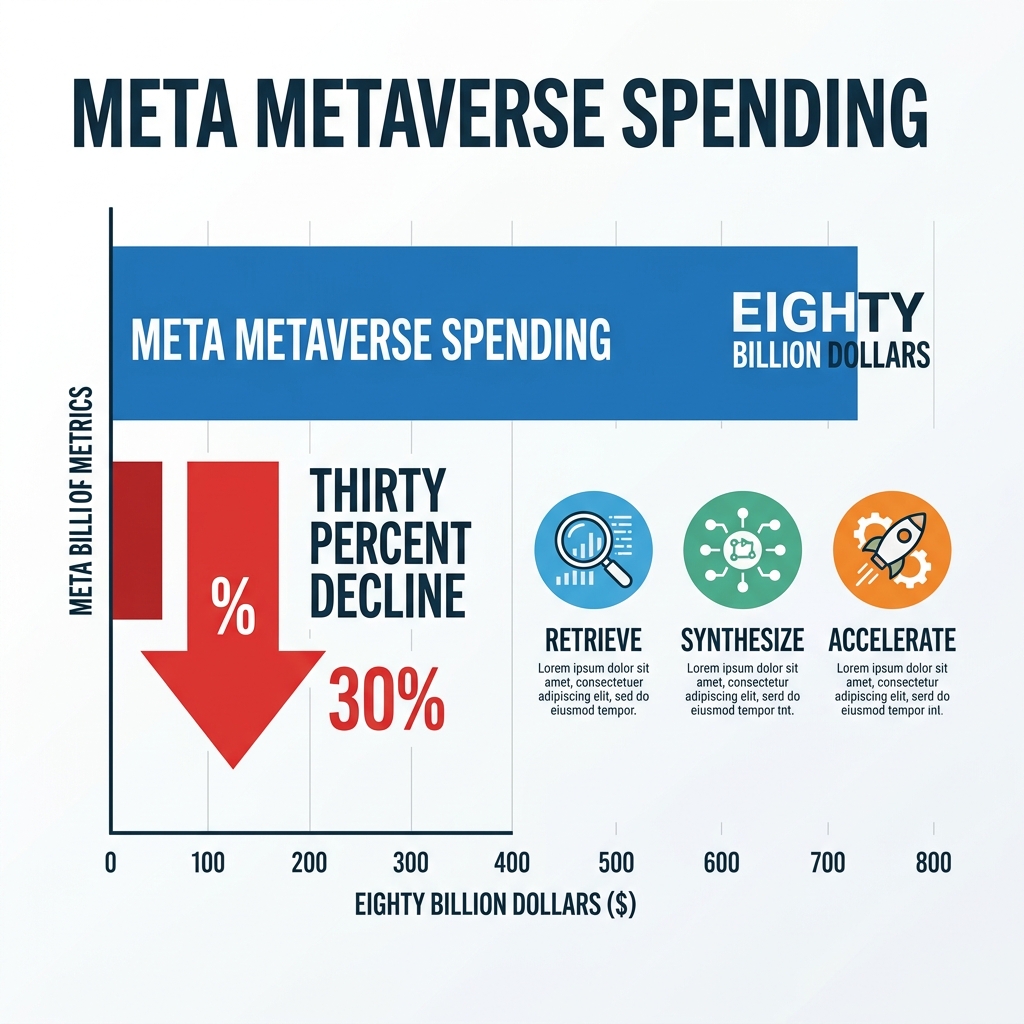
The timing is impossible to ignore. Meta has poured nearly $80 billion into its metaverse ambitions over the past several years, but recent reports indicate the company is now slashing those investments by roughly 30% as that vision largely fails to materialize. At the same time, Zuckerberg is redirecting Meta’s focus—and its internal engineering talent—toward artificial intelligence not merely as a consumer product strategy, but as an operational backbone for the entire organization. By using an AI agent to surface critical data faster than human deputies can, Zuckerberg is effectively attempting to flatten the organizational hierarchy that typically slows Fortune 500 companies to a crawl, while signaling that AI’s next frontier is internal corporate infrastructure.
This development matters far beyond Menlo Park. If one of the world’s most closely watched technology CEOs can delegate information retrieval, analysis, and preliminary decision support to an AI, the ripple effects for corporate governance, workforce structure, and competitive strategy could be staggering. In this article, we’ll break down exactly what Zuckerberg’s CEO agent is designed to do, analyze why Meta is aggressively recalibrating its priorities after its costly metaverse detour, explore the technical and ethical boundaries of executive AI agents, and examine what this means for the future of leadership itself. As enterprises race to embed AI into every layer of their operations—from customer support to strategic planning—platforms like CallMissed are already enabling businesses to deploy production-ready AI voice agents and multilingual chatbots that mirror the same real-time efficiency Zuckerberg is now chasing inside the boardroom.
Introduction

The Billion-Dollar Desk Job Is Getting an Upgrade
Most executives use artificial intelligence to polish presentations or summarize meeting notes. Mark Zuckerberg is reportedly using it to help run Meta.
According to an exclusive Wall Street Journal report, the Meta CEO is personally building and testing a dedicated "CEO agent"—an artificial intelligence tool designed to assist him directly in his role leading one of the world's most valuable technology companies. While technical specifications remain closely held, the operational goal is already reshaping conversations in Silicon Valley and across the global business community about the future of machine-augmented leadership.
Bypassing the Corporate Ladder in Real Time
The agent's core function is deceptively simple and organizationally radical: information retrieval at the speed of inference. Rather than waiting for answers to percolate up through layers of vice presidents, directors, and middle managers, the AI retrieves responses for Zuckerberg directly—delivering context and data he would typically have to extract by navigating Meta's complex corporate hierarchy himself.
This isn't a customer-service chatbot or a coding copilot. It is an executive intelligence layer built specifically to compress decision-making timelines and reduce friction between raw data and strategic action. As the WSJ noted, Meta is actively seeking to embrace artificial intelligence in all it does, and Zuckerberg's hands-on involvement signals this is a top-down mandate with C-suite weight behind it, not a tentative IT pilot destined for a quarterly review deck.
The reported capabilities point to a fundamental reimagining of how a chief executive interacts with their own company:
- Direct data retrieval without routing requests through multiple management layers
- Accelerated decision-making by collapsing the time between strategic questions and actionable answers
- Continuous availability operating outside the constraints of human executive assistants or staff schedules
- Reduced organizational drag by algorithmically replacing chains of approval with instant insight generation
A Strategic Pivot From Metaverse to Machine Intelligence
The timing of this experiment is particularly telling. Meta has reportedly slashed its metaverse investments by 30% after pouring nearly $80 billion into a spatial computing vision that has yet to fully materialize at commercial scale. Simultaneously, Zuckerberg has publicly emphasized that he aims to build AI agents intuitive enough that he'd want his own mother to use them.
This dual shift—retreating from hardware-heavy virtual worlds while aggressively deploying software-native AI—positions the CEO agent as both a practical operational tool and a symbolic corporate declaration. Meta isn't merely adopting AI as a product feature; it is actively reorganizing its executive function around autonomous systems that promise to outpace human-only information bandwidth.
From C-Suite Experiment to Enterprise Standard
Zuckerberg's personal AI pilot raises an unavoidable question for leaders across industries: If machine intelligence can serve the real-time information needs of a CEO managing a trillion-dollar enterprise, how long before every organization expects similar capability?
The infrastructure to deploy such agents is no longer theoretical or locked inside Big Tech R&D labs. Platforms like CallMissed already enable businesses to build production-ready AI voice agents and LLM-powered assistants spanning 300+ models and 22 Indian languages, suggesting that agentic AI for high-stakes decision support is rapidly becoming accessible far beyond Silicon Valley's most elite boardrooms. As these tools mature and security frameworks evolve, the gap between a tech giant's privately developed CEO agent and an enterprise-grade intelligence platform may close faster than industry analysts previously predicted.
Background & Context


Meta's Strategic Pivot from Metaverse to AI
Few corporate pivots have been as costly—or as closely watched—as Meta's multi-year immersion in the metaverse. The company spent nearly $80 billion pursuing a vision of virtual worlds and augmented reality that has yet to materialize at scale. Now, according to multiple reports, Meta is pulling back sharply, reducing metaverse investments by approximately 30% while redirecting capital and talent toward artificial intelligence.
This isn't a minor budget reallocation. It represents a fundamental strategic inflection in how Meta defines its future. Where the metaverse promised entirely new digital spaces, AI promises to reshape the internal machinery of the company itself—from product development and content moderation to executive decision-making. The Wall Street Journal reports that Zuckerberg is seeking to "embrace artificial intelligence in all it does," and his personal AI agent project appears to be the flagship example of that organization-wide mandate.
Inside Zuckerberg's CEO Agent
The WSJ exclusive, detailed subsequently by the Economic Times and Yahoo Finance, reveals that Zuckerberg is personally building and testing an AI agent whose core function is speeding up information retrieval and executive decision-making. In a typical Fortune 500 structure, a CEO requesting operational data must wait for that query to descend through vice presidents, directors, and analysts before an answer cycles back upward. Zuckerberg's agent collapses those organizational layers entirely, retrieving answers directly that he would typically have to source through multiple levels of management.
Think of it as an executive co-pilot: a system engineered to eliminate the latency between strategic question and actionable insight. While Meta has not disclosed technical specifications or training data, the description aligns with an emerging class of enterprise agentic AI—systems that do not merely analyze dashboards but actively fetch, filter, and present mission-critical information to human leaders in real time.
The Enterprise AI Agent Wave
Meta's internal experiment reflects a broader transformation sweeping across global enterprises. Organizations are rapidly moving beyond simple customer-service chatbots toward autonomous agents capable of complex internal workflows:
- Automating information retrieval across fragmented databases and communication silos
- Bypassing hierarchical bottlenecks to accelerate strategic decision-making at the top
- Integrating AI into core operational infrastructure rather than treating it as a peripheral experiment
For mid-sized and large organizations watching Meta's move, the barrier to deploying similar technology is dropping rapidly. Instead of assembling dedicated machine-learning teams to build from scratch, businesses can leverage platforms like CallMissed, which offers AI voice agents, access to 300+ LLMs, and automated workflow orchestration. These production-ready tools deliver the same fundamental capability Zuckerberg is reportedly testing: compressing the distance between organizational data and leadership action.
Why Information Architecture Determines Speed
At massive technology scale, information friction is not merely an operational inconvenience—it directly constrains competitive velocity. As companies grow, executives increasingly depend on pre-filtered reports that introduce delay and distortion. Zuckerberg's reported agent represents an attempt to reverse this structural drift by creating a direct pipeline between raw operational data and the CEO's office. If successful, such a model could redefine how Fortune 500 leaders interact with their own organizations, replacing layered reporting with instantaneous, AI-mediated intelligence.
Key Developments
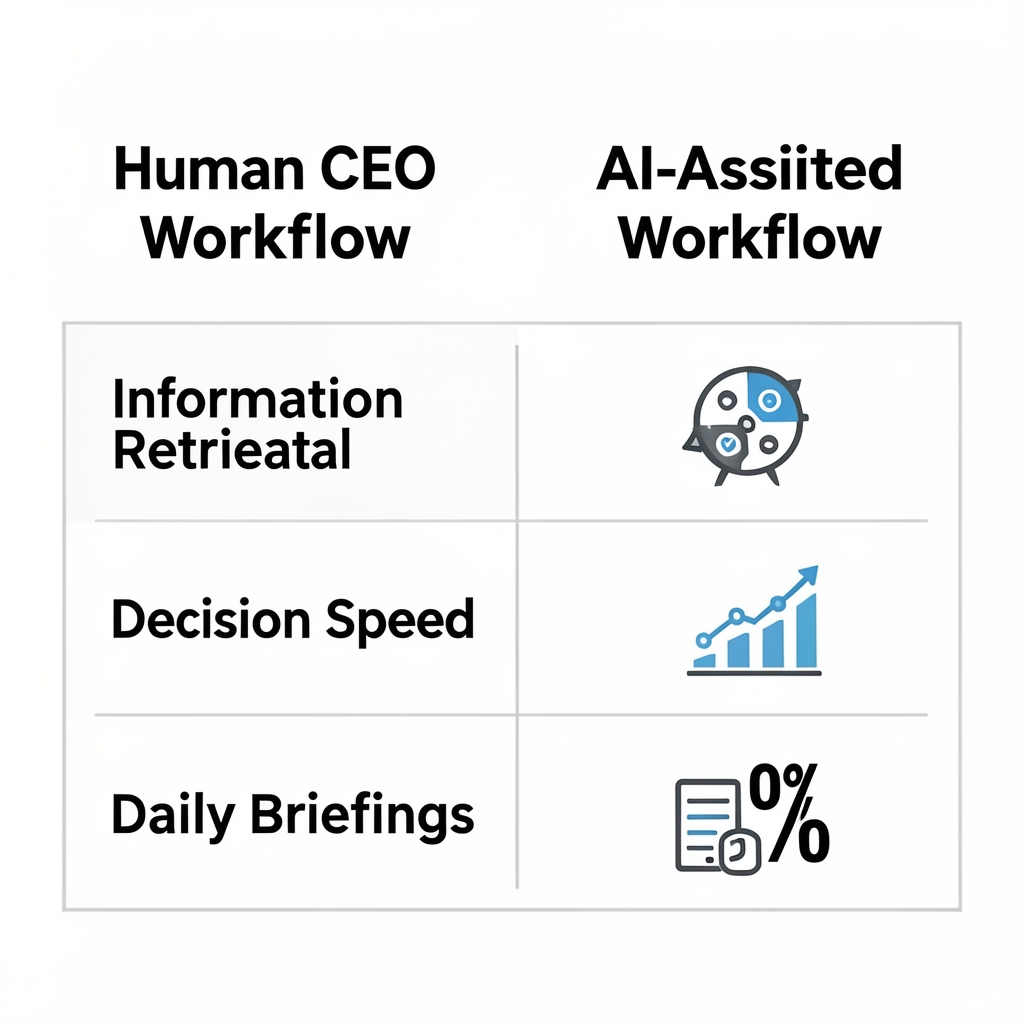
According to an exclusive Wall Street Journal report, Mark Zuckerberg is personally building and testing an AI agent whose sole purpose is to help him function more effectively as Meta's Chief Executive Officer. This is not a standard chatbot or calendar assistant. The tool is specifically designed to retrieve internal information and answers at speeds impossible through traditional corporate channels, allowing Zuckerberg to bypass organizational layers and management chains that typically slow decision-making at a company employing tens of thousands of people.
The development lands amid a sweeping strategic recalibration. Meta is reportedly reducing metaverse investments by 30% after spending nearly $80 billion on Reality Labs and related ventures that have struggled to deliver mainstream commercial traction. These parallel moves—an AI agent for the CEO and a major retreat from metaverse capital intensity—suggest Meta is reallocating its vast resources toward artificial intelligence as the central pillar of its next decade.
| Development | Description | Strategic Significance | Current Status |
|---|---|---|---|
| CEO AI Agent | Personal tool built by Zuckerberg to retrieve internal answers and accelerate decisions without traversing management layers | Tests whether AI can compress the distance between data and executive action at scale | In internal testing (WSJ) |
| Metaverse Retreat | Reported 30% reduction in metaverse investments following nearly $80 billion in cumulative spending | Signals hard pivot of capital and talent from hardware-heavy VR toward software-driven AI | Ongoing restructuring |
| Organization-Wide AI Mandate | Meta is reportedly seeking to "embrace artificial intelligence in all it does" | Transitions corporate culture toward AI-native operations beyond isolated pilot programs | Active company-wide directive |
| Consumer Agent Vision | Zuckerberg aims to build an AI agent "he'd want his mom to use" | Positions the internal CEO tool as a stress-test for eventual mass-market deployment | Publicly stated benchmark |
| Information Architecture Overhaul | Agent surfaces data previously buried under hierarchical reporting structures | Could flatten middle management and redefine corporate knowledge workflows | Early deployment phase |
Implications for Executive Decision-Making
The convergence of these developments signals something more profound than simple cost-cutting. By building an agent that can surface information without traversing management hierarchies, Zuckerberg is effectively testing whether AI can compress the distance between raw data and strategic decision at the highest levels of corporate power. If the prototype proves reliable, it could redefine how Fortune 500 leaders interact with their own organizations, replacing layered dashboards and lengthy business reviews with direct, conversational access to operational truth.
Zuckerberg's reported accessibility benchmark—creating an agent he would want his mother to use—also reveals Meta's ultimate ambition. The CEO agent serves as both an internal productivity weapon and a high-stakes prototype for consumer-grade general intelligence. Stress-testing such a system inside Meta's complex bureaucratic machinery ensures that when similar agents reach WhatsApp, Instagram, or Facebook's billions of users, they will have already proven their reliability under the most demanding conditions imaginable.
For the broader market, Meta's experiment validates a rapidly maturing category. Enterprises are moving beyond experimental chatbots toward autonomous agents that retrieve information, handle voice interactions, and execute workflows without human intermediaries. Platforms like CallMissed reflect this shift, offering businesses production-ready voice agents and access to 300+ LLMs through unified API infrastructure—effectively democratizing the same type of executive-grade agent capabilities that Meta is custom-building internally.
Still, the experiment raises sharp questions about accountability and governance. If an AI agent sources strategic recommendations, the executive remains responsible for outcomes, even when the chain of reasoning is opaque. As these systems migrate from corner offices to everyday operations, corporate governance frameworks will need to evolve just as rapidly as the underlying models.
In-Depth Analysis


The Pivot from Metaverse Ambitions to Internal AI
Meta's reported development of a "CEO agent" arrives amid a dramatic strategic recalibration. The company is seeking to embrace artificial intelligence "in all it does," according to The Wall Street Journal. This pivot is underscored by two stark data points reported alongside the CEO agent story:
- A 30% cut to metaverse investments following nearly $80 billion in spending on a vision that has yet to fully materialize
- An AI-first mandate to embed artificial intelligence into every operational layer of the company
This is not merely a product pivot—it is an operational one. By deploying an AI agent to assist Zuckerberg directly, Meta is effectively beta-testing its own AI future at the highest level of corporate governance. The message is clear: AI is no longer just a feature in Meta's apps; it is becoming the nerve center of the company itself.
How the CEO Agent Functions
The WSJ reports that Zuckerberg's agent is designed primarily to accelerate information retrieval. Rather than waiting for answers filtered through layers of executives and reports, the tool retrieves answers directly, allowing Zuckerberg to bypass traditional organizational bottlenecks. As noted in coverage of the report, the AI agent is helping Zuckerberg get information faster by retrieving answers that he would typically have to go through layers to obtain. One analysis characterized the agent as doing "what no human can" by synthesizing massive internal data streams at machine speed.
The agent appears to deliver value across three core dimensions:
- Speed: Eliminating latency from hierarchical information flows
- Depth: Retrieving data from across Meta's vast internal systems without human intermediaries
- Scalability: Serving as a test case for AI tools that could eventually roll out company-wide
Zuckerberg's personal involvement in building and testing the tool also signals its importance to Meta's long-term product roadmap. In separate remarks reported by Yahoo Finance, he noted that he aims to build an AI agent he'd want his mother to use, suggesting the internal CEO agent may serve as the prototype for streamlined consumer-facing agents in the future.
Industry Signal: The Dawn of Augmented Leadership
Meta's experiment reflects a broader inflection point in enterprise AI. When a CEO at the helm of a trillion-dollar company personally tests an AI agent to run his own organization, it validates the shift from experimental chatbots to mission-critical infrastructure. The move raises pressing questions about organizational design: if a chief executive can query an AI rather than a chain of lieutenants, the role of middle management as information gatekeepers will inevitably evolve. Companies that fail to integrate similar decision-support systems risk falling behind competitors who leverage AI for real-time strategic agility.
While Meta builds bespoke executive agents internally, the democratization of similar technology is accelerating across the global market. Platforms like CallMissed are already enabling businesses to deploy production-ready AI voice agents and LLM inference infrastructure—offering access to 300+ models and multilingual speech-to-text capabilities across 22 Indian languages—allowing enterprises to automate complex information retrieval workflows without multibillion-dollar R&D investments. Whether deployed at the helm of a tech giant or within a growing startup, the underlying capability—intelligent automation of decision-support systems—is rapidly becoming the new global standard for organizational leadership.
Impact & Implications

Redefining the C-Suite Workflow
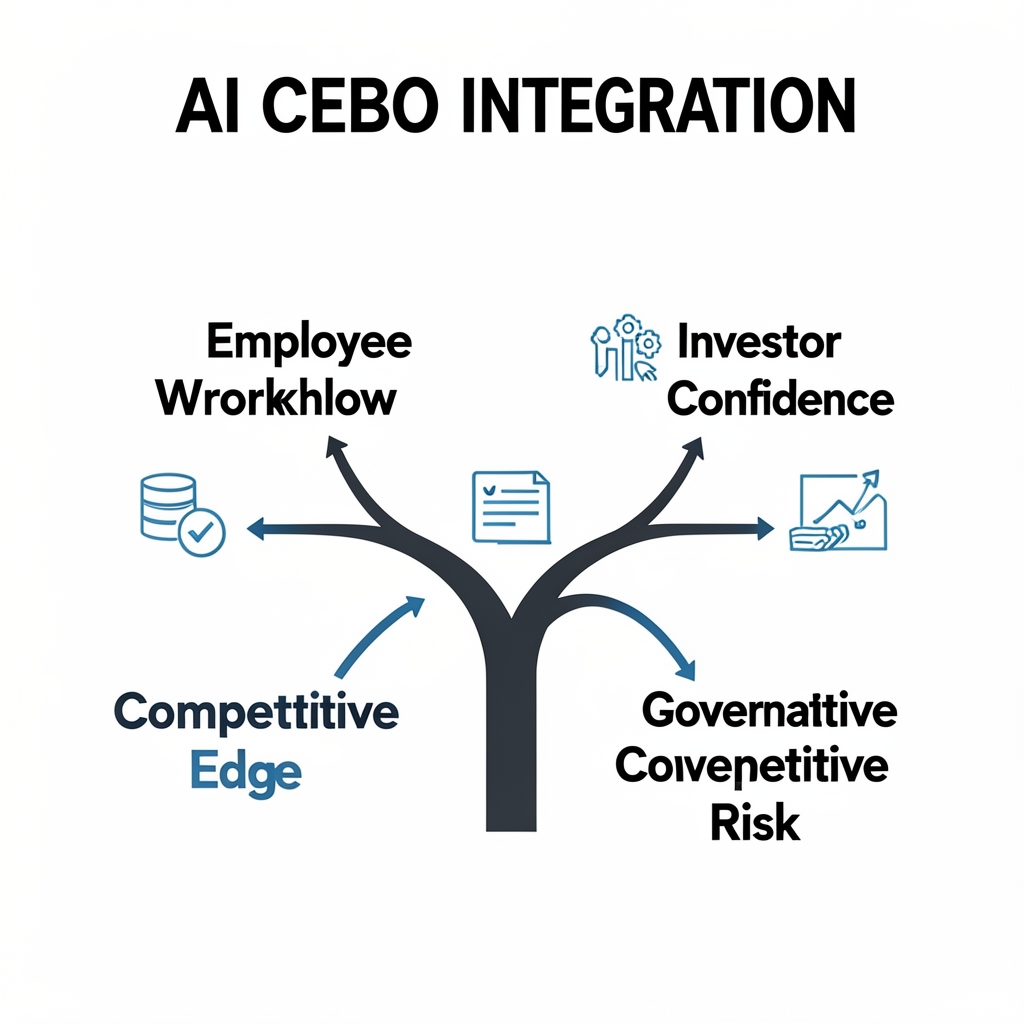
Zuckerberg’s experiment signals a structural shift: AI is moving from individual productivity software to the strategic core of the enterprise. According to The Wall Street Journal, the agent retrieves answers for Zuckerberg that he would typically have to obtain through multiple layers of management, effectively compressing Meta’s corporate hierarchy into a conversational interface. By eliminating information bottlenecks, Meta aims to accelerate decision-making and flatten its command structure in real time.
The implications run deeper than convenience. If a CEO can query an internal agent for operational, financial, or product data on demand, the traditional roles of executive assistants, chiefs of staff, and internal strategy teams face immediate reinvention.
Enterprise AI Adoption Gets a Boardroom Mandate
When the founder of a trillion-dollar company personally builds a CEO agent, enterprise AI graduates from back-office automation to C-suite infrastructure. Zuckerberg’s public endorsement will likely trigger a ripple effect across Fortune 500 boards already pressuring leadership to demonstrate tangible AI integration.
This strategic pivot is mirrored in Meta’s balance sheet. Reports indicate the company is slashing metaverse investments by 30% after spending nearly $80 billion on a vision that has failed to fully materialize. Redirecting that capital toward AI infrastructure suggests that agentic systems are not peripheral experiments—they are central to the company’s next growth phase.
Governance, Accountability, and the Human Loop
Flattening hierarchy through agentic retrieval introduces material governance risks. If Zuckerberg’s agent surfaces flawed data or hallucinates a financial projection, the speed of decision-making becomes a liability. The experiment raises urgent questions about executive accountability:
- Responsibility: Who bears the outcome when an AI-sourced recommendation leads to a material business error?
- Strategic intuition: How does a leader maintain independent judgment when an algorithm intermediates raw operational data?
- Guardrails: What approval mechanisms exist for sensitive decisions involving layoffs, acquisitions, or product shutdowns?
Meta must now prove not only technical proficiency, but institutional maturity in separating advisory AI from autonomous executive action.
The Infrastructure Ripple Effect
As hyperscalers normalize executive-grade AI agents, demand for reliable, low-latency AI infrastructure will surge across global enterprises. Leadership teams will require secure multi-model backends, real-time data pipelines, and multilingual interfaces to serve diverse geographies. Platforms like CallMissed are already enabling this transition by providing LLM inference across 300+ models and Speech-to-Text support for 22 Indian languages, offering the communication backbone that agentic workflows depend on. Whether deployed as voice-enabled executive assistants or real-time analytics interfaces, such infrastructure underscores that the next competitive battleground is not merely owning an AI strategy, but having the architecture to execute it at the speed of thought.
Expert Opinions
From Analysts: A Necessary Evolution in Leadership Architecture
Leadership experts and technology analysts are treating the Wall Street Journal revelation not merely as a tech-industry anecdote but as a structural inflection point. The consensus among organizational strategists is that Zuckerberg’s CEO agent addresses a universal enterprise pain point: information latency. According to the reporting, the tool retrieves answers for Zuckerberg that he would typically have to extract by navigating through multiple organizational layers. For a company of Meta’s scale—where decision bottlenecks can cost billions—eliminating friction in the information pipeline is viewed by efficiency specialists as high-return automation.
However, governance experts raise concerns about judgment delegation. While retrieval systems can surface data faster than human assistants, executive decisions rely on contextual intuition and ethical framing that current large language models struggle to replicate. Critics point to Meta’s own capital allocation as a cautionary tale: the company spent nearly $80 billion on its metaverse vision before reportedly slashing those investments by 30%, suggesting that even human-led strategic bets carry catastrophic risk. The debate among boardroom consultants is whether an AI co-pilot would have accelerated that pivot—or simply optimized the path to the same sunk cost.
Technical Feasibility and the Accessibility Paradox
Engineering analysts note that what Zuckerberg is piloting internally is conceptually similar to AI agent infrastructure already entering the market. The Meta chief’s stated ambition—to build an AI agent he’d want his mom to use—signals a focus on radical usability over raw capability. This mirrors a broader industry shift toward domain-specific agents that abstract complexity away from end users.
For enterprises outside Meta’s orbit, platforms like CallMissed are already operationalizing this transition by offering production-ready voice agents, multilingual support across 22 Indian languages, and inference access to 300+ LLMs. Systems architects suggest that CEO-grade AI tooling will democratize faster than C-suite culture can adapt, allowing mid-market companies to deploy executive-assistance workflows without building bespoke models.
Strategic Symbolism: The Metaverse-to-AI Pivot
Perhaps the sharpest expert commentary centers on narrative symbolism. By personally constructing an AI agent while dialling back metaverse commitments, Zuckerberg is reframing Meta’s identity from a hardware-centric future to an AI-first present. Analysts observe that this is not merely product strategy but a leadership thesis: the CEO is deploying his own dog food at the highest altitude, validating the company’s institutional mandate to embrace artificial intelligence in all it does.
The Unanswered Accountability Questions
Not all expert reactions are bullish. Ethics researchers and workforce strategists have raised specific concerns about an AI-influenced C-suite:
- Liability gaps: If a recommendation engine contributes to a layoff decision or a geopolitical content moderation call, accountability frameworks remain undefined.
- Layer elimination: If AI agents replace middle-management information relays, corporate hierarchies may flatten faster than labor markets can absorb.
- Cultural velocity: Fortune 500 governance experts warn that AI decision-support adoption will outpace the legal and ethical guardrails designed to contain it, a tension that will intensify as similar systems enter production through 2026.
What This Means For You
The revelation that Mark Zuckerberg is personally constructing a CEO agent to bypass organizational layers and retrieve information faster is not merely a CEO productivity hack—it is a structural precedent. According to the Wall Street Journal, the agent retrieves answers that Zuckerberg would typically have to excavate from multiple layers of management, effectively collapsing the distance between question and data. This comes as Meta reportedly reins in metaverse spending by 30% after investing nearly $80 billion in the division, signaling a hard pivot toward AI-driven operational efficiency over capital-intensive moonshots. Whether you lead a team, build products, or invest in enterprise automation, the architecture of decision-making is being rewritten in real time.
For business leaders watching this unfold, the immediate takeaway is that information hierarchies are becoming liabilities. When a CEO can query an agent instead of waiting for filtered reports, the middle layers that exist primarily to aggregate and sanitize data face existential pressure. This does not necessarily herald mass layoffs, but it does demand a recalibration of value—from gatekeeping to judgment, from summarizing to strategizing.
The Stakeholder Shift
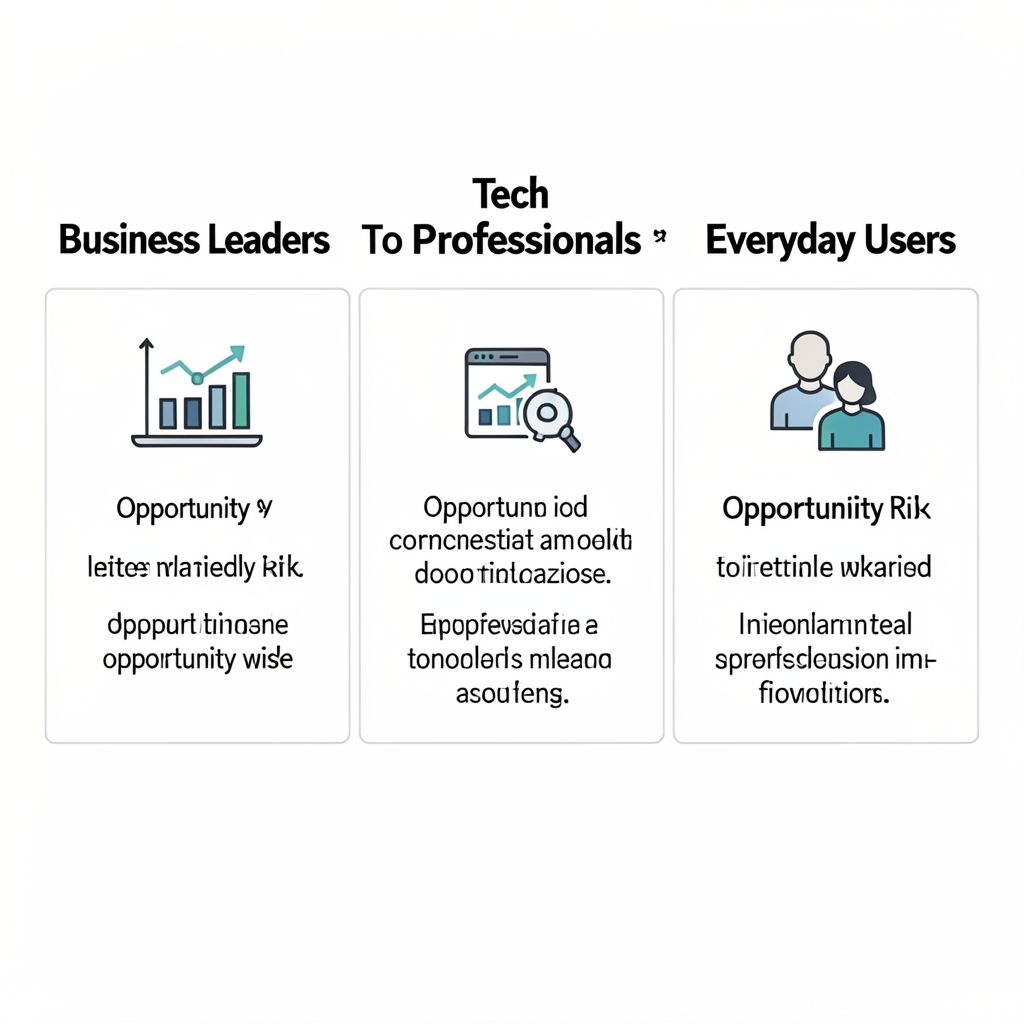
The impact varies dramatically by role. The table below breaks down what Zuckerberg’s experiment means across the organizational spectrum, from the C-suite to the end consumer.
| Stakeholder | Core Impact | Strategic Opportunity | Key Risk |
|---|---|---|---|
| C-Suite / Founders | Direct AI access to raw operational data, bypassing management filters | Accelerated decision-making and reduced organizational drag | Accountability gaps when AI recommendations fail or hallucinate |
| Mid-Level Management | Diminished role as information gatekeepers and report compilers | Upskill toward strategic interpretation and cross-functional enablement | Role compression if value remains purely informational |
| Knowledge Workers | Automation of research, briefings, and spreadsheet workflows | Redirect effort toward creative problem-solving and complex negotiation | Administrative displacement in heavily data-driven functions |
| AI Developers | Surging demand for secure, hallucination-resistant enterprise agents | Build specialized orchestration layers for executive decision-support tools | Security vulnerabilities and liability at scale |
| Consumers | Faster product iteration as unfiltered user feedback reaches leadership | Improved product-market fit via direct signal ingestion | Ethical blind spots if governance decisions are fully automated |
| SMEs / Startups | Democratization of CEO-tier tools—Zuckerberg has stated he wants an agent his mom can use | Access to decision-augmentation previously limited to Fortune 500 | Data privacy fragmentation and vendor lock-in |
The flattening of information architecture is already visible in how infrastructure platforms are evolving. Indian startups like CallMissed are building multilingual AI agents and voice infrastructure that let smaller enterprises automate communications without training proprietary models—an early signal that executive-agent logic will cascade downstream quickly.
For knowledge workers, the imperative is clear: curatorial judgment will outperform mere information retrieval. Zuckerberg’s agent may surface answers in seconds, but it cannot yet own outcomes or contextualize nuance. Mid-level managers who evolve into context-providers—interpreting AI-generated signals rather than simply passing them upward—will become indispensable rather than obsolete.
Investors and founders should treat this as a baseline reset, not a distant experiment. Meta is stress-testing an autonomous executive interface inside a company serving billions of users. If the system proves durable, the market expectation for real-time, AI-mediated leadership will harden. Those who wait for a “mature” market may find their competitors already operating at inference speed, while enterprises that adopt agent infrastructure early—from internal LLM gateways to automated voice operations—will define the next standard for organizational velocity.
Frequently Asked Questions
_Section generation failed: Blog LLM (@cf/moonshotai/kimi-k2.6) returned empty/null content: {'id': 'id-1778957295160', 'object': 'chat.completion', 'created': 1778957295, 'model': '@cf/moonshotai/kimi-k2.6', 'choices': [{'finish_reason': 'length', 'index': 0, 'logprobs': None, 'matched_stop': None, 'message': {'content': None, 'reasoning_content': 'The user wants me to write Section 8 of 9_
Conclusion
The revelation that Mark Zuckerberg is personally engineering a "CEO agent" marks more than a quirky executive experiment—it signals a fundamental inflection point in how leadership operates at the world's most influential technology companies. By using AI to bypass traditional information hierarchies and accelerate decision-making, Meta isn't merely optimizing workflows; it is prototyping the future of executive intelligence itself.
Here are the key takeaways every business leader should internalize:
- AI is flattening corporate hierarchies: According to the Wall Street Journal, Zuckerberg's agent retrieves answers he would typically need to traverse multiple layers of management to obtain, demonstrating how AI can collapse organizational structures in real time.
- The CEO as architect, not just end-user: Unlike generic enterprise software, this agent is reportedly being built by Zuckerberg himself, reflecting a hands-on philosophy that AI must be engineered from the top down to genuinely transform operations.
- Strategic recalibration toward AI infrastructure: Even as Meta reportedly trims metaverse investments by roughly 30% after nearly $80 billion in cumulative spending, the company is redirecting focus toward intelligent agents—positioning AI as its primary competitive frontier.
- Accessibility is the ultimate benchmark: Zuckerberg's stated goal to build AI agents he'd "want his mom to use" suggests today's executive-grade experiments are tomorrow's consumer-grade commodities.
Looking ahead, the critical variable isn't whether AI agents will permeate the C-suite—they already have—but how governance frameworks, accountability structures, and strategic intuition will adapt when algorithms participate in board-level thinking. Industry observers should watch closely to see if Meta open-sources components of this CEO agent or keeps it proprietary, a decision that could establish the standard for corporate AI adoption across the Fortune 500.
For businesses eager to explore their own AI-driven communication and decision-support layers, platforms like CallMissed provide production-ready infrastructure—from multilingual voice agents to LLM inference APIs—that democratizes enterprise AI deployment without requiring Fortune 500 engineering budgets.
The era of the AI-augmented executive has arrived. The question is no longer if AI will reshape your leadership strategy, but whether your organization will architect that future—or be reorganized by it.
Discussion
Related Posts


Ready to automate customer conversations?
Launch AI voice agents and WhatsApp bots with CallMissed — one API, 22+ Indian languages.