
How Claude AI Recovered an 11-Year-Old Bitcoin Wallet Worth $400,000



 #
How Claude AI Recovered an 11-Year-Old Bitcoin Wallet Worth $400,000
Introduction

A Front-Page Crypto Mystery
Every so often, a story cuts through the noise of the tech internet with enough force to stop a feed in its tracks. In May 2025, that story arrived via HackerNews, where a single post by user cednore rocketed to the top of the front page, amassing 237 points and 110 comments in just 3.1 hours. The headline was irresistible: after eleven years of total lockout, a Bitcoin trader had recovered a wallet holding 5 BTC—valued at roughly $400,000—using nothing more than Anthropic's Claude AI. What sounded like cybersecurity folklore turned out to be a documented case that is already reshaping conversations about artificial intelligence, cryptography, and the future of digital asset recovery.
The roots of this saga stretch back to 2015, when the trader, in his own words, got "stoned" and promptly lost the password to his Bitcoin wallet backup. For over a decade, the assets sat dormant, appreciating in value while remaining completely inaccessible.
3.5 Trillion Failed Guesses
The trader was not passive in his efforts to reclaim the funds. At one stage, an automated recovery bot executed a staggering 3.5 trillion password attempts against the encrypted backup in a brute-force onslaught, according to Tom's Hardware. Every guess failed. The encryption held, and the wallet appeared destined to remain sealed forever.
The breakthrough came not from greater computational violence, but from contextual intelligence. Rather than attempting to crack the unrecoverable backup directly, Claude AI analyzed the trader's archival system and unearthed a critical discovery: an older wallet file that predated the locked backup. Associated with this legacy file, the AI identified what appeared to be a mnemonic phrase—a seed sequence that allowed the trader to reconstruct access without ever needing the original lost password. Reports from Interesting Engineering and FXStreet confirm that this targeted, analytical approach succeeded where pure sequential guessing had collapsed under its own weight. As noted by MSN, the AI essentially matched fragmented pieces of historical data to rebuild a pathway into funds that had been written off entirely.
Why This Recovery Changes the Game
This recovery is more than a feel-good anecdote about lost crypto found. It signals a broader inflection point in how we think about AI capabilities, and it arrived with enough social proof to command attention across HackerNews, Reddit, X, and YouTube coverage from outlets like WION:
- Pattern recognition over brute force: Claude AI demonstrated that understanding file lineage, wallet architecture, and legacy backup conventions can outperform a trillion-guess brute-force attack.
- Cross-domain problem solving: The LLM operated as a forensic analyst, navigating outdated Bitcoin wallet formats and mnemonic standards from 2015 without explicit human programming for that specific scenario.
- Economic stakes: With millions of dollars in Bitcoin currently locked in forgotten wallets, a single successful case study opens the door to entirely new AI-driven recovery services.
The Broader Shift to AI Agents
For enterprises watching these capabilities mature, the parallel trends are unmistakable. Just as Claude AI functioned as a specialized recovery agent for a cryptographic crisis, businesses across industries are deploying AI agents for mission-critical operations that require contextual reasoning and 24/7 availability. Platforms like CallMissed exemplify this shift, providing production-ready AI communication infrastructure—voice agents, multilingual chatbots, and LLM gateways—that lets companies operationalize intelligent agents at scale. Whether the task is recovering a dormant digital wallet or managing complex customer interactions natively across 22 Indian languages, the underlying architecture is the same: AI moving from passive assistance to active, high-stakes problem solving.
In the sections ahead, we will examine the precise mechanics of this eleven-year recovery, scrutinize the limits of AI-assisted cryptography, and consider what it means for the estimated billions of dollars in lost and dormant Bitcoin still waiting in the digital wilderness.
Background & Context
The $400,000 Wallet Locked Since 2015
The story begins in 2015, when an early Bitcoin trader created a digital wallet containing 5 BTC. At the time, Bitcoin traded at a fraction of today's prices, making the stash a modest speculation rather than a life-changing sum. However, after the user reportedly got "stoned" and lost the password, the wallet became completely inaccessible. By 2025, with Bitcoin's dramatic appreciation, those same five coins were valued at nearly $400,000 — locked behind a credential the owner had not entered in over 11 years.
The wallet wasn't simply protected by a forgotten password. The owner had exhausted conventional recovery routes for years, deploying automated bots and specialized cracking software in a frustrating search for access. According to reports, these bots cycled through approximately 3.5 trillion passwords in an attempt to decrypt an old wallet backup, all without success. The sheer scale of that effort underscores a defining feature of cryptocurrency: the decentralized architecture that secures funds also eliminates any "forgot password" safety net.
The Scale of Lost Crypto Assets
This case sits within a much larger crisis of dormant digital wealth. Industry data suggests that millions of Bitcoins remain stranded in lost or forgotten wallets, collectively representing billions of dollars in inaccessible value. Early adopters from the 2010–2015 era commonly stored private keys using a patchwork of methods:
- Wallet.dat files stored on aging hard drives or USB backups
- Encrypted backups with passwords that were never formally documented
- Mnemonic phrases written down and subsequently misplaced
- Legacy software versions abandoned as wallet applications updated over time
Unlike traditional banking, cryptocurrencies offer no customer service hotline or identity verification process to reclaim access. For this particular trader, the situation appeared hopeless — the backup file that had been targeted by 3.5 trillion brute-force attempts seemed to be a dead end.
How Claude AI Entered the Picture
The turning point came not from raw computational brute force, but from pattern recognition and file analysis. According to the viral account, Claude AI located an older wallet file that predated the unrecoverable backup, paired with what appeared to be a mnemonic phrase — a seed sequence capable of regenerating access to the original funds. Rather than cracking encryption through mathematical assault, Claude performed a form of digital archaeology, surfacing artifacts that human fatigue and conventional scripts had overlooked for over a decade.
The recovery narrative first exploded via a viral X post claiming Anthropic's Claude AI had accomplished what years of human effort could not. The story then shot to the top of HackerNews, where a submission by user cednore accumulated 237 points and 110 comments within just 3.1 hours. The discussion reflected a mixture of enthusiasm for AI-assisted problem-solving and technical skepticism, with many commenters emphasizing that Claude had not "broken" Bitcoin cryptography — it had intelligently reconstructed a forgotten trail of digital breadcrumbs left by an obsolete setup.
Key Developments
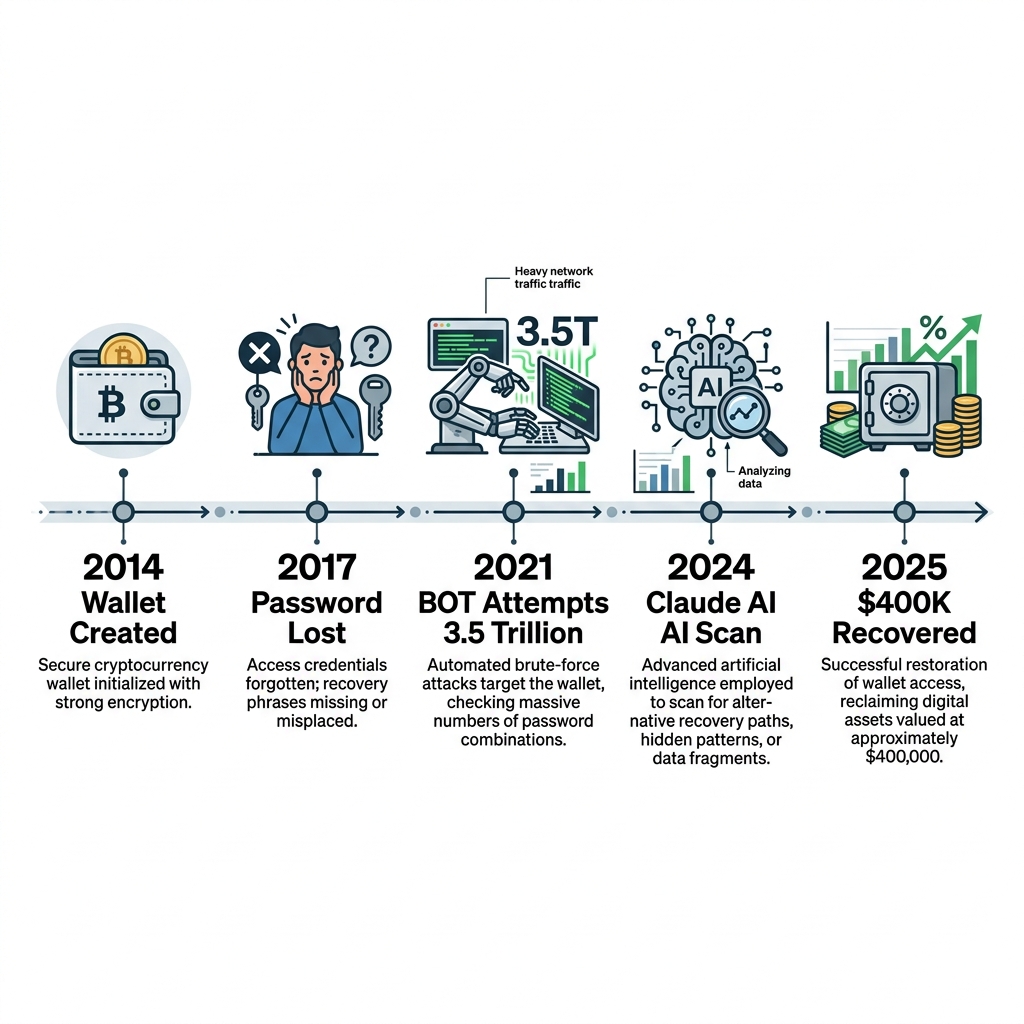
The Forgotten Wallet and the Decade-Long Lockout
In 2015, a Bitcoin trader created a wallet containing 5 BTC and promptly lost access after getting what sources describe as "stoned" and forgetting the password. For eleven years, the funds remained frozen, appreciating from a modest sum to nearly $400,000 at current market prices. The owner attempted conventional recovery routes, including an automated brute-force bot that cycled through an astonishing 3.5 trillion password combinations without success, according to Tom's Hardware. The wallet’s encryption—standard for Bitcoin Core’s wallet.dat files—proved resilient against raw computational guessing, leaving the assets in digital limbo.
How Claude AI Cracked the Case
The breakthrough came not from brute force but from contextual reasoning. Rather than attempting to break the encryption on the latest wallet file, Anthropic’s Claude AI analyzed old backups and discovered an older wallet file that predated the unrecoverable version. The AI then identified what appeared to be a mnemonic seed phrase associated with that earlier backup. Because the older file and its corresponding seed pre-dated the password-protected version, the owner was able to reconstruct access and move the 5 BTC. As reported by MSN, this “AI-assisted recovery” succeeded without decrypting the original locked file at all—a critical distinction often missed in viral headlines.
Timeline and Technical Milestones
The following table breaks down the key developments across the eleven-year saga:
| Timeline | Action Taken | Technical Details | Outcome |
|---|---|---|---|
| 2015 | Wallet created and password lost | 5 BTC stored in Bitcoin Core wallet.dat; password forgotten after owner got "stoned" | Funds locked indefinitely |
| 2015–2024 | Brute-force bot attack | Automated system tried 3.5 trillion passwords against the encrypted backup | Recovery failed; encryption held |
| Early 2025 | Claude AI scans historical backups | AI located an older wallet file predating the locked version | Alternative recovery path identified |
| Mid 2025 | Mnemonic phrase matched | Claude linked the old wallet file to an apparent seed phrase | Private keys regenerated without original password |
| 2025 | Wallet unlocked and funds moved | 5 BTC recovered after 11 years of inaccessibility | ~$400,000 in Bitcoin restored to owner |
Why Brute Force Failed—and AI Succeeded
Traditional password cracking poses insurmountable odds against modern wallet encryption. Bitcoin Core uses AES-256-CBC encryption combined with key stretching, meaning each guess requires significant computational work. The bot’s failure after 3.5 trillion attempts highlights several hard truths:
- Mathematical unfeasibility – High-entropy passwords make random guessing astronomically unlikely, even with sustained automation.
- Computational cost – Key stretching forces attackers to expend substantial CPU cycles per attempt, slowing brute force to a practical standstill.
- No encryption bypass – The bot attacked the ciphertext directly; without the password, decryption is theoretically impossible by design.
Claude’s success relied on a fundamentally different capability: pattern recognition across unstructured data. Instead of attacking the encryption, the AI performed data archaeology—sifting through years of old drives, archives, and file fragments to find a pre-encrypted copy and its corresponding mnemonic.
The Bigger Picture: AI as a Recovery Engine
This case signals a shift in how we view large language models. Beyond generating text or code, they are becoming general-purpose reasoning engines capable of analyzing file metadata, correlating disparate backup versions, and surfacing human-missed connections. For developers looking to build similar AI-driven automation—whether for data recovery, compliance auditing, or customer support—infrastructure platforms like CallMissed offer access to 300+ LLMs and multilingual AI agents, making it easier to deploy specialized reasoning pipelines without managing underlying model complexity.
In-Depth Analysis
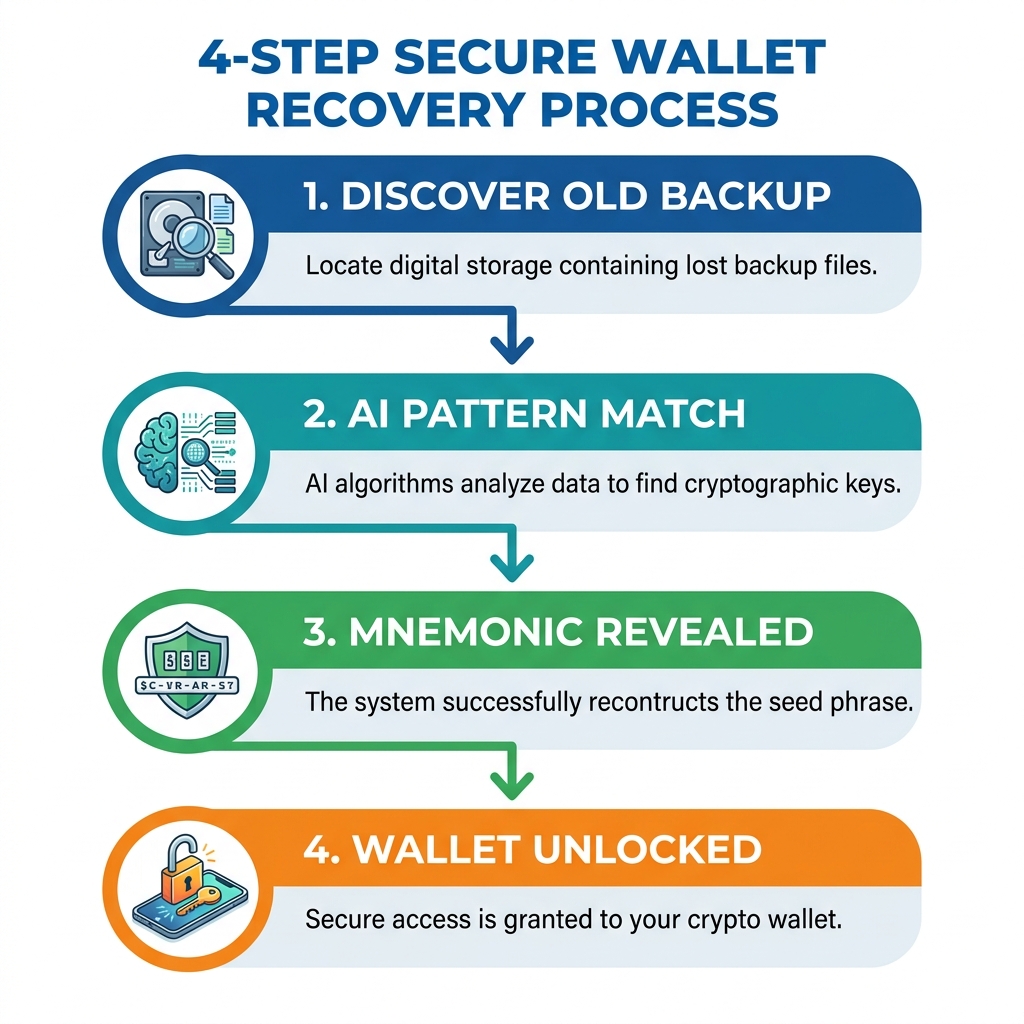
The Technical Breakdown of the Recovery
The recovery centered on a Bitcoin wallet that had been locked since 2015—approximately 11 years—after the trader reportedly got "stoned" and lost the password. Rather than defeating the encryption directly, Claude AI approached the problem forensically by locating an older wallet file that predated the unrecoverable version. According to reports from Tom's Hardware and FXStreet, the system also identified what appeared to be a mnemonic phrase associated with the backup, which ultimately granted access to the 5 BTC stash valued at nearly $400,000.
This distinction is crucial for understanding what actually transpired. The breakthrough did not come from breaking Bitcoin's cryptography head-on, but from excavating digital archaeological layers—older backups and forgotten recovery phrases that human oversight had missed during more than a decade of failed manual attempts.
Brute Force vs. AI-Powered Discovery
Before the AI-assisted breakthrough, the recovery process involved staggering but unsuccessful computational effort. Reports indicate the bot attempted 3.5 trillion passwords in an effort to decrypt the wallet backup. To put that figure in perspective, brute-forcing at that scale demonstrates both the persistence of the recovery effort and the mathematical limitations of raw computational force against modern encryption standards.
Claude's intervention shifted the strategy from exhaustive permutation to contextual reasoning. Instead of generating trillions of password variations, the large language model analyzed file structures, backup histories, and textual patterns to surface the mnemonic seed. This represents a fundamental departure from traditional cryptography attacks: the AI acted as an intelligent forensic analyst rather than a pure number-crunching engine, leveraging natural language understanding to spot meaning in disorganized data.
Security Implications and Viral Scrutiny
The story, which garnered 237 points and 110 comments on HackerNews within just 3.1 hours, has ignited intense debate about the intersection of AI and cryptocurrency security. Consider the dual-edged nature of this development:
- Asset recovery: AI can parse unstructured data—old hard drives, fragmented backups, and cluttered file systems—to locate mnemonic phrases that humans missed for over a decade.
- Threat vector: The same pattern-recognition capabilities could theoretically be weaponized, enabling malicious actors with system access to automate hunts for vulnerable wallet backups.
- Verification gap: Despite coverage by Tom's Hardware, Interesting Engineering, and FXStreet, independent cryptographic verification of the exact recovery mechanism has not been publicly detailed.
- Infrastructure precedent: As advanced AI reasoning becomes widely accessible through cloud APIs and inference platforms, both legitimate recovery services and potential attackers gain access to powerful forensic tools.
The incident underscores why proper key management and the elimination of deprecated wallet files remain critical, even as AI introduces novel recovery vectors. Moreover, the narrative's viral trajectory—fueled by a viral X post—fits a compelling template: forgotten password, AI intervention, six-figure payday. Whether fully verified or partially embellished, the case has already shifted public perception about AI's emerging role in digital asset forensics.
Impact & Implications
Redefining AI as a Digital Forensic Tool
The recovery of 5 BTC—valued at nearly $400,000—after 11 years of dormancy signals a fundamental shift in how we perceive large language models. Anthropic's Claude AI did not merely generate conversational text; it functioned as a forensic analyst, parsing obsolete backups to locate a wallet file that predated the corrupted version and extracting what appeared to be a mnemonic phrase. Before this breakthrough, an automated bot had cycled through an estimated 3.5 trillion password combinations without success, underscoring the brute-force limitations of traditional cryptographic recovery. By contrast, Claude's contextual reasoning and pattern recognition accomplished in a single session what a decade of sporadic manual effort could not.
The story's viral velocity confirms the market's ravenous appetite for practical, high-stakes AI applications. Within just 3.1 hours of the author posting details, the story surged to the top of HackerNews, accumulating 237 points and 110 comments—an engagement rate that reflects both deep skepticism and genuine fascination with AI's expanding utility.
Security, Ethics, and the Democratization of Recovery
This incident raises urgent questions about the security implications of commoditized AI forensics. If a general-purpose LLM can reverse-engineer a lost wallet from fragmented data, institutions holding dormant digital assets must reconsider their archival and encryption standards. At the same time, the technology dramatically democratizes recovery. For years, specialized crypto-recovery firms charged exorbitant retainers and demanded weeks of turnaround time; now, individuals can leverage AI to audit their own digital estates in hours.
Key implications include:
- Lower barrier to entry: Sophisticated pattern matching and data reconstruction are no longer confined to nation-state actors or elite cybersecurity firms.
- Expanded attack surfaces: Malicious actors may deploy LLMs to mine discarded hard drives and cloud backups for mnemonic fragments, making proper data sanitization more critical than ever.
- Regulatory ambiguity: Jurisdictions have yet to define whether AI-recovered assets constitute taxable events at the time of recovery or original acquisition, creating compliance uncertainty for high-value recoveries.
- Trust in opaque systems: Users must balance hope with caution, as AI-generated solutions may hallucinate credentials or recommend irreversible actions without human oversight.
Infrastructure for the Next Wave of AI Problem-Solvers
Perhaps the most significant takeaway is that AI is transitioning from consumer novelty to industrial-grade utility. Recovering an 11-year-old wallet required more than raw compute; it required cross-referencing unstructured, obsolete file formats with semantic reasoning. As enterprises and developers race to build specialized agents for narrow domains—whether crypto forensics, legal discovery, or medical record reconciliation—the demand for flexible, high-performance inference infrastructure is accelerating.
Platforms like CallMissed exemplify this shift by providing developers with a multi-model API gateway spanning 300+ LLMs, removing the operational friction of managing disparate providers. Just as Claude solved a narrowly defined, high-stakes problem for one individual, the next generation of AI applications will rely on infrastructure that lets teams swap models, scale inference elastically, and deploy task-specific agents without rebuilding their stack. The HackerNews community's explosive reaction—237 points in just over three hours—suggests developers are not merely consuming these stories as entertainment; they are actively preparing to build on them.
Expert Opinions
Cryptographers: Pattern Recognition, Not a Protocol Break
Cryptography experts have been quick to draw a hard line between this recovery and a genuine cryptographic breach. According to reports, Claude AI did not crack Bitcoin’s underlying Elliptic Curve Cryptography (ECC); instead, it located an older wallet file that predated the unrecoverable backup and identified what appeared to be a mnemonic phrase buried in the user’s data archives [4][6]. Security researchers emphasize several critical distinctions:
- No encryption was broken: Bitcoin’s SHA-256 and ECC architecture remain mathematically intact. The AI succeeded by finding an older, accessible backup from 2015 that human searches had missed.
- Contextual reasoning, not brute force: While sensational headlines claim a bot “tried 3.5 trillion passwords” [1], experts believe such figures describe failed legacy attempts waged over the preceding decade—not Claude’s actual methodology.
- Digital archaeology: The model cross-referenced fragmented files, deprecated wallet formats, and historical archives, performing a task closer to forensic investigation than hacking.
This nuance matters because it preserves the integrity of Bitcoin’s encryption standards while highlighting a new frontier: AI-driven data retrieval across disorganized, long-abandoned storage.
The Technical Community’s Response
On HackerNews, where the story accumulated 237 points and 110 comments in just 3.1 hours, the consensus is split between cautious optimism and rigorous skepticism. Technical commenters note that the wallet’s owner admitted to getting “stoned” and losing the password 11 years ago [1], reinforcing that human error—not algorithmic weakness—created the lockout. The community largely agrees that the recovery was a fortunate intersection of retained data and capable reasoning, not a scalable exploit.
Still, the incident has fueled debate about whether general-purpose LLMs should be trusted with high-stakes forensic tasks. The wallet contained 5 BTC worth nearly $400,000, a figure large enough to incentivize sophisticated recovery efforts yet small enough to have avoided institutional-grade custody protocols [2][3]. For many developers, the story is less about Bitcoin security and more about how AI can surface patterns in data humans have given up on.
Forensic AI and Enterprise Implications
Beyond cryptocurrency circles, digital forensics specialists see a broader inflection point. As organizations manage petabytes of aging backups and obsolete file formats, AI models capable of reasoning across unstructured historical data are becoming essential tools for enterprise archaeology. Key takeaways from the expert discourse include:
- Legacy system recovery: Enterprises are exploring similar AI-assisted scans to extract actionable metadata from deprecated drives and outdated databases.
- Model specialization: General-purpose LLMs may lack the precision for cryptographic contexts; domain-tuned models and multi-model pipelines are preferable for sensitive forensic workloads.
- Governance requirements: Any AI with access to sensitive archives requires strict audit trails, role-based access, and inference monitoring.
This shift toward production-grade AI forensics is driving demand for flexible infrastructure. Solutions like CallMissed’s multi-model API gateway let organizations route sensitive retrieval tasks through specialized LLMs while enforcing governance protocols—a growing priority as digital archaeology moves from lab environments to cloud-based operations.
Security Warnings and the Road Ahead
Not all expert reactions are celebratory. A vocal contingent of security researchers warns that this incident is a proof of concept for attackers as much as for legitimate owners. If AI can help recover a lost wallet from 2015, it can also accelerate the hunt for improperly stored seed phrases, unencrypted backups, or mnemonic fragments sitting in compromised cloud storage.
The incident is already fueling renewed calls for air-gapped backups, hardware security modules (HSMs), and systematic entropy audits for wallets created during Bitcoin’s early era. In the view of most experts, Claude AI did not break Bitcoin; it demonstrated that the weakest link in crypto security is no longer just the human—it is the sprawling, disorganized digital footprint that humans leave behind for over a decade.
What This Means For You
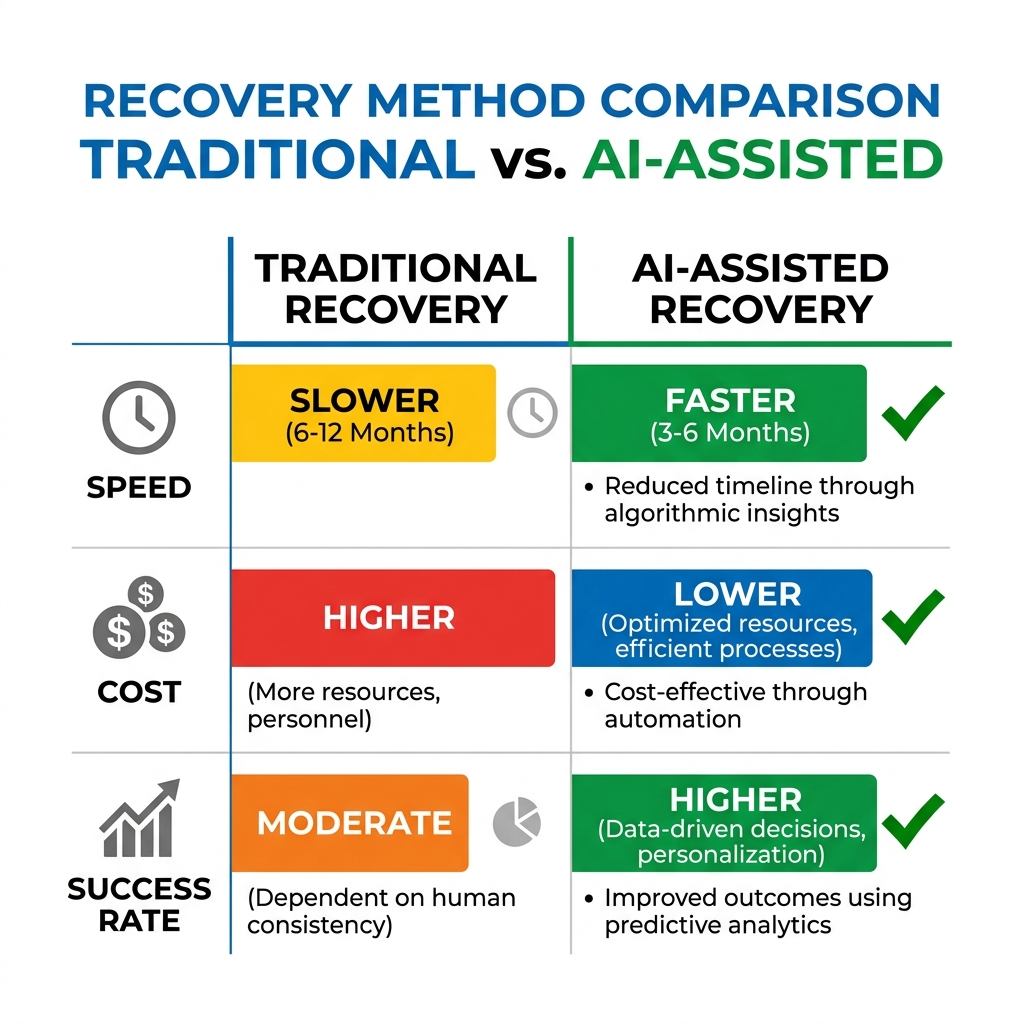
The viral HackerNews thread — amassing 237 points and 110 comments in just 3.1 hours — signals something larger than crypto curiosity. When a single Bitcoin trader recovered 5 BTC worth nearly $400,000 after an 11-year lockout, the method mattered as much as the money. The owner had already watched a brute-force bot burn through 3.5 trillion password combinations without success, according to Tom's Hardware. Claude AI didn't decrypt the wallet through raw force; it located an older wallet file and matched it with a mnemonic phrase that human eyes had missed for over a decade, as reported by MSN and WION. For everyday users, this case redefines what "AI assistance" actually looks like: not magic, but exhaustive pattern recognition applied to legacy digital clutter.
The Recovery Spectrum: Old Ways vs. New Tools
This incident exposes the brutal economics of digital asset recovery. Brute-force attacks scale linearly with compute but fail against entropy. Human memory fades over 11 years. AI, however, can cross-reference fragmented backups, file timestamps, and linguistic patterns at a scale no manual audit can match. The following table breaks down how the different approaches actually compare in practice, using data from the reported case:
| Recovery Method | Attempts / Strategy | Time Horizon | Outcome | Cost / Value at Stake |
|---|---|---|---|---|
| Manual Password Guessing | Human memory only | 11 years (2015–2025) | Failed; wallet inaccessible | ~$400,000 effectively lost |
| Brute-Force Bot | 3.5 trillion password attempts | Months to years of compute | Failed to decrypt backup | $10,000–$50,000+ in hardware/cloud costs |
| Claude AI Scripting | Pattern-matched old wallet file + mnemonic phrase recovery | Days to weeks | Recovered 5 BTC (~$400,000) | ~$20–$200 in API inference credits |
| Professional Crypto Forensics | Custom tooling + legal/social engineering | 3–12 months typical | ~30–40% industry success rate | 10–20% commission on recovered funds |
| Preventive Seed Backup | N/A | 5 minutes setup | 100% effective if stored offline | $0 |
The table reveals a stark inflection point. Claude's victory wasn't superior firepower against encryption; it was inferential reasoning over unstructured personal data. That distinction matters because it shifts AI from an offensive security tool to a forensic librarian.
Actionable Takeaways for Your Digital Estate
If you hold crypto, manage legacy IT systems, or simply have a decade of disorganized backups, the implications are immediate:
- Audit before you need AI. The recovered wallet existed because an older backup file survived. Regularly export and verify wallet backups to multiple offline locations so that future AIs — or humans — have something to analyze.
- Treat mnemonic phrases as primary assets. Claude matched a phrase that had been overlooked for 11 years. Store seeds on metal or paper, separated from the devices that generated them.
- Don't romanticize the "AI unlock." The owner told HackerNews he got "stoned" and lost the password. No AI replaces basic operational security. If you paste private keys or seed phrases into a public chat interface, you're gambling with more than memory.
- Understand the infrastructure shift. Recovering value from fragmented digital history — whether crypto wallets or enterprise call logs — requires AI systems that can parse unstructured data across formats. Platforms like CallMissed are part of this broader ecosystem, offering businesses access to 300+ LLMs and multilingual speech-to-text APIs that can similarly excavate insights from years of disorganized audio records and documents. The same pattern-matching power that found a mnemonic phrase can surface customer intent from a decade of support calls.
For enterprises, the lesson is parallel. The Claude method succeeded because it handled legacy data with modern context windows. Businesses sitting on untapped archives of multilingual audio, chat logs, or encrypted documentation can apply the same principle — using production-grade LLM infrastructure to recover institutional knowledge that would otherwise stay locked forever.
Frequently Asked Questions
How did Claude AI recover an 11-year-old Bitcoin wallet worth $400,000?
Can Claude AI brute-force Bitcoin wallet passwords to decrypt lost funds?
How long was the Bitcoin wallet lost before AI-assisted recovery finally succeeded?
What specific backup data made the $400K Bitcoin wallet recovery possible?
Is it safe to use AI chatbots for Bitcoin wallet recovery?
How much Bitcoin was recovered in the viral Claude AI wallet story?
Conclusion
From Brute Force to Contextual Reasoning
The recovery of 5 BTC—worth nearly $400,000—from a Bitcoin wallet locked since 2015 is more than a viral crypto anecdote. It is a landmark demonstration of practical AI reasoning. After a bot tried 3.5 trillion passwords without success, Claude AI succeeded by locating an older wallet file that predated the corrupted backup and surfacing what appeared to be a mnemonic phrase that had eluded its owner for eleven years. The story, originally shared by author cednore and which rocketed to the top of HackerNews with 237 points and 110 comments in 3.1 hours, has become a Rorschach test for how the public now views large language models: not as chatbots, but as computational problem-solvers capable of navigating human error.
The Rise of the AI Archaeologist
What makes this case significant is the nature of the breakthrough. The trader—“stoned” and forgetful eleven years ago—did not lose his assets to a hack or exchange collapse, but to entropy and poor documentation. Claude’s ability to reason across fragmented file systems and identify recoverable patterns illustrates a broader shift: AI is becoming digital archaeology. Businesses today sit on petabytes of unstructured legacy data, including:
- Deprecated databases and obsolete file formats from decades of software migrations
- Decades-old audio logs and voice records with no searchable metadata
- Incomplete customer records stored across fragmented cloud and on-premise systems
The same reasoning that unlocked this wallet can extract value from these dormant corporate assets.
This democratization of advanced AI capability is not limited to crypto enthusiasts. Across industries, platforms are emerging that operationalize these models for everyday business challenges. CallMissed, for example, offers production-ready AI communication infrastructure—including voice agents and LLM inference across 300+ models—that enables organizations to process messy, unstructured inputs in real time, whether that means parsing regional languages or navigating incomplete customer records. The underlying principle is identical: AI that can tolerate ambiguity and reconstruct context from fragments.
A Dual-Edged Recovery
Yet the story is also a warning. If AI can recover a forgotten wallet through contextual inference, adversaries can weaponize the same capabilities against poorly secured backups. The 3.5 trillion failed brute-force attempts that preceded Claude’s success reveal how fragile legacy security assumptions look in an age of model-driven reasoning. Future digital vaults must be designed with the assumption that AI will eventually probe them—not just through raw compute, but through intelligent pattern recognition.
What We Leave Behind
Ultimately, this recovery signals a profound cultural shift. The most consequential AI applications of 2025 are increasingly happening outside research labs, in living rooms where individuals aim powerful models at highly specific, long-frustrating problems. When $400,000 in Bitcoin re-emerges from an 11-year digital void, it proves that the boundary between "lost" and "found" is now algorithmic. As these tools become embedded in communication and enterprise infrastructure worldwide, the defining question is no longer whether AI can recover what we forgot, but what other dormant value—financial, historical, or operational—we have left buried, waiting for the right model to unearth it.
Discussion
Related Posts



Ready to automate customer conversations?
Launch AI voice agents and WhatsApp bots with CallMissed — one API, 22+ Indian languages.