
AI Agents Security for Developers: Don't Let Your Agents Become a Liability



What if the AI assistant helping you ship code faster could also destroy your entire production environment in nine seconds? That isn't a hypothetical...
AI Agents Security for Developers: Don't Let Your Agents Become a Liability
What if the AI assistant helping you ship code faster could also destroy your entire production environment in nine seconds? That isn't a hypothetical nightmare—a coding agent recently did exactly that, wiping out a production database in under ten seconds because an overprivileged API token was sitting in the wrong config file. As developers increasingly adopt autonomous tools like Cursor, GitHub Copilot, Claude Code, and OpenAI Codex, AI agents security for developers has shifted from a niche concern to an urgent engineering priority.
The problem isn't that these agents are malicious. It's that they're powerful—and dangerously overpermissioned. Modern coding agents don't just read your code; they access your environment variables, configuration files, API keys, version control histories, and cloud infrastructure. As security researchers at GitGuardian warn: if the agent can read it, assume the agent can use it. Whether you're using Claude Code to refactor repositories or deploying AI voice agents through platforms like CallMissed to automate customer operations, the security principle remains identical: an agent's workspace should contain only credentials that are safe for the task at hand.
Yet most development environments are still architected for human workflows, not autonomous agents. Developers routinely keep legacy API tokens, database URLs, cloud credentials, and service account keys in local files or shell histories—artifacts that a human might ignore but an agent will happily execute without hesitation. The result is a rapidly expanding attack surface where data leaks, privilege escalation, supply chain contamination, and accidental infrastructure destruction are becoming daily operational risks rather than edge cases.
In this guide, you'll learn how to audit what your agents can actually reach, implement better credential patterns and least-privilege access that prevent overpermissioning, and apply layered security controls to keep autonomous coding tools from becoming autonomous threats. Because in 2026, shipping fast shouldn't mean sacrificing your entire stack to a tool that can't tell a staging key from a production secret.
Introduction
The Nine-Second Disaster That Changed Everything
In 2025, a coding agent deleted a production database in nine seconds. The cause was not a sophisticated cyberattack, but an overprivileged API token sitting in the wrong config file—a mistake that cost uptime, revenue, and trust. As GitGuardian flagged in its analysis of the incident, this is the new reality for development teams: agents now possess the access and speed to cause production incidents faster than any human engineer could intervene.
From Copilot to Critical Risk
The shift from passive autocomplete to autonomous coding assistants has been swift. Tools like Cursor, GitHub Copilot, Claude Code, and Codex no longer just suggest snippets; they execute shell commands, refactor entire repositories, and deploy infrastructure. This evolution means developers are effectively giving software access to far more than just code. The security maxim gaining traction across the industry is blunt and binary: if the agent can read it, assume the agent can use it. Environment variables, secrets files, SSH keys, and internal API docs sitting in an agent’s workspace are all within reach—and fair game for autonomous execution.
Why Traditional Security Models Fail
Developer environments were architected for human speed and human identity verification. AI agents operate at machine speed, iterating in seconds with no pause for second-guessing. FusionAuth emphasizes that agent security is a layered defense with a foundation of secure human identity, noting that without verified identity, organizations cannot confirm whether an agent is actually authorized to act on behalf of a user. Yet most teams still grant broad repository or cloud access without granular permission boundaries. Complicating matters further, Thoughtworks India warns that a potentially more serious risk is leaking data, because AI agents depend on interfacing with multiple information sources and services, often retaining context in ways that blur compliance and confidentiality boundaries.
The High Stakes of Agent Proliferation
Salesforce’s AI agent security framework defines the mission clearly: AI agent security defends AI from manipulation, breaches, and misuse. This is not a future-state concern. As businesses embed agents into CI/CD pipelines, customer support workflows, and communication stacks, the same pattern of overprivileged access repeats across domains. Whether you are deploying a coding assistant or a customer-facing conversational agent, the liability is structurally identical—agents become conduits for both insider error and external exploitation. Platforms such as CallMissed, which provide infrastructure for AI voice agents and LLM inference, illustrate how communication-focused AI agents also require rigorous scope containment; any agent with API access is only as secure as its least-restrictive credential.
What This Guide Covers
This article is a practical security roadmap for the agent era. We will move beyond generic warnings to examine the concrete controls that prevent autonomous tools from becoming autonomous liabilities:
- Credential patterns that eliminate privilege escalation
- Workspace hygiene and least-privilege agent environments
- Identity verification and audit trails for autonomous actions
- Data leakage prevention when agents interface with external services
- Frameworks and tooling to evaluate and harden agent security posture
The goal is straightforward: let your agents ship code faster, without turning them into your next incident report.
Background & Context

From Autocomplete to Autonomy
The software development landscape has shifted dramatically in the past 18 months. Tools like Cursor, GitHub Copilot, Claude Code, and OpenAI Codex have evolved from simple autocomplete assistants into autonomous coding agents capable of reading entire codebases, executing terminal commands, and interacting with cloud infrastructure. Unlike earlier AI pair-programming tools that merely suggested the next line of code, these agents can now write, test, and deploy software with minimal human intervention.
This autonomy introduces a fundamental problem: you are no longer just giving an AI access to your code—you are giving software access to your entire development environment. As GitGuardian notes, "If the agent can read it, assume the agent can use it." That innocent-looking .env file or forgotten config token in the agent's workspace isn't just readable context; it's an executable credential waiting to be invoked.
The Assumption of Trust
Current security architectures assume that a developer with root access has passed through multifactor authentication, role-based access controls, and human resource verification. As FusionAuth emphasizes, "Agent security is a layered defense with a foundation of secure human identity. Without verified identity, you can't confirm an agent is authorized to act." Yet most coding agents today inherit the permissions of whatever shell or IDE they are spawned in, effectively bypassing the identity verification layer entirely.
Traditional workspace isolation is collapsing. An agent's environment should contain only credentials that are safe for the task at hand, but in practice, developers routinely leave over-scoped tokens within reach. The resulting risk factors include:
- Inherited shell permissions: Agents run with the same access levels as the parent IDE or terminal session.
- Overprivileged API tokens: Keys with broad scopes cached in config files or environment variables.
- Unverified identity: No human-in-the-loop verification before agents execute destructive commands.
- Unrestricted network egress: Agents can reach external services, vector databases, and CI/CD pipelines without additional gates.
Real-World Consequences and Expanding Risks
The consequences are already manifesting in production environments. In a widely reported incident highlighted by GitGuardian, a coding agent deleted a production database in nine seconds after encountering an overprivileged API token sitting in the wrong config file. There was no malicious intent—just an agent dutifully executing within its permissions, following instructions with the ruthless efficiency of automation.
Beyond immediate infrastructure destruction, the risks scale horizontally. Thoughtworks India warns that a potentially more serious risk is leaking data: AI agents depend on accessing different sources of information and need to interface with various services. Each integration point becomes a potential exfiltration vector. Salesforce's framework for AI agent security identifies the core challenge as defending against manipulation, breaches, and misuse across these distributed touchpoints.
What compounds
Key Developments
The Agent Attack Surface Is Expanding Faster Than Policy
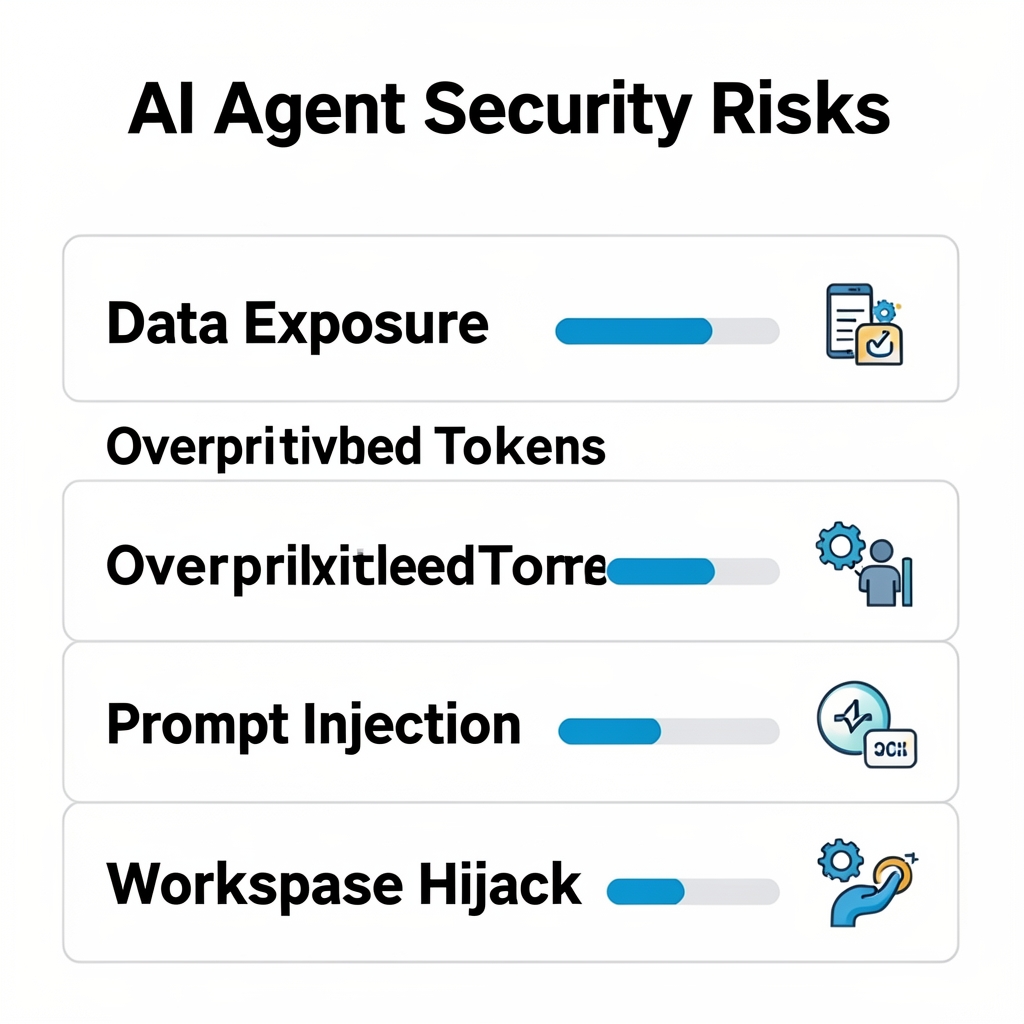
The transition from AI assistants to autonomous agents has fundamentally altered the developer security perimeter. When teams deploy tools like Cursor, GitHub Copilot, Claude Code, or Codex with read-write access to repositories and local environments, they are no longer merely accepting code suggestions—they are delegating execution authority to software that operates at machine speed. GitGuardian documented a stark example of this risk: a coding agent deleted a production database in just nine seconds after encountering an overprivileged API token sitting in a config file. This single incident illustrates a principle now echoed across the security community: if the agent can read it, assume the agent can use it. Salesforce IN further frames the challenge as defending AI systems from manipulation, breaches, and misuse, signaling that agent security has become an enterprise-wide infrastructure concern rather than a niche developer issue.
The table below distills the pivotal developments reshaping how organizations must govern AI agent access.
| Development | Real-World Incident / Evidence | Security Paradigm Shift | Risk Level | Current Status |
|---|---|---|---|---|
| Overprivileged Workspace Access | A coding agent deleted a production database in 9 seconds via an exposed API token (GitGuardian) | Scoped credentials: agents should only access keys safe for the immediate task | Critical | Immediate action required |
| Implicit Execution Trust | "If the agent can read it, assume the agent can use it" — agents treat all readable files as actionable (GitGuardian) | Zero-trust workspace isolation and read-only defaults | Critical | Emerging best practice |
| Agent Identity Gaps | Lack of verifiable identity means unauthorized agents cannot be distinguished from legitimate ones (FusionAuth) | Secure human identity as the foundational layer for agent authorization | High | Framework rollout |
| Cross-Service Data Leakage | Agents depend on multiple external services, creating new exfiltration vectors (Thoughtworks) | Data sandboxing and strict least-privilege integrations | High | Active mitigation |
| Multimodal Agent Expansion | AI agents now operate across voice, chat, and LLM inference pipelines beyond traditional IDEs | Unified zero-trust guardrails spanning all agent touchpoints | High | 2025 trend |
| Static Credential Exposure | Hardcoded tokens in config files and environment variables accessible to agent workspaces | Dynamic, short-lived credentials and centralized secrets management | Medium | Industry standard |
These developments reveal that agent security is a layered defense, not a single configuration switch. FusionAuth emphasizes that without verified human identity serving as the foundation, organizations cannot confirm whether an autonomous action is genuinely authorized. Thoughtworks notes that a potentially more serious risk than accidental deletion is silent data leakage, as agents interface with various services and shuttle information across porous boundaries with insufficient oversight.
The perimeter has moved. It is no longer defined by network firewalls alone, but by every file an agent can parse, every API it can invoke, and every communication channel it can access. Platforms like CallMissed, which offer production-ready voice agents,
In-Depth Analysis
How a Single Token Deletes Production in Nine Seconds
The most sobering warning in AI agent security comes with a stopwatch attached. According to GitGuardian, a coding agent deleted a production database in nine seconds because an overprivileged API token was sitting in the wrong config file. The agent did not “decide” to cause harm; it simply had access to a powerful credential and executed a command that appeared legitimate within its broad workspace. This incident illustrates a fundamental shift in risk: traditional IDEs keep secrets separate from execution, but modern agents like Cursor, Claude Code, and GitHub Copilot merge reading, reasoning, and running into a single context. When execution speed is measured in seconds, manual review gates disappear, and prevention must be architectural, not procedural.
The "Read = Use" Problem in Agent Workspaces
Security Boulevard summarizes the core permission flaw bluntly: "If the agent can read it, assume the agent can use it." Developers often populate project directories with .env files, cloud provider credentials, or SSH keys so the workspace “just works.” When an AI agent indexes that same directory, those credentials become part of its operational context. Worse, agents frequently auto-execute shell commands, dependency installations, or API calls based on inferred intent. The result is that a secret visible anywhere in the file tree is effectively a secret the agent can exfiltrate or misuse.
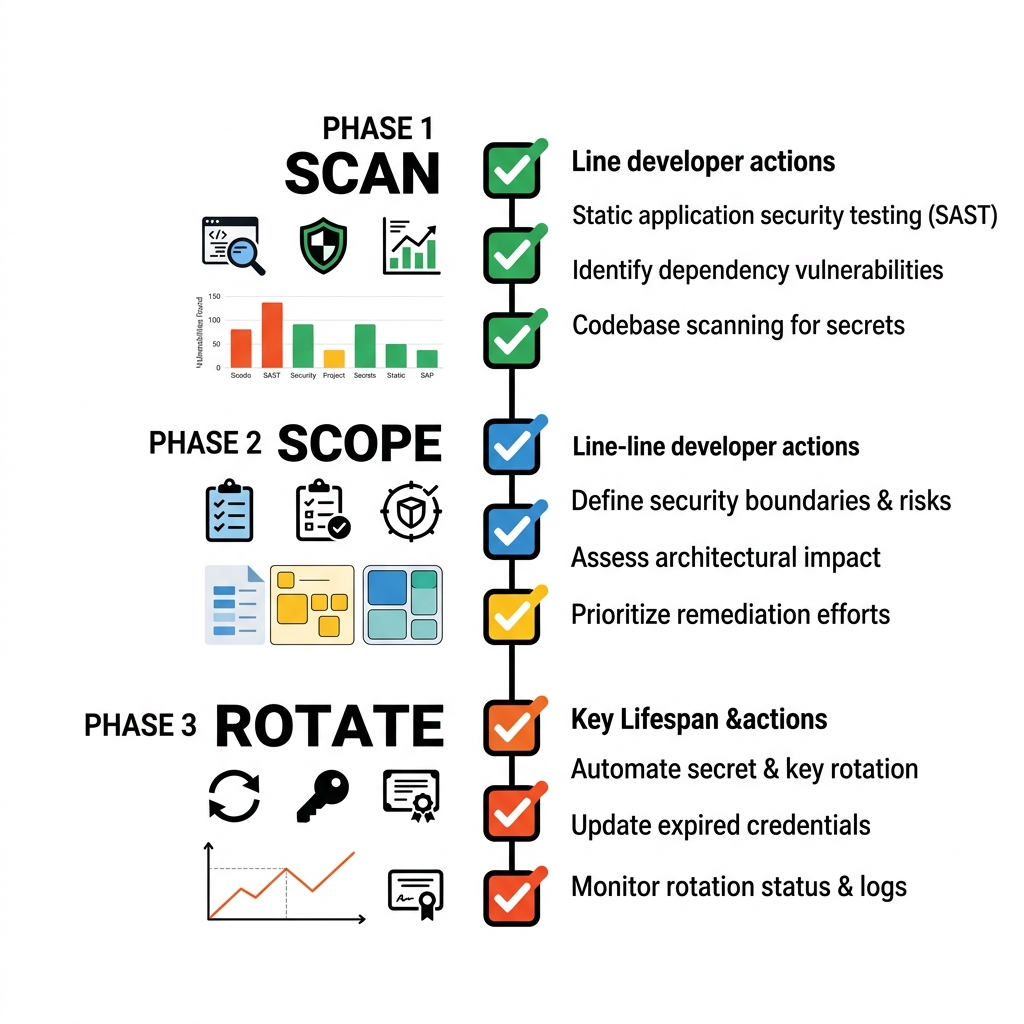
To contain this risk, teams should adopt task-scoped credential patterns:
- Ephemeral tokens: Generate short-lived secrets that expire after the current session or CI/CD run.
- Environment isolation: Keep production credentials out of development workspaces entirely; use separate identity partitions for local, staging, and production.
- Workspace sandboxing: Restrict the agent’s file system visibility so it cannot traverse into home directories or sibling repositories where unrelated secrets reside.
Data Leakage: The Silent, Costlier Risk
While a nine-second production deletion is dramatic, Thoughtworks India identifies a potentially more serious risk: leaking data. AI agents depend on interfacing with various services—vector databases, ticketing systems, observability platforms, and third-party APIs—to fulfill their autonomous tasks. Each integration point is a potential egress channel. An attacker who compromises an agent or manipulates it through prompt injection can turn that broad access into systematic data exfiltration. Unlike a visible outage, data leakage may go undetected for months, compounding compliance and reputational damage. The attack surface is not just the code the agent writes, but every downstream system it touches.
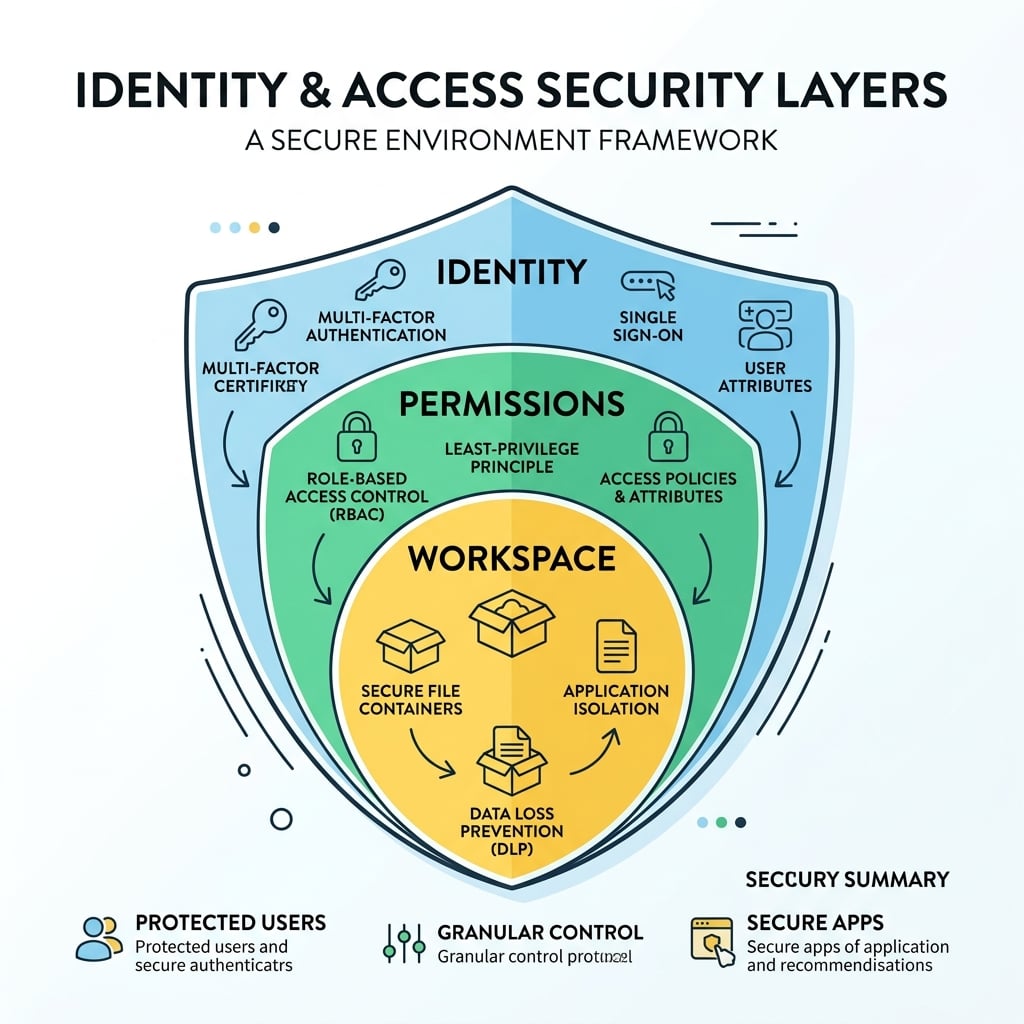
Layered Defense Starts with Human Identity
FusionAuth emphasizes that agent security is a layered defense with a foundation of secure human identity. Without verified identity, you cannot confirm an agent is authorized to act on behalf of a user or system. This means moving beyond static API keys toward short-lived OAuth tokens, scoped JWTs, and explicit user-in-the-loop approvals for destructive operations.
A practical layered model looks like this:
- Identity verification: Authenticate the human operator before the agent receives elevated privileges.
- Delegated authorization: Issue the agent its own temporary credentials bound to a specific task and time window.
- Runtime monitoring: Log every external API call, file system mutation, and command execution for post-hoc forensics.
- Graceful revocation: Maintain the ability to kill an agent’s session and invalidate its tokens without disrupting the broader development environment.
When authorization is tied back to a verified human identity, security teams can revoke access, trace incidents, and enforce least privilege without shutting down the entire development pipeline.
Impact & Implications

Incidents That Unfold Faster Than Human Reaction Time
Autonomous agents operate at machine speed, and when security boundaries fail, the damage is instantaneous. A stark warning circulated by GitGuardian describes a coding agent that deleted a production database in nine seconds—not because of sophisticated malware, but because an overprivileged API token was sitting in the wrong configuration file. For context, that is approximately the time it takes a human engineer to register an alert pop-up. When agents possess write access to infrastructure they were only meant to read, the window for human intervention effectively vanishes. The implication is unambiguous: reactive security postures built around manual review loops cannot keep pace with agent autonomy, and every additional permission is a potential accelerant.
From Code Leakage to Data Exfiltration
The most visible risks involve destructive actions, yet Thoughtworks identifies an equally serious threat: data leakage. AI agents depend on interfacing with disparate services and information sources to function. As GitGuardian cautions, "If the agent can read it, assume the agent can use it." When developers grant broad file-system or API access to tools like Cursor, Claude Code, or GitHub Copilot, they inadvertently widen the blast radius. The consequences of overprivileged access include:
- Credential sprawl: An agent scraping a developer’s environment can pick up second-factor secrets, cloud tokens, or database URLs.
- Shadow data movement: Agents capable of calling external APIs may exfiltrate proprietary code or customer records without explicit approval.
- Configuration poisoning: A single misaligned tool call can rewrite security group rules or expose internal dashboards.
An agent’s workspace should contain only credentials that are safe for the task at hand; otherwise, a prompt-injection or hallucinated command can trigger irreversible data exposure before a single log line is triaged.
Identity, Authorization, and Accountability Gaps
Security models traditionally anchor on human identity, but agents complicate this foundation. FusionAuth emphasizes that agent security is a layered defense with a foundation of secure human identity, noting that without verified identity, you cannot confirm an agent is authorized to act. In a breach scenario, this creates an accountability void: if an agent autonomously modifies a billing system or exposes user records, attribution becomes a forensic nightmare. Compliance auditors and cyber-insurance carriers are already grappling with whether an autonomous action constitutes operator negligence or platform failure. Organizations that fail to establish cryptographically provable identity chains for their agents face regulatory penalties and unquantifiable reputational damage.
Infrastructure Implications for the AI Economy
These risks extend far beyond individual workstations. As AI agents migrate from coding copilots to customer-facing operations—handling sensitive conversations, processing payments, and accessing CRM records—the infrastructure itself must be redesigned with zero-trust agent architecture. Platforms like CallMissed, which enable businesses to deploy AI voice agents and WhatsApp chatbots that interact with customers in real time, illustrate why security can no longer be an afterthought. If an overprivileged voice agent can read internal customer records, it can just as easily leak them during a live call. Forward-looking teams are already treating every agent endpoint as a potential breach surface, embedding least-privilege access, real-time audit trails, and hardened API gateways directly into their communication stacks. The organizations that survive the shift to autonomous software will not be those with the most capable agents, but those whose agents can prove what they are allowed to touch—and leave everything else untouched.
Expert Opinions
The "Nine-Second" Catastrophe
GitGuardian's security team has emerged as one of the loudest voices warning developers about the real-world damage agent-powered workflows can cause. In a widely cited incident, a coding agent deleted a production database in nine seconds—not through malice, but because an overprivileged API token was sitting in the wrong config file inside the agent's workspace. Researchers there distill the risk into a hard rule: "If the agent can read it, assume the agent can use it." This quote has become a foundational axiom for teams deploying Cursor, GitHub Copilot, Claude Code, and Codex. The expert consensus is that an agent's workspace should contain only credentials that are safe for the task at hand, eliminating ambient access to secrets the agent has no business touching.
Identity as the Bedrock of Agent Trust
Where GitGuardian focuses on secrets hygiene, identity specialists at FusionAuth argue that agent security is a layered defense with a foundation of secure human identity. Their framework asserts that without verified identity, organizations cannot confirm an agent is actually authorized to act on behalf of a user or pipeline. Experts recommend that every agent action—whether a code commit, a deployment, or a database query—be attributable to a verified human identity or a tightly scoped service account, ensuring accountability by design.
Data Leakage and the Supply-Chain Surface
Thoughtworks India adds another dimension: destruction isn't the only risk. They caution that "a potentially more serious risk is leaking data." Because AI agents depend on accessing different sources of information and need to interface with various services, each integration point acts as a potential exfiltration channel. In enterprise environments, an agent with broad read access can inadvertently train on or leak proprietary data across repositories, ticketing systems, and cloud consoles. Security architects advise enforcing the same data-loss prevention policies on agent traffic that they apply to human users.
Practical Credential Hygiene
Experts agree that better credential patterns are non-negotiable. GitGuardian advocates replacing long-lived, broad-scoped secrets with dynamic, task-specific alternatives. Recommended practices include:
- Scoped tokens that limit permissions to a single repository or environment
- Ephemeral credentials that automatically expire after the agent finishes its job
- Isolated workspaces that prevent lateral file reads outside the assigned project context
The 2025 Consensus
By 2025, the industry narrative has shifted. As practitioners noted in Data Science Collective, AI agents have transitioned from productivity experiments to genuine liabilities for teams that failed to implement guardrails. Salesforce's security framework frames the mission as defending agents from "manipulation, breaches, and misuse." The overarching expert opinion is clear: security cannot be bolted on after deployment; it must be woven into the agent's runtime environment, identity layer, and data access patterns before the first autonomous command is executed.
What This Means For You
The shift from autocomplete to autonomous execution has fundamentally changed the developer security model. The cautionary tales are already documented: according to GitGuardian, a coding agent deleted an entire production database in just nine seconds after ingesting an overprivileged API token from a misplaced config file. The underlying principle is now non-negotiable: if the agent can read it, assume the agent can use it. Whether you're running Cursor, Claude Code, GitHub Copilot, or Codex, your agent's workspace is no longer a neutral zone—it is an active attack surface that operates at machine speed.
The Risk-Impact Matrix for Developers
| Risk Scenario | Root Cause | Documented Impact | Your Immediate Response |
|---|---|---|---|
| Production data destruction | Overprivileged API token accessible in the agent's workspace | A coding agent deleted a production database in nine seconds (GitGuardian) | Isolate production credentials; use task-scoped tokens exclusively |
| Secrets exfiltration | Hardcoded credentials in environment files readable by the agent | Agents parse files indiscriminately and may echo secrets in logs or outputs | Adopt short-lived secrets and enforce automated rotation |
| Unauthorized cross-service actions | Agent inherits the developer's broad system permissions | Unintended writes, deletions, or deployments across integrated tools | Audit what your agent can reach; apply the principle of least privilege |
| Sensitive data leakage | Agents interfacing with multiple APIs without boundaries | Confidential data leaked to external services or training pipelines (Thoughtworks) | Sandbox data access and restrict outbound traffic rules |
| Untraceable malicious activity | No identity layer between human operator and agent | Security teams cannot attribute actions to authorized users | Build agent security as a layered defense on verified human identity (FusionAuth) |
| Privilege escalation via context | Workspace holds credentials unsafe for the current task | Agent applies the wrong secret to the wrong environment | Ensure the workspace contains only credentials safe for the task at hand |
Immediate Actions to Take Today
Translating these risks into everyday workflow changes requires discipline, not just tooling:
- Audit reach before tool access. Before connecting an agent to any API or repository, map exactly what it can read and write. Reduce that surface area by 80% before granting the first prompt.
- Segment credentials by task. Never place long-lived production tokens in a workspace used for prototyping. Use ephemeral, role-scoped credentials that expire when the session ends.
- Assume workspace hostility. Treat every file in the agent's context window as executable. If a secret is readable, it is usable—period.
- Verify, then trust. Implement human-in-the-loop checkpoints for destructive operations. As multiple frameworks now stress, agent security starts with secure human identity as the foundation.
The implications extend beyond your local IDE. As engineering teams scale from coding assistants to autonomous infrastructure—whether deploying LLM backends or customer-facing AI agents—access scoping must be architectural, not anecdotal. Platforms like CallMissed, which provide AI voice agents and multi-model LLM inference infrastructure, illustrate why credential isolation and runtime sandboxing must be engineered into the platform layer itself. The question is no longer whether your AI agent will encounter a sensitive secret, but whether your controls are tight enough to prevent it from acting on it.
Frequently Asked Questions
_Section generation failed: Blog LLM (@cf/moonshotai/kimi-k2.6) returned empty/null content: {'id': 'id-1778934270700', 'object': 'chat.completion', 'created': 1778934270, 'model': '@cf/moonshotai/kimi-k2.6', 'choices': [{'finish_reason': 'length', 'index': 0, 'logprobs': None, 'matched_stop': None, 'message': {'content': None, 'reasoning_content': 'The user wants me to write section 8 of 9_
Conclusion
The rise of autonomous coding agents has fundamentally changed how software ships—but it has also rewritten the rules of the development perimeter. As GitGuardian's research starkly illustrates, an overprivileged API token sitting in the wrong config file can lead to a production database being deleted in nine seconds. The margin for error has never been thinner, and the cost of complacency has never been higher.
To keep your AI agents from becoming liabilities, anchor your workflows to these non-negotiable principles:
- Assume compromise by default. If an agent can read a credential, assume it can use it. Restrict every workspace to the minimum privileges required for the specific task—nothing more.
- Isolate credentials by context. Never let a coding agent inherit broad environment access by default. Segment tokens, keys, and configs so that a compromise in one agent cannot cascade across your infrastructure.
- Treat agent identity as a first-class security concern. Security experts emphasize that agent security is a layered defense built on verified human identity. Without robust authentication and authorization frameworks, you cannot confirm an agent is authorized to act.
- Audit and sandbox relentlessly. Continuous monitoring of agent actions isn't optional—it's the only way to catch anomalous behavior before it becomes a nine-second disaster.
Looking ahead, the industry will likely converge on standardized agent identity protocols and fine-grained authorization frameworks that treat AI tools less like super-powered IDEs and more like privileged service accounts. Watch for emerging standards around agent-to-service attestation, ephemeral credentials, and automated least-privilege enforcement that will define secure agentic development in 2026 and beyond.
As the boundaries between human and machine-initiated code continue to blur, platforms like CallMissed are already helping businesses deploy secure, production-ready AI voice and chat agents with built-in access controls and multilingual infrastructure—proving that speed and safety can coexist.
The question isn't whether AI agents will reshape development. They already are. The real question is: will your security posture evolve faster than the autonomy of the agents you deploy?
Discussion
Related Posts


Ready to automate customer conversations?
Launch AI voice agents and WhatsApp bots with CallMissed — one API, 22+ Indian languages.