
Mitigating AI Bias in Production Systems



A practical 2026 guide to mitigating AI bias in production — slice evals, counterfactual testing, mitigation techniques that work, and the limits of the field.
"Mitigating bias" in AI is one of those phrases that has been loaded with so much rhetoric that the engineering practice underneath has gotten confused. This guide is for builders who have to ship a system in 2026 and want to reduce real, measurable disparate harm — not abstract bias scores. Here is what works, what doesn't, and where the field still has open problems.
Define the harm before defining the bias

The first mistake teams make is benchmarking against generic "bias" metrics without first specifying what harm the system can do.
A useful starting question: if our model output is wrong or unfavorable for a specific group, what is the consequence?
- A loan model that under-approves a demographic — financial harm, regulatory exposure
- A hiring model that under-recommends a demographic — employment harm, regulatory exposure
- A content moderation model that over-flags a dialect — speech-suppression harm
- A medical triage model that under-prioritizes a demographic — clinical harm
- A customer support model that gives worse answers to certain groups — service-quality harm
Each of these maps to different metrics. Bias-mitigation work without this mapping ends up optimizing the wrong number.
Build the demographic slice in your eval suite
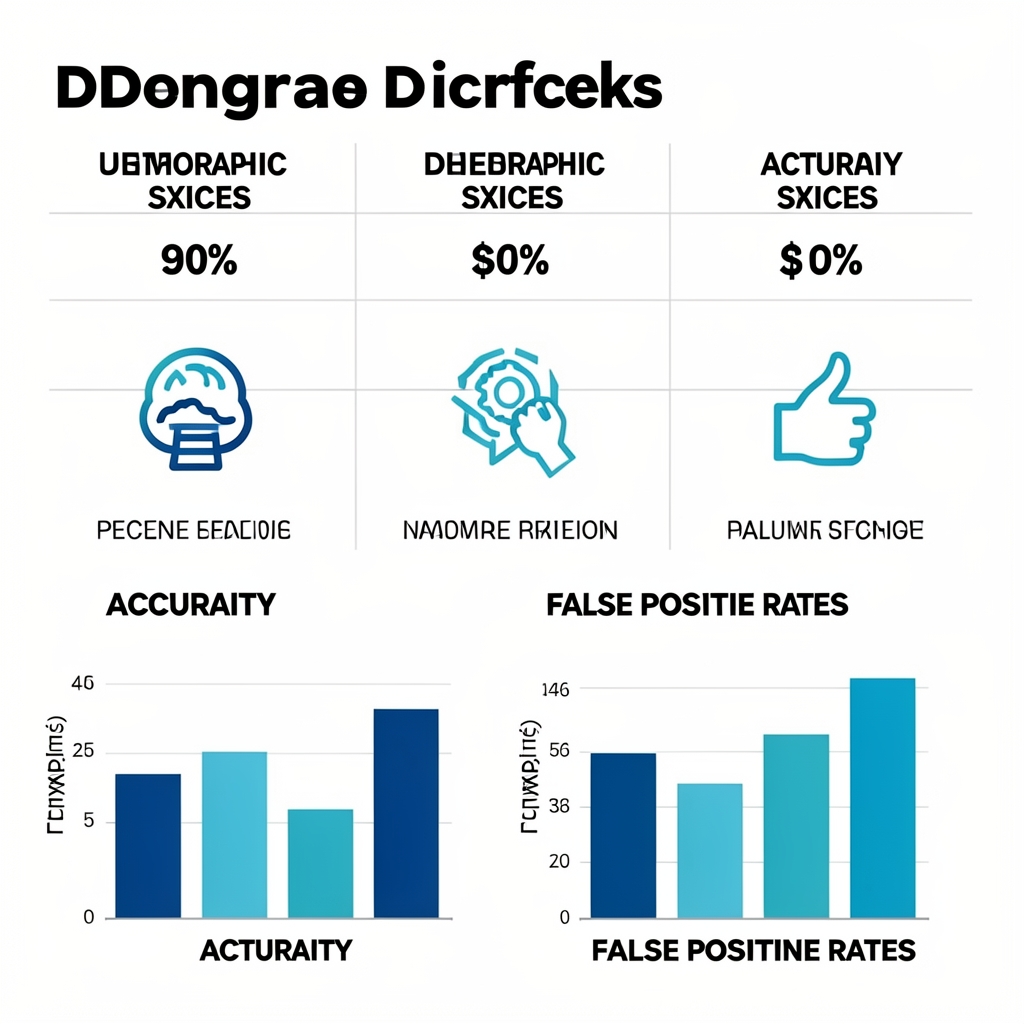
The single most leveraged practice: every offline eval should be sliced by the demographic dimensions that map to your harm. If you have not built the slice, you cannot measure the bias.
Practical steps:
- Identify protected and harm-relevant attributes (race/ethnicity, gender, age, disability, language, socioeconomic proxies). Protected categories vary by jurisdiction.
- Construct or augment your eval set so each slice has enough examples for statistical signal — typically 200+ per slice for binary outcomes.
- Compute the same headline metric per slice: accuracy, recall, false-positive rate, mean output score, and the relevant fairness metric for your domain (demographic parity, equalized odds, calibration).
- Track slice-level metrics over time, not just aggregate.
The eval-suite-with-slices is more important than any single mitigation technique because it tells you which technique is actually helping.
Mitigation techniques that actually work
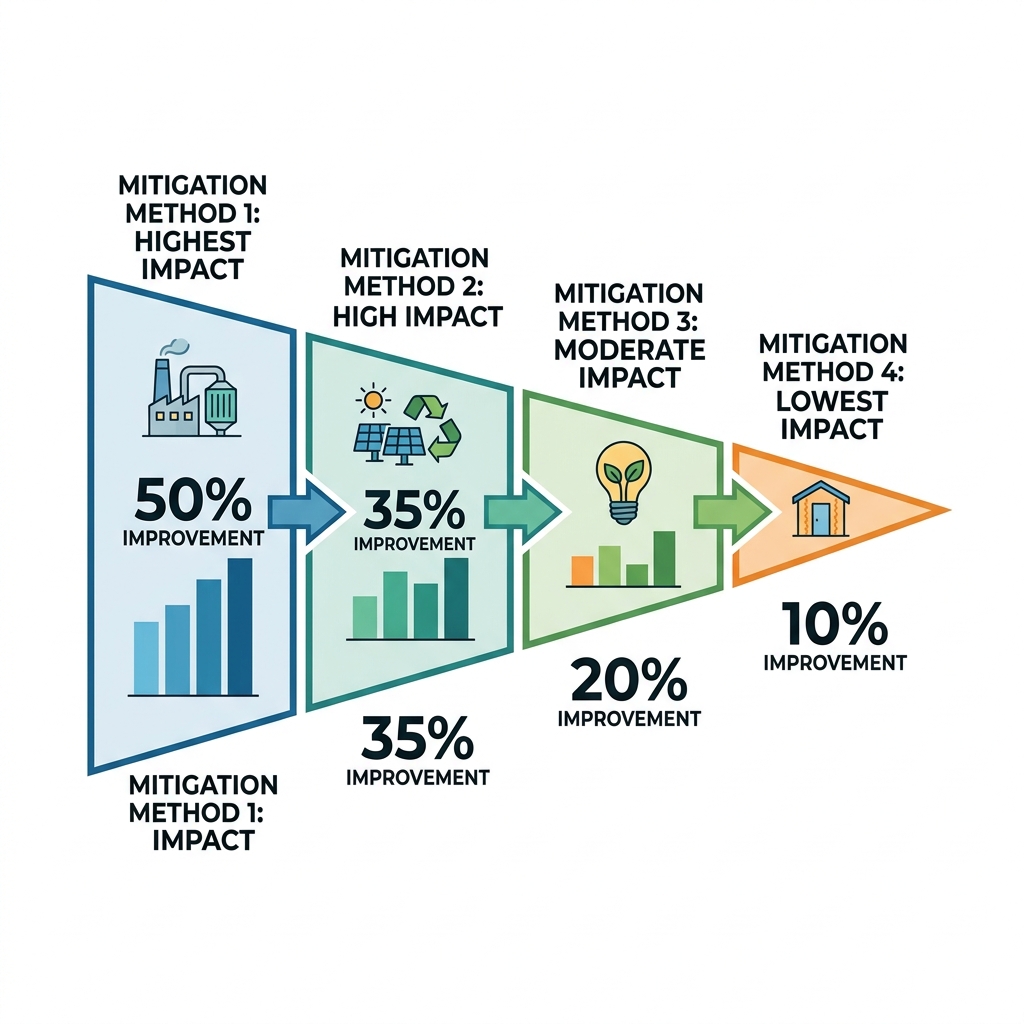
Across 2026 production systems, the techniques most commonly correlated with measured improvement:
1. Data curation
Rebalancing or augmenting training data to reduce demographic skew. Often the single highest-impact intervention; also the most expensive. Useful when the model is being fine-tuned on your data.
2. Prompt-level constraints
For LLM-based systems, instructing the model to consider all groups, to apply uniform criteria, or to flag its own uncertainty for sensitive cases. Cheap, fast to iterate, but limited ceiling. Works as a partial mitigation, not a sole one.
3. Output filtering and post-processing
A post-hoc layer that detects suspicious patterns — high-confidence recommendations against protected groups, language patterns associated with stereotyped outputs — and routes them to a human or a fallback path. Most useful for high-stakes decisions.
4. Human review at slice-conditioned thresholds
Lower the auto-approve threshold for slices where false-positive cost is high. Push more borderline cases to human review. This trades latency and ops cost for measurable disparate-impact reduction.
5. Calibration adjustment
When the model is well-calibrated overall but mis-calibrated within slices, re-fit per-slice calibration. Useful when you can identify the slice at inference time without legal risk (in many jurisdictions, using protected attributes in inference is itself restricted — check first).
6. Counterfactual evaluation
Run the system on examples that differ only in a protected attribute. If the output materially changes, that is direct evidence of disparate treatment. Counterfactual evals are increasingly part of standard release gates for high-stakes systems.
Mitigations that often disappoint
A few techniques get more attention than results:
- Generic "fairness regularizer" terms. Often improve a fairness metric while hurting overall utility, with limited demographic-harm reduction in deployment.
- Removing protected attributes from features. Doesn't address the proxy variables that correlate with the protected attribute (zip code, name, school). Required by law in some domains, but it is not a mitigation by itself.
- One-time bias audits. Useful as a snapshot but doesn't catch drift. Replace with continuous slice monitoring.
- Generic LLM "be unbiased" instructions. Marginal effect without slice-conditioned evals to verify.
Continuous monitoring in production

A 2026 production system needs:
- Real-time slice-level metric dashboards (volume, accuracy, false-positive rate, output-score mean)
- Drift detection per slice — alert when a slice's metric moves significantly relative to baseline
- A feedback loop where flagged outputs are re-graded periodically
- Periodic counterfactual evals against the live model
- An incident-response playbook for "the system started showing disparate behavior"
Monitoring without dashboards that surface to product engineering is shelf-ware. Make the slice metrics part of the same observability that engineers already check.
Where the field has open problems
Honest accounting of the limits in 2026:
- Intersectional slices. A 2x2x2 cut quickly runs out of statistical power; intersectional disparities (e.g., older women of a particular ethnicity) are hard to measure with small datasets.
- LLM-output bias is harder to quantify than classifier-output bias. Free-text outputs can carry bias in framing, tone, recommendations, and emphasis — none of which fit a single numeric metric cleanly.
- Dataset-shift bias. A system fair on launch can become unfair as the real-world population shifts. Continuous monitoring is partial mitigation; the deeper problem is unsolved.
- Multimodal bias. Image, voice, and video systems carry bias modalities that text-only audits miss.
- Trade-offs between fairness criteria. Some pairs of fairness metrics are mathematically incompatible; you have to choose which to prioritize.
A pragmatic 2026 program
For a team starting from zero:
- Map the harm. What does a wrong/unfavorable output cost which group?
- Build the slice eval. Every offline release runs through it.
- Pick 2-3 mitigations matched to your data control and decision stakes.
- Stand up continuous slice monitoring in prod.
- Set escalation thresholds and an incident playbook.
- Re-audit quarterly with counterfactual probes.
This is more than most teams are doing today and less than perfect. It also produces real, measurable harm reduction — which is the goal.
Frequently Asked Questions
What is the highest-leverage AI bias mitigation in 2026?
Should I remove protected attributes from features?
How often should bias audits run?
Discussion
Related Posts



Ready to automate customer conversations?
Launch AI voice agents and WhatsApp bots with CallMissed — one API, 22+ Indian languages.