
RAG Best Practices in 2026: Chunking, Reranking, Hybrid Search



The 2026 RAG playbook — chunking strategies, hybrid retrieval, rerankers, and how long context fits in. Practical defaults and the four levers that move quality.
RAG (retrieval-augmented generation) graduated from a 2023 buzzword to a 2026 production pattern, and along the way the industry agreed on what actually matters. Most quality wins come from four levers: chunking strategy, hybrid retrieval, rerankers, and the long-context vs RAG tradeoff. Get those four right and you are ahead of 80% of production deployments.
Chunking: where most quality is won or lost
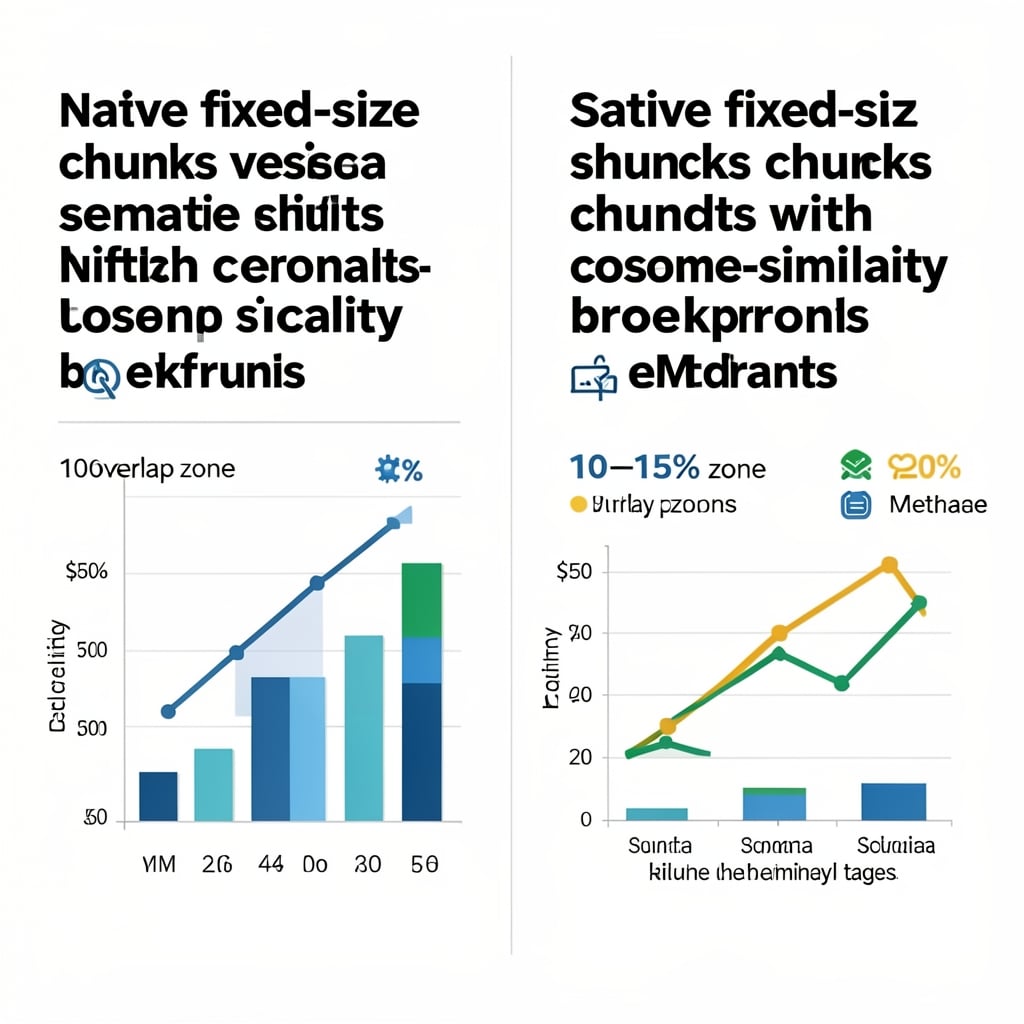
The naive "split into 1000-character chunks every 100 characters" approach is a fast start and a slow ceiling. In 2026 the patterns that ship:
- Semantic chunking — split where meaning shifts. Compute embeddings sentence-by-sentence and start a new chunk when cosine similarity between adjacent sentences drops below a threshold. One published comparison reported semantic chunking lifting accuracy to ~71% versus fixed-size baselines on the same dataset. Unverified — primary source: practitioner blogs cited via [Medium]
- Structure-aware splitting — for documentation, split on
##headings; for code, split per function or class via AST; for legal text, split per clause with full-paragraph context. - Overlap — 10–15% overlap between adjacent chunks reduces context-cliff failures where the answer spans a boundary.
- Metadata — every chunk carries source, section, page, and parent-chunk ID. You will need them for citations, filters, and hierarchical retrieval.
A common failure: chunks that are too small ("one sentence each") perform worse on multi-step reasoning. 512–1024 tokens with structure-aware boundaries is the safe default for prose.
Hybrid retrieval: dense + lexical, always
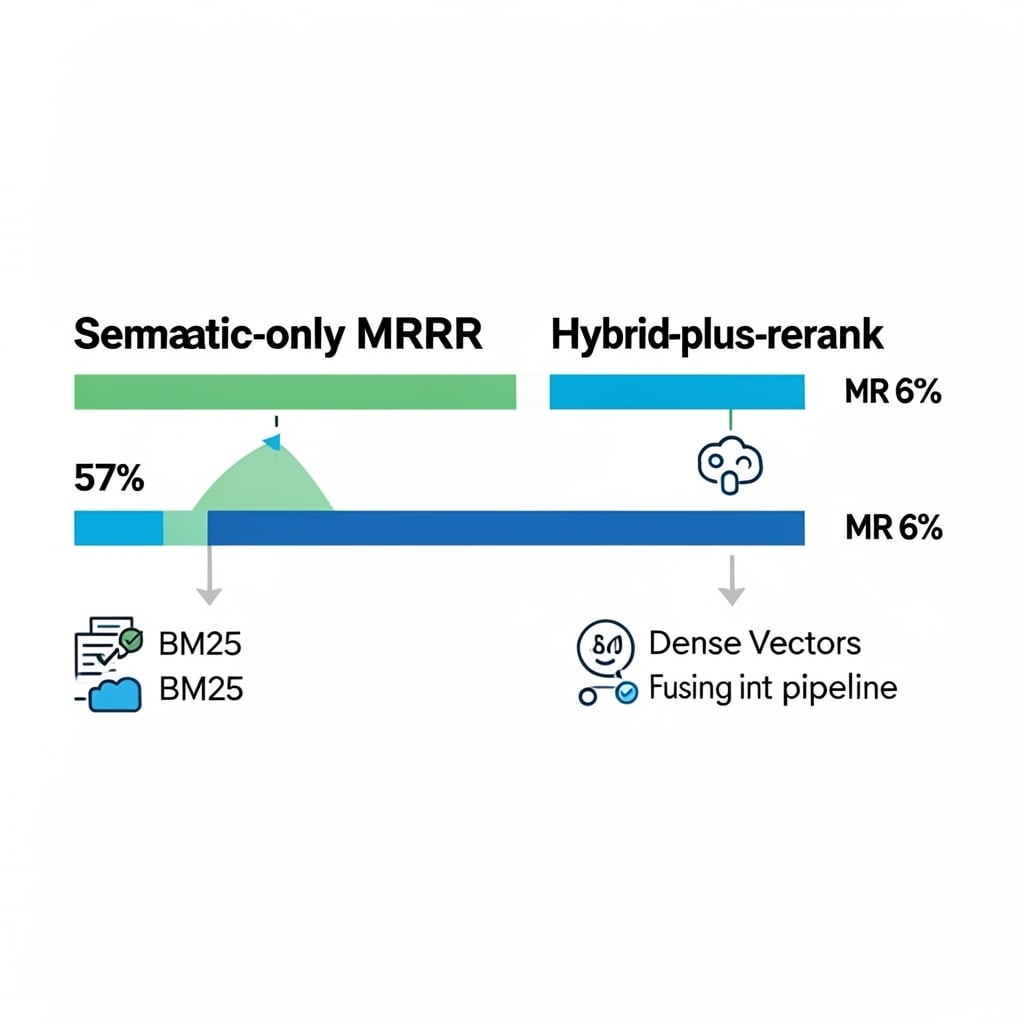
Dense embeddings are good at semantics but bad at exact matches — names, SKUs, dates, error codes. BM25 (a lexical scoring function) is the inverse. Combining them — hybrid retrieval — is consistently better than either alone.
In benchmarks reported by Superlinked and others, hybrid + rerank reached MRR around 66% on tested datasets versus around 57% for semantic-only — roughly a 9-point gain. (VectorHub) [Unverified — single benchmark]
Two ways to fuse:
- Reciprocal Rank Fusion (RRF) — combines rank positions, no score normalization needed. The default starting point.
- Weighted score fusion — alpha-blend dense and BM25 scores. More tunable, requires score normalization.
If your stack supports it natively (Weaviate, Qdrant with sparse vectors, Elasticsearch, OpenSearch), use the built-in operator. If not, retrieve top-k from each path independently and fuse outside the database.
Rerankers: the highest-ROI step
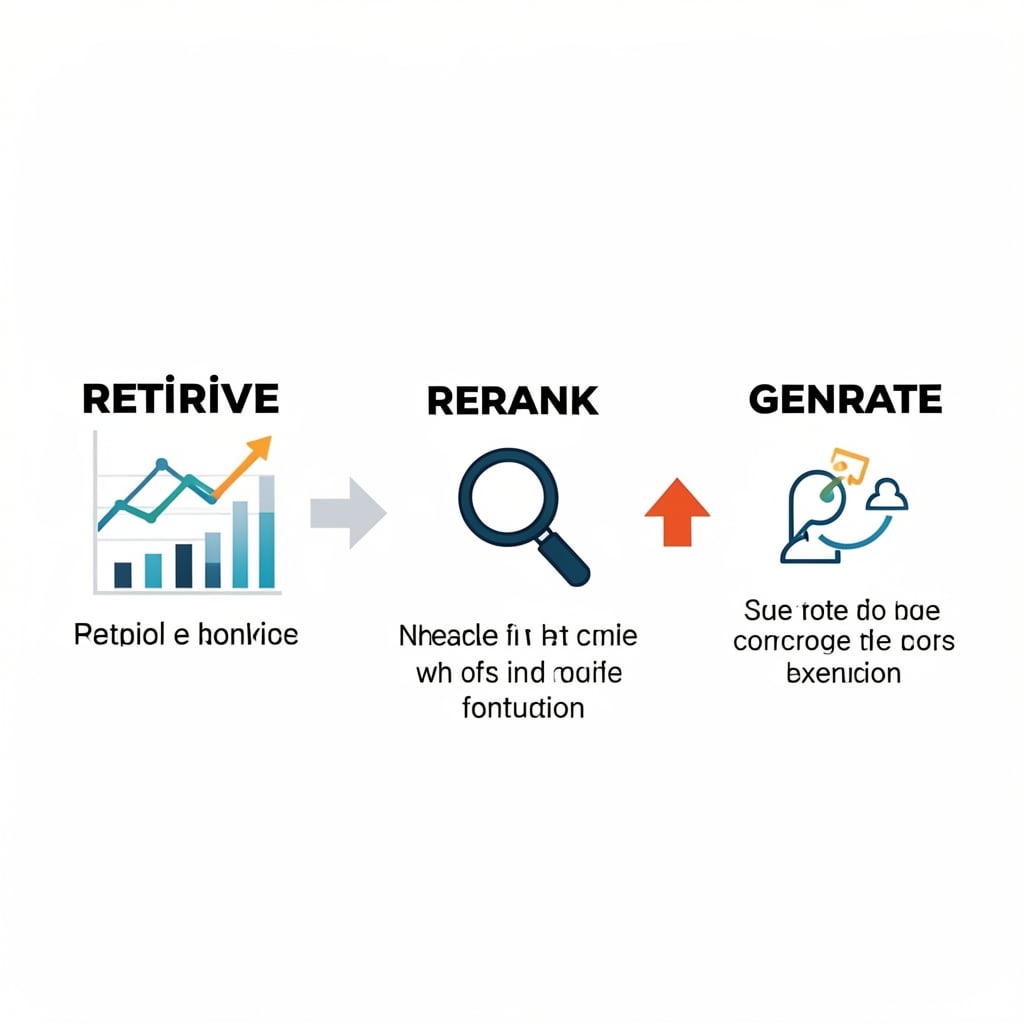
Initial retrieval is "fast and approximate." A reranker takes a small candidate set (say, top 20–50) and re-scores each with a heavier model that looks at query + chunk together. Cross-encoders are slower per pair but materially more accurate.
In 2026 the practical choices:
- Cohere Rerank 3 — managed API, multilingual, fast for production scale.
- Voyage rerank-2 / rerank-lite — strong on retrieval-heavy domains. [Unverified]
- BGE-reranker-v2 — open source, fits on a single consumer GPU.
- Cross-encoder MS-MARCO — battle-tested baseline, free, slower.
Rule of thumb: retrieve 20, rerank to 5, send 3–5 to the LLM. Reranking 100+ candidates rarely pays off; the head of the distribution carries the signal.
Long context vs RAG: not "one wins"
Frontier models in 2026 have million-token context windows. The reflex "we don't need RAG anymore" is wrong for three reasons:
- Cost — a 1M-token prompt costs orders of magnitude more than a 5K-token RAG prompt, even with prompt caching.
- Latency — TTFT scales with prefill, and prefill scales with prompt size.
- Attention quality — recall on "needle in a haystack" tests is good, but recall on subtle multi-document reasoning still degrades with prompt size. [Inference]
The 2026 consensus pattern: RAG retrieves, long context refines. Pull 5–20 reranked chunks, hand them to the model in a 16–64K-token prompt with system instructions and examples. Use the full context window when synthesis genuinely demands it (long reports, codebases) — not as a substitute for retrieval.
Evaluation: the part most teams skip
You cannot improve what you do not measure. The minimum viable eval:
- Retrieval quality — recall@k, MRR. Build a small (~100 query) golden set with ground-truth chunks.
- End-to-end answer quality — LLM-as-judge with rubric, or human spot-check.
- Citation faithfulness — does the answer reference chunks that were actually retrieved? Penalize hallucinated citations explicitly.
Run this on every config change. The number of teams that "improved" their pipeline and quietly regressed retrieval is non-trivial.
A 2026-default RAG pipeline
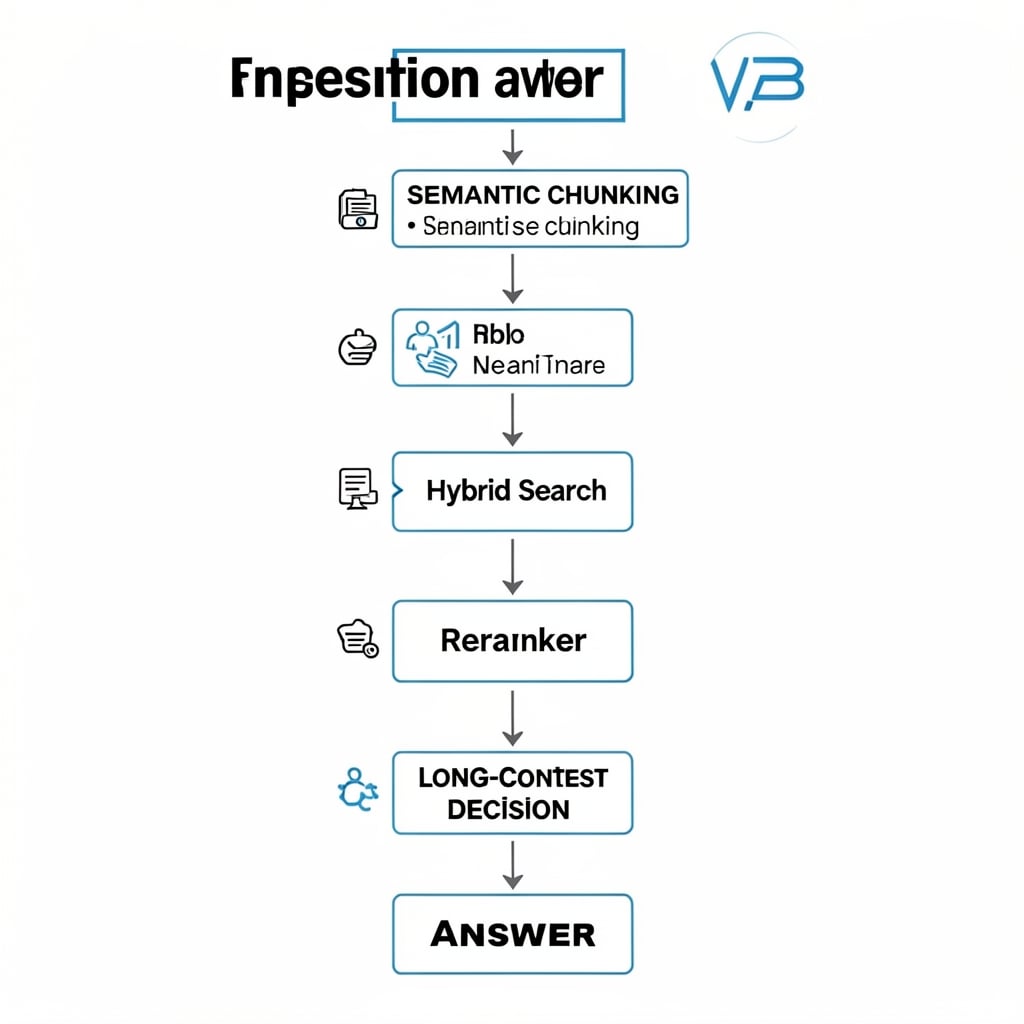
query
  → query rewrite (optional, helps multi-turn)
  → hybrid retrieval (dense top-50 + BM25 top-50, RRF fused)
  → reranker (Cohere or Voyage) → top 5–8
  → context builder (with metadata + citations)
  → LLM with structured output for citations
This pipeline is boring on purpose. Each step earns its keep, and each step is independently swappable when something better ships.
Bottom line
The fastest way to better RAG in 2026 is not "use Claude 4.5 instead of GPT-4." It is chunk better, retrieve hybrid, rerank aggressively, and measure. Frontier models help, but they amplify the quality of what you feed them. Garbage in still produces confidently-worded garbage out.
Frequently Asked Questions
Should I use semantic chunking or fixed-size chunking?
Is hybrid search worth the complexity?
Do I still need RAG with million-token context windows?
Discussion
Related Posts



Ready to automate customer conversations?
Launch AI voice agents and WhatsApp bots with CallMissed — one API, 22+ Indian languages.