
Sarvam AI: India's Sovereign LLM Breakthrough with Nokia & Bosch



While the global AI race has been dominated by Silicon Valley and Beijing, an Indian startup has achieved what many considered impossible: building fully...
Sarvam AI: India's Sovereign LLM Breakthrough with Nokia & Bosch
While the global AI race has been dominated by Silicon Valley and Beijing, an Indian startup has achieved what many considered impossible: building fully sovereign large language models without external help or foreign training infrastructure. Sarvam AI’s breakthrough is not simply a technical milestone—it represents a strategic inflection point for the world’s most populous democracy as nations scramble to secure control over their artificial intelligence supply chains.
The timing is critical. Most existing foundational models remain optimized for English and Mandarin, creating a significant gap for India’s vast vernacular-speaking population and raising serious questions about data sovereignty in an era of geopolitical fragmentation. Sarvam is directly addressing this challenge by constructing an indigenous AI stack built for Indian languages, edge deployment, and government-grade security. The startup has secured strategic hardware partnerships that extend far beyond the cloud: Nokia and HMD Global will embed Sarvam’s AI directly into feature phones, leveraging telecom-optimized edge inference to bring conversational intelligence to users without expensive smartphones or constant broadband connectivity. Simultaneously, Bosch Global Software Technologies is integrating Sarvam’s sovereign capabilities into automotive systems, laptops, and IoT hardware, combining Bosch’s enterprise engineering strengths with Sarvam’s deep vernacular expertise. Qualcomm collaborations further expand this footprint by optimizing on-device AI for smartphones and consumer electronics.
Beyond commercial hardware, Sarvam
Introduction

India's artificial intelligence landscape is undergoing a fundamental recalibration. For years, the nation’s AI ambitions were tethered to foreign large language models—powerful but linguistically skewed, geographically opaque, and strategically dependent. That dependency is now fracturing. Bengaluru-based Sarvam AI has achieved what few domestic ventures have dared: it has developed proprietary LLMs entirely without external help, constructing a sovereign AI stack engineered specifically for India’s linguistic diversity and computational sovereignty. This is not merely a technical footnote; it represents a geopolitical inflection point in how emerging economies architect their AI futures.
Why Sovereign AI Matters Now
The urgency of AI sovereignty extends beyond national pride. When models are hosted, trained, and fine-tuned abroad, data residency, cultural nuance, and regulatory compliance become contingent variables. Sarvam’s breakthrough directly addresses this by creating a homegrown foundational model that keeps inference and data governance within national boundaries. Industry reports confirm that Sarvam trained and deployed these LLMs natively, making it one of the first Indian entities to achieve this without relying on external base architectures for core development.
But a model without distribution is just a research artifact. The real significance lies in how Sarvam is translating this technical milestone into tangible infrastructure through an ecosystem of strategic alliances.
Global Partnerships: From Feature Phones to Automotive Edge
Sarvam is leveraging its sovereign LLMs through hardware partnerships that span the entire device spectrum, bringing generative AI to form factors and demographics often ignored by Western cloud-first strategies.
- Nokia / HMD Global: The collaboration focuses on embedding conversational AI directly onto feature phones, bypassing the smartphone divide that excludes hundreds of millions of Indian users. This deployment utilizes telecom-optimized edge inference, enabling voice-based assistance on low-power devices.
- Bosch / BGSW: Bosch Global Software Technologies is integrating Sarvam’s models into enterprise engineering, automotive systems, and applied AI scenarios, including smartphones, laptops, and connected cars. A Bosch press release emphasized the union of BGSW’s industrial AI strengths with Sarvam’s "sovereign AI capabilities and deep vernacular" expertise to advance responsible AI adoption.
- Qualcomm: The chipmaker partnership targets on-device AI acceleration for mobile and automotive chipsets, ensuring that Indian-language inference happens locally rather than in distant data centers.
This triad—Nokia for accessibility, Bosch for enterprise and automotive, Qualcomm for silicon-level optimization—creates a rare end-to-end sovereign pipeline.
Domestic Deployment: The State-Level Push
Parallel to its global hardware expansion, Sarvam is anchoring itself domestically through public-sector sovereign AI partnerships. The startup has formalized collaborations with Odisha and Tamil Nadu to deploy compute-at-scale infrastructure, Indian-language models, and public-service adoption frameworks. These state-level engagements are designed to localize governance, education, and citizen services through AI that understands regional syntax and context natively rather than translating English outputs retroactively.
The Broader Indian AI Infrastructure Wave
Sarvam’s trajectory signals a maturation of India’s AI substrate—from consumers of foreign APIs to architects of indigenous intelligence. Yet sovereign LLMs are only one pillar of this transformation. Across the communication stack, Indian startups are building complementary infrastructure that operationalizes multilingual AI at the application layer. Platforms like CallMissed are already enabling businesses to deploy AI voice agents and WhatsApp chatbots that support 22 Indian languages natively, turning foundational models into customer-facing utilities. As sovereign base models converge with specialized deployment platforms, India is not just localizing AI—it is reimagining who gets to build, control, and benefit from it.
Background & Context
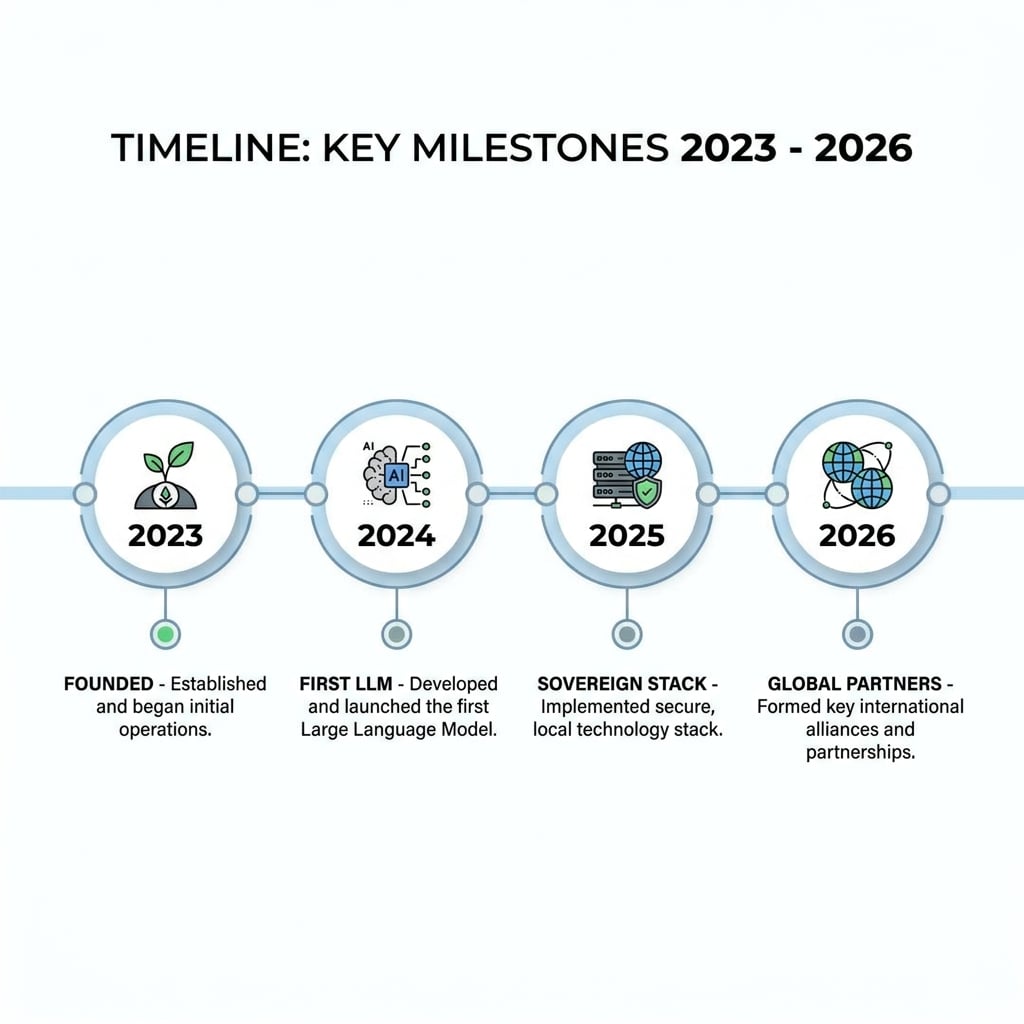
The Urgency of AI Sovereignty in India
India’s push for AI sovereignty is driven by more than national pride—it reflects urgent priorities around data governance, linguistic inclusivity, and strategic autonomy. With 22 officially recognized languages and hundreds of dialects, global LLMs trained primarily on English corpora have consistently underperformed for Indian language users. Sarvam AI’s decision to develop its own LLMs without external assistance directly addresses this gap, creating vernacular-first AI infrastructure that can operate entirely within national boundaries.
The policy momentum behind this approach is already visible. Sarvam has announced sovereign AI partnerships with the Indian states of Odisha and Tamil Nadu, focused on compute-at-scale deployments, Indian-language models, and public-service adoption. These state-level collaborations signal a structural shift: governments are prioritizing citizen data and AI inference workloads that remain under domestic jurisdiction rather than routing through foreign cloud providers.
From Model to Hardware: Why Silos Don't Work
Sovereign model weights alone do not guarantee adoption. Sarvam’s architecture gains credibility through strategic hardware alliances that extend its reach from data centers to edge devices. According to Firstpost, the startup has partnered with Qualcomm, Bosch, and Nokia HMD to embed AI across disparate form factors:
- Qualcomm is optimizing on-device inference for smartphones and laptops
- Bosch (via Bosch Global Software Technologies) is integrating Sarvam’s models into automotive systems, enterprise edge devices, and industrial IoT—combining BGSW’s “enterprise engineering and applied AI strengths” with Sarvam’s sovereign capabilities
- Nokia/HMD Global is embedding conversational AI into feature phones, targeting edge AI and telecom-optimized inference for users outside the smartphone ecosystem
This hardware-aware strategy matters because India’s feature phone user base still numbers in the hundreds of millions. By compressing models for low-bandwidth, low-power environments, Sarvam is architecting for India’s actual connectivity reality, not its idealized digital surface.
A Broader Ecosystem Play
Sarvam’s approach reflects a maturing consensus: sovereign AI requires end-to-end domestic infrastructure. Rather than offering standalone API endpoints, the startup is building a vertically integrated alternative where training, inference, and deployment partners align geographically and politically. At a time of tightening GPU export controls and fragmented global AI regulation, an Indian LLM backed by European hardware partnerships offers enterprises a de-risked alternative to American or Chinese vendor lock-in.
The ripple effects are already visible across India’s commercial AI landscape. As Sarvam pushes regional-language LLMs into Bosch automobiles and Nokia feature phones, the demand for vernacular voice interfaces and localized inference backends is accelerating. Platforms like CallMissed—which provide Speech-to-Text across 22 Indian languages and LLM inference through production-ready voice agents—demonstrate how the domestic stack is maturing from experimental models into reliable, customer-facing infrastructure. Sarvam’s breakthrough is not an isolated lab achievement; it is a critical node in a hardening Indian AI sovereignty network.
Key Developments
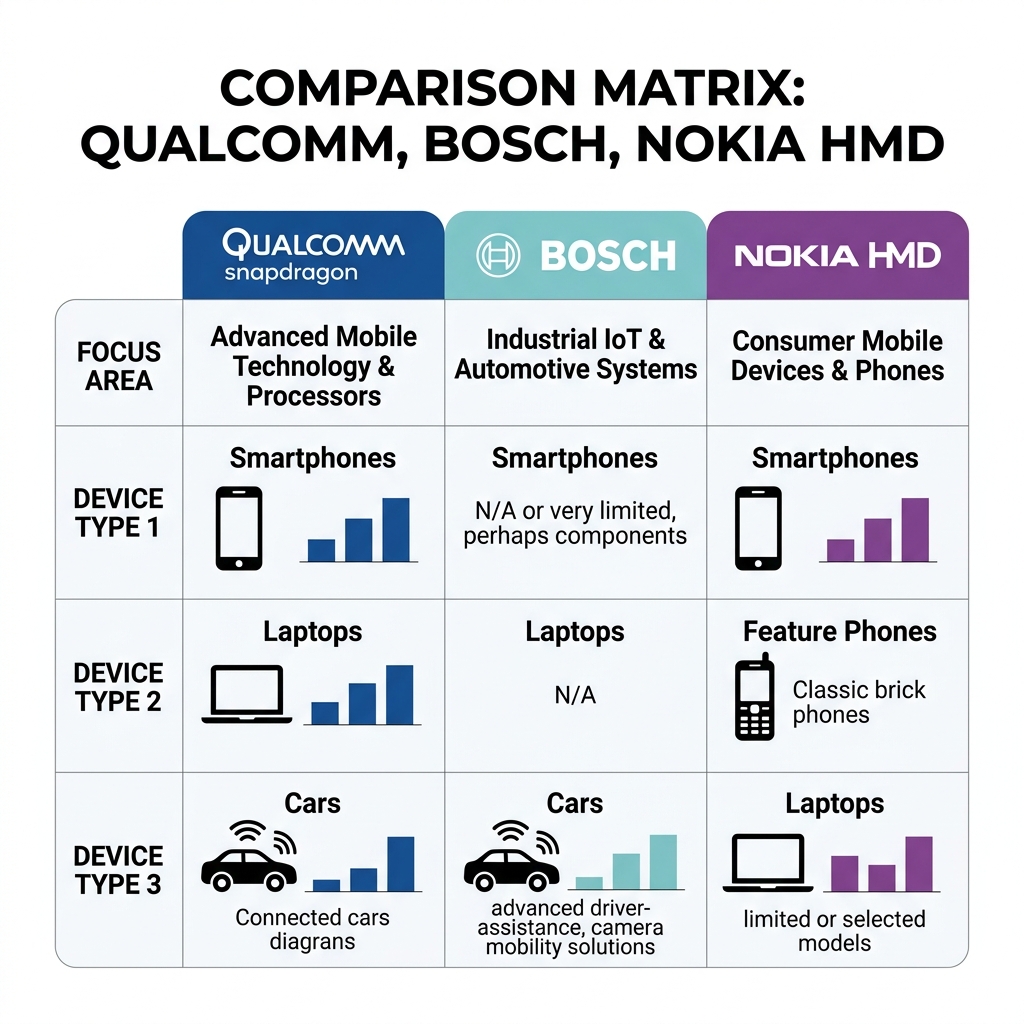
From Labs to Edge: The Partnership Architecture
Sarvam AI’s ascent from stealth startup to sovereign AI champion rests on a deliberately structured expansion across hardware, policy, and software layers. The company’s core technical differentiator is its decision to develop full-stack LLMs without external assistance—a rarity in the Indian ecosystem, where most players rely on fine-tuning foreign base models. This end-to-own approach grants Sarvam complete control over training data, model architecture, and inference optimization for Indian languages, while ensuring strict data residency and commercial guarantees that imported APIs cannot offer.
The following table maps the six pivotal developments converting this technical independence into market traction:
| Development | Partner / Stakeholder | Technical Focus | Strategic Outcome |
|---|---|---|---|
| Sovereign LLM Development | Sarvam AI (In-house) | Full-stack model architecture built without external dependencies | Independent Indian AI infrastructure with controlled data residency |
| Feature Phone Edge AI | Nokia / HMD Global | Telecom-optimized inference and embedded edge AI | Conversational AI deployed on mass-market feature phones with low latency |
| Enterprise & Automotive AI | Bosch / BGSW | Applied AI integration and responsible AI governance frameworks | Model deployment across smartphones, laptops, and connected vehicles |
| On-Device AI Acceleration | Qualcomm | Hardware-specific model optimization and on-device inference | Efficient AI execution on consumer silicon (phones, laptops, automotive) |
| State Sovereign AI | Odisha & Tamil Nadu Governments | Compute-at-scale infrastructure and vernacular model training | Public-sector AI adoption for governance and citizen services |
| Vernacular Model Stack | Internal R&D | Indic-language NLP optimization | Inclusive AI access across India's diverse linguistic landscape |
Decoding the Hardware and Policy Implications
The Nokia / HMD Global collaboration is arguably the most disruptive for mass-market access. By targeting edge AI and telecom-optimized inference, Sarvam aims to embed conversational intelligence directly into feature phones—devices that still dominate India’s rural and semi-urban markets. This bypasses the smartphone bottleneck entirely, reducing cloud dependency while maintaining responsive voice interactions on low-power hardware.
The enterprise and government dimensions break down as follows:
- Bosch / BGSW: Integrates sovereign models into smartphones, laptops, and cars under a responsible AI adoption framework, effectively treating Sarvam’s stack as an embedded intelligence layer for intelligent hardware.
- Qualcomm: Optimizes models for on-device inference across Snapdragon-powered consumer electronics, eliminating the need for persistent cloud connectivity during critical operations.
- Odisha & Tamil Nadu: Provide compute at scale and train models for public-sector vernacular use cases, establishing a template for sovereign AI governance where citizen data never crosses state boundaries.
This multi-vector approach ensures that Sarvam is not dependent on a single distribution channel, insulating it from the platform-risk bottlenecks that plague startups relying solely on cloud APIs.
Bridging the Last Mile with Voice Infrastructure
For all this foundational progress, the sovereign AI stack remains incomplete without a communication layer that translates text-based intelligence into natural voice interactions at scale. Here, infrastructure platforms like CallMissed play a complementary role—offering production-ready voice agents, Speech-to-Text APIs supporting 22 Indian languages, and a multi-model gateway connecting to 300+ LLMs. As Sarvam builds the underlying cognitive engine, such platforms provide the multilingual voice orchestration and deployment tooling that enterprises actually need to reach non-English-speaking users across India.
In-Depth Analysis

The Architecture of Sovereign Independence
Sarvam AI’s decision to develop its LLMs entirely in-house — without external help — represents more than an engineering milestone. It marks a structural inflection point in how emerging economies can approach artificial intelligence. By building a fully sovereign AI stack, Sarvam ensures that Indian-language training data, cultural context, and inference workloads remain within national borders, directly addressing long-standing concerns about data colonialism and API dependence on foreign providers. This homegrown foundation allows the startup to optimize models for Indic languages at the tokenization layer itself, a capability that Western foundational models frequently treat as an aftermarket retrofit rather than a core design principle.
Deconstructing the Global Partnership Matrix
The technical breakthrough is now being commercialized through a carefully chosen set of hardware and enterprise partnerships that span the full compute spectrum:
- Nokia / HMD Global: The alliance targets embedding conversational AI directly onto feature phones, with Nokia further contributing edge AI and telecom-optimized inference architectures. This is a high-impact accessibility play, bringing LLM interactions to hundreds of millions of users in India’s tier-2 and tier-3 markets who remain on non-smart devices.
- Bosch (BGSW): Bosch Global Software Technologies is integrating Sarvam’s models into smartphones, laptops, and automotive systems. According to Bosch, the collaboration unites BGSW’s enterprise engineering and applied AI strengths with Sarvam’s sovereign AI capabilities and deep vernacular language support. The joint focus is on responsible AI adoption across industrial automation and consumer IoT verticals.
- Qualcomm: Though secondary to the Nokia and Bosch narrative in public messaging, Qualcomm provides the critical silicon layer for on-device inference, enabling phones and vehicles to run these models locally rather than routing every query through centralized, often foreign-owned cloud infrastructure.
State-Level Adoption and Public Infrastructure
Sarvam’s sovereignty thesis extends beyond consumer hardware into government digital infrastructure. The company has formalized sovereign AI partnerships with Odisha and Tamil Nadu, both linguistically distinct states with large non-Hindi populations. These agreements focus on three operational pillars: compute at scale, Indian-language models, and public-service adoption. By deploying LLMs directly within state datacenters and digital portals, Sarvam is piloting a governance template where citizen-facing chatbots, welfare scheme navigation, and administrative document processing can operate entirely on domestic compute — a reference architecture that other Indian states will likely evaluate closely.
The Voice-First Challenge
For sovereign LLMs to become utility-grade infrastructure rather than laboratory achievements, the final mile must be conversational and multilingual. India’s digital divide is spoken, not typed. The ability to interact with state services and enterprise systems through voice in 22-plus regional languages will determine real adoption. Platforms such as CallMissed, which provide Speech-to-Text coverage for 22 Indian languages and production-ready voice agent APIs, operate within the same enabling layer as Sarvam’s models. As these sovereign LLMs scale from Nokia feature phones to Bosch automotive systems and state helplines, seamless integration with multilingual voice infrastructure will separate theoretical capability from daily civic and commercial utility.
Impact & Implications
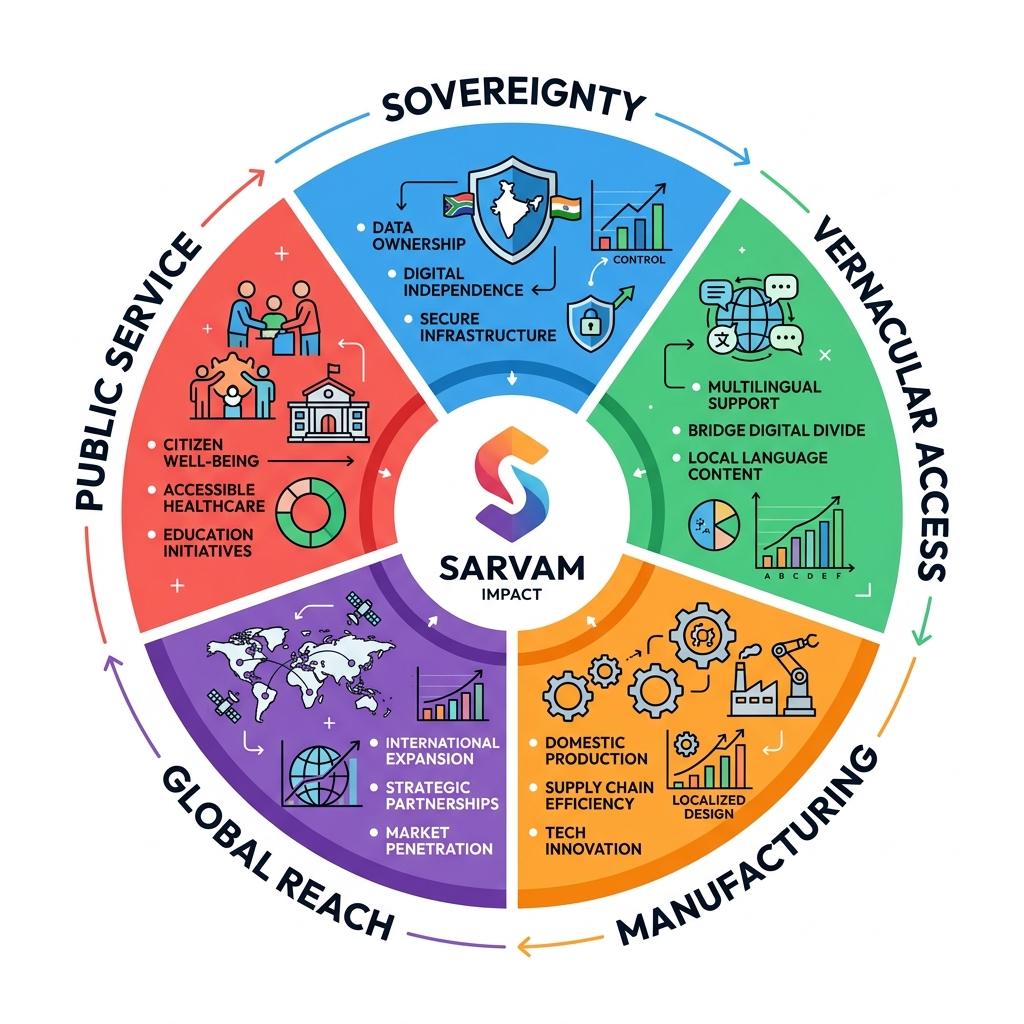
Reshaping India's AI Sovereignty
Sarvam AI's achievement in developing its own LLMs without external help represents more than an engineering milestone—it is a strategic assertion of digital sovereignty. In an era where foundational AI models are overwhelmingly concentrated among a handful of U.S. and Chinese labs, Sarvam's entirely homegrown stack gives Indian enterprises and government agencies an alternative that sits within national jurisdictional boundaries, directly addressing data-localization mandates and latency concerns. The implications are already materializing at the state level: Sarvam has partnered with Odisha and Tamil Nadu on sovereign AI initiatives that include compute-at-scale infrastructure, Indian-language models, and direct public-service adoption. These are not experimental pilots; they are statewide deployments designed to bring large language model capabilities to regional governance, potentially impacting hundreds of millions of citizens who interact with government services in local languages.
Accelerating Edge and Embedded AI
The partnerships with Nokia/HMD Global, Bosch, and Qualcomm illustrate how sovereign software can rapidly harden into physical infrastructure. According to Firstpost, the collaborations divide across device categories:
- Qualcomm and Bosch will help inculcate AI in smartphones, laptops, and cars.
- Nokia HMD is positioned to deliver conversational AI directly onto feature phones—a move that targets India's vast non-smartphone user base—leveraging edge AI and telecom-optimized inference to run models locally on inexpensive hardware.
Meanwhile, Bosch Global Software Technologies (BGSW) frames its collaboration as a union of BGSW's enterprise engineering and applied AI strengths with Sarvam's sovereign AI capabilities and deep vernacular expertise. This points toward compliant, Indian-language AI in automotive and industrial settings, governed by local data regulations rather than foreign terms of service.
Democratizing Access Beyond Metro India
By targeting feature phones through Nokia and statewide public-service delivery through Odisha and Tamil Nadu, Sarvam is defining the next frontier of inclusive AI. The combined impact includes:
- Feature-phone penetration — Embedding LLM-powered voice and text assistance on low-cost devices sidesteps the smartphone barrier for rural populations.
- State-level compute — Partnerships with Odisha and Tamil Nadu deploy compute-at-scale infrastructure, creating a template for delivering agricultural advisories, healthcare triage, and educational support in native dialects.
- Responsible deployment — BGSW's emphasis on responsible AI adoption underscores an intent to deploy ethically at population scale rather than rushing to consumer vanity features.
A Replicable Playbook for the Global South
Beyond India's borders, Sarvam's trajectory offers a blueprint for emerging economies wrestling with data sovereignty and language fragmentation. The startup has demonstrated that a domestically trained LLM stack, optimized for local connectivity constraints and vernacular nuance, can secure partnerships with tier-1 global hardware manufacturers—Qualcomm, Nokia, and Bosch—without forcing a dependency on foreign cloud APIs. For communication infrastructure providers operating in this ecosystem, sovereign LLMs capable of edge inference in Indian languages remove a critical bottleneck for context-aware customer engagement. Platforms like CallMissed, which already deploy AI voice agents and WhatsApp chatbots across 22 regional languages, stand to benefit from lower-latency, privacy-compliant model layers that keep inference and data within national boundaries.
Expert Opinions

Sovereign AI as a Geostrategic Necessity
Industry analysts view Sarvam's achievement—developing its own LLMs without external help—as a watershed moment for India's technology sovereignty. Strategic experts argue that reliance on foreign foundational models creates structural vulnerabilities in data governance, particularly for sensitive public-sector applications. By building a fully homegrown stack, Sarvam addresses what policymakers have long identified as a critical gap: sovereign inference capability that keeps Indian data within national jurisdictional boundaries and reduces dependency on externally controlled AI systems.
The strategic significance deepens when examining deployment architecture. Assessments from technology strategists highlight that embedding AI at the edge via feature phones represents a deliberate bet on inclusive AI access rather than limiting distribution to premium smartphone users. This approach aligns with India's broader digital public infrastructure philosophy: technology must reach the last mile before it can be considered nationally transformative.
Hardware Partnerships Redefine the Edge
Observers highlight Sarvam's hardware alliances as a masterclass in vertical ecosystem integration:
- Nokia/HMD Global: Embedding AI directly on feature phones with telecom-optimized inference at the network edge
- Bosch Software Technologies: Explicitly stated its collaboration "brings together BGSW's enterprise engineering and applied AI strengths with Sarvam's sovereign AI capabilities and deep vernacular" expertise, signaling concrete enterprise and automotive deployment roadmaps
- Qualcomm: Enabling on-device intelligence across smartphones, laptops, and cars
Industry specialists note this multi-pronged hardware strategy directly addresses India's compute scarcity challenge by distributing inference loads across edge devices rather than concentrating them in centralized cloud clusters that require massive foreign GPU allocations.
Vernacular-First Architecture Wins State Backing
Perhaps the most consequential expert consensus centers on language. Unlike dominant global LLMs trained primarily on English corpora, Sarvam's vernacular-first approach aligns precisely with state-level digital inclusion mandates. The startup's formal partnerships with Odisha and Tamil Nadu focus on three pillars:
- Compute at scale for sovereign infrastructure
- Indian-language models tuned for local governance
- Public-service adoption at the state administrative level
These partnerships demonstrate that government stakeholders view localized LLMs not as experimental technology, but as essential administrative infrastructure.
Technology strategists emphasize that deploying LLMs for public service requires more than trained model weights; it demands robust communication infrastructure capable of handling voice interactions across India's linguistically diverse population. Platforms like CallMissed are already enabling this transition, offering Speech-to-Text coverage for 22 Indian languages and production-ready voice agent infrastructure that complements sovereign model deployment at the grassroots level. As strategic assessments suggest, the convergence of homegrown LLMs and multilingual communication stacks will ultimately determine whether India's AI revolution meaningfully reaches beyond metropolitan, English-speaking centers.
The prevailing expert opinion is unequivocal: sovereign models, distributed edge hardware partnerships, and vernacular communication pipelines together constitute India's most credible blueprint for genuine AI independence.
What This Means For You
Sarvam AI's sovereign breakthrough is not merely a geopolitical milestone—it is a structural shift that will reshape how organizations build AI, how governments deliver services, and how everyday Indians interact with technology. Because Sarvam developed its LLMs without external help, the resulting stack offers data residency by design, deep vernacular language support, and freedom from foreign API dependencies. Whether you are an enterprise architect, a policymaker, or a consumer in a low-connectivity region, the implications are concrete and immediate.
For Enterprises and Government
For CIOs and CTOs, the Bosch collaboration—specifically with Bosch Global Software Technologies (BGSW)—combines enterprise engineering rigor with Sarvam’s sovereign models and deep vernacular capabilities. This means Indian enterprises can now deploy LLM-driven automation in Hindi, Tamil, Telugu, and other regional languages without routing sensitive data offshore. Meanwhile, Sarvam’s state-level partnerships with Odisha and Tamil Nadu demonstrate real-world sovereign AI procurement at scale: these states are gaining compute at scale, Indian-language models, and public-service adoption frameworks that other governments can replicate.
| If You Are... | Key Partnership | What Changes For You | Practical Outcome |
|---|---|---|---|
| Enterprise/Govt Decision-Maker | Bosch (BGSW) | Access to sovereign, vernacular enterprise AI | Regulatory compliance + native-language process automation |
| Feature Phone User | Nokia / HMD Global | Conversational AI embedded on basic handsets | Voice-first internet access without a smartphone |
| Smart Device Owner | Qualcomm | On-device AI for phones, laptops, and cars | Lower latency, reduced cloud costs, stronger privacy |
| State Government | Odisha & Tamil Nadu | Dedicated compute + regional model fine-tuning | Public service chatbots and helplines in local languages |
| AI Developer/Startup | Sarvam Sovereign Stack | Fully homegrown LLMs with zero external API lock-in | Predictable costs and full data sovereignty |
| Rural/Vernacular User | Cross-platform (Nokia + Qualcomm + Bosch) | Deep Indian-language model support | Digital inclusion for non-English speakers at scale |
For Consumers and the Broader Ecosystem
If you are a consumer, the Nokia/HMD partnership signals that AI is coming to feature phones—not just flagships. Through edge AI and telecom-optimized inference, Sarvam’s models will run on inexpensive hardware, making conversational search, voice assistants, and content generation accessible beyond India’s metropolitan smartphone elite. The Qualcomm alignment extends this to the device ecosystem you already own, putting efficient inference on smartphones, laptops, and cars without constant cloud connectivity.
For the developer ecosystem, Sarvam’s fully indigenous stack creates a reliable domestic foundation. Yet models alone do not equal customer experience. Platforms like CallMissed are already enabling businesses to operationalize sovereign LLMs through production-ready voice agents, WhatsApp chatbots, and Speech-to-Text APIs covering 22 Indian languages—bridging the gap between raw model capability and end-user communication. Indian startups no longer need to stitch together foreign voice APIs with local LLMs; the infrastructure layer is now homegrown end-to-end.
Ultimately, Sarvam’s achievement means that sovereign AI is no longer theoretical for India. It is a deployable, vernacular-first, hardware-integrated reality with tangible benefits across the public sector, enterprise, and consumer markets.
Frequently Asked Questions
Conclusion
Sarvam AI’s breakthrough signals more than a technical milestone—it marks a strategic inflection point for India’s technology sovereignty. By developing its own LLMs without external assistance and anchoring them through partnerships with Nokia/HMD Global for feature-phone edge AI and Bosch for enterprise and automotive deployment, the startup has built a blueprint for emerging-market AI that is independent, vernacular, and hardware-integrated. The addition of state-level collaborations with Odisha and Tamil Nadu confirms that sovereign AI is shifting from laboratory curiosity to governance infrastructure.
• Full-stack ownership is non-negotiable for sovereignty. Sarvam’s end-to-end model development demonstrates that controlling the training pipeline—not merely fine-tuning foreign weights—is critical for strategic autonomy and deep local-language performance.
• Edge optimization will define emerging-market AI. Partnerships targeting feature phones, automotive systems, and low-power devices reveal that efficient, on-device inference is the fastest path to reaching billions of users beyond smartphone elites.
• Public-sector adoption validates the economic model. State partnerships indicate that sovereign LLMs are graduating from pilots to production-grade citizen services, creating sustainable demand for domestic AI infrastructure.
• Global hardware alliances multiply local innovation. Tight integration between India’s model layer and hardware leaders like Nokia and Bosch creates a defensible ecosystem where software sovereignty meets world-class device manufacturing.
As this ecosystem matures, watch whether Sarvam can scale across India’s diverse linguistic landscape while maintaining inference efficiency on low-cost edge devices and feature phones. If it succeeds, the template could redefine how emerging economies worldwide approach AI independence.
Will your organization be ready when sovereignty, localization, and edge intelligence become the standard rather than the exception? To explore how AI communication is evolving, check out CallMissed — an AI infrastructure platform powering voice agents and multilingual chatbots for businesses.
Discussion
Related Posts



Ready to automate customer conversations?
Launch AI voice agents and WhatsApp bots with CallMissed — one API, 22+ Indian languages.