
NASA Citizen Scientists Discover 3,000 Brown Dwarfs, Doubling Known Failed Stars



What if the next great astronomical breakthrough didn't come from a billion-dollar observatory, but from someone scrolling through telescope data on their...
NASA Citizen Scientists Discover 3,000 Brown Dwarfs, Doubling Known Failed Stars
What if the next great astronomical breakthrough didn't come from a billion-dollar observatory, but from someone scrolling through telescope data on their laptop during a coffee break? That's precisely what unfolded earlier this month. On May 5, 2026, NASA announced that an international army of over 200,000 citizen scientists had discovered more than 3,000 brown dwarfs—enigmatic "failed stars" that lack the mass to ignite nuclear fusion—effectively doubling the known population of these cosmic objects in a single stroke. The discoveries, made through NASA's Backyard Worlds: Planet 9 project, represent one of the most significant crowdsourced achievements in modern astrophysics and a watershed moment for participatory science.
Brown dwarfs occupy the elusive grey zone between massive gas giants and the dimmest red dwarfs, making them critical missing pieces in our understanding of how stars and planets form and evolve. Before this milestone, astronomers had spent three decades cataloging approximately 3,000 of these faint, infrared-emitting wanderers since the first confirmed detection in 1995. To locate 3,000 more in just one campaign—led not by PhD-bearing professionals peering through eyepieces, but by volunteers analyzing digital sky surveys from their living rooms—fundamentally reshapes who gets to participate in humanity's exploration of the cosmos.
The timing of this announcement carries weight beyond the statistics. As NASA's James Webb Space Telescope and next-generation infrared observatories probe deeper into the universe, brown dwarfs serve as natural laboratories for studying atmospheric chemistry, weather systems, and magnetic fields in worlds beyond our solar system. With the known population now exceeding 6,000, researchers have an unprecedented dataset to test formation theories and hunt for even colder, darker objects lurking in the void.
In this article, we'll explore exactly how NASA citizen scientists discovered 3,000 brown dwarfs using publicly available WISE telescope data, why these celestial underachangers matter to the future of astronomy, and how distributed human-AI collaboration is redefining research. Just as platforms like CallMissed are democratizing AI communication infrastructure for global teams, this landmark project demonstrates that when you put powerful data in the hands of curious people, the boundaries of discovery expand faster than ever imagined.
Introduction
On May 5, 2026, NASA announced a staggering achievement that has effectively rewritten our catalog of the cosmos. Through the agency's Backyard Worlds: Planet 9 citizen science initiative, more than 2,00,000 volunteers from around the globe have identified over 3,000 new brown dwarfs — mysterious celestial objects often described as "failed stars." This single effort has doubled the known population of brown dwarfs, pushing the total catalog past the 6,000 mark and demonstrating the extraordinary power of distributed human curiosity.
Brown dwarfs occupy the ambiguous cosmic frontier between the largest planets and the smallest stars. Formed from collapsing clouds of gas and dust, these objects typically range between 13 and 80 times the mass of Jupiter. They are massive enough to fuse deuterium in their youth, yet they lack the gravitational heft to ignite sustained hydrogen fusion — the defining process that turns a gas giant into a shining star. Without that stellar engine, brown dwarfs gradually cool and fade, making them exceptionally difficult to detect against the black backdrop of space. Many emit primarily in infrared wavelengths, hiding from optical telescopes until specialized instruments — and eagle-eyed volunteers — come hunting.
The Scale of Volunteer Discovery
What makes this announcement remarkable is not merely the science, but the sheer scale of public participation. NASA's Backyard Worlds project recruited roughly 200,000 citizen scientists to scrutinize infrared imagery from the agency's Wide-field Infrared Survey Explorer (WISE) mission. These volunteers combed through decades of telescope data, looking for subtle movements that indicate nearby faint objects. Their reward? The identification of more than 3,000 previously hidden brown dwarfs — a haul that professional astronomy surveys had missed for years.
Key facts about this discovery include:
- The known brown dwarf population has doubled to over 6,000 confirmed objects as of May 2026
- Discoveries span a wide range of temperatures, ages, and galactic locations
- Several newly identified objects rank among the coldest and oldest brown dwarfs ever cataloged
- The project shows no signs of slowing, with volunteers continuing to analyze fresh WISE data releases
Why Failed Stars Matter
Understanding brown dwarfs is critical to refining our models of star formation and planetary evolution. Because they straddle the boundary between planets and stars, these objects act as natural laboratories for testing theories about atmospheric chemistry, weather patterns, and magnetic fields under extreme conditions. The newly discovered cohort provides astronomers with an unprecedented sample size to study how these bodies cool over billions of years and whether they host planet-like satellite systems.
This discovery also arrives alongside targeted observations by the James Webb Space Telescope (JWST), which has recently identified some of the tiniest free-floating failed stars on record. Together, the volunteer-driven Backyard Worlds catalog and JWST's precision spectroscopy are constructing a comprehensive census of the Milky Way's most elusive inhabitants.
The message is clear: the future of astronomical discovery is collaborative. By combining publicly accessible data platforms with global volunteer networks, NASA has proven that the next great breakthrough might not come from a solitary observatory, but from hundreds of thousands of curious minds working in parallel.
Background & Context

What Are Brown Dwarfs?
Brown dwarfs occupy the ambiguous frontier between stars and planets. Sometimes called "failed stars," these substellar objects form the way stars do—through the gravitational collapse of gas clouds—but lack the minimum mass (roughly 75–80 Jupiter masses) needed to ignite sustained hydrogen fusion. They do burn deuterium early in their lives, emitting faint infrared glows before cooling into cosmic embers. Because they are dim and cool, often with temperatures below 2,000 K, they elude conventional optical surveys and have earned the nickname "hidden worlds."
Astronomers first theorized their existence in the 1960s, yet confirming brown dwarfs required infrared telescopes capable of piercing interstellar dust. Even then, automated algorithms frequently missed the subtle motions and faint signatures that characterize these objects against crowded star fields.
The Backyard Worlds: Planet 9 Project
NASA's Backyard Worlds: Planet 9 project was designed to solve exactly this detection problem. Launched in 2017, the initiative harnesses data from the agency's WISE (Wide-field Infrared Survey Explorer) mission, which mapped the entire sky in infrared wavelengths across multiple epochs. The project's primary goal was to search for the hypothetical Planet Nine—a distant, massive ice giant predicted to orbit far beyond Neptune—and to catalog cold, faint objects in the solar neighborhood.
The platform presents volunteers with flipbook-style animations created from WISE images taken years apart. Participants look for objects that appear to shift position relative to background stars, signaling celestial bodies close enough to our solar system to exhibit proper motion. Over the past decade, this human-driven pattern recognition has proven more effective than pure software pipelines at spotting the coldest, slowest-moving substellar objects.
The Scale of Citizen Science
On May 5, 2026, NASA announced findings that validate this distributed approach. According to publications highlighted by NASA's citizen science division and coverage by EarthSky and India Today, volunteers from around the globe—numbering over 200,000 citizen scientists—had collectively identified more than 3,000 new brown dwarfs, effectively doubling the known population to over 6,000 objects. These discoveries span spectral types from warmer L-dwarfs to the coldest known Y-dwarfs, including candidates only a few light-years from Earth.
Key figures from the announcement include:
- 200,000+ volunteers contributed visual classifications through the Backyard Worlds platform.
- 3,000+ new brown dwarfs were confirmed, surpassing the entire previously cataloged census.
- The project operated for roughly a decade, with discoveries validated through follow-up observations by professional telescopes, including the James Webb Space Telescope, which recently identified three of the tiniest free-floating failed stars in complementary research.
The individuals who made these finds were not career astronomers. As NASA's citizen science highlights note, the people who spotted these objects were volunteers, hobbyists, students, and retirees who collectively invested millions of hours in pattern recognition.
Why Distributed Discovery Works
This milestone underscores a broader shift in how science handles massive datasets. WISE generated billions of infrared sources; no single research team could inspect them all. Human volunteers provided the nuanced visual judgment that machine learning models still struggle to replicate at the extremes of detection limits.
The architecture of this success—distributed human intelligence parsing an overwhelming data stream—mirrors trends now reshaping enterprise technology. Just as NASA decentralized the search for brown dwarfs across 200,000 global volunteers, modern platforms are decentralizing complex computational workloads. CallMissed's multi-model API gateway, for instance, enables organizations to distribute language and voice processing across 300+ LLMs without rewriting infrastructure, while its multilingual AI agents support 22 Indian languages natively. Whether in astrophysics or global communication, the paradigm is identical: scalable, community-powered systems—human or artificial—are expanding the boundaries of what institutions can achieve.
The May 2026 announcement doesn't merely fill a catalog. It redefines the throughput of discovery itself, proving that when data scales beyond the capacity of traditional experts, the crowd—properly orchestrated—can redraw the map of the cosmos.
Key Developments
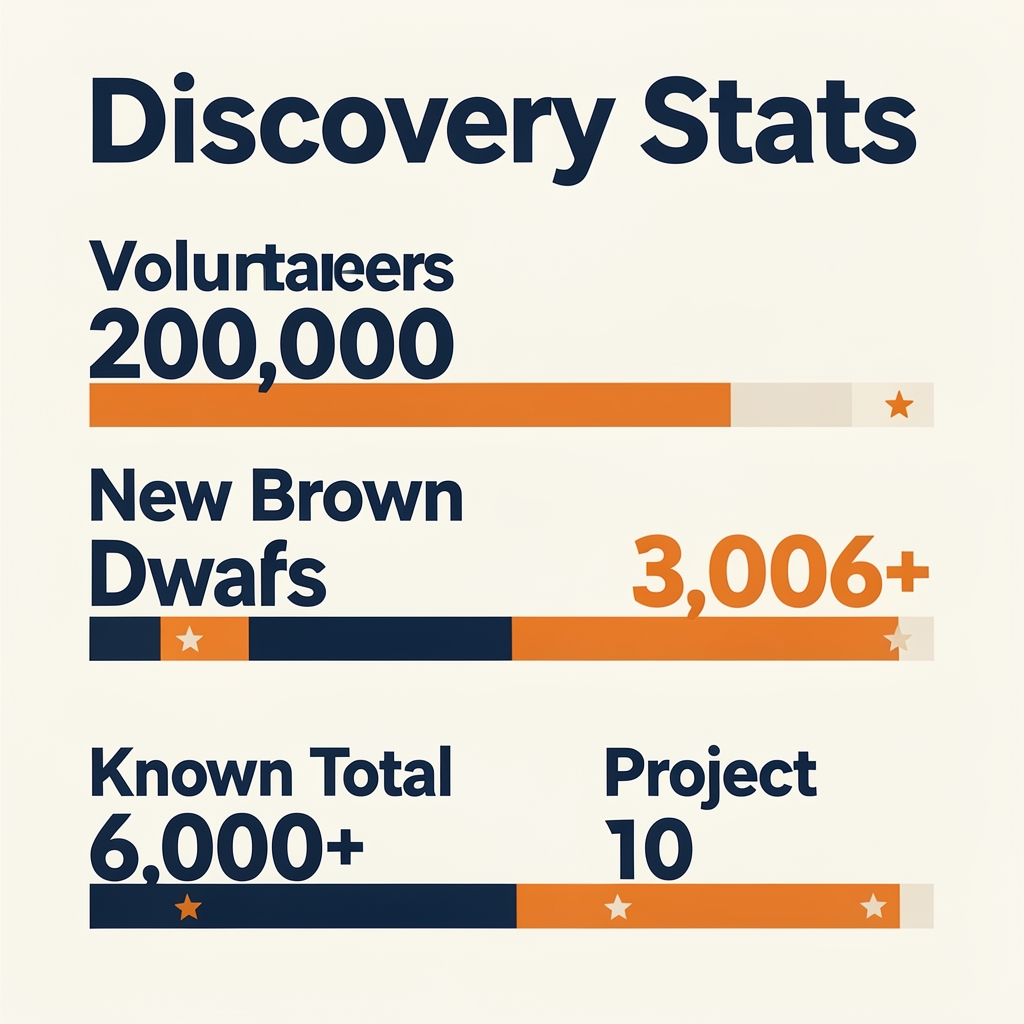
The announcement that NASA-backed volunteers had effectively doubled the universe’s catalog of brown dwarfs represents one of the most dramatic crowdsourced achievements in modern astronomy. What makes the milestone staggering is not merely the volume—over 3,000 new failed stars identified in a single wave—but the mechanism: roughly 2,00,000 citizen scientists poring over infrared telescope data to spot faint, fast-moving objects that professional algorithms and even seasoned astronomers had overlooked. The findings, formally announced by NASA on May 5, 2026, mark the culmination of a decade-long detection campaign operating under the Backyard Worlds: Planet 9 initiative. Before this release, the astronomical community had spent decades building an inventory of approximately 3,000 brown dwarfs. In one collaborative sweep, volunteers erased that ceiling and pushed the confirmed population past 6,000 objects, transforming brown dwarfs from cosmic curiosities into a substantial demographic worthy of dedicated theoretical revision.
The Numbers Behind the Discovery
The following table distills the core developments and contextualizes the leap in our understanding of these substellar objects:
| Discovery Parameter | Pre-May 2026 Baseline | May 2026 Update | Significance |
|---|---|---|---|
| Known Brown Dwarf Population | ~3,000 catalogued objects | 6,000+ confirmed | Population effectively doubled overnight |
| Citizen Contributors | Professional astronomers & small research teams | 200,000 volunteers globally | First major population driven by non-experts |
| New Identifications | Incremental annual additions | 3,000+ "hidden worlds" | Largest single batch release in history |
| Lead Program | Institutional sky surveys (e.g., SDSS, 2MASS) | Backyard Worlds: Planet 9 | NASA's decade-long crowdsourced initiative |
| Key Announcement Date | — | May 5, 2026 | NASA and partner institutions confirmed totals |
| Follow-up Validation | Ground-based adaptive optics | JWST & Spitzer cross-checks | Confirmed tiniest free-floating failed stars |
These figures reveal more than incremental progress; they signal a paradigm shift in how sky surveys are conducted. The Backyard Worlds platform did not merely augment existing catalogs—it multiplied them. Volunteers identified candidates by spotting subtle proper motion in archival WISE and Spitzer infrared imagery: a telltale wobble indicating nearby, cool objects rather than distant background galaxies. Once flagged by the crowd, candidates entered a professional verification funnel. Follow-up observations, including targeted surveys by the James Webb Space Telescope, authenticated the most elusive specimens, among them some of the smallest free-floating brown dwarfs ever documented.
Why the Surge Happened Now
Several converging factors turned a trickle of annual discoveries into a flood:
- Decade-deep infrared archives: By 2026, WISE had accumulated enough all-sky passes to reveal motion that single-epoch surveys missed, giving citizen scientists a rich, time-resolved dataset to mine.
- Human pattern recognition at scale: Volunteers consistently outperformed pure automated pipelines when recognizing faint, slow-moving point sources embedded in noisy galactic backgrounds—precisely the domain where brown dwarfs hide.
- Streamlined validation loops: The transition from amateur flagging to professional follow-up tightened from months to weeks, thanks to better coordination between NASA's science teams and ground-based observatories.
- Global participation mechanics: The project lowered the barrier to entry, allowing anyone with an internet connection to contribute classifications, effectively distributing the labor of a major sky survey across living rooms rather than mountaintops.
The implications extend well beyond astrophysics. Distributed human–machine workflows—where crowds handle edge-case ambiguity and algorithms handle rote throughput—are becoming the default architecture for large-scale classification challenges. Enterprise technology is echoing the same philosophy: platforms like CallMissed let organizations deploy AI voice agents and WhatsApp chatbots that process millions of multilingual customer interactions, blending human oversight with serverless LLM inference across 300+ models and 22 Indian languages. Whether the goal is mapping hidden worlds in the infrared or scaling communication infrastructure on Earth, the proven formula is identical: democratized access, robust API backends, and intelligent human-AI collaboration.
In-Depth Analysis
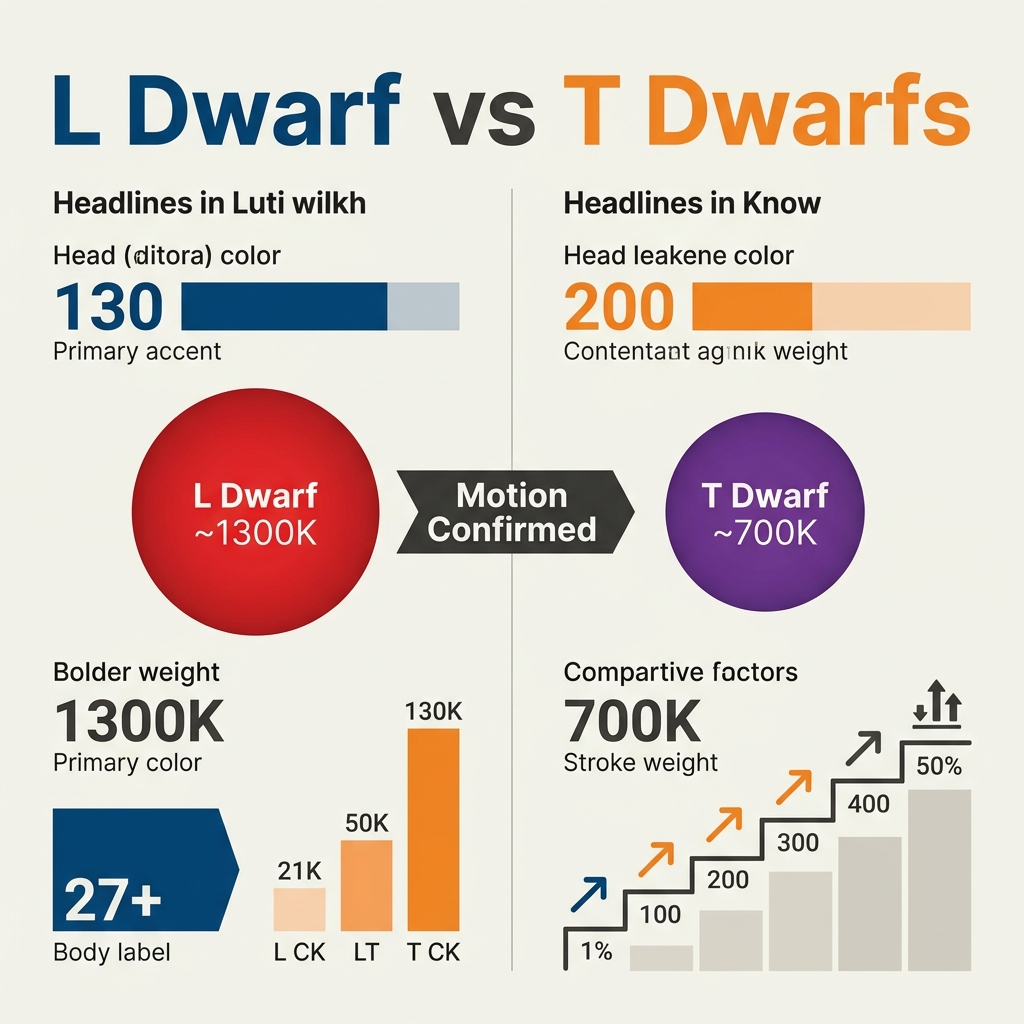
The Backyard Worlds: Planet 9 project operates on a deceptively simple premise: human eyes remain superior to pure algorithms at detecting faint, slow-moving pinpricks of light against crowded infrared star fields. Since its launch in 2017, the initiative has enlisted volunteers to inspect short "flipbook" animations compiled from NASA’s WISE (Wide-field Infrared Survey Explorer) telescope archive. On May 5, 2026, NASA confirmed that this global collaboration—comprising 2,00,000 registered citizen scientists—had yielded more than 3,000 new brown dwarfs, effectively doubling the known catalog from roughly 3,000 to over 6,000 objects, as reported by EarthSky and NASA’s citizen science highlights.
The Astrophysics of Failed Stars
Brown dwarfs are the universe’s perpetual underachievers: born from the same molecular clouds as main-sequence stars, they accumulate mass through gravitational accretion yet stall before reaching the 0.08 solar-mass threshold required to sustain hydrogen fusion. Without a fusion furnace, they cool and dim over billions of years, radiating primarily in infrared wavelengths. This thermal signature makes them invisible to conventional optical telescopes but detectable by infrared all-sky surveys like WISE. The newly discovered cohort spans a range of spectral types and ages, offering astronomers an unprecedented sample to study:
- Substellar atmospheric chemistry — including the formation of iron and silicate clouds at temperatures below 2,000 K
- Mass distribution boundaries — clarifying the divide between super-Jupiter planets and the smallest brown dwarfs
- Free-floating populations — objects roaming interstellar space without a host star, recently highlighted by JWST’s detection of the three tiniest free-floating failed stars on record
These combined datasets are tightening constraints on how often brown dwarfs form in isolation versus within star systems.
Validation and the Democratization of Data
Raw detections are merely the opening stanza. Every candidate flagged by a volunteer triggers a rigorous downstream workflow: astrometric validation, cross-matching against existing catalogs, and spectroscopic follow-up using ground-based facilities like the Mayall telescope and Keck Observatory. The project has proven that a curated, non-specialist workforce can vet millions of image sets when equipped with intuitive browser-based interfaces and explicit classification criteria. In essence, Backyard Worlds functions as a citizen-powered filtering layer, catching nuanced motion and color anomalies that automated pipelines trained on stellar templates frequently overlook. The result is not just quantity, but quality—a doubly large sample of verified objects whose diversity is already reshaping population models.
Distributed Intelligence and Modern Infrastructure
The operational blueprint here—routing massive unstructured datasets through a network of human validators orchestrated by lightweight software—mirrors emerging paradigms in enterprise AI. Just as NASA channels 200,000 volunteers through an elegant interface to separate cosmic signal from noise, businesses today require infrastructure that blends scalable automation with human oversight. Platforms such as CallMissed exemplify this convergence, offering production-ready voice agents, WhatsApp chatbots, and access to 300+ LLMs that handle millions of multilingual interactions while escalating edge cases to human operators. Whether the dataset is infrared flipbooks or customer voice streams, the architecture of discovery is increasingly defined by hybrid human-AI pipelines that turn distributed participation into structured, actionable knowledge.
Impact & Implications
The announcement on May 5, 2026, did not merely add a few entries to an astronomical catalog—it fundamentally reshaped our understanding of the Sun’s neighborhood. By contributing over 3,000 new brown dwarfs, the 200,000 volunteers working with NASA’s Backyard Worlds: Planet 9 project have effectively doubled the known population of these failed stars, pushing the total census beyond 6,000 objects for the first time.
Rewriting the Cosmic Census
Brown dwarfs occupy the elusive boundary between the smallest stars and the largest planets. Because they lack the mass to sustain hydrogen fusion, they are incredibly faint and difficult to detect with conventional optical surveys. The citizen-science deluge has flooded this blind spot in stellar astronomy, allowing researchers to study population-level trends rather than relying on scattered anecdotal specimens.
The astrophysical implications ripple across multiple domains:
- Star-formation models must be recalibrated. If failed stars are twice as common as previously believed, theories about how molecular clouds fragment and collapse require significant revision.
- The initial mass function—the statistical distribution of star birth masses across the cosmos—has a far more populated low-mass tail than textbooks suggested just months ago.
- Planet formation theories gain thousands of new test subjects. Many brown dwarfs host circumstellar disks and even planetary-mass companions, offering natural laboratories for studying worlds beyond our solar system under conditions distinct from those around Sun-like stars.
Democratizing Discovery
Beyond pure astrophysics, the project’s architecture signals a permanent shift in how big science gets done. NASA’s citizen science framework proved that distributed human pattern recognition, augmented by machine-learning preprocessing, can outperform small teams of professionals on sheer search volume alone. As documented in the project findings, volunteers accomplished in roughly a decade what traditional survey pipelines would have struggled to complete in generations.
This success validates a scalable hybrid model:
- Machine algorithms flag candidates across petabytes of all-sky infrared data from facilities like NEOWISE.
- Human volunteers vet ambiguous, motion-shifted signals that automated classifiers routinely dismiss as noise.
- Professional astronomers confirm discoveries using high-resolution spectrographs on large ground-based telescopes.
The result is a pipeline that converts public curiosity into peer-reviewed, archival science at an industrial scale.
Fueling the Next Generation of Missions
The timing of this population boom is fortuitous. With the James Webb Space Telescope actively targeting the tiniest free-floating failed stars, astronomers now have an expanded, distance-ranked target list of nearby, cold objects to observe at mid-infrared wavelengths. The newly cataloged brown dwarfs also serve as dynamic signposts: their spatial distribution and velocities can refine the Galaxy’s mass budget, while their atmospheres—ranging from 300 K to 2,500 K—provide unique test beds for models of cloudy, metal-rich chemistry.
In short, these 3,000 “hidden worlds” have moved from observational obscurity to centerpiece status. They are no longer statistical noise at the bottom of stellar catalogs but key diagnostic tools for understanding everything from local star formation to the large-scale kinematics of the Milky Way.
Expert Opinions
A New Benchmark for Crowdsourced Astronomy
The astronomical community is hailing the Backyard Worlds findings as a watershed moment for collaborative science. According to an official NASA citizen science update, a new paper from the Backyard Worlds: Planet 9 project confirms that volunteers have essentially doubled the number of known brown dwarfs, pushing the total catalog beyond 6,000 objects. For a field where these "hidden worlds" were once considered rare cosmic oddities, the sudden influx of over 3,000 confirmed brown dwarfs is forcing researchers to rewrite population models. As noted in EarthSky's coverage of NASA's May 5, 2026 announcement, the discovery marks the transition of brown dwarfs from elusive curiosities to mainstream stellar population statistics.
Experts emphasize that the discovery carries implications far beyond simple tallying. Because brown dwarfs—often called failed stars—straddle the mass boundary between the largest gas-giant planets and the smallest red-dwarf stars, they serve as critical test beds for atmospheric and formation theories. The project’s ability to more than double the sample size overnight gives astrophysicists an unprecedented dataset to study:
- Atmospheric diversity across temperatures ranging from scorching hot to room-temperature Y-dwarfs
- Formation mechanisms, including whether brown dwarfs form like stars through cloud collapse or like planets through accretion
- Galactic distribution patterns, revealing how these objects populate the Milky Way's disk and halo
The Validation of Human Pattern Recognition
Perhaps the most significant expert consensus centers on what this success means for the future of data-intensive science. With 200,000 citizen scientists contributing visual inspections to datasets that algorithms initially screened, the project has demonstrated that human volunteers remain indispensable for detecting subtle infrared motion. India Today's coverage highlights that the people who found these worlds "weren't astronomers, but volunteers"—a detail that researchers cite as proof that specialized expertise is no longer the sole gateway to meaningful discovery.
Astronomers point out that machine learning models often struggle with the faint, slow-moving signatures characteristic of nearby brown dwarfs. The citizen scientist network effectively acted as a massive distributed sieve, catching candidates that automated pipelines missed. This hybrid model—algorithmic pre-filtering followed by crowdsourced validation—is now being studied as a template for future all-sky surveys, including those that will process petabytes of data from next-generation observatories.
Implications for Future Research
Looking ahead, specialists argue that this dataset will serve as the foundational reference for brown dwarf science throughout the decade. Having 3,000 new targets enables statistically robust studies of:
- Weather systems on substellar objects, using follow-up spectroscopy from facilities like the James Webb Space Telescope
- Binary and multiplicity rates among low-mass objects, which constrain stellar formation scenarios
- The bottom end of the stellar mass function, helping define the boundary between planets and stars
As NASA’s citizen science program highlights, these volunteers have not merely expanded a catalog—they have fundamentally altered the scale at which astronomers can test theoretical models. With the brown dwarf population now doubled, the field is positioned to answer questions that were statistically impossible just weeks ago.
What This Means For You
Democratizing the Cosmos
The announcement on May 5, 2026, that volunteers had effectively doubled the catalog of known brown dwarfs from roughly 3,000 to more than 6,000 is not merely a triumph for professional astronomers—it is a paradigm shift in who gets to participate in frontier science. For the average person, this discovery demonstrates that meaningful contributions to astrophysics no longer require a PhD or access to billion-dollar observatories. NASA's Backyard Worlds: Planet 9 project leveraged the pattern-recognition skills of over 200,000 citizen scientists to spot faint, moving objects that algorithms and even trained researchers had missed. The result—3,000 previously hidden "failed stars" now cataloged—proves that the boundary between amateur enthusiast and working scientist is more permeable than ever before.
Why These Failed Stars Matter
Brown dwarfs occupy a persistent blind spot in our cosmic census. Too massive to be classified as planets, yet lacking the sustained hydrogen fusion that powers true stars, these enigmatic objects help astronomers map the bottom end of the stellar mass function and constrain models of exoplanetary system formation. By expanding the known population so dramatically, citizen scientists have furnished researchers with a statistically significant sample to test theories about atmospheric chemistry, substellar weather patterns, and the relative prevalence of solitary versus binary brown dwarfs. In practical terms, the new dataset generated by volunteers will directly feed into follow-up studies using the James Webb Space Telescope, refining targets for some of the most competitive observational time ever allocated.
From Discovery to Your Dashboard
The success of this crowdsourced model extends far beyond astrophysics. Consider what the 200,000 volunteers have validated:
- Distributed human-AI workflows work: automated algorithms pre-filter petabytes of all-sky survey data, while human volunteers catch subtle anomalies that code alone misses.
- Classroom impact: the 3,000 new discoveries offer educators an immediate, engaging case study in stellar evolution and the electromagnetic spectrum.
- Policy implications: the result underscores the extraordinary return on investment when scientific institutions release proprietary data to the public.
- Personal access: dormant scientific curiosity—previously gated behind university admissions—can now be activated with nothing more than an internet connection.
| Audience | Why the 3,000 Brown Dwarfs Matter | How to Participate Today | Barrier to Entry | Typical Time Commitment |
|---|---|---|---|---|
| General Public | Doubled the known cosmic census of substellar objects | Join NASA's Backyard Worlds: Planet 9 | None—just a web browser | 30 min to 2 hrs/week |
| Students & Educators | Real-world dataset validates lessons on stellar mass and fusion | NASA Citizen Science portal; Zooniverse projects | Basic computer literacy | Class periods or semester projects |
| Aspiring Astronomers | 6,000+ known objects create research opportunities in atmospheric modeling | Analyze public archives; propose JWST follow-up targets | Intermediate astronomy knowledge | 5–10 hrs/week |
| Tech Professionals | 200K volunteers parsing data proves value of hybrid human-machine pipelines | Build tools for citizen-science platforms; improve ML models | Coding or ML skills | Flexible, project-based |
| Science Enthusiasts in India | Trending discovery signals India's rising engagement with global astronomy | Online citizen-science projects accessible globally | None | As available |
The Bigger Picture
Perhaps most importantly, this milestone reframes failure as a scientific asset. Brown dwarfs are literally failed stars—objects that could not sustain nuclear ignition—yet they are now among the most scientifically valuable populations in the sky because 200,000 volunteers refused to treat them as irrelevant detritus. The method matters as much as the outcome: when institutions like NASA release raw survey data to the public, the result is not chaos but a doubling of human knowledge in under a decade. Whether you spend an hour classifying infrared images or simply track the follow-up papers, you are witnessing a democratization of discovery that will define 21st-century science.
Frequently Asked Questions
Understanding Failed Stars
What are failed stars, and why are brown dwarfs called that?
How did NASA citizen scientists discover 3,000 new failed stars?
The Historic Discovery
What is NASA's Backyard Worlds: Planet 9 project?
Why is the discovery of 3,000 new brown dwarfs scientifically significant?
Joining the Search
What telescopes and data did citizen scientists use to locate these hidden worlds?
Can anyone become a NASA citizen scientist and help discover failed stars?
Conclusion
The May 2026 announcement from NASA marks a watershed moment for both astrophysics and public engagement in science. What began as the Backyard Worlds: Planet 9 project evolved into one of the most successful citizen-science campaigns in history, proving that rigorous, paradigm-shifting discovery is no longer confined to professional observatories or academic institutions.
• Scale of participation unlocks scale of discovery: More than 200,000 volunteers pored over infrared telescope data to identify faint moving objects, demonstrating that distributed human intelligence can process massive datasets as effectively as traditional research pipelines.
• Brown dwarfs are far more common than models predicted: By adding over 3,000 new objects to the cosmic catalog, these citizen scientists effectively doubled the known population of failed stars, forcing astronomers to rethink formation theories and galactic demographics.
• The boundary between star and planet is blurrier than ever: Among the discoveries are some of the tiniest free-floating substellar objects detected to date, challenging long-standing definitions of where stars end and giant planets begin.
• Citizen science is now a permanent pillar of research: With this haul announced on May 5, 2026, NASA has shown that crowdsourced astronomy can produce validated, peer-reviewed results at a velocity that institutional teams alone struggle to match.
Looking ahead, the astronomical community will likely prioritize follow-up spectroscopy—particularly using the James Webb Space Telescope—to study the atmospheric chemistry and weather patterns of these newly flagged brown dwarfs. We should also expect similar volunteer-driven campaigns to expand into dark-matter mapping, exoplanet atmospheric biosignature hunting, and perhaps even the long-sought detection of the outer Solar System’s elusive Planet Nine. The next frontier in exploration isn’t merely building larger mirrors; it’s designing smarter, more inclusive interfaces that translate raw data into discoveries by leveraging global human curiosity.
So the next time someone claims that frontier science is too esoteric for the public, remember that a global network of volunteers just rewrote our cosmic census in a single decade. What hidden corners of the universe will we choose to illuminate together next? To explore how AI communication is evolving, check out CallMissed — an AI infrastructure platform powering voice agents and multilingual chatbots for businesses.
Discussion
Related Posts



Ready to automate customer conversations?
Launch AI voice agents and WhatsApp bots with CallMissed — one API, 22+ Indian languages.