
Enterprise voice AI is moving on-prem and becoming easier to optimize


Enterprise voice AI is moving on-prem and becoming easier to optimize matters for CallMissed because it affects voice agents, model routing, multilingual support, and customer conversation quality.
Enterprise voice AI is moving on-prem and becoming easier to optimize
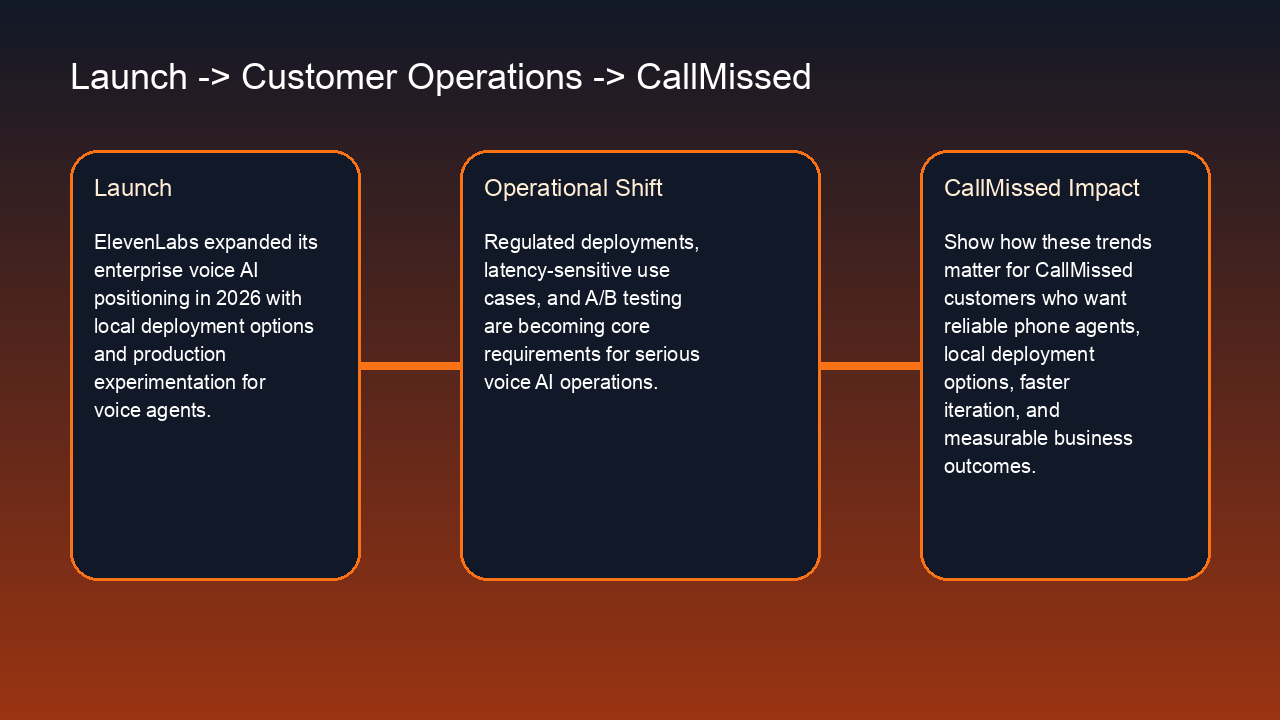
ElevenLabs expanded its enterprise voice AI positioning in 2026 with local deployment options and production experimentation for voice agents. ElevenLabs Blog framed the launch on April 9, 2026 as a meaningful step in the broader AI stack, and that matters because regulated deployments, latency-sensitive use cases, and a/b testing are becoming core requirements for serious voice ai operations.
For CallMissed, this is not abstract model news. The platform already sits at the point where customers expect voice agents, WhatsApp automation, multilingual understanding, and reliable handoffs to behave like production software instead of demos. That is why enterprise voice AI on-prem deserves attention from teams building communication infrastructure today.
What launched and why people are paying attention
According to ElevenLabs Blog on April 9, 2026, The ElevenLabs blog highlights that enterprise voice AI can now be deployed on-premise and on-device, reflecting stronger demand for local deployment and control. According to ElevenLabs on February 19, 2026, ElevenLabs introduced production A/B testing for live agent traffic so teams can measure changes to prompts, workflows, voices, guardrails, CSAT, containment, conversion, latency, and cost. According to ElevenLabs on March 6, 2026, ElevenLabs says its agents can talk, type, and take action across phone, web, and apps, and that customers have created more than 2 million agents handling more than 33 million conversations this year.
The practical takeaway is that the conversation is moving away from single-model demos and toward complete systems: reasoning, live interaction, governance, latency, and measurable business outcomes. That shift is directly relevant to platforms like CallMissed because customer conversations are one of the fastest places where model quality becomes operationally visible.
Key facts at a glance
| Date | Source | Signal | Why it matters |
|---|---|---|---|
| April 9, 2026 | ElevenLabs Blog | Enterprise voice AI, deployed locally | The ElevenLabs blog highlights that enterprise voice AI can now be dep |
| February 19, 2026 | ElevenLabs | Introducing Experiments in ElevenAgents | ElevenLabs introduced production A/B testing for live agent traffic so |
| March 6, 2026 | ElevenLabs | Introducing ElevenLabs Agents | ElevenLabs says its agents can talk, type, and take action across phon |
| Today | CallMissed | Production implication | Better routing, QA, multilingual flows, and conversation design decisions |
What this means for AI voice agents and customer conversations
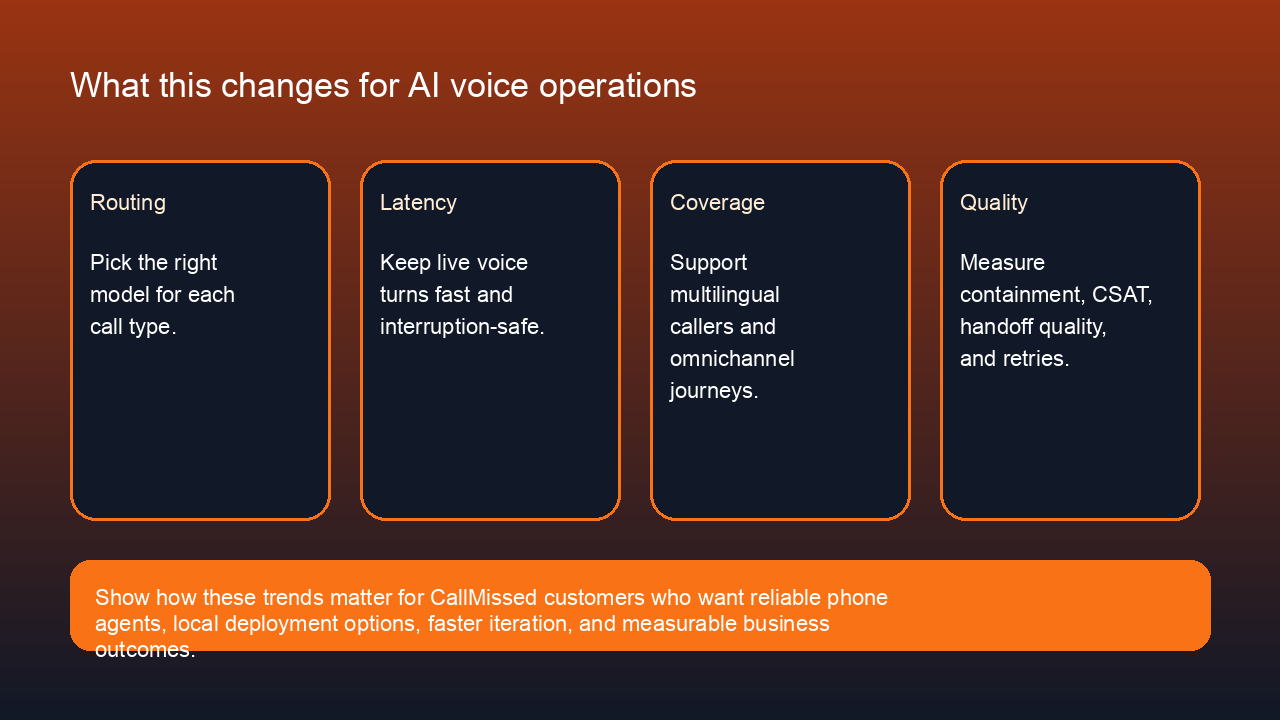
Show how these trends matter for CallMissed customers who want reliable phone agents, local deployment options, faster iteration, and measurable business outcomes. In practice, stronger models or better voice infrastructure change four things at once: how reliably a system understands intent, how quickly it answers, how well it keeps context across turns, and how safely it knows when to escalate.
That is the layer where CallMissed has to win. A business does not buy a model release; it buys lower missed-call leakage, higher containment, cleaner WhatsApp follow-ups, faster multilingual handling, and more predictable call outcomes. When a launch improves reasoning, voice quality, or governance, the real question is how quickly that improvement can be absorbed into production call flows.
How teams using CallMissed can respond now
The right reaction is not to rebuild everything around a headline. The right reaction is to tighten the operating system around the conversation layer. CallMissed already gives teams a place to combine voice agents, WhatsApp chatbots, model routing, telephony workflows, and multilingual speech APIs, so the opportunity is to upgrade decision quality without breaking production reliability.
- Review which call intents need deeper reasoning versus lower latency.
- Re-evaluate model routing so simple requests and high-stakes conversations do not share the same stack.
- Use multilingual STT and TTS more deliberately for regional support coverage.
- Measure call containment, transfer quality, and retry patterns after any model change.
- Keep WhatsApp and voice journeys aligned so a conversation can move channels without losing context.
Risks, trade-offs, and what to watch next
The most common mistake after a major AI launch is assuming a better model automatically creates a better workflow. In reality, operations teams still need prompt discipline, routing rules, observability, escalation logic, and fallback paths. ElevenLabs may have improved the model or platform layer, but the business result still depends on how the conversation system is assembled.
The second watchpoint is expectations. Every major release resets what customers think a digital assistant should sound like, know, and remember. That creates upside for CallMissed because better infrastructure can raise answer quality, but it also raises the bar for every production conversation that touches sales, support, or scheduling.
FAQ
What is enterprise voice AI on-prem?
Why does enterprise voice AI on-prem matter for voice agents?
How does this affect CallMissed specifically?
Should teams switch their entire stack immediately?
What should operators measure after adopting a new AI launch?
Conclusion
Enterprise voice AI is moving on-prem and becoming easier to optimize is important because it shows where the AI market is putting real effort: stronger reasoning, better live interaction, safer deployment, or more operational control. For CallMissed, the point is not to chase every headline. The point is to absorb the right advances into customer-facing systems that answer faster, escalate smarter, and work across channels and languages.
That is the practical definition of AI influence for this product category. The vendors may launch the models, but the business value appears when a platform like CallMissed turns those gains into fewer dropped conversations, better service recovery, and more dependable communication automation.
Sources
- ElevenLabs Blog (April 9, 2026): Enterprise voice AI, deployed locally
- ElevenLabs (February 19, 2026): Introducing Experiments in ElevenAgents
- ElevenLabs (March 6, 2026): Introducing ElevenLabs Agents
Discussion
Related Posts


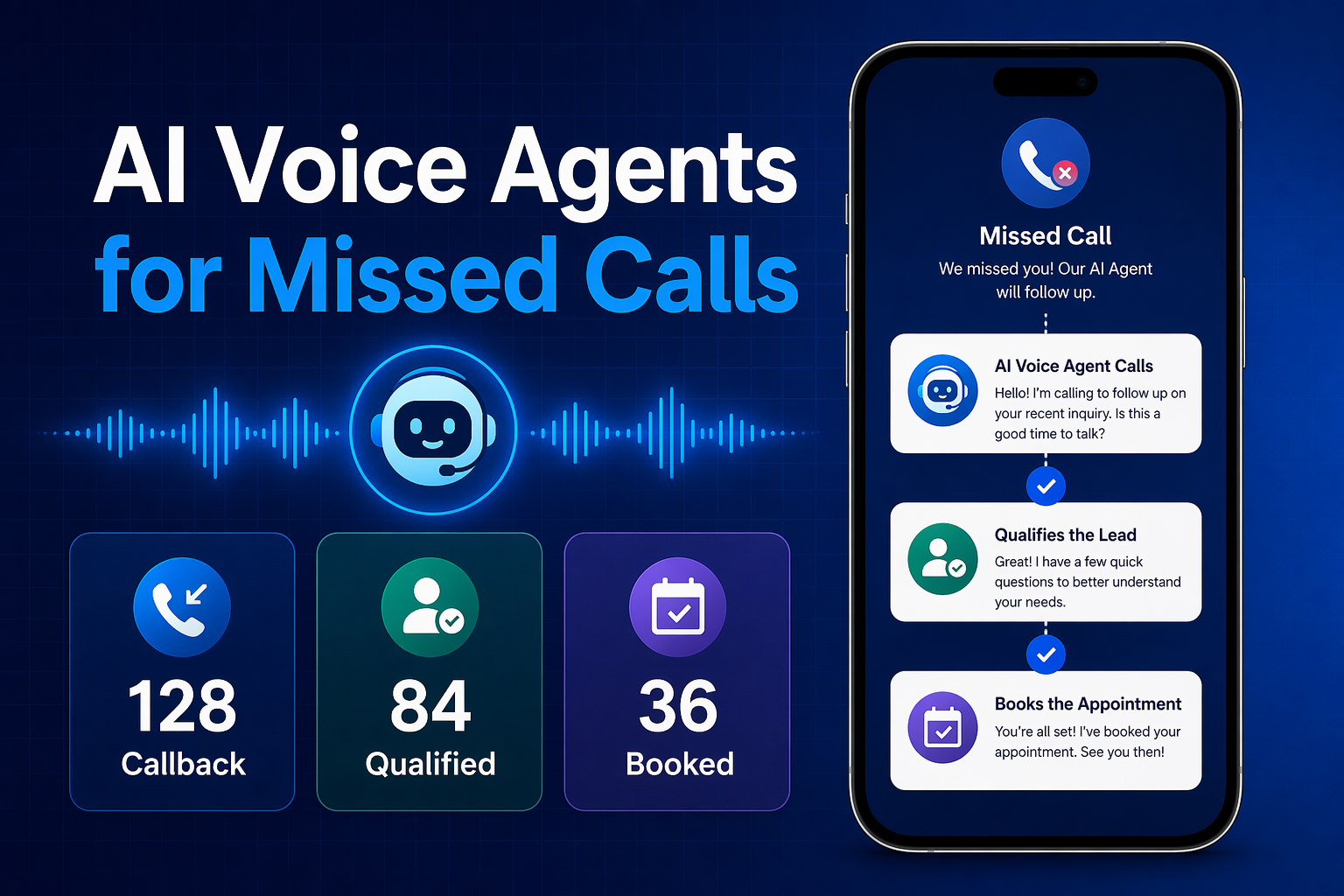
Ready to automate customer conversations?
Launch AI voice agents and WhatsApp bots with CallMissed — one API, 22+ Indian languages.