
The Agentic AI Stack: From Tool Use to Autonomous Workflows



How the AI agent stack is layered in 2026 — model, framework, tools, memory, observability, evaluation — and the design decisions that matter at each layer.
"Agent" was the most overused word in AI in 2024. By 2026 the term has stratified — a real agent stack now has identifiable layers, each with its own design decisions, failure modes, and competitive landscape. Here is how the stack looks today.
Layer 1: The model
This is the bottom of the stack and the most-discussed layer. The model decides what to do. Some characteristics matter more for agents than for chatbots:
- Multi-step consistency — the model maintains a coherent plan across many turns
- Tool-call accuracy — when the model decides to call a tool, the JSON args are right
- Self-correction — when a tool returns an error, the model adapts rather than repeating the broken call
- Honest uncertainty — the model can say "I do not know" instead of fabricating
In 2026, Claude Opus 4.7, GPT-5.5, and Gemini 3.1 Pro are the frontier picks. Llama 4 Maverick is the strongest open-weight option. Smaller models can power narrow agents but the multi-step ones still benefit measurably from frontier capability.
Layer 2: The framework
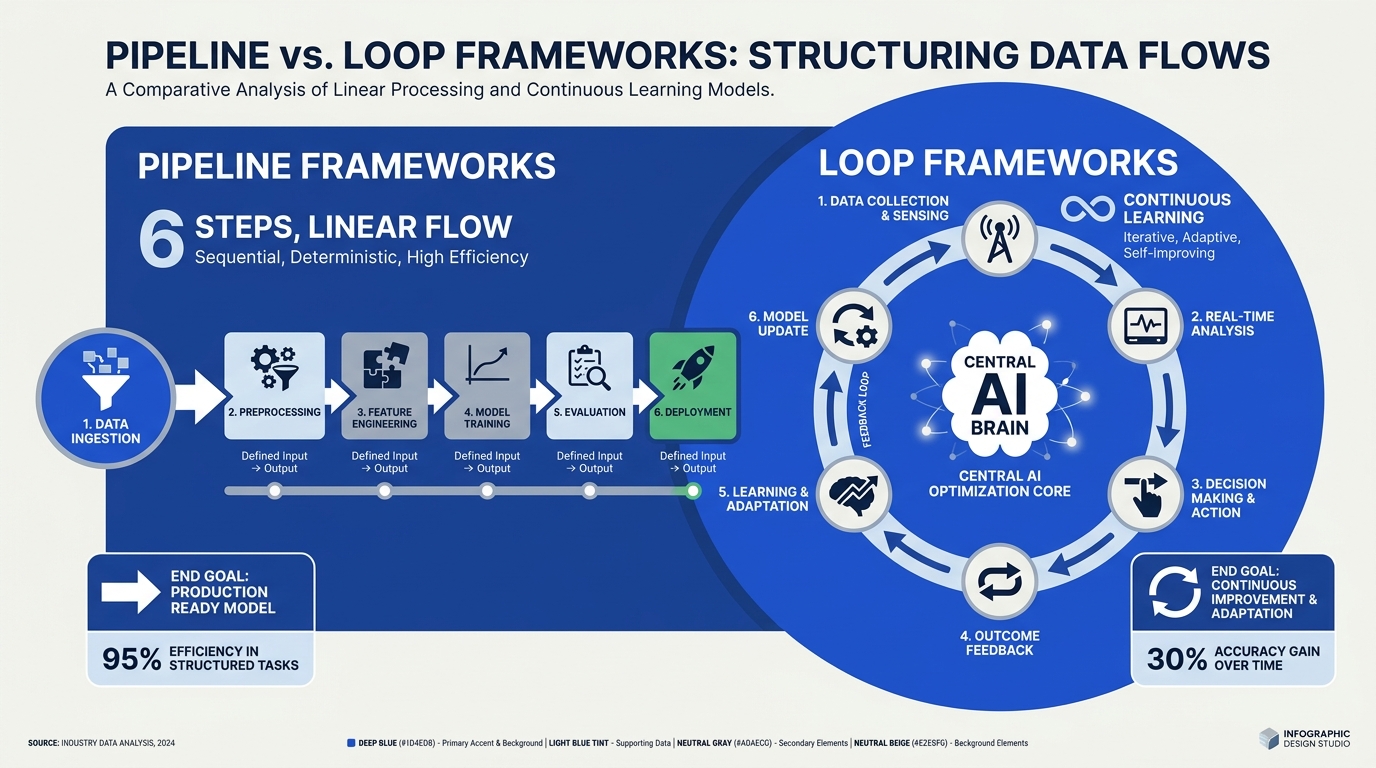
The framework sits between your code and the model. Two patterns dominate:
- Pipeline frameworks — LangGraph, OpenAI Agents SDK, Anthropic's
claude-agent-sdk. The agent's flow is encoded as nodes and edges; you write the orchestration explicitly. - Loop frameworks — minimal harnesses around the model's native tool-call loop. The model decides; the framework executes. Less code, less control.
The 2026 consensus is that lightweight loops win for most use cases. The model is competent enough that explicit orchestration becomes a liability — you end up routing around the model's actual judgment. Pipeline frameworks are still the right call when the agent has hard constraints (compliance gates, multi-stage approvals, deterministic intermediate steps).
Layer 3: Tools
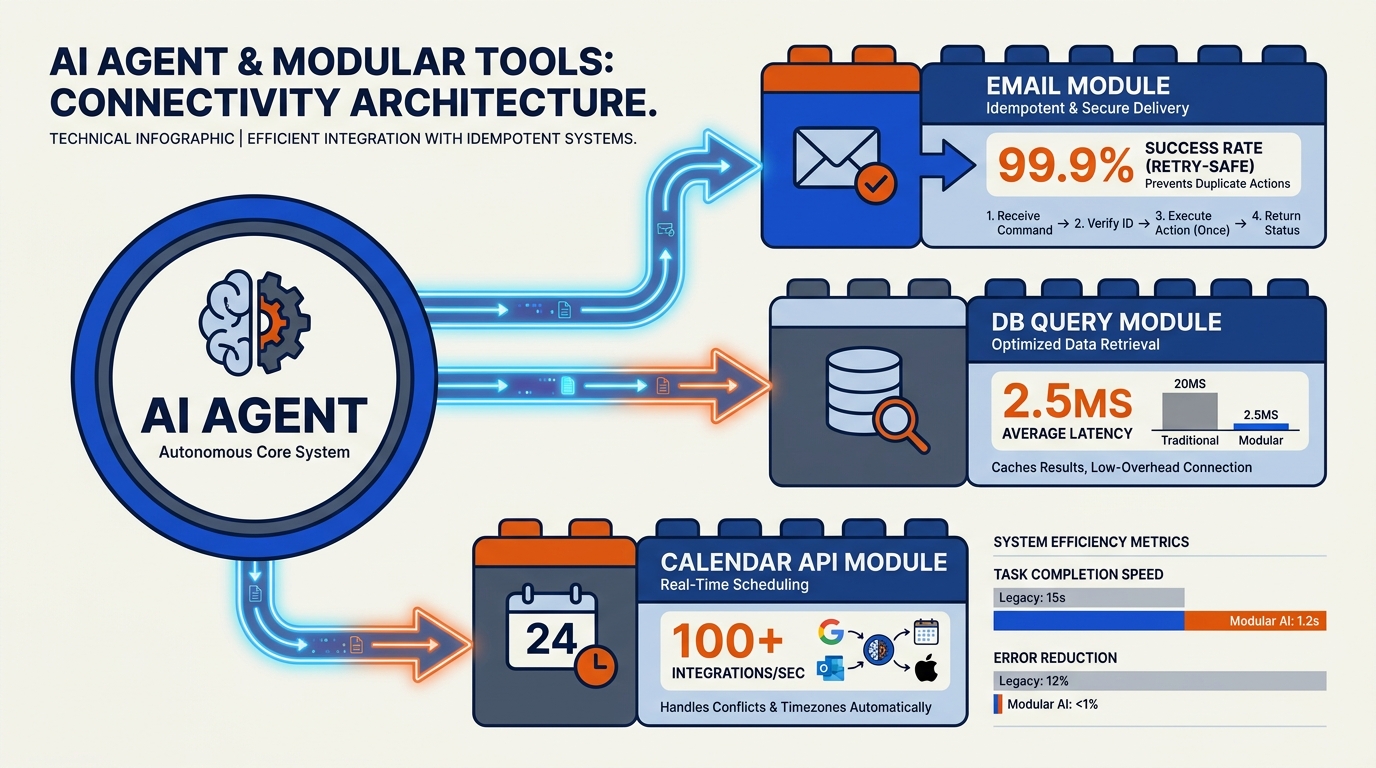
Tools are how agents do anything other than talk. In 2026, the dominant tool-integration pattern is MCP (Model Context Protocol) — see the separate post for the full story.
The interesting design decisions at this layer:
- Granularity. A tool that does one thing is debuggable; a tool that does ten is opaque. Err toward small.
- Idempotency. Agents retry. Non-idempotent tools cause real-world side-effect surprises (duplicate emails, double-booked meetings). Wrap them.
- Structured returns. Tools should return parseable structured data plus a human-readable summary, not free-form text. Models hallucinate less when the input is structured.
- Permission scoping. A tool should authorize per call, not at registration time. Agents do unexpected things.
Layer 4: Memory
Memory is where most agent systems get hard. There are three kinds, and they have different implementations:
- Working memory — the conversation context window itself. Bounded by the model's context size; managed by truncation or summarization when full.
- Episodic memory — what happened in past sessions. Vector stores (Qdrant, Pinecone, pgvector) plus retrieval at session start.
- Semantic memory — facts the user wants the agent to remember. Often a structured store (a key-value or document DB) with explicit write/read tools.
The mistake teams make is conflating these. "We added vector memory and the agent still forgets things" is almost always a symptom of using episodic memory for facts that should be semantic. The fix is a write-policy decision (when does the agent actively save a fact?) more than a tech-stack decision.
Layer 5: Observability

Agents fail in ways chatbots do not. They get into loops. They make wrong tool calls and recover badly. They mix up user instructions across long contexts. You cannot debug this from logs alone.
The observability layer in 2026 is built around trace tooling (LangSmith, Phoenix, Langfuse, Helicone) that captures the full agent execution: every model call, every tool call, every intermediate decision, in a tree structure. Without this, debugging an agent failure is archaeology. With this, it is straightforward.
This layer is non-negotiable for production agents. Skipping it works for a demo and breaks at the first real failure.
Layer 6: Evaluation
How do you know if a change made the agent better? Eval frameworks (Braintrust, Inspect, custom test harnesses) record canonical task instances, run them after every change, and surface regressions. The setup cost is high but the alternative — shipping changes and hoping — is worse.
Most teams underinvest in this layer. The result: gradual drift in agent quality with no way to localize where it came from. Investing in eval before the agent is in production avoids the cliff.
How the stack composes
A working production agent in 2026 looks roughly like this:
┌──────────────────────────────────────┐
│  6. Evaluation (canonical task runs) │
├──────────────────────────────────────┤
│  5. Observability (trace tools)      │
├──────────────────────────────────────┤
│  4. Memory (working/episodic/semantic)│
├──────────────────────────────────────┤
│  3. Tools (MCP servers + native)     │
├──────────────────────────────────────┤
│  2. Framework (loop or pipeline)     │
├──────────────────────────────────────┤
│  1. Model (frontier or fine-tuned)   │
└──────────────────────────────────────┘
Each layer has good defaults in 2026 and a small set of credible alternatives. The interesting work is at the boundaries — how memory feeds the model, how tools surface to the model, how observability captures decisions across layers.
What is still hard
Three problems the stack does not solve in 2026:
- Cross-session goal continuity — agents do not yet do well at "we are in the middle of a multi-week project; what should I work on today?"
- Cost/latency budgeting — most frameworks happily run a 30-tool-call sequence that costs $5 and takes 2 minutes. Bounding this gracefully is an open problem.
- Trust and authorization — when does the agent need to ask a human? When can it act autonomously? The right answer is task-dependent and most systems get it wrong in both directions.
Expect the next 12 months of agent infrastructure to be largely about these three problems. The base stack is settled; the hard parts are the ones humans have to decide.
Discussion
Related Posts


Ready to automate customer conversations?
Launch AI voice agents and WhatsApp bots with CallMissed — one API, 22+ Indian languages.